
Quick definition: In slang, OD means doing too much, going overboard, or being extremely something — as in “You’re OD” (you are doing too much) or “That song is OD good” (that song is extremely good). It comes from overdose, but in most casual texts and TikTok comments it does not mean a drug overdose at all. Context decides which meaning someone intends, and the serious medical meaning must always be taken seriously when it appears.
OD Meaning Slang & Definition
OD meaning slang is short for “overdoing it.” When someone writes OD in a text, a comment, or a caption, they usually mean that a person, a reaction, an outfit, a price, or a feeling has gone past normal and into excess. It can work as a verb, an adjective, and an adverb, which is part of why it is so useful — and part of why it confuses people the first time they see it.
As a verb, OD means to overdo something: “She OD’d on the accessories” means she wore far too many accessories. As an adjective or intensifier, it means “extremely” or “too much”: “I’m OD tired” means “I’m extremely tired,” and “That price is OD” means “That price is unreasonably high.” As a noun in its original, literal sense, an OD is an overdose — taking too much of a drug or medicine, which can be a medical emergency. The slang meaning borrows the idea of “too much” from the medical word and applies it to everyday life: too much drama, too much effort, too much sauce, too much of anything.
The difference between the slang meaning and the literal meaning is usually obvious from the sentence around it. “I OD’d on pizza last night” is almost certainly a joke about eating too much pizza. “I think he OD’d last night and he is not waking up” is not a joke, and it is not slang — it is a possible emergency, and it needs an immediate, serious response. Learning OD slang therefore means learning two things at once: how to use a flexible piece of everyday language, and how to recognise the moment when the same two letters stop being casual.
OD is also closely related to other intensity words in modern slang. Like tuff, which turned an old word for “tough” into praise, OD took a heavy medical word and lightened it for everyday exaggeration. It sits in the same family as “extra,” “doing the most,” and “over the top,” but it is shorter, punchier, and easier to drop into a fast-moving group chat. That brevity is a big part of its staying power.
Introduction
You are scrolling through comments and you see it: “This video is OD funny.” A friend texts, “Bro, you OD.” Someone else posts, “OD’d on caffeine again ☕😵.” None of them is talking about a hospital. All of them are talking about excess — something funny beyond funny, a reaction beyond reasonable, a third coffee beyond wise. If you grew up with the medical meaning of OD first, the slang use can feel jarring. If you grew up online, the slang use probably feels completely normal, and the medical meaning is the one that needs a pause.
That double life is exactly what makes OD worth a full guide. It is one of the most common two-letter slang terms in American texting, social media, and hip-hop-influenced speech, and it is also one of the most misunderstood, because the same letters carry a light, joking meaning and a heavy, life-or-death meaning. Used well, OD adds colour and emphasis to everyday conversation. Used carelessly — especially around real drug use, real illness, or real distress — it can sound flippant, confusing, or even cruel.
This guide explains OD slang the way people actually use it. You will get the clear definition, the origin in medicine and New York street and hip-hop culture, and the spread through social media. You will see real examples for friendly chats, professional settings, and funny moments, a comparison table with similar terms, the alternate and technical meanings of OD, polite alternatives for formal writing, the common mistakes that trip learners up, and quick tips for using it naturally. By the end, you will know instantly whether “OD” in a message means “extremely,” “overdoing it,” or “call for help” — and you will know what to say back in each case.

Origin
OD begins, unambiguously, with overdose. The medical word describes taking more of a substance — a drug, a medicine, sometimes alcohol in combination — than the body can safely handle. It has been part of English medical and news language for well over a century, and the abbreviation OD, with the verb forms OD’d and OD’ing, was already in use in the twentieth century to describe both accidental and intentional overdoses. News reports, hospital dramas, and public-health campaigns kept the abbreviation in the public ear long before it became slang.
The slang turn happened when “too much” stopped being only a medical idea. In New York street slang and hip-hop culture, especially from the early 2000s onward, OD began to be used metaphorically: if an overdose is taking far too much of something, then “OD’ing” on anything — jewellery, drama, confidence, food, compliments — is doing far too much of that thing. The metaphor is vivid because everyone already knew the original word. You did not need the slang explained to you; you felt it. To OD on something was to cross a line everyone could picture.
Hip-hop lyrics, interviews, and everyday speech in New York carried the metaphorical use outward. Rappers and online creators used OD as an intensifier — “OD nice,” “OD serious,” “OD wavy” — in the same way other slang intensifiers like “mad,” “hella,” and “deadass” spread from regional speech into national speech. The word’s shortness helped: two letters fit a lyric, a tweet, a caption, and a text with no effort at all. Once Twitter, Instagram, and later TikTok rewarded short, emphatic language, OD had exactly the shape the internet likes.
It is worth being precise about what “origin” means here. OD slang did not appear from nowhere, and it did not replace the medical meaning. It grew out of it. That is why the slang still carries a faint edge of danger and drama even in its lightest uses. When someone says a party was “OD fun,” the joke works because the word for excess is borrowed from a word for dangerous excess. The humour and the warning live in the same two letters, and good speakers of the slang know which one they are invoking.
Popularity
OD is popular because it does three jobs at once. It judges (“you’re doing too much”), it praises (“that’s OD good”), and it measures (“I’m OD tired”). Few slang words switch between criticism and compliment that smoothly, and few do it in two letters. In group chats, that flexibility matters: the same word can tease a friend, hype a song, and describe a long day, all without changing form.
Social media made OD a national word rather than a regional one. On TikTok and Instagram, comments are short and reactions are instant, and “OD” is the perfect comment: it says “this is a lot, in a good way” or “this is too much, in a funny way” without a paragraph of explanation. Creators caption videos “OD’d on thrift finds” or “POV: you OD on confidence before a presentation,” and viewers understand immediately. The word also travels well in memes and reaction images, where a single caption — “me OD’ing on snacks at 2 a.m.” — can carry the whole joke.
Music keeps refreshing it. Every few years a new wave of artists, from New York drill to mainstream pop-rap, uses OD in lyrics and interviews, and each wave teaches a new audience the word in context. Sports and gaming communities use it too: a player who is “OD” on a game is playing excessively well or excessively long, and a fan who says a dunk was “OD” means it was beyond normal. Because the word is tied to intensity rather than to one scene, it does not age out when one scene fades.
Search interest follows the same pattern as other slang explained on this site: people do not usually search OD because they have never heard it. They search it because they have heard it in a specific sentence and cannot tell which meaning fits. “OD meaning in text,” “what does OD mean in slang,” and “OD meaning TikTok” are all versions of the same question: is this a joke, a compliment, or something serious? That question is the reason this guide spends as much time on context as on definition.
How It Is Used
OD is used in three main grammatical roles, and recognising the role usually tells you the meaning. First, as a verb: “to OD” or “to OD on something” means to overdo it. “Don’t OD on the perfume” means do not wear too much perfume. “He OD’d at the gym” means he pushed himself far too hard. The past forms are OD’d and ODed, and the present participle is OD’ing or ODing — all spellings appear online, and none of them is wrong in casual writing.
Second, as an intensifier before an adjective: “OD tired,” “OD expensive,” “OD loud,” “OD funny.” Here OD works like “extremely,” “mad,” or “so.” “I’m OD hungry” is stronger than “I’m hungry,” and it carries a hint of comedy: the hunger is almost too much. Third, as a standalone judgement: “That’s OD,” “You’re OD,” or simply “OD.” On its own, OD almost always means “that is too much” — too dramatic, too extra, too intense. Tone and the relationship decide whether it lands as teasing, admiration, or a real complaint.
In texting, OD is usually lowercase — “od” — because most slang in chats is lowercase, fast, and uncapitalised. In captions and comments, both “OD” and “od” appear, and capitalisation rarely changes the meaning. What does change the meaning is everything around the word: emojis, punctuation, and the topic. “You OD 😭😭” with crying-laughing emojis is almost certainly a joke about someone being dramatic. “You’re OD serious right now” with no emoji, in an argument, is probably a real criticism. “He OD’d, call someone” with no joke anywhere near it is an emergency until proven otherwise.
OD also appears in fixed phrases worth learning. “OD’ing on” something is the most common: OD’ing on coffee, on compliments, on a new show, on selfies. “Went OD” means someone crossed from normal into excessive in a single moment: “He went OD when he found out.” “OD good,” “OD fire,” and “OD clean” are praise phrases, especially for music, outfits, and performances. And “don’t OD” is friendly advice in its own right — a short way of saying “take it easy, don’t overdo it.”
One usage deserves a clear warning. Joking about “OD’ing” on drugs, pills, or alcohol — even when everyone in the chat knows it is a joke — can be genuinely upsetting to people who have lost someone to an overdose or who are in recovery, and it can hide a real cry for help inside what looks like humour. If a message could be read either way, read it the serious way first. Ask, plainly, “Are you okay? Do you need help?” You can always laugh about a misunderstanding afterwards. You cannot undo ignoring a real emergency.
Examples
OD makes the most sense in context. The same two letters can praise, tease, complain, or warn, and the examples below show how the tone shifts. Read the sentence, the situation, and the relationship together — that combination is the real definition.
Friendly Examples
- “That playlist is OD good. I’ve had it on repeat all day.” — Praise. OD means extremely good.
- “You OD’d on the snacks and I’m not even mad about it. 😂” — Affectionate teasing about excess.
- “I’m OD tired, I’m going straight to bed after this.” — An everyday exaggeration about tiredness.
- “Bro, you went OD on that fit. 🔥” — A compliment: the outfit is beyond normal, in a good way.
- “We OD’d on ice cream and now we regret everything. Worth it.” — A joke about overindulgence.
- “She OD’s on drama every single time. I love her, but please. 😭” — Friendly complaint, softened by humour.
Professional Examples
OD is casual language, so it rarely belongs in formal professional writing, emails to clients, or job applications. In a relaxed workplace chat with colleagues who use slang, a mild version can appear — “The workload this week is OD” — but even there, clearer language is usually better: “The workload this week is excessive” says the same thing without risking a misunderstanding. In presentations, reports, and customer messages, avoid OD entirely and use “excessive,” “extremely,” or “more than necessary” instead.
There is one professional context where OD appears constantly and must be used precisely: health, safety, and news writing. In a medical report, a news story, or a workplace incident note, “OD” means overdose, full stop. “The patient was admitted following an OD” is not slang, it is a clinical fact, and it should be written out in full — “overdose” — on first use so that no reader has to guess. Mixing the slang meaning into that context would be dangerous as well as unprofessional.
A safe, realistic workplace example: a colleague messages, “Sorry, I OD’d on coffee this morning, I’m jittery.” That is fine in an informal team chat. The same sentence in a formal email to a manager would read as careless. The rule is simple: OD is for peers and informal channels. When the audience is mixed, senior, or unknown, choose the plain English version.
Funny Examples
- “Me: I’ll just watch one episode. Also me at 4 a.m., OD’ing on the whole season. 😵”
- “He OD’d on cologne. We smelled him before we saw him.”
- “I OD’d on confidence, walked in like I owned the place, and immediately tripped. 💀”
- “My grandma said my cooking was ‘OD salty.’ I have never been roasted so politely.”
- “POV: you OD on filters and now you look like a different person in your own photos.”
- “The group chat OD’d on memes during the meeting. Nobody was paying attention. Not one person.”
Notice what the funny examples have in common: the excess is harmless, the person is usually the butt of their own joke, and the consequence is embarrassment or a stomach ache, not harm. That is the safe zone for OD humour. The moment the excess involves drugs, medicine, alcohol, or someone’s health, the joke stops being safe, and the word stops being funny.

Comparison with Similar Terms
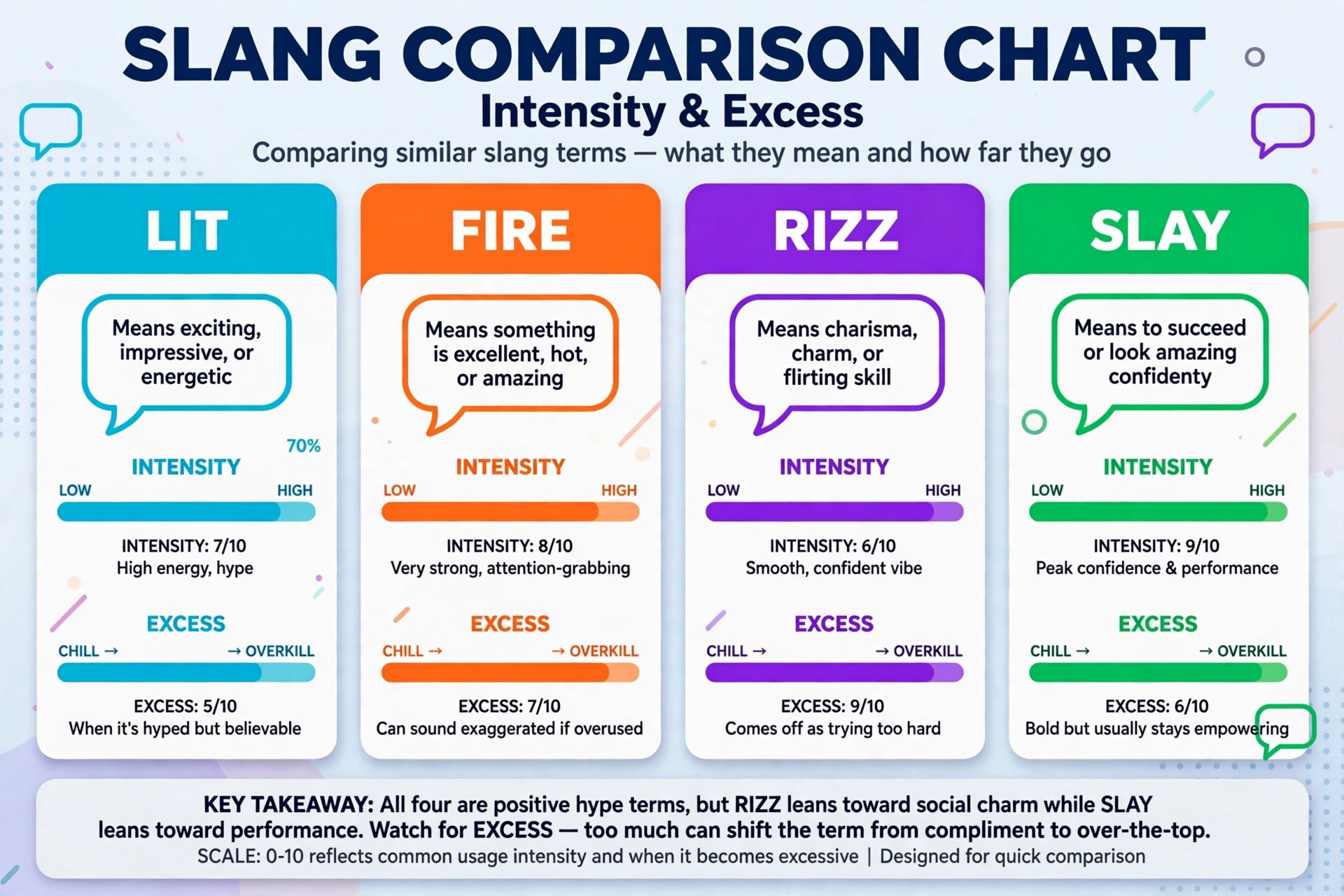
OD overlaps with several other slang words, but each one shades the meaning differently. “Extra” is the closest cousin: someone who is extra is dramatic, over the top, and doing too much for attention. OD is broader — it can describe a price, a feeling, or a performance, not just a person’s behaviour. “Doing the most” is a full phrase for the same judgement: “She’s doing the most” and “She’s OD” often mean the same thing, but “doing the most” sounds more like a comment on effort and attention-seeking, while OD can be pure intensity with no judgement at all. “Over the top” is the plain-English equivalent, and it is the safest choice when you are unsure whether your audience knows the slang.
Other intensifiers compete with OD in the same sentences. “Mad” (New York slang for “very”), “hella” (West Coast slang for “very”), and “dead” or “deadass” (emphasis words) can all sit where OD sits: “I’m mad tired,” “I’m hella tired,” “I’m OD tired.” The difference is flavour and origin. OD carries the “too much” idea inside it; “mad” and “hella” only carry “very.” That is why “That price is OD” sounds like a complaint about excess, while “That price is hella high” sounds like a simple observation about height. The table below sets out the main comparisons at a glance.
| Term | Meaning | How It Differs From OD | Example |
|---|---|---|---|
| OD | Overdoing it; extremely; too much | The base term — verb, intensifier, and judgement in one | “I’m OD tired.” |
| Extra | Dramatic, over the top, attention-seeking | Usually about a person’s behaviour, not a price or feeling | “She’s being so extra today.” |
| Doing the most | Putting in excessive effort or drama | A phrase, not a two-letter shortcut; more judgemental | “He’s doing the most for no reason.” |
| Over the top | Excessive, beyond what is reasonable | Plain English, safe in formal settings; less slang flavour | “The decorations were over the top.” |
| Mad / Hella | Very, extremely | Pure intensifiers; no built-in idea of “too much” | “That was mad funny.” / “That was hella funny.” |
| Bussin / Fire | Excellent, amazing (praise only) | Only positive; OD can praise or criticise | “That song is bussin.” |
| Overdose (literal) | Taking a dangerous excess of a drug or medicine | Medical meaning only; never casual slang | “He was treated for an overdose.” |
OD also has a family resemblance to intensity slang from earlier decades, which is one reason older readers sometimes recognise it even if they have not used it themselves. In the 2000s slang era, “off the chain,” “off the hook,” and “crazy” did similar work: they took a word for something wild or uncontrolled and used it to mean “amazing” or “extreme.” OD follows the same pattern, but it adds the specific idea of crossing a limit. A party can be “off the chain” without anyone doing too much. A party that is “OD” has, by definition, gone past the line — gloriously or regrettably, depending on the morning after.
Alternate Meanings
OD is a crowded abbreviation, and slang is only one of its lives. Knowing the other lives prevents embarrassing mix-ups, especially in technical, academic, and medical reading.
- Overdose (medical). The original and still most serious meaning. An overdose is a dangerous amount of a drug or medicine. In news, health, and emergency contexts, OD always means this unless the context is unmistakably casual.
- Doctor of Optometry (O.D.). In eye care, O.D. after a name is a professional degree, like M.D. after a doctor’s name. “Dr. Lee, O.D.” is an optometrist, not a slang reference.
- Right eye (OD, from Latin oculus dexter). On eye prescriptions and medical charts, OD means the right eye and OS means the left eye. This is a standard medical abbreviation, not slang.
- Outer diameter. In engineering, plumbing, and manufacturing, OD is the outside measurement of a pipe, tube, or cylinder, paired with ID (inner diameter).
- Officer of the Day. In military usage, the OD is the officer on duty for the day. You will see it in military writing and historical documents.
- Overdraft / On demand. In banking and business writing, OD can mean overdraft, and in media and technology it can mean on demand. Both are context-bound and unrelated to slang.
There is also a separate, older slang-adjacent use worth noting: “OD” as a noun for a person who has overdosed appears in news and memoir writing — “an OD in the next room” — and it should be handled with care. It reduces a person to an event, and modern health writing prefers “a person who overdosed” or “a person who experienced an overdose.” The same care applies to jokes: language that treats overdose as a punchline can wound readers who have lived through one, even when no harm is intended.
If you see OD in a sentence and the topic is eyes, pipes, the military, or banking, forget the slang entirely. If the topic is a chat, a comment, or a song, the slang meaning is almost certainly the right one. And if the topic is drugs, medicine, or someone’s health, stop and treat the medical meaning as the default until the context proves otherwise. That three-way check — technical, casual, medical — resolves nearly every OD you will ever meet.
Professional or Polite Alternatives
OD is vivid, but it is not polite, formal, or precise enough for every situation. The table below gives you a clean replacement for each slang use, so you can keep the meaning and drop the risk.
| Slang Use of OD | Polite / Professional Alternative | Example Sentence |
|---|---|---|
| “You’re OD.” (doing too much) | “I think that may be more than necessary.” | “I think that reaction may be more than the situation calls for.” |
| “I’m OD tired.” | “I’m extremely tired.” | “I’m extremely tired after a long day.” |
| “That price is OD.” | “That price seems unusually high.” | “That price seems unusually high for this item.” |
| “Don’t OD on the details.” | “Please keep it concise.” | “Please keep the summary concise.” |
| “That song is OD good.” | “That song is outstanding.” | “That song is outstanding — I’ve played it all week.” |
| “He OD’d on caffeine.” | “He had far too much caffeine.” | “He had far too much caffeine this morning.” |
In school and work writing, the alternatives also solve a second problem: precision. “OD” can mean “extremely good,” “extremely bad,” or “too much,” and a reader who does not know the slang has to guess which one you meant. “Extremely,” “excessively,” and “outstanding” each mean one thing, and they mean it for every reader. Save OD for conversations where everyone already speaks the same slang, and use the plain word everywhere else.
For the serious meaning, there is no casual alternative and there should not be one. If someone may have taken too much of a drug or medicine, say so plainly: “I think he overdosed,” “She took too many pills,” or “We need medical help right now.” Clear language gets help faster. If you are writing about overdose prevention or harm reduction, the National Institute on Drug Abuse is an authoritative source for accurate, non-judgemental information. Do not soften a medical emergency with slang, and do not dress up a joke as an emergency either.
Common Mistakes
- Assuming OD always means overdose. In casual texting, OD usually means “overdoing it” or “extremely.” Reading every “OD” as a medical event will make normal jokes sound alarming, and it will make you miss the actual joke.
- Assuming OD never means overdose. The opposite mistake is more dangerous. If the context is drugs, medicine, unconsciousness, or distress, treat OD as the medical word first and ask directly whether the person is safe.
- Using OD as a joke about real drug use. Joking that someone “OD’d” on pills or at a party can minimise a real risk and hurt people affected by overdose. Keep the joke version for harmless excess — food, shows, compliments, outfits — and keep drugs and medicine out of it.
- Using OD with strangers, seniors, or in formal settings. Many readers will hear only the medical meaning, or no meaning at all. With an unknown audience, use “extremely,” “excessive,” or “too much” instead.
- Confusing OD with OMG, OG, or OOTD. OMG is surprise (“Oh my God”), OG means an original or a respected veteran, and OOTD means “outfit of the day.” None of them means excess, and swapping them changes the sentence completely.
- Writing OD’d, ODed, and OD’ing inconsistently in one piece. All three spellings are used online, but pick one style per message or article and stick to it. In formal writing, avoid the verb forms altogether and write “overdid” or “overdosed” in full.
- Thinking OD is always negative. “OD good,” “OD talented,” and “OD fun” are praise. The word judges intensity, not goodness. Read the adjective after OD before deciding whether the sentence is a compliment or a complaint.
- Overusing OD until it means nothing. Like “literally” and “amazing,” OD loses force when it appears in every sentence. One well-placed OD in a message lands harder than five. If everything is OD, nothing is.

Quick Tips
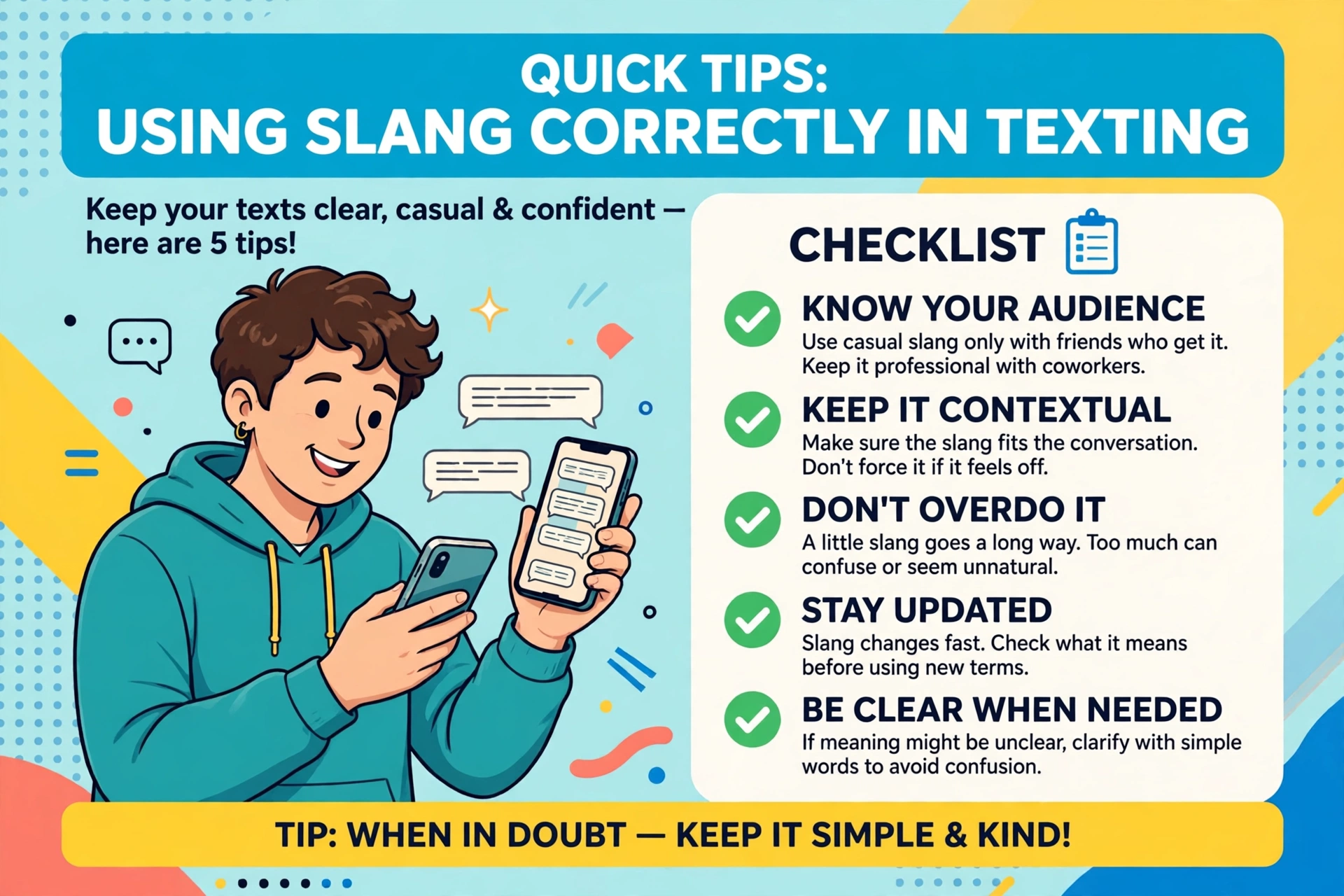
- Check the topic first. Food, music, outfits, and tiredness mean slang. Drugs, pills, hospitals, and unconsciousness mean medical. Let the topic choose the meaning.
- Read the adjective. “OD tired” and “OD good” tell you the direction. If there is no adjective — just “You’re OD” — the meaning is “you’re doing too much,” and the tone decides whether it is teasing or criticism.
- Match your audience. Use OD with friends who use it. Use plain English with everyone else. When in doubt, plain English wins.
- Keep it to harmless excess. Pizza, caffeine, TV shows, and compliments are safe joke material. Medicine and drugs are not.
- Reply to the meaning, not just the letters. If someone says “I’m OD tired,” reply with sympathy. If someone says “That’s OD,” reply to the judgement. If someone may have overdosed, reply with help, not humour.
- Use “don’t OD” as friendly advice. It is one of the gentlest uses of the word — a short, warm way of saying “take it easy” to someone who is pushing too hard.
- Listen before you copy. OD sounds different in New York, in a gaming lobby, and in a family group chat. Hear how the people around you use it, then match their tone instead of forcing the word into every sentence.
- When a message worries you, ask plainly. “Are you okay? Do you need help right now?” is always the right reply to an ambiguous message about overdose. A false alarm costs a moment. A missed alarm can cost far more.

FAQ
What does OD mean in slang?
In slang, OD means overdoing it, doing too much, or extremely. “You’re OD” means you are going overboard, and “I’m OD tired” means you are extremely tired. It comes from the word overdose, but in casual conversation it usually has nothing to do with drugs.
What does OD mean in texting?
In texting, OD usually means “overdoing it” or “too much.” Someone might write “You OD’d on that reaction” to mean the reaction was excessive, or “That outfit is OD” to mean it is extremely good or extremely much. As with all slang, the surrounding message and the relationship decide the exact shade of meaning.
Does OD always mean overdose?
No — but it sometimes does, and that is why context matters. In casual chats about food, music, or feelings, OD almost always means excess in a joking or emphatic sense. In conversations about drugs, medicine, hospitals, or someone not waking up, OD means overdose and must be treated as a possible emergency.
What does “OD’ing” mean?
“OD’ing” (also spelled ODing) is the present participle of the slang verb: doing too much right now. “I’m OD’ing on coffee” means “I’m drinking far too much coffee.” In a medical context, “OD’ing” would mean actively overdosing, which is why the topic of the sentence matters so much.
Is OD positive or negative?
It can be either. “OD good,” “OD talented,” and “OD fun” are praise. “You’re OD,” “Don’t OD,” and “He OD’d on drama” are criticism or advice. The word itself only measures intensity; the adjective, the situation, and the tone supply the positive or negative judgement.
Where did OD slang come from?
OD slang grew out of the medical word overdose in New York street and hip-hop culture, especially from the early 2000s onward, where “too much of a drug” became a metaphor for “too much of anything.” Social media, music, and texting then spread the metaphorical use across the United States and beyond.
Can I use OD at work or school?
Only in very informal chats with colleagues or classmates who already use slang, and even then, sparingly. In emails, essays, presentations, and messages to clients or teachers, use “extremely,” “excessive,” or “more than necessary” instead. In medical, safety, or news writing, always write “overdose” in full.
What should I do if someone says they OD’d and I’m worried?
Take it seriously and act at once. Ask plainly whether they are safe, stay with them if you can, and call your local emergency number for medical help if they are unresponsive, struggling to breathe, or showing signs of an overdose. Do not wait to see whether they were joking, and do not try to handle a possible overdose on your own. If it turns out to have been a joke about food or a TV show, you will both be relieved — and if it was real, your quick response may save a life.
Conclusion
OD is a small word with a large range. At its lightest, it is a joke about a third coffee, a compliment about a song, or a tease about a friend who never does anything halfway. At its heaviest, it is the word for a medical emergency that needs immediate help. The slang meaning — overdoing it, extremely, too much — is the one you will meet most often in texts, comments, and captions, and it is a useful, vivid piece of modern American English when it is used with care.
The practical rule is the one this whole guide comes back to: let context decide. Check the topic, read the adjective, watch the tone, and know your audience. Use OD for harmless excess with people who speak the same slang, choose plain English everywhere else, and never let a joke version of the word delay a serious response. Like OAT and YOLO, OD shows how a short piece of internet language can carry a whole attitude — but unlike most slang, this one also carries a warning, and respecting that warning is part of using the word well.
Start with one simple habit. The next time you see OD in a message, pause for one second and ask: is this about excess, or is this about safety? If it is excess, enjoy the exaggeration and answer in kind. If there is any chance it is safety, answer with care and get help. That one-second check is the difference between speaking slang fluently and speaking it responsibly — and it is the most important thing this guide can teach you.
