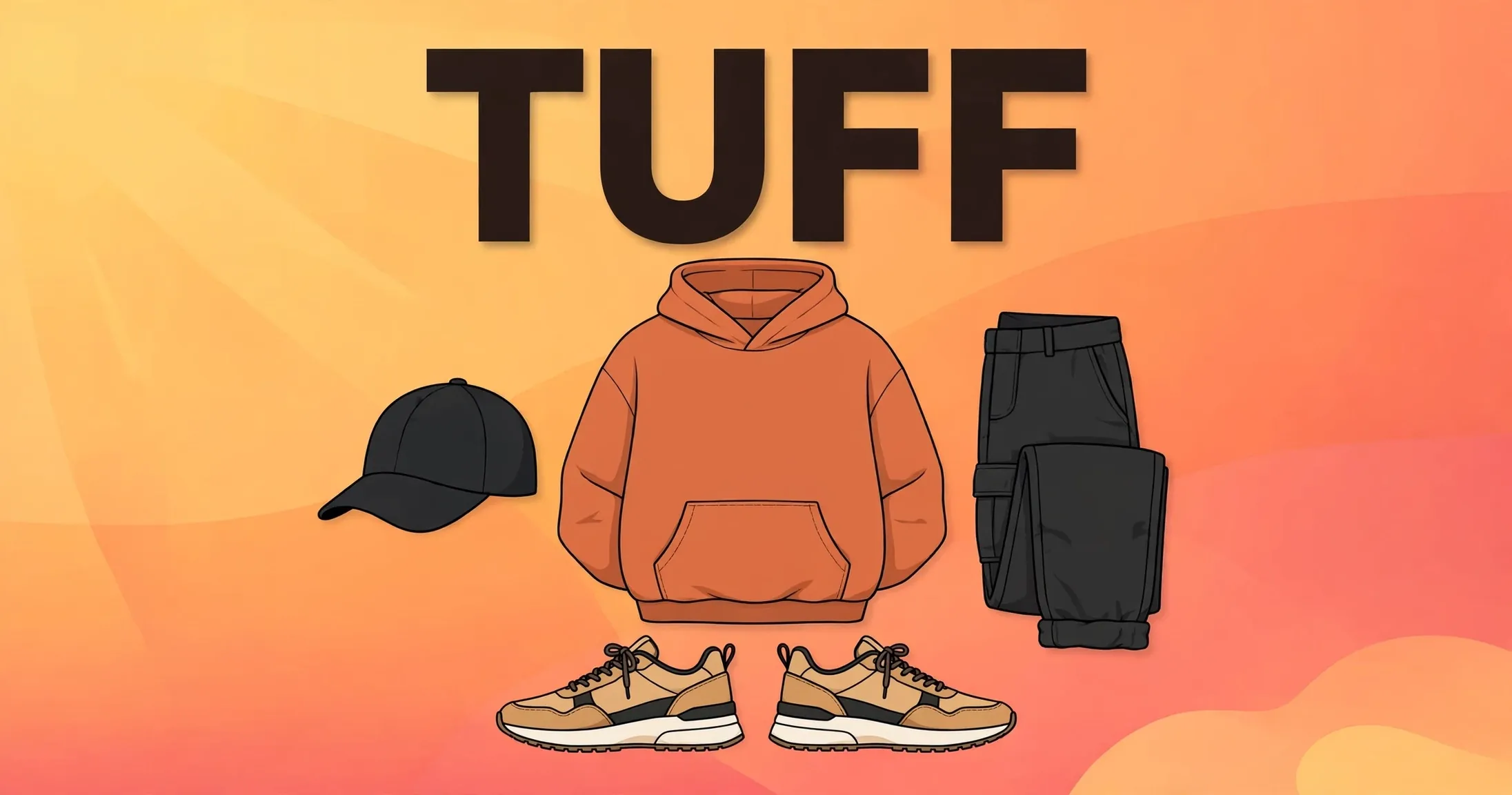
Quick definition: In slang, tuff means cool, impressive, or strong-looking. It is a stylised spelling of “tough,” but in texts, comments, and captions it almost never means “difficult.” When someone calls an outfit, a car, a play, or a person tuff, they are giving praise: it looks sharp, it hits hard, and it has presence. The tone is casual admiration, not a formal compliment.
Tuff Meaning Slang: Definition and Quick Answer
Tuff meaning slang is simple once you separate the spelling from the standard word. “Tough” is the everyday English word for something difficult, durable, or hard to beat. “Tuff” borrows that sound and that attitude, then turns it into praise. A tuff jacket is not a jacket that is hard to tear. It is a jacket that looks good enough for someone to stop scrolling and say so. A tuff dunk is not a difficult dunk in the technical sense, although it might be that too. It is a dunk with style, force, and confidence.
That distinction is the whole word. If you read “tuff” as “tough” in a comment, you will usually still get the general feeling — something strong — but you will miss the compliment. The slang sense is closer to “that goes hard” than to “that was a hard day.” It describes how something lands, not how much effort it took. People use it as a one-word reaction, as an adjective before a noun, and as a short verdict at the end of a sentence. “That fit is tuff.” “Tuff edit.” “Nah, that beat is tuff.” In each case, the speaker is saying the same thing: impressive, stylish, and worth noticing.
It also carries a little edge. “Cool” is neutral. “Nice” is polite. “Tuff” suggests something with grit — a look, a sound, or a person that does not try to be soft or safe. That edge is why it thrives in streetwear captions, sports clips, gaming chats, and music comments, and why it can sound wrong in a polite thank-you note. Context decides whether it reads as genuine hype or as someone trying too hard. Used sparingly, about something that really is striking, it sounds natural. Used about everything, it starts to sound like filler.
One more thing to settle before we go further: “tuff” is not a typo. It is a deliberate spelling, chosen for style in the same way other slang respellings are chosen. You would not correct it to “tough” in a caption, because the correction would change the meaning. In formal writing, though, the standard spelling still rules. Save “tuff” for casual conversation, comments, and captions, and keep “tough” for essays, work messages, and anything where a reader might take the slang as a mistake.
Introduction
You have probably seen it under a photo and paused for half a second. A friend posts a new pair of sneakers, a car pulling up at night, or a clip of a last-second shot, and the first comment is a single word: “tuff.” No explanation, no emoji, no follow-up. Everyone who knows the slang nods. Everyone who does not is left wondering whether the commenter meant “tough,” whether something went wrong, or whether the post was somehow difficult.
That confusion is understandable, because “tuff” looks like a misspelling and sounds exactly like a familiar word. But slang often works this way. A small change in spelling signals a change in tribe, tone, and meaning. The word still carries the strength of “tough,” but it adds fashion, attitude, and internet timing. It is praise that borrows toughness as a style, not as a hardship report. Like sigma meaning slang, it belongs to a family of words that praise confidence and presence, although “tuff” is older, simpler, and much easier to drop into an ordinary sentence.
This guide explains the full picture: what “tuff” means in slang today, where the spelling came from, how it spread from mid-century youth speech to TikTok comments, and how to use it without sounding forced. You will find real examples for friendly chats, work-adjacent situations, and jokes, a comparison with similar praise words such as “hard” and “fire,” the alternate meanings that can trip you up, polite alternatives for formal settings, the mistakes people make most often, and quick tips you can use the next time you see the word in the wild.

Origin
The story of “tuff” starts with “tough,” but the slang spelling has its own history. “Tough” has described strength, durability, and difficulty in English for centuries. The respelling “tuff” shows up in American youth and street speech in the middle of the twentieth century, where pronouncing a word the way it sounds — and spelling it that way on purpose — was part of sounding current rather than bookish. It was not a new word so much as a new attitude toward an old one: less about enduring hardship, more about looking and sounding sharp.
The spelling got one of its most widely cited boosts in print from S. E. Hinton’s 1967 novel The Outsiders. In the world of the Greasers, “tuff” is the word for something cool, attractive, or impressive — a car, a look, a person who carries themselves with style. The novel is set among working-class teenagers in Oklahoma, and its slang helped fix “tuff” in the popular imagination as youth language with roots in street culture rather than in schoolroom English. Readers who met the word there carried it with them, and later generations rediscovered it through the book, the film, and classroom reading lists. That is one reason the word feels both old and new at the same time: it has been circulating for decades, but each wave of teenagers meets it as if it were freshly invented.
From there, the word travelled the usual routes. Hip-hop lyrics, sports talk, and streetwear culture kept “tuff” alive as praise for style and resilience, and the spelling stayed useful because it looked different on a page. A dictionary entry for tuff lists the slang adjective separately from the geological noun, which is a good reminder that this spelling now has a life of its own in reference works, not just in comments. Texting and social media then did what they always do to short praise words: they shortened the distance between seeing something impressive and reacting to it. A one-word comment is faster than a sentence, and “tuff” is faster still because it needs no explanation among people who already know it.
None of this means the word was invented by the internet. TikTok, Instagram, and group chats amplified “tuff” and gave it new homes — outfit checks, sneaker drops, gaming highlights, and car edits — but they did not create its core meaning. The internet version is the same word, in a louder room, with more examples per day. That history matters when you use it, because it explains why “tuff” feels authentic in some communities and borrowed in others. It has roots. People who grew up with it can hear the difference between someone using it naturally and someone using it as a costume.
Popularity
“Tuff” is popular in a specific, durable way. It is not usually the single most-trending word of a month, and it does not depend on one viral video to survive. Instead, it sits in the steady vocabulary of praise that Gen Z and younger millennials use across platforms, surfacing whenever something visual needs a quick verdict. You will see it most on TikTok and Instagram, in comments under outfit photos, car videos, sports highlights, music snippets, and edits. You will also see it in gaming chats, Discord servers, and text threads, where short reactions carry the conversation.
Several things keep it in circulation. First, it is short. In a comment section, a one-word reaction competes with hundreds of others, and “tuff” reads instantly. Second, it is visual. The word suits things you can see — a fit, a fade, a paint job, a trick — better than it suits abstract ideas. Third, it is flexible. It works as praise for a person (“she’s tuff”), a thing (“tuff jacket”), and an action (“that move was tuff”), so one word covers a lot of ground. And fourth, it photographs well in text: the double “f” makes it look intentional, stylised, and a little rebellious, which is part of the point.
Its popularity also rises with the wider wave of short, punchy slang that defines each platform era. When “67 meaning slang” and other Gen Alpha phrases flood comment sections, older-but-current words like “tuff” often ride along, because commenters mix established praise with whatever is newest. That mixing is normal. Slang vocabularies are not replaced wholesale; they layer. A teenager in 2026 might use “tuff” in one comment, “fire” in the next, and a brand-new phrase in the third, all to say roughly the same thing with slightly different flavour.
Popularity has limits, though. “Tuff” is still casual, youth-coded slang. It is common in peer conversation and public comments, but rare in news writing, business email, and formal speech. Adults can use it without sounding strange, but only when the setting is already casual and the use is natural. A parent texting a teenager “tuff pic” will usually land fine. A manager writing “tuff presentation” in a performance review will not. Knowing where the word lives is as important as knowing what it means.
How It Is Used
People use “tuff” in three main patterns, and recognising them makes the word easy to read in any thread. The first pattern is the standalone reaction. Someone posts something impressive, and the reply is just “tuff” or “tuff 🔥.” There is no subject and no verb, because the post itself is the subject. This is the most common use in comments, and it works because everyone understands the implied sentence: “That is tuff.” It is the slang equivalent of applause.
The second pattern is the adjective before a noun. “Tuff fit,” “tuff edit,” “tuff beat,” “tuff colourway.” Here “tuff” does the same job as “cool” or “sharp,” but with more attitude. It usually comes before things that have a look or a sound: clothes, cars, hairstyles, songs, videos, plays. You will rarely hear “tuff idea” or “tuff plan,” because the word wants something concrete and striking to praise, not an abstract suggestion. If the thing cannot be pictured or heard, “tuff” usually feels like the wrong praise word, and “great” or “smart” fits better.
The third pattern is the description of a person. “He’s tuff.” “She stayed tuff through all of it.” This is where the two senses of the word — impressive and resilient — meet. Describing a person as “tuff” can mean they look sharp and carry themselves with confidence, or that they endured something hard without falling apart. The phrase “stay tuff” leans toward the second sense. It is encouragement, close to “stay strong,” and it shows up in motivational posts, captions about getting through a hard time, and messages to friends who are struggling. In that use, the word is warmer than it first appears. It is not only about style. It is about holding up under pressure and still looking like yourself.
Grammar stays loose, as slang grammar usually does. People write “tuff,” “tufff,” and “so tuff” for emphasis, and they pair it freely with fire emojis, exclamation marks, and other praise words. “Tuff” can also appear in comparisons — “tougher than expected” stays standard English, while “more tuff” is rare — and in playful exaggeration, such as calling an ordinary sandwich “tuff” as a joke. The joke works only because the listener knows the word is normally reserved for something genuinely striking. Overuse kills that effect, which is why the best users of the word ration it.
Tone changes with the sentence around it. “That jacket is tuff” is friendly praise. “Tuff.” under a rival’s highlight reel can be respectful acknowledgement, the internet version of a nod. “You think you’re tuff?” flips the word into a challenge, questioning whether someone’s tough image is real. The word itself does not change; the situation does. Before you reply to “tuff,” read the post and the thread. A compliment and a taunt can share the same four letters.
Examples
The fastest way to learn a slang word is to see it in sentences people would actually send. The examples below cover the three tones you will meet most often. Notice how short most of them are. Slang praise is usually a reaction first and a sentence second.
Friendly Examples
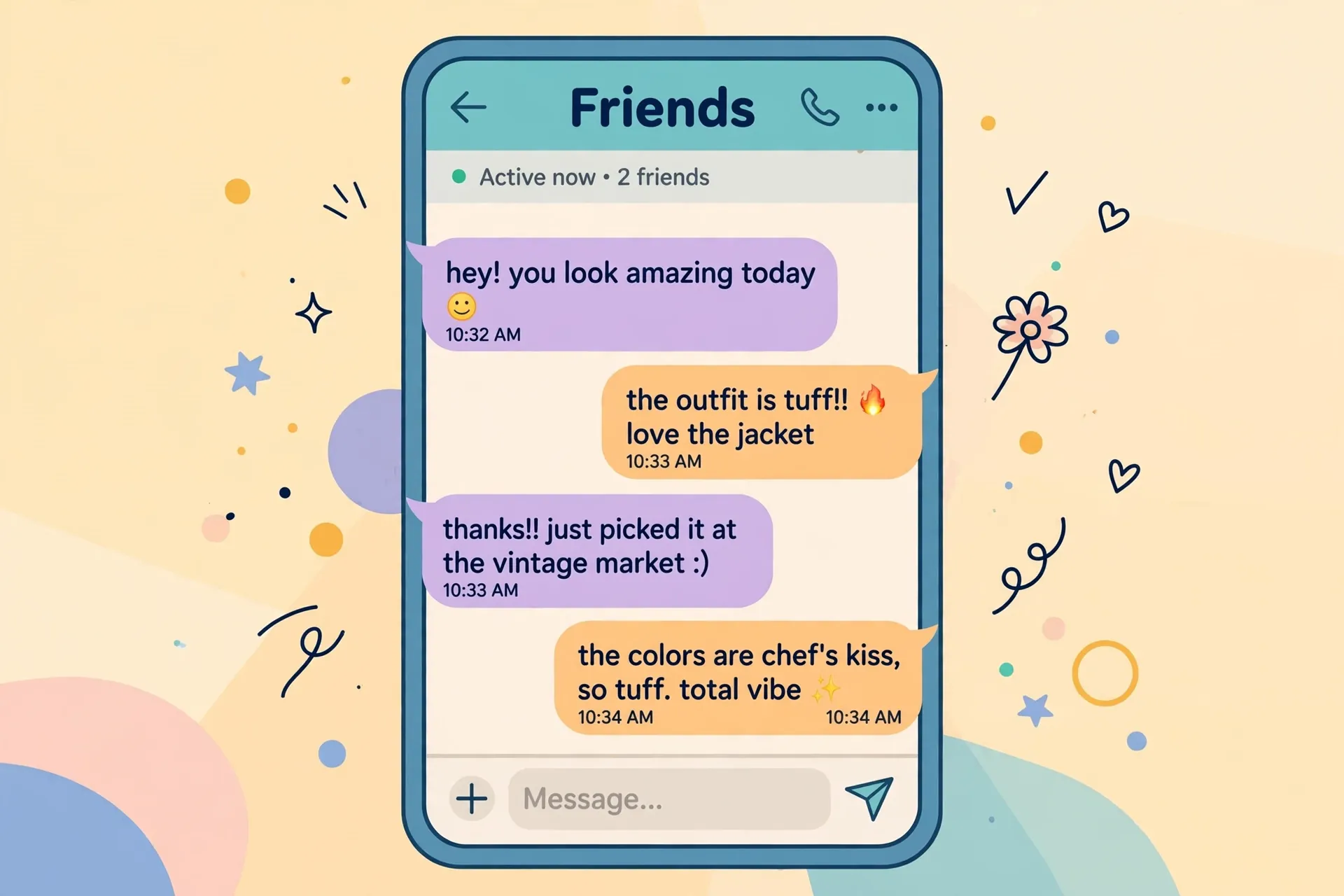
- “Your new jacket is tuff, where did you get it?”
- “That fit is tuff 🔥 no notes.”
- “Bro, that edit is tuff. The transitions are clean.”
- “She posted her art and everyone just said ‘tuff.’ It deserved it.”
- “Tuff playlist. Every song hits.”
- “You handled that game so well. Stay tuff.”
In friendly use, “tuff” sits next to warmth. It is often paired with a question, a fire emoji, or a specific detail that shows the praise is real. “Tuff, where did you get it?” tells the person you liked something enough to want it yourself. That extra detail is what separates genuine slang from a copied comment. Anyone can type one word. A real reaction usually adds one more beat.
Professional Examples
“Tuff” does not belong in formal professional writing, but it does appear in casual creative workplaces, especially in fashion, music, sports, gaming, and social media, where the audience itself uses the word. Even there, use it carefully and only in informal channels.
- Internal chat about a campaign visual: “This colourway is tuff. Let’s lead with it.”
- Social media draft for a streetwear drop: “New drop. Tuff by design.”
- Message to a creator you work with: “That cut was tuff — the pacing really works.”
- Team reaction to a highlight reel: “Tuff edit. Great work on this one.”
Do not use “tuff” in a client email, a report, a job application, or a message to someone senior who has not set a casual tone first. In those settings, “impressive,” “striking,” or “excellent” says the same thing without the slang risk. The professional examples above work because everyone in the conversation already speaks the same casual language and the stakes are low. If you are unsure, choose the standard word. Nobody ever lost a deal by saying “impressive” instead of “tuff.”
Funny Examples
- “My grandad saw my sneakers and said, ‘Very tuff.’ He has no idea what it means and he nailed it.”
- “I called my packed lunch tuff and my friends have not let it go since.”
- “That cat knocked over the vase and stared at me like, ‘Yeah, I’m tuff.’”
- “Me, putting on sunglasses indoors: feeling extremely tuff for no reason.”
- “He said ‘tuff’ about his own haircut. The confidence was the whole look.”
The humour in these examples comes from mismatch. “Tuff” is praise for something striking, so applying it to a packed lunch, a cat, or sunglasses indoors is funny because the thing is ordinary. The joke only lands if the audience knows the normal use. That is a useful test for any slang word: if you can joke with it, you understand it. If the joke confuses people, the word is still new to them, and a straight example will teach more than a funny one.
| Situation | Example | What it means |
|---|---|---|
| Comment on an outfit photo | “That fit is tuff 🔥” | The outfit looks sharp and impressive. |
| Reaction to a sports clip | “Tuff dunk, no debate.” | The play was powerful and stylish. |
| Encouragement to a friend | “Stay tuff, you’ve got this.” | Stay strong and keep going. |
| Chat about music | “That beat is tuff.” | The beat sounds hard-hitting and good. |
| Teasing challenge | “Oh, you think you’re tuff?” | Are you really as tough as you act? |
Comparison with Similar Terms
“Tuff” shares a neighbourhood with several other praise words, and choosing between them is mostly a matter of flavour. “Hard” is the closest cousin. “That goes hard” and “that’s tuff” often describe the same thing, although “hard” leans a little more toward intensity and impact, while “tuff” leans a little more toward style and appearance. “Fire” is broader and warmer: a song, a meal, a photo, or an outfit can all be fire, and the word carries excitement more than edge. “Cool” is the neutral, all-purpose option. It works everywhere, which is exactly why it says less. “Dope,” “lit,” and “sick” belong to the same praise family, each with its own era and crowd, and each slightly dated or revived depending on who is speaking.
“Tough” itself is the word to keep separate. It is standard English, it is always correct in formal writing, and it means difficult, strong, or durable. “Tuff” is not a replacement for it. You would write “a tough decision” and “a tough exam” with the standard spelling, and you would never write “a tuff decision” unless you were joking or quoting a comment. The table below puts the differences side by side so you can pick the right word in seconds.
| Term | Core meaning | Tone | Best for |
|---|---|---|---|
| Tuff | Cool, impressive, strong-looking | Casual, edgy praise | Outfits, cars, edits, highlights, style |
| Tough | Difficult, durable, resilient | Standard, neutral | Formal writing, hard situations, endurance |
| Hard | Impressive, intense, hitting hard | Casual, emphatic | Beats, plays, photos, strong reactions |
| Fire | Amazing, exciting, excellent | Warm, enthusiastic | Songs, food, photos, anything excellent |
| Cool | Good, approved, agreeable | Neutral, safe | Almost anything, low risk |
| Dope | Excellent, impressive | Casual, slightly retro | Music, style, nostalgic praise |
| Resilient | Able to recover, bounce back | Formal, thoughtful | People, recovery, serious contexts |
The practical rule is simple. If you want to praise how something looks or hits, and the setting is casual, “tuff” is a strong choice. If you want to describe difficulty or endurance in standard English, use “tough” or “resilient.” If you want warmth without edge, use “fire” or “cool.” And if you are writing for an audience you do not know well, “cool” and “impressive” are the safest bets. Slang is a seasoning, not the whole meal. The right word in the right place says more than the newest word in the wrong place.
It is also worth noting the opposite end of the scale. Where “tuff” praises style and presence, chopped meaning slang does the reverse, calling a look or a person unattractive in blunt Gen Z terms. The two words rarely appear in the same comment, but they frame the same judgement from opposite sides: one is the compliment you hope for, the other is the verdict you hope to avoid. Knowing both helps you read comment sections accurately, because praise and insult often sit only a scroll apart.

Alternate Meanings
Most of the time, “tuff” in a comment means the slang praise described above. But the same spelling has other lives, and a few of them are common enough to mention. The most important is geological. In earth science, “tuff” is a noun naming a rock formed from volcanic ash and fragments that have consolidated into solid rock. A geologist writing about tuff layers, tuff cliffs, or a tuff sample is not using slang at all. The spelling is identical, the pronunciation is similar, and the meaning is completely different. If the sentence is about volcanoes, rocks, or fieldwork, read it as geology, not praise.
A second alternate sense is the older, literal one carried over from “tough.” In some mid-century and regional speech, “tuff” could describe a person who was hard, unyielding, or involved in street life — closer to “tough guy” than to “cool outfit.” That sense still appears in phrases such as “acting tuff,” where the meaning is closer to putting on a hard front. The difference is the verb and the target: “acting tuff” describes behaviour, while “that’s tuff” describes an impressive thing. Tone and grammar tell you which one you are reading.
There are smaller uses too. “Tuff” appears as a name, a brand, and a nickname, where it is simply a label and should be left exactly as spelled. In Swedish, the borrowed word “tuff” means tough or cool, a reminder that English slang travels and settles in other languages with its own shades of meaning. None of these uses changes the main slang definition, but they explain why a search for the word returns geology pages, dictionaries, and song titles alongside slang guides. When you meet “tuff” in the wild, check the topic first. A rock, a nickname, and a compliment can share four letters without sharing a meaning.
Professional or Polite Alternatives
Because “tuff” is casual slang, you need a small set of standard replacements for settings where slang would distract or offend. The best alternative depends on what you are praising. If you mean impressive, say “impressive,” “striking,” or “excellent.” If you mean stylish, say “sharp,” “stylish,” or “well put together.” If you mean resilient, say “resilient,” “strong,” or “steady under pressure.” Each of these carries the praise without the slang, and each works in email, reports, and conversation with people you do not know well.
- Instead of “tuff fit”: “sharp outfit,” “great look,” “really well styled.”
- Instead of “tuff edit”: “impressive edit,” “excellent pacing,” “really polished video.”
- Instead of “stay tuff”: “stay strong,” “hang in there,” “you’ve got this.”
- Instead of “that’s tuff” (praise): “that’s impressive,” “that’s excellent,” “really well done.”
- Instead of “acting tuff”: “putting on a tough front,” “acting hard,” “trying to look unshakeable.”
There is also a middle ground for semi-casual workplaces. If your team already uses slang in chat, “tuff” can fit in a message about a visual or a clip, as the professional examples earlier showed. But keep it out of anything a client, a manager, or a stranger might read without context. A useful test is the forwarding test: if the message were forwarded to someone outside the joke, would “tuff” still read clearly and kindly? If not, use the standard word. Politeness in language is not about being stiff. It is about making sure the praise lands the way you meant it.
For replies to slang, you do not need slang back. If a friend says “tuff fit,” you can answer “thank you!” or “appreciate it” and the conversation flows perfectly. Matching someone’s slang is friendly, but understanding it and replying in your own voice is friendlier than forcing a word that is not yours. Use “tuff” when it feels natural to you. Otherwise, a sincere “thank you” beats a borrowed word every time.
Common Mistakes
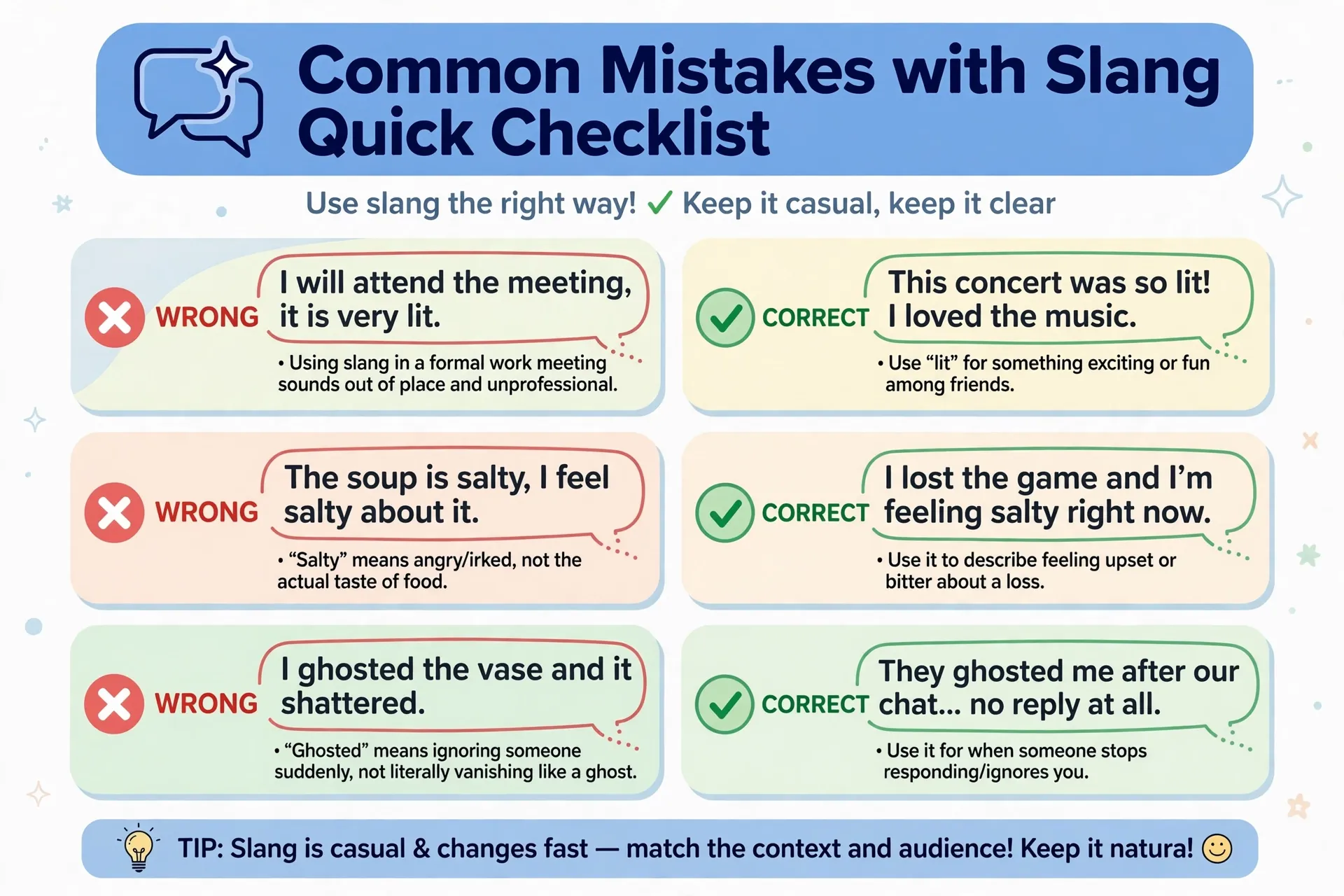
Most mistakes with “tuff” come from treating it as a straight synonym for “tough.” It is not. The list below covers the errors that appear most often in comments, captions, and chats, so you can avoid the ones that change the meaning or make the praise sound wrong.
- Using it for difficulty: “That exam was tuff” reads as a spelling mistake. The exam was “tough.” Save “tuff” for praise, not hardship, unless you are quoting slang on purpose.
- Using it about sad news: “Sorry for your loss, that’s tuff” is a painful mismatch. The word is praise, not sympathy. Say “I’m so sorry” and leave the slang out entirely.
- Using it in formal writing: A cover letter, essay, or client email with “tuff” looks like an error, even when the reader knows the slang. Formal settings need “tough,” “impressive,” or “strong.”
- Using it about everything: Calling every photo, meal, and playlist “tuff” drains the word. Praise works because it is selective. Save it for the things that genuinely stand out.
- Using it to challenge strangers: “You think you’re tuff?” can sound confrontational, especially from someone the reader does not know. In a friendly thread it may be a joke. With strangers, it reads as a taunt.
- Correcting the spelling: Changing someone’s “tuff” to “tough” in a reply, or telling them it is misspelled, misses the point. The spelling is the style. Correct it only in formal writing of your own.
- Mixing it with the rock meaning: Writing about geology and slang in the same paragraph without a signal confuses readers. If you mean the rock, say “volcanic tuff.” If you mean the slang, keep the context clearly casual.
The underlying pattern is simple: check the setting, check the target, and check the feeling. Casual setting, visible or audible target, admiring feeling — “tuff” fits. Formal setting, abstract target, or sympathetic feeling — choose another word. Most slang mistakes are not grammar mistakes. They are context mistakes, and context is the part you can check in two seconds before you post.
Quick Tips
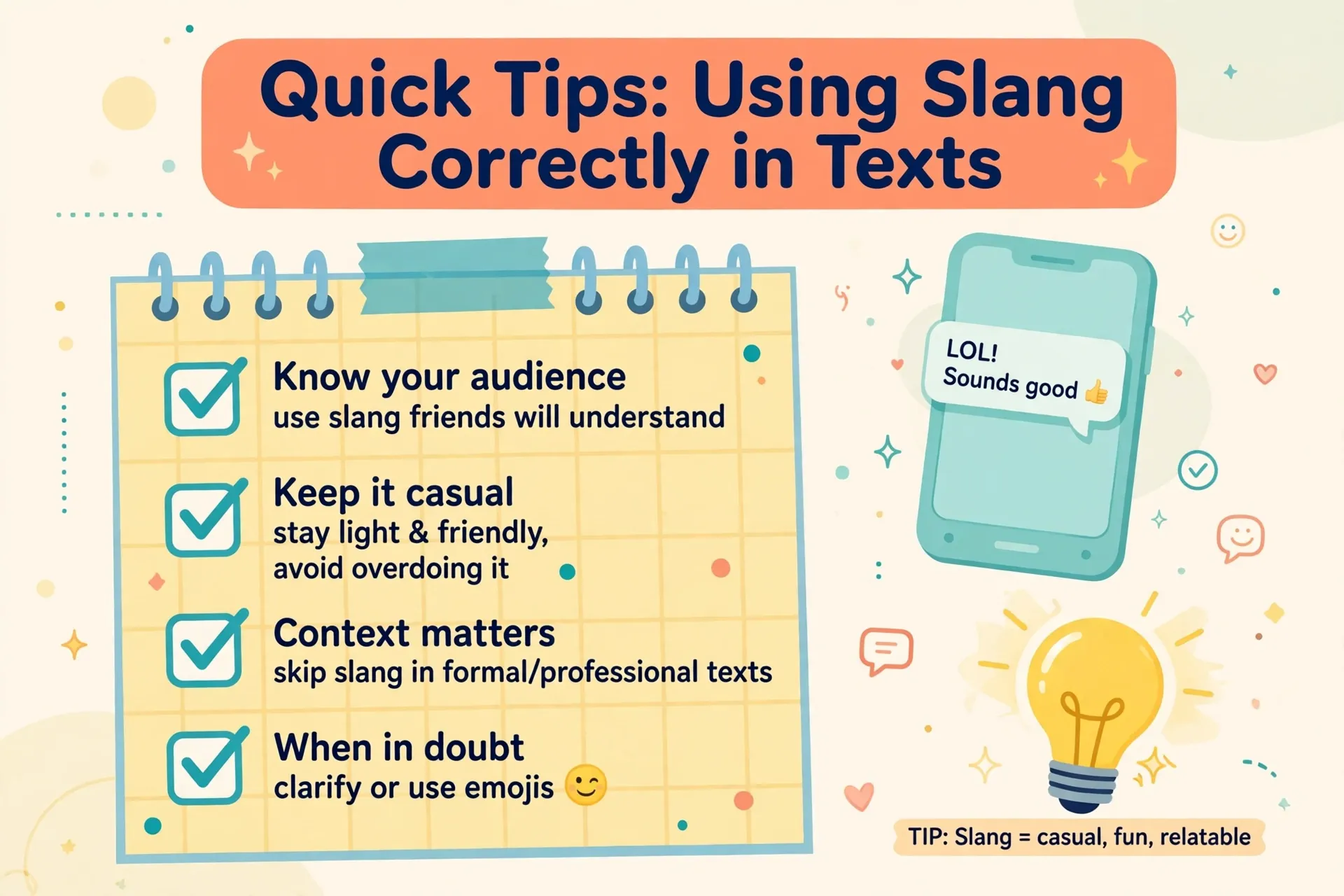
- Use it as a reaction first. A single “tuff” under a striking post is the most natural use. You do not need a full sentence to praise well.
- Pair it with a detail. “Tuff fit — the jacket is perfect” sounds more genuine than “tuff” alone, because it shows you actually looked.
- Keep it visual. The word shines for outfits, cars, edits, clips, and art. For ideas and plans, use “great,” “smart,” or “solid.”
- Ration it. One “tuff” per conversation carries weight. Five in a row reads as filler, and filler praise stops feeling like praise.
- Read the thread before replying. Check whether “tuff” is a compliment, a joke, or a challenge in that conversation. The same word can be all three.
- Do not force it at work. If your workplace chat is already casual and visual, it can fit. If not, “impressive” is always safe.
- Remember “stay tuff.” As encouragement, it means “stay strong.” It is one of the warmest uses of the word — use it kindly, and only when encouragement is welcome.
- Reply simply. If someone calls your post “tuff,” a thank-you is enough. You do not have to answer slang with slang.
If you remember only one tip, remember this: “tuff” is praise with an edge, so aim it at things that deserve an edge. A striking outfit, a clean edit, a powerful play, a friend holding steady through a hard week — those are tuff. An ordinary lunch, a routine email, and a sad announcement are not. The word rewards good judgement, and good judgement is what makes slang sound natural instead of copied.
FAQ

What does tuff mean in slang?
In slang, tuff means cool, impressive, or strong-looking. It is a stylised spelling of “tough” used as praise, most often for outfits, cars, music, edits, and sports highlights. It describes how something lands — stylish and striking — rather than how difficult it was.
Is tuff just a misspelling of tough?
No. “Tuff” is a deliberate slang spelling with its own meaning. “Tough” is standard English for difficult, durable, or resilient. In casual comments, “tuff” is praise. In formal writing, always use “tough” for the standard sense and avoid “tuff” altogether.
What is the tuff meaning slang definition in one sentence?
Tuff meaning slang is this: something or someone that looks sharp, hits hard, and earns admiration for style or presence, said casually as praise.
Where did tuff come from?
The spelling comes from mid-twentieth-century American youth and street speech, and it was popularised in print by S. E. Hinton’s 1967 novel The Outsiders, where “tuff” means cool or sharp-looking. Hip-hop, sports, streetwear, and later social media kept it in circulation and spread it worldwide.
Can I use tuff in professional settings?
Only in very casual, creative workplaces where the audience already uses the word, and only in informal chat about visuals or clips. Avoid it in emails, reports, applications, and messages to clients or senior colleagues. Use “impressive,” “striking,” or “excellent” instead.
What is the difference between tuff, hard, and fire?
All three are praise, with different flavour. “Tuff” stresses style and presence. “Hard” stresses intensity and impact, as in “that goes hard.” “Fire” is warmer and broader, meaning excellent or exciting. They overlap often, so the choice is usually about tone rather than a strict rule.
What does “stay tuff” mean?
“Stay tuff” means stay strong and keep going through a hard time. It is encouragement, close to “stay strong,” and it draws on the resilient side of the word rather than the fashion side. Use it kindly, in messages where encouragement is welcome.
Does tuff mean anything else?
Yes. In geology, tuff is a rock formed from consolidated volcanic ash — a completely different meaning with the same spelling. “Tuff” can also be a name or nickname. Check the topic of the sentence: rocks and fieldwork mean geology, while comments and captions usually mean slang praise.
Conclusion
“Tuff” is a small word with a clear job. In slang, it means cool, impressive, and strong-looking — praise that borrows the attitude of “tough” and aims it at style, presence, and impact. It comes from mid-century youth speech, was carried into popular culture by The Outsiders, and now lives in comments, captions, and chats wherever something visual needs a fast verdict. Used well, it is one of the most efficient compliments in internet English. Used carelessly, it turns into a spelling mistake, a sympathy error, or empty filler.
The rules are easy to keep. Use it casually, for things you can see or hear, when you genuinely admire them. Keep it out of formal writing, sad news, and descriptions of difficulty, where “tough,” “impressive,” or a simple “I’m sorry” does the job better. Read the thread before you reply, because the same four letters can praise, joke, or challenge. And when someone calls your work tuff, enjoy it — it means the thing you made had presence, and presence is hard to fake.
Slang keeps moving, and new praise words will keep arriving alongside it. The words that last are the ones with roots, and “tuff” has them, from street speech to novels to the comment sections of today. If you want to keep exploring how praise words differ, zesty meaning slang is a good next read, because it shows how a word can praise style in one crowd and tease it in another. Context is the whole game, and now you know how to play this word. Next time a post stops your scroll, you will know exactly what that one-word comment means — and exactly when to use it yourself.

3 thoughts on “Tuff Meaning Slang: What Tuff Really Means, From Tough Roots to TikTok Praise”