
Quick definition: In slang, FOB stands for “fresh off the boat,” a term for someone who has recently immigrated to a new country and is still adjusting to its language, customs, and everyday routines. Understanding fob meaning slang starts with tone: among friends or family who share the experience, it can be teasing, self-deprecating, or even proud, but aimed at a stranger it often lands as an insult. The same three letters can also mean something entirely different — a car key fob, or “free on board” in shipping — so context decides everything. This guide explains the origin, the TikTok and texting uses, the examples, and the polite words to use instead.
FOB Meaning Slang Meaning & Definition
At its simplest, fob meaning slang is shorthand for “fresh off the boat.” It describes a newcomer: someone whose clothes, accent, food habits, or way of doing ordinary things still clearly belong to the country they came from, rather than the country they now live in. The label is not really about a boat. Almost nobody arrives by ship anymore. It is about newness — the visible, audible signs that a person has only just arrived and has not yet learned the unwritten rules of a new place.
That is why the word carries so much weight. “Newcomer” is neutral. “FOB” is not. It bundles together a whole set of assumptions: that the person speaks English with a strong accent or not at all, that they dress differently, that they eat different food, that they do not understand local jokes, slang, or systems like tipping, small talk, or public transport. Some of those assumptions may be true for a particular person, and many may not be. The term judges the whole person from the outside, which is exactly why it stings.
| Element | What it means for FOB |
|---|---|
| Full form | Fresh off the boat |
| Part of speech | Mostly a noun or adjective: “a FOB,” “so FOB,” “FOB kid” |
| Core sense | Recently immigrated; still adjusting to a new culture |
| Tone | Teasing or proud inside a community; insulting from an outsider |
| Where you see it | Texts, TikTok, memes, group chats, family jokes, online forums |
| Not to confuse with | Key fob (car remote), FOB in shipping (“free on board”), “fob off” (to brush someone off) |
One more distinction matters from the start. People sometimes use FOB for anyone who seems “foreign,” including people who were born in the country and have lived there all their lives. That use is a stereotype, not a definition. A person can have an accent, speak another language at home, or prefer food from their parents’ culture and still be anything but newly arrived. Using FOB that way says more about the speaker’s assumptions than about the person being described.
Introduction
You have probably seen it in a comment section or a group chat: someone posts a video of a parent haggling, packing an enormous suitcase, or mispronouncing a brand name, and the caption reads “my mom is such a FOB” — followed by laughing emojis. Or a friend texts, “I felt so FOB at the grocery store today, I had no idea what half the labels meant.” The word is everywhere in immigrant humor online, and it is also one of the slang terms most likely to be misunderstood.
Part of the confusion is that FOB looks like any other three-letter internet abbreviation. Like ASL in texts, which can mean “age, sex, location” or “American Sign Language,” FOB only makes sense once you know the conversation around it. And like TS in slang, where the same letters can mean several unrelated things, FOB shifts meaning with context — from a joke between cousins to a shipping term on an invoice to the remote in your pocket.
This guide sorts it out without taking sides in the argument about the word. You will learn where FOB came from, how it traveled from Ellis Island to TikTok, how people actually use it today, when it is funny and when it hurts, and what to say when you need a neutral word. By the end, you will be able to read the term in any chat, video, or meme and know exactly which meaning is meant — and whether you should repeat it.

Origin
The phrase “fresh off the boat” began literally. In the 19th and early 20th centuries, most immigrants to the United States arrived by ship, and a person who had just stepped off a boat at a port like Ellis Island in New York was, quite plainly, fresh off the boat. The phrase marked someone as brand new: they had not yet learned the language, the money, the food, or the customs, and everyone could tell.
At first the expression was descriptive, but it was rarely kind. It drew a line between “us,” the people who already belonged, and “them,” the people who had just arrived. Over time the boat became a metaphor. Long after air travel replaced ocean liners, people still said “fresh off the boat” about someone who had flown in the day before. Among East, South, and Southeast Asian immigrants in the United States, a joking variation appeared: “fresh off the Boeing 707,” named after the jet airliner — same idea, updated transport. Wikipedia traces the phrase through these waves of migration and notes that within Asian-American circles it is widely considered derogatory, even as some immigrants have reclaimed it as a point of pride.
The abbreviation FOB followed the phrase into everyday speech, and from there into books, plays, and television. David Henry Hwang’s play FOB, first staged in 1980, used the title deliberately: its characters argue over what the word means and who gets to use it, with a recent immigrant from China and an American-born Chinese cousin seeing the same label from opposite sides. Decades later, the ABC sitcom Fresh Off the Boat (2015–2020), based on chef Eddie Huang’s memoir, put the phrase in living rooms across America as the story of a Taiwanese-American family adjusting to life in Florida. The show treated the label with humor, but the humor only worked because viewers already knew the sting underneath it.
In the United Kingdom, the same idea produced the words “freshie” and “freshies,” used especially about South Asian newcomers, while in New Zealand “freshy” and “fob” have been used, often derogatorily, about Pacific Islanders, especially recent arrivals. The geography changes; the pattern does not. Wherever large numbers of people migrate, a word appears for the newest arrivals — and that word almost always carries a judgment about how quickly they should stop seeming new.
Popularity
FOB never really went away, but social media gave it a second life. On TikTok and Instagram, second-generation kids film their parents’ “FOB moments” — bringing home food in a handbag, bargaining at a fixed-price store, calling every video game a “Nintendo,” or pronouncing a word in a way that makes the whole family laugh. The hashtag culture around “FOB life” turns private family jokes into shared content, and millions of viewers who grew up in immigrant households recognize themselves instantly.
That recognition is the engine of its popularity. For children of immigrants, joking about a parent’s FOB habits is a way of saying: we lived this, we survived the awkwardness, and we can laugh about it now. The same videos also work as translation for outsiders, who get a window into experiences they have never had. Memes do the rest — suitcase-packing jokes, “my dad brought his own spices on vacation” posts, and screenshots of parents’ texts written in a mix of two languages travel far beyond the communities they came from.
Search interest follows the same pattern. People look up FOB when they hear it in a video, read it in a comment, or have it aimed at them and want to know whether they should be offended. Parents look it up when their children use it at the dinner table. Teachers and managers look it up when they hear it in a classroom or workplace and need to decide whether it is harmless teasing or harassment. The word’s popularity is therefore not just about humor; it is about a real, recurring question: who is allowed to say this, about whom, and when?
How It Is Used
In everyday speech, FOB works as both a noun and an adjective, and the grammar tells you a lot about the intent. As a noun, it labels a person: “He’s a FOB.” As an adjective, it describes behavior, food, clothes, or an accent: “That outfit is so FOB,” “Don’t be so FOB about the menu, just try it,” “She has a FOB accent.” The intensifier “so” is common, and so is the plural “FOBs” for a group. You will also see it compounded — “FOB kid,” “FOB parent,” “FOB behavior,” “FOB English” (sometimes shortened to “FOBlish,” a blend of FOB and English, for the heavily accented or simplified English of a recent arrival).
Four patterns cover almost every real-world use. First, self-description: “I was so FOB when I moved here, I wore a winter coat in September.” The speaker is the butt of their own joke, and the tone is usually warm. Second, in-group teasing: cousins, siblings, or friends from the same background ribbing each other about habits they share. Third, affectionate family teasing: a daughter laughing at her father’s pronunciation, where the love is obvious and the target is in on the joke. Fourth, outsider insult: a stranger or classmate using FOB to mark someone as lesser, foreign, or unwelcome. The words can be identical in all four cases. Only the relationship and the reaction tell you which one you are hearing.
| Form | Example | Usual tone |
|---|---|---|
| Noun | “He just moved here last month — total FOB.” | Teasing or insulting, depending on speaker |
| Adjective | “That lunchbox is so FOB, I love it.” | Affectionate, often in-group |
| Self-label | “Sorry, I’m being such a FOB today.” | Self-deprecating, friendly |
| Compound | “FOB parents always pack too much food.” | Joking generalization, risky with strangers |
Online, the word also appears as a hashtag and a punchline: #FobLife, “FOB problems,” “you know you’re FOB when…” lists. In those formats it functions less as a label for a person and more as a shared identity — a shorthand for a whole bundle of experiences, from translating for your parents at the doctor’s office to explaining a dish to classmates who have never seen it. That shared-identity use is the one most likely to be reclaimed with pride, and the one least likely to be understood by someone outside the experience.
Examples
Examples show the tone problem behind fob meaning slang better than any definition can. Read each one and ask two questions: who is speaking, and would the person being described laugh? If the answer to the second question is no, the example is not a joke, whatever the speaker intended.
Friendly Examples
Friendly uses are almost always in-group or self-directed. A college student texts her brother: “Mom packed me three containers of biryani for a two-hour train ride. Peak FOB parent energy, and I ate every bite.” A newcomer messages a friend: “I just tried to pay with cash at a card-only cafe. So FOB of me, I swear I’m learning.” In both cases, the speaker belongs to the story. The word softens an embarrassment by making it shared and funny, and nobody’s dignity is the price of the laugh.
Another friendly pattern is the “welcome to the club” use. Someone who immigrated ten years ago hears a new arrival struggling with an automated phone menu and says, “Don’t worry, I was exactly that FOB my first winter here. It gets easier.” Here FOB is a badge of survival: I was new once too, and I made it through. The label points backward, at a stage of life, rather than fixing the person in it forever.
Professional Examples
In professional settings, FOB almost never belongs in spoken conversation — but it does appear in writing about language, culture, and migration, where it is quoted or discussed rather than aimed at a person. A sociologist might write, “Second-generation teenagers often distance themselves from what they call ‘FOB’ behavior in order to fit in at school.” A journalist covering immigrant communities might quote a resident who says, “People called us FOBs when we arrived, and now our kids use the word about us as a joke.” In both cases the word is the subject of discussion, set at arm’s length, and the writer is explaining it, not endorsing it as a label for a colleague.
If you work with newcomers — as a teacher, manager, or customer-service worker — the professional version of this conversation sounds very different: “She’s a recent arrival and still building her English; let’s give her the forms in her first language too.” That sentence communicates everything FOB communicates, without the judgment. It describes a situation, not a character, and it leaves room for the person to stop being new, which everyone eventually does.
Funny Examples
The humor around FOB usually comes from the gap between two worlds. A TikTok creator films herself translating her mother’s voice notes, where a single sentence mixes three languages and a brand name pronounced with total confidence and zero accuracy. A meme reads: “FOB starter pack: plastic bags full of plastic bags, a suitcase that weighs more than you do, and a parent who thinks air conditioning causes colds.” The jokes land because they are specific and recognizable, not because they are cruel — the audience is laughing with the family, not at a stranger.
The line is easy to cross, though. A joke stops being funny the moment it relies on the idea that the person is stupid, dirty, or unwelcome, rather than simply new. “He can’t even order coffee, what a FOB” is not the same joke as “I couldn’t order coffee my first week either.” The first punches down at someone who is already disoriented. The second admits a shared human experience. If you are writing a caption or a comment, that distinction is the whole job.
| Situation | Example message | Read it as |
|---|---|---|
| Texting a cousin | “Uncle brought his own tea bags to the hotel lol, ultimate FOB move.” | Family teasing, affectionate |
| Group chat, self-joke | “Me at my first American BBQ: why is everyone standing?? So FOB.” | Self-deprecating, friendly |
| TikTok caption | “POV: your FOB dad tries to use slang and invents a new language.” | In-group humor, usually fine |
| Comment from a stranger | “Go back if you’re such a FOB.” | Insult, not a joke |
| Workplace chat | “Don’t ask the new guy, he’s a FOB.” | Exclusionary, avoid |

Comparison with Similar Terms
FOB sits in a crowded family of words about immigration, belonging, and assimilation. Some are near-synonyms, some are opposites, and some describe the same people from a crueler or kinder angle. Mixing them up is one of the most common mistakes in this whole topic, so the table below separates them carefully.
| Term | Meaning | How it differs from FOB |
|---|---|---|
| Freshie / freshy | A recent immigrant, especially in the UK (South Asian communities) and New Zealand (Pacific Islanders) | Same idea, regional variant; equally capable of sounding insulting |
| OTB | “Off the boat” — the shorter form of the same phrase | Identical meaning, less common online |
| ABCD | “American-Born Confused Desi” — a South Asian person born in the US, caught between cultures | The opposite pole: born in the country, not newly arrived |
| Banana / coconut / Twinkie | Slurs for Asian or Latino people seen as “white on the inside” | Insults aimed at assimilation, while FOB insults non-assimilation |
| Immigrant | A person who has moved to a new country to live there | Neutral, factual; FOB adds judgment about how “adjusted” they seem |
| Newcomer / new arrival | Someone who has recently arrived anywhere | Neutral and safe in every setting; the polite replacement for FOB |
| Expat | Someone living outside their home country, often temporarily and often privileged | Usually applied to white, professional migrants; FOB almost never is |
| FOBlish | Heavily accented or simplified English spoken by a recent immigrant | Describes speech, not a person — still often offensive |
The comparison that explains the most is FOB versus ABCD. The two terms police the same border from opposite sides. A “FOB” is accused of keeping too much of the old culture; an “ABCD” is accused of losing too much of it. A young person in an immigrant family can be called one by classmates and the other by relatives, sometimes in the same week. Both labels assume there is a correct amount of “fitting in,” and both punish the person for getting the amount wrong. Seeing the pair together makes it clear why neither word should be thrown around casually: they are not descriptions, they are verdicts.
The FOB-versus-expat comparison is equally revealing. A British banker in Dubai and a Bangladeshi worker in the same city are both living outside their home countries, but only one of them is likely to be called a FOB. The difference is not the passport or the plane ticket; it is race, class, and power. That is why many people hear FOB as a racial term even when the speaker claims to mean only “new here.” The word’s history is soaked in that unequal treatment, and no amount of joking fully washes it out.

Alternate Meanings
Not every FOB is about immigration. The same three capital letters do unrelated jobs in at least three other worlds, and mistaking one for another produces genuinely confusing sentences. A text that says “don’t forget the FOB” could be about a person, a car key, or a shipping contract — and only the surrounding words tell you which.
| Meaning | Field | Example | Clue it is this one |
|---|---|---|---|
| Fresh off the boat | Slang / culture | “He’s still pretty FOB, he just moved here.” | Talking about a person, culture, or accent |
| Key fob | Cars / security | “The key fob battery died, so I couldn’t unlock the car.” | Talking about a car, a door, or a remote |
| Free on board | Shipping / trade | “The price is FOB Shanghai, so the buyer pays freight.” | Talking about ports, cargo, invoices, or Incoterms |
| Fob off | Verb phrase | “Don’t try to fob me off with an excuse.” | Followed by “off,” meaning to brush aside or deceive |
The key fob is the most common alternate meaning in everyday life. A key fob is the small remote that locks and unlocks a car, opens a trunk, or starts an engine without a key, and many apartment buildings use a similar fob to open doors. The word “fob” here has a different history — it comes from an old word for a small pocket, the fob pocket in a waistcoat where a watch was kept — and it has nothing to do with boats. If a message mentions a battery, a button, a car, or a door, it is this fob.
“Free on board” belongs to international trade. In a shipping contract, FOB names the point at which responsibility and cost pass from seller to buyer: the goods are “free on board” a named ship or port, and after that point the buyer bears the risk and the freight. You will see it on quotes, invoices, and Incoterms lists, always near a port name and a price. Nobody in a warehouse is making a comment about anyone’s accent; they are allocating liability.
Finally, the verb “to fob someone off” means to dismiss them with an excuse, to palm something inferior off on them, or to deceive them — as in “she fobbed off the reporter with a vague statement.” It shares the spelling but not the boat. As with TS in slang, where one abbreviation hides several meanings, the only reliable test for FOB is the sentence around it: person and culture, car and keys, or cargo and a port.
Professional or Polite Alternatives
There is almost always a better word than FOB when you are speaking to, about, or on behalf of a real person — especially at work, at school, or in any public writing. The alternatives below are not euphemisms; they are more accurate, because they describe a fact (recent arrival, language in progress) instead of passing judgment on a person.
| Instead of | Say | When it fits best |
|---|---|---|
| “He’s a FOB.” | “He recently moved here.” | General, always safe |
| “She’s so FOB.” | “She’s still settling in.” | Describing adjustment, kindly |
| “FOB English” | “English is still new for him.” / “She’s building her English.” | Language learning, school and work |
| “FOB parents” | “First-generation parents” / “Immigrant parents” | Formal writing, journalism |
| “FOB kid” | “A newly arrived student” | Schools, safeguarding, official contexts |
| “That’s so FOB.” | “That’s how we do it back home.” / “That’s new to me.” | Quoting the person themselves |
In a workplace, the rule is simple: describe the need, not the person. “Our new colleague would benefit from translated onboarding materials” is actionable; “he’s a FOB” is not, and it tells the rest of the team that labeling is acceptable. In a classroom, the same principle protects students: “recently arrived students” keeps the focus on support, while FOB invites the class to sort children into insiders and outsiders. If you are writing for publication, style guides for respectful language consistently prefer “recent immigrant,” “new arrival,” or “first-generation immigrant” — terms that name a situation a person is in, rather than an identity they cannot escape.
None of this means the word can never be quoted. Discussing FOB — in an article like this one, in a memoir, in a classroom lesson about slang — is different from aiming it at someone. Quoting the term to explain it, with its history and its sting intact, is how readers learn to recognize it. The mistake is using it as if it were neutral, as if it described a fact about the world rather than a judgment about a person.
Common Mistakes
Most mistakes with FOB come from the same source: assuming that because you have heard the word used as a joke, it is safe to use as a joke about anyone, anywhere. It is not. The mistakes below are the ones people make most often, and each one is easy to avoid once you see it.
- Calling a stranger a FOB. The teasing version of the word only works inside a relationship where both people know it is affectionate. With a stranger, a classmate you barely know, or a customer, it reads as an insult about their origins. Do not test the boundary on a real person.
- Using it for anyone with an accent. An accent is not a arrival date. Many people born in the country speak with an accent, speak another language at home, or code-switch between languages. Labeling them FOB confuses heritage with newness and tells them they will always sound foreign to you.
- Assuming reclamation gives everyone permission. When immigrants and their children reclaim FOB with pride — “FOB and proud” — they are claiming a word that was used against their own community. That in-group reclamation does not transfer to outsiders. The same logic applies to many reclaimed slurs: the speaker’s identity is part of the meaning.
- Using it at work or school. Even meant lightly, FOB in a professional or educational setting can count as harassment or bullying, because it singles someone out by national origin. Managers and teachers who hear it should treat it as a conduct issue, not as banter, and address the behavior rather than debating the dictionary.
- Stacking stereotypes. “FOB” plus jokes about driving, food smells, hygiene, or intelligence turns one label into a whole caricature. Each added stereotype makes the comment harder to defend and more likely to cause real hurt, even if the first joke seemed harmless.
- Confusing the meanings. Replying to “the FOB price is $400” with a joke about immigration, or telling a mechanic that your “FOB is broken” when you mean your key fob battery, creates confusion at best. Check whether the conversation is about people, cars, or cargo before you respond.
- Treating it as a permanent identity. Newness ends. A person who was “fresh off the boat” in 2015 is, in 2026, someone who has lived, worked, and raised a family in a place for over a decade. Labels that freeze people at their moment of arrival deny them the ordinary passage of time that everyone else is granted.
Quick Tips
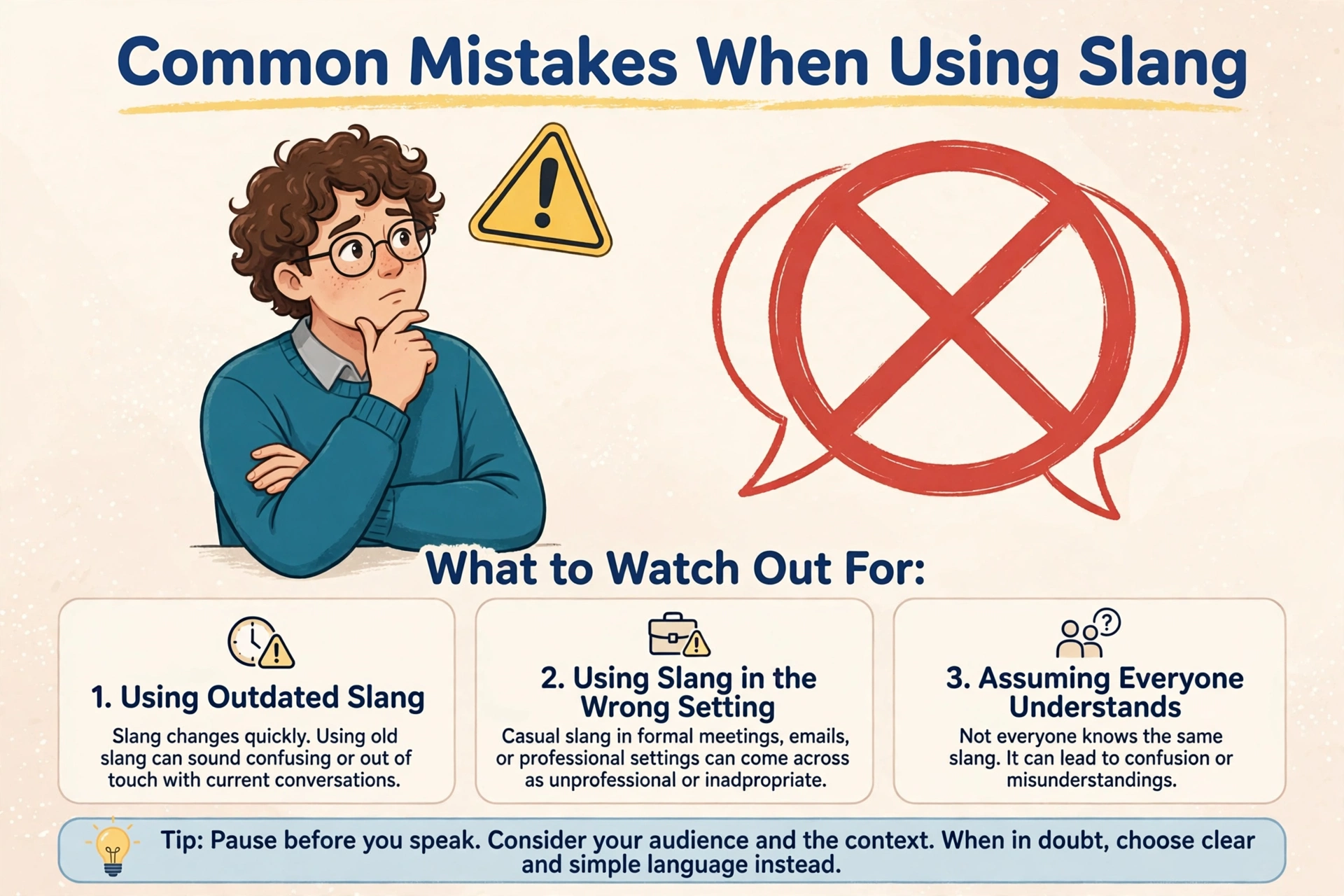
If you take only one section of this guide with you, make it this one. These tips work whether you are texting friends, posting a video, writing an article, or simply trying not to put your foot in it at a family gathering.
- Listen before you label. If you are not sure whether someone finds FOB funny or hurtful, do not use it about them. Listen to how they describe themselves, and mirror their language.
- Keep it self-directed or in-group. The safest uses are about yourself (“I felt so FOB”) or shared jokes with people who have explicitly welcomed them. If in doubt, leave it out.
- Describe the situation, not the person. “Still learning the system” and “recently arrived” say everything you need, without judging anyone’s culture, accent, or intelligence.
- Read the room online. A TikTok caption that plays in an immigrant-humor community can read very differently when screenshotted into a thread of strangers. Context does not travel with the post; assume the widest possible audience.
- Do not correct someone’s pride. If a person calls themselves FOB proudly, that is their word to claim. Do not lecture them about it, and do not take their pride as permission to use it about others.
- Apologize simply if you get it wrong. “I’m sorry, I didn’t realize that word landed that way. I won’t use it about you again.” No defense, no debate about intent. Impact is what the other person felt.
- Teach, don’t tease, with kids. Children repeat what they hear. If a child uses FOB at school, explain what it means and why it hurts, and give them the neutral words — newcomer, new student, recent arrival — to use instead.
- Check the other meanings. Before replying to a message with FOB in it, glance at the topic: people and culture, a car key, or a shipping quote? A ten-second check prevents a very awkward reply.
FAQ
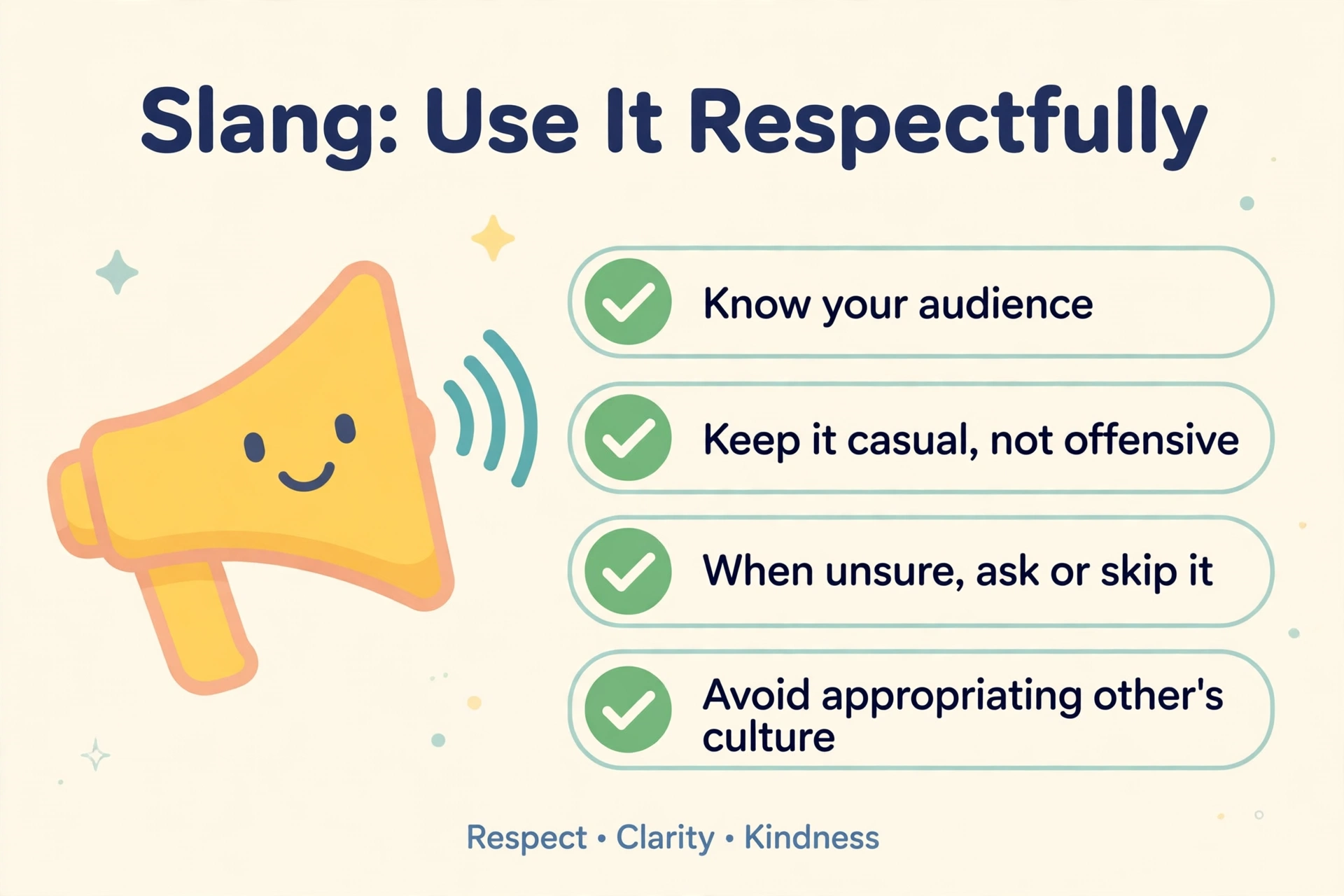
These eight questions answer the most common searches about fob meaning slang, from offensiveness and TikTok use to the shipping and car-key meanings that share the same letters.
What does FOB mean in slang?
In slang, FOB stands for “fresh off the boat.” It describes someone who has recently immigrated and is still adjusting to a new country’s language and customs. It can be teasing, proud, or insulting depending on who says it and to whom.
Is FOB offensive?
Often, yes. Within Asian-American and other immigrant communities, FOB is widely considered derogatory when used by outsiders, because it reduces a person to stereotypes about accent, dress, and behavior. In-group and self-directed uses can be affectionate or proud, but that does not make the word neutral in general use.
What does FOB mean on TikTok?
On TikTok, FOB usually appears in immigrant-family humor: videos and captions about parents’ habits, food, accents, and “FOB moments” after moving to a new country. The tone is usually in-group and affectionate, with hashtags like #FobLife, but the same word in a stranger’s comment can still be an insult.
Can I call myself a FOB?
If the experience is yours — you immigrated recently, or you grew up in an immigrant family and the word describes your own story — many people use it about themselves with humor or pride. Self-labeling is very different from labeling someone else, and other people’s comfort with the word is not a license to apply it to them.
What is the difference between FOB and freshie?
Very little. “Freshie” (UK) and “freshy” (New Zealand) are regional variants of the same idea: a recent immigrant who has not yet assimilated. Both carry the same risk of sounding insulting, and both are best avoided about strangers.
What does FOB mean in texting versus shipping?
In texting and social media, FOB almost always means “fresh off the boat.” In shipping and trade, FOB means “free on board,” the point in a contract where cost and risk pass from seller to buyer, usually followed by a port name. The surrounding words — a person versus a cargo quote — tell you which meaning is intended.
What is a key fob, and is it related?
A key fob is the small remote used to lock, unlock, or start a car, or to open a secured building door. It is unrelated to “fresh off the boat” except for the shared spelling; it comes from an old word for a small pocket. If a message mentions a battery, a button, or a car, it means the remote.
How should I reply if someone calls me a FOB?
You get to decide. If it was friendly and you are comfortable, a laugh or a self-deprecating reply is fine. If it stung, a calm, direct answer works: “I’d rather you didn’t call me that — I just moved here, and I’m still learning.” If it happens at work or school, you can also report it as harassment based on national origin, because that is how the term functions in those settings.

Conclusion
Fob meaning slang is easy to define and hard to use well. The definition fits in one line — “fresh off the boat,” a recent immigrant still finding their feet — but the word’s history, from literal ships to Ellis Island to TikTok family jokes, loads it with judgment about who belongs and how fast they should stop seeming new. Used by the people it describes, it can be funny, warm, and even proud. Used by strangers, it is usually an insult, and in workplaces and schools it can cross into harassment.
The practical rule is the one this guide returns to again and again: context and relationship decide the meaning, and neutral language is always available when you need it. Say “recently arrived,” “newcomer,” or “still settling in,” and you will never have to explain whether you meant it as a joke. Save FOB for quoting, discussing, and understanding — and for the in-group jokes where everyone laughing is also everyone described. Like the multi-meaning abbreviations covered in the TS meaning slang guide, FOB rewards a ten-second pause to check the context before you speak or reply.
If this topic made you curious about how slang labels travel through communities, the Fanum Tax meaning guide shows how an in-group joke from streaming culture became everyday slang, and the chopped meaning slang guide explains another word whose tone flips completely with context. Read those next, and the next time FOB appears in your feed, you will know exactly which FOB it is — the person, the key, or the shipping term — and exactly what to say back.
