
Quick Definition: “Mewing” is a technique of pressing your entire tongue flat against the roof of your mouth — with lips closed and breathing through your nose — that TikTok and the looksmaxxing community claim reshapes your jawline and face over time. The word is named after British orthodontist Dr. John Mew, whose “orthotropics” philosophy inspired the trend.
Mewing Meaning: Meaning & Definition
You have probably seen the gesture before you ever heard the word. Someone stares into the camera, drags one finger slowly along their jawline, taps their lips shut, and says nothing at all. That silent move — the “mewing” signal — exploded across TikTok, group chats, and high-school hallways, racking up billions of views. But what does mewing actually mean, and where did it come from?
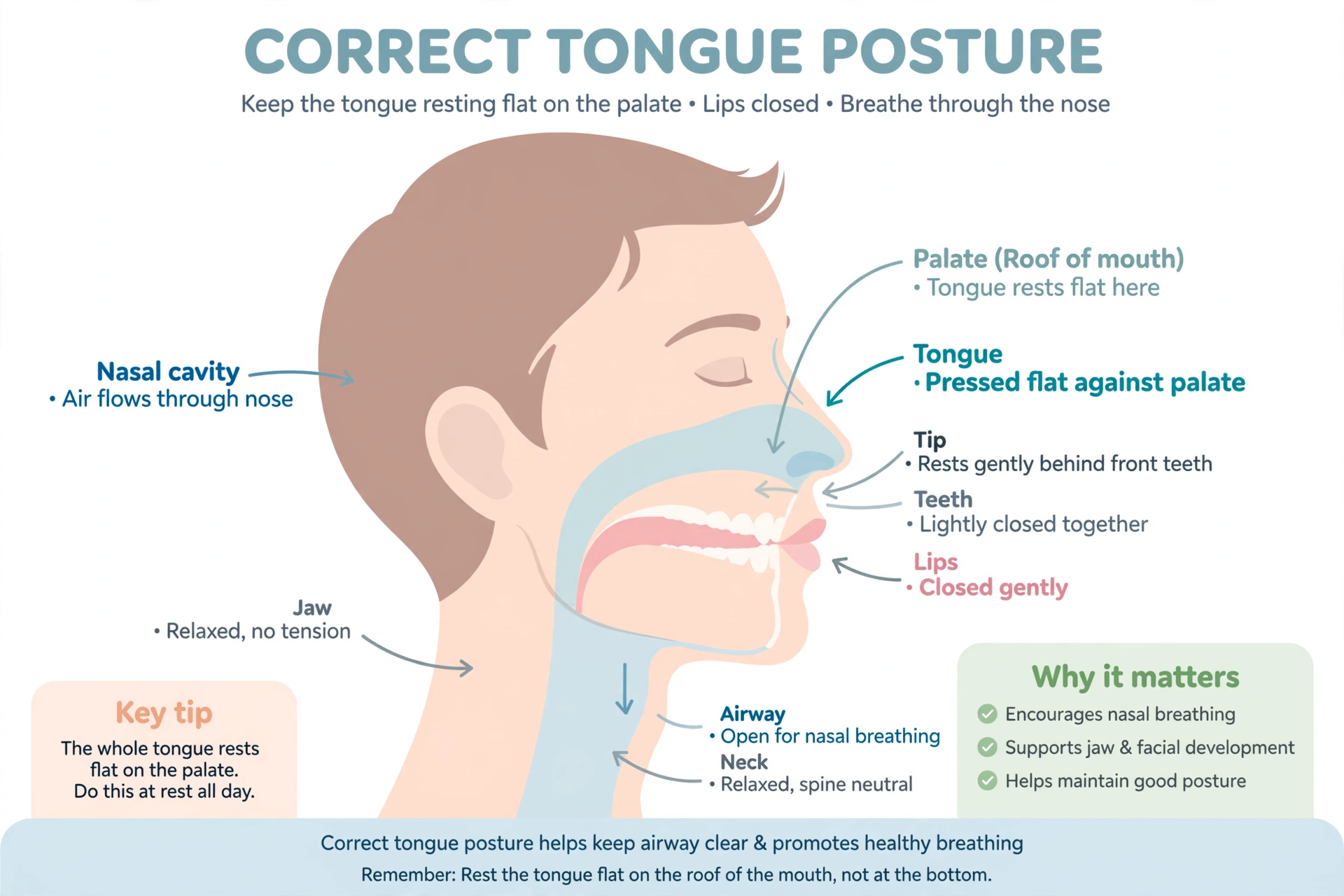
At its simplest, the mewing meaning is a tongue-posture technique: rest the whole tongue — not just the tip — against the roof (palate) of your mouth, keep your lips sealed, and breathe through your nose. Supporters claim that holding this posture all day, every day, gradually pushes the maxilla (upper jaw) forward and upward, giving you a sharper jawline, better facial symmetry, and even improved breathing.
The name itself is a tribute. “Mewing” comes from Dr. John Mew, a British orthodontist who developed an alternative orthodontic philosophy called orthotropics in the 1970s. His son, Dr. Mike Mew, also an orthodontist, spread those ideas on YouTube, and the internet’s looksmaxxing community ran with them. The term “mewing” was not coined by the Mews themselves — it was invented by their online followers, who turned orthotropics into a viral DIY jawline project.
Introduction
Every few years, the internet latches onto a “natural” beauty hack with cult-like devotion. Before mewing, it was jaw-exerciser gadgets and ice-water face plunges. Mewing went further than all of them because it promised something irresistible: a better face without surgery, fillers, or a single dollar — just your tongue, sitting in the right place.
That promise is exactly why the word took over TikTok. Gen Z creators, especially young men deep in looksmaxxing culture, started documenting their “mewing journeys” with side-profile before-and-after photos. The hashtag passed 1.5 billion views, and suddenly everyone from middle-schoolers to college guys was walking around with their tongues glued to their palates. The trend also shares DNA with other viral self-improvement slang, which is why it sits comfortably next to ideas like the delulu meaning trend — one is about believing your jawline will transform, the other is about believing your crush likes you back.
But beneath the memes sits a real debate. Orthodontists, dentists, and the American Dental Association have pushed back hard, warning that there is no solid scientific proof mewing reshapes adult faces — and that some versions of the trend (like chewing tough gum for hours or forcing your jaw forward) can damage teeth and joints. Understanding mewing means understanding both halves of the story: the technique itself, and the hype machine that made it famous.
Origin
Mewing’s origin story starts decades before TikTok existed, in the office of a controversial British orthodontist.
In the 1970s, Dr. John Mew began arguing that modern faces were “melting” — becoming longer, narrower, and more recessed — because of soft diets, mouth breathing, and poor oral posture. He proposed orthotropics: instead of just straightening teeth with braces, orthodontists should guide facial growth itself by correcting tongue posture, lip seal, and nasal breathing, especially in children whose bones were still developing.
His son, Dr. Mike Mew, carried the philosophy into the internet age with YouTube videos explaining how proper tongue posture could, in theory, expand the palate, create room for teeth, and improve the airway. The idea resonated with a generation already obsessed with facial aesthetics. Online forums picked it up around the late 2010s, gave it the catchy name “mewing,” and the trend ignited.
The meme phase arrived around 2023–2024. TikTok creators started using “mewing” as a joke: tapping your lips shut and tracing your jawline became a silent way to say “I can’t talk right now — I’m mewing.” Teachers reported students refusing to answer questions because they were “mewing.” The word had officially crossed from technique to full-blown slang.
There is an ironic footnote to all this. In 2017, the UK’s General Dental Council revoked John Mew’s dental license over his controversial practices and public criticism of mainstream orthodontics, and in 2024, Mike Mew’s license was revoked as well. Mainstream dentistry has never accepted orthotropics as proven science — a fact the viral trend conveniently left out of most TikTok captions.
Popularity
Mewing’s popularity is genuinely staggering for what started as a niche orthodontic philosophy:
- TikTok dominance: The #mewing hashtag has passed 1.5 billion views, with daily uploads of jawline checks, “mewing streaks,” and transformation timelines.
- Looksmaxxing fuel: Mewing became a cornerstone of looksmaxxing — the online subculture dedicated to maximizing one’s appearance — alongside skincare routines, “mewing + chewing hard gum” challenges, and posture-maxxing.
- Meme status: The silent jawline-trace gesture became a classroom meme. Doing it in a group photo or while a teacher is talking is understood as a joke about dedication to the grind.
- Gen Z male culture: Unlike most beauty trends, mewing skewed heavily toward young men, who treated it like a gym routine for the face — something to do constantly, with discipline, while others weren’t looking.
- Mainstream spillover: By 2024–2025, mewing was showing up in YouTube essays, podcast debates, dental-office blog posts warning against it, and even Merriam-Webster and dictionary “word of the year” conversations.
Its popularity feeds on a perfect loop: the technique costs nothing, takes no extra time (you’re supposed to do it all day anyway), and the “results” are nearly impossible to disprove in a selfie. A teenager’s face naturally sharpens between 15 and 20 — but the mewing community credits the tongue, not puberty.
How It Is Used
“Mewing” shows up in two very different ways, and context tells you which one you are hearing.
1. As a technique (literal use): “I’ve been mewing for six months and my jawline is way more defined.” Here the speaker means they are actively practicing the tongue-posture method — whole tongue on the roof of the mouth, lips together, breathing through the nose.
2. As slang / a joke (meme use): Someone goes quiet in a group chat or traces their jawline on camera, and a friend replies “mewing rn” or “he’s mewing, leave him alone.” It is a playful way of saying “don’t talk to me, I’m busy being handsome.” The joke works because everyone knows the posture is invisible — the humor is in taking it extremely seriously.
3. As a verb for the lifestyle: In looksmaxxing circles, “mewing” became shorthand for the whole self-improvement grind. “Mewing, gym, and skincare — that’s my whole 2025” reads like a mission statement.
The basic steps of the technique itself, as described by its proponents, are:
- Close your mouth and rest your lips together.
- Flatten your entire tongue against the roof of your mouth — tip behind the front teeth, middle and back of the tongue pressed up too.
- Apply gentle, steady upward pressure (not hard pushing).
- Breathe through your nose, not your mouth.
- Hold this posture as your default, all day, while awake.
Proponents say you should feel mild pressure across the middle of your face and jaw. Critics — including many orthodontists — say the only thing you should feel is your patience being tested, because there is no quality evidence this changes adult facial structure.
Examples
Friendly Examples
- “Bro your jawline looks sharper lately — you been mewing or is that just the haircut?”
- “Okay but mewing actually helped my mouth-breathing, I sleep so much better now.”
- “She posted a 1-year mewing transformation and I genuinely can’t tell if it’s the lighting or real lol.”
Professional Examples
- “While correct tongue posture is recognized in myofunctional therapy, there is no peer-reviewed evidence that mewing reshapes adult facial structure.” — the kind of line you’d hear from an orthodontist on a panel.
- “Several patients arrived asking about mewing after seeing it online; we used it as a starting point to discuss evidence-based orthodontics.”
Funny Examples
- “Teacher asked me a question and I just pointed at my jaw and stayed silent. Mewing too hard to speak.”
- “POV: you’ve been mewing for 3 years and your jawline still looks like a bag of milk.”
- “My dog saw me mewing and started doing it too. We both look stupid.”

Comparison with Similar Terms
Mewing sits in a crowded neighborhood of jawline and posture trends. Here is how it stacks up against the ones people confuse it with:
| Term | What It Is | Key Difference from Mewing |
|---|---|---|
| Mewing | Tongue flat on roof of mouth, lips sealed, nasal breathing | The baseline — free, passive, posture-based |
| Looksmaxxing | The whole culture of maximizing appearance | Mewing is one tool inside the looksmaxxing toolbox, not the whole thing |
| Hard mewing | Pressing the tongue up with extra force | A more aggressive version; dentists warn it raises the risk of jaw pain |
| Chewing / mastic gum | Chewing tough gum or resin to build masseter muscles | Works the jaw muscles (which can visibly grow), not the bone — often paired with mewing |
| Chin tucks / posture-maxxing | Exercises to fix forward head posture | Targets neck and head position; mewing targets tongue position |
| Orthotropics | Dr. John Mew’s full orthodontic philosophy | The original clinical theory; “mewing” is the internet’s DIY nickname for one piece of it |
| Myofunctional therapy | Clinical therapy for tongue/lip muscle function | Evidence-based and supervised; mewing is the unsupervised internet version |
The most common confusion is between mewing and chewing hard gum. Chewing can genuinely enlarge the masseter (jaw) muscles — which changes how the face looks — while mewing claims to reshape the bones themselves. When a “mewing transformation” photo looks dramatic, skeptics usually credit the gum, the lighting, the angle, and puberty before they credit the tongue.

Alternate Meanings
Mewing is unusual because it barely has alternate meanings — the word is tightly bound to the technique. But a few exist:
- The literal sound: Long before TikTok, “mewing” was simply what kittens do — the soft, high-pitched cry of a cat. (“The mewing of the kittens woke me up.”) This is the dictionary-original meaning and still the first one most adults over 40 think of.
- The silent signal: In classrooms and group chats, “mewing” became a gesture-meme: tracing the jawline to signal you are too busy sculpting your face to talk.
- A sarcastic dismissal: “Okay, mewing” can be used the way people say “sure, Jan” — a deadpan response to an unbelievable claim. (“I gained 10 pounds of muscle in a month.” “Okay, mewing.”)
In nearly every online context today, though, “mewing” means the tongue-posture trend. If someone says the word on TikTok, they are not talking about kittens.
Professional or Polite Alternatives
If you need to discuss the concept in a serious or professional setting — a dental office, a health article, a conversation with a skeptical parent — these alternatives land better than internet slang:
- Proper tongue posture — the neutral, clinical term for the underlying idea.
- Oral resting posture — what myofunctional therapists call it.
- Nasal breathing with lip seal — describes the breathing component without the meme baggage.
- Orthotropics — the formal philosophy, useful when discussing the theory’s origins.
- Myofunctional therapy — the evidence-based clinical cousin, good for directing people toward professional help.
Saying “I’ve been working on my oral resting posture” at the dentist gets you a thoughtful conversation. Saying “I’ve been mewing” gets you a pamphlet — or an eye roll.
Common Mistakes
Most people mew wrong, which is ironic for a trend with “just put your tongue up” as the entire instruction manual. The common mistakes:
- Only the tip touches the roof: The number-one error. The whole tongue — middle and back included — must press the palate. Saying “sing” and holding the “ng” position helps find the spot.
- Pushing too hard: “Hard mewing” with aggressive force can strain the jaw joint (TMJ), cause headaches, and shift teeth in unwanted ways. Gentle, consistent pressure is the claim; force is the risk.
- Mouth breathing anyway: Mewing with your mouth hanging open defeats the purpose. The lip seal and nasal breathing are half the technique.
- Chewing rocks for hours: The “chew hard things” add-on trend — mastic gum, jaw trainers, or worse — can crack teeth, loosen fillings, and cause real TMJ disorders. Dentists consistently flag this as the most dangerous part of the trend.
- Expecting bone changes as an adult: Facial bones largely stop growing after adolescence. Expecting a 25-year-old’s jaw to remodel from tongue pressure is, per most orthodontists, wishful thinking — and the disappointment fuels the cycle of “I must be doing it wrong.”
- Ignoring real problems: Chronic mouth breathing, sleep apnea, or bite issues deserve a professional, not a TikTok tutorial. Mewing used as a substitute for treatment can let real conditions go unaddressed.
- Believing every transformation photo: Lighting, angles, weight loss, beards, and plain old growing up explain most “results.” Treat dramatic before-and-afters as marketing until proven otherwise — a healthy dose of smh skepticism helps.

Quick Tips
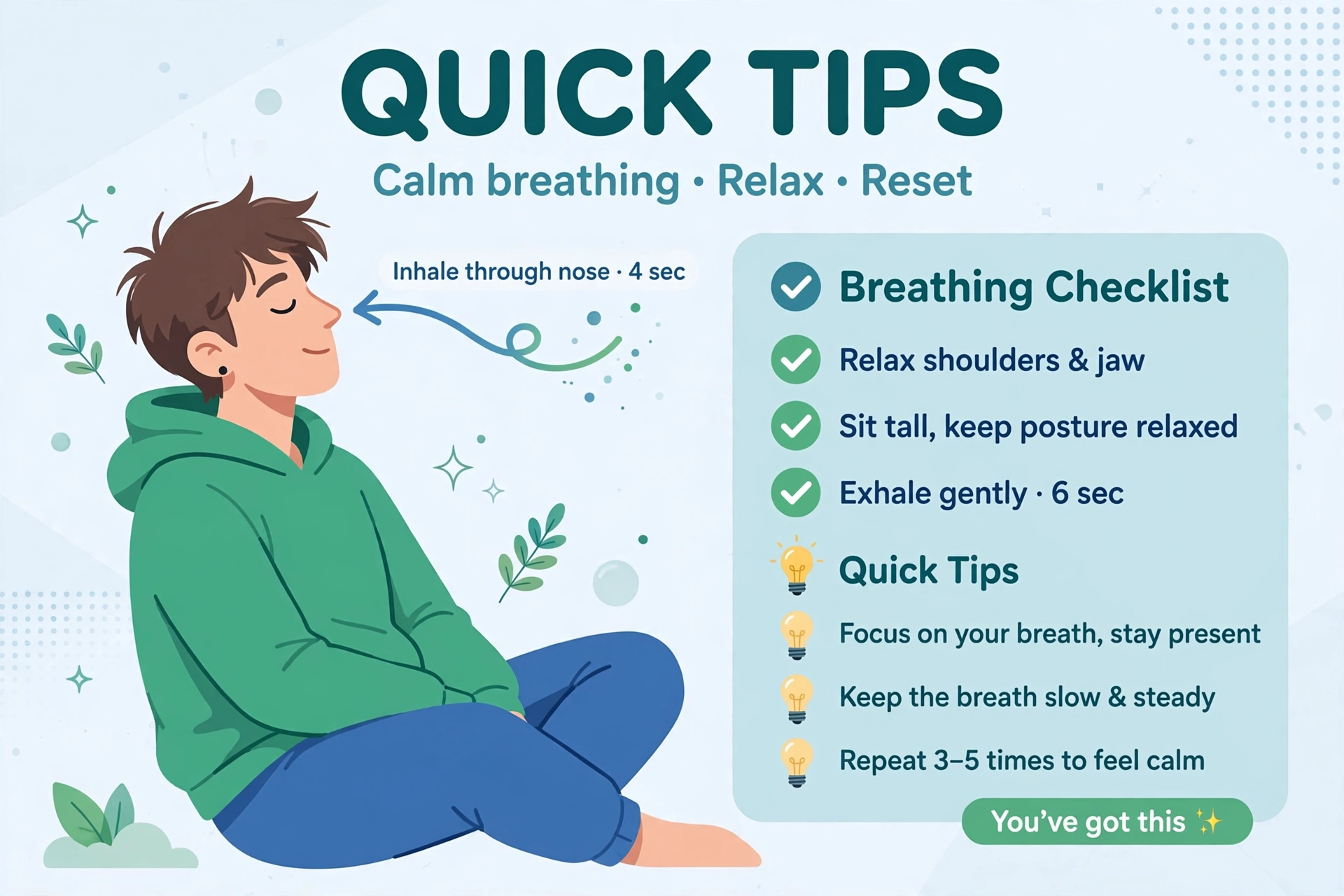
If you are curious about mewing, do it the safe and honest way:
- Learn the “ng” trick: Say “sing,” freeze on the “ng” sound — that is roughly where the back of your tongue should live.
- Check your breathing first: If you cannot breathe comfortably through your nose, see a doctor about that before worrying about tongue posture. A deviated septum or congestion makes mewing miserable.
- Keep it gentle: Light, consistent contact beats forceful pushing. Pain, clicking jaws, or headaches mean stop.
- Skip the jaw-destroying extras: You do not need to chew concrete-grade gum for six hours. If your jaw aches, you have gone too far — and no, being “chopped” is not a medical emergency that justifies cracked molars.
- Be honest about timelines: Even believers say visible change takes many months to years. Anyone selling 30-day jawline transformations is selling something else.
- Talk to a professional: An orthodontist or myofunctional therapist can assess your bite, airway, and tongue posture properly. Free advice from a 16-year-old’s TikTok is not a treatment plan.
- Enjoy the meme, question the medicine: The jawline-trace joke is genuinely funny. The medical claims deserve the same scrutiny you would give any viral health trend.
FAQ
1. What does mewing mean in slang?
In slang, “mewing” means practicing the viral tongue-posture technique — pressing your whole tongue against the roof of your mouth — in hopes of getting a sharper jawline. As a meme, it also means the silent jawline-tracing gesture people do to joke that they are too busy “mewing” to talk.
2. Who invented mewing?
The technique is named after Dr. John Mew, a British orthodontist who developed the “orthotropics” philosophy in the 1970s. His son, Dr. Mike Mew, popularized it online. The word “mewing” itself was coined by their internet followers, not by the Mews.
3. Does mewing actually work?
There is no strong scientific evidence that mewing reshapes adult facial bones. Correct tongue posture and nasal breathing are genuinely healthy habits — and they may matter most during childhood facial development — but the dramatic jawline transformations in TikTok photos are more plausibly explained by lighting, angles, weight changes, muscle growth from chewing, and natural aging. Most orthodontists consider the bone-reshaping claims unproven.
4. How long does it take to see results from mewing?
Even committed believers say any visible change takes many months to years of constant practice. Claims of fast transformations should be treated skeptically — faces change naturally over that kind of timeline anyway, especially in teenagers.
5. Is mewing dangerous?
Basic gentle tongue posture is low-risk. The dangers come from the add-ons: forceful “hard mewing,” chewing extremely tough gum or jaw trainers for hours, and using mewing as a substitute for real dental or airway treatment. These can cause TMJ pain, cracked or loosened teeth, and misaligned bites.
6. What is the difference between mewing and looksmaxxing?
Looksmaxxing is the broader internet culture of maximizing your appearance (skincare, gym, style, posture, jawline). Mewing is one specific technique inside that culture — the tongue-posture piece. All mewers are arguably looksmaxxers, but not all looksmaxxers mew.
7. Can adults benefit from mewing, or is it only for kids?
The original orthotropics theory focused on children, whose facial bones are still growing. For adults, bones are largely set, so structural change is unlikely. Adults may still benefit from the habits involved — nasal breathing and good oral posture can help with sleep quality and jaw comfort — which is why some therapists recommend similar exercises in clinical settings.
8. Why do people say “mewing” instead of talking?
It is a TikTok-born joke. Tracing your jawline and staying silent signals “I’m mewing right now” — a parody of how seriously the community takes the technique. Teachers, parents, and group chats all became stages for the bit, which is a big reason the word escaped the looksmaxxing niche and entered mainstream slang.

Conclusion
Mewing is two things at once: a decades-old orthodontic idea about tongue posture, and one of the defining memes of Gen Z internet culture. The technique — whole tongue on the palate, lips sealed, nose breathing — is simple, free, and genuinely tied to healthy oral habits. The viral promise wrapped around it — that it will sculpt your jawline like a filter — is where the science runs out and the marketing begins.
The honest takeaway is this. Good tongue posture and nasal breathing are worth having; they are basic body mechanics your dentist would endorse anyway. But no tongue position has been shown to remodel an adult’s facial bones, and the trend’s riskier add-ons can genuinely hurt you. Treat the transformation photos as entertainment, keep the pressure gentle, and if you have real breathing or bite issues, see a professional instead of a comment section.
And if nothing else, mewing gave us one of the funniest silent gestures in meme history — a whole generation tracing their jawlines in perfect, deadpan seriousness. For more internet culture decoded the same way, check out what chopped means in slang, the delulu meaning trend that shares its DNA, and why skeptics keep saying frfr about viral beauty hacks. For an expert breakdown of the actual claims, see this expert analysis of mewing’s buzzy claims.

7 thoughts on “Mewing Meaning: TikTok’s Viral Jawline Trick Explained in Detail”