
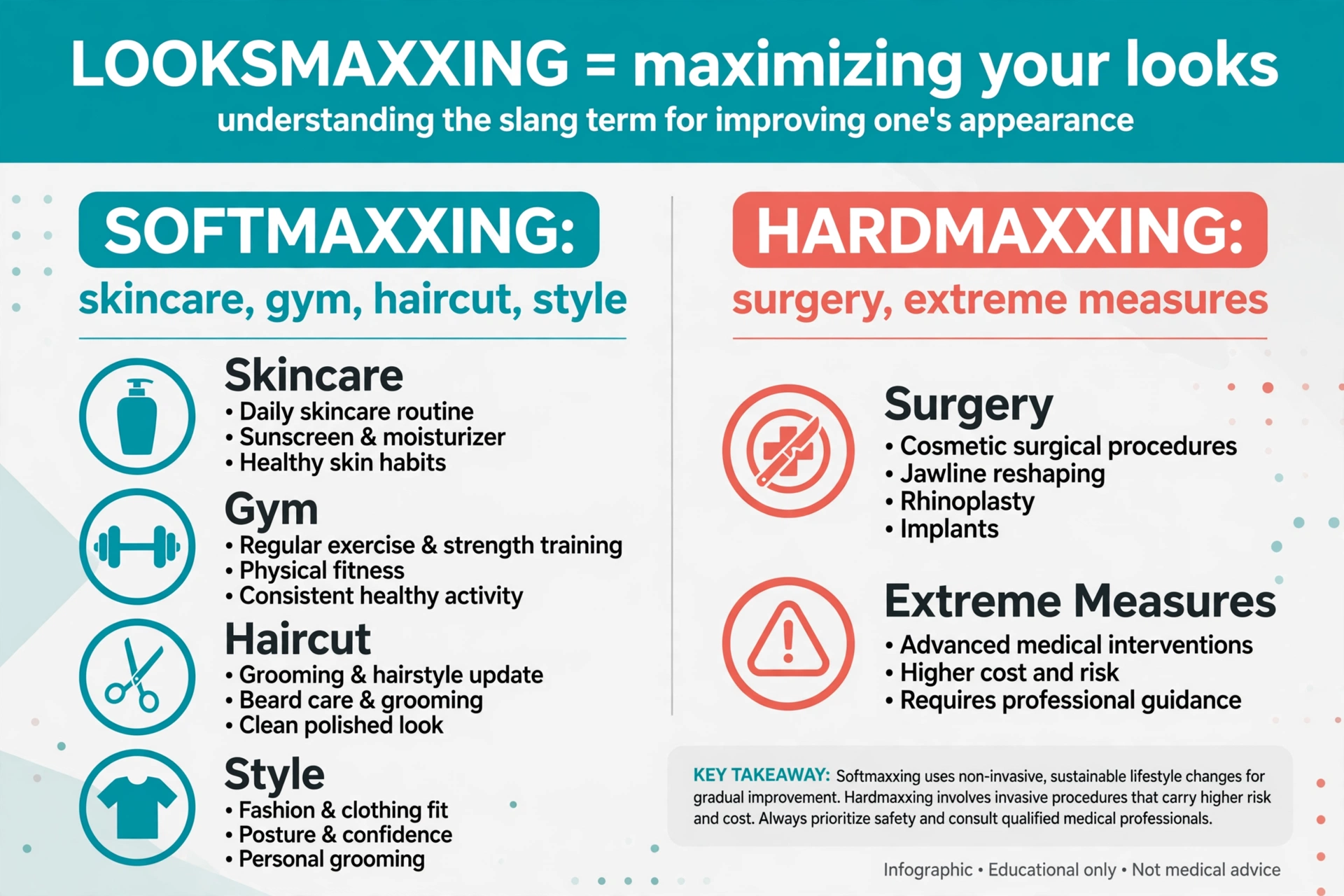
Quick definition: Looksmaxxing means making the maximum effort to improve your physical appearance — from simple habits like skincare, haircuts, and gym workouts (called softmaxxing) to extreme interventions like cosmetic surgery (called hardmaxxing). The term blew up on TikTok in the 2020s as Gen Z’s name for the old idea of “looking your best,” taken to a whole new obsessive level.
Looksmaxxing Meaning & Definition
So, what does looksmaxxing actually mean? At its core, the looksmaxxing meaning is simple: it is the practice of maximizing your own physical attractiveness through any means available, from the totally ordinary to the extreme.
The word itself is a blend: “looks” (your appearance) + “maxxing” (a slang suffix meaning “to maximize,” borrowed from gaming and RPG terminology where you “max out” a character’s stats). So a “looksmaxxer” is literally someone trying to max out their appearance stats in real life.
In everyday internet use, especially on TikTok and in Gen Z group chats, the looksmaxxing meaning has softened a bit. When someone says “I’m looksmaxxing this summer,” they usually just mean they are getting serious about their appearance — new haircut, clearer skin, better style, hitting the gym. The term covers two very different worlds:
- Softmaxxing: Non-invasive, common-sense improvements — skincare routines, moisturizing, clearing up acne, working out, better posture, a good haircut, dressing well, whitening teeth. This is the version 99% of TikTok means.
- Hardmaxxing: Extreme or invasive measures — cosmetic surgery, jaw implants, rhinoplasty, steroids, and other risky interventions. This side of looksmaxxing has drawn criticism from doctors and mental-health experts.
Understanding the looksmaxxing meaning means knowing which version someone is talking about — because the gap between “I started a skincare routine” and “I got jaw surgery” is enormous, even though both get labeled looksmaxxing online.
Introduction
You have probably seen the videos: a guy posts a photo of himself at 15 — awkward haircut, bad skin, slouched posture — then cuts to himself at 19 looking like a completely different person. The caption reads: “3 years of looksmaxxing.” The comments are full of people asking for his routine.
Looksmaxxing is one of those internet words that escaped its original corner of the web and went fully mainstream. It started in the 2010s on obscure forums, spent years as niche forum slang, and then TikTok discovered it in the 2020s and turned it into a full-blown trend with millions of views. Today, “looksmaxxing” shows up in everyday conversation among teens and twenty-somethings the same way words like mewing (the tongue-posture trick many looksmaxxers swear by) did.
But there is more to the looksmaxxing meaning than glow-up videos. The term carries real baggage: it grew out of online subcultures with troubling ideologies, and the extreme end of the practice has been linked by commentators and medical experts to body dysmorphia and dangerous health decisions. This guide breaks down everything — the definition, where it came from, how people actually use it, the difference between the harmless and harmful versions, and how to talk about it without sounding clueless (or endorsing something unhealthy).
Whether you heard it in a group chat, saw it trending, or just want to understand what the teens in your life are talking about, this is the complete guide to what looksmaxxing means in 2026.
Origin
The looksmaxxing meaning starts in a much darker corner of the internet than most TikTok trends. The term was coined in the 2010s on incel message boards — forums like Lookism, Sluthate, and PUAHate — where users obsessed over rating physical attractiveness.
On these forums, “maxxing” was already productive slang: users talked about “moneymaxxing” (maximizing income), “statusmaxxing” (maximizing social status), and “gymmaxxing” (maximizing physique). Looksmaxxing was the umbrella term for all appearance-focused self-improvement, and the forums developed an elaborate pseudo-science around it — rating faces on the “PSL scale,” measuring facial ratios like “midface ratio” and “hunter eyes,” and debating which features were “mogging” (dominating) others.
For years, the looksmaxxing meaning stayed locked inside these communities. Then, around 2022–2024, TikTok creators — mostly young men — picked up the vocabulary and stripped out much of the original ideology. The TikTok version kept the glow-up framing (before/after transformations, “facial gains,” rating attractiveness) but reframed it as self-improvement content: skincare routines, hairstyle guides, fitness tips, and style advice.
That migration from forum to For You Page is why the word feels so contradictory today. Ask a TikTok teen, and looksmaxxing means “glow up.” Ask someone who knows the forums, and it means something far more obsessive. Both are using the same word — they just inherited different versions of the looksmaxxing meaning.
Popularity
Looksmaxxing went from forum jargon to mainstream vocabulary remarkably fast. A few markers of how big it got:
- TikTok explosion: Looksmaxxing content — transformation videos, “rate my face” posts, softmaxxing routine breakdowns — has racked up billions of collective views. Creators like “Clavicular” built entire followings around looksmaxxing content.
- Media coverage: By 2024, the BBC and other major outlets were reporting on the trend, particularly on concerns that looksmaxxing content was contributing to body dysmorphia among teenage boys.
- Dictionary recognition: Collins Dictionary added entries for related terms like “softmaxxing” and “hardmaxxing,” a sign the vocabulary had entered the mainstream lexicon.
- Everyday speech: “Maxxing” became a productive suffix far beyond looks — people now joke about “sleepmaxxing,” “moneymaxxing,” and “aura farming” as part of the same optimization-obsessed internet humor.
- Crossover with other slang: Looksmaxxing travels in a pack with terms like delulu (delusional confidence, sometimes applied to looksmaxxers’ self-ratings), mewing, and “mogging” — all part of the same appearance-rating internet dialect.
The trend shows no signs of fading in 2026. If anything, the “optimization” mindset behind looksmaxxing has spread: the same logic now gets applied to productivity, dating profiles, and even sleep. Looksmaxxing was just the first and most visible version.
How It Is Used
The looksmaxxing meaning shifts depending on who is saying it and where. Here are the main ways people use the word:
| Usage | What it means | Example |
|---|---|---|
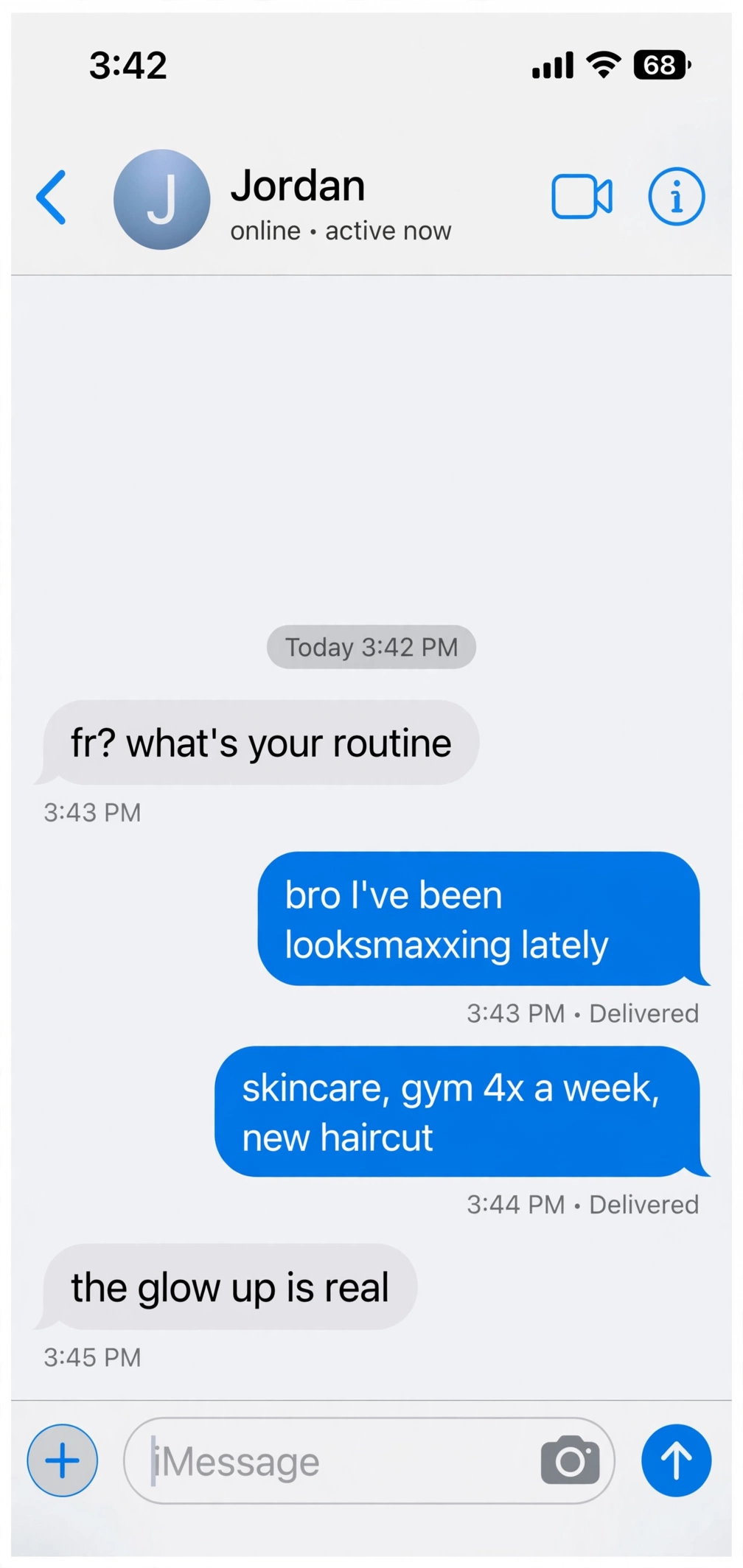
| Self-improvement (casual) | Working on your appearance in normal, healthy ways | “I’ve been looksmaxxing lately — new haircut, gym 4x a week, actually washing my face.” |
| Glow-up framing | Documenting a before/after transformation | “POV: 2 years of looksmaxxing” (before/after photo dump) |
| Rating culture | Judging or rating someone’s attractiveness | “He’s a solid 7, but with looksmaxxing he could be an 8.” |
| Ironic/joking | Using it humorously for trivial improvements | “Brushed my teeth twice today, I’m basically looksmaxxing.” |
| Hardmaxxing talk | Discussing extreme or surgical interventions | “He went from softmaxxing to hardmaxxing and got a chin implant.” |
| Criticism | Calling out obsessive or unhealthy behavior | “Bro is looksmaxxing so hard he’s developing body dysmorphia.” |
Tone matters enormously. Among friends, “looksmaxxing” is usually light — a funny, self-aware way to say you’re trying to look better. In looks-rating communities, it can be brutally judgmental. And in health discussions, it is often used critically, as a warning label for obsessive appearance culture.
The word is almost always used as a verb (“I’m looksmaxxing”) or gerund, though “looksmaxxer” (noun, a person who does it) and “looksmaxxed” (adjective, “he’s fully looksmaxxed”) are common too.
Examples
Context changes everything with slang. Here is how looksmaxxing sounds across different tones:
Friendly Examples
- “You look great today! What changed?” — “Thanks! I’ve been lowkey looksmaxxing — finally found a skincare routine that works.”
- “Wanna come gym with me? We’re both looksmaxxing this semester, no excuses.”
- “She got a new haircut and a whole new wardrobe — the looksmaxxing arc is real.”
- Group chat: “Fit check for tonight 👀” — “Okay looksmaxxer, we see you.”
Professional Examples
Looksmaxxing is not a professional-context word. You would not use it in a workplace email or a job interview. If the concept comes up professionally (say, in marketing or media coverage), people rephrase it:
- Instead of: “Our campaign targets looksmaxxers” → “Our campaign targets consumers invested in personal appearance and self-improvement.”
- Instead of: “He’s been looksmaxxing” → “He’s been focusing on his personal grooming and fitness.”
- In journalism: outlets write “the looksmaxxing trend” with a definition attached, treating it as a cultural phenomenon rather than casual vocabulary.
Funny Examples
- “Drank water and got 8 hours of sleep. Call me a looksmaxxer.”
- “My looksmaxxing routine is just showering regularly and standing up straight. The bar is on the floor.”
- “Day 47 of looksmaxxing: the jawline is still loading.”
- “Me: *buys one face wash* Also me: ‘the looksmaxxing journey begins.'”
The humor almost always comes from the gap between the intense, optimization-obsessed sound of the word and the totally mundane reality of what the person actually did.
Comparison with Similar Terms
Looksmaxxing sits in a crowded neighborhood of self-improvement and appearance slang. Here is how it compares:
| Term | Meaning | How it differs from looksmaxxing |
|---|---|---|
| Glow up | A positive transformation in appearance/confidence over time | Broader and warmer — a glow up can be about confidence and style, not just “maximizing” looks. Less obsessive connotation. |
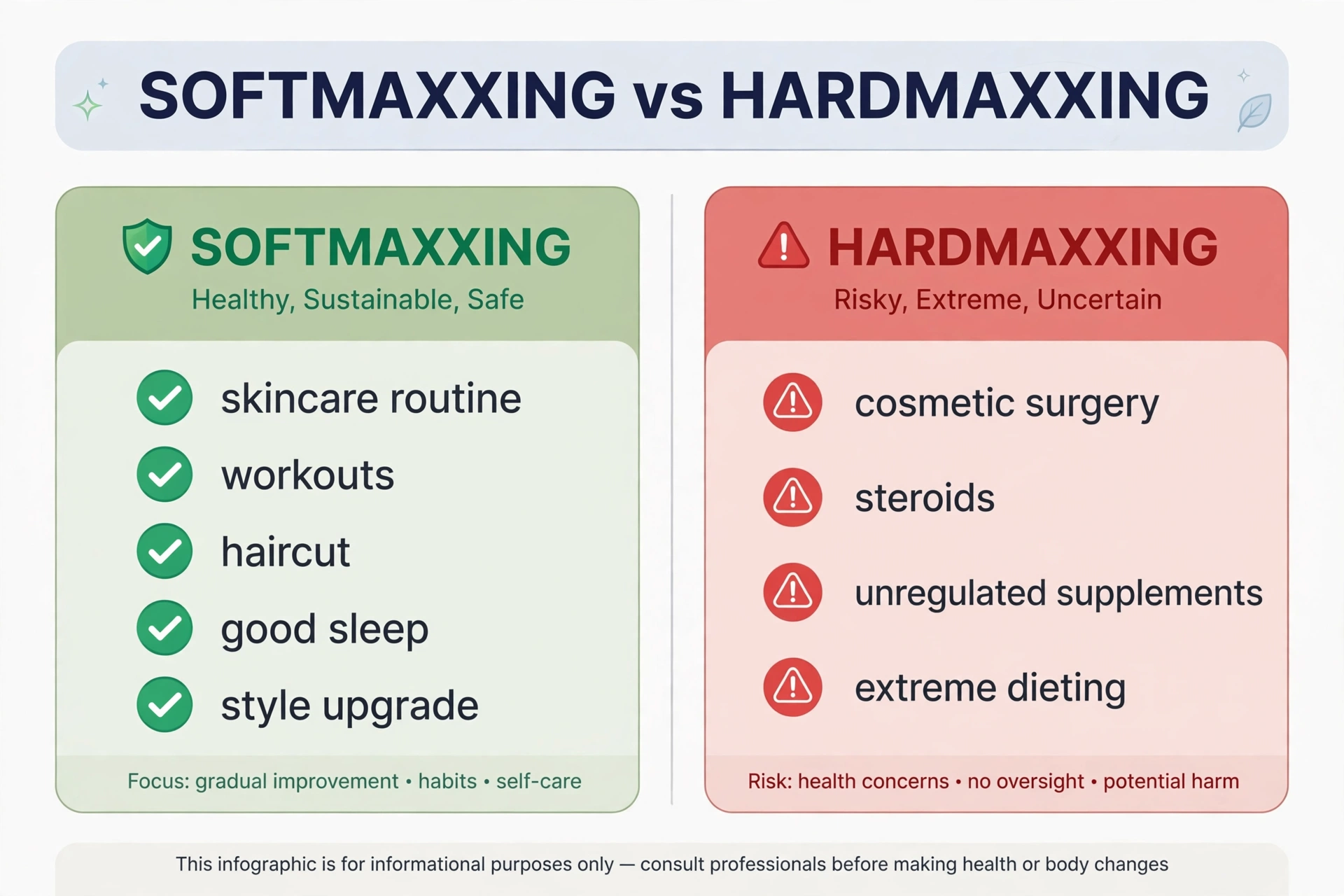
| Softmaxxing | Non-invasive appearance improvements (skincare, gym, haircut) | A subset of looksmaxxing — the safe, normal part. |
| Hardmaxxing | Extreme/invasive appearance interventions (surgery, steroids) | A subset of looksmaxxing — the risky, controversial part. |
| Mewing | Tongue-to-roof-of-mouth posture claimed to sharpen the jawline | One specific technique within softmaxxing, not the whole project. |
| Mogging | Dominating someone in looks (making them look worse by comparison) | About comparison and competition, not self-improvement. |
| Self-care | Taking care of your wellbeing | Broader and health-positive; looksmaxxing is appearance-specific and can tip into unhealthy. |
The key takeaway: looksmaxxing is the umbrella; softmaxxing and hardmaxxing are its two halves; mewing is one technique; glow up is the friendlier cousin. Mixing them up is the most common mistake people make with this vocabulary.
Alternate Meanings
Unlike many slang terms, looksmaxxing does not have a widely used second definition — it is pretty locked to the “maximize your appearance” meaning. But a few alternate shades exist:
- Ironic “maxxing”: As a joke, people attach “-maxxing” to anything (“sleepmaxxing,” “snackmaxxing”), which dilutes the word into general “trying hard at X” humor. In these jokes, “looksmaxxing” itself sometimes just means “putting in any effort at all.”
- Spelling variant: You will occasionally see “looksmaxing” (one x). Same meaning, just a lazier spelling.
- Gendered usage note: The term originated in male-dominated spaces and is still used mostly about/for men, but TikTok has broadened it — women use “looksmaxxing” too, often overlapping with “glow up” content.
- No relation to: Despite the “max” in the name, it has nothing to do with Max (the streaming service), Mad Max, or “to the max” in the 90s sense — though the retro echo is probably why the word sounds so natural.
Professional or Polite Alternatives
If you need the concept without the internet-forum flavor, here is how to say it in grown-up language:
- “Personal grooming and self-improvement” — the safest all-purpose substitute.
- “Working on his appearance” — casual but neutral.
- “Investing in his image” — slightly business-flavored, good for marketing contexts.
- “Aesthetic self-optimization” — academic/journalistic tone.
- “Glow-up journey” — friendly, social-media-safe, no baggage.
- “Taking his fitness and grooming seriously” — describes softmaxxing without the slang.
Rule of thumb: in any context where you would not say “rizz” or “mogging,” do not say “looksmaxxing” either. Rephrase.
Common Looksmaxxing Mistakes
People get the looksmaxxing meaning wrong in a few predictable ways:
- Thinking it only means surgery. The TikTok mainstream usage is overwhelmingly softmaxxing — skincare, gym, haircuts. Assuming someone “looksmaxxing” means something extreme is the #1 misunderstanding.
- Thinking it only means skincare. The reverse mistake: the term’s full range includes the extreme hardmaxxing end, and ignoring that misses why doctors and journalists treat the trend seriously.
- Using it as a compliment without context. Telling someone “you should try looksmaxxing” can sound like “you’re ugly” — the word carries a judgmental edge from its rating-culture roots.
- Confusing it with mewing. Mewing is one tongue-posture technique; looksmaxxing is the entire appearance-optimization project. (For the full breakdown, see our guide to mewing meaning.)
- Ignoring the mental-health dimension. Treating looksmaxxing as pure comedy misses the real concern: rating-culture communities have been linked to body dysmorphia, especially among teenage boys. The joke version and the harmful version share a word.
- Spelling it “looks maxing.” As two words it looks like a typo. The community spelling is one word: looksmaxxing (double x, double s).

Quick Looksmaxxing Tips
If you are going to talk about looksmaxxing — or do the healthy version of it — here is how to keep it smart:
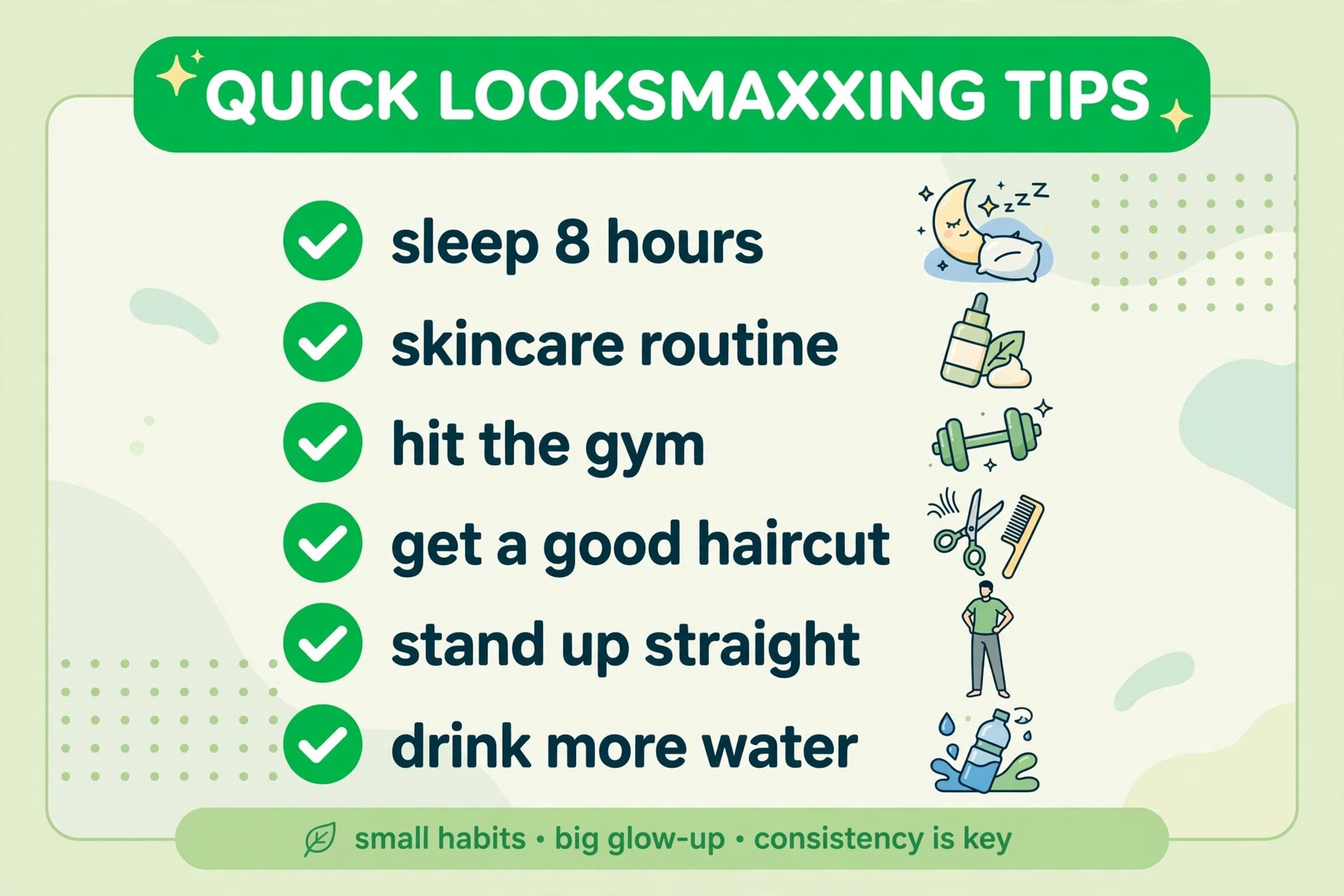
- Know which half you mean. Say “softmaxxing” when you mean skincare/gym/style, so nobody thinks you mean surgery.
- Keep it healthy. The best “looksmaxxing” is boring: sleep 8 hours, drink water, exercise, eat decently, see a dermatologist for skin issues, stand up straight. That is genuinely 90% of it.
- Do not rate people. The rating-culture side of looksmaxxing (“he’s a 6.5”) is where the word turns toxic. Keep it about yourself.
- Watch for red flags. If “looksmaxxing” starts meaning skipping meals, unregulated supplements, or obsessing over facial measurements for hours — that is no longer self-improvement.
- Use it lightly. The word is funniest and safest as self-deprecating humor (“my looksmaxxing era begins” + buys one moisturizer).
- Read the room. Fine in a group chat or TikTok comment; not fine at work, at family dinner, or as unsolicited advice to someone’s face.
- Credit the boring basics. Every dramatic “looksmaxxing transformation” is usually: puberty + haircut + gym + better photos. The algorithm loves a miracle; reality loves consistency.
FAQ

1. What does looksmaxxing mean in simple terms?
Looksmaxxing means trying to maximize how good you look — from basic self-care like skincare and haircuts (softmaxxing) to extreme measures like cosmetic surgery (hardmaxxing). On TikTok, it usually just means taking your appearance seriously.
2. Where did looksmaxxing come from?
The term was coined on incel message boards in the 2010s, where users obsessed over rating attractiveness. It stayed niche for years, then exploded on TikTok in the 2020s as creators reframed it as glow-up/self-improvement content.
3. What is the difference between softmaxxing and hardmaxxing?
Softmaxxing = non-invasive improvements (skincare, gym, haircut, style, posture). Hardmaxxing = extreme or invasive interventions (surgery, steroids, implants). Softmaxxing is the mainstream, healthy version; hardmaxxing is controversial and risky.
4. Is looksmaxxing just for guys?
It started in male-dominated forums and is still used mostly about men, but TikTok broadened it — plenty of women use “looksmaxxing” interchangeably with “glow up” content.
5. Is looksmaxxing healthy or harmful?
The softmaxxing version (sleep, exercise, skincare, grooming) is just healthy self-care with a funny name. The extreme version — obsessive rating, unregulated supplements, surgery pressure — has been linked by experts to body dysmorphia. The word covers both, so context matters.
6. What does “mewing” have to do with looksmaxxing?
Mewing — resting your tongue on the roof of your mouth, claimed to sharpen the jawline — is one of the most talked-about softmaxxing techniques in looksmaxxing communities. It is a single trick inside the much bigger looksmaxxing project.
7. Can I say looksmaxxing at work or school?
In casual conversation with peers, sure. In professional settings, rephrase it as “personal grooming” or “self-improvement.” And never direct it at someone as advice — “you should looksmax” lands as an insult.
8. Why is looksmaxxing so popular on TikTok?
Before/after transformations are perfect short-form content, the word sounds funny and intense, and the “optimization” mindset resonates with Gen Z humor about self-improvement. It also rides the same wave as related slang like GRWM (get ready with me) and SMH-worthy rating memes.
Conclusion
The looksmaxxing meaning boils down to one idea: maxing out your appearance — but the word contains multitudes. For most people in 2026, it is a funny, self-aware label for the timeless project of looking your best: better sleep, a solid skincare routine, regular workouts, a haircut that actually suits you. That is softmaxxing, and honestly, it is just good advice with a meme name.
The important part is knowing where the healthy version ends. The moment looksmaxxing stops being “I’m taking care of myself” and becomes obsessive rating, extreme interventions, or misery about unchangeable features, it has crossed into the territory that doctors and journalists warn about. Keep the word in its lane — light, funny, self-directed — and it is harmless internet slang. Let it drift into judgment of others, and it turns ugly fast.
So the next time someone in your chat says they are “looksmaxxing,” you will know exactly what they mean — and which version they are talking about. And if you want to keep decoding the internet’s appearance-obsessed vocabulary, from mewing to the GRWM routine videos all over your feed, you know where to look.
For the encyclopedic background on where the term came from, Wikipedia’s looksmaxxing article traces its forum origins and mainstream breakout in detail.
