
Torta Meaning Slang Meaning & Definition
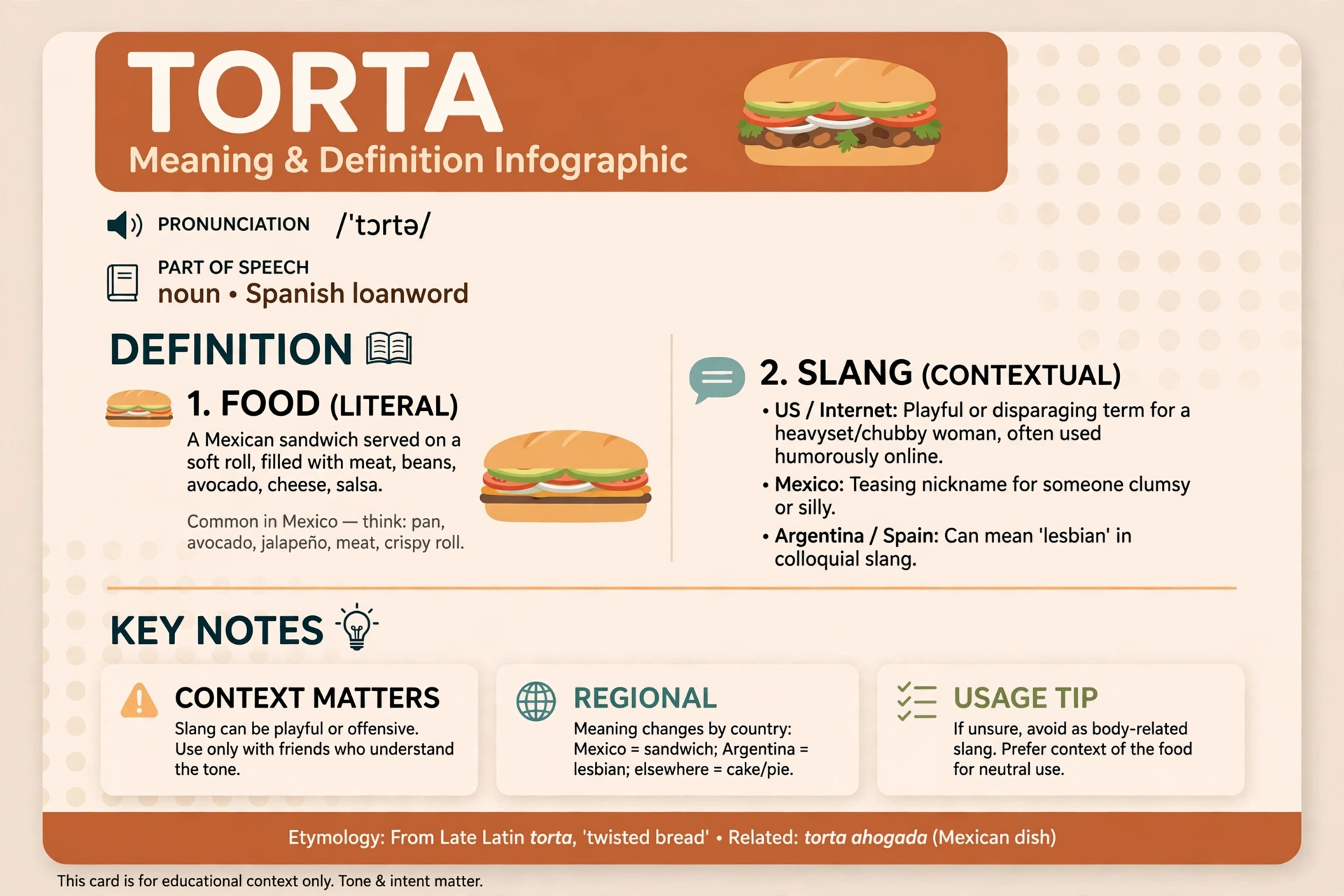
If you’ve scrolled TikTok lately and seen the word “torta” popping up in comments, captions, or viral sounds, you probably had the same reaction everyone has: wait, isn’t that just… a sandwich? And you’re not wrong. At its core, “torta” is a totally ordinary Spanish word for food. But the internet has a habit of taking innocent words and stuffing them (pun intended) with new meaning, and “torta” is one of the best examples of torta meaning slang taking over the internet in recent years.
So what does “torta” mean in slang? The honest answer is that it depends on who says it, where they say it, and whether they’re laughing when they say it. Here’s the rundown:
- US internet slang: “Torta” or “torta girl” typically refers to a chubby, curvy, or plus-size Latina woman. It comes from the idea that a Mexican torta — a thick, generously stuffed sandwich — is hefty and round, so the term playfully (or sometimes cruelly) compares a woman’s figure to one.
- Mexican street slang: It can also mean a clumsy or goofy person — calling someone “una torta” is like calling them a lovable goofball.
- Argentinian slang: “Torta” is slang for a lesbian woman, which can be casual or offensive depending on the speaker and the room.
- Spain (informal): It can mean a slap (“dar una torta”) or getting drunk (“agarrar una torta”).
The slang meaning most English speakers run into online is the first one — the TikTok-era “torta girl” usage. Know Your Meme documents how the term went viral in the 2020s across TikTok, X/Twitter, and Instagram, often posted by Latino and Hispanic creators themselves. A spin-off term, “torta pounder,” describes a man who specifically prefers dating tortas — proof that the term has its own mini-universe of memes.
Dictionaries are blunt about the tone: Dictionary.com labels the slang sense “usually disparaging and offensive,” defining it as an overweight or heavyset woman. Wiktionary’s slang entry similarly defines it as “an overweight or obese Hispanic woman, especially one deemed attractive.” That tension — between joke, insult, and self-description — is exactly what makes this word worth understanding before you use it.
Introduction
Food words make great slang. They’re visual, they’re funny, and everybody instantly gets the joke. “Thicc” already proved that describing people with food-adjacent language hits hard online, and “torta” rode that same wave straight into viral territory. If you’ve been trying to figure out fn meaning in text or decoding TikTok comments like glizzy meaning, you know how fast slang terms can jump from niche communities to mainstream feeds — “torta” followed that exact playbook.
What makes “torta” different from most slang terms is how much baggage it carries from language to language. It’s not a made-up internet word; it’s a real Spanish noun with centuries of history, and each region gave it a different flavor before the internet ever got involved. When Latino creators on TikTok started using it in memes around 2020–2021, English-speaking audiences met the word for the first time with zero background — which is why it’s so easy to misuse.
This guide breaks down every layer: the food meaning, the slang meaning, the regional twists, the meme culture, and most importantly, how to use (or avoid) the word without putting your foot in your mouth. By the end, you’ll know exactly what’s being said when someone drops “torta” in a comment section — and whether it’s a joke, a compliment, or a jab.
Origin
The word “torta” is far older than any meme. It traces back to Late Latin torta, an abbreviation of torta panis — literally “twisted bread.” Collins Spanish–English dictionary lists the food meanings — cake, flatbread, and the Mexican sandwich — that the slang later grew out of. From there it spread through the Romance languages and picked up food meanings everywhere it went: cake in Italy and much of Latin America, a flatbread in parts of Spain, and the famous sandwich in Mexico.
The slang layer started much later. Urban Dictionary hosts a definition of “torta” as slang dating all the way back to 2003, suggesting the term was already circulating in US Latino communities in the early 2000s. The logic is pretty transparent: a Mexican torta is a big, thick, stuffed sandwich served on a hefty roll, so calling someone a “torta” plays on roundness and solidity. Some linguistics-minded observers think it started in Mexican street culture and youth slang, where food metaphors for people are common and often affectionate.
The viral chapter opened in the 2020s. As Know Your Meme documents, “torta” — often as “torta girl” — exploded across TikTok, Twitter/X, and Instagram. It mirrored the rise of “Edgar,” the slang term for Latino men with a distinctive haircut, and the two terms often appeared together in memes about Latino dating culture. Predominantly Latino and Hispanic creators drove the trend, using “torta” both as self-description and as a roast, which is why the tone swings so wildly.
Music and media helped too. The word shows up in regional Mexican songs, comedy sketches, and viral audios — like the TikTok trend of lip-syncing “me voy por una torta” (I’m going for a torta) after a breakup. Each platform added a new layer of meaning, and by 2024 the term had fully crossed over into mainstream internet vocabulary.
Popularity
“Torta” slang hit its viral peak in the early-to-mid 2020s, and it hasn’t really faded. Here’s why it stuck around while other meme terms burned out:
- TikTok comment culture: The phrase “torta girl” became a staple of TikTok comments, used on glow-up videos, fashion hauls, and body-positivity content. Whether it’s praise or a jab depends entirely on the commenter.
- Meme formats: “Torta” memes — from sandwich puns to Edgar-and-torta dating jokes — are endlessly remixable. Food humor is evergreen.
- Latino creator economy: Latino and Hispanic creators are a massive force on TikTok and Instagram, and “torta” is one of their signature in-group terms. That keeps it circulating constantly.
- Search curiosity: Millions of English speakers have seen the word without knowing Spanish, so search interest stays high — people keep asking “what does torta mean in slang” because they keep encountering it cold.
It’s also worth noting that the term’s popularity is heavily regional within the US. It’s most common in areas with large Mexican-American communities — Texas, California, Arizona, Chicago — but TikTok has flattened that geography. Today, a teenager in Ohio who has never eaten an actual torta sandwich might still know exactly what “torta girl” means.
How It Is Used
Using “torta” correctly is all about reading the room. Here’s a practical breakdown of the main ways it shows up:
As a body-related slang term (the viral meaning)
This is the TikTok-era usage. “Torta girl” describes a curvy or plus-size Latina woman. In some circles it’s used as a genuine compliment — celebrating curvy bodies the way “thicc” does. In others it’s a straight-up insult. The difference is almost entirely tone and relationship.
- Affectionate/self-descriptive: “I’m a proud torta girl 💅” — reclaimed, body-positive.
- Playful roast between friends: “Okay torta, pass the chips” — teasing but warm.
- Mean-spirited: Commenting “torta” on a stranger’s photo to mock their weight — just bullying.
As Mexican slang for a goofy person
In Mexico, “eres una torta” can mean “you’re such a goof” — aimed at clumsiness or silliness, not weight. It’s closer to calling someone a “dork” than anything about their body.
As regional slang (Argentina, Spain)
In Argentina, calling a woman “torta” can mean she’s a lesbian — this can be neutral among friends or a slur from strangers. In Spain, “dar una torta” means to slap someone. Same word, completely different conversations.
As the literal food
Don’t overthink it: millions of people use “torta” every day to mean lunch. “Voy por una torta de milanesa” just means someone’s going to get a breaded-steak sandwich. Context — especially food context — usually makes this obvious.
Examples
Friendly Examples
Between friends who share the joke, “torta” works like any affectionate roast:
- “Girl, you ate that whole plate? Certified torta behavior 😂”
- “We’re getting tortas after this, no debate.”
- “My torta era is thriving and I’m not apologizing.”
- “You’re not clumsy, you’re just… torta-coded.”
Professional Examples
Here’s the thing: “torta” has no professional usage. It’s slang about bodies, food, or goofiness — none of which belong in a workplace, classroom, or formal email. The only workplace-safe appearance is the literal food:
- “I’m grabbing a torta from the food truck for lunch — want one?” (food meaning, totally fine)
- “The client lunch is at the torta place on 5th.” (food meaning, totally fine)
Every slang sense of the word should stay out of professional settings. Full stop.
Funny Examples
The internet’s best torta jokes lean into the sandwich:
- Meme caption: “Me: I’m on a diet. Also me at 11pm: sees torta stand“
- “Broke up with my boyfriend, so naturally me voy por una torta.”
- “My toxic trait? Calling every sandwich a torta and every torta a personality.”
- “Edgars be like ‘I only date tortas’ — sir, you ARE the torta of this relationship.”
| Scenario | Example Message | Meaning Here |
|---|---|---|
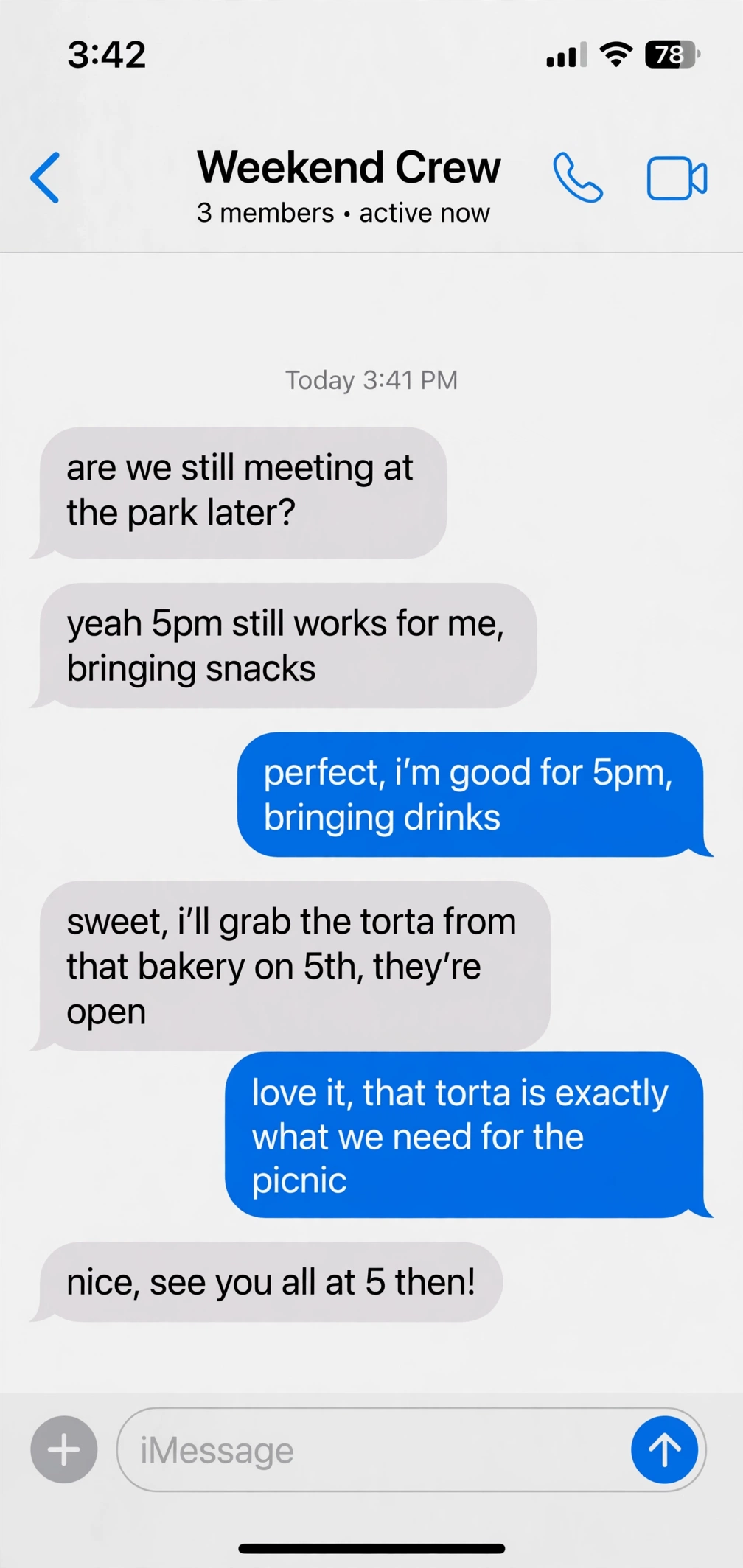
| Texting a friend | “JAJA eres una torta 😂” | You’re such a goof (playful) |
| TikTok comment | “Torta girl summer 💅” | Curvy-girl pride (reclaimed) |
| Group chat roast | “Okay torta, calm down” | Affectionate teasing |
| Stranger’s photo comment | “torta 💀” | Body-shaming (offensive) |
| Lunch plans | “Torta de carnitas at noon?” | Literally a sandwich |
Comparison with Similar Terms
“Torta” sits in a crowded neighborhood of body-related and food-related slang. Here’s how it stacks up:
| Term | Meaning | How It Differs from “Torta” | Tone |
|---|---|---|---|
| Thicc | Curvy, full-figured (compliment) | Almost always positive; “torta” is more often an insult | Positive/playful |
| BBW | Big Beautiful Woman | Explicitly affirming by design; “torta” is ambiguous | Affirming |
| Chubby | Slightly overweight | Plain English descriptor; “torta” adds the Latina/cultural layer | Neutral to negative |
| Gordita | Spanish diminutive: “little fatty” | Closest cousin — also food-adjacent Spanish slang; often more affectionate due to the diminutive | Affectionate/teasing |
| Edgar | Latino guy with a specific haircut | The male counterpart in the same meme universe; often paired with “torta” in jokes | Mocking/playful |
| Snack | An attractive person | Also food slang, but purely a compliment; “torta” is far riskier | Compliment |
The key takeaway: “torta” is the riskiest word in this group. “Thicc,” “snack,” and “BBW” are compliments. “Torta” might be a compliment, a joke, or an insult — and you usually can’t tell which until someone reacts. That’s why “gordita” is often the safer pick among Spanish speakers: the diminutive “-ita” softens it into something that reads as affectionate far more reliably.

Alternate Meanings
This is where “torta” gets genuinely complicated. The word’s meaning changes dramatically by country, and mixing them up can cause real embarrassment:
- Mexico — the sandwich: A torta is a sandwich on a telera or bolillo roll, stuffed with milanesa, carnitas, jamón, or countless other fillings. Ordering “una torta” at a Mexican restaurant is the most normal thing in the world.
- Much of Latin America (Colombia, Venezuela, etc.) — cake: “Torta” means cake, as in birthday cake. “Torta de chocolate” is chocolate cake, not a chocolate sandwich.
- Spain — flatbread / slap / drunkenness: In Spain it can mean a flatbread, a slap (“te voy a dar una torta” = “I’ll slap you”), or getting drunk (“agarró una torta” = “he got plastered”). It also appears in idioms like “ni torta” (not a clue).
- Argentina — lesbian (slang): “Torta” is slang for a lesbian woman. Depending on who’s talking, it’s casual community language or a slur. “Hacerse la torta” means to play innocent.
- Philippines — omelette: Borrowed via Spanish, “torta” in the Philippines is a type of omelette, often with ground meat and potatoes.
- US (Wiktionary) — the sandwich, again: In American English dictionaries, “torta” is defined as the Mexican sandwich, served hot or cold.
So if a Mexican friend says “vamos por tortas,” they’re hungry. If an Argentine friend says “ella es torta,” they’re talking about someone’s sexuality. Same four letters, wildly different conversations. When you see the word online with no context, the slang/body meaning is the safest default assumption on English-language social media — but the food meaning is the safest default in real life.
Professional or Polite Alternatives
Since the slang sense of “torta” is about someone’s body, there is almost no situation where it’s the right word choice outside of jokes among friends. Here are better options depending on what you actually mean:
- If you mean curvy in a complimentary way: “curvy,” “full-figured,” “thicc” (informal but positive), “shapely.”
- If you’re describing body type neutrally: “plus-size,” “heavyset” (clinical), or simply don’t comment on someone’s body at all — usually the best move.
- If you mean goofy/silly (the Mexican sense): “goofball,” “silly,” “clumsy” — all the warmth, none of the risk.
- If you mean the food: just say “sandwich” or “torta sandwich” in English contexts to avoid confusion.
- If you’re joking with Latino friends: “gordita” (with the affectionate diminutive) lands softer than “torta” in most friend groups — but only if you know they’d find it funny.
Golden rule: never use “torta” to describe a stranger’s body, a coworker’s body, or anyone who hasn’t clearly signaled they’re in on the joke. Dictionaries label this usage “usually disparaging and offensive” for a reason.
Common Mistakes with Torta Meaning Slang
People mess up “torta” constantly. Here are the big ones:
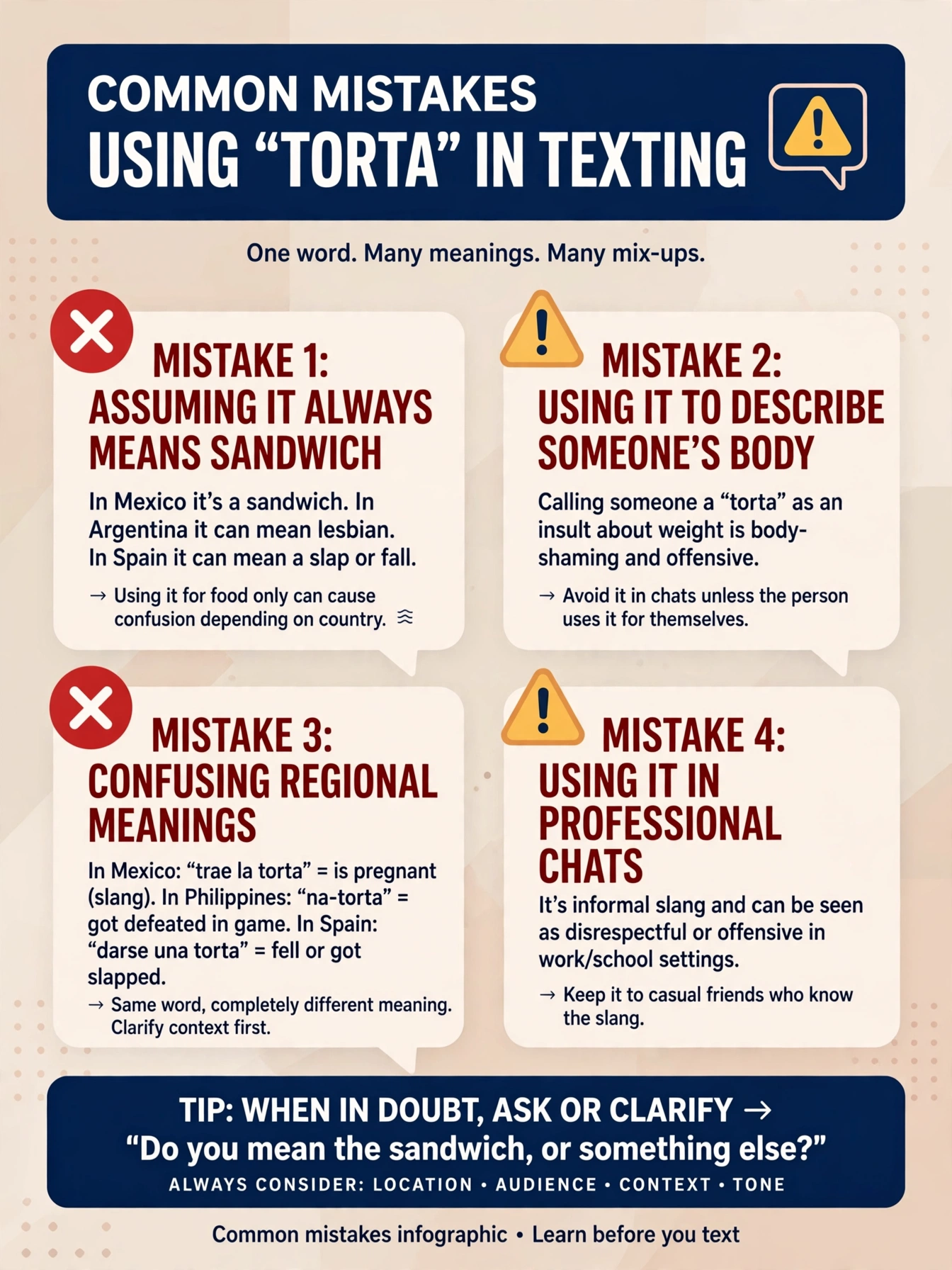
- Using it on strangers. The #1 mistake. What’s a funny roast between friends is body-shaming when aimed at someone you don’t know. TikTok comments are full of this mistake.
- Assuming it’s always about weight. In Mexico it might mean “goofy,” in Argentina it might mean “lesbian,” in Spain it might mean “slap.” Jumping to the body meaning in the wrong country causes genuine confusion.
- Thinking the diminutive fixes everything. “Tortita” isn’t really a thing the way “gordita” is — don’t invent softened versions and assume they’re safe.
- Using it professionally. There is no HR-safe version of calling someone a torta. Keep it out of work chats entirely.
- Confusing it with “torta pounder.” That’s a separate term for a man who seeks out tortas — using it on the wrong person, or not knowing what it implies, gets awkward fast.
- Forgetting the food meaning exists. Reacting with shock when someone says “I love tortas” at a Mexican restaurant is a classic gringo tell. They’re talking about sandwiches.
- Assuming reclamation = universal permission. Some women proudly call themselves “torta girls.” That doesn’t give everyone else a pass to use it — reclaimed language belongs to the community reclaiming it.
Quick Tips for Using Torta Meaning Slang
- When in doubt, don’t say it. If you can’t tell whether “torta” will land as a joke or an insult, silence is the correct choice.
- Mirror, don’t initiate. If your Latino friends use it playfully with each other, you can follow their lead — but let them set the tone first.
- Check the country. Mexico, Argentina, and Spain all hear this word differently. Know your audience.
- Food context = food meaning. Menus, restaurants, lunch plans — it’s a sandwich. Relax.
- Social media context = slang meaning. On TikTok and X, assume the body-related slang unless food is clearly involved.
- Self-description is safest. Calling yourself a “torta girl” as a joke about your own appetite or curves is very different from labeling someone else.
- Pair it with warmth, not venom. Among friends, it works like “gordita” — a term of endearment wrapped in a roast. The second it turns mean, it’s just mean.
- Learn “torta pounder” before you need it. If you see this term in comments, now you know: it describes a guy who’s into tortas. Forewarned is forearmed.


FAQ
What does “torta” mean in slang?
In US internet slang, “torta” (often “torta girl”) describes a curvy or plus-size Latina woman, named after the hefty Mexican sandwich. This torta meaning slang shows up across TikTok, X, and Instagram, and it can be affectionate, joking, or insulting depending on tone and context. In Mexican slang it can also mean a goofy or clumsy person.
Is calling someone a “torta” offensive?
It can be. Dictionary.com labels the slang sense “usually disparaging and offensive.” Between close friends it’s often playful, but aimed at strangers — especially about their weight — it’s body-shaming. When in doubt, don’t use it about other people.
What is a “torta girl” on TikTok?
On TikTok, “torta girl” is a viral label for curvy or plus-size Latina women, used in memes, comments, glow-up videos, and body-positivity content. Some creators embrace it proudly; others find it insulting. The term went viral in the early 2020s alongside “Edgar” memes about Latino dating culture.
What does “torta pounder” mean?
“Torta pounder” is slang for a man who specifically prefers dating “tortas” — curvy or plus-size Latina women. It emerged from the same 2020s meme culture as “torta girl” and is generally used jokingly.
Does “torta” mean sandwich or cake?
Both — it depends on the country. In Mexico, a torta is a sandwich on a soft roll. In much of the rest of Latin America (Colombia, Venezuela, and others), “torta” means cake. In Spain it can also mean a flatbread. Always check the regional context.
What does “torta” mean in Argentina?
In Argentinian slang, “torta” means a lesbian woman. It can be casual in-group language or derogatory depending on the speaker. Argentina also uses “hacerse la torta” (to play innocent) and “torta de plata” (a pile of money) — completely unrelated meanings.
Where did “torta” slang come from?
The slang dates back to at least 2003 in US Latino communities, per early Urban Dictionary entries, likely originating in Mexican street and youth slang where the hefty sandwich became a metaphor for a round, solid figure. It went mainstream-viral in the 2020s via TikTok, X, and Instagram memes.
Can I call my friend a “torta” as a joke?
Only if you’re sure they’d find it funny. Among close friends who share the joke, it works like “gordita” — affectionate teasing. But it’s about someone’s body, so it can easily sting. Never use it on strangers, coworkers, or anyone who hasn’t signaled they’re okay with that kind of humor.
Conclusion
“Torta” is one of those rare slang terms that contains multitudes: a sandwich in Mexico City, a birthday cake in Bogotá, a slap in Madrid, a loaded label in Buenos Aires, and a viral TikTok identity all at once. The torta meaning slang most people encounter online — the “torta girl” of meme culture — sits right on the line between affectionate joke and genuine insult, which is exactly why it pays to understand it before you use it.
The safest way to think about it: food context means food, social media means slang, and real life means asking yourself whether the joke is worth the risk. Used with warmth among friends, it’s the kind of playful roast that makes group chats fun. Used carelessly, it’s just body-shaming with better branding. And if you’re still building your internet-slang vocabulary, decoding terms like imk meaning in text or ttm meaning in text will keep you fluent — just remember that unlike those harmless abbreviations, “torta” carries real weight (pun very much intended). When the tone is right and the company is right, embrace the meme; when it’s not, there’s always an actual torta sandwich waiting, and it’s delicious.
