
Quick Answer: WTV stands for “whatever” in texting. It started as a quick three-letter shortcut, but its tone changes with context — it can sound neutral, flexible, playful, or flat-out dismissive depending on the conversation. This guide breaks down what WTV means in text, real examples, and how to reply to it.
WTV Meaning & Definition
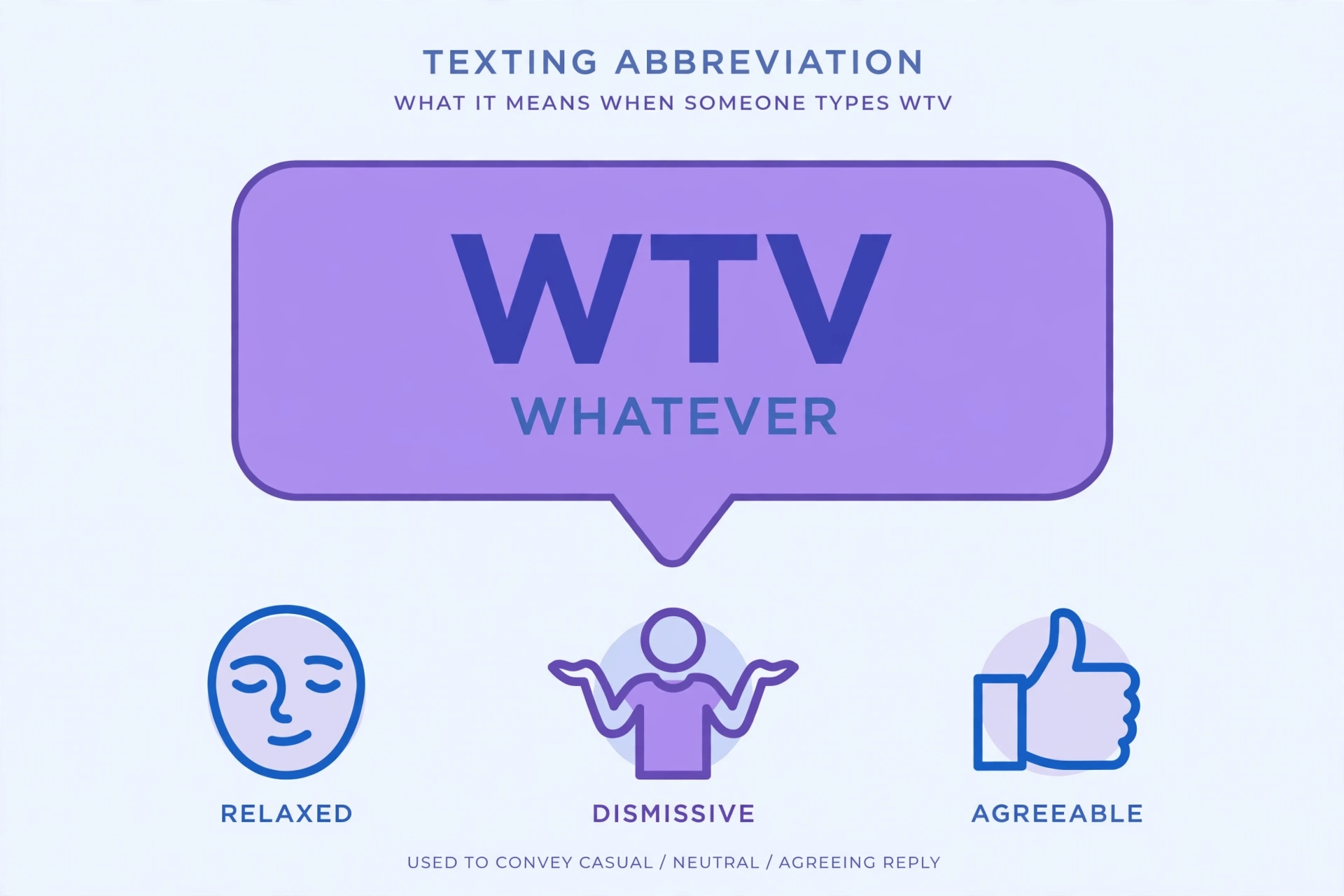
If you have ever wondered about the wtv meaning in text, here is the short version: WTV stands for “whatever.” It is one of those three-letter texting abbreviations that carries a whole mood in a tiny package. Unlike abbreviations that only save keystrokes, WTV is all about attitude — it tells the other person you are fine with anything, or that you honestly could not care less.
The tricky part is that the meaning shifts with context. One “wtv” can mean “sure, I am flexible,” and another can mean “I am done with this conversation.” The word “whatever” works the same way out loud — a flat tone versus an easygoing tone changes everything. In texting, punctuation, emojis, and timing take over that job.
You will see WTV in casual texts, group chats, TikTok comments, and Snapchat DMs. It shows up most often between friends, siblings, and people who are comfortable being a little blunt with each other. Whether it lands as chill or rude depends on who sends it and how the conversation got there.
Introduction
Every generation gets its own shorthand for “I do not want to argue about this anymore.” Gen X had the eye roll, millennials had the one-letter “k,” and Gen Z and Gen Alpha have “wtv.” The abbreviation has been floating around texting culture for years, but it picked up serious speed with TikTok captions and comment sections, where saying more with fewer characters is practically a sport.
If you got a text that just said “wtv” and had no idea what to do with it, you are in good company. It is one of those messages that can mean three different things depending on the time of day, the person sending it, and whether there is a period at the end. This guide unpacks all of it: the definition, the origins, real examples across tones, how to reply without starting a fight, and the mistakes that make you look ruder than you meant to be.
And while you are decoding texting slang, you might also want to look up the WYFD meaning in text and the WYA meaning in text — both show up in the same conversations where WTV tends to appear.
Origin
WTV is simply “whatever” squeezed down to three letters. Abbreviations like this grew out of early internet chat and SMS culture, when character limits were real and old-school phone keypads made every keystroke cost effort. “Whatever” was already one of the most tone-loaded words in English, so it was a natural candidate for the shortcut treatment.
The abbreviation bounced around AIM chats, MySpace comments, and early Facebook messages before texting culture absorbed it completely. Unlike slang that was born on a single platform, WTV grew up everywhere at once. It never had one big viral moment; it just steadily became part of the texting vocabulary the way “lol” and “brb” did.
One thing has stayed constant through all of it: WTV has always carried that signature “whatever” attitude. Even back in 2009, a bare “wtv” in a chat meant roughly what it means now — somewhere between “sure” and “I do not care,” with the reader left to figure out which one.
Popularity
By the mid-2010s, WTV had gone mainstream in teen and young-adult texting. It shows up regularly in TikTok comment sections, where users drop it on opinions they half-agree with or questions they do not feel like answering seriously. It is also a staple of Snapchat and Instagram DMs, especially in group chats where someone suggests plans and half the group answers “wtv.”
Search interest for “what does wtv mean” spikes whenever a new wave of users runs into it for the first time — usually younger teens or older adults. Teachers report seeing it in class group chats. Parents find it in their kids’ messages and assume something is wrong. That gap between the senders and the receivers is exactly why guides like this one exist.
In 2026, WTV is still going strong. It has not been replaced by a newer abbreviation, and it has not faded the way some platform-specific slang does. If anything, its usage has spread wider: millennials use it ironically, Gen Z uses it unironically, and Gen Alpha picked it up from both. It is a rare piece of slang that belongs to everyone now.
How It Is Used
WTV does different jobs depending on where it lands in a conversation. Here is how to read the most common uses:
- Agreeing without enthusiasm: “Where should we eat?” → “wtv.” Translation: any option works, so do not overthink it.
- Dropping an argument: after a long back-and-forth, “wtv” means “I am done discussing this.” This is the version that can sting.
- Being genuinely flexible: “Movie or dinner?” → “wtv, you pick.” No frustration here — just easygoing.
- Keeping it casual: responding to low-stakes news with “wtv” keeps the vibe light.
- Soft rejection: “Wanna hang out Friday?” → “wtv, I might be busy.” That one usually means no.
WTV Meaning in Text: Reading the Tone
Because “whatever” is a tone word, you have to read the delivery. Three signals matter most:
Punctuation. “wtv” with no period reads casual and chill. “wtv.” with a period reads clipped — the digital version of a door closing. “WTV” in caps reads annoyed or sarcastic, and “wtv…” with an ellipsis reads tired or passive-aggressive.
Emoji. A bare “wtv” is a coin flip. Add 🤷 and it is clearly neutral-flexible. Add 🙄 and it is dismissive. Add 😂 and it is playful. Add ❤️ and it might even be flirty. No emoji after a serious question usually leans cold.
Timing. An instant “wtv” right after you ask something suggests the person does not care much about the answer. A “wtv” that arrives an hour later — or at 2 a.m. — might mean they are tired and do not want to decide. Same three letters, different mood.
WTV Meaning in Text in Group Chats
Group chats are where WTV truly shines. Someone floats a plan, three people react with emojis, and one person drops a “wtv” — meaning “I am in for whatever, stop pinging me.” In group settings it is usually the lowest-conflict answer available. Nobody is fighting, nobody is deciding, everyone moves on.
Just be careful with one thing: in a group chat about something that actually matters to someone — a wedding venue, a trip budget, a birthday plan — “wtv” can read as “your thing does not matter to me.” Context is everything, and the higher the stakes, the more careful your wording should be.
Examples
The fastest way to learn WTV slang is to see it in action. These examples are grouped by tone so you can feel the difference between friendly, professional, and funny uses.
Friendly Examples
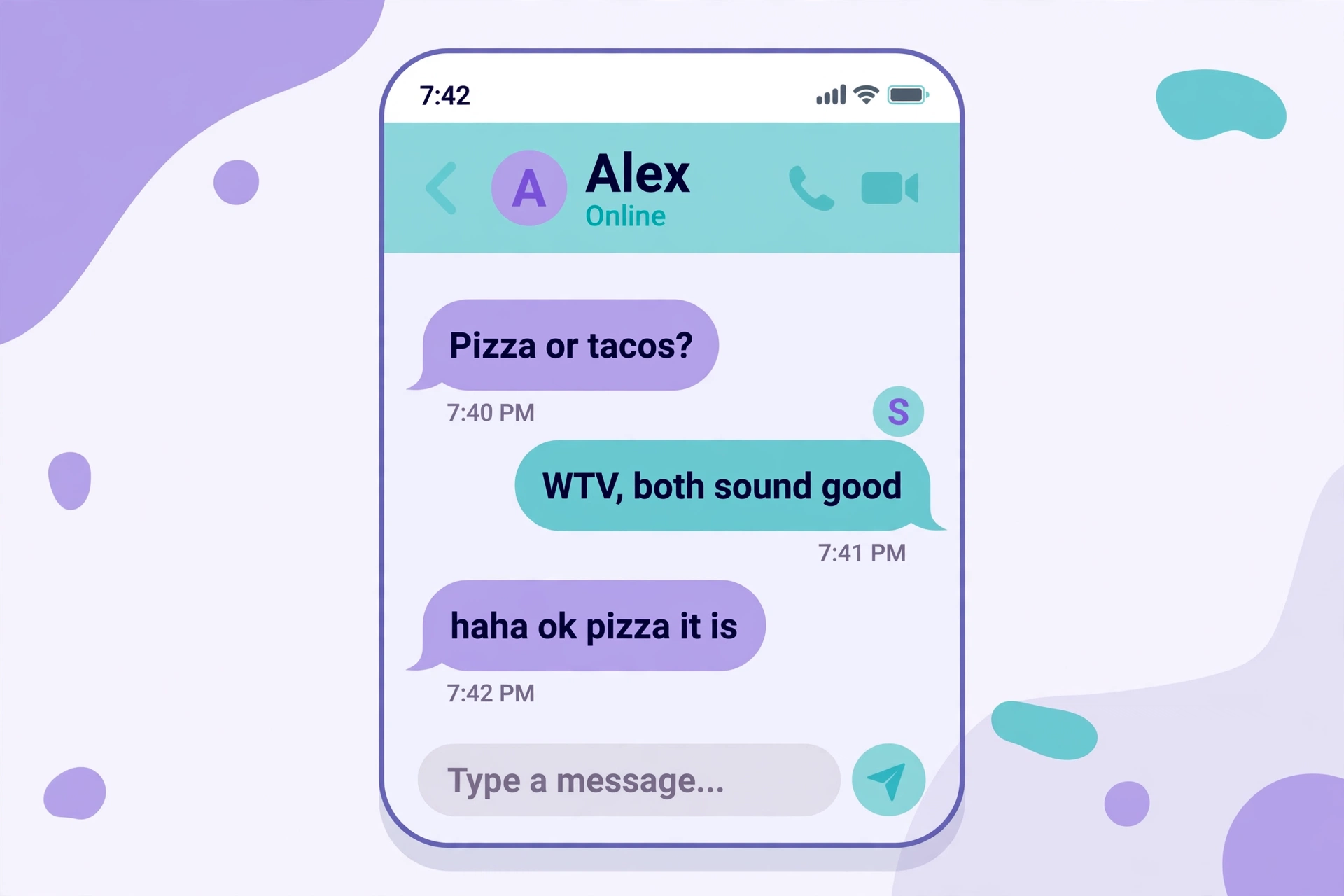
- “Pizza or tacos tonight?” → “wtv, I’m starving either way 😋”
- “Should I wear the blue or the black?” → “wtv you like, both look good on you”
- “We can go early or late, up to you.” → “wtv works for me, honestly”
- “Pick a movie.” → “wtv, I trust your taste lol”
- “You want the last slice?” → “wtv, go ahead 😊”
- “Beach or pool this weekend?” → “wtv, I’m just happy we’re going”
Professional Examples
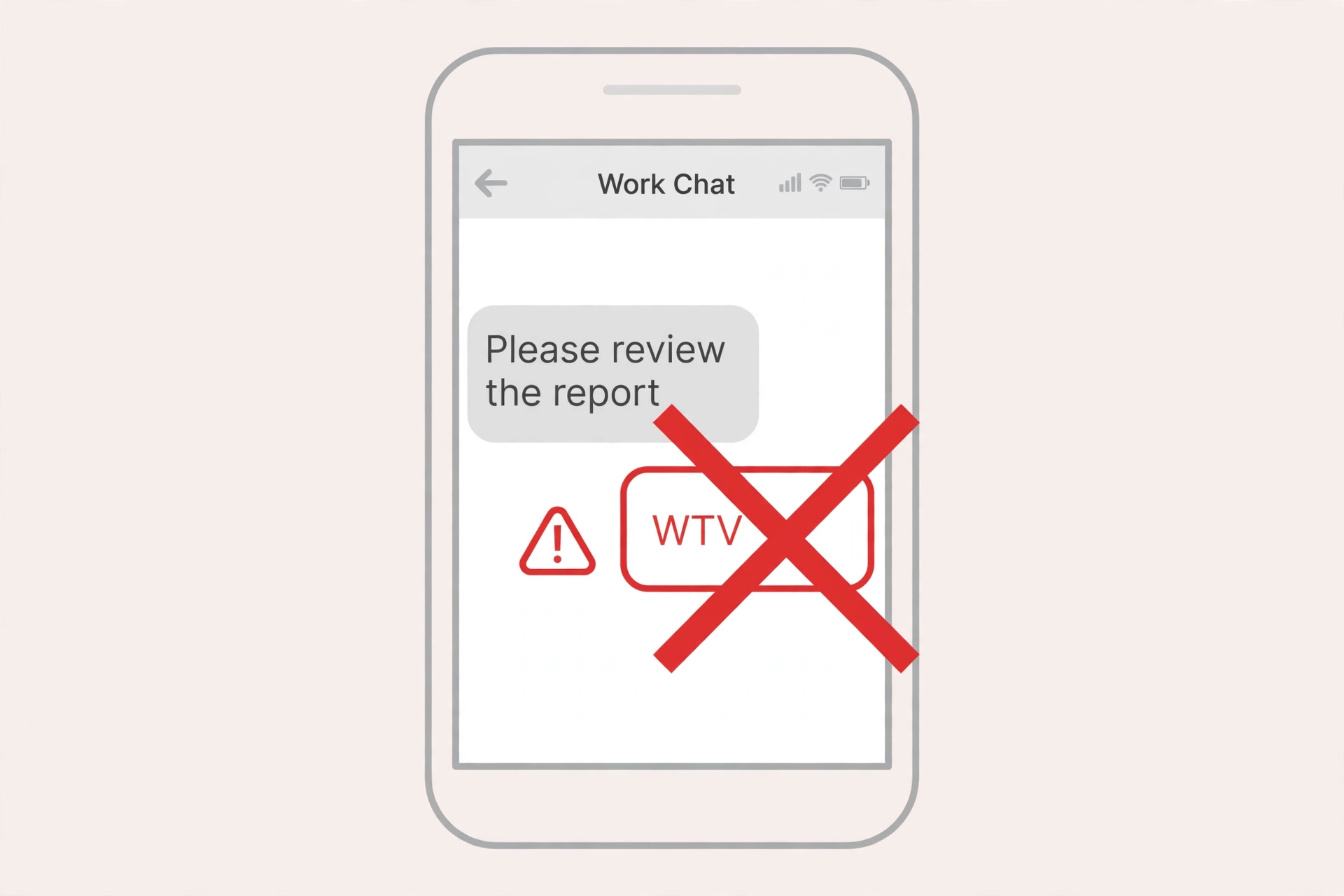
Here is the honest truth: WTV is almost never appropriate at work. These examples show the tone gap — and what to say instead:
- To your boss: “wtv” — reads as disrespectful, no matter what you meant.
- Better: “Either option works for me — happy to go with your call.”
- Casual chat with a close colleague: “Coffee at 9 or 10?” → “wtv, I’ll be at my desk either way” (still risky — read the room first).
- To a client: “I don’t have a strong preference — whatever you prefer is fine.”
Funny Examples
- “I’m a genius.” → “wtv, Einstein 🙄”
- “My team is winning this year, I can feel it.” → “wtv you gotta tell yourself 😂”
- “This homework is actually easy.” → “wtv, nerd”
- “I could eat ten tacos.” → “wtv, prove it 🌮”
- “I’m definitely going to bed early tonight.” → “wtv, see you online at 3am”
Comparison with Similar Terms
WTV gets mixed up with other short-and-blunt abbreviations all the time. Here is how it stacks up against the closest ones:
| Term | Stands For | Core Meaning | Typical Tone | Best Used When |
|---|---|---|---|---|
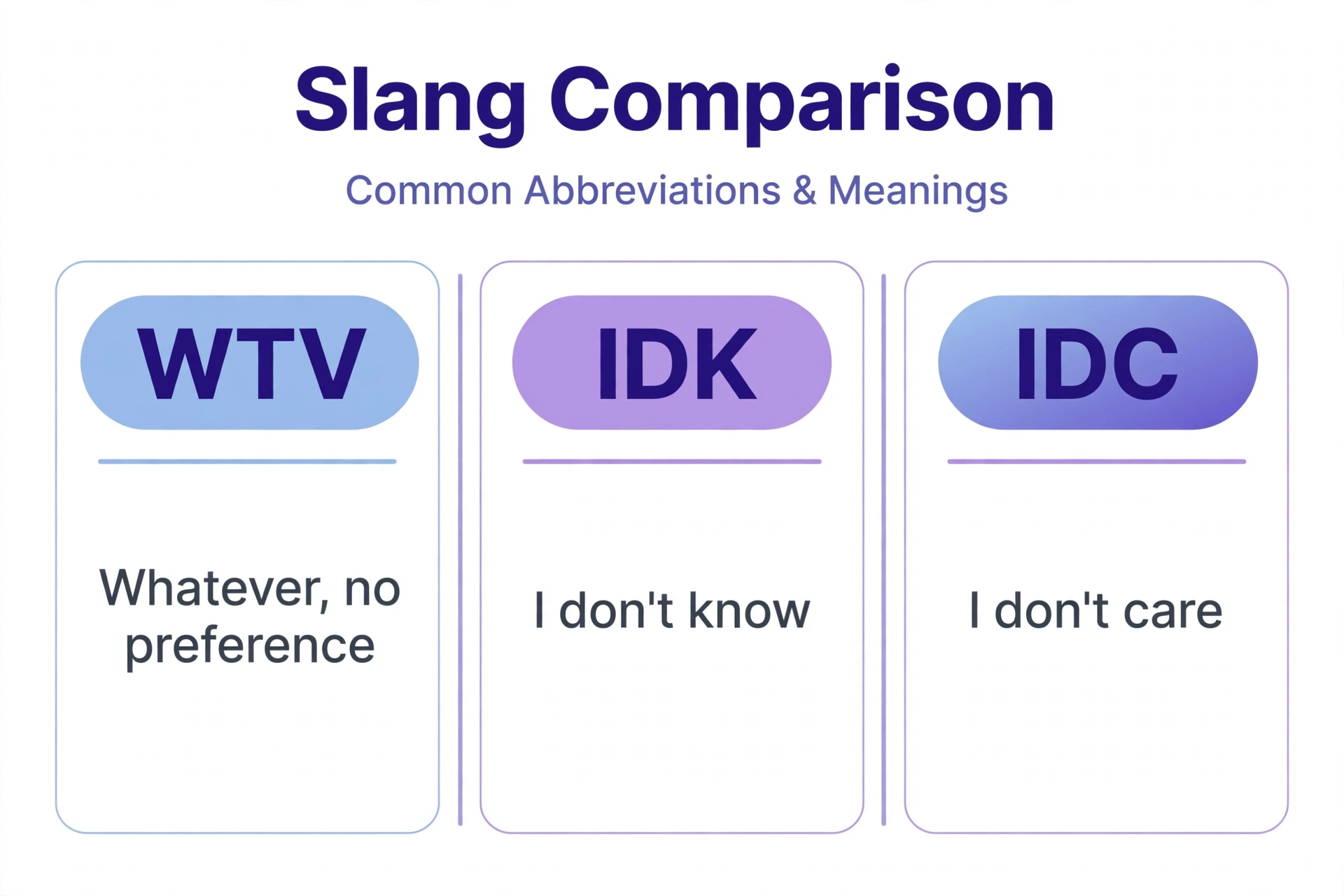
| WTV | Whatever | Flexible or dismissive | Neutral to cold | Low-stakes decisions, casual chats |
| IDK | I don’t know | Genuinely unsure | Neutral | You lack the information |
| IDC | I don’t care | Blunt disinterest | Cold, can offend | You truly don’t care (use carefully) |
| Whatev | Whatever (playful) | Light dismissal | Playful, snarky | Joking around with friends |
| Meh | A shrug in word form | Underwhelmed | Flat, neutral | Reacting to something boring |
The key difference: IDK is about knowledge, IDC is about caring, and WTV sits somewhere between the two. “IDK what time the movie starts” means you need information. “IDC what time the movie starts” means you do not care — and it can sound harsh. “WTV, pick a time” means you are fine with anything, which is warmer than IDC but vaguer than IDK.
“Whatev” is WTV’s playful cousin — it softens the dismissal with humor, so it works best with friends who get your tone. “Meh” is not even a response to a question most of the time; it is a reaction to something, like a movie or a meal. If you mix these up, the message still lands, but the exact flavor changes.
Alternate Meanings
WTV almost always means “whatever,” but it has a few alternate meanings worth knowing:
- “What’s the vibe”: on TikTok and Discord, “wtv” sometimes shortens “what’s the vibe” — as in “wtv tonight?” meaning “what’s the plan?” This usage is much less common, and context usually makes it obvious.
- “Watch the video”: rarely, in comment sections, “wtv first” can mean “watch the video first.” Again, context is the giveaway.
- .wtv file format: in tech contexts, WTV is the file extension for Windows Recorded TV Show files. If you see “wtv” in a folder of video files or a tech forum, it is almost certainly the format, not the slang.
When in doubt, assume “whatever.” The alternate meanings are niche enough that the slang meaning wins about 99% of the time in everyday texting.
Professional or Polite Alternatives
If WTV feels too blunt for the situation, swap in one of these. They say the same thing without the attitude:
| Instead of “wtv,” say | Best for |
|---|---|
| “Either works for me” | General polite agreement |
| “I’m flexible” | Scheduling and planning |
| “No preference” | Quick, neutral answers |
| “Whatever you prefer” | Deferring to someone else |
| “I’m good with anything” | Casual plans with friends |
| “Happy to go with your call” | Work situations |
The pattern is simple: keep the flexibility, drop the shrug. Full words signal that you actually thought about your answer, which is exactly what “wtv” fails to do in formal settings.
Common Mistakes
WTV is easy to type and easy to misuse. These are the mistakes people make most often — and how to fix each one:
- Dropping a bare “wtv” on something someone cares about. If your friend is excited about their news or stressed about a decision, “wtv” lands like a slap. Fix: match their energy — give a real answer when the topic matters to them.
- Adding a period in a tense conversation. “wtv.” reads like a door slamming, even if you did not mean it that way. Fix: skip the period, or add context: “wtv, you pick.”
- Using “wtv” at work. Bosses, clients, and formal emails are not the place for it. Fix: use one of the professional alternatives from the table above.
- Assuming every “wtv” means someone is mad. Half the time it just means “I genuinely do not mind.” Fix: check the signals — punctuation, emoji, timing — before you react.
- Answering “wtv” when you actually have a preference. Vague answers do not end decisions; they just delay them and annoy everyone. Fix: say what you want. People respect a clear answer more than a fake-flexible one.
- Using “wtv” to shut down an argument. It does not resolve anything — it just tells the other person their point was not worth your time. Fix: try “let’s agree to disagree,” or take a break and come back later.
- Sending “wtv” to parents or elders. The generational gap is real — it will read as rude even when you meant it casually. Fix: use full words with older family members.
Quick Tips
- Match the tone to the person. Playful “wtv 😂” with close friends; nothing abrupt with strangers or elders.
- Add context when it matters. “wtv, you pick” beats a bare “wtv” every single time.
- Read before you react. Check punctuation, emoji, and timing before deciding someone is upset.
- Use it to keep things easy, not to shut people down. WTV should oil the conversation, not end it.
- In group chats, stay flexible on small stuff. Save your strong opinions for decisions that actually matter.
- If a “wtv” stings, just ask. “lol are you good or actually annoyed?” clears things up in seconds.
- Replying to “wtv”? Take the decision. Say “cool, then let’s do X” — nothing kills a “wtv” loop faster than someone actually choosing.
FAQ
What does WTV mean in texting?
WTV stands for “whatever” in texting. It is a casual abbreviation people use to show they are flexible about a decision — or, depending on tone, that they do not care much about it. Whether it sounds chill or dismissive comes down to context, punctuation, and emojis.
Is WTV rude?
It can be. A bare “wtv” or “wtv.” after someone shares something important reads dismissive and rude. But “wtv, you pick 😊” between friends is just easygoing. The rudeness is not in the letters — it is in the delivery. When in doubt, add a few words to soften it.
What does WTV mean on TikTok?
On TikTok, WTV means the same thing it means in texting: “whatever.” You will see it in comments under opinions, debates, and questions — sometimes as a chill reaction, sometimes as a dismissive one. Occasionally it shortens “what’s the vibe” (“wtv tonight?”), but that usage is much rarer.
How do you reply to WTV?
The best reply depends on the tone. If it was friendly, just take the decision: “Cool, then let’s do pizza.” If it felt cold, check in: “You good, or actually annoyed?” If it was playful, volley back: “Wow, such enthusiasm 😂.” Never reply with another bare “wtv” — that just starts a standoff.
What is the difference between WTV and IDK?
IDK means “I don’t know” — it is about lacking information. WTV means “whatever” — it is about not having a strong preference, or not caring. “IDK, what time is it?” asks for facts. “WTV, pick a time” hands over the decision. They are not interchangeable.
Can you use WTV at work?
Almost never. WTV reads as blunt or disrespectful in professional settings, even when you mean it neutrally. Use “either works for me,” “I’m flexible,” or “happy to go with your call” instead. The one exception is a very casual chat with a close colleague — and even then, read the room first.
Is WTV flirty?
Usually not on its own. But pair it with the right signals — “wtv, you pick ❤️” or “wtv 😉” — and it can turn playful or flirty, especially late at night. Without those signals, assume it is neutral, not romantic.
Is WTV still popular in 2026?
Yes. WTV is still widely used in texting, TikTok comments, and group chats in 2026. It never had a single viral peak, so it never had a crash either — it just became permanent texting vocabulary, like “lol” and “tbh.” Expect it to stick around.
Conclusion
WTV is one of those rare abbreviations that says more than its three letters suggest. It can mean “I’m easygoing,” “I don’t care,” or “I’m done talking about this” — and telling those apart is the whole skill. Read the punctuation, watch for emojis, check the timing, and you will rarely misread it.
Want to keep decoding texting slang? Check out the TTM meaning in text, the TMP meaning in text, and the IKTR meaning in text — all three show up in the same chats where WTV lives. And if you are curious about the word behind the abbreviation, Merriam-Webster’s dictionary has the full story on “whatever.”

1 thought on “WTV Meaning in Text: What Does WTV Mean? Real Examples & 2026 Guide”