Quick Definition: Cop slang is the informal language built around the word “cop” — most famously meaning a police officer, but also a verb meaning to get, catch, or take something (“cop a feel,” “cop out”), and a whole family of street expressions that have been part of American English for more than 150 years. Whether someone says “the cops are coming,” “don’t cop out on me,” or “I copped the new sneakers,” the meaning changes completely with the context — and this guide breaks down every one of them.
Cop Slang Meaning & Definition
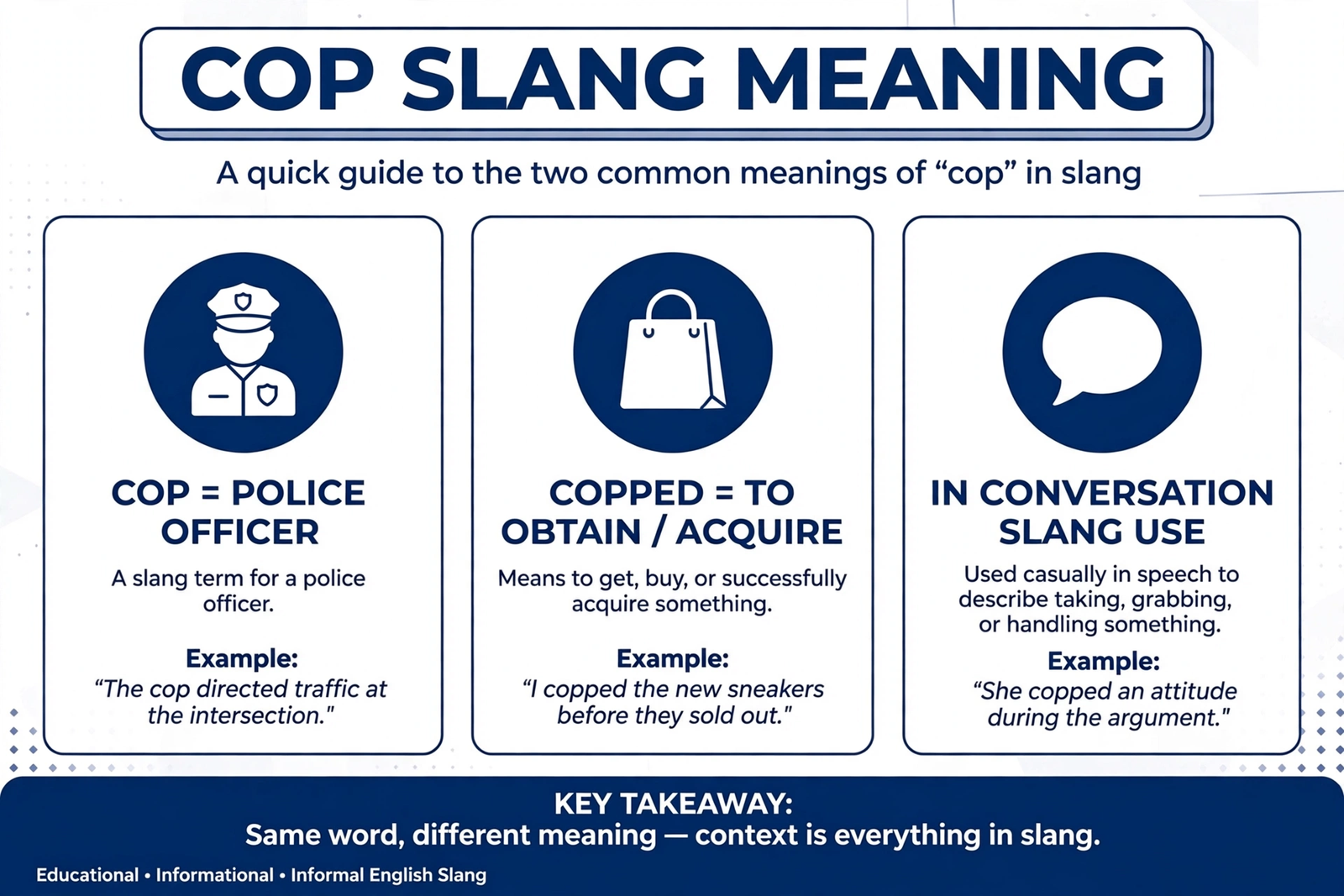
Cop slang means the casual, everyday uses of the word “cop” that go far beyond the dictionary definition of a police officer. As a noun, “cop” is the most common slang word for the police in the United States — “Call the cops,” “the cops pulled me over,” “there’s a cop car behind us.” As a verb, “cop” means to obtain, catch, or take something, often quickly or sneakily: “I copped tickets to the show,” “he copped a fine,” “she copped an attitude.” And as a root word, “cop” powers dozens of phrases — “cop out,” “cop a plea,” “cop a feel,” “cop shop,” “cop it” — each with its own history and its own rules about when it is safe to use.
What makes cop slang interesting is how ordinary it feels. Unlike newer internet slang such as gyat meaning slang, which lives mostly on TikTok, “cop” has been in everyday speech since the 1800s. Grandparents say it, rappers say it, police officers themselves say it, and kids texting their friends say it. It is one of the rare slang words that crossed every generation and every social group without losing its edge.
The Merriam-Webster dictionary lists “cop” as both a noun for a police officer and a verb meaning to get hold of or to steal, which shows how firmly the slang uses have entered standard English. But the dictionary only tells half the story. The real meaning of cop slang lives in the phrases, the tone, and the situations where people actually use it — and that is what this guide covers, with real examples you can use right away.
Introduction
Picture this: you are driving home late at night, your friend in the passenger seat suddenly says “cop!” — and without thinking, you slow down and check your mirrors. One tiny word just changed your behaviour completely. Or imagine a group chat where someone writes “I copped the new Jordans before they sold out” and everyone replies with fire emojis. Same word, totally different world. That is the power of cop slang: three letters that can mean law enforcement, a shopping win, a cowardly escape, or a criminal charge, depending on the sentence around it.
Most people learn cop slang the same way they learn all slang — by hearing it, not by studying it. You pick it up from movies, hip-hop lyrics, crime shows, video games, and friends. But hearing a word is not the same as understanding it. Say “cop a feel” in a formal meeting and you will get very different reactions than if you say “the cops helped me find my lost wallet.” Context is everything, and some cop phrases are playful while others are offensive, dated, or even risky to use in the wrong company.
This guide gives you the full picture. You will learn where “cop” came from and why it stuck, how it spread from the streets into mainstream English, what each major phrase means with real examples, how it compares with similar slang words, the mistakes people make when they use it, and the polite alternatives you can use when “cop” is not the right word for the room. By the end, you will never be confused by “cop” again — in a text, a song, a movie, or a conversation.
Origin
The word “cop” has one of the most debated origins in all of English slang, and the debate itself is part of the fun. The most widely accepted explanation is that “cop” comes from the verb “cop,” meaning to catch or seize, which itself comes from the old French word “caper” (to seize) and the Latin “capere” (to take). A police officer is, literally, someone who catches criminals — so the people who did the catching became known as “coppers,” and then simply “cops.” The first recorded use of “copper” for a policeman appears in British slang around the 1840s, and “cop” followed in American newspapers by the 1850s and 1860s.
You may also have heard the popular story that “COP” stands for “Constable On Patrol.” It is a good story, but language historians say it is almost certainly a myth — a backronym invented long after the word was already in use. Real police slang rarely comes from neat acronyms; it comes from the street, from the verb, from the job itself. The “copper” theory has the evidence on its side: officers wore copper buttons, and the slang word “copper” for a policeman was common in London slang decades before anyone talked about patrols.
The verb sense of “cop” — to get or take — is just as old. In 19th-century British thieves’ slang, “to cop” meant to steal or snatch something. From there it spread into general slang: you could “cop” a bargain, “cop” a beating, or “cop” a look at something. American English adopted both senses, and the two meanings have lived side by side ever since. That is why “I copped a new phone” and “the cops showed up” can both sound perfectly natural to the same person in the same day.
The phrase “cop out” arrived later, in the early 20th century, meaning to back out of a commitment or avoid responsibility — probably from the idea of escaping the way a criminal escapes the police. “Cop a plea,” meaning to plead guilty in exchange for a lighter sentence, comes from American courtroom slang of the mid-1900s. And “cop a feel,” a crude phrase for unwanted touching, spread through mid-century American slang and is still the reason parents and teachers warn teenagers about the word. Each phrase carries the same root idea — taking, catching, or escaping — stretched into a new situation.
Popularity
Cop slang has never really gone out of fashion, which is unusual for slang. Most slang words burn bright for a few years and then fade — but “cop” has been in continuous use for over 170 years, and it shows no sign of disappearing. The reason is simple: it is short, it is useful, and it covers too many situations to be replaced. Police officers are a permanent part of daily life, so the word for them is a permanent part of daily language.
Pop culture keeps cop slang alive in every generation. Classic cop shows and crime movies made phrases like “the heat,” “the fuzz,” and “cop out” part of the national vocabulary. Hip-hop turned “cops” and “cop” into some of the most repeated words in rap lyrics — from N.W.A’s famous protest anthem to modern tracks where “copped” means buying something rare and expensive. Sneaker culture gave the verb a second life: “copping” a pair of limited-edition shoes is now a whole hobby, with apps, raffles, and resale markets built around the word.
On social media, cop slang is everywhere. TikTok videos about police encounters use “cops” in captions millions of times a day. Sneaker and streetwear accounts post “cop or drop?” polls, asking followers whether a new release is worth buying. Gaming chats use “cop” for grabbing items, and group chats use “cop out” to call out a friend who cancels plans at the last minute. The word has adapted to every new platform without losing its meaning — a rare achievement for any slang term.
Search data tells the same story. People constantly look up what “cop” means in different phrases — “cop out meaning,” “cop a feel meaning,” “what does copped mean” — because the word is so common that everyone assumes they know it, until they meet a version they do not. That steady curiosity is why a complete guide to cop slang is still useful in 2026, more than a century and a half after the word first appeared in print.
How It Is Used
Cop slang works differently depending on whether “cop” is a noun or a verb, so the easiest way to understand it is to split the two jobs apart. As a noun, “cop” almost always means a police officer: “a cop pulled me over,” “ask a cop for directions,” “the cops are here.” It is informal but not rude — most police officers do not mind being called cops, and the word appears in newspapers, TV news, and everyday conversation without anyone blinking. It is simply the casual version of “police officer.”
As a verb, “cop” is much more flexible and much more dependent on the words that follow it. “Cop” plus a noun usually means to get or obtain something: “cop a ticket,” “cop a deal,” “cop some sleep,” “cop the new album.” In sneaker and streetwear culture, “copping” specifically means buying something limited or hyped before it sells out. In British and Irish English, “cop it” means to get into trouble or receive punishment — “if Mum finds out, you’ll cop it.” And “cop on” in Irish slang means to realise or understand something: “cop on to yourself” means “wise up.”
Then there are the fixed phrases, where the meaning cannot be guessed from the parts alone. “Cop out” means to avoid doing something you promised or should do — “he copped out of the presentation.” “Cop a plea” means to plead guilty for a lighter sentence. “Cop a feel” is a crude, offensive phrase for groping someone, and it is never appropriate in polite conversation. “Cop shop” is Australian slang for a police station. “Cop a squat” is American slang for sit down. Each phrase is its own little idiom, and learning them one by one is the fastest way to master cop slang.
Tone matters as much as meaning. “Cop” as a noun is neutral and friendly in most contexts, but “cop” as a verb in phrases like “cop a feel” or “cop out” can sound rough or accusatory. A good rule is to use the noun freely, use the verb carefully, and avoid the crude phrases entirely unless you are sure of your audience. The examples below show the difference in action.
Examples
Real examples are the fastest way to learn cop slang, because the same word changes meaning with every sentence. The examples below are grouped by tone — friendly, professional, and funny — so you can see exactly where each use fits and where it does not.
Friendly Examples
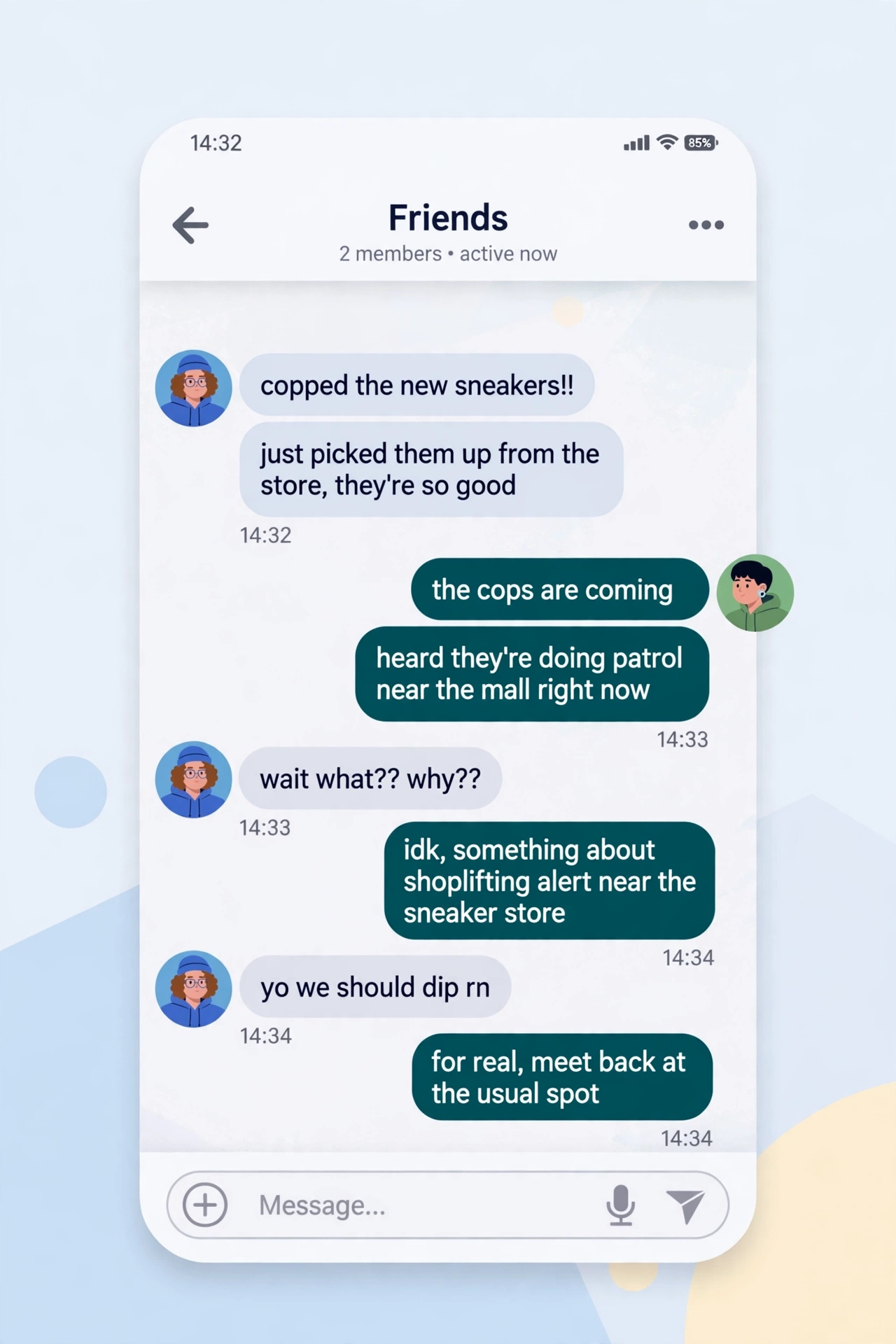
- “I copped the new sneakers the second they dropped — I can’t believe I actually got a pair!” (bought something limited before it sold out)
- “The cop at the corner helped my little brother cross the street. Such a nice guy.” (a friendly police officer)
- “Let’s cop some pizza on the way home, I’m starving.” (get or buy something casually)
- “She copped a free upgrade at the hotel just by asking nicely.” (obtained something good, informally)
- “No way I’m copping out on game night — I’ve been looking forward to it all week.” (refusing to back out of a fun plan)
- “Cop a squat, the movie’s about to start.” (sit down, casual and warm)
Professional Examples
- “The officer — the cop on duty that night — filed the report within the hour.” (informal noun use in a workplace story)
- “We copped a major client after months of pitching, and the whole team celebrated.” (won or secured something, business-casual tone)
- “Please don’t cop out of the deadline; the client is counting on us.” (calling out avoidance, direct but professional)
- “The defendant chose to cop a plea rather than risk a trial.” (legal context, standard courtroom slang)
- “Our store copped the exclusive launch, so expect a line outside on Friday.” (retail and streetwear business use)
Funny Examples (if applicable)
- “My dog saw the cop car and immediately sat down like he pays taxes.” (the universal joke about dogs and police cars)
- “I tried to cop a compliment from my crush and ended up complimenting her shoes for five minutes straight.” (awkward, relatable)
- “He copped out of helping us move by suddenly remembering he had a dentist appointment. On a Sunday.” (the classic excuse everyone sees through)
- “I copped the last slice of pizza and now my roommate is acting like I committed a crime. The cops might actually get called.” (playful exaggeration)
- “My grandma asked what ‘copping’ means and now she says she ‘copped a bargain’ at every single shop. She’s not wrong.” (generational slang crossover)
Comparison with Similar Terms
Cop slang does not exist in a vacuum. English has a whole shelf of words for the police and for getting things, and each one carries a different flavour. Knowing the differences helps you pick the right word for the right moment — and avoid the ones that will get you in trouble.
| Term | Meaning | Tone | When to Use It |
|---|---|---|---|
| Cop | Police officer; or to get/take something | Informal, neutral | Everyday conversation, texts, casual writing |
| Police officer | A member of the police force | Formal, respectful | Official reports, news, talking to police |
| The fuzz | The police (old-fashioned slang) | Dated, playful | Jokes, retro movies, 1960s–70s references |
| The pigs | The police (derogatory slang) | Rude, offensive | Almost never — it insults officers |
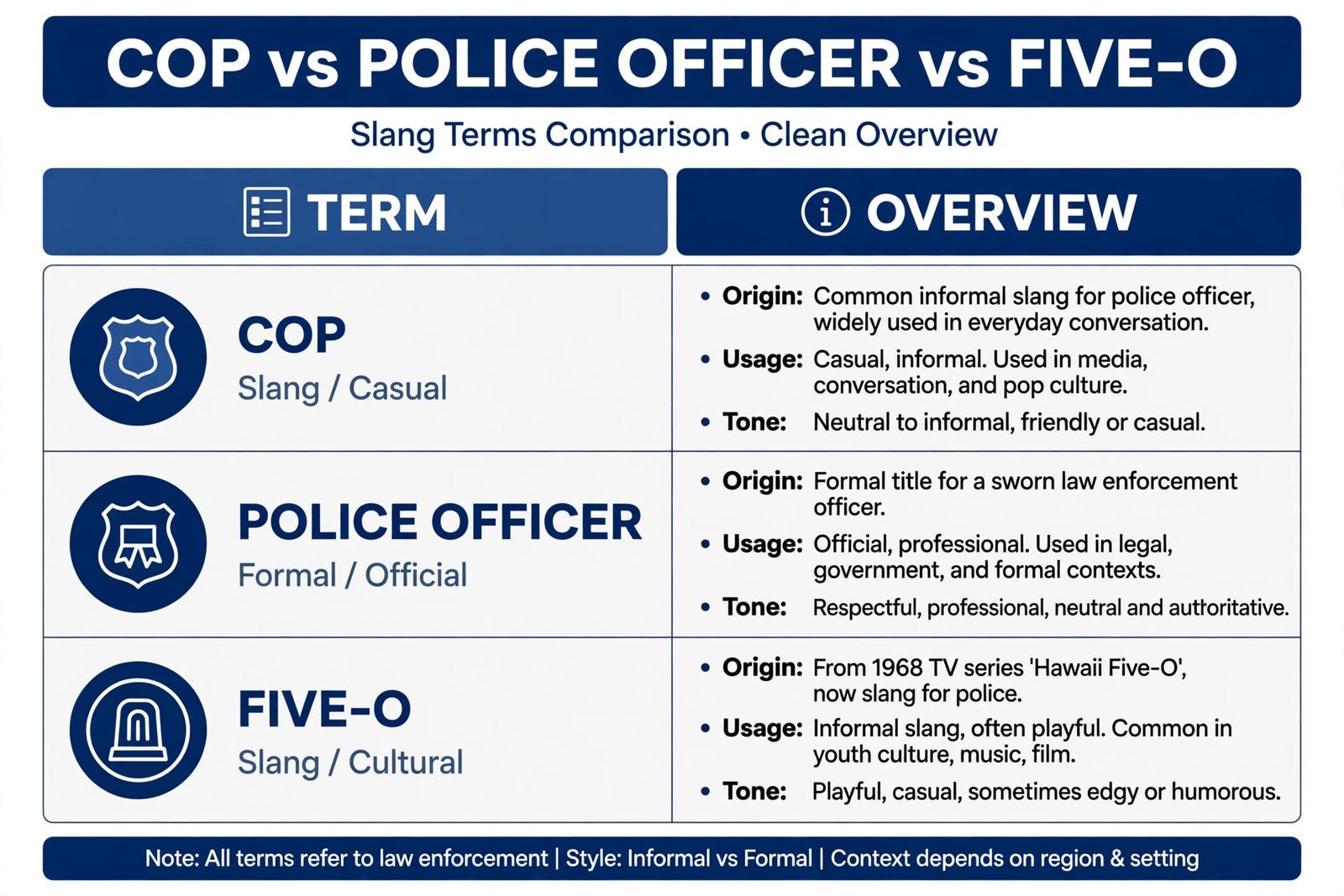
| Five-O | The police (from the TV show Hawaii Five-O) | Playful, pop-culture | Casual chat, hip-hop, warning friends |
| The heat | Police attention or pressure | Street slang | Crime movies, rap lyrics, informal stories |
| Po-po / Popo | The police (playful slang) | Light, joking | Texts, memes, joking with friends |
| Grab / Snag | To get or obtain something | Informal, neutral | Everyday alternative to “cop” as a verb |
The biggest difference is respect. “Cop” is the safe middle ground: informal enough for a group chat, respectful enough that officers use it themselves. “The pigs” and “the fuzz” sit at opposite ends of the spectrum — one is insulting, the other is so dated it sounds like a costume. If you are unsure, “cop” is almost always the right choice, just as dope slang meaning guides show how one word can swing from praise to insult depending on context. The same rule applies here: the word is only as polite as the sentence around it.
There is also a useful contrast with newer slang for getting things. In sneaker culture, “cop” and “grab” mean the same thing, but “cop” sounds more plugged-in — it signals you are part of the culture. In gaming, players “cop” loot and items the same way shoppers “cop” shoes. The verb has spread so far that it now works anywhere “get” works, as long as the setting is casual. In a job interview or a formal email, stick with “obtain,” “secure,” or “purchase” instead.
Alternate Meanings
Like many old slang words, “cop” has collected extra meanings over the decades, and a few of them have nothing to do with the police at all. Knowing them saves you from embarrassing misunderstandings — especially when you meet the word in a different country or a different generation’s speech.
The most common alternate meaning is simply the verb “to cop” as “to catch or receive.” In British English, “you’ll cop it” means you will get in trouble or get punished — “if the teacher sees your phone, you’ll cop it.” In Australia, “cop a hiding” means to get a beating, and “cop shop” is the local police station. In the United States, “cop a feel” is the crude phrase mentioned earlier, while “cop a plea” belongs to the courtroom. None of these mean “police officer,” but all of them grow from the same root idea of catching or taking.
Then there are the meanings that have nothing to do with slang at all. “Cop” is short for “copper” in the metal sense — a plumber might talk about “cop piping,” and an old coin was a “copper.” In film and theatre, a “cop” can be a police character, but it can also be a piece of stage equipment. In the world of spinning and textiles, a “cop” is a spool of thread wound on a spindle. These technical uses rarely cause confusion in conversation, but they explain why the word appears in such strange places in old books and dictionaries.
There is also “cop” as an abbreviation in modern contexts: COP can stand for the Conference of the Parties (the UN climate summit), a “cop” in gaming can mean a police role in a role-play server, and in online slang “cop” sometimes appears in phrases like “copium” — a blend of “cope” and “opium” meaning a fake excuse someone tells themselves after losing. “Copium” is not really about police at all; it is a meme word built on “cope.” If you see it in a comment section, the writer is teasing someone for making excuses, not talking about law enforcement.
Professional or Polite Alternatives
Sometimes “cop” is exactly the right word, and sometimes it is not. In formal writing, in a job interview, in court, or when speaking to a police officer you do not know, the polite alternatives below will always be safer. Keep them in your back pocket for the moments when slang would cost you credibility.
- Instead of “cop” (police officer): police officer, officer, law enforcement officer, member of the police, constable (UK). Example: “The officer directed traffic after the accident” sounds more formal than “The cop directed traffic.”
- Instead of “copped” (bought or obtained): purchased, bought, acquired, secured, got hold of. Example: “I purchased the new album on release day” fits a formal email better than “I copped the new album.”
- Instead of “cop out” (avoid responsibility): back out, withdraw, avoid, shirk, fail to follow through. Example: “He withdrew from the project at the last minute” is neutral; “he copped out” sounds accusatory.
- Instead of “cop a plea”: enter a plea bargain, plead guilty, accept a plea deal. Example: “The defendant accepted a plea deal” is the standard newsroom wording.
- Instead of “cop a feel”: there is no polite version — the act itself is inappropriate touching, and the correct language is “inappropriate touching” or “unwanted physical contact.” Do not dress it up; name it plainly.
- Instead of “cop shop” (police station): police station, precinct, station house. Example: “Report it at the nearest police station.”
The rule of thumb is simple: use “cop” with friends, family, and in casual writing, and switch to the formal words in official settings. Nobody will ever fault you for saying “police officer” in a text message, but saying “cop” in a court statement can make you sound careless. Match the word to the room, and you will never go wrong.
Common Mistakes
Even native speakers get cop slang wrong, because the word is so familiar that people stop thinking about it. These are the mistakes that cause the most confusion — and the easiest ones to fix.
1. Using “cop a feel” as a joke. This is the biggest mistake of all. The phrase describes non-consensual touching, and treating it as a funny expression minimises something serious. Never use it as a punchline, and never use it around people you do not know well. If you hear it, understand it — but do not repeat it casually.
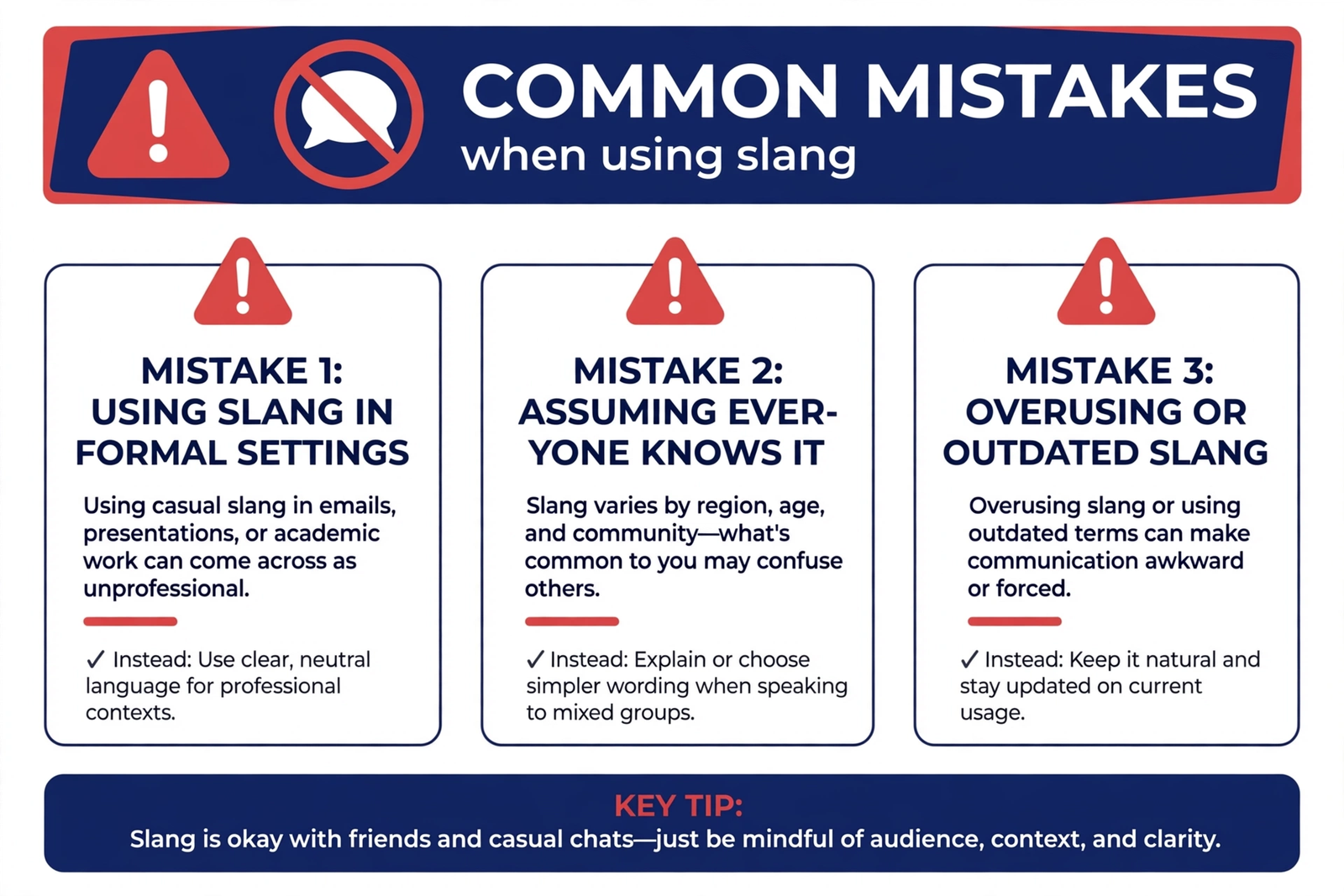
2. Calling every officer “cop” in a formal setting. “Cop” is fine in conversation, but in a written statement, a news report, or a conversation with an officer, “police officer” or “officer” is more respectful. A good habit is to mirror the language of the person you are talking to: if they say “officer,” you say “officer.”
3. Confusing “cop out” with “chicken out.” They are close, but not the same. “Cop out” means avoiding a responsibility or commitment you already made — “he copped out of the deal.” “Chicken out” means backing down because you are scared — “he chickened out of the jump.” Use “cop out” for broken promises, “chicken out” for fear.
4. Using “copped” for everything you bought. In sneaker and streetwear culture, “copped” means buying something limited or hyped. Saying you “copped groceries” or “copped a bus ticket” sounds odd — it overuses the slang and makes the sentence feel forced. Save “copped” for the special purchases, the ones you hunted for.
5. Assuming “cop” always means police. “I copped a cold” means I caught a cold. “She copped an attitude” means she became rude. “He copped a fine” means he received a fine. If you read every “cop” as “police officer,” half of these sentences will make no sense. Always check the words around it.
6. Using dated terms like “the fuzz” or “the pigs” seriously. “The fuzz” sounds like a 1970s movie, and “the pigs” is genuinely insulting to police officers. Neither belongs in modern conversation unless you are quoting a film or making a deliberate joke — and even then, know your audience.
Quick Tips
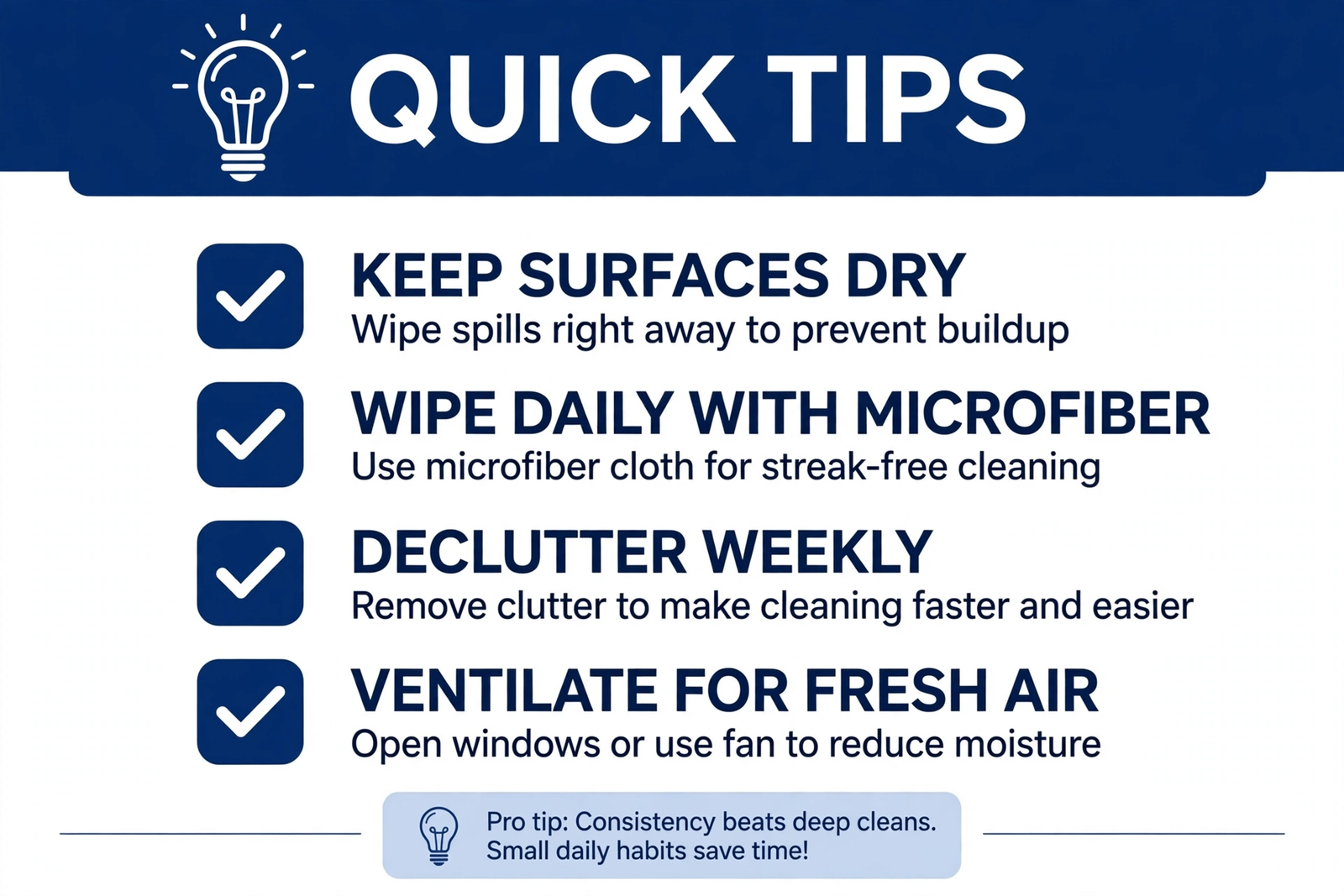
- Learn the noun first. “Cop” meaning police officer is the safest and most common use. Master it before you touch the verb phrases.
- Read the words after “cop.” “Cop a ticket,” “cop out,” “cop a plea,” and “cop a feel” are four completely different ideas. The phrase after “cop” is the real meaning.
- Use “copped” for wins. Got the last pair of limited sneakers? A rare vinyl? A hard-to-get ticket? That is a “cop.” Routine shopping is just shopping.
- Keep it casual. “Cop” belongs in texts, chats, and conversation. In formal writing, switch to “police officer,” “purchased,” or “obtained.”
- Never joke with “cop a feel.” Understand it when you hear it, but do not use it as humour. Some phrases are better left unrepeated.
- Watch for regional differences. “Cop it” (get in trouble) is British, “cop shop” (police station) is Australian, “cop a squat” (sit down) is American. The same word travels differently.
- Pair it with other slang carefully. “Cop” mixes well with casual words — but combining it with formal language in one sentence (“The officer copped a plea bargain forthwith”) sounds strange. Keep the register consistent.
- When in doubt, ask. If someone texts you “I copped it” and you are not sure what “it” is, just ask. Slang is meant to be understood, not guessed at — and a quick question beats a wrong reply every time.
FAQ
What does cop slang mean?
Cop slang is the informal language around the word “cop.” As a noun it means a police officer (“call the cops”). As a verb it means to get, catch, or take something (“I copped the last ticket”). Phrases like “cop out” (avoid responsibility) and “cop a plea” (plead guilty for a lighter sentence) build on the same root idea of catching or taking.
What does “cop out” mean in slang?
“Cop out” means to back out of a commitment or avoid a responsibility you already accepted. If your friend promised to help you move and then cancels with a weak excuse, they “copped out.” It is different from “chicken out,” which is about fear — “cop out” is about dodging duty.
What does “copped” mean in texting and sneaker culture?
In texting and sneaker culture, “copped” means successfully bought something — usually something limited, hyped, or hard to get. “I copped the new Jordans” means the person managed to buy them before they sold out. It is a small brag: the purchase itself was the achievement.
Is it rude to call a police officer a cop?
Generally no. “Cop” is informal but widely accepted, and many officers use it themselves. It becomes rude only in formal settings — a written statement, a court appearance, or an official report — where “police officer” or “officer” is more appropriate. In everyday conversation, “cop” is fine.
What does “cop a feel” mean?
“Cop a feel” is a crude slang phrase for touching someone in a sexual way without their consent. It is not a joke phrase and should not be used lightly. If someone uses it around you, understand the meaning, but do not repeat it casually — the behaviour it describes is inappropriate and can be a form of harassment.
What does “cop a plea” mean?
“Cop a plea” is American legal slang for pleading guilty to a lesser charge in exchange for a lighter sentence. A defendant who “cops a plea” accepts a plea bargain instead of going to trial. News reports usually say “accepted a plea deal” instead.
Where did the word “cop” come from?
“Cop” most likely comes from the verb “cop,” meaning to catch or seize, which traces back to the old French “caper” and Latin “capere” (to take). A “copper” was a policeman because his job was to catch criminals, and “cop” is the shortened form. The popular story that COP stands for “Constable On Patrol” is a myth invented after the word was already in use.
What is the difference between “cop” and “the fuzz”?
Both mean the police, but “cop” is current, neutral, and used every day, while “the fuzz” is dated 1960s–70s slang that now sounds retro or jokey. Use “cop” in normal conversation and save “the fuzz” for quoting old movies or making a deliberate throwback joke.
Conclusion
Cop slang is one of the oldest and most useful pieces of English slang still in daily use. In three letters it packs a police officer, a shopping victory, a broken promise, and a courtroom deal — and the only way to tell them apart is the context around the word. That is what makes “cop” both easy and tricky: easy because everyone knows it, tricky because everyone assumes they know all of it.
The key takeaways are simple. Use “cop” as a noun freely — it is the friendly, everyday word for a police officer. Use the verb carefully, and always read the phrase that follows it: “cop a ticket” and “cop out” are different worlds. Save “copped” for the wins that were actually hard to get, and leave crude phrases like “cop a feel” out of your vocabulary entirely. And when the setting turns formal, switch to “police officer,” “purchased,” or “accepted a plea deal” without a second thought.
Slang is a living thing, and “cop” has survived for more than 170 years because it keeps adapting — from London streets to American courtrooms, from hip-hop lyrics to sneaker drops and TikTok captions. If you understand cop slang, you understand a piece of English that connects generations, and you will never be confused when it shows up in a text, a song, or a conversation again. Keep exploring the language around you — from playful terms like canary slang to street words like what is an opp slang — and the next slang word you meet will feel a little less mysterious.
