
what is an opp slang Meaning & Definition
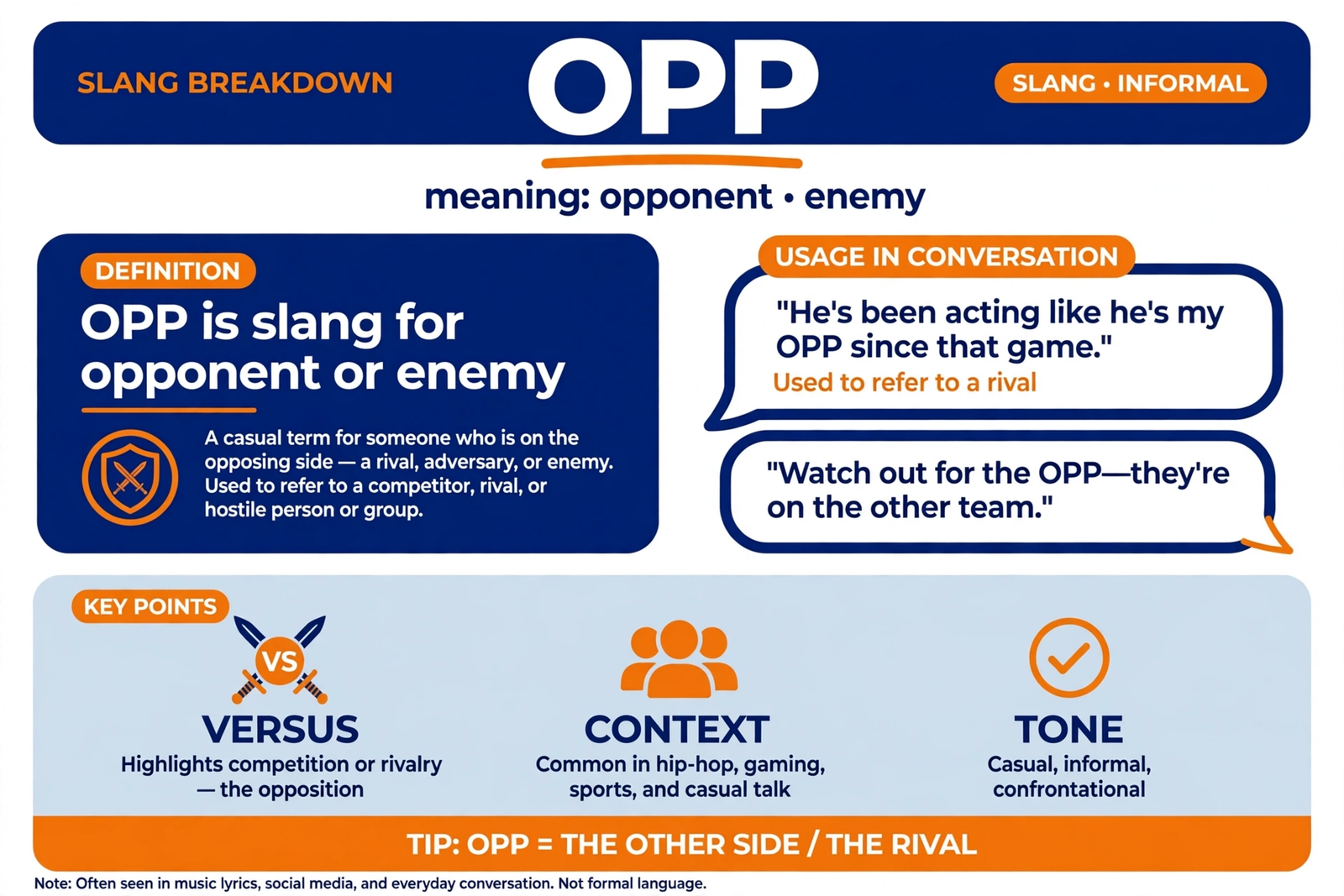
Quick definition: In slang, an opp is an opponent, enemy, or rival — someone who is on the other side of a conflict. The plural is opps. The word comes from African American Vernacular English (AAVE) and hip-hop culture, and today it shows up everywhere from rap lyrics and TikTok captions to everyday group chats.
So, what is an opp slang exactly? If you have ever seen a comment like “the opps are watching” or heard a rapper say “I don’t talk to opps,” you have already met the word in the wild. In this guide, we break down the full opp meaning, where it came from, how people use it in texts and on social media, the common mistakes to avoid, and the polite alternatives you can use instead. By the end, you will know exactly when “opp” means a real enemy — and when it is just a joke.
Introduction
Slang moves fast. A word that belonged to one neighborhood or one music scene can become a global TikTok trend within months, and “opp” is one of the best examples of that journey. What started as street and hip-hop shorthand for “opposition” is now used by teenagers, gamers, sports fans, and even brands trying to sound young. But because the word carries real history — including serious gang and drill-music roots — using it correctly matters more than with most slang.
That is why so many people search for what is an opp slang. They want a simple answer, but they also want the context: is it always negative? Can you call a friend an opp as a joke? Does it mean the same thing in a business email as it does in a rap song? The short answer is no — context changes everything. The long answer is what this article is for.
In the sections below, you will find the definition, the origin story, real chat examples in friendly, professional, and funny tones, a comparison table with similar slang terms, alternate meanings (including the famous 1991 song that made “O.P.P.” a household phrase), and a quick FAQ answering the exact questions people type into Google. If you enjoy decoding internet slang, you may also like our guide to fn meaning in text, another short abbreviation that confuses a lot of readers.
Origin of Opp Slang
The word “opp” is a clipped form of “opponent” or “opposition.” It grew out of African American Vernacular English (AAVE) and was used for years in street culture to name rival groups or individuals. In that world, an opp was not a casual rival — it was someone genuinely on the other side, and the word carried real weight.
The term exploded into mainstream awareness through Chicago drill music in the early 2010s. Rappers such as Chief Keef and other drill artists used “opp” and “opps” constantly in lyrics, turning a local word into a national one. From there, social media did the rest: Instagram captions, Twitter (now X) jokes, and later TikTok sounds carried the word far beyond its original scene.
There is also an older, separate chapter in the story. In 1991, the hip-hop group Naughty by Nature released the hit single “O.P.P.,” where the letters stood for “Other People’s Property” — a playful euphemism for being involved with someone else’s romantic partner. That song made “O.P.P.” famous decades before the modern “opp” took off, and the two meanings still get mixed up today. We cover that difference in the alternate meanings section below. For a deeper look at the term’s documented history, see the Know Your Meme entry on Opp / Opps.
Popularity: Why Everyone Says Opp Now
A decade ago, “opp” was mostly heard in rap songs. Today, it is hard to scroll through TikTok, X, or Instagram without seeing it. Several forces pushed it into the mainstream:
- Drill and hip-hop: New generations of rappers kept the word in hit songs, so it never left the charts.
- Memes and TikTok: Phrases like “the opps are watching” and “opp behavior” became joke formats, often used about nosy coworkers, strict parents, or jealous exes.
- Gaming and sports: Players call rival teams or players “opps” in a light, competitive way.
- Softening of the meaning: Online, the word lost much of its serious edge. Calling someone an opp is now often closer to calling them a “hater” than a real enemy.
That softening is exactly why the question what is an opp slang gets searched so often. Newcomers hear the word in a funny TikTok and want to know whether it is an insult, a joke, or something in between. The honest answer: it depends on who says it, where, and about whom. A rapper talking about opps in a song and a teenager joking that their little brother is an “opp” are using the same word in very different ways.
How Opp Is Used in Texts and on Social Media
On social media, “opp” appears in a few repeatable patterns. Recognizing them helps you read the tone instantly:
- “The opps are watching / lurking”: A joking way to say rivals, critics, or nosy people are paying attention to your posts.
- “Moving like an opp”: Accusing someone of acting suspiciously, disloyally, or like an enemy instead of a friend.
- “My opp”: Naming a specific rival — sometimes serious, often playful, as in “my little brother is my biggest opp.”
- “Opp behavior”: A label for anything that feels like working against you, from a friend sharing your embarrassing photo to a coworker taking credit for your work.
- “No opps over here”: A boast that you have no enemies, or that your circle is solid.
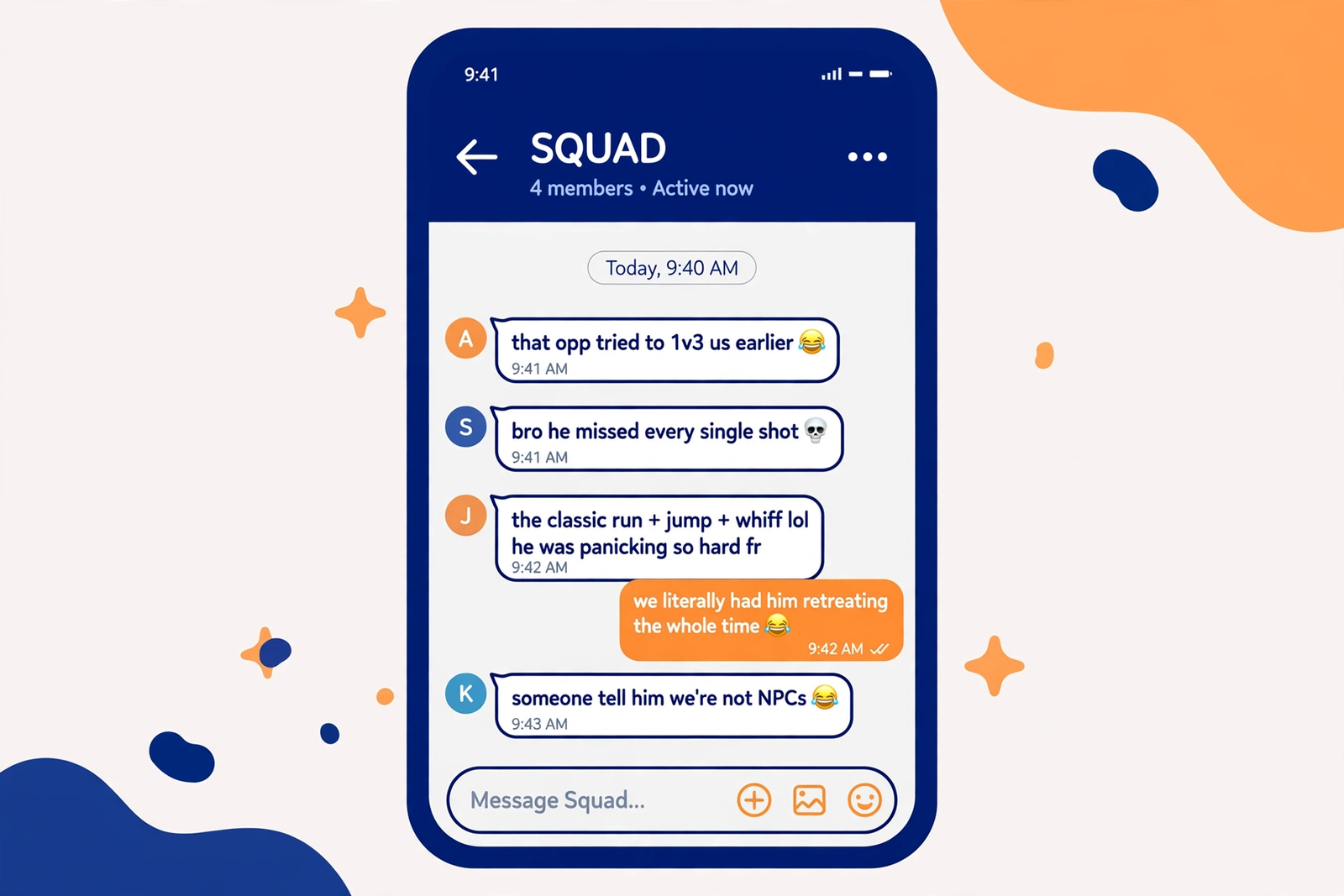
The plural “opps” is extremely common, and it can mean a rival group, a general sense of opposition, or just “the haters” in a vague, joking sense. In gaming, “opp” can also mean the opposing team or player, with no real-life conflict at all. Context is the whole game: the same sentence can be a threat in one conversation and a punchline in another.
Examples of Opp in Real Conversations
Examples make the meaning click faster than any definition. Here are real-world style examples of what is an opp slang in action, grouped by tone so you can see how the same word shifts.
Friendly Examples
- “My little sister ate the last slice of pizza. She’s an opp for real.” — Joking, affectionate, zero real conflict.
- “Bro, don’t tell mom I failed the test. Don’t move like an opp.” — Playful warning between friends.
- “My best friend beat me in FIFA again. He’s my opp now.” — Friendly rivalry after a game.
- “The group chat is quiet today. The opps must be asleep.” — Teasing friends who are not replying.
Professional Examples
“Opp” is informal, so it rarely belongs in a formal workplace message. But in casual work chats, creative industries, or sports commentary, it does appear:
- “Our competitor just dropped a huge update. The opps are not playing around.” — Casual talk about a business rival.
- “Keep the launch plan quiet for now. We don’t need the opps knowing our moves.” — Joking about competitors in a team chat.
- “The other sales team hit their target first. Respect to the opps, we’ll catch up next quarter.” — Competitive but respectful.
In professional settings, “competitor” or “rival” is almost always the safer choice. Save “opp” for casual conversations where everyone understands the joke.
Funny Examples
- “My alarm clock is my biggest opp. It always goes off at the worst time.”
- “The Wi-Fi went down during my ranked match. The opps hacked my router, I swear.”
- “My diet said no cake, but the cake shop across the street is moving like an opp.”
- “Me: posts a selfie. The opps in the comments: ‘who is this?'”
Notice the pattern: in funny uses, the “opp” is almost never a person you actually hate. It is an obstacle, a rival, or anyone (or anything) working against your plans in the moment.
Comparison with Similar Terms
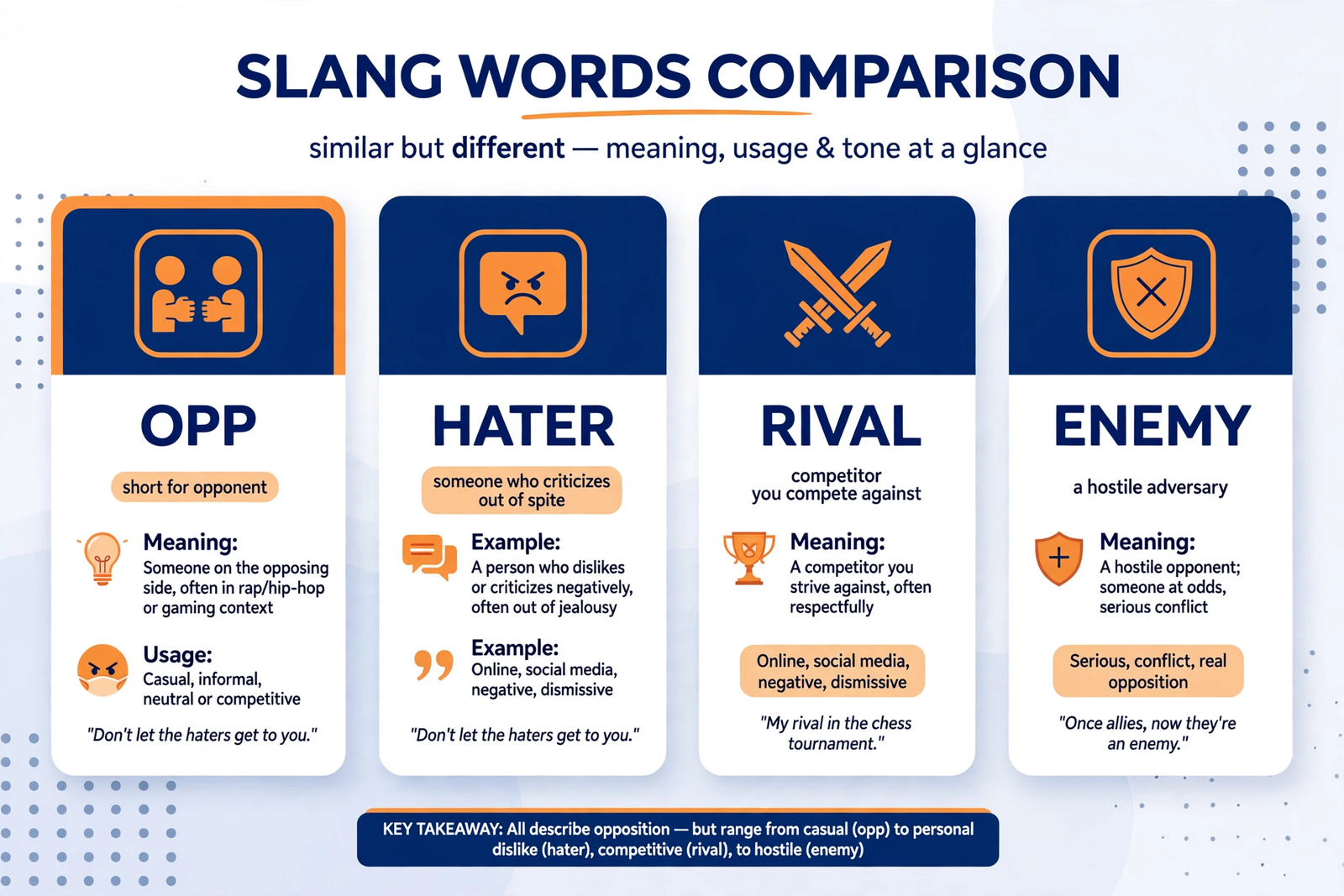
“Opp” sits in a crowded family of slang words for rivals and enemies. The table below shows how it compares with the closest terms, so you can pick the right one every time.
| Term | Meaning | Tone | When to Use It |
|---|---|---|---|
| Opp | Opponent, enemy, or rival | Serious to joking, depends on context | Hip-hop, social media, gaming, casual chats |
| Opps | Multiple opponents or rivals | Same as opp, often joking online | “The opps are watching” type jokes |
| Hater | Someone who dislikes you out of jealousy | Light, dismissive | When someone criticizes you unfairly |
| Rival | A competitor in sports, work, or school | Neutral, formal-friendly | Professional and everyday contexts |
| Enemy | Someone you are in real conflict with | Strong, serious | When the conflict is genuine |
| Snake | A disloyal or two-faced person | Negative, about betrayal | When someone betrays your trust |
| Ops | Short for “operations” or police in some contexts | Varies by region | Different meaning — do not confuse with opp |
The key difference: “hater” is about jealousy, “snake” is about betrayal, and “rival” is neutral. “Opp” is about opposition — someone on the other side, whether that side is a rival gang, a competing team, or just your sibling stealing your fries. If you want to explore more short slang words that work the same way, our glizzy meaning guide breaks down another hip-hop term that went mainstream.
Alternate Meanings of Opp
Like many slang abbreviations, “opp” does not have one single meaning. Here are the main alternate meanings, so you are never caught off guard:
- Other People’s Property (or Partner): From Naughty by Nature’s 1991 hit “O.P.P.” — being romantically involved with someone else’s partner. If someone asks “are you down with O.P.P.?” they are quoting the song, not talking about enemies.
- Opportunity: In business, sales, and job postings, “opp” is sometimes short for opportunity, as in “a great opp just opened up.” This is completely unrelated to the slang meaning.
- Opposite: In addresses and directions, “opp.” is an old abbreviation for “opposite,” as in “the bank is opp. the post office.” You will still see this in the UK and India.
- Ontario Provincial Police: In Canada, OPP is the abbreviation for the Ontario Provincial Police.
- Original Poster: On forums, some people write “OPP” for the original poster, though “OP” is far more common.
Most of the time, when someone online asks what is an opp slang, they mean the opponent/enemy sense. But if the context is business, an address, or a 1990s hip-hop throwback, one of these alternate meanings may be the right one.
Professional or Polite Alternatives
Because “opp” can sound aggressive or street-flavored, it is smart to have polite replacements ready. Use these when the setting is formal or when you are not sure the other person knows the slang:
| Instead of | Say | Best For |
|---|---|---|
| “He’s an opp.” | “He’s a competitor.” | Work, school, formal chats |
| “The opps are watching.” | “Our rivals are paying attention.” | Business or sports talk |
| “Don’t move like an opp.” | “Don’t work against me here.” | Asking a friend for loyalty |
| “My biggest opp” | “My biggest challenge” | Joking about obstacles politely |
| “Opp behavior” | “Unhelpful behavior” | Calling out actions, not people |
The goal is simple: keep the meaning, lose the edge. In a group chat with close friends, “opp” is fine and funny. In an email to a client or a message to a teacher, “competitor” or “rival” says the same thing without the risk.
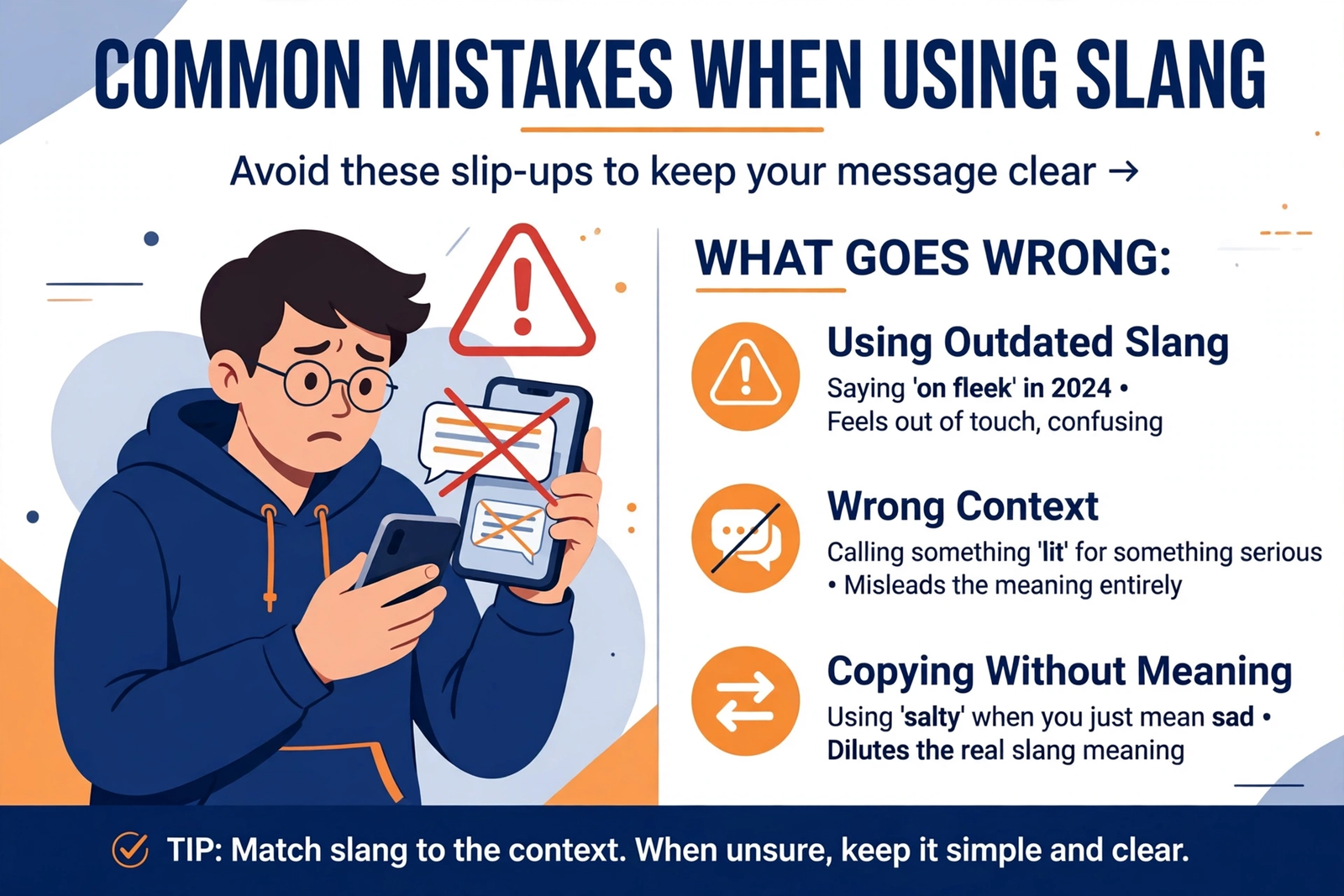
Common Mistakes When Using Opp
Even regular users slip up with this word. Here are the mistakes to avoid:
- Calling a real enemy an opp as a joke: In serious street or gang contexts, the word is not funny. If the conflict is real, do not treat the word lightly.
- Using it at work without thinking: “Opp” can sound unprofessional or even threatening in a formal message. Stick to “competitor” in professional settings.
- Confusing opp with OP: “OP” usually means “original poster” or “overpowered” in gaming. “Opp” means opponent. They are different words.
- Confusing it with the 1991 song meaning: Saying “I’m down with O.P.P.” in a modern slang conversation will confuse people — today, most listeners hear “opponent,” not the Naughty by Nature reference.
- Overusing it until it loses meaning: If everyone is an opp, no one is. Save the word for real rivals or clear jokes, and it stays funny.
- Using it about strangers: Calling someone you barely know an opp can come across as hostile. The joking version works best with friends who know you are kidding.
Quick Tips for Using Opp Correctly
- Check the room: With close friends, “opp” is a joke. With strangers or in formal settings, it can sound aggressive.
- Use the plural for groups: “Opps” covers a rival crew, a group of critics, or the haters in general.
- Pair it with humor: The word lands best when the joke is obvious — an opp alarm clock, an opp Wi-Fi router, an opp little brother.
- Never use it to threaten: If you mean real conflict, use plain language and stay safe. Slang should never be a cover for threats.
- Remember the culture: “Opp” comes from AAVE and hip-hop. Using it respectfully means knowing where it came from, not just copying the sound.
- When in doubt, pick “rival”: If you are unsure whether “opp” fits, “rival” or “competitor” always works and never offends.
One more tip for readers who love decoding short slang: the same habit of shortening words shows up all over texting culture. For example, our guide to imk meaning in text explains another three-letter abbreviation you will see in the same group chats where “opp” appears.

FAQ

What does opp mean in slang?
In slang, opp means opponent, enemy, or rival — someone on the other side of a conflict. It comes from AAVE and hip-hop culture, and the plural is “opps.” Online, it is often used jokingly for friendly rivals, critics, or anyone working against you in the moment.
What is an opp slang in texting?
In texting, an opp is someone you are jokingly (or seriously) treating as a rival. Examples include “my brother is my biggest opp” or “don’t move like an opp.” The tone is usually playful between friends, but the word can be serious in other contexts.
Is opp a bad word?
No, “opp” is not a swear word, but it can sound aggressive depending on context. Among friends it is usually a joke. In serious street contexts or formal settings, it can come across as hostile or unprofessional, so choose your audience carefully.
What does “the opps are watching” mean?
It is a joking way to say that rivals, critics, or nosy people are paying attention to what you post or do. On TikTok and X, it is often used humorously, not as a real warning.
What does “moving like an opp” mean?
It means someone is acting like an enemy — being suspicious, disloyal, or working against you instead of supporting you. Friends use it playfully when someone does something shady or unhelpful.
Does opp mean the same as hater?
Not exactly. A hater dislikes you, usually out of jealousy. An opp is someone on the opposing side — a rival or enemy. The words overlap online, but “opp” is about opposition, while “hater” is about attitude.
What did O.P.P. mean in the Naughty by Nature song?
In the 1991 hit “O.P.P.,” the letters stood for “Other People’s Property” — a playful euphemism for being involved with someone else’s romantic partner. That meaning is different from the modern slang “opp” (opponent), though both come from hip-hop culture.
Can I call my friend an opp?
Yes, if you are close and the tone is clearly joking — for example, after losing a game or when a friend steals your food. Avoid it with strangers, in formal settings, or in any situation where it could be taken as a real threat.
Conclusion
So, what is an opp slang in one sentence? An opp is an opponent, enemy, or rival — a word born in AAVE and hip-hop, made famous by drill music, and now used everywhere from TikTok jokes to gaming lobbies. The modern meaning is flexible: sometimes it names a real rival, and sometimes it is just a funny way to call your little brother, your alarm clock, or your Wi-Fi router the enemy.
The smart way to use it is to read the room. With friends, “opp” is playful and current. In formal or professional settings, “competitor” or “rival” carries the same meaning without the risk. And remember the alternate meanings — from the 1991 Naughty by Nature classic to the business shorthand for opportunity — so the context never catches you out.
Now that you know the full story, try using the word correctly in your next group chat. And if you come across another confusing abbreviation, our guide to hbu meaning in chat is a good next stop — it decodes one of the most common greetings in texting slang.
