
Quick definition: In internet slang, dover meaning slang is simple — “dover” is a playful, goofy roast for someone who is acting over-the-top, extra, dramatic, or a little bit clumsy. If a friend calls you “a dover” after you trip over nothing or freak out over a tiny typo, they are not really insulting you. They are laughing with you. The word works as a noun, an adjective, and even a verb, and it almost always shows up in casual chats, memes, and comment sections rather than in formal writing.
Dover Meaning & Definition
At its core, dover is a tone word. It does not describe a thing — it describes a vibe. A “dover” moment is the moment someone goes slightly too far: too dramatic, too loud, too clumsy, or too extra for the situation. Think of the friend who drops their phone, gasps like it is a tragedy, and then trips over the charger while picking it up. That whole sequence is dover energy.
Most of the time, dover is light and affectionate. It is the kind of word friends use to tease each other in a group chat, usually with a laughing emoji right behind it. It is not a serious insult, and it is not a compliment either. It sits in the middle: a funny callout that says “you are being ridiculous right now, and we all see it.”
The word is also flexible. As a noun, it labels the person: “Stop being a dover.” As an adjective, it describes the behavior: “That reaction was so dover.” As a verb, it describes messing something up: “I totally dovered my presentation.” All three uses point back to the same idea — something went over the top, or went wrong in a funny way.
Introduction
Scroll through TikTok comments, Discord servers, or a chaotic group chat for long enough and you will eventually meet a word that stops you mid-scroll: dover. Someone writes “bro is such a dover” under a video, or a friend texts “I dovered that so bad,” and if you have never seen the word before, you are left guessing. Is it a name? A place? A typo for “over”? The honest answer is: a little bit of all three, which is exactly why people keep searching for the dover meaning slang explanation.
Dover is not a mainstream slang word like “rizz” or “slay.” You will not find it in every dictionary, and your parents almost certainly do not use it. It lives in a smaller, younger corner of the internet — the corner where memes, typos, and inside jokes turn into vocabulary. That is part of its charm. Using it correctly signals that you are plugged into meme culture, and using it wrong just makes you look like you missed the joke.
This guide breaks down everything you need to know about dover in slang: what it means, where it probably came from, how people actually use it in texts and chats, how it compares to similar roast words, and the alternate meanings you should not confuse it with. By the end, you will know exactly when to drop “dover” into a conversation — and when to leave it out.

Origin
The exact origin of dover as slang is unclear, and anyone who claims to know the one true story is guessing. Internet slang rarely comes with a birth certificate. What we do know is that the word grew out of the same online habit that gives us dozens of other slang terms: taking a familiar word, twisting it slightly, and letting a community run with the joke.
The most popular theory is that dover started as a playful spin on the word “over.” Say “over” with extra emphasis, stretch it out, add a “d” to the front, and you get a word that sounds funnier and hits harder: dover. In this reading, “that was so dover” is a cousin of “that was so over the top” — the joke is baked right into the sound of the word. Some users also link it to “do over,” as in having to redo something you messed up, which fits the verb sense of dover perfectly: you dovered it, so now you need a do over.
Another theory points to the place itself. Dover is a real port town in England, famous for the White Cliffs of Dover — a landmark that stands out dramatically against the sea. Just as the cliffs stand out, a “dover” person stands out, usually by being dramatic. Whether the slang actually started from the town or whether people just connected the dots later is impossible to prove, but the association stuck, and it makes the word easy to remember.
What is certain is where the word spread: TikTok comments, Discord servers, Twitter replies, and meme pages. Short, punchy, two-syllable words travel fast in those spaces, and dover had one more advantage — it was funny to say. A word that makes people laugh when they hear it does not need a marketing campaign. It just needs one viral comment thread.
Popularity
Dover slang is niche, and that matters for how you use it. Unlike words that cross over into everyday speech, dover has stayed mostly inside younger, meme-fluent communities. You will see it in TikTok comments, gaming lobbies, Discord chats, and Reddit threads. You will rarely see it on the news, in a work email, or in a conversation with someone who does not spend much time online.
That niche status is a double-edged sword. On one hand, using it with the right crowd makes you sound current and in on the joke. On the other hand, using it with the wrong crowd gets you a blank stare, because the word has no obvious meaning to an outsider. If someone has never seen it, “dover” just sounds like a place in England or a typo.
Search interest in the term follows a familiar slang pattern: someone sees it in a comment, does not get the joke, searches for the meaning, and then starts using it themselves. That curiosity loop keeps small slang words alive long after the original meme fades. Dover may never become a household word, but it has earned a stable little corner of internet vocabulary — and its very obscurity is part of why people keep looking it up.
How It Is Used
Dover is grammatically flexible, which is one reason it caught on. Here are the main patterns you will see in real chats:
- As a noun (a person): “Stop being a dover, you tripped on air!” This is the most common use — labeling someone who just did something dramatic or clumsy.
- As an adjective (a vibe): “That movie was totally dover, I cannot even.” Here it means over-the-top, ridiculous, or absurd in a funny way.
- As a verb (a fail): “I dovered my whole exam, forgot all the answers.” This means messed up or failed, usually in a self-deprecating, joking way.
- As an exclamation: “Bro, you are such a dover right now.” Said mid-roast, usually with laughing emojis, to call out extra behavior in real time.
- As an energy: “Pure dover energy from this guy.” This borrows the “energy” format from other slang and means the person is radiating dramatic, chaotic vibes.
Tone is everything with dover. Said between friends with laughing emojis, it is a joke. Said flatly to a stranger, it can sound confusing or even rude, because the stranger has no context for the word. The safest rule is the one that applies to most roast slang: use it with people who already know the joke, and never use it to genuinely put someone down. Dover is a fun jab, not a weapon. If you want to see how another metaphor-based slang word works the same way — tough on the outside, flexible in meaning — check out tungsten meaning slang, where a metal becomes a whole personality description.
Examples
Examples are the fastest way to feel a slang word, so here is dover in real conversational contexts, grouped by tone.
Friendly Examples
- “You rehearsed your order three times and still panicked at the counter? You are such a dover, I love it.”
- “He waved at someone who was not waving at him and just kept waving. Total dover move.”
- “My little brother cried because his ice cream melted, then slipped on the puddle. Certified dover.”
- “She sent the text to the wrong group chat and then sent a voice note apologizing to the wrong group chat. Dover behavior, honestly.”
Professional Examples
- “I dovered the first slide of the presentation, but the rest went fine — do not use dover in the actual meeting, just laugh about it afterwards with coworkers who get it.”
- “He turned a five-minute update into a twenty-minute story. We all thought it, nobody said it: that was a dover meeting moment.”
- “If you mess up a casual team chat message, a self-aware ‘well, I dovered that one’ can actually break the tension — in a formal email, never.”
Funny Examples
- “Bro studied for the wrong exam, showed up confident, and then asked where the questions were. Peak dover.”
- “She tried to act cool, tripped over a flat floor, and then blamed the floor. The floor did nothing. Dover.”
- “He said ‘I never get scared’ and then screamed at his own reflection. Dover of the year, no competition.”
- “I dovered my own birthday post — wrote ‘happy birthday to me’ on someone else’s wall. Twice.”
| Situation | What someone says | What it means |
|---|---|---|
| Friend trips over nothing | “Okay, dover.” | You are being clumsy and dramatic |
| Friend overreacts to a typo | “Total dover move.” | That reaction was way over the top |
| You fail a quiz badly | “I dovered that quiz.” | I messed it up completely |
| Someone is being extra online | “Pure dover energy.” | Dramatic, chaotic, hilarious vibes |

Comparison with Similar Terms
Dover does not live alone. It belongs to a family of playful roast words that call out dramatic or clumsy behavior. Here is how it stacks up against its closest neighbors:
| Term | Meaning | How it differs from dover |
|---|---|---|
| Extra | Over-the-top, dramatic | Extra is mainstream and widely understood; dover is the niche, meme version |
| Dramatic | Exaggerated emotions | Dramatic is literal and serious; dover is always joking |
| Clowning | Acting foolish | Clowning is harsher and more mocking; dover is softer and friendlier |
| Goofy | Silly, funny | Goofy is affectionate and general; dover adds the “over-the-top fail” flavor |
| Messy | Chaotic, sloppy | Messy describes a situation; dover usually describes a person or a moment |
The key difference is tone plus specificity. “Extra” could describe an outfit, a party, or a personality. “Dover” almost always describes a moment where someone went too far or messed up in a funny way. It is also much more of an in-group word: saying “extra” is understood by everyone, while saying “dover” quietly checks whether the other person is part of the same internet culture. Roast slang works on a spectrum, and dover sits at the gentle end — closer to teasing a friend than to actually insulting them. For a roast term on the sharper end of that spectrum, see SYFM meaning slang, which is far more direct and far less friendly.

Alternate Meanings
Because dover is also a real place name and an old idiom, the word carries a few alternate meanings that have nothing to do with the meme. Do not mix them up:
- Dover, England: A historic port town on the English Channel, famous for the White Cliffs of Dover and its ferry crossing to France. If someone says “I am going to Dover,” they mean the town, not the slang.
- Dover, Delaware: The capital city of the US state of Delaware. Again, geography, not slang.
- “The pros from Dover”: An older American idiom for outside consultants or experts brought in to fix a problem — a reference that originally comes from the movie M*A*S*H. The Phrase Finder lists “the pros from Dover” as American slang for outside troubleshooters, and it has nothing to do with being dramatic or clumsy.
- The “buzzkill” sense: A few smaller slang blogs describe a “dover” as someone dull or negative who kills the vibe at a party. This sense is much less common than the dramatic/clumsy sense, and it conflicts with it — a buzzkill is boring, while a dover is entertainingly over-the-top. If you see this version, check the context: the dramatic sense is the one most people mean online.
Context solves all of these. In a travel conversation, Dover is a place. In a business story from decades ago, the pros from Dover are consultants. In a TikTok comment or a group chat, dover is the playful roast. When in doubt, the chat context wins.
Professional or Polite Alternatives
Dover is strictly casual. It does not belong in a work email, a job interview, a formal essay, or any message to someone who does not know internet slang. Here are polished alternatives that carry the same meaning without the meme baggage:
- Instead of “Stop being a dover,” say “You are overthinking this” or “Let us not overreact.”
- Instead of “That was so dover,” say “That was a bit over the top” or “That escalated quickly.”
- Instead of “I dovered my exam,” say “I did not do well on that one” or “That one got away from me.”
- Instead of “Pure dover energy,” say “A lot of energy in that room” or “Things got a bit chaotic.”
- Instead of calling someone a dover at work, say nothing at all — or, if you must, “Let us take a step back” keeps the peace without the joke.
The rule is simple: use dover where the audience knows internet culture, and switch to plain language where the audience expects professionalism. The humor survives the translation, and you avoid the blank stare.
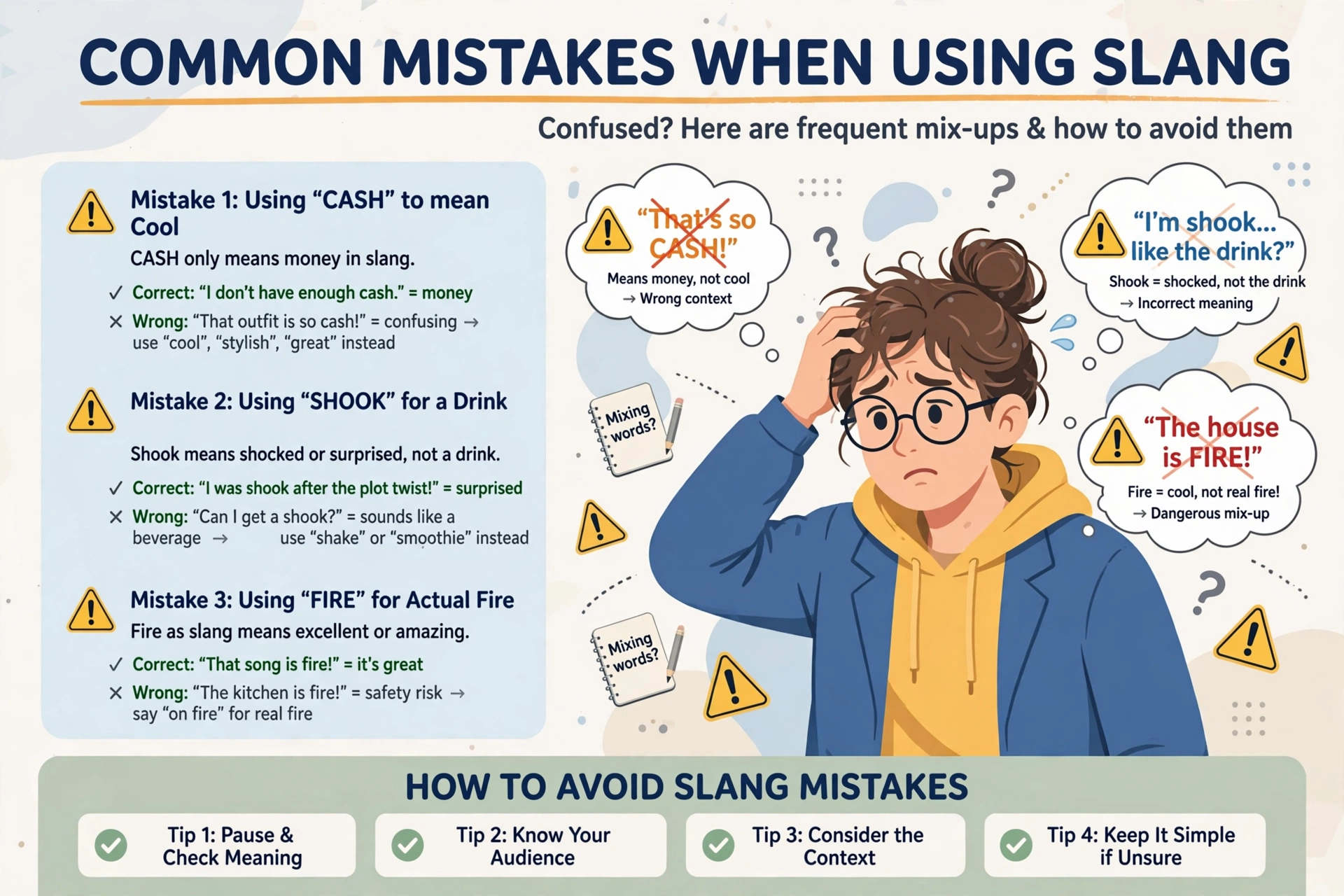
Common Mistakes
Dover is easy to use, but a few mistakes show up again and again — especially for people who just learned the word.
- Using it as a real insult: Dover is a fun jab, not a burn. If you say it with real anger, it stops being funny and just sounds strange, because the word has no real sting behind it.
- Using it with people who do not know it: Your boss, your teacher, and your grandparents will hear a place name, not a joke. Save it for friends who live in the same meme world.
- Confusing it with the town: If someone is talking about a ferry to Dover, do not reply with a laughing emoji and “same.” Read the room — travel talk is not slang talk.
- Overusing it in one conversation: Repeating “dover” five times in one chat makes it feel forced. One well-placed use lands harder than five.
- Using the buzzkill sense and the dramatic sense at once: These two senses contradict each other. Pick the mainstream one — dramatic, extra, clumsy — unless your specific friend group clearly uses the other.
- Spelling it wrong: It is dover, not “doaver,” “doverr,” or “doverr.” And it is not “do over” with a space when you mean the slang — the space turns it back into ordinary English.
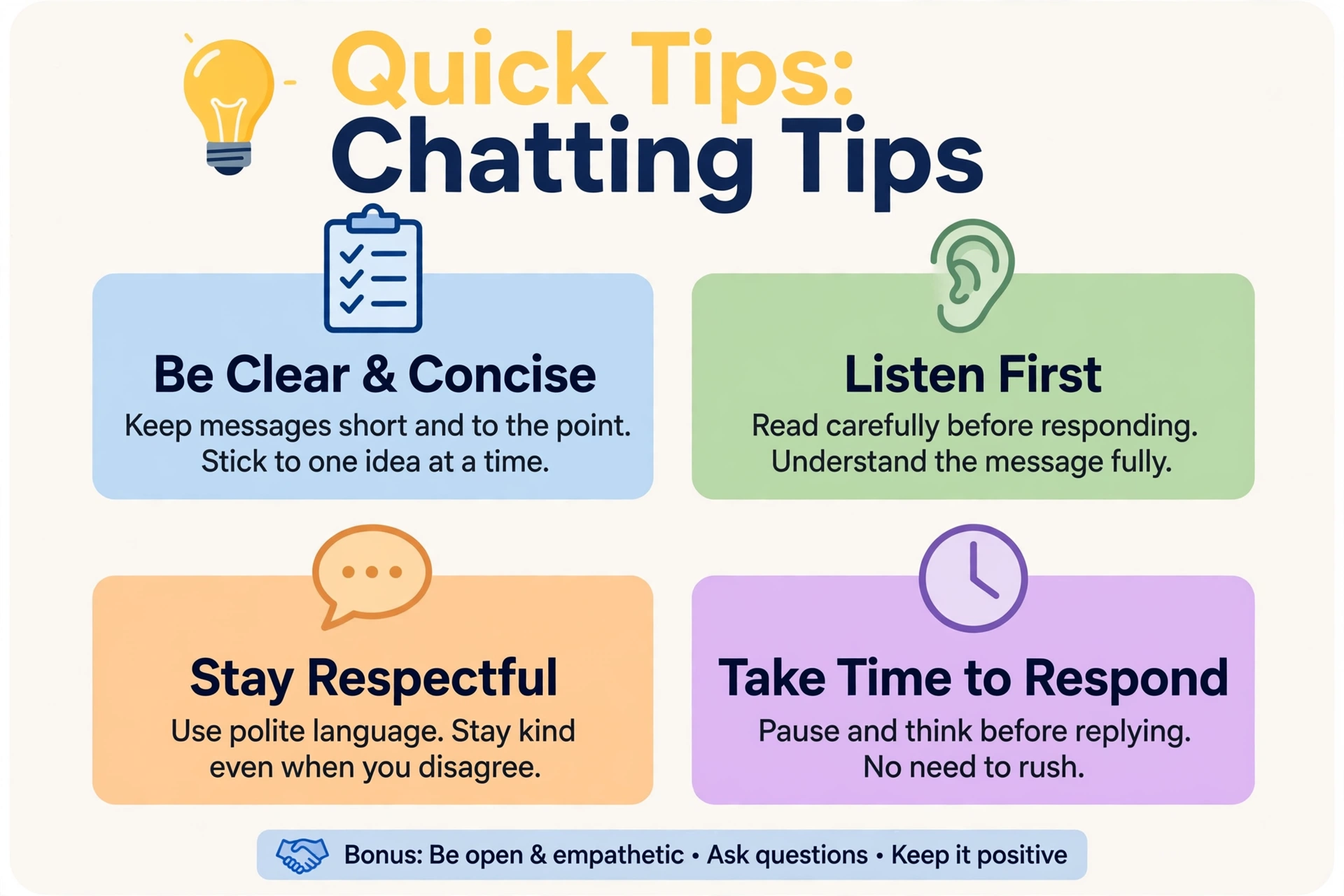
Quick Tips
- Use it for funny fails: Dover shines when something goes wrong in a harmless, hilarious way — a trip, a typo, an overreaction. That is its natural home.
- Pair it with a laughing emoji: A single laughing emoji after “dover” signals the tone instantly and stops the word from sounding mean.
- Try it as a self-roast first: Saying “I totally dovered that” about yourself is the safest first use. It shows you get the joke without risking anyone else’s feelings.
- Keep it in casual chats: Group chats, comments, and gaming lobbies are perfect. Work channels, formal writing, and first meetings are not.
- Let the moment do the work: Dover lands best right after the funny moment happens. Explaining the joke afterwards kills it.
- Learn the neighbors: Knowing related slang like DL meaning slang helps you read fast-moving group chats, since these terms often appear in the same threads.
- Reply smartly: If someone calls you a dover, a good reply is “Guilty, and I would do it again,” or simply “Dover and proud.” Owning the joke ends the roast on your terms.

FAQ
What does dover mean in slang?
In slang, dover is a playful roast for someone acting over-the-top, extra, dramatic, or clumsy. It describes a funny fail or an exaggerated reaction, usually between friends, and it is almost never meant as a serious insult.
Is dover a real word?
Dover is a real place name — a port town in England and the capital of Delaware — but as slang it is an informal internet coinage, not a dictionary word. Its slang meaning lives in memes, TikTok comments, and group chats rather than in formal English.
Where did dover slang come from?
The exact origin is unclear, but the most popular theory is that it started as a playful twist on “over” or “do over,” helped along by TikTok and meme culture. Some people also connect it to the dramatic White Cliffs of Dover, though that link is speculative.
How do you use dover in a sentence?
You can say, “Stop being a dover,” “That reaction was so dover,” or “I dovered my exam.” As a noun it labels a person, as an adjective it describes over-the-top behavior, and as a verb it means messing something up.
Is dover an insult or a compliment?
Neither, exactly — it is a friendly tease. It sits between a joke and a callout: funny when friends say it to each other, confusing when strangers hear it, and never as harsh as a real insult.
What does “dover energy” mean?
“Dover energy” means someone is radiating dramatic, chaotic, over-the-top vibes — the kind of energy where a small moment turns into a big, funny scene. It is the same “energy” format used in phrases like “main character energy.”
What does “the pros from Dover” mean?
“The pros from Dover” is a separate, older American idiom for outside experts or consultants brought in to solve a problem. It has nothing to do with the TikTok slang meaning of dover, so do not confuse the two.
Can I use dover at work or school?
Not in formal settings. Dover is strictly casual slang for friends and meme-fluent crowds. At work or school, use alternatives like “over the top,” “that escalated quickly,” or “that one got away from me” instead.
Conclusion
Dover meaning slang is one of those small internet words that makes perfect sense the moment someone explains it to you. A word that sounds like a place became a joke about going over the top — and the joke works because everyone has had a dover moment. We have all tripped over nothing, overreacted to a tiny problem, or messed up something simple in a way that was funnier than it was tragic.
Use it well and it does real work in a sentence. It teases without wounding, it turns a fail into a shared laugh, and it signals that you understand the corner of internet culture where it lives. Just remember the guardrails: save it for friends who know the joke, keep it out of formal settings, and never confuse the slang with the town, the state capital, or the old “pros from Dover” idiom.
The next time you see “bro is such a dover” under a video or in your group chat, you will know exactly what it means — and you will know whether to laugh, own it, or fire back with “dover and proud.” For more slang decoded the same way, check out OTP meaning in text slang and keep building your internet vocabulary one funny word at a time.
