Opp Meaning Slang: What “Opp” Really Means in Texts, Rap & Everyday Talk (2026)
Quick definition: In slang, an “opp” is short for opposition — an enemy, rival, or anyone who is against you. It started in Chicago drill rap culture in the early 2010s and is now used in texts, gaming, sports, and everyday conversation to describe a competitor or someone you’re in conflict with.
Opp Meaning Slang: Meaning & Definition
If someone calls you their opp — or texts you “watch out, the opps are here” — they’re not complimenting you. In opp meaning slang terms, “opp” is one of the most widely used words in modern hip-hop and internet culture, and it almost always carries a confrontational edge.
The word is short for “opposition.” That’s it. An opp is anyone standing against you: a rival, an enemy, a competitor, or a hater. The plural form is usually written as “opps” (with an S) rather than “opp’s” — you’ll see phrases like “my opps,” “opp alert,” and “no opps in my circle.”
What makes this term interesting is its journey. It started in street and gang culture in Chicago, moved into drill rap lyrics, then spread to UK drill, TikTok, and gaming lobbies — where it got a much lighter, almost playful meaning. Today, the same word can describe a genuine enemy in a rap lyric or your friend who just beat you in a Fortnite match. Context is everything, and by the end of this guide, you’ll know exactly how to read it every time.
Introduction
Every generation invents its own words for “the enemy.” Shakespeare’s characters talked about foes and adversaries. Your grandparents said rivals. Your parents might say haters. And Gen Z? They say opp.
You’ll hear it in rap lyrics, see it in TikTok comments, and read it in text messages from friends who’ve never been near a real conflict in their lives. One minute it’s a serious word about street rivalries in Chicago; the next minute it’s a gamer joking that their roommate is their “opp” because he keeps stealing their snacks. That flexibility is exactly why the word took over.
But here’s the thing most articles miss: “opp” isn’t just one flat definition. It has layers — from the raw original meaning in drill culture to the watered-down playground version kids use today. And mixing those layers up can make you sound either out of touch or accidentally serious in a casual conversation. This guide breaks down every layer: where the word came from, how its meaning shifted, how to use it correctly in different situations, what to say instead in professional settings, and the mistakes that give away that you’re new to the term.

Origin
The opp meaning slang story starts in Chicago, Illinois, in the early 2010s. At that time, the city’s drill rap scene — led by artists like Chief Keef, Lil Durk, and Fredo Santana — was exploding onto the national stage. These rappers were telling raw stories about street life, and their vocabulary came straight from neighborhood culture.
In that world, “opp” was literal and serious. It meant the opposition — rival crews, rival blocks, real enemies. It wasn’t a joke word. When a drill rapper said “opps,” they were talking about people they had genuine, sometimes dangerous conflict with. Songs from that era are full of references to opps, opp blocks, and “opp packs” (a blunt rolled in disrespect of a fallen enemy — a grim detail that shows how heavy the term originally was).
The word traveled fast. Around the mid-2010s, the UK drill scene picked it up, and British rappers made “opps” one of the most common words in their lyrics. Artists like Headie One, Central Cee, and Digga D use it constantly, and because UK drill blew up on YouTube and Spotify globally, the word landed in the ears of millions of teenagers who’d never been to Chicago or London.
Then came the final stage of the journey: TikTok and gaming culture. By 2020, “opp” had gone fully mainstream. Gamers started calling rival players opps. Sports fans called opposing teams opps. Friends jokingly called each other opps. The street meaning didn’t disappear — it still exists in rap — but a second, lighter meaning grew up alongside it. Today both versions live side by side, which is why context matters so much.
Popularity
It’s hard to overstate how popular “opp” has become. The word appears in hundreds of chart-topping rap songs across the US and UK. YBN Nahmir’s viral 2017 track “Opp Stoppa” put the word in front of a massive audience. Pop Smoke, Lil Baby, and dozens of drill artists built entire verses around it.
On social media, the numbers are just as big. TikTok is full of “opp” content — skits, storytimes, and POV videos with captions like “POV: your opp walks into the same party.” In gaming, you’ll see it in Twitch chats and Discord servers constantly: “the opps are camping mid” or “we smoked the opps.” Even Twitter/X threads about sports rivalries use it naturally: “The Lakers are our opps tonight.”
Search data tells the same story. Queries like “opp meaning slang,” “what does opp mean,” and “opp meaning in text” spike regularly, especially when a new drill song drops or a TikTok trend goes viral. The word has officially crossed from subculture slang into general Gen Z vocabulary — the same path words like glizzy and crash out traveled before them (you can read our full breakdowns of glizzy meaning and crash out meaning in slang for comparison).
How It Is Used
The opp meaning slang definition shifts depending on who’s talking and where. Here are the five main contexts you’ll run into:
- In rap lyrics (serious): The original meaning. “Opps” are real rivals or enemies. Lyrics about opps often describe actual conflict, so this usage carries weight and sometimes menace. When a drill rapper says “opp,” believe the intensity.
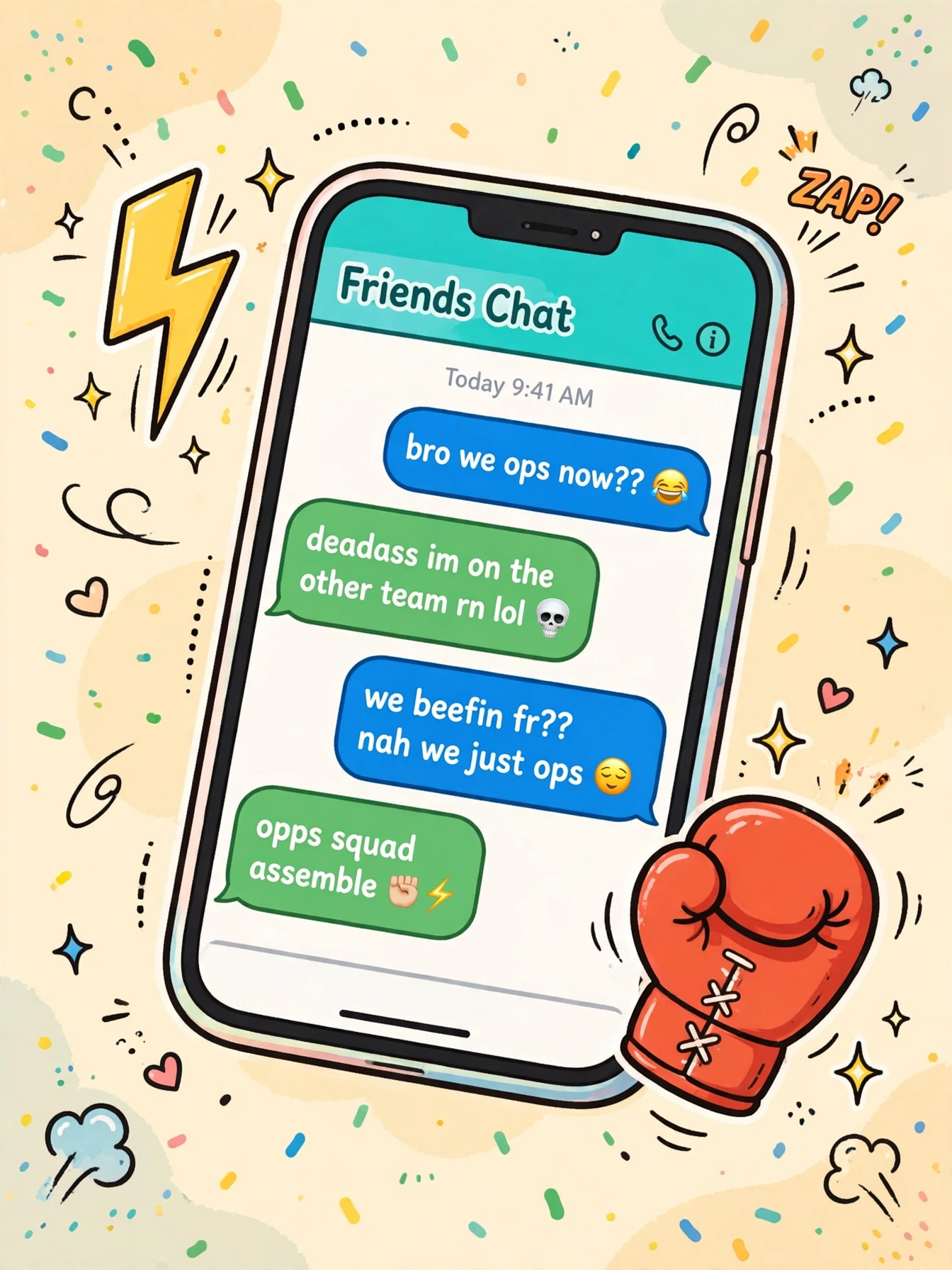
- In texting and casual conversation (playful): The everyday Gen Z meaning. “You’re such an opp” said with a laughing emoji usually means “you’re acting like my rival right now” — and it’s said with affection. Context clues like emojis and tone tell you it’s a joke.
- In gaming: The opposing team or rival players. “Watch for opps on the left” just means watch for enemies. This is one of the most common uses among teens, and it’s completely neutral — nobody thinks there’s real beef.
- In sports: Fans call rival teams “opps.” It adds a dramatic, hype flavor to ordinary sports talk: “The opps dropped 40 on us last night.”
- As a warning: “Opp alert” or “opps outside” is a heads-up that rivals — literal or joking — are nearby. Among friends, it’s usually playful: “Opp alert, Sarah just walked in” (said about a friend who’s been winning at everything lately).
Notice the pattern: the word scales from very serious (street/drill context) to completely lighthearted (gaming/friends context). The trick to using it well is matching your intensity to the situation — which we’ll cover in the tips section.
Examples
Nothing teaches slang like seeing it in real sentences. Here are examples across different tones and situations.
Friendly Examples
- “You beat my high score? Okay, you’re officially my opp now 😂”
- “Sorry I didn’t reply earlier, I was beefing with my WiFi — it was being a real opp today.”
- “She took the last slice of pizza, so now she’s the opp of the group chat.”
- “My brother keeps copying my outfits. Certified opp behavior.”
Professional Examples
Let’s be honest: there’s no true “professional” use of this word — it doesn’t belong in a work email or a job interview. But there are borderline-professional-adjacent situations (casual office chat, creative industries, coaching) where people borrow it:
- “Our competitor just launched the same feature — gotta respect the opps, but we’re staying ahead.” (startup team chat)
- “The other department keeps booking the meeting room — lowkey opps.” (joking, casual workplace banter — only with close colleagues)
Rule of thumb: keep it out of anything your boss’s boss might read. We’ll give you proper alternatives below.
Funny Examples
- “My alarm clock is my biggest opp. It wants me to fail at life.”
- “POV: you see your opp at the family cookout and he’s winning at Uno.”
- “The group chat was peaceful until my opp (my mom) joined and started reading everything.”
- “Me: I love Mondays. Mondays: I’m your opp now.”
Comparison with Similar Terms
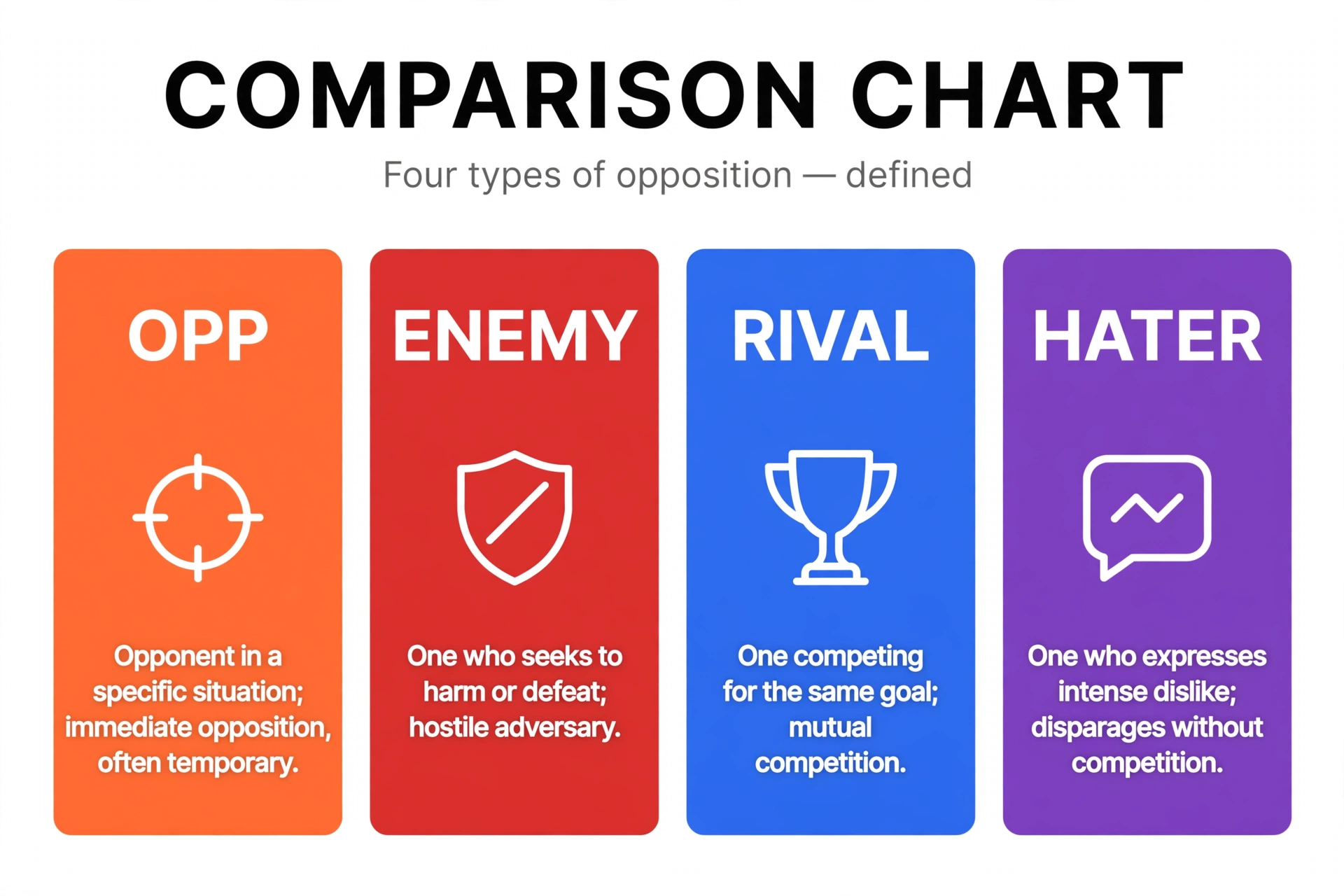
“Opp” isn’t the only word for an enemy or rival. Here’s how it stacks up against similar terms — because using the wrong one can change your whole meaning:
| Term | Meaning | Tone | Key difference from “opp” |
|---|---|---|---|
| Opp | Opposition; enemy or rival | Serious → playful | The baseline — scales from street-serious to joking |
| Enemy | Someone you oppose or hate | Formal, heavy | Much more intense; “enemy” in a casual text sounds dramatic |
| Rival | A competitor for the same goal | Neutral | Implies competition, not conflict — safer and more formal |
| Hater | Someone who dislikes or criticizes you | Dismissive | A hater just talks; an opp might actually oppose you |
| Foe | An enemy (old-fashioned) | Literary | Sounds Shakespearean next to “opp” — never interchangeable casually |
| OP | Original poster (forums) / overpowered (gaming) | Neutral | Totally different meaning despite sounding identical — see our guide on OP meaning in slang |
| Nemesis | A long-standing rival | Dramatic | Implies a deep history; an opp can be brand new |
The most important confusion to avoid is opp vs. OP. They sound the same when spoken, but “OP” in forums means “original poster” and in gaming means “overpowered” — neither has anything to do with opposition. Mixing these up is one of the most common mistakes (more on that below).
Alternate Meanings
Like a lot of slang, “opp” has a few alternate meanings floating around. Here’s what’s real and what’s confusion:
- “O.P.P.” the song (1991): Naughty by Nature’s classic hip-hop track “O.P.P.” stands for “other people’s property” — and the initials were derived from “OPM” (other people’s money), a phrase used in their neighborhood. Some sources note the two meanings (“opposition” vs. “O.P.P.”) developed independently of each other. If someone references “O.P.P.” with the periods, they’re almost certainly talking about the song, not your enemies.
- Ontario Provincial Police (OPP): In Canada, OPP is the abbreviation for the Ontario Provincial Police. Completely unrelated to the slang — context will always make this one obvious.
- Gaming abbreviation: In some older game communities, players typed “opp” as shorthand in contexts that had nothing to do with “opposition” — but this usage is rare and dying out.
- Medical/insurance: “OPP” occasionally appears in healthcare paperwork as an abbreviation, but again — context makes it obvious.
Nine times out of ten, when someone types “opp” in a text or comment, they mean opposition / enemy / rival. The alternates above are edge cases worth knowing so you’re never caught off guard.
Professional or Polite Alternatives
As mentioned, “opp” doesn’t belong in professional settings — it’s casual slang with confrontational roots. If you need to express a similar idea at work, school, or in formal writing, use one of these instead:
| Instead of “opp,” say… | Best for |
|---|---|
| Competitor | Business, sports, academics — the standard professional choice |
| Rival | Sports, debates, friendly competition — still slightly informal but widely acceptable |
| Counterpart | Negotiations, cross-team work — polite and neutral |
| Opposing team / side | Debates, legal contexts, team sports — clear and formal |
| Adversary | Serious conflicts, writing — formal but carries real weight, use carefully |
Quick rule: if you’re talking to anyone you address as “sir” or “ma’am,” or writing anything that could end up in a formal record, skip “opp” entirely and pick from the table above.
Common Mistakes
Even regular slang users trip over these. Here are the mistakes that make people sound like they’re faking it:
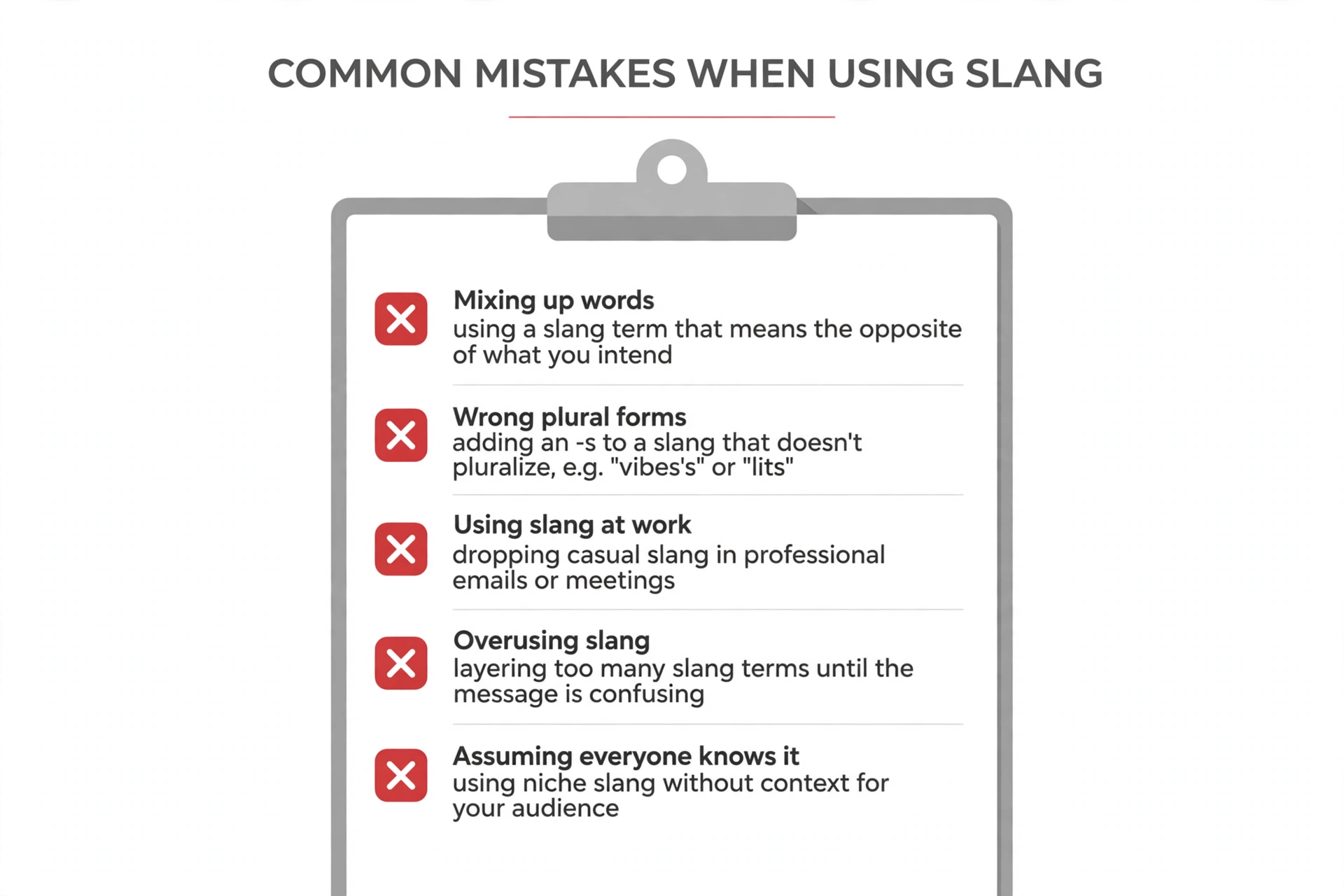
- Confusing “opp” with “OP.” They sound identical but mean completely different things. “OP” = original poster or overpowered. “Opp” = opposition. Saying “the OPs are coming” in a drill-rap context will get you laughed at.
- Using the serious meaning in a joke setting (or vice versa). Calling your friend an “opp” is funny. Using it about real street conflict is not funny at all. Read the room — the word’s weight changes with the audience.
- Writing “opp’s” as the plural. The plural is “opps” — no apostrophe. Apostrophes show possession (“my opp’s car”), not plurals.
- Saying it in professional settings. It will not land well in a job interview, a client email, or a classroom presentation. Keep it casual-only.
- Overusing it. Like any slang, “opp” loses its punch if every other word out of your mouth is “opp this, opp that.” Sprinkle, don’t drown.
- Assuming everyone knows it. Older generations and people outside hip-hop/gaming culture may not know the word at all. If your aunt asks “what’s an opp?” mid-conversation, just explain it — don’t act surprised.
Quick Tips
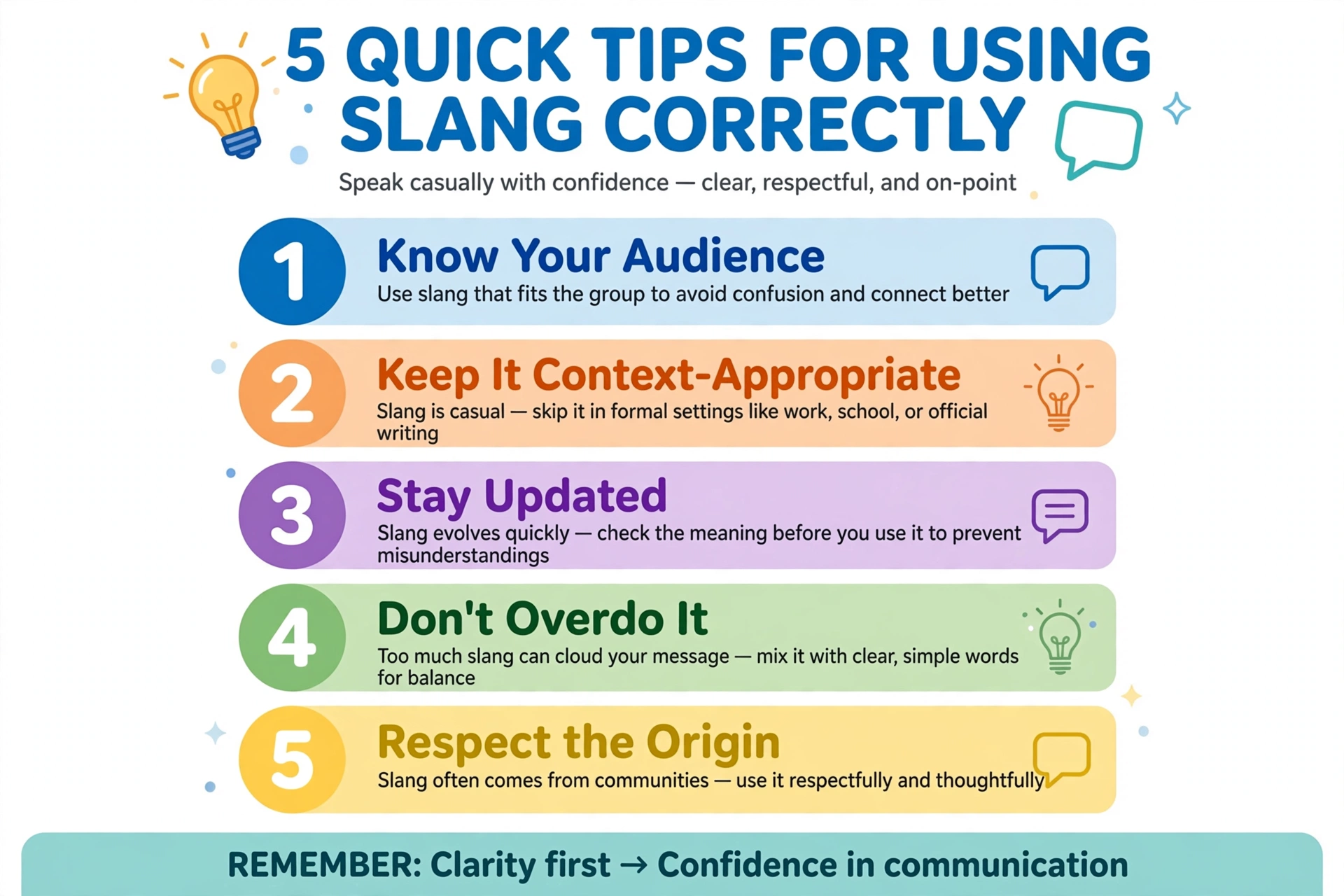
Want to use “opp” like someone who’s actually fluent in modern slang? Follow these tips:
- Match the energy. Rap lyrics = serious. Group chat with friends = playful. Gaming = neutral. Let the situation set the tone.
- Pair it with context clues. In text, emojis do the heavy lifting: “you’re my opp 😂” is a joke; “watch out for the opps” with no emoji is a warning. Choose accordingly.
- Use the classics. Phrases like “opp alert,” “my opps,” and “no opps allowed” sound natural because they’re the established forms. Inventing weird new versions (“oppositioner”?) will sound off.
- Don’t force it. If the sentence works fine with “rival” or “enemy,” you don’t need to swap in “opp” just to sound current. Slang works best when it’s effortless.
- Learn the drill context. Even if you only use the playful version, knowing the word’s serious roots (Chicago drill, real rivalries) keeps you from accidentally disrespecting something real. Slang always has a history — respect it.
- Keep up with related slang. “Opp” travels in a pack with words from drill, gaming, and Gen Alpha culture. Our Gen Alpha slang guide and the breakdown of crash out meaning in slang will keep your vocabulary current.

FAQ
1. What does “opp” mean in slang?
“Opp” is short for “opposition.” In slang, it means an enemy, rival, or anyone who is against you. It originated in Chicago drill rap culture in the early 2010s and has since spread into mainstream texts, gaming, and social media, where it’s often used playfully.
2. What does “opp” mean in text messages?
In texts, “opp” usually has a playful meaning — a friend who’s acting like your rival. For example, “you’re such an opp 😂” typically means “you’re messing with me right now” said affectionately. Without a laughing emoji or clear joking context, it can sound more serious, so read the tone carefully.
3. Is “opp” the same as “OP”?
No. Despite sounding identical, they’re completely different. “OP” means “original poster” (on forums like Reddit) or “overpowered” (in gaming). “Opp” means “opposition” or enemy. Confusing the two is one of the most common slang mistakes.
4. Where did “opp” come from originally?
The word comes from street and gang culture in Chicago, Illinois, and was popularized by the city’s drill rap scene in the early 2010s (artists like Chief Keef and Lil Durk). The UK drill scene then spread it globally, and TikTok and gaming culture brought it into everyday conversation. For a sourced overview of the term, see Wikipedia’s Glossary of Generation Z slang.
5. What does “opp alert” mean?
“Opp alert” is a heads-up that rivals — real or joking — are nearby. In serious contexts it can be a genuine warning; among friends it’s almost always playful, like “opp alert, Jake just walked in” said about a friend who’s been beating everyone at a game.
6. Is it rude to call someone an “opp”?
It depends entirely on context. Among friends with a joking tone, it’s friendly teasing. Said seriously to someone you have real conflict with, it’s confrontational. And to a stranger, it can come across as hostile. When in doubt, don’t say it to people you don’t know well.
7. What’s the plural of “opp” — “opps” or “opp’s”?
The plural is “opps” with no apostrophe — as in “my opps” or “the opps are here.” The apostrophe version (“opp’s”) is only correct for possession, like “my opp’s car.”
8. Can I use “opp” at work or in school?
Best to avoid it. “Opp” is casual slang with confrontational roots, so it doesn’t fit professional or academic settings. Use alternatives like “competitor,” “rival,” or “opposing team” instead — the full polite-alternatives table is in the section above.
Conclusion
So what is the opp meaning in slang? At its core, it’s simple: short for “opposition,” an opp is an enemy, a rival, or anyone standing against you. But as you’ve seen, the simple definition only scratches the surface. The word carries a real history — from Chicago’s drill scene to London’s rap underground to TikTok group chats and gaming lobbies — and that history is what gives it its weight.
The key takeaway is this: context decides everything. In a rap lyric, “opp” is serious. In a text with a laughing emoji, it’s a joke. In a game lobby, it’s just the other team. Master that sliding scale and you’ll use the word naturally instead of accidentally sounding either too intense or totally out of touch.
Slang never sits still, and “opp” is no exception — it’s still evolving as new generations pick it up. If you found this breakdown useful, keep exploring: our guides on OP meaning in slang (the word everyone confuses with “opp”) and crash out meaning in slang cover two more terms from the same culture. And for the bigger picture of how young people actually talk online, the Gen Alpha slang guide has you covered.
