
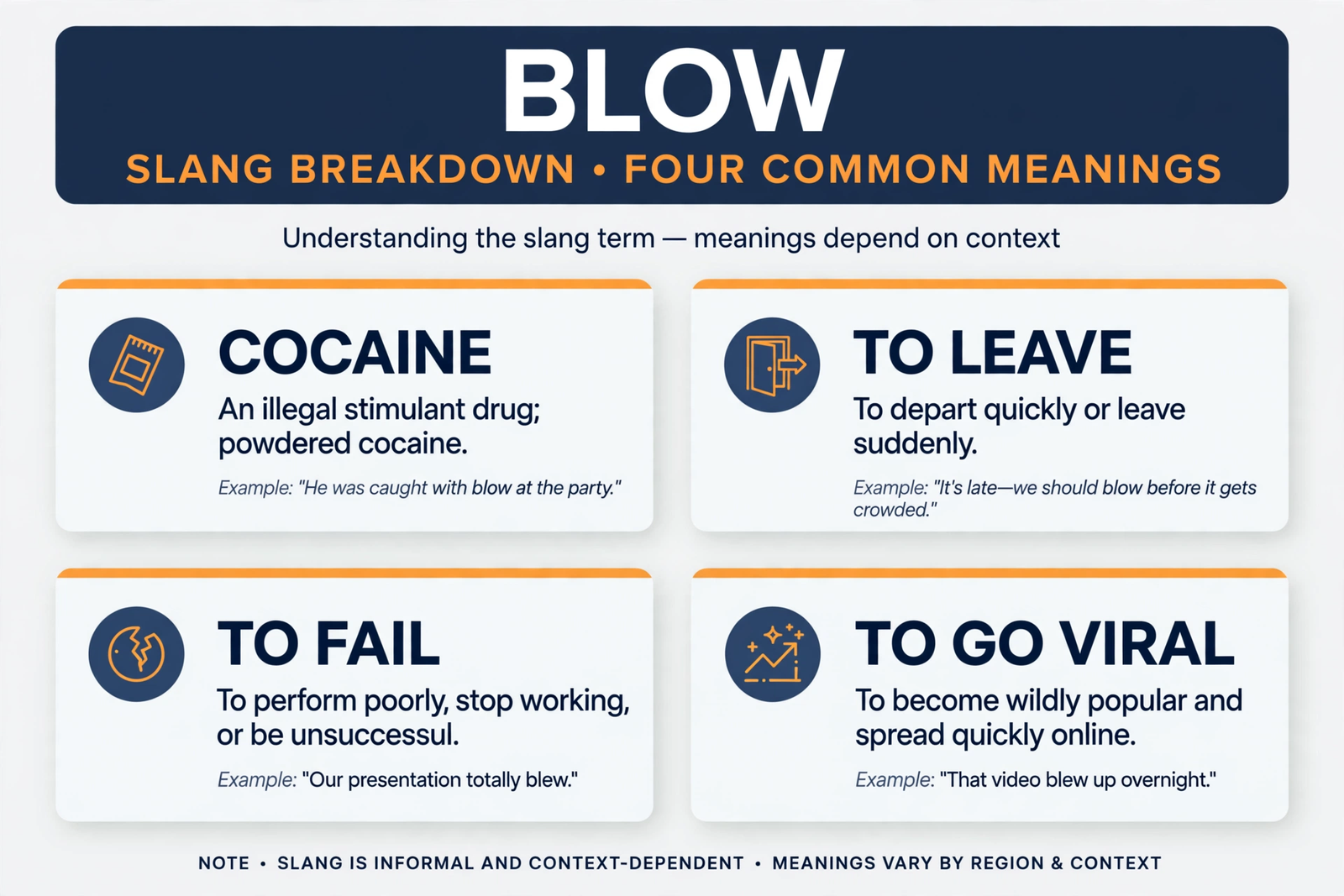
Quick definition: In slang, blow is a multi-meaning word — it most commonly means cocaine, to leave in a hurry, to mess something up, or to become suddenly famous. The exact meaning of “what is blow slang for” depends entirely on context: “let’s blow this joint” means let’s leave, “he blew the interview” means he ruined it, and “that song is blowing up” means it is going viral.
What Is Blow Slang For? Meaning & Definition
So, what is blow slang for? The short answer is that there is no single answer. Blow is one of the most flexible slang words in American English, and it has been used in street talk, hip-hop lyrics, texting, and TikTok captions for decades. As a noun, blow is best known as a street name for cocaine. As a verb, it can mean to leave, to fail, to waste money, to brag, or to explode in popularity.
Because the word shifts meaning so easily, people searching for “what is blow slang for” are usually trying to decode one specific use they saw in a text, a song, or a social media post. The trick is to read the sentence around it. “This party blows” is a complaint. “Let’s blow” is an exit plan. “He’s got blow” is a drug reference. Same word, three completely different conversations.
In this guide, we break down every major slang meaning of blow, where each one came from, and how people actually use it in real texts and conversations — plus the polite alternatives you can use when the slang version is too risky for work or school.
Introduction: Why Everyone Is Asking What Blow Slang Means
Blow has been trending again thanks to TikTok, rap lyrics, and Gen Z group chats, where one short word can carry five different meanings before lunch. Older slang dictionaries recorded “blow” as street talk as far back as the 1700s, when “to blow the gaff” meant to inform on someone. By the 1980s and 1990s, hip-hop made the cocaine meaning famous worldwide, and by the 2010s, “blow up” had become the standard way to describe anything going viral.
What makes blow confusing is that it is both a noun and a verb, and both forms have several slang senses. Unlike newer slang words that usually mean one thing — like glizzy, which mostly means a hot dog — blow is a shape-shifter. That is exactly why it shows up in so many “what does this mean?” searches every month.
Origin of Blow as Slang
The slang story of blow starts centuries before TikTok. In 18th-century London street cant, “to blow” meant to betray or expose someone, probably from the image of wind scattering something hidden into the open. “Blow the gaff” (to reveal a secret) and “I’m blowed if I will” (a mild oath) were common in the 1700s and 1800s.
In American English, the word picked up new senses throughout the 20th century. Jazz musicians in the 1930s and 1940s used “blow” to mean playing an instrument — “he can really blow that trumpet” — and also to mean smoking marijuana. By the 1970s and 1980s, “blow” had become a well-known street name for cocaine, likely because the drug is snorted, or “blown,” through the nose. Rap music in the 1980s and 1990s pushed that meaning into the mainstream.
Meanwhile, other senses grew in parallel. “Blow this joint” (leave this place) was already common in mid-century American slang, and “that movie blows” (it is terrible) became a staple of 1980s and 1990s teen speech. The newest sense — “blow up” meaning to go viral — arrived with social media in the 2010s and is now the meaning most young people encounter first.
Popularity: How Blow Became a Everyday Slang Word
Blow owes its staying power to music, movies, and memes. Hip-hop lyrics used “blow” for cocaine so often that the meaning became common knowledge even among people who had never encountered the drug. At the same time, sitcoms and teen movies normalized “this blows” as a harmless way to say something is awful.
Social media gave the word a second life. “Blow up” is now the default phrase for viral fame: a TikTok creator, a meme, or a song can “blow up” overnight. Because the phrase is positive in that context, many younger users first learn blow as a success word, not a drug word — which is why the question “what is blow slang for” keeps getting asked by confused parents, teachers, and new English learners alike.
How It Is Used in Real Conversations
In everyday use, blow appears in texts, group chats, captions, and song lyrics. The meaning almost always comes from the words around it:
- As a noun: “He got caught with blow” = cocaine. This is the drug sense, and it is the one to be careful with.
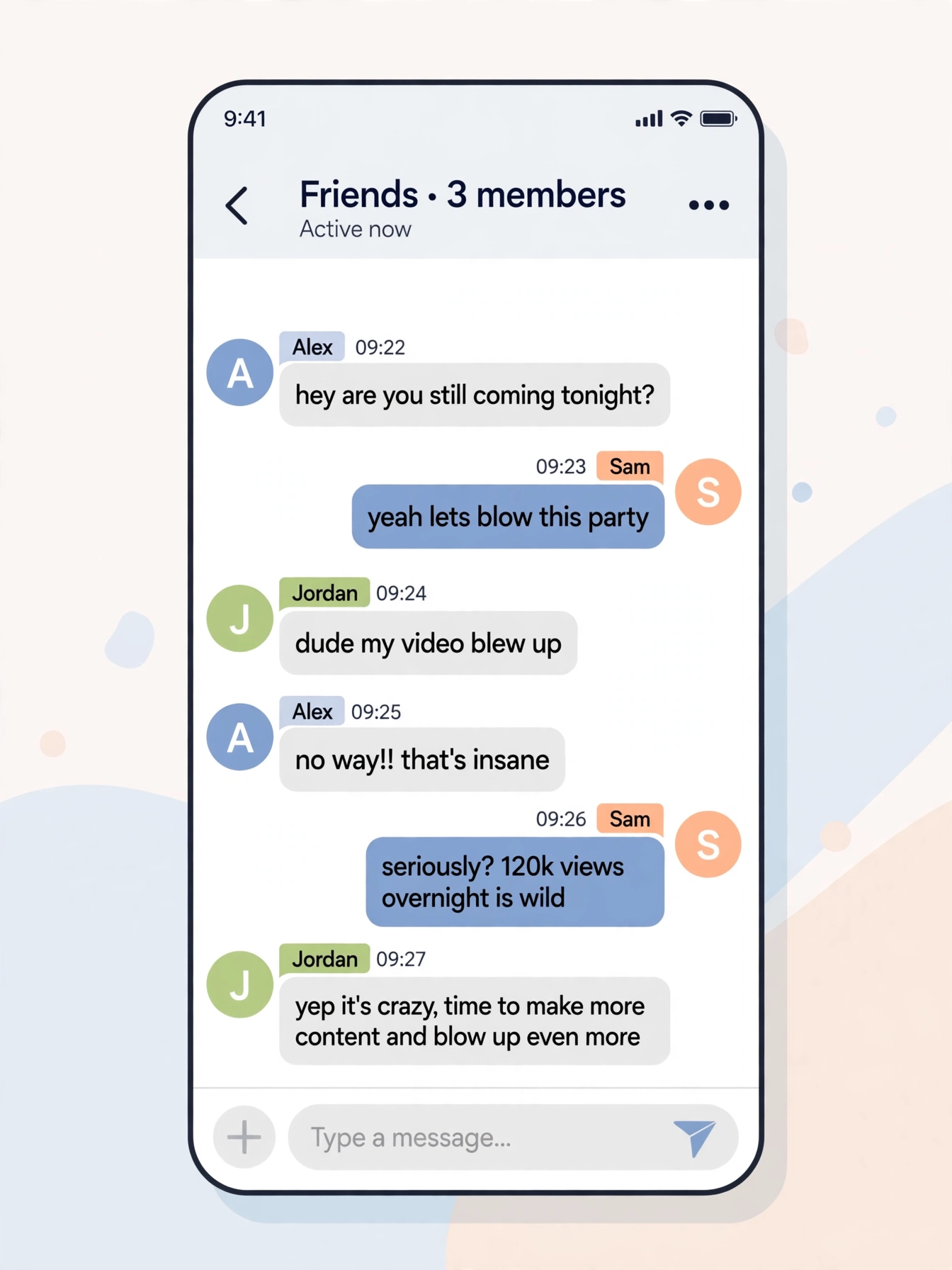
- As a verb for leaving: “This party is dead, let’s blow” = let’s leave now.
- As a verb for failing: “I blew my chance” = I ruined my opportunity.
- As a verb for spending: “I blew my whole paycheck on sneakers” = I wasted or spent it all quickly.
- As an adjective-like complaint: “This traffic blows” = this traffic is terrible.
- As a phrasal verb for fame: “Her account is blowing up” = she is going viral fast.
Notice how the grammar helps: blow followed by “up” usually signals fame or anger, blow followed by an object (“blew the game”) usually signals failure, and blow standing alone as a noun (“the blow”) usually signals cocaine.
Examples of Blow in Slang
Here are real-world style examples showing how blow sounds in different tones. The same word feels playful in one sentence and serious in the next, so tone and context matter more than the dictionary.
Friendly Examples
- “This concert is boring, let’s blow and get tacos instead.”
- “My video blew up overnight — I went from 200 followers to 20k!”
- “Don’t blow all your birthday money in one day, okay?”
- “We were supposed to meet at 6, but he totally blew me off.”
Professional Examples
- “We can’t afford to blow this deal — the client meeting is tomorrow.”
- “The product launch blew up on social media within hours.”
- “He blew the presentation by forgetting the key numbers.”
- “Let’s not blow our budget on the first quarter.”
Funny Examples
- “My Wi-Fi blew up right in the middle of my job interview. Classic.”
- “This new restaurant blows — the food took two hours and my fries were cold.”
- “I tried to cook dinner and blew it so bad the smoke alarm applauded me.”
- “My phone blew up with messages the second the teacher said ‘pop quiz.’”
Comparison with Similar Terms
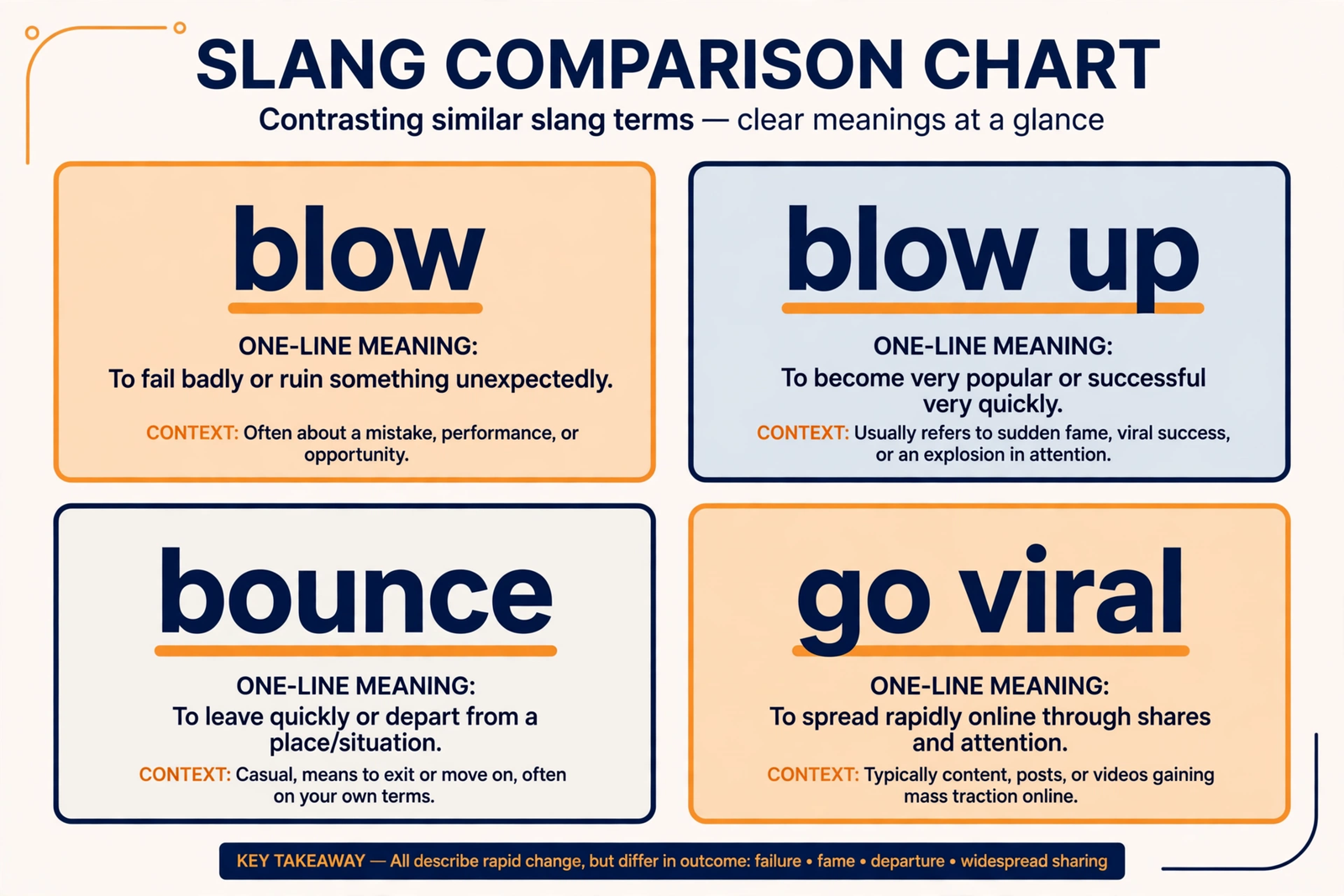
Blow overlaps with several other slang words, but each one has its own flavor. This table clears up the confusion fast.
| Term | What It Means | How It Differs from Blow |
|---|---|---|
| Blow | Cocaine; to leave; to fail; to go viral | The most multi-purpose of the group |
| Blow up | To become famous fast; to get very angry | Always about sudden growth or explosion of emotion |
| Bounce | To leave a place | Only means leaving, never drugs or failure |
| Mess up | To ruin or fail at something | Clearer and safer than “blew it” in formal settings |
| Suck / blows (as complaint) | To be terrible | Same complaint sense, but “sucks” is more common today |
| Go viral | To spread fast online | The polite, professional way to say “blow up” |
| Coke / snow | Cocaine | Other street names for the same drug as “blow” |
If you only need the “leave” meaning, “bounce” or “head out” is clearer. If you only need the “fail” meaning, “mess up” avoids all confusion. Blow is best used when your audience already knows which meaning you intend.
Alternate Meanings of Blow
Beyond slang, blow has plenty of standard English meanings that still appear in everyday speech:
- Air movement: “The wind is blowing hard tonight” — the literal, original sense.
- A hit or strike: “A blow to the head” — a sudden physical impact, or a setback, as in “a blow to the economy.”
- Playing music: “He blows a mean saxophone” — jazz slang for playing an instrument well.
- Exploding: “The tire blew out on the highway” — burst from pressure.
- Bragging: “He kept blowing about his promotion” — empty boasting, an older slang sense still found in dictionaries like Merriam-Webster’s entry for blow.
- Revealing a secret: “She blew his cover” — exposed something hidden, from the old “blow the gaff” sense.
- Oral sex: In vulgar slang, “blow” is short for “blow job.” This meaning is crude and should never be used in polite, professional, or school settings.
The drug meaning deserves a serious note: cocaine is illegal in most countries and dangerous to health. If someone offers you “blow” in that sense, the safe answer is no — and if you or someone you know is struggling with substance use, reaching out to a local health professional or helpline is the right move.
Professional or Polite Alternatives
Because blow can sound crude, confusing, or drug-related, it is often better to swap it for a clearer word — especially at work, in school, or in writing. Here are safe replacements for each meaning:
| When You Mean… | Say Instead | Example |
|---|---|---|
| To leave | Head out, leave, take off | “Let’s head out — it’s getting late.” |
| To fail or ruin | Miss, mess up, lose the chance | “I missed my chance at the internship.” |
| To waste money | Spend, use up, overspend | “I overspent on the holiday sale.” |
| Something is terrible | Is awful, is disappointing | “The service was really disappointing.” |
| To go viral | Went viral, took off, exploded in popularity | “Her video took off overnight.” |
| To get angry | Lost his temper, got upset | “He lost his temper during the meeting.” |
A good rule of thumb: if your sentence would confuse a teacher, a boss, or someone learning English, use the plain version. Save “blow” for casual chats where everyone already knows which meaning you want — just like other Gen Z terms such as chopped or fanum tax, the audience matters as much as the definition.
Common Mistakes People Make with Blow
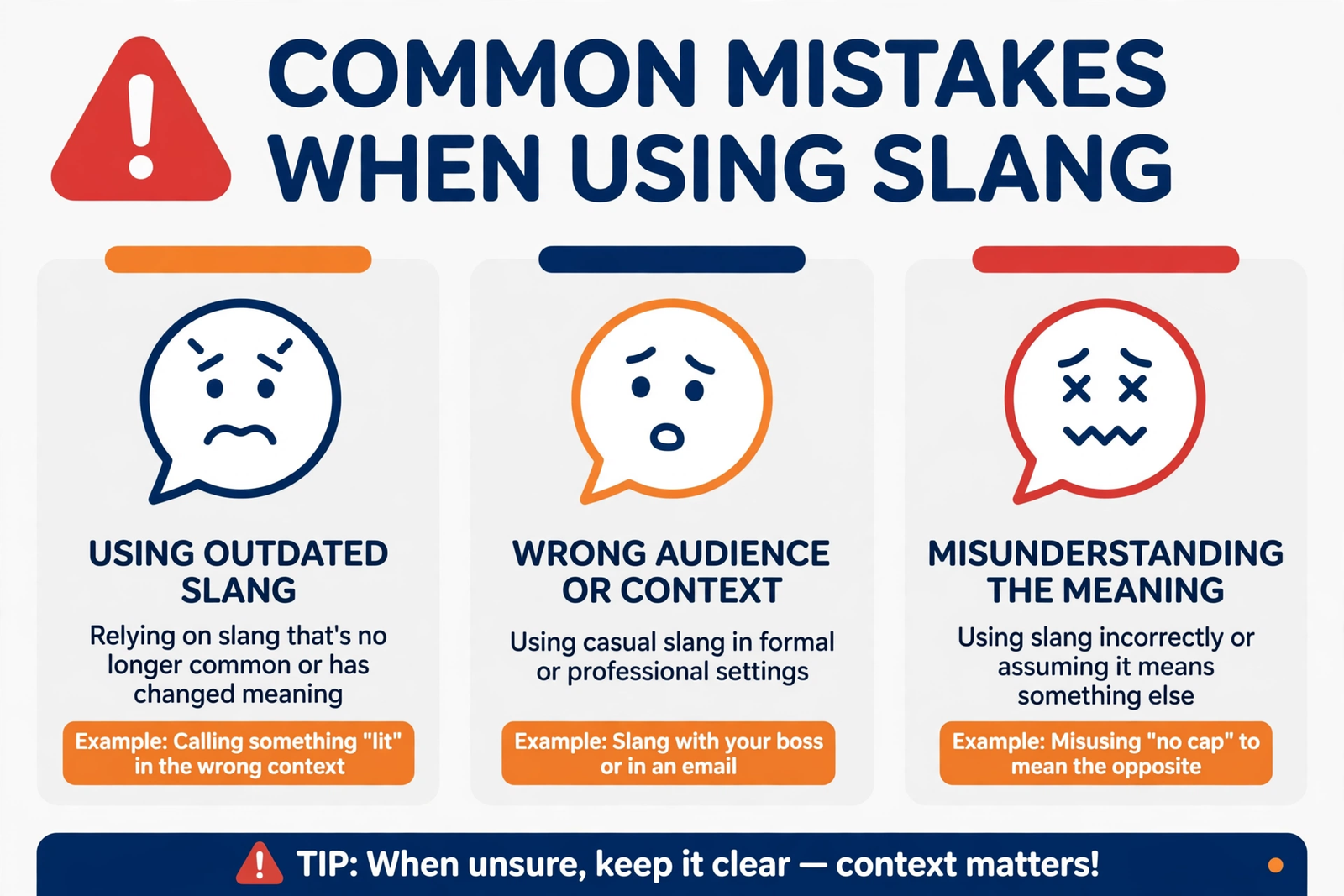
- Using it at work or school: “This assignment blows” sounds unprofessional, and “blow” in a drug sense can cause a serious misunderstanding. Use neutral words in formal settings.
- Mixing up “blow” and “blow up”: “Let’s blow” means let’s leave, but “let’s blow up” sounds like a threat or a plan to go viral — very different outcomes.
- Assuming the drug meaning every time: Most of the time in texts and TikTok comments, blow means fail, leave, or go viral — not cocaine. Check the context before jumping to conclusions.
- Using the vulgar meaning by accident: Phrases like “blow me” are crude in slang. Never use them jokingly with strangers, teachers, or coworkers.
- Overusing it in writing: Because blow has so many meanings, using it three times in one paragraph guarantees confusion. Pick one meaning per conversation and stick to it.
- Confusing “blew off” with “blew up”: “He blew me off” means he ignored or stood me up; “he blew up” means he got famous or furious. Swapping them changes the story completely.
Quick Tips for Using Blow Correctly
- Read the room: In a casual group chat, blow is fine. In an email to your manager, it is not.
- Watch the words around it: “Blow up” = fame or anger. “Blew it” = failure. “Let’s blow” = leaving. The neighbors of the word tell you the meaning.
- Use it once, then move on: Repeating a multi-meaning word makes your message harder to follow.
- When in doubt, ask: If a friend texts “that blows,” a quick “like, bad or gone viral?” saves an awkward misunderstanding.
- Keep the drug meaning out of jokes: Joking about cocaine can offend people and cause real trouble at school or work.
- Pair it with clear context: “My song blew up on TikTok” is instantly clear; “it blew up” alone is not.
- Learn the regional differences: In the US, “this blows” is a common complaint; in the UK, the same phrase is understood but used less often.
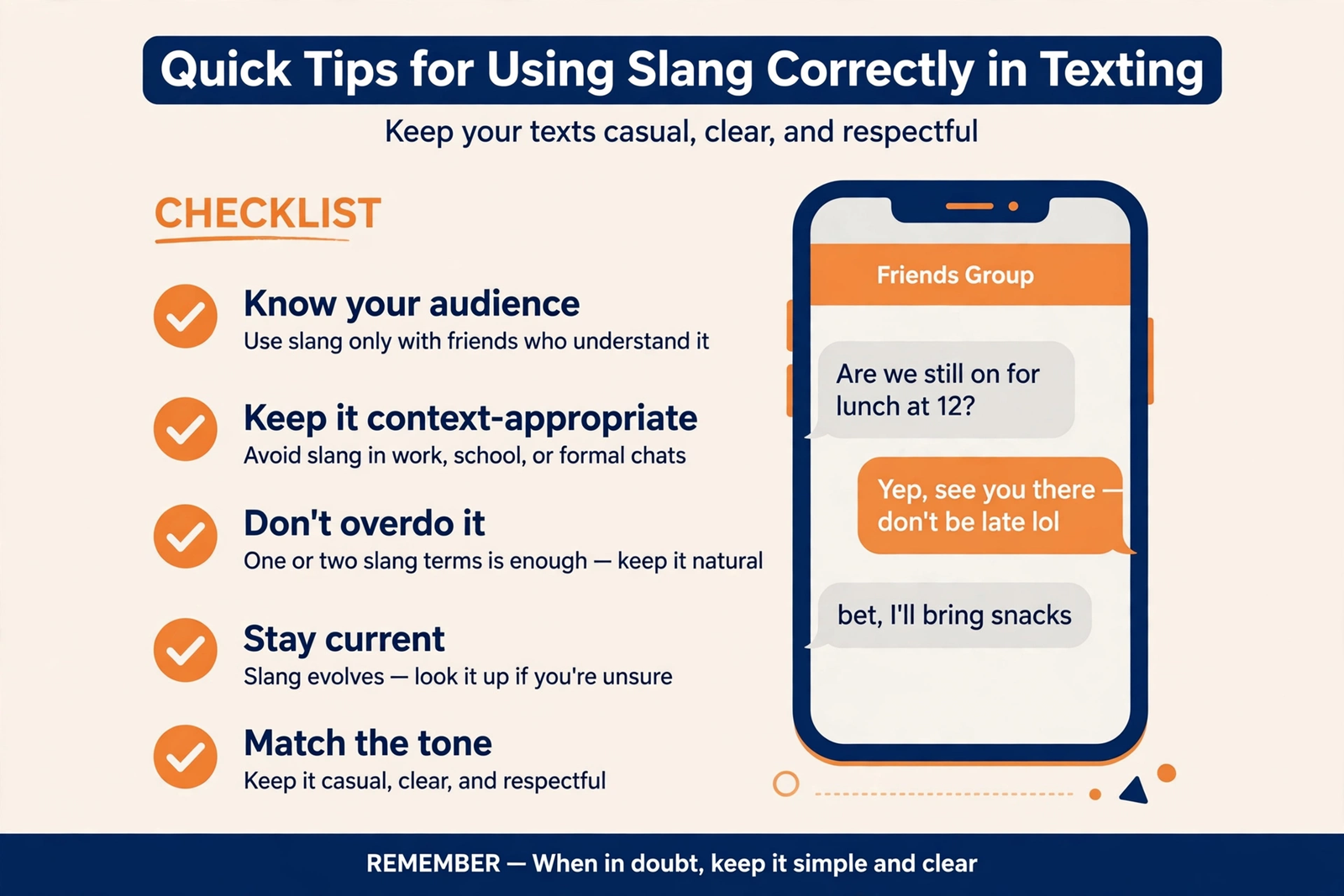
FAQ: What Is Blow Slang For?
1. What is blow slang for in texting?
In texting, blow usually means to fail, to leave, or that something is terrible — for example, “I blew the test” (I failed it) or “this homework blows” (it is awful). The viral sense (“blowing up”) is also common. The drug meaning appears less often in casual texts but is still the best-known noun sense.
2. Does blow mean cocaine?
Yes — as a noun, blow is a long-standing street name for cocaine, popularized by hip-hop and movies in the 1980s and 1990s. If someone says “he’s got blow” or “doing blow,” they are almost certainly talking about cocaine.
3. What does “blow up” mean in slang?
“Blow up” has two main slang meanings: to become suddenly famous or viral (“her TikTok blew up”), and to lose your temper (“dad blew up when he saw the grades”). Context tells you which one is meant.
4. What does “let’s blow” mean?
“Let’s blow” means “let’s leave” — usually quickly, because a place is boring or uncomfortable. It comes from mid-20th-century American slang and is still common in casual speech today.
5. What does “this blows” mean?
“This blows” means “this is terrible” or “this is really bad.” It is a casual complaint, similar to “this sucks,” and it has been common in American English since the 1980s.
6. What does “blew it” mean?
“Blew it” means ruined it or wasted the opportunity — “I blew the interview” means I failed the interview because of my own mistakes. It can also mean wasted money: “I blew my savings on a car.”
7. Is blow slang rude or offensive?
It depends on the meaning. “This blows” and “blow up” are mild and widely accepted. The drug meaning and the vulgar sexual meaning are not polite at all — avoid those senses at work, at school, and around people you do not know well.
8. Where did blow slang come from?
Blow has been slang since at least the 1700s, when “blow the gaff” meant to reveal a secret. The cocaine sense spread in the 1970s and 1980s, the “this blows” complaint sense grew in the 1980s and 1990s, and the viral “blow up” sense took off with social media in the 2010s.
Conclusion
So, what is blow slang for? It is a single word with a whole toolbox of meanings: cocaine as a noun; to leave, to fail, to waste, or to brag as a verb; and “blow up” for sudden fame or sudden anger. The meaning you need is always hiding in the sentence around it — check the neighboring words, the tone, and the setting before you decide.
The safest way to use blow is in casual conversation where everyone shares the same context, and to switch to a plainer word whenever clarity matters. If you remember one thing, remember this: “let’s blow” means go, “I blew it” means I failed, “this blows” means it is awful, and “blowing up” usually means going viral. Master those four, and you will never be confused by this slippery little word again — much like learning other tricky slang such as BFE, context is everything.
