
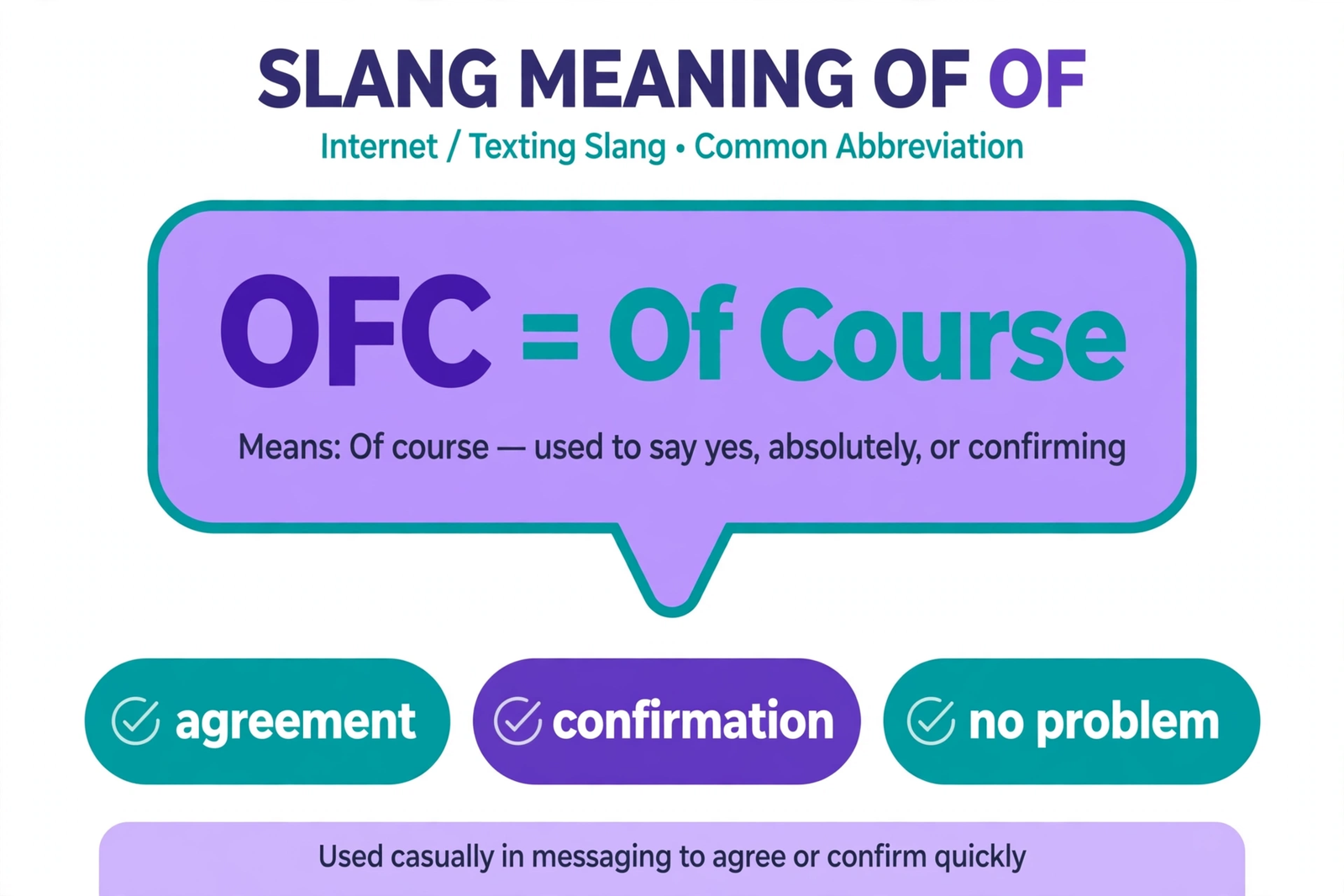
Quick definition: In slang, “of” is a small word with a big job in texting. On its own it rarely carries slang meaning, but inside abbreviations and casual phrases it does the heavy lifting — most famously in OFC, short for “of course.” When people search for the of meaning slang, they usually want to know what “of” means in expressions like OFC, “kind of,” “sort of,” and “ofc I will,” and how to use them without sounding rude or confusing.
OF Meaning Slang & Definition
The of meaning slang is simple once you see the pattern: “of” almost never stands alone as slang. It shows up as the middle word of the phrase “of course,” which texters shorten to OFC or ofc, and inside softening phrases such as “kind of” (kinda) and “sort of” (sorta). In a text message, “of” signals agreement, confirmation, or a casual hedge — the exact shade depends on the words around it.
Think of it this way. Nobody texts just “of” to mean something. But millions of people text “ofc” every day, and everyone reading it instantly understands: “of course,” “yes,” “obviously,” or “no problem.” The word “of” is the quiet connector that turns a plain phrase into one of the most used abbreviations in online chat. That is why the of meaning slang question comes up so often — people see “of” inside OFC, “ofc,” and phrases like “kinda of” and want to know what it is doing there.
In short: “of” in slang means “of course” when it appears as OFC, and it softens or connects ideas in phrases like “kind of” and “sort of.” It is friendly, casual, and completely normal in texting, Snapchat, Instagram DMs, TikTok comments, Discord, and WhatsApp — but it does not belong in formal writing.
| Form | What it means | Where you see it |
|---|---|---|
| OFC / ofc | Of course — yes, obviously, no problem | Texting, Snapchat, Instagram, TikTok, Discord |
| Kind of / kinda | Somewhat, a little, not fully | Casual chat, captions, comments |
| Sort of / sorta | Somewhat, in a way, approximately | Casual chat, captions, comments |
| Of the day / of the moment | The current trend or pick | Social media captions, memes |
Introduction
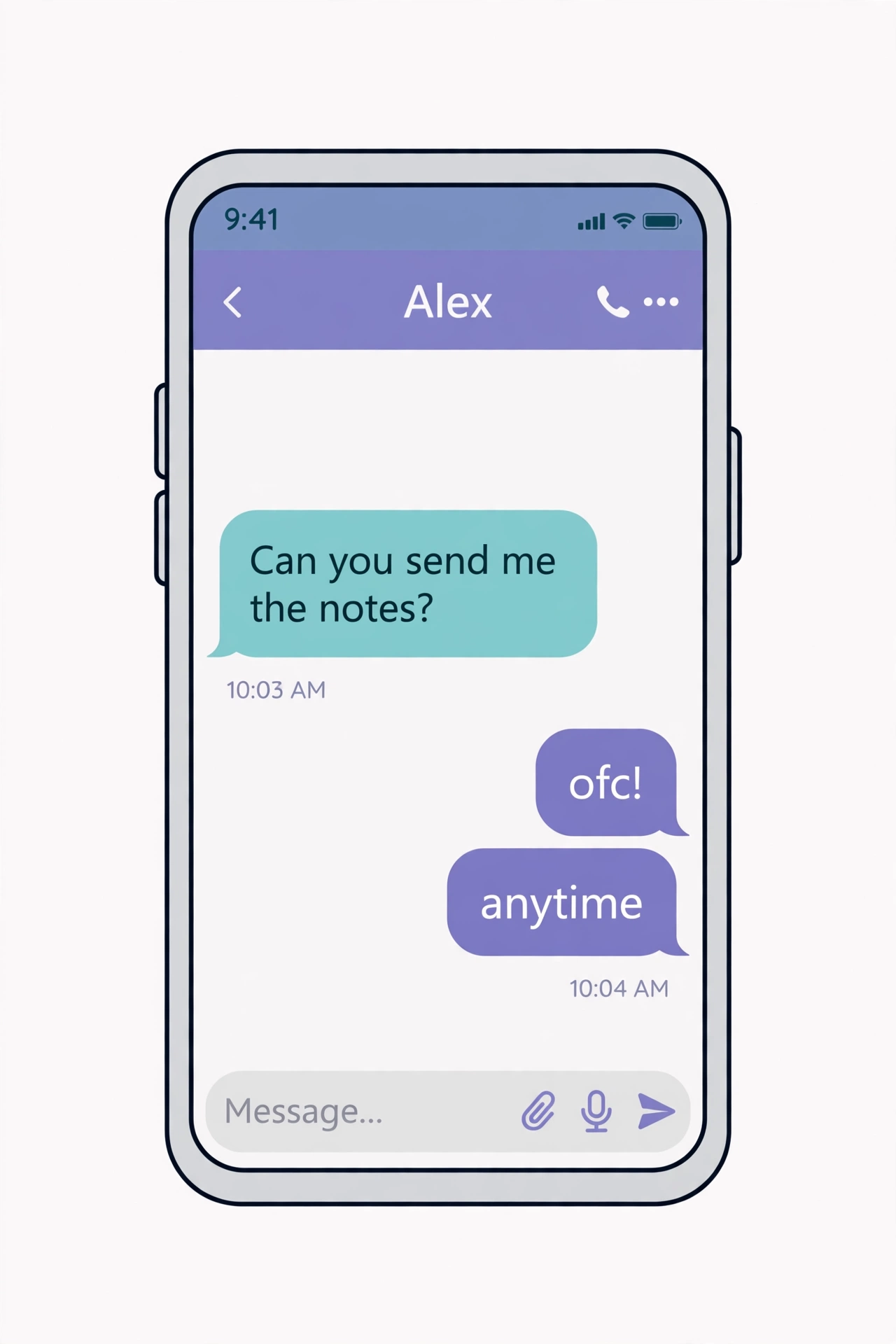
You have probably seen it a hundred times without thinking twice: a friend asks “Can you send me the notes?” and you reply “ofc.” A TikTok comment says “this is kinda of my favorite song.” A Discord message reads “sorta tired, ofc I’m staying home.” The tiny word “of” is everywhere in slang and texting — and yet if someone asked you what “of” means in slang, you might pause. It is a preposition, after all. How can a preposition be slang?
The answer is that slang rarely invents new words from nothing. More often, it takes ordinary words and squeezes them into new shapes. “Of” got squeezed into OFC, stretched into “kinda,” and tucked into dozens of everyday phrases that make digital conversation faster and softer. Understanding the of meaning slang is really about understanding those shortcuts — and knowing when a two-second reply like “ofc” is perfect, and when it can accidentally sound dismissive or sarcastic.
In this guide, we break down everything: the exact definition, where “of” slang came from, how it is used on every major platform, real examples in friendly, professional, and funny tones, a comparison with similar terms, alternate meanings, polite alternatives, the mistakes people make most, and quick tips you can use today. By the end, you will read “ofc” the way native texters do — instantly, and with the tone exactly right.
Origin
The slang life of “of” starts with the phrase “of course.” English speakers have used “of course” since the 1500s to mean “naturally” or “as a matter of course.” It was a polite way to agree — “Of course I’ll help” — and it stayed formal for centuries. Then the internet arrived, and everything about the phrase changed.
In the early 2000s, SMS texting, AIM, MSN Messenger, and Yahoo Messenger made typing slow and expensive. Phones had physical keypads, messages had character limits, and every extra letter cost time. People began compressing their most-used phrases: “laughing out loud” became LOL, “be right back” became BRB, and “of course” became OFC. The “of” in the middle was the part nobody wanted to type out — so it became a single letter, and the abbreviation stuck.
At the same time, spoken slang was compressing “kind of” into “kinda” and “sort of” into “sorta.” These were not texting inventions — people had been slurring them in speech for decades — but texting gave them written form. “Kinda” and “sorta” moved from spoken slang into captions, comments, and chats, carrying the word “of” inside them in shortened form.
By the 2010s, OFC was a Gen Z and Gen Alpha staple. It spread from texting to Snapchat streaks, Instagram comments, TikTok replies, and Discord servers. Unlike many slang terms that flare up and vanish, OFC stayed stable because its meaning is universally recognized: everyone knows “of course,” so everyone instantly gets “ofc.” Linguists note that abbreviations survive when their full form is common knowledge — and “of course” is one of the most common phrases in English.
Popularity
OFC is one of the most durable texting abbreviations in use today. It appears millions of times a day across messaging apps, and it has stayed relevant while other abbreviations faded. Part of the reason is usefulness: “of course” is something people say constantly — agreeing to plans, confirming help, reassuring a friend — and OFC saves time every single time.
On TikTok and Instagram, “ofc” shows up in comments as a quick, warm agreement: “ofc bestie,” “ofc I remember,” “ofc, tell me everything.” On Snapchat, it is a one-word reply that keeps a streak alive without killing the conversation. On Discord and in gaming chats, “ofc” confirms a plan in half a second: “ofc, I’m down for a match.” The abbreviation works everywhere because the phrase behind it works everywhere.
The softer “of” phrases are just as popular. “Kinda” and “sorta” are among the most common hedges in casual English online. Creators use them in captions to sound relaxed and relatable — “kinda obsessed with this song” reads warmer than “I am obsessed with this song.” Memes lean on them too: “sorta funny, kinda true” is a whole genre of caption.
Search interest in the of meaning slang has grown as older users, parents, and teachers encounter OFC in their kids’ messages and want to decode it. It is also a frequent question from English learners, because textbooks teach “of” as a preposition and never mention that it hides inside one of the internet’s favorite abbreviations.
How It Is Used
“Of” in slang is used in three main ways, and the context tells you which one you are looking at.
1. As OFC — agreement and confirmation. This is the most common use. Someone asks a question or makes a request, and “ofc” answers it with a yes. “Can you pick me up?” — “Ofc.” “Are you coming to the party?” — “Ofc I’ll be there.” It can also reassure: “Are you mad at me?” — “Ofc not, you’re good.” The tone is warm and casual, like a nod in a conversation.
2. As a softener — “kind of” and “sort of.” Here “of” waters down a statement so it sounds less blunt. “I’m kinda tired” is softer than “I’m tired.” “Sorta agree” leaves room for doubt. “Kind of” and “sort of” are hedges, and they make opinions, feelings, and criticism easier to say — and easier to hear.
3. As part of a set phrase — “of the day,” “of the moment,” “of all time.” Social media loves these frames. “Song of the day,” “fit of the day,” “GOAT of all time” — the word “of” connects the thing to its moment or category. In captions and memes, this use of “of” is pure internet grammar, borrowed from everyday English and dressed up for the feed.
One thing “of” is almost never used for in slang is standing alone. If someone texts you just “of,” it is almost certainly a typo or half of a phrase that got cut off. The meaning lives in the words around it — and that is the first rule of reading “of” slang correctly.
Examples
Real examples make the of meaning slang click. Here is how “of” and its abbreviations look in everyday messages, grouped by tone.
Friendly Examples
- “Can I borrow your charger?” — “Ofc, take it!” (warm agreement)
- “You’re the best, thank you!” — “Ofc, anytime.” (reassurance)
- “Wanna grab coffee later?” — “Ofc! What time?” (enthusiastic yes)
- “I’m kinda hungry, wanna order something?” (soft, casual opener)
- “That movie was sorta sad but I loved it.” (gentle opinion)
- “Ofc I remember your birthday — how could I forget?” (affectionate confirmation)
Professional Examples
- “Could you share the report by Friday?” — “Of course, I’ll send it over.” (In work chat, spell it out — “ofc” can read as too casual.)
- “I’m kind of behind on the timeline, but I’ll catch up today.” (softening a delay)
- “Sort of — let me double-check the numbers and confirm.” (hedging an uncertain answer)
- “Of course, happy to help with the presentation.” (polite, full form)
Funny Examples
- “Are you seriously eating pizza for breakfast again?” — “Ofc. It’s a lifestyle.” (playful, obvious yes)
- “I’m kinda a professional napper at this point.” (self-deprecating humor)
- “Sorta rich, sorta broke, mostly confused.” (meme-style caption)
- “Ofc the Wi-Fi dies right when the meeting starts. Ofc.” (sarcastic “obviously” — the universe strikes again)
- “Me: I’m going to bed early. Also me at 3 a.m.: kinda still awake.” (relatable joke)
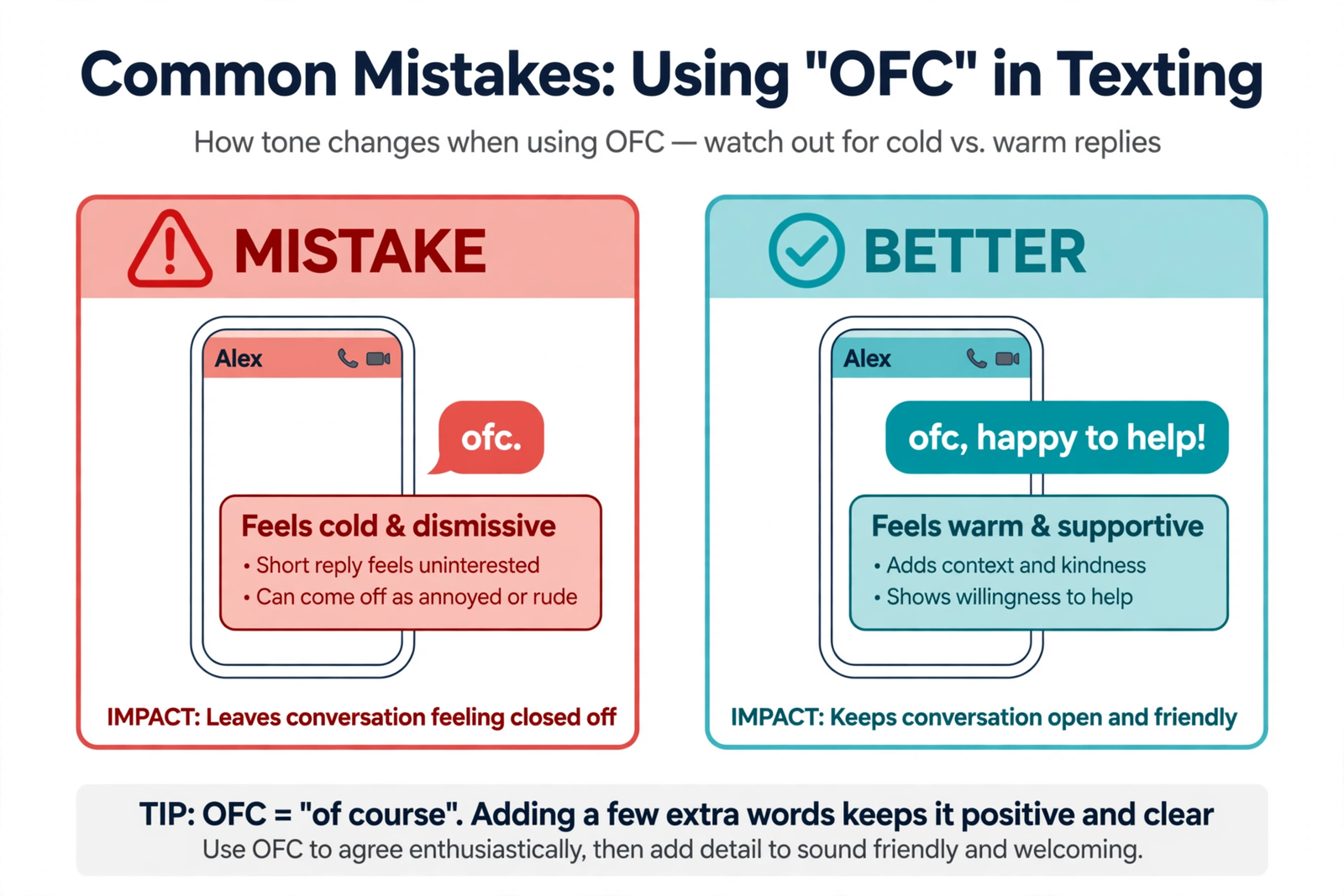
Notice how punctuation changes the tone. “Ofc!” with an exclamation mark sounds enthusiastic. “Ofc.” with a full stop can sound flat or even annoyed. “Ofc” on its own is neutral — friendly by default, but cold if the conversation is tense. That tiny punctuation difference is one of the most common sources of misunderstanding in texting.
Comparison with Similar Terms
“Of” slang overlaps with several other abbreviations and phrases. Knowing the differences helps you pick the right one — and read other people’s messages correctly.
| Term | Meaning | How it differs from OFC / “of” |
|---|---|---|
| OFC / ofc | Of course | The standard: warm, quick agreement or confirmation. |
| OBV / obvi | Obviously | Stronger and often more sarcastic than OFC; “obvi” can sound dismissive. |
| Yep / yup | Yes | A plain yes; OFC adds “of course” warmth and reassurance. |
| FS / fosho | For sure | More emphatic and casual; “for sure” stresses certainty, OFC stresses willingness. |
| IKR | I know, right? | Agreement with an opinion, not a yes to a request. |
| Kinda / sorta | Kind of / sort of | Hedges that soften a statement; the opposite of a firm OFC. |
| NGL | Not gonna lie | Adds honesty before an opinion; OFC confirms, NGL confesses. |
The closest cousins are OBV and FS. “Obv” and “ofc” both answer with “obviously,” but “obv” carries more attitude — it can imply “you should have known that.” OFC is the safer, friendlier choice in most chats. “For sure” is the more enthusiastic cousin: “ofc I’ll come” means “yes, naturally,” while “fs I’ll come” means “yes, absolutely, count on it.”
“Kinda” and “sorta” sit on the other side of the family. Where OFC is definite, they are deliberately indefinite. Mixing them up changes the message completely: “I’m ofc going” is a promise, while “I’m kinda going” is barely a maybe. If you want to sound sure, use OFC; if you want room to change your mind, use kinda or sorta.
For more short-form slang, see our guides to FN meaning in text and CFS meaning in text — both work the same way, compressing a common phrase into a few fast letters.

Alternate Meanings
Most of the time, “of” in slang points back to “of course.” But the letters OFC and the word “of” pick up other meanings in specific communities, and a few are worth knowing so you are not confused when they appear.
- OFC — Original Female Character: In fanfiction and fandom communities, OFC means a female character created by the writer, not one from the original story. If you see “my OFC” in a fanfiction forum, it has nothing to do with “of course.”
- OFC — OnlyFans Creator: On some social platforms, OFC is shorthand for an OnlyFans creator. Context makes this one obvious — it appears in creator-economy discussions, not in a friend asking for a favor.
- OFC — Official Fan Club: In music and celebrity fandoms, OFC can mean an official fan club. Again, the surrounding words give it away.
- OFC — Occipitofrontal Circumference: In medical settings, OFC is a measurement of a baby’s head circumference taken during pediatric checkups. You will not see this one in a group chat.
- OFC — “Of f***ing course”: In heated or emphatic messages, some people use OFC to mean “of f***ing course,” with the implied expletive adding sarcasm or frustration. “OFC he forgot. OFC.” reads very differently from a friendly “ofc!” — the repetition and the full stops do the work.
- “Of” in AAVE and regional slang: In some dialects, phrases like “I’m finna” or “kinda of” appear with “of” as a filler or connector. “Kinda of” is technically nonstandard — the correct form is “kind of” — but it is common in casual typing and speech.
The rule of thumb: if the message is a quick reply to a question or request, OFC means “of course.” If the conversation is about fanfiction, medicine, or creators, check the context before assuming.
Professional or Polite Alternatives
OFC is perfect for friends, but it can look lazy or careless in a work email, a message to a teacher, or a formal setting. Here are polished alternatives that keep the same meaning:
- Instead of “ofc” (agreement): “Of course,” “Certainly,” “Absolutely,” “I’d be happy to,” “Yes, of course.”
- Instead of “ofc” (reassurance): “Of course not,” “No problem at all,” “Don’t worry about it,” “Anytime.”
- Instead of “kinda” (softening): “Somewhat,” “To some extent,” “A little,” “Rather.”
- Instead of “sorta” (softening): “In a way,” “Somewhat,” “Approximately,” “More or less.”
A good habit: use the full form “of course” in any message where the other person is a boss, client, teacher, or someone you do not know well. It costs you eight extra letters and buys you a noticeably more professional tone. Save “ofc” for friends, family, and casual group chats, where it reads as warm rather than careless.
For other texting abbreviations that need the same formal-versus-casual judgment, check our HBU meaning in chat guide — it covers another abbreviation that shifts meaning with tone.
Common Mistakes
Because “of” slang is so short, small mistakes change the meaning fast. These are the ones people make most:
- Using “ofc” when you are annoyed — and sounding sarcastic by accident. A bare “ofc.” in a tense conversation reads as “obviously, duh.” If you are frustrated, either spell out a warmer reply or add a softener: “ofc, no worries at all!”
- Writing “kinda of” instead of “kind of.” “Kinda” already contains “kind of,” so “kinda of” doubles the “of.” It is common in fast typing, but it looks sloppy in anything semi-formal. Write “kinda” or “kind of” — never “kinda of.”
- Using “ofc” in formal messages. “Ofc, I’ll send the contract” to a client reads as careless. Use “Of course” in professional contexts, every time.
- Confusing OFC with “obviously.” They overlap, but OFC is agreement (“yes, of course”) while “obviously” can be an insult (“you should have known”). Do not swap them when someone is asking a genuine question.
- Reading “ofc” as rude when it is just fast. Most people type “ofc” because they are busy, not because they are annoyed. If the rest of the conversation is warm, assume the “ofc” is warm too.
- Overusing “kinda” and “sorta.” Hedging every sentence — “I kinda sorta think maybe” — makes you sound unsure even when you are not. Use hedges when you genuinely mean “somewhat,” not as a reflex.
- Typing “of” when you mean “have.” “I should of gone” is a classic mix-up: the correct phrase is “I should have gone” (or “should’ve”). The “of” sneaks in because “should’ve” sounds like “should of” when spoken. In writing, it is a mistake.
Quick Tips
Use these tips to get the of meaning slang right every time you type it:
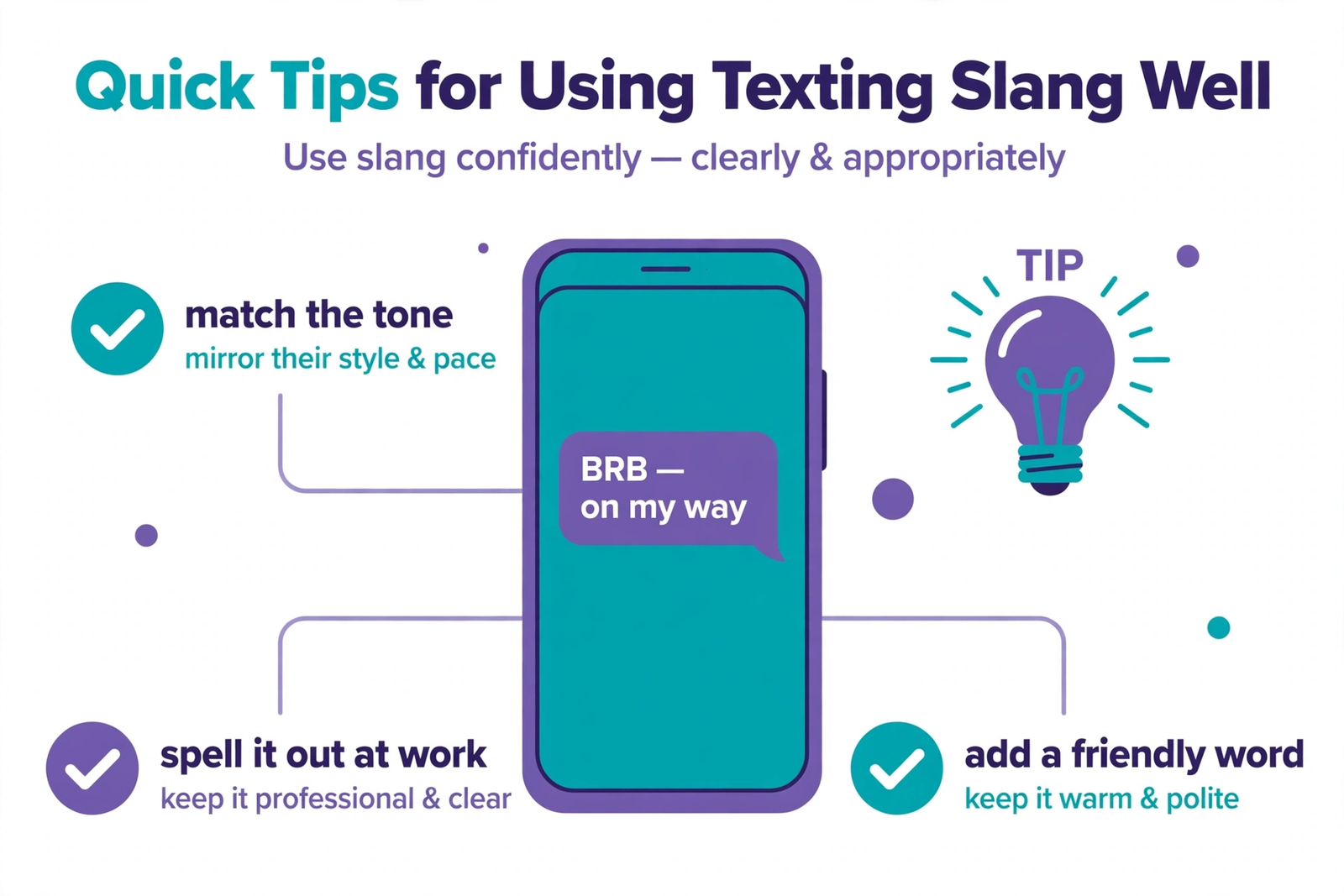
- Match the tone with punctuation. “Ofc!” is enthusiastic, “ofc” is neutral, “ofc.” can read as cold. Add an exclamation mark or a friendly extra word when you want warmth.
- Answer requests with “ofc” + a detail. “Ofc, I’ll be there at 7” is warmer and clearer than a bare “ofc.” The detail proves you actually read the message.
- Use “kinda” and “sorta” to soften opinions, not facts. “I kinda liked it” works; “I kinda am your brother” does not. Hedges belong on opinions and feelings.
- Spell it out at work. “Of course” in professional messages, “ofc” with friends. The eight extra letters are worth it.
- Do not use “ofc” to dodge a question. If someone asks something serious, a one-word “ofc” can feel dismissive. Give a real answer, then add “ofc” for warmth.
- Read the room before assuming sarcasm. “OFC he did that” with no context is probably a joke between friends, not an attack. Check the relationship before reacting.
- Keep “kinda of” out of your typing. It is “kinda” or “kind of.” Your autocorrect will not always catch it, so watch for it yourself.
One more useful habit: if you are learning English slang, keep a small note of the abbreviations you see most — OFC, IMK, TMP, MHM — and the tone each one carries. Slang is less about definitions and more about timing, and timing is what makes “ofc” land right.
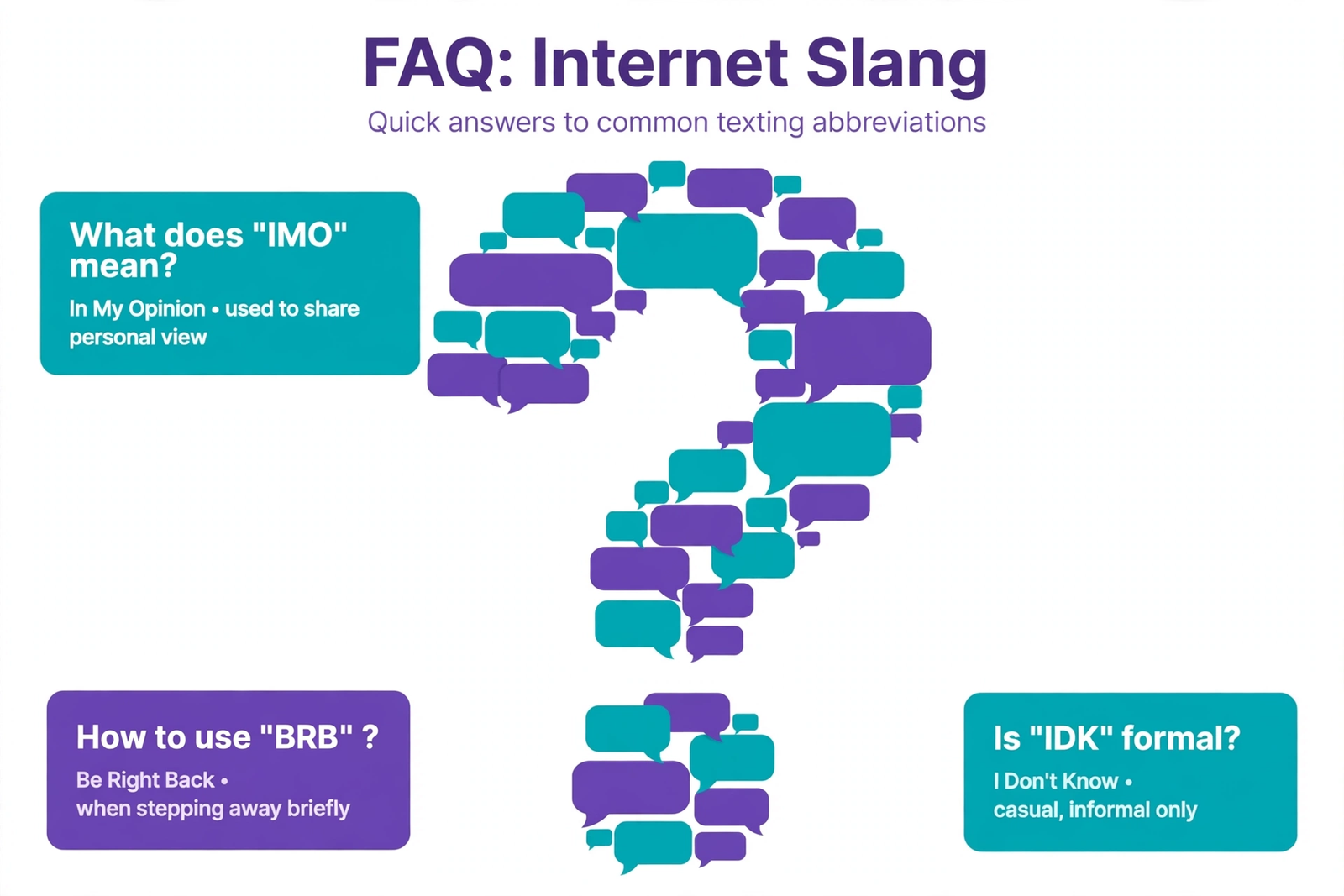
FAQ
What does “of” mean in slang?
In slang, “of” most often appears inside the abbreviation OFC, short for “of course,” meaning yes, obviously, or no problem. It also appears in softening phrases like “kind of” (kinda) and “sort of” (sorta), where it means “somewhat” or “in a way.” On its own, “of” has no slang meaning.
What does OFC mean in texting?
OFC means “of course.” People use it to agree, confirm, or reassure someone quickly — “Can you help?” — “Ofc!” It is friendly and casual, and it works on every messaging app, from WhatsApp and iMessage to Snapchat, Instagram, and Discord.
Is OFC rude?
Usually not. OFC is normally warm and casual. It can sound rude or sarcastic when it is a bare “ofc.” in a tense conversation, or when it is used to mean “of f***ing course.” Adding an exclamation mark or an extra friendly word — “ofc, happy to!” — keeps it clearly polite.
What does “ofc” mean from a girl?
It means the same thing: “of course.” The tone may carry extra warmth or enthusiasm depending on context — “ofc!!” with extra exclamation marks is often playful or affectionate — but the definition does not change with who sends it.
What is the difference between OFC and OBV?
OFC means “of course” and signals friendly agreement. OBV means “obviously” and is stronger, often carrying sarcasm or impatience. Use OFC when you want to sound helpful; OBV can accidentally sound like you think the question was silly.
What does “kinda of” mean?
“Kinda of” is a common nonstandard spelling of “kind of.” “Kinda” already means “kind of,” so adding “of” again is a doubling mistake. The correct forms are “kinda” (casual) or “kind of” (standard). It means “somewhat” or “a little.”
Can I use OFC in professional messages?
It is better not to. In work emails or messages to clients, managers, or teachers, write out “Of course” instead. OFC is fine with coworkers in a casual team chat, but the full form always reads as more professional.
What does “of” mean on TikTok and Snapchat?
On TikTok and Snapchat, “of” shows up in OFC comments (“ofc this is my favorite sound”) and in phrases like “song of the day” or “fit of the day.” The meaning is the same as in texting: agreement, confirmation, or connecting a thing to its moment.
Conclusion
The of meaning slang turns out to be a story about a tiny word doing outsized work. On its own, “of” is just a preposition — but inside OFC it becomes one of the fastest, friendliest ways to say yes online, and inside “kinda” and “sorta” it becomes the softener that keeps casual conversation comfortable. It connects phrases, shortens “of course” to three letters, and shows up in captions, comments, and chats millions of times a day.
The key takeaways are simple: OFC means “of course” and is your go-to for quick agreement; “kind of” and “sort of” soften what you say; punctuation sets the tone, so “ofc!” and “ofc.” are not the same message; and formal settings always deserve the full “of course.” Use “ofc” with friends, spell it out at work, and never write “kinda of.”
Next time you see “ofc” in your messages, you will know exactly what it means — and exactly how to answer it. And if you want to keep decoding the shorthand your friends use every day, our Glizzy meaning guide is a good place to continue: same fast style, same real examples, same plain-English explanations. For a deeper look at how OFC is used across platforms, see this OFC meaning in text guide as well.
