
Quick definition: In slang, tacky meaning slang is simple — something is tacky when it looks cheap, gaudy, or in poor taste. People use it to call out flashy outfits, cringey behavior, or anything that tries too hard to impress and misses the mark. If someone texts “that’s so tacky,” they mean it lacks class, not that it is sticky.
Tacky Meaning Slang & Definition
So, what does tacky mean in slang? At its core, the tacky meaning slang definition is all about taste — or the lack of it. When people call something tacky, they are saying it is cheap-looking, overdone, or socially off-key. It is a judgment word, and in modern texting culture it covers a lot more than clothes.
The dictionary agrees with the slang. Merriam-Webster defines tacky as “not having or exhibiting good taste,” including “marked by cheap showiness” and “gaudy.” That is exactly how the word works in everyday chats, comments, and captions — it flags something that feels low-class, flashy, or embarrassing.
In short, the tacky meaning in text boils down to this: if it looks cheap, sounds desperate for attention, or breaks basic social etiquette, people will call it tacky. The word can describe an outfit, a decoration, a social media post, or even a person’s behavior at a party. It is one of those slang words that everyone understands instantly, even though nobody ever formally taught it to them.
Here is the easiest way to remember it:
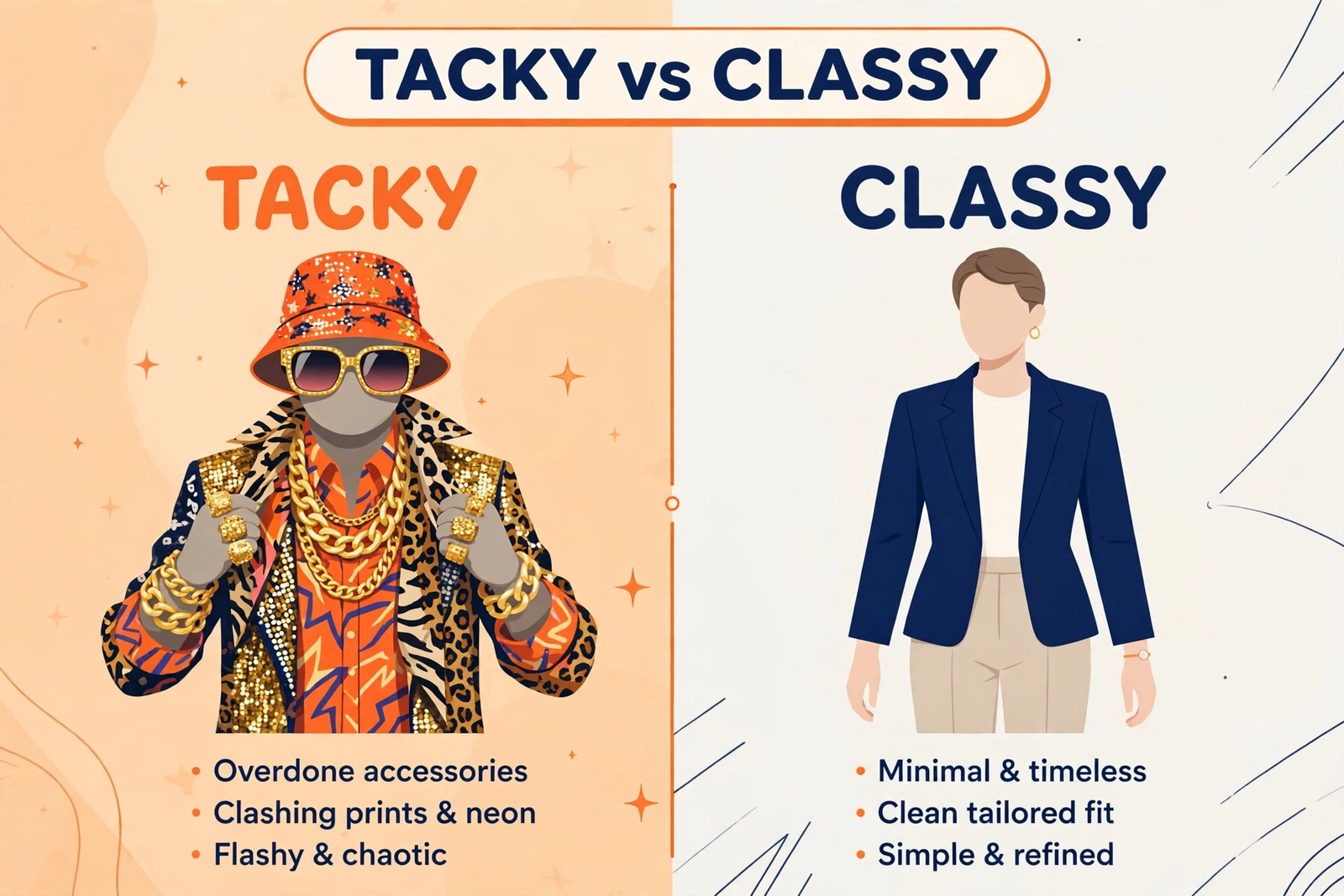
- Tacky outfit: too much glitter, fake designer logos, clashing colors worn to impress.
- Tacky behavior: bragging about money, oversharing online, or making a scene for attention.
- Tacky decor: plastic flowers, neon signs everywhere, or anything that screams “cheap and loud.”
- Tacky text: a message that is cringey, desperate, or tone-deaf for the moment.
The word is almost always negative, but the tone matters. Friends joking around might call each other’s outfits tacky and laugh about it. A stranger saying it in a comment section usually means it as a real insult. Context decides whether it stings or just teases.
Introduction
You have probably seen it in a group chat or a TikTok comment: someone posts a photo of a glitter-covered car or a humblebrag about their new diamond ring, and the replies flood in with one word — “tacky.” But what exactly are they saying? Is it about the glitter? The bragging? Or something deeper about taste?
The truth is that tacky is one of the most useful judgment words in modern slang because it packs a whole opinion into five letters. It says “that looks cheap,” “that was in poor taste,” and “you should know better” all at once. And unlike many slang terms that fade in a season, tacky has been around for over a century — it just keeps finding new things to describe, from Instagram flexes to wedding speeches.
In this guide, we will break down the full tacky meaning slang story: where the word came from, how it evolved from sticky paint to social media shade, how people use it in texts and real conversations, and how you can use it correctly without sounding rude. You will also get real examples, a comparison with similar slang words, common mistakes to avoid, and quick tips for using it naturally. If you have ever wondered whether something counts as tacky — or worried that someone might call you tacky — this article answers it all.
And if you enjoy decoding texting slang, you will also like our guide to fn meaning in text, another short term that confuses a lot of people in chats.

Origin
The origin of “tacky” is older — and stranger — than most people expect. The word has two separate roots that eventually merged into the slang we use today.
The first root is the sticky one. “Tacky” comes from the word “tack,” meaning to attach something temporarily. Since 1788, tacky has described a surface that is slightly sticky to the touch — like fresh paint, wet glue, or varnish that has not fully dried. If you have ever touched a wall and pulled your fingers away with that light pull, you know exactly what tacky feels like. This literal meaning is still alive today in art classes and DIY projects.
The second root is the surprising one. In the 1800s, in the American South, a “tackey” (also spelled “tackie”) was a small, neglected, low-priced horse — the kind of scruffy pony nobody wanted. Wealthier people started using the word to describe people and things they saw as low-class, shabby, or seedy. By 1862, tacky meant shabby in appearance, and by 1888 it had settled into the meaning we recognize now: in poor taste.
So how did a word about sticky paint and scruffy horses become a slang staple? The bridge is the idea of “cheapness.” Something sticky feels unfinished and low-quality. A neglected horse looks shabby. Both ideas point to the same judgment: this is not the good stuff. Over the twentieth century, the word moved from describing poor-quality objects to describing poor taste in general — clothes, decor, manners, and eventually online behavior.
The big modern boost came from pop culture. In 2014, “Weird Al” Yankovic released a parody song called “Tacky,” mocking people who overshare online, brag constantly, and lack social awareness. The song’s list of tacky behaviors — live-tweeting a funeral, humblebragging, wearing socks with sandals — matched exactly how the internet was already using the word. From there, tacky became a go-to label for anything cringey on social media.
Popularity
Tacky is not a trend that peaked and vanished. It is a steady, everyday word that shows up across generations, which is rare for slang. Teenagers use it on TikTok, millennials drop it in group chats, and older generations have used it for decades to describe everything from wedding decor to neighbors’ Christmas lights.
Why has it stayed popular? Three reasons stand out. First, it is short and punchy — one word does the work of a whole sentence. Second, it is flexible: it works for fashion, behavior, design, and digital manners. Third, it is honest without being vulgar. Calling something tacky is a criticism, but it is not a swear word, so it fits in polite conversation, work chats, and family group messages alike.
On social media, tacky has found a second life. Comment sections under celebrity outfit posts, home renovation reveals, and viral flex videos are full of it. Creators even use it as a hook — “Is this tacky or cute?” is a classic engagement question on TikTok and Instagram Reels, because everyone has an opinion about taste. The word also powers a whole genre of content: tacky outfit challenges, tacky Christmas sweater parties, and “tacky tourist” looks.
Search interest in the term stays consistent year-round, with spikes around the holidays (tacky Christmas sweaters, tacky Halloween costumes) and wedding season (tacky wedding themes, tacky bridesmaid dresses). In the United States, it is one of the most searched taste-related slang words, right alongside “cringey,” “cheugy,” and “basic.” Unlike those newer terms, though, tacky has the advantage of being understood by every age group — your grandmother and your group chat both know what it means.
How It Is Used
People use tacky in three main ways: to judge appearance, to judge behavior, and to joke around. The grammar is simple — it is an adjective, so it goes before a noun (“a tacky dress”) or after a linking verb (“that was tacky”). The comparative is “tackier” and the superlative is “tackiest.”
1. Judging appearance and style. This is the classic use. An outfit, a car, a living room, or a party theme can all be tacky if they look cheap, gaudy, or overdone. The judgment is about taste, not price — expensive things can be tacky too. A gold-plated phone case or a diamond-covered steering wheel is tacky precisely because it tries to look rich and ends up looking cheap.
2. Judging behavior and manners. In modern slang, this is the fastest-growing use. Bragging about money, making a scene at someone else’s event, asking about someone’s salary at dinner, or posting a vague dramatic status just for attention — all of these get called tacky. Here, the word means socially tone-deaf rather than visually ugly. It is about reading the room and failing.
3. Joking and teasing. Friends use tacky playfully all the time. Calling your best friend’s glittery phone case tacky with a laughing emoji is a joke, not an attack. The playful use works because everyone knows the word is a judgment — the humor comes from applying that judgment to something small and harmless.
A few usage patterns worth knowing:
- “That’s so tacky.” The most common form. A complete verdict on something you just saw or heard.
- “A bit tacky.” A softer version. It says the same thing but leaves room for “but I kind of love it.”
- “Tacky but cute.” The affectionate contradiction. It admits something is in poor taste and enjoys it anyway.
- “Tacky flex.” Bragging disguised as complaining, like “Ugh, my new diamond ring keeps scratching my steering wheel.”
- “Tacky tourist.” The classic look: socks with sandals, fanny pack, oversized camera, Hawaiian shirt.
One important note: tacky is almost always used by the person doing the judging, not the person being judged. Nobody introduces themselves as tacky. It is a label other people apply, which is why it can sting even when it is meant lightly.
Examples
Examples make the meaning click faster than any definition. Here is how tacky shows up in real conversations, across friendly chats, professional settings, and funny moments.
Friendly Examples
Friends use tacky as playful shade. The tone is teasing, usually with laughing emojis, and nobody’s feelings get hurt — most of the time.
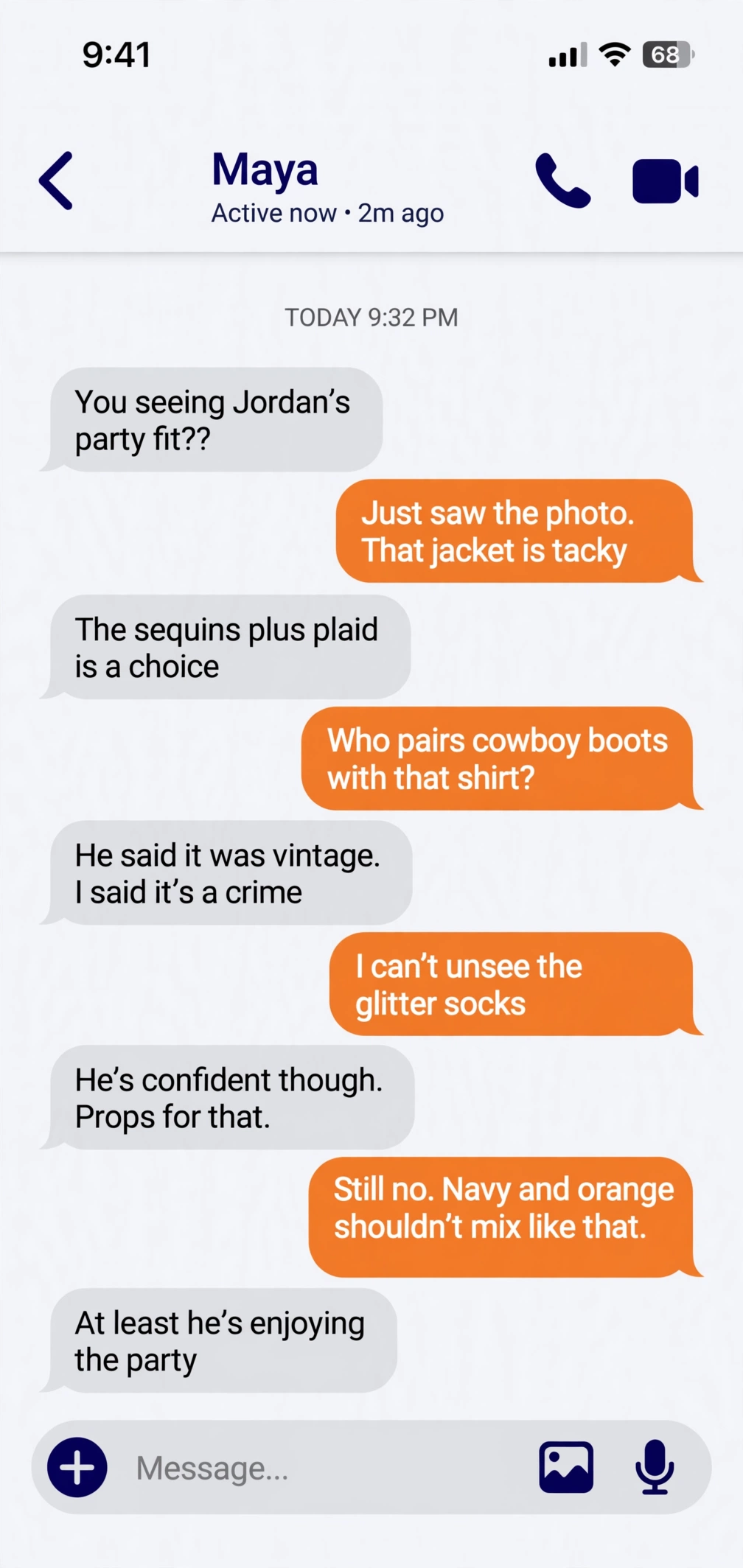
- “Did you see what she wore to the party? That sequined jumpsuit was so tacky, I loved it though.”
- “OMG, your new phone case has rhinestones AND glitter? That’s tacky in the best way.”
- “He put LED lights all over his car. Tacky? Yes. Cool at night? Also yes.”
- “Matching Christmas pajamas for the whole family is a little tacky, but honestly, it’s the best part of the holidays.”
- “She bedazzled her water bottle. It’s tacky, it’s extra, and I’m kind of jealous.”
In friendly chats, tacky often comes with a compliment hiding inside it. “Tacky but cute” is basically a term of endearment among close friends — it says “this breaks the rules of good taste, and that is exactly why it is fun.”
Professional Examples
In work and formal settings, tacky describes behavior that breaks etiquette. The word is polite enough for the office but still lands as a real criticism.
- “It was tacky of him to announce his promotion during someone else’s farewell lunch.”
- “Handing out your business cards at a funeral? That is beyond tacky.”
- “The client thought the gold-plated pens were impressive, but honestly, they looked tacky.”
- “She wore sneakers to the wedding. The bride noticed, and everyone agreed it was tacky.”
- “Bragging about your salary in a team meeting is tacky, no matter how much you earn.”
Notice the pattern: in professional examples, tacky is about timing and awareness, not money. The same expensive suit can be classy at a gala and tacky at a beach wedding. Context is everything.
Funny Examples (if applicable)
Tacky is a naturally funny word because the things it describes are often funny too — just not on purpose.
- “He showed up to the pool party in a suit and tie. Tacky? No. Confusing? Absolutely.”
- “My uncle’s car has leopard-print seat covers, a dashboard hula dancer, and a bumper sticker that says ‘Honk if you’re tacky.’ He is self-aware, at least.”
- “The birthday cake had ten layers of glitter and a tiny plastic flamingo on top. A little tacky, but the kids went wild for it.”
- “She live-tweeted her own breakup with a poll asking followers to vote on who was right. That is not just tacky, that is a new level of main character energy.”
- “I wore socks with sandals to the grocery store as a joke, and three people called me tacky before I even reached the milk aisle.”
Funny examples work because tacky behavior is relatable. Almost everyone has worn, said, or posted something tacky at least once — the humor comes from recognizing it.
Comparison with Similar Terms
Tacky has a lot of near-neighbors in slang, and they are easy to mix up. The differences are subtle but real: each word judges a slightly different thing. This table sorts them out.
| Term | What It Judges | Example | How It Differs from Tacky |
|---|---|---|---|
| Tacky | Cheap, gaudy, poor taste | “That fake designer bag is tacky.” | The baseline: taste and class |
| Cringey / Cringe | Secondhand embarrassment | “His pickup line was so cringey.” | About the feeling it gives you, not the taste |
| Cheugy | Outdated millennial trends | “Live, Laugh, Love signs are cheugy.” | About being out of style, not cheap-looking |
| Basic | Unoriginal, mainstream taste | “Pumpkin spice everything is so basic.” | About being boring and predictable |
| Gaudy | Too bright, too flashy | “That gaudy gold chain hurts my eyes.” | Visual only; tacky also covers behavior |
| Trashy | Low-class, vulgar | “That reality show is trashy fun.” | Harsher and more vulgar than tacky |
| Corny | Unoriginal, trying too hard to be funny | “His joke was so corny.” | About humor, not taste or style |
| Kitschy | Deliberately campy, ironic bad taste | “That flamingo lamp is kitschy.” | Often enjoyed on purpose; tacky rarely is |
The closest cousins are gaudy and trashy. Gaudy is purely visual — something can be gaudy without being tacky if it is expensive and well-made. Trashy is tacky’s ruder sibling: it implies something is not just in poor taste but low-class or vulgar. Tacky sits in the middle — critical, but still polite enough to say at a dinner table.
Then there is cringey, the word people reach for when tacky feels too old-fashioned. Cringey describes the embarrassment you feel watching something; tacky describes the bad taste itself. A tacky wedding speech can also be cringey, but a cringey text message is not necessarily tacky. If you are unsure which word fits, ask yourself: am I judging the taste (tacky) or my own embarrassment (cringey)?
One more distinction matters online. “Cheugy” and “basic” judge people for following trends; tacky judges them for having bad taste. A pumpkin spice latte is basic, not tacky. A pumpkin spice latte served in a glitter-covered gold goblet at a funeral is tacky. The difference is the context, the excess, and the occasion.
Alternate Meanings
Tacky is one of those words with a completely different meaning depending on the room you are in. Here are the alternate meanings you need to know so you never misunderstand it.
1. Sticky to the touch (the literal meaning). In painting, woodworking, and crafts, tacky means a surface that is not fully dry yet — slightly adhesive when you touch it. “Wait before you hang that frame, the paint is still tacky.” This is the original meaning from 1788, and it is still the standard term in DIY and art contexts. If someone in an art class says your project is tacky, they might just mean the glue is wet.
2. Shabby or seedy (the older slang). In 19th-century Southern American English, tacky described something worn-out, poor-quality, or run-down — a tacky house, a tacky suit, a tacky horse. This sense survives in phrases like “ticky-tacky,” made famous by the song “Little Boxes,” which mocks rows of identical cheap houses. When people say a neighborhood looks ticky-tacky, they mean it looks cheap and mass-produced.
3. A person of low standing (historical, now offensive). In the 1800s South, “tacky” or “tackey” was also used as a noun for a person considered low-class or unrefined. This usage is obsolete and offensive today — nobody uses it this way in modern conversation, and you should not either. It is worth knowing only so you recognize it if you meet it in old books.
4. Sticky in weather and sports. Athletes and outdoor workers sometimes call a surface tacky when it has grip — a tacky football, a tacky climbing hold, or tacky road conditions after light rain. Here it is a compliment: grip is good. This is the same sticky root, just used positively.
The takeaway: if the conversation is about paint, glue, or crafts, tacky probably means sticky. If it is about outfits, parties, or social media, it means poor taste. The setting tells you which meaning is in play.
Professional or Polite Alternatives
Sometimes “tacky” is too blunt. At work, with family, or in any situation where you want to be kind, these alternatives say the same thing more gently.
- “Not my style.” The safest option. It frames the judgment as personal preference, not a universal verdict. “The decor is not really my style.”
- “A bit much.” Perfect for over-the-top outfits or parties. It says “too flashy” without saying “bad taste.” “The gold theme was a bit much for a baby shower.”
- “Over the top.” Similar to “a bit much,” but slightly stronger. Good for events and decorations.
- “In poor taste.” The formal version of tacky. Use it in professional or written contexts where slang feels wrong. “The joke was in poor taste given the occasion.”
- “Not quite appropriate for the occasion.” The most diplomatic choice. It focuses on the mismatch with the setting rather than the person’s taste.
- “Bold choice.” The classic polite dodge. Everyone knows what it means, and nobody can prove you meant it badly.
- “Loud” or “flashy.” Neutral descriptions of the look itself. “That tie is pretty flashy” criticizes the item, not the person wearing it.
When should you use an alternative instead of tacky? Whenever the person you are talking about can hear you, whenever the setting is formal, and whenever you want to give feedback rather than win an argument. Tacky is a great word for group chats and comment sections; it is a risky word in performance reviews and wedding speeches. If you are not sure, “not my style” never gets you in trouble.
Common Mistakes
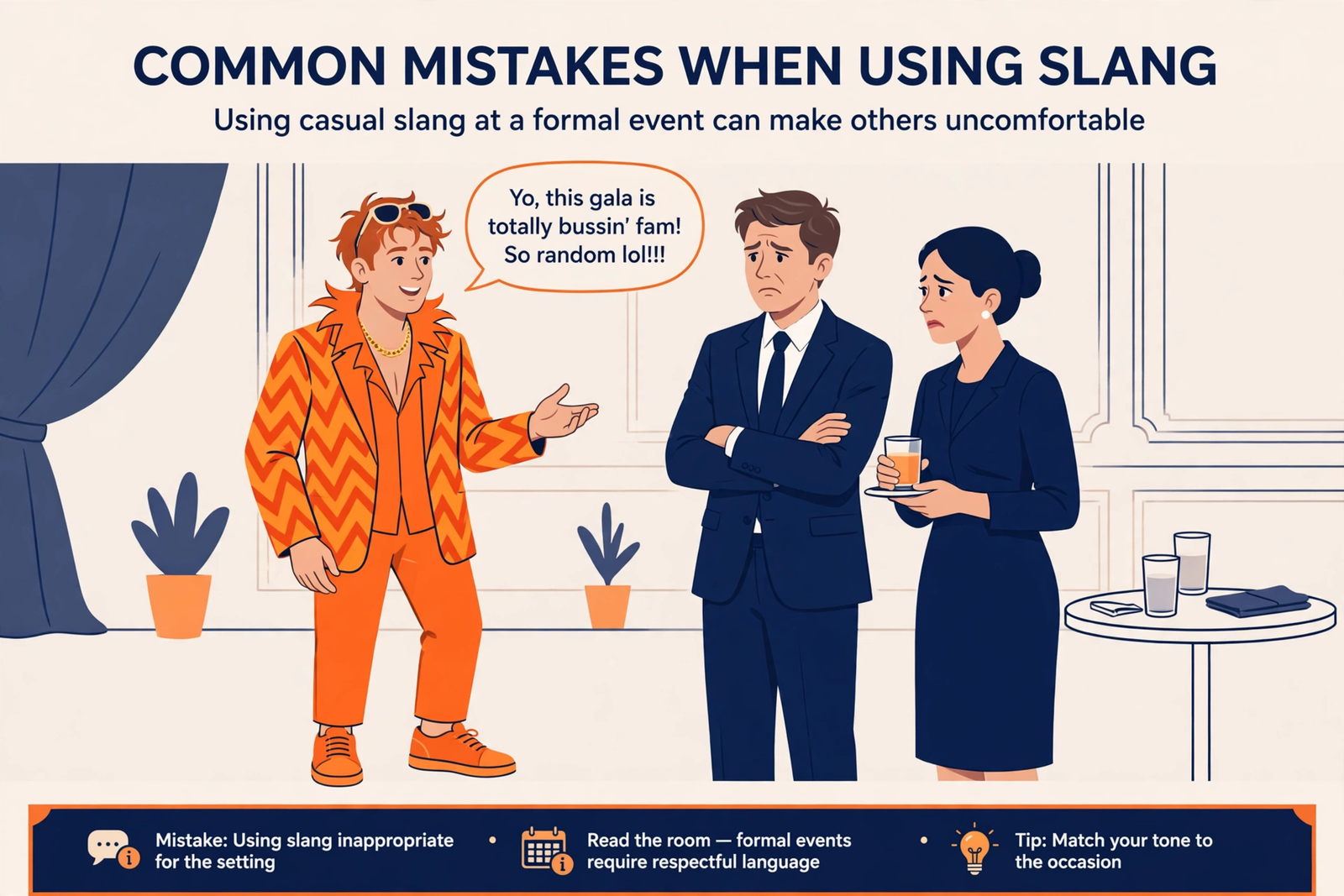
Even a simple word like tacky gets misused. Here are the most common mistakes people make — and how to avoid them.
Mistake 1: Calling everything expensive “classy” and everything cheap “tacky.” Price has nothing to do with it. A ten-dollar thrift store jacket can look classy, and a five-thousand-dollar gold toilet can be tacky. Tacky is about taste, proportion, and context — not the price tag. Judging by price alone makes you sound snobbish, not stylish.
Mistake 2: Using tacky for things that are just different. Not every bold choice is tacky. Bright colors, unusual art, and cultural traditions that look unfamiliar to you are not automatically in poor taste. Before you call something tacky, ask whether it is actually cheap and gaudy, or just outside your comfort zone. Confusing “different” with “tacky” is the fastest way to sound judgmental.
Mistake 3: Saying it to someone’s face about something they love. Tacky is a judgment word, and people take it personally. Telling a friend her wedding theme is tacky — even if you are right — will hurt her feelings and start a fight. Save the word for situations where the person is not present, or soften it with “not my style” if they are.
Mistake 4: Mixing up tacky with sticky. In a craft or painting context, “tacky” means not fully dry. New English learners sometimes hear “the paint is tacky” and think someone is insulting the painter. It is just a technical term. Context decides the meaning, so listen for the setting before reacting.
Mistake 5: Using tacky as a noun for a person. You can say “that outfit is tacky” or “that was a tacky thing to do,” but calling a person “a tacky” is outdated and offensive — it echoes the 1800s Southern usage where “tackey” labeled a person as low-class. Stick to the adjective form and describe the thing or the behavior, not the person.
Mistake 6: Overusing it until it loses meaning. If you call everything tacky — the font, the music, the food, the lighting — the word stops landing. Save it for the moments that genuinely deserve the label, and it keeps its punch. If you are curious about other slang words people often misuse, check our guide to cfs meaning in text for another term with a tricky double meaning.
Quick Tips
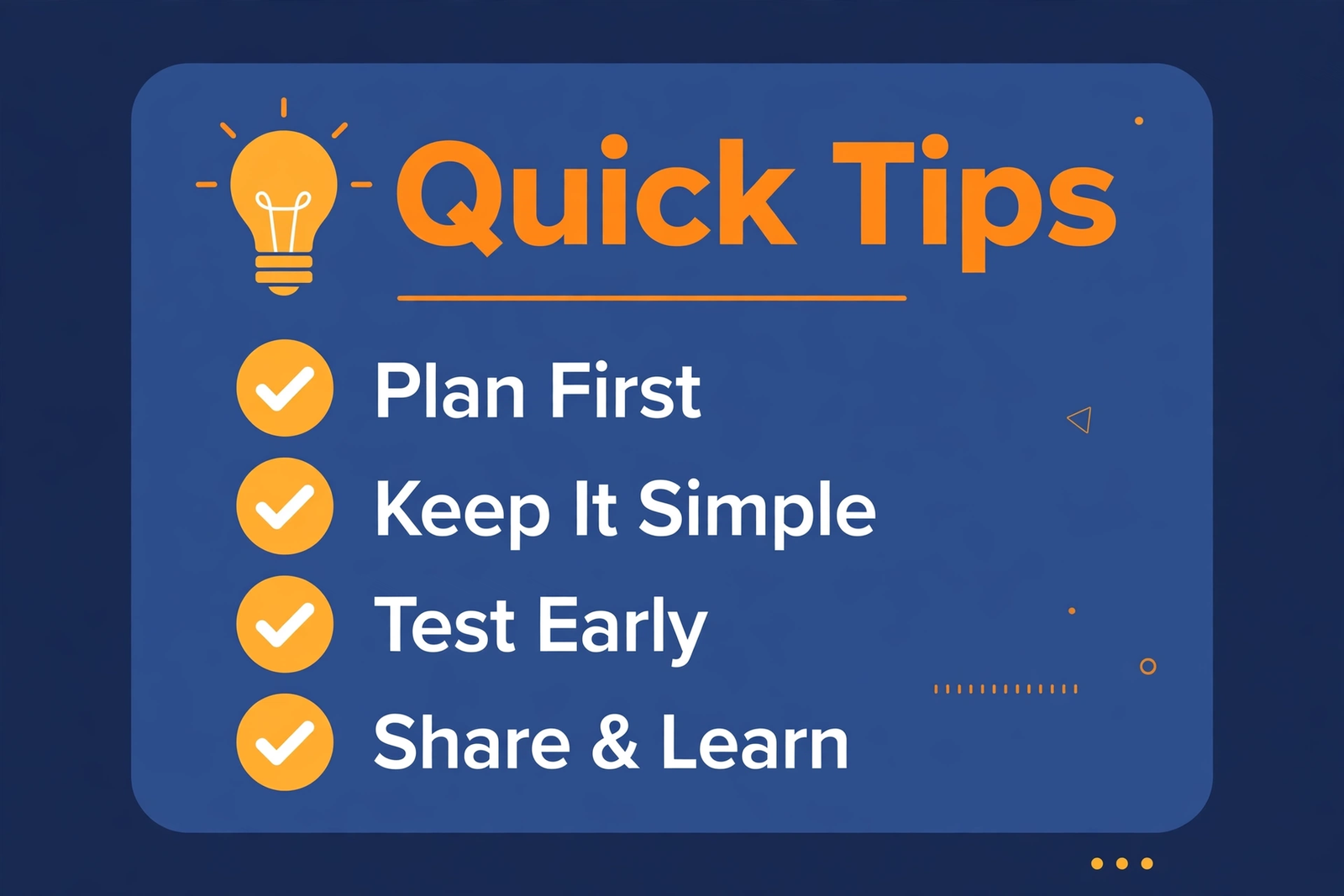
Want to use tacky like a native speaker? These quick tips cover the essentials.
- Pair it with specifics. “That’s tacky” is vague. “That glitter-covered car is tacky” is clear and funnier. The more specific you are, the less mean it sounds.
- Use “a bit tacky” to soften it. Adding “a bit” turns a verdict into an opinion. It is the difference between an insult and a comment.
- Add “but cute” when you mean it affectionately. “Tacky but cute” is the universal code for “I love this even though it breaks the rules.” Use it for ugly Christmas sweaters, glitter crafts, and over-the-top birthday parties.
- Save it for taste, not people. Judge the outfit, the post, or the behavior — not the person. “That was a tacky joke” is fair game. “You are tacky” is a personal attack.
- Read the occasion before you judge. The same outfit can be perfect at a costume party and tacky at a funeral. Taste is always relative to the setting.
- Use it in texts exactly like in speech. Tacky works the same in messages as in conversation: “omg that cake is so tacky 😂” needs no translation. It is one of the easiest slang words to use correctly in texting.
- Know when to hold back. If the person who chose the thing is standing right there and they clearly love it, silence is kinder than honesty. Not every opinion needs to be shared.
FAQ
What does tacky mean in slang?
In slang, tacky means cheap-looking, gaudy, or in poor taste. It describes outfits, decorations, or behavior that tries too hard to impress and ends up looking low-class or socially off-key. The tacky meaning slang definition covers both style and manners.
Is tacky a rude word?
Tacky is not a swear word, but it is a criticism, so it can feel rude depending on the situation. Among friends it is often playful, especially with a laughing emoji. Said to a stranger or about something someone loves, it can sting. Use “not my style” when you want to be polite.
What is an example of something tacky?
Classic examples include fake designer bags, head-to-toe leopard print at a formal event, a glitter-covered car, humblebragging about money, or making a dramatic scene at someone else’s celebration. Anything cheap-looking, overdone, or tone-deaf for the occasion counts.
Can expensive things be tacky?
Yes, absolutely. Price does not decide taste. A gold-plated phone, a diamond-covered steering wheel, or a mansion with a neon sign can all be tacky because they are gaudy and overdone. Tacky is about judgment and proportion, not the price tag.
What is the difference between tacky and cringey?
Tacky judges bad taste — something looks cheap or is in poor taste. Cringey describes the embarrassment you feel watching something. A tacky outfit can be cringey to look at, but a cringey text message is not necessarily tacky. Tacky is about the thing itself; cringey is about your reaction to it.
What does tacky mean in texting?
In texting, tacky means the same as in speech: cheap, gaudy, or in poor taste. People text it as a quick verdict — “that’s so tacky 😂” — about outfits, posts, or behavior they just saw. It is often playful among friends and sharper in comment sections.
Is “tacky but cute” a compliment?
Usually, yes. “Tacky but cute” means something breaks the rules of good taste in a charming way — like an ugly Christmas sweater or a glittery DIY project. It is affectionate, not insulting, and it is one of the most common friendly uses of the word.
Where did the word tacky come from?
Tacky has two roots: the sticky sense from “tack” (1788, for paint or glue that is not fully dry) and the Southern American sense from “tackey,” a neglected low-priced horse (1800s). The “in poor taste” meaning developed from the shabby, low-quality sense and was firmly established by 1888.
Conclusion
The tacky meaning slang story is simple once you see it whole: a word that started with sticky paint and scruffy horses became the internet’s favorite one-word verdict on bad taste. Today, tacky covers everything from glitter-covered outfits to humblebrag posts to wedding speeches that miss the moment. It is short, flexible, and understood by every generation — which is why it has outlasted trendier slang words like cheugy and basic.
The key takeaways are easy to remember. First, tacky is about taste, not price — expensive things can be tacky and cheap things can be classy. Second, it judges the thing or the behavior, not the person, so aim it at outfits and actions rather than people. Third, context decides everything: the same look can be perfect at a party and tacky at a funeral. And fourth, when you want to be kind, “not my style” says the same thing without the sting.
Now you know exactly what people mean when they text “that’s so tacky” — and you know how to use the word yourself without sounding rude or judgmental. Use it wisely, pair it with specifics, and remember that a little self-awareness goes a long way: we have all been tacky at least once.
Want to keep building your slang vocabulary? Our guide to tysm meaning breaks down another short texting term everyone uses but few can explain, and glizzy meaning covers one of the funniest slang words on the internet right now.
