Quick definition: The phrase late 90s early 2000s slang describes the informal language that ruled American pop culture roughly from 1995 to 2005 — playful words and catchphrases like da bomb, phat, bling, as if!, and talk to the hand, spread by hip-hop, teen movies like Clueless and Mean Girls, MTV, and the first wave of internet chat. Today people use these words mostly for nostalgia, jokes, themed parties, and retro captions — and knowing what they mean is the fastest way to decode a whole era of movies, music, and memes.
Late 90s Early 2000s Slang Meaning & Definition
Late 90s early 2000s slang refers to the casual words, phrases, and catchphrases that were everywhere in the United States during the last years of the 1990s and the first years of the 2000s. It was the language of mall culture, boy bands, pagers, AIM chats, and Saturday morning cartoons — a mix of hip-hop vocabulary, Valley Girl sarcasm, surfer and skater talk, and brand-new internet abbreviations.
Unlike formal English, this slang was never written down in a rulebook. It spread the way slang always spreads: one cool kid said it, a rapper put it in a song, a movie character made it a catchphrase, and suddenly the whole country was saying it. According to Merriam-Webster, slang is “an informal nonstandard vocabulary” — and the late 90s and early 2000s produced one of the richest informal vocabularies in modern American history.
What makes this era special is that it sits right on the border between two worlds. The late 90s were still mostly offline — you heard new slang on TV, on the radio, or in the school hallway. The early 2000s added the internet: AOL Instant Messenger, texting on flip phones, and early chat rooms turned abbreviations like LOL, BRB, and TTYL into everyday language almost overnight.
Introduction
Picture this: it is 1999, you are at the mall with your friends, your pager just buzzed with the code 143, and someone walks past in baggy jeans and a crop top looking totally fly. Your friend turns to you and says, “That outfit is da bomb.” Everyone within earshot knows exactly what she means — and nobody needs a dictionary to translate it.
That is the magic of late 90s early 2000s slang. It was not just a way of talking; it was a badge of belonging. If you knew the words, you were in on the joke. If you did not, you were, well, a scrub. For a full tour of the decade’s vocabulary, check out our guide to 90s slang words — this article goes further, covering both the late 90s classics and the early 2000s terms that followed them.
In this guide, you will find 45+ late 90s and early 2000s slang words with clear meanings and real example sentences, the stories behind the most famous phrases, a side-by-side comparison of 90s versus 2000s talk, and practical tips for using these words today without sounding like you are trying too hard. Whether you are writing a retro caption, planning a Y2K party, or just trying to understand what your older cousin meant when she said “as if!”, you are in the right place.
Origin
Most late 90s early 2000s slang came from four places, and each one shaped the words in a different way.
Hip-hop and Black English. The biggest engine of the era’s slang was hip-hop culture. Words like phat, fly, dope, bling, crunk, and fo’ shizzle started in Black English and hip-hop lyrics, then crossed into the mainstream through radio, MTV, and movies. Bling got its big push from B.G.’s 1999 song “Bling Bling,” while Snoop Dogg turned fo’ shizzle into a national catchphrase. The sitcom Martin (1992–1997) is even credited with popularizing “talk to the hand” and “you go, girl.”
Teen movies and TV. Hollywood did the rest. Clueless (1995) gave the world “as if!” and “whatever!” delivered with perfect Valley Girl sarcasm. Seinfeld gave us “yada, yada, yada” in 1997. The Budweiser “Wassup?!” commercials of 1999 turned a simple greeting into a cultural event, and Mean Girls (2004) gave the early 2000s “so fetch” and “that’s so fetch” — even though the movie itself jokes that fetch was never going to happen.
Music and MTV. Boy bands, pop princesses, and TRL countdowns kept the slang machine running. When a lyric used a word like jiggy or baller, millions of teenagers repeated it the next day at school. Music videos also spread the fashion that went with the words: baggy jeans, frosted tips, and enough shiny jewelry to justify the word bling.
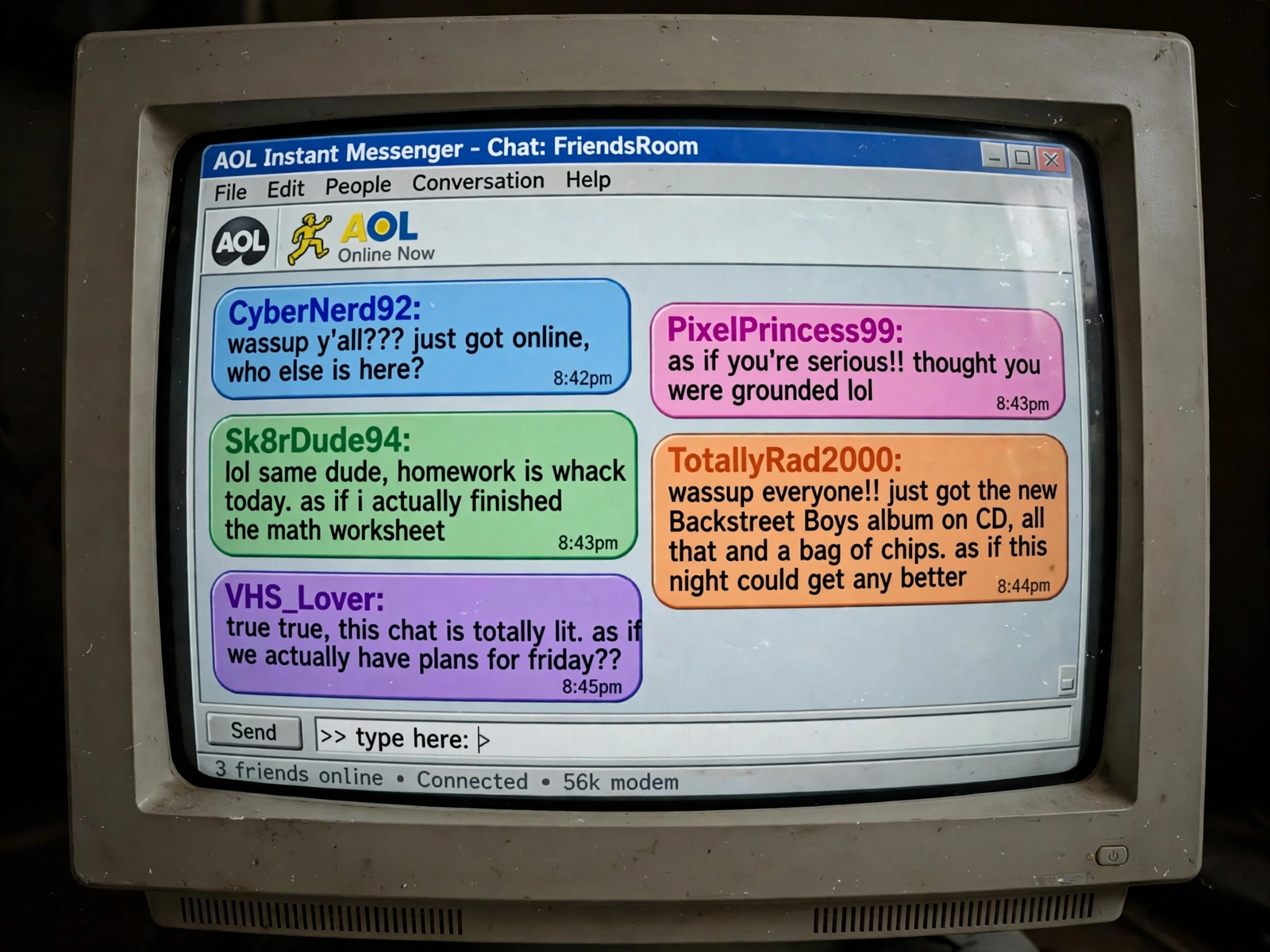
The early internet. By 2000, AOL Instant Messenger and texting on numeric keypads were changing how fast slang traveled. Abbreviations that saved keystrokes — LOL, BRB, TTYL, G2G, IDK, BFF — became slang in their own right. Gamers added noob, owned, and epic fail. For the first time, a word could go from a chat room to the whole country in a single weekend.
Popularity
At its peak, late 90s early 2000s slang was not a subculture — it was the culture. Teen comedies, sitcoms, commercials, and even news anchors borrowed it. Saying “my bad” instead of “I’m sorry” felt modern. Calling something “the bomb dot com” felt clever, because the internet itself was still new and exciting enough to joke about.
The slang survived because the media that carried it never really went away. Clueless, Mean Girls, Friends, and The Fresh Prince of Bel-Air still stream to new audiences today, so every generation meets these words for the first time through the same scenes. That is why a teenager in 2026 can still quote “as if!” and get a laugh — the joke has been passed down, fully intact, for thirty years.
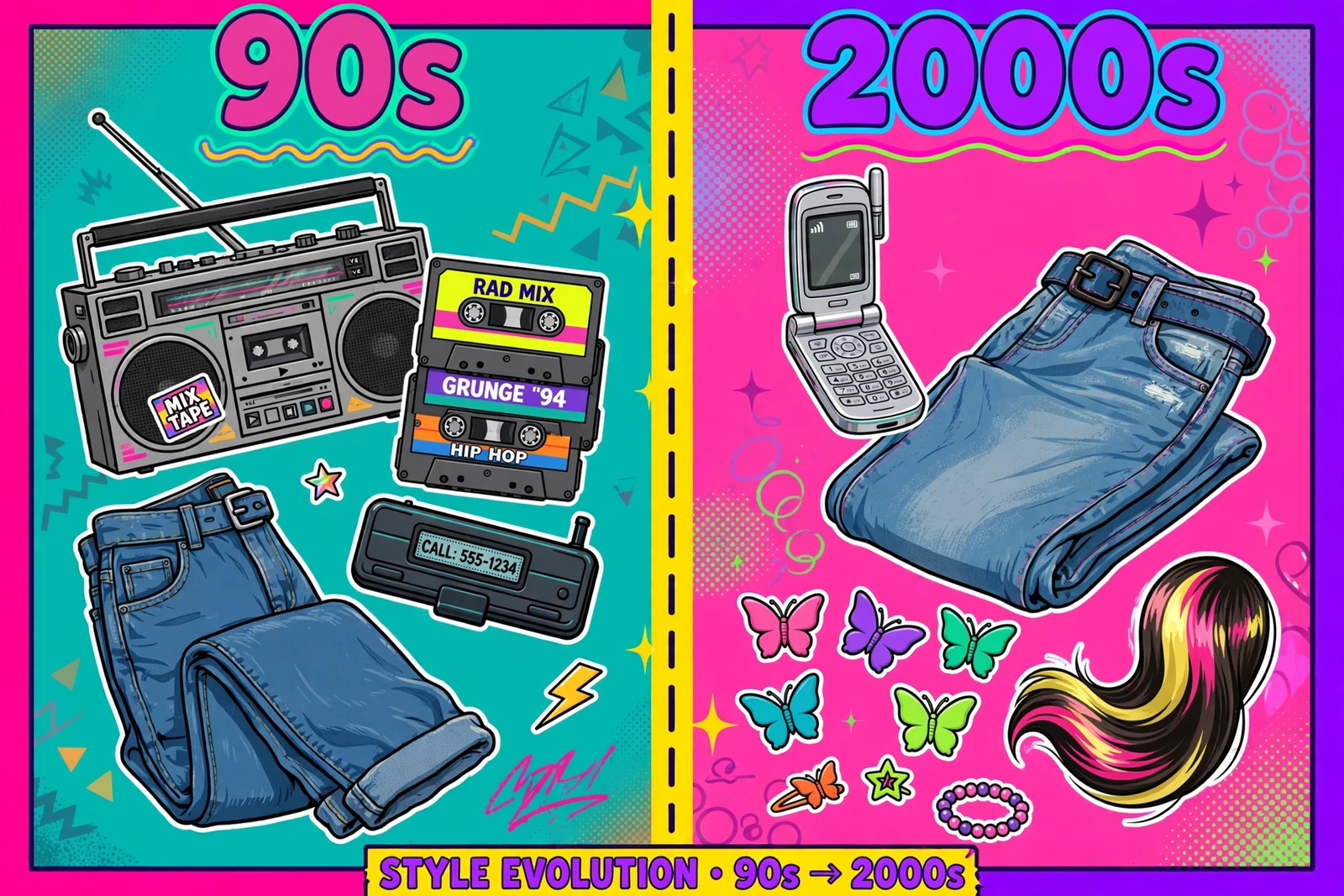
Nostalgia keeps the words alive in a second way. Y2K fashion came back in the 2020s — low-rise jeans, baby tees, butterfly clips — and the language came back with it. Party planners print “talk to the hand” on invitations, brands run “da bomb” throwback campaigns, and social media captions are full of ironic “that’s hot” and “booyah.” The words have shifted from everyday speech to a shared cultural code: using them now says “I remember,” and that is exactly the point.
How late 90s early 2000s slang Is Used
Late 90s early 2000s slang works in three main ways: as praise, as dismissal, and as agreement. Most of the famous terms fall neatly into one of those buckets, which is why they were so easy to learn — you only needed to know the attitude, not the grammar.
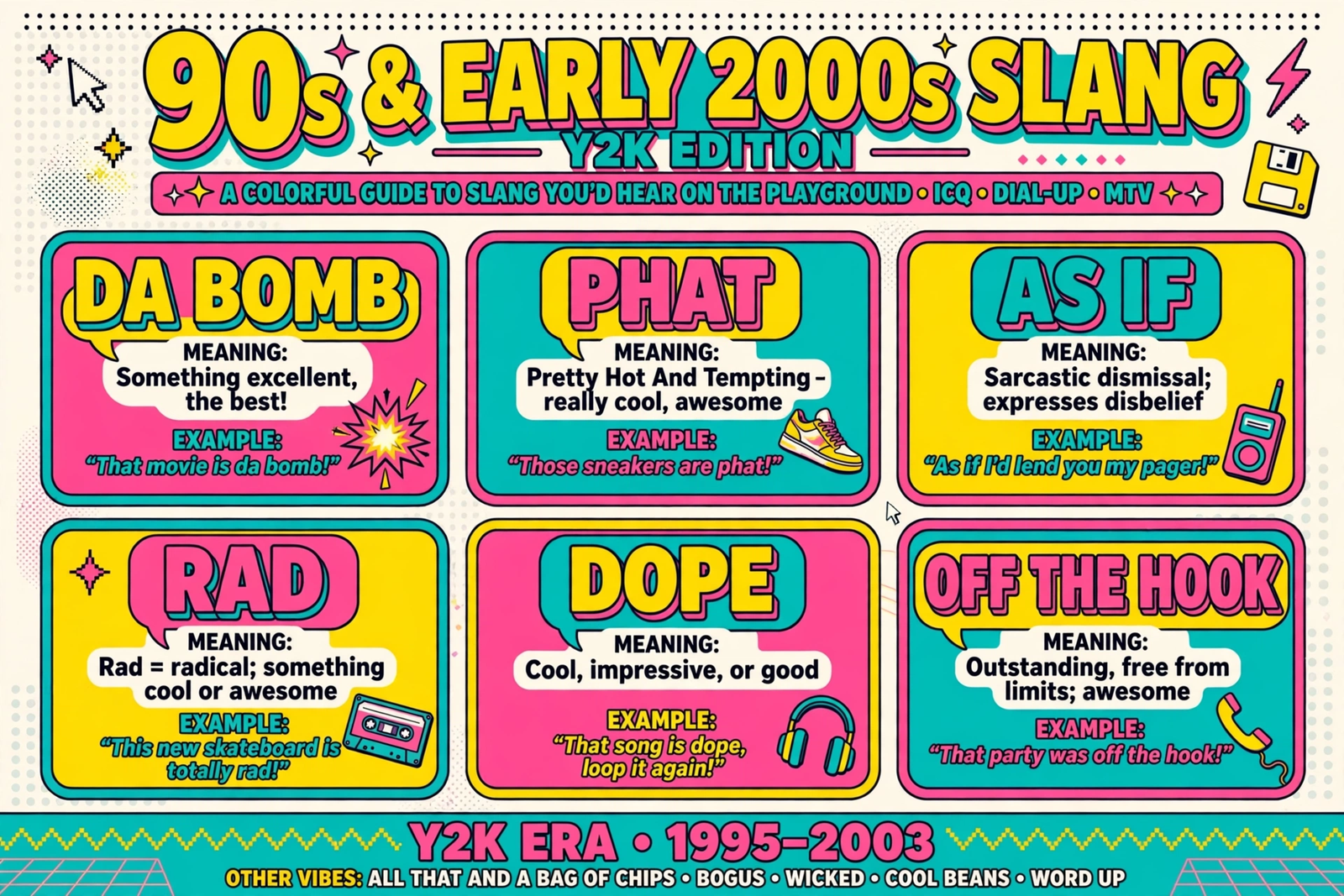
As praise: When something was great, you called it da bomb, phat, fly, dope, tight, sick, rad, or all that and a bag of chips. The words were interchangeable enough that you could stack them — “That party was totally phat, da bomb, all that” — and everyone understood you were having the time of your life.
As dismissal: When you were done with someone, you had options. Talk to the hand came with a palm in the face. As if! shut down an absurd suggestion. Whatever! ended the conversation entirely, preferably with an eye roll and a hand forming the letter W. Not! let you take back a compliment as a joke: “I love homework. Not!”
As agreement: Short words did the heavy lifting. Word meant “I agree” or “true.” Word up worked as a greeting and an agreement at the same time. You go, girl! cheered someone on. And a simple sweet could mean “cool,” “awesome,” or “I approve” depending on the moment.
The tone matters as much as the words. Almost all of this slang was spoken with exaggeration — stretched vowels, dramatic pauses, and the famous Valley Girl uptalk. Saying “as IF” flatly is just a phrase; saying it with a hair flip and an eye roll is a performance. That is why so much of it works best today in captions, quotes, and jokes rather than in serious conversation.
Examples
The best way to learn late 90s early 2000s slang is to see it in action. Here are real-feeling examples grouped by tone, so you can match the words to the moment.
Friendly Examples
- “Wassup, dawg? You coming to the mall later?” — a warm, casual greeting between friends.
- “Hey, home skillet! Long time no see — let’s bounce after class.” — home skillet is a playful way to say “my friend,” and bounce means “leave.”
- “Your new kicks are totally phat. Where’d you get them?” — a genuine compliment about someone’s sneakers.
- “What’s up, peeps? Movie night at my crib, be there or be square.” — peeps means “people” or “friends,” and crib means “house.”
- “Aight, I’ll TTYL — my mom needs the phone line!” — a very 1999 goodbye, when dial-up internet tied up the family phone.
Professional Examples
This slang was never really professional, but some of it softened into everyday office and classroom speech. “My bad” is still the most common survivor — a quick, friendly way to own a small mistake without making a big deal of it. “No worries” and “word” also crossed over into casual workplaces. Even so, most late 90s early 2000s slang belongs at the party, not in the boardroom — telling your manager her presentation was “da bomb” would have raised eyebrows even in 1999.
- “My bad — I forgot to attach the file. Sending it now.” — polite, quick, and still perfectly natural today.
- “That’s a solid plan. Word.” — casual agreement, best kept for relaxed teams.
- “Let’s chillax before the big meeting and go over the notes.” — chillax (chill + relax) works only in a very informal office.
Funny Examples
- “You think I’m doing your chores? As if!” — the classic Clueless shutdown.
- “He said his mixtape is fire. It’s not, though — it’s straight-up wack. Psych!” — a joke built on two slang words and a fake-out.
- “I just got owned at Mario Kart. Booyah? No — more like boo-hoo.” — owned means thoroughly beaten, especially in a game.
- “She showed up in low-rise jeans and a butterfly clip and said, ‘That’s hot.’ Girl, it is 2004 again.” — a loving roast of a full Y2K outfit.
- “Fo’ shizzle, my nizzle — wait, can I still say that? Asking for a friend.” — even in its prime, this one was best left to Snoop Dogg.
Comparison with Similar Terms
The late 90s and the early 2000s are often lumped together, but their slang had different flavors. The 90s leaned on hip-hop praise words and movie catchphrases; the 2000s added internet abbreviations, gamer talk, and reality-TV catchphrases. Here is how the two halves of the era compare — and what replaced these words today.
| 90s Classic | Meaning | 2000s Cousin | Meaning | Today’s Version |
|---|---|---|---|---|
| Da bomb | The best, amazing | That’s hot | Attractive, impressive | Fire, slay |
| Phat | Cool, excellent | Tight | Cool, impressive | Lit, dope (still used) |
| Talk to the hand | I’m not listening | Whatever | I don’t care | OK, and? / Girl, bye |
| As if! | No way, yeah right | So fetch | Really cool | No cap? / Delulu |
| Fly | Stylish, attractive | Baller | Rich, impressive | Drip, clean |
| Word | I agree, true | Fo’ shizzle | For sure | Facts, fr |
| Booyah! | Yes! Celebration | Owned / Pwned | Thoroughly beaten | Let’s gooo / W |
| My bad | My mistake, sorry | Chillax | Chill and relax | My bad (still used!) |
| All that and a bag of chips | Amazing, and then some | Bling | Flashy jewelry | Iced out |
| Wassup? | Hello, what’s going on | Waz crackin’? | What’s happening | Wyd / What’s good |
The pattern is clear: every generation reinvents the same handful of ideas — praise, dismissal, agreement, greeting — with fresh words. The 90s version was louder and more theatrical; the 2000s version was shorter and more digital. Today’s slang follows the same logic on TikTok instead of TRL. If you want the full 2000s list on its own, our guide to 2000s slang breaks down the words that defined the second half of the era.
45+ Late 90s Early 2000s Slang Words with Meanings
Here is the big list — the words people actually said, with plain meanings and an example for each. Learn ten of these and you can survive any 90s movie marathon.
| Slang | Meaning | Example |
|---|---|---|
| As if! | No way; yeah, right | “Me, date him? As if!” |
| Da bomb | Amazing, the best | “This pizza is da bomb.” |
| Phat | Cool, excellent, attractive | “Those sneakers are phat.” |
| Fly | Stylish, attractive | “She looks so fly tonight.” |
| Dope | Cool, excellent | “That song is dope.” |
| Talk to the hand | I’m done listening to you | “Talk to the hand — I’m busy.” |
| Whatever! | I don’t care; end of discussion | “Whatever, I’m going home.” |
| Not! | Just kidding (said after a statement) | “I love homework. Not!” |
| Booyah! | Yes! A shout of triumph | “Booyah! I won the game.” |
| Word | I agree; that’s true | “That movie was great.” “Word.” |
| My bad | My mistake; sorry | “Oops, my bad — wrong number.” |
| Bling / Bling bling | Flashy, shiny jewelry | “Check out his new bling!” |
| Fo’ shizzle | For sure; definitely | “You coming tonight?” “Fo’ shizzle!” |
| Crunk | Wildly excited; having a great time | “This party is about to get crunk!” |
| All that and a bag of chips | Amazing, impressive, and then some | “She thinks she’s all that and a bag of chips.” |
| What’s the 411? | What’s the news? What’s going on? | “Give me the 411 on the party.” |
| Psych! | Fooled you; just kidding | “You won! Psych — you lost.” |
| Rad | Cool, awesome | “That skateboard trick was rad.” |
| Sick | Amazingly cool (not ill) | “That dunk was sick!” |
| Tight | Cool, impressive, excellent | “Your new ride is tight.” |
| Baller | Someone rich, successful, impressive | “He’s a total baller now.” |
| Homie / Home skillet | A close friend | “What’s up, homie?” |
| Wassup? / Wazzup? | Hello; what’s going on? | “Wassup, dawg?” |
| Chillax | To chill and relax at the same time | “Let’s just chillax this weekend.” |
| Take a chill pill | Calm down, relax | “Take a chill pill, it’s fine.” |
| Buggin’ | Freaking out; overreacting | “I’m totally buggin’ about the test.” |
| Oh, snap! | Wow! An expression of surprise | “Oh, snap — did you see that?” |
| Let’s bounce | Let’s leave | “This party’s dead — let’s bounce.” |
| Crib | House or home | “Come over to my crib later.” |
| Peeps | People; friends | “What’s up, peeps?” |
| Sweet | Cool; awesome; I approve | “We got tickets! Sweet!” |
| That’s hot | Attractive or impressive (often sarcastic) | “New haircut? That’s hot.” |
| So fetch | Really cool or fashionable | “That bag is so fetch!” |
| Owned / Pwned | Thoroughly beaten, especially in a game | “I just owned you at Mario Kart.” |
| Noob / Newbie | Someone new and inexperienced | “He’s a total noob at this game.” |
| Epic fail | A huge, embarrassing failure | “Tripped on stage — epic fail.” |
| LOL / BRB / TTYL | Laughing out loud / be right back / talk to you later | “LOL, BRB — TTYL!” |
| BFF | Best friends forever | “She’s my BFF since third grade.” |
| Stoked | Very excited; thrilled | “I’m so stoked for the concert!” |
| Scrub | A loser; someone who thinks he’s cool but isn’t | “Don’t date him, he’s a scrub.” |
| Yada, yada, yada | And so on; blah blah blah | “He talked about work, yada yada yada.” |
| You go, girl! | Cheering someone on; you did great | “You got the part! You go, girl!” |
| Don’t go there | Don’t bring that up; don’t start | “Don’t go there — we agreed to drop it.” |
| ‘Rents | Parents | “My ‘rents are out tonight.” |
| Waz crackin’? | What’s happening? How’s it going? | “Waz crackin’, dawg?” |
| Holla | Call me; get in touch | “Holla at me later.” |
| Jiggy | Cool, stylish, fun | “Let’s get jiggy with it!” |
| Off the chain | Wildly good; out of control fun | “That concert was off the chain.” |
That is 47 terms in one place — more than most of the short listicles ranking for this topic, and every one of them comes with a meaning and an example you can actually use.
Alternate Meanings
Some late 90s early 2000s slang words had more than one meaning, and context decided which one applied.
- Sick: Normally “ill,” but in slang it meant “amazing.” “That’s sick!” was high praise, while “I feel sick” still meant you needed to go home. The compliment version is the one that survived into modern slang.
- Bad: In “my bad,” it means “my mistake” — but in “that’s bad,” said with the right tone, it could also mean “that’s cool.” Context and delivery did all the work.
- Fly: It could mean stylish (“she looks fly”), but it also worked as a general compliment for anything impressive. It had nothing to do with insects.
- Dope: Originally a reference to drugs, by the 90s it had fully flipped into a compliment meaning “excellent.” That is why your teacher could call a science project “dope” without anyone blinking.
- Bomb: A bomb is normally a bad thing, but “da bomb” meant the best thing ever. Add “dot com” — “da bomb dot com” — and it meant the best thing on the brand-new internet.
- Word: It could mean agreement (“Word.”), a greeting (“Word up!”), or emphasis (“Word is bond” — “I promise”). One tiny word, three jobs.
Professional or Polite Alternatives
Most of this slang is far too casual for work, school presentations, or formal writing. Here is how to translate the most common terms when the setting calls for it:
| Slang | Polite Alternative |
|---|---|
| My bad | My apologies / My mistake |
| That’s dope / da bomb | That’s excellent / That’s wonderful |
| Whatever | That’s fine / Let’s move on |
| Talk to the hand | I’d rather not discuss this now |
| As if! | That’s unlikely / I don’t think so |
| Let’s bounce | Let’s head out / Shall we leave? |
| What’s up, peeps? | Hello, everyone |
| That’s sick! | That’s impressive / That’s amazing |
One exception: “my bad” is so widely accepted now that it works in most casual workplaces. The rest is best saved for friends, family, parties, and captions.
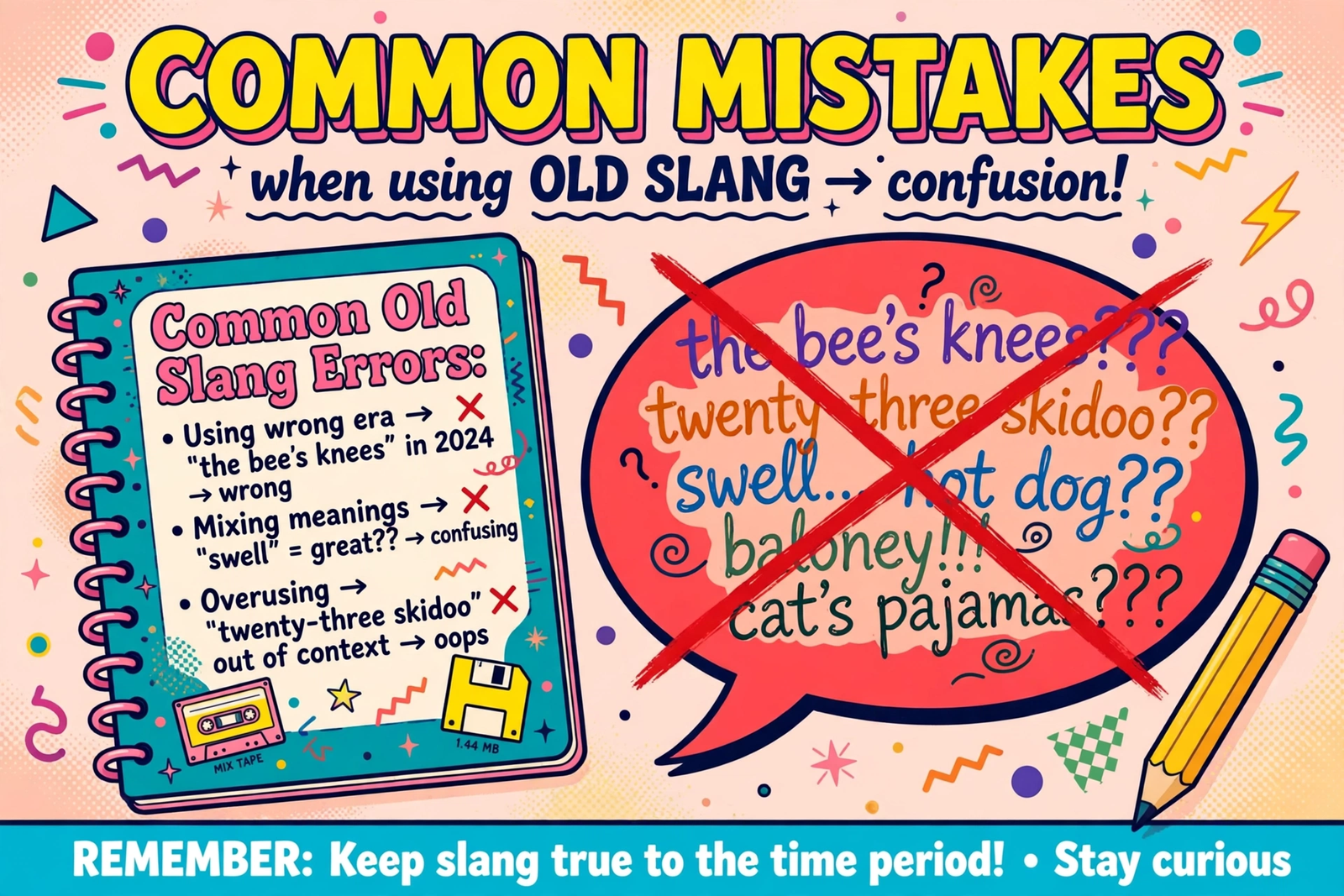
Common Mistakes
People get late 90s early 2000s slang wrong in a few predictable ways. Avoid these and you will sound like you actually lived through the era instead of someone reading a list off the internet.
Using too many terms at once. Real 90s kids did not say “Yo, that party was da bomb, phat, fly, and totally off the chain, fo’ shizzle” in a single sentence. One slang word per sentence was plenty; the rest was normal English. Stacking five of them is the fastest way to sound like a parody.
Saying “phat” with the wrong spelling. It is P-H-A-T, not “fat.” Writing “fat” changes the meaning completely — and not in a good way. The same goes for “da bomb” (two words, with “da”) and “fo’ shizzle” (with the apostrophe).
Using dismissal slang on the wrong people. “Talk to the hand” and “whatever!” were rude even in 1999 — that was the point. Aiming them at a teacher, a boss, or a stranger was asking for trouble then, and it still is now.
Forgetting the gesture. “Talk to the hand” needs the open palm. “Whatever!” needs the eye roll and the W-shaped hand. The words alone are only half the phrase — the body language sold the joke.
Mixing up the decades. Not every old word is a 90s word. “Groovy” is 60s and 70s. “Gnarly” is 80s surfer talk. “Lit” and “bae” belong to the 2010s. If you want to stay in the era, stick to the list in this article — and if you are unsure, our classic guide to 90s slang is a good place to double-check.
Quick Tips
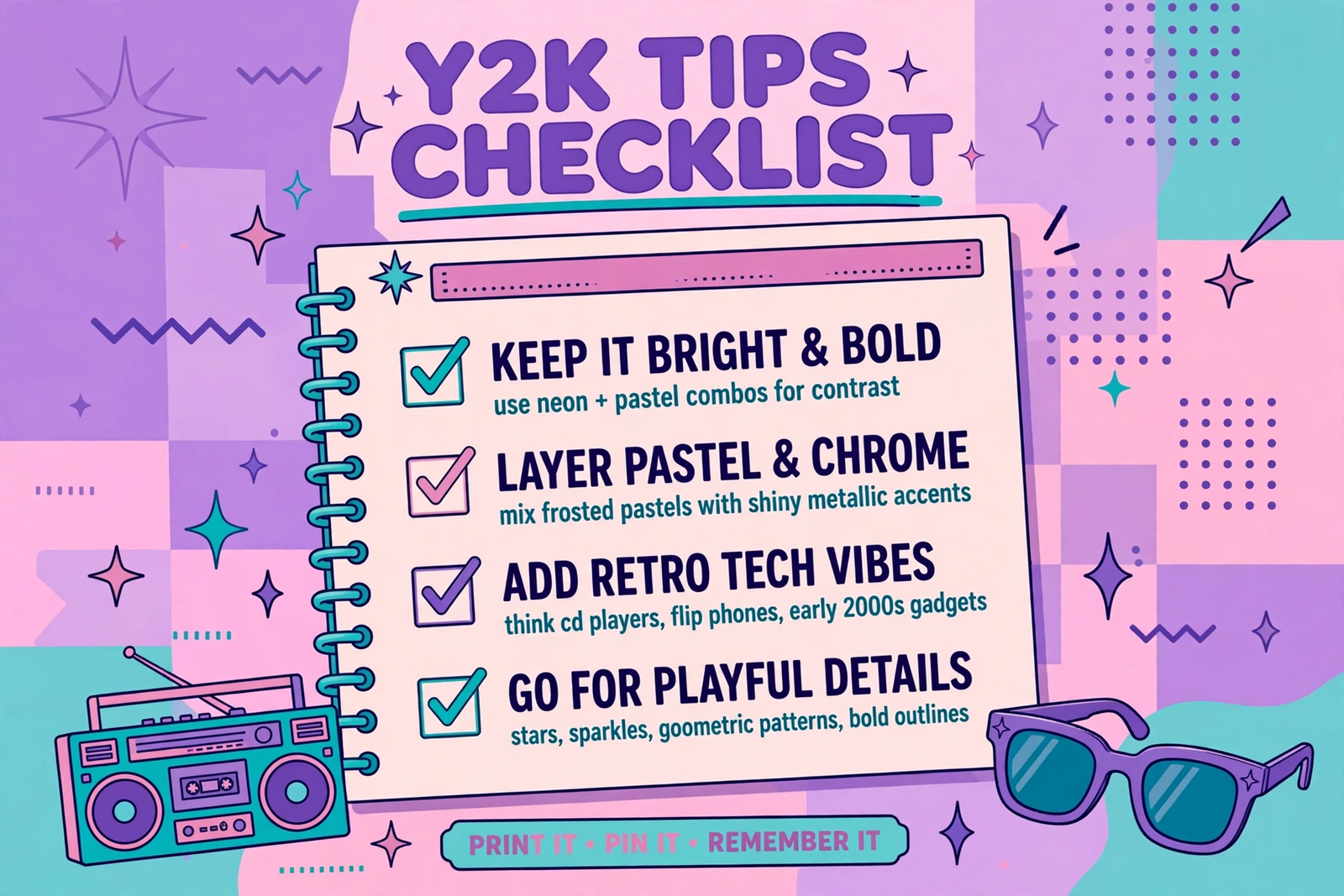
- Start with the survivors. “My bad,” “sick,” “dope,” and “word” are still understood by everyone, so they are the safest way to use this slang today without confusing anyone.
- Use it for nostalgia, not for everyday talk. These words shine in themed parties, retro captions, throwback posts, and jokes with friends who remember the era. They sound forced in a serious conversation.
- Match the word to the moment. “Booyah!” fits a game win; “as if!” fits a ridiculous suggestion; “take a chill pill” fits a friend who is overreacting. The right word at the right time is what makes it land.
- Learn the movie scenes. Watch Clueless for “as if,” Mean Girls for “fetch,” and a few episodes of Martin for “talk to the hand.” Hearing the words in their original scenes teaches the tone better than any list.
- Don’t overdo the accent. The Valley Girl voice is fun for a line or two, but a whole conversation in uptalk gets old fast — even for the people who lived it.
- Check the spelling before you post. “Phat,” “fo’ shizzle,” and “da bomb” are easy to misspell, and a typo turns a cool caption into a confusing one.
- Pair the words with the look. A “da bomb” caption hits harder next to a butterfly clip, a baby tee, or a low-rise jeans photo. The words and the fashion were a package deal.
FAQ
What does late 90s early 2000s slang mean?
Late 90s early 2000s slang is the informal language popular in the United States from about 1995 to 2005 — words and phrases like da bomb, phat, bling, as if!, and talk to the hand, spread by hip-hop, teen movies, MTV, and early internet chat.
What are the most popular 90s slang words?
The most popular 90s slang words are as if!, da bomb, phat, fly, dope, talk to the hand, whatever!, my bad, booyah, word, and all that and a bag of chips. Most of them came from hip-hop and teen movies like Clueless.
What are the most popular early 2000s slang words?
The most popular early 2000s slang words are bling, crunk, fo’ shizzle, that’s hot, so fetch, owned, noob, epic fail, LOL, BRB, TTYL, and BFF. The 2000s added internet and gamer slang to the 90s foundation.
What does “da bomb” mean?
“Da bomb” means something is amazing or the best — for example, “This pizza is da bomb.” It was one of the most common praise words of the late 90s, and “da bomb dot com” was the internet-era upgrade.
What does “as if” mean in 90s slang?
“As if” means “no way” or “yeah, right.” It was popularized by the 1995 movie Clueless, where Cher Horowitz used it to dismiss ridiculous suggestions. It is short for “as if that would ever happen.”
Is 90s slang still used today?
Some of it is. “My bad,” “sick,” “dope,” and “word” are still common. Most other terms — like “talk to the hand” and “fo’ shizzle” — are now used ironically, in nostalgia posts, themed parties, and retro captions rather than in everyday speech.
What is the difference between 90s slang and 2000s slang?
90s slang leaned on hip-hop praise words (phat, fly, dope) and movie catchphrases (as if, whatever). 2000s slang kept those words and added internet abbreviations (LOL, BRB, TTYL), gamer terms (noob, owned, epic fail), and reality-TV catchphrases like “that’s hot.”
Where did “talk to the hand” come from?
“Talk to the hand” was popularized by the sitcom Martin (1992–1997) and means “I’m not listening to you.” It is said while holding up an open palm like a stop sign, and the full version is “talk to the hand, ’cause the face ain’t listening.”
Conclusion
Late 90s early 2000s slang was more than a funny way to talk — it was the sound of a generation growing up between two worlds. The late 90s gave us the movies, the music, and the mall culture; the early 2000s added the internet and turned those same words into the first truly digital slang. Together they produced a vocabulary that is still quoted, memed, and celebrated thirty years later.
The words themselves are simple, but the attitude behind them is what people remember: confident, playful, a little bit dramatic, and always ready with a comeback. Whether you use “my bad” at work, drop an “as if!” in a group chat, or throw a full Y2K party with a “da bomb” playlist, you are keeping a small piece of that era alive.
So go ahead — dig out the butterfly clips, queue up the boy bands, and talk like it is 1999. Just remember the golden rule of the era: one slang word per sentence, and never, ever say “talk to the hand” to your boss. For more throwback vocabulary, explore our guides to 90s slang words and 2000s slang, and keep the nostalgia going.

1 thought on “Late 90s Early 2000s Slang: 45+ Iconic Words, Meanings & Examples”