
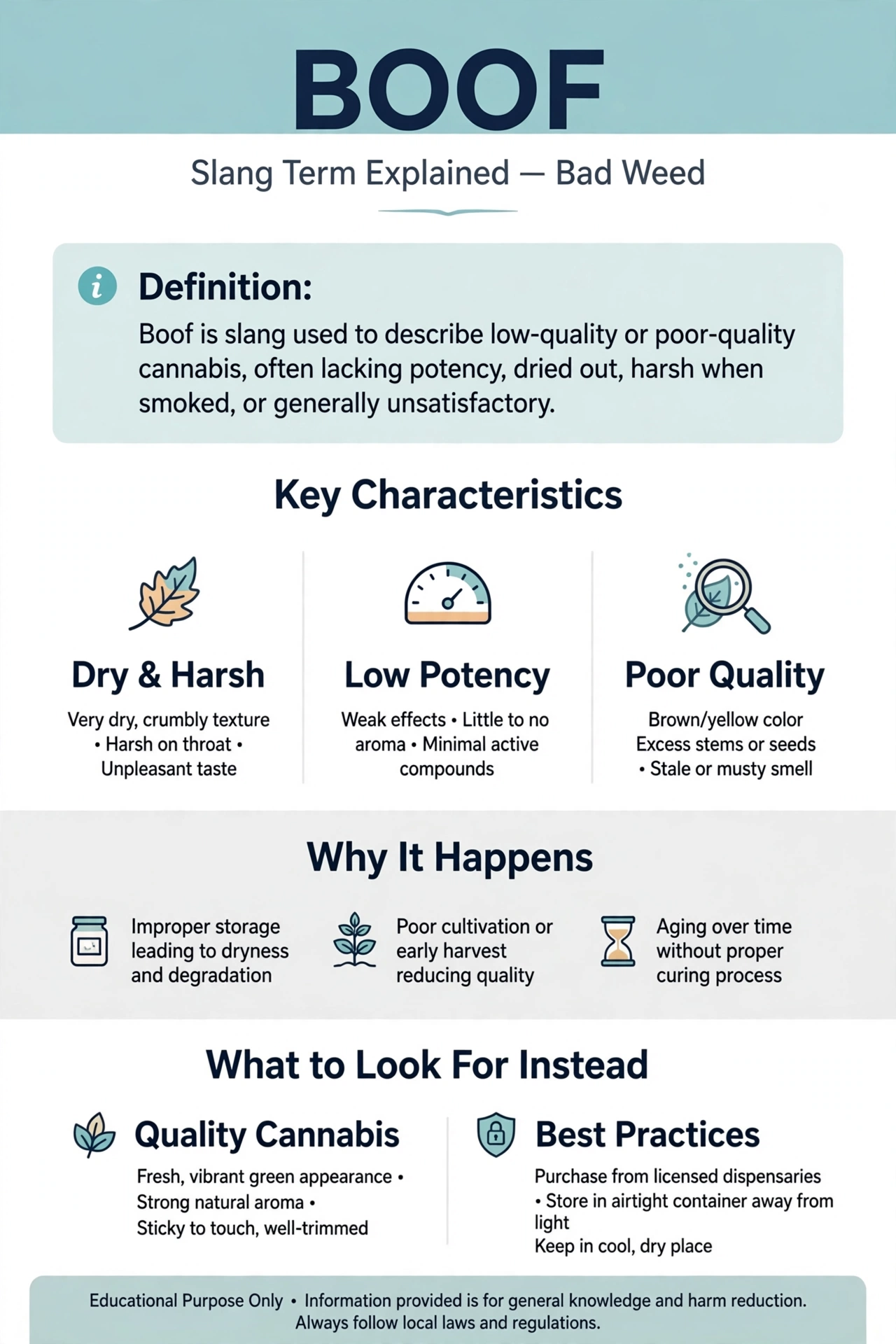
Quick Definition: In slang, boof most commonly means low-quality, weak cannabis — the dry, harsh weed nobody wants to smoke. The same word also shows up as boofing, slang for taking drugs or alcohol rectally, as an old joke word for farting, and even as a kayaking move. Which meaning applies depends entirely on context, and this guide explains all of them with real examples.
Boof Meaning Slang & Definition
Boof meaning slang is one of those words that refuses to sit still. Ask five people what boof means and you may get five different answers — and all of them could be right. In modern American slang, the most common meaning is simple: boof is bad weed. If someone calls your flower boof, they are saying it is dry, harsh, weak, and not worth the money. The word has spread far beyond that one meaning, though, and it now covers everything from fake vape carts to a Supreme Court confirmation hearing.
Here is the short version of every meaning you are likely to meet:
- Bad weed: Low-quality, poorly grown or badly cured cannabis. This is the number one meaning in rap lyrics, on Reddit, and in smoke circles today.
- Boof carts: Fake, counterfeit, or unregulated cannabis vape cartridges filled with mystery oil.
- Boofing: Taking drugs or alcohol through the rectum instead of swallowing, smoking, or snorting them.
- A fart: The meaning Brett Kavanaugh claimed for the word during his 2018 Supreme Court confirmation hearing, when senators asked about his high school yearbook.
- Anal sex: An older meaning, probably shortened from “bufu,” itself a clipped form of a cruder phrase, common in 1970s and 1980s slang.
- A kayaking move: In whitewater kayaking, a boof is a stroke that lifts the bow of the boat over a drop so it lands flat instead of nosediving.
- An expression of disappointment: In some online circles, “boof” works like “bummer” or “that sucks.”
Context is everything with this word. A rapper saying “that pack is boof” is talking about weed quality. A harm-reduction article warning about “boofing” is talking about a risky way of taking drugs. A kayaker shouting “boof it!” is talking about a river. The rest of this guide walks through each meaning, where it came from, and how to tell them apart — so you never mix them up in the wrong conversation.
Introduction
Picture this: your friend pulls out a bag of weed, takes one hit, coughs, and groans, “Bro, this is boof.” Everyone in the room nods. Nobody asks what boof means — they all know. The weed is dry, it tastes like hay, and the high barely shows up. One word did all of that work.
Now picture a different room: a Senate hearing in 2018, where a Supreme Court nominee is asked to explain the phrase “have you boofed yet?” from his high school yearbook. He answers that it means farting. The internet explodes. Memes, explainers, and dictionaries all weigh in — and suddenly a word most people had never heard becomes a national punchline.
That is the strange double life of boof. In one world, it is everyday cannabis slang, the kind of word you hear in rap songs and group chats. In another, it is a piece of American political history. In a third, it is a technical term in whitewater kayaking. Few slang words cover so much ground, and that is exactly why people keep searching for it. If you have seen boof in a lyric, a meme, a comment thread, or a headline and wondered what it actually means, you are in the right place. This guide covers every meaning, the origin story, real examples, and the mistakes to avoid — including the ones that can genuinely embarrass you.
Origin
The origin of boof is messy, which is fitting for a word with so many meanings. Nobody can point to a single moment when it was invented, because different meanings grew up in different places at different times. Linguists and slang historians have traced at least four separate threads.
The weed meaning is the newest of the big ones — and the one that matters most today. A definition of boof as a synonym for weed appeared on Urban Dictionary in November 2014, with the poster saying it came from Washington, D.C. From there it spread through hip-hop and cannabis culture, first as a word for low-grade flower and later as a general-purpose insult for anything subpar. By the late 2010s, Reddit, Instagram, and Discord users were calling weak weed, fake carts, and disappointing strains boof, and the word had become a standard part of the cannabis vocabulary. The sound of the word probably helped: “boof” feels blunt and heavy, like a cough after a harsh hit. Some writers suggest it is onomatopoeic — the sound of bad smoke hitting your throat.
The sexual meaning is much older. Slang dictionaries trace “boofer” as a word for someone who engages in anal sex back to the 1970s, and the word appears in 1980s pop culture — for example, a character nicknamed Boof in the 1985 film Teen Wolf. The most popular theory is that boof is a clipped, softened form of “bufu,” itself short for a much cruder phrase. That is why the word felt safe enough to print in a high school yearbook in 1983, even though everyone who used it understood the joke underneath.
The drug-administration meaning grew out of the prison meaning. Around the year 2000, according to slang lexicographer Jonathon Green, boof took on the meaning of contraband hidden in the rectum, specifically in prison slang. From “something hidden in the butt” it was a short step to “a drug taken through the butt,” and by the 2010s “boofing” was the standard slang for rectal drug use — also called plugging or booty bumping. This is the meaning that health and addiction websites use today, and it is the one with real dangers attached, which we cover below.
The kayaking meaning is completely independent. Whitewater kayakers started using “boof” as onomatopoeia for the sound a kayak makes when it launches off a drop and lands flat on the water — a deep, hollow “boof.” It has nothing to do with any of the other meanings, which is why a kayaking video and a rap lyric can use the same word and mean entirely different things.
Popularity
Boof stayed a niche word for decades, then went mainstream in two waves. The first wave came in 2018, when the Kavanaugh confirmation hearings put the word on every news channel in America. Searches for “boof” and “boofing” spiked overnight, and the word became a late-night punchline. Millions of people learned the word that week — even if they learned the wrong definition, depending on who they believed.
The second wave came from cannabis culture itself. As legalization spread across the United States in the late 2010s and early 2020s, cannabis slang exploded online, and boof rode that wave. Rappers used it constantly — XXXTENTACION’s “Look At Me!” includes the line “just got a pound of the boof” — and the word became the standard insult for bad weed in smoke circles. The rise of fake vape carts gave it a second life: “boof carts” became the go-to term for counterfeit cartridges, and cannabis forums filled with guides on how to spot them.
Today, boof is firmly established in American slang, especially among Gen Z and millennial cannabis users. It shows up in song lyrics, TikTok comments, Reddit threads like r/weed and r/trees, and Discord servers. It is far less common in the UK or Australia, where other words do the same job. And because the word is vulgar in several of its meanings, it stays mostly in casual, private, or online settings — you will not hear it in a workplace meeting, and you should not use it in one.
How It Is Used
Boof works as a noun, an adjective, and a verb, and the part of speech usually tells you which meaning is in play. Here is how to read it:
- As a noun (weed): “That dispensary sold me straight boof.” The boof is the weed itself — bad weed, full stop.
- As an adjective (weed quality): “This pack is boof.” The word describes anything low-quality, and in cannabis circles it almost always means the product is weak, dry, or fake.
- As a verb (boofing): “He boofed the molly.” This almost always means rectal administration of a drug, not smoking. If you hear the -ing form, think plugging, not weed.
- As a noun (a fart): Rare today, but this was the meaning claimed in the 1983 yearbook and the 2018 hearings. You will mostly meet it in jokes about that hearing.
- As a verb (kayaking): “Boof that drop!” A kayaker is telling another kayaker to launch the boat flat off a waterfall or ledge.
- As an exclamation: “Boof.” Said flatly after bad news, it means “that sucks” or “bummer” in some online circles, though this use is the least common of all.
The key rule is simple: in a weed context, boof means bad weed. In a drug-use context, boofing means rectal use. Mix those two up and you will confuse everyone in the room — or say something far cruder than you intended.
Boof also appears in a few common phrases. “Boof pack” means a bag of bad weed. “Boof cart” means a fake vape cartridge. “Super Boof” is the name of a real cannabis strain — a cross of Black Cherry Punch and Tropicana Cookies — which is ironic, because the strain is actually known for being strong, the opposite of boof. And “boofed” can mean either “got bad weed” or, in the older sense, something much more explicit, so be careful with the past tense.
Examples
Examples are the fastest way to learn a slang word, because they show you the tone, the setting, and the reaction. Here are real-world-style examples for each of the main uses of boof.
Friendly Examples
These are the casual, everyday uses you will hear between friends — mostly about weed quality.
- “Bro, don’t buy from that guy again, his stuff is straight boof.”
- “I paid forty for this eighth and it’s boof. It smells like hay and barely does anything.”
- “She took one hit, coughed, and said, ‘Yeah, that’s boof.’ We all laughed.”
- “My plug swore this was gas, but it’s boof. I’m not going back to him.”
- “Check the cart before you buy it — half the carts on the street are boof.”
Professional Examples
Boof is not a professional word, and there is no polite office version of it. But it does appear in professional contexts in two places: cannabis journalism and harm-reduction work. In those settings, writers use it carefully and define it on first use.
- “Boof carts — counterfeit, unregulated vape cartridges — are one of the biggest risks for new cannabis consumers.” (cannabis journalism)
- “Boofing, also called plugging, carries a higher overdose risk because the dose is hard to control.” (harm-reduction writing)
- “Our guide explains how to tell boof flower from quality flower before you spend your money.” (dispensary blog)
- “The term ‘boof’ appears in the 2018 Senate hearing transcript, where the nominee defined it as flatulence.” (news reporting)
The lesson here is simple: if you are writing or speaking professionally, define the word first and use it only when the topic genuinely requires it. In most professional settings, “low-quality cannabis” and “rectal administration” are better choices than “boof” and “boofing.”
Funny Examples (if applicable)
Boof is a funny word, and the internet has had a lot of fun with it — especially after 2018.
- “Judge, have you boofed yet?” — the yearbook line that launched a thousand memes.
- “I asked for gas and got boof. My plug really said ‘trust me bro’ and handed me hay.”
- “That strain is called Super Boof, which is like naming a restaurant ‘Terrible Food’ and then winning a Michelin star.”
- “Me: buys a boof cart for $20. Also me: shocked when it tastes like burnt plastic.”
- “My grandma asked what boof means. I told her it’s a kayaking term. Technically, I’m not lying.”

Comparison with Similar Terms
Boof sits in a crowded corner of cannabis slang, and the words around it all mean slightly different things. Getting them right is the difference between sounding like you know weed and sounding like you are guessing. Here is how boof compares to the terms people confuse it with most.
| Term | What It Means | How It Differs from Boof |
|---|---|---|
| Boof | Bad, weak, or fake cannabis | The baseline insult for poor quality |
| Gas | Top-shelf, very potent cannabis | The exact opposite of boof — gas is what you want, boof is what you got |
| Mid / Mids | Average, middle-quality cannabis | Mid is mediocre but smokeable; boof is worse — dry, harsh, or fake |
| Reggie | Low-grade, old-school commercial weed | Reggie is a specific grade of bad weed; boof is the general insult for any bad weed |
| Zaza | Exotic, high-end cannabis | Zaza is premium and rare; calling something zaza is a compliment, calling it boof is not |
| Plugging | Taking a drug rectally | The clinical-sounding synonym for boofing — same act, different word |
| Booty bump | Taking a drug rectally, usually a stimulant | Another synonym for boofing, more common in party-drug scenes |
| Schwag | Cheap, low-quality weed, often full of seeds | An older word for the same idea as boof; schwag is 1990s slang, boof is the modern version |
The most useful distinction is the quality ladder: zaza and gas sit at the top, mid sits in the middle, and boof and reggie sit at the bottom. If you remember that one line, you will understand almost every weed-quality conversation you hear. For a deeper look at the top of that ladder, see our guide to gas slang, and for the middle, see mid slang meaning — both explain the full quality scale in detail.

Alternate Meanings
Because boof has so many meanings, this section collects the alternate ones in one place, with the context where each one lives.
1. Boofing (rectal drug use). This is the most serious alternate meaning, and the one health professionals care about. Boofing means inserting a drug or alcohol into the rectum so it absorbs through the rectal lining into the bloodstream. People do it because the effects come on faster and stronger than swallowing, and because it avoids snorting or injecting. The risks are real: the dose is hard to control, the drug hits faster than expected, and the rectal lining can be damaged. Overdose risk is higher than with oral use, and alcohol taken this way is especially dangerous because the body cannot vomit it back up. If you or someone you know is considering this, the National Institute on Drug Abuse has free, confidential information about substance use and safer choices. This meaning is also the reason you should never use “boofing” casually as a joke about weed — it describes a specific, risky act.
2. Anal sex (older slang). In 1970s and 1980s slang, boof was a euphemism for anal sex, probably clipped from “bufu.” You will still find this definition in Urban Dictionary and slang dictionaries, and it is the meaning historians think was actually behind the 1983 yearbook line. It is rarely the intended meaning in modern cannabis conversations, but it is the reason the word can still raise eyebrows.
3. A fart. This is the definition Brett Kavanaugh gave under oath in 2018: that in his high school circle, “boof” meant farting, and “have you boofed yet?” meant “have you farted yet?” Linguists and slang historians were sceptical, pointing out that the fart definition barely appears in any slang dictionary from that era, while the sexual definition does. Whether or not the claim was true, it is now permanently attached to the word, and it is the first thing many older Americans think of when they hear “boof.”
4. A kayaking move. In whitewater kayaking, to boof is to drive the bow of the boat up and over a drop — a waterfall, a ledge, a hole — so the kayak lands flat on the water instead of plunging nose-first. The word imitates the sound of the landing. Kayaking forums, YouTube channels, and instruction sites use it constantly, and it has zero connection to any of the other meanings. If you ever see “boof” in an outdoor-sports context, this is the meaning.
5. An expression of disappointment. In some online gaming and group-chat circles, “boof” works as a one-word reaction meaning “that sucks” or “bummer.” It is the least documented of the meanings and the least common, so treat it as a niche use rather than a standard one.
Professional or Polite Alternatives
Boof is a vulgar word in most of its meanings, so there are plenty of situations where you need a cleaner substitute. Here are polite alternatives for each meaning:
- Instead of “boof weed”: say “low-quality cannabis,” “weak flower,” “poorly cured bud,” or “subpar product.” In a dispensary, “this batch seems low-potency” gets the point across without the slang.
- Instead of “boof cart”: say “counterfeit cartridge,” “unregulated vape cart,” or “unlicensed product.” These are the terms regulators and journalists use.
- Instead of “boofing”: say “rectal administration” or “plugging” in a medical or harm-reduction context. In casual conversation, it is usually better to describe the act plainly than to use the slang at all.
- Instead of the sexual meaning: there is no polite version of this slang — use plain, clinical language if the topic genuinely comes up.
- Instead of “boof” as a disappointment: say “that’s a bummer,” “what a letdown,” or “that’s unfortunate.” All of them are safe everywhere.
As a general rule, keep boof in casual, private conversations with people who already use the word. In work messages, school, customer service, or any formal writing, the polite alternatives above are always the better choice.
Common Mistakes
Boof is easy to misuse, and the mistakes range from mildly embarrassing to genuinely risky. Here are the ones to avoid:
- Calling good weed boof as a joke. In smoke circles, calling someone’s expensive flower boof is an insult, even as a joke. If the weed is actually gas, the joke will not land — it will just annoy the person who bought it.
- Confusing boof with boofing. This is the big one. “That weed is boof” means the weed is bad. “He boofed it” means he took a drug rectally. Mixing them up in front of the wrong audience is a fast way to say something far more explicit than you meant.
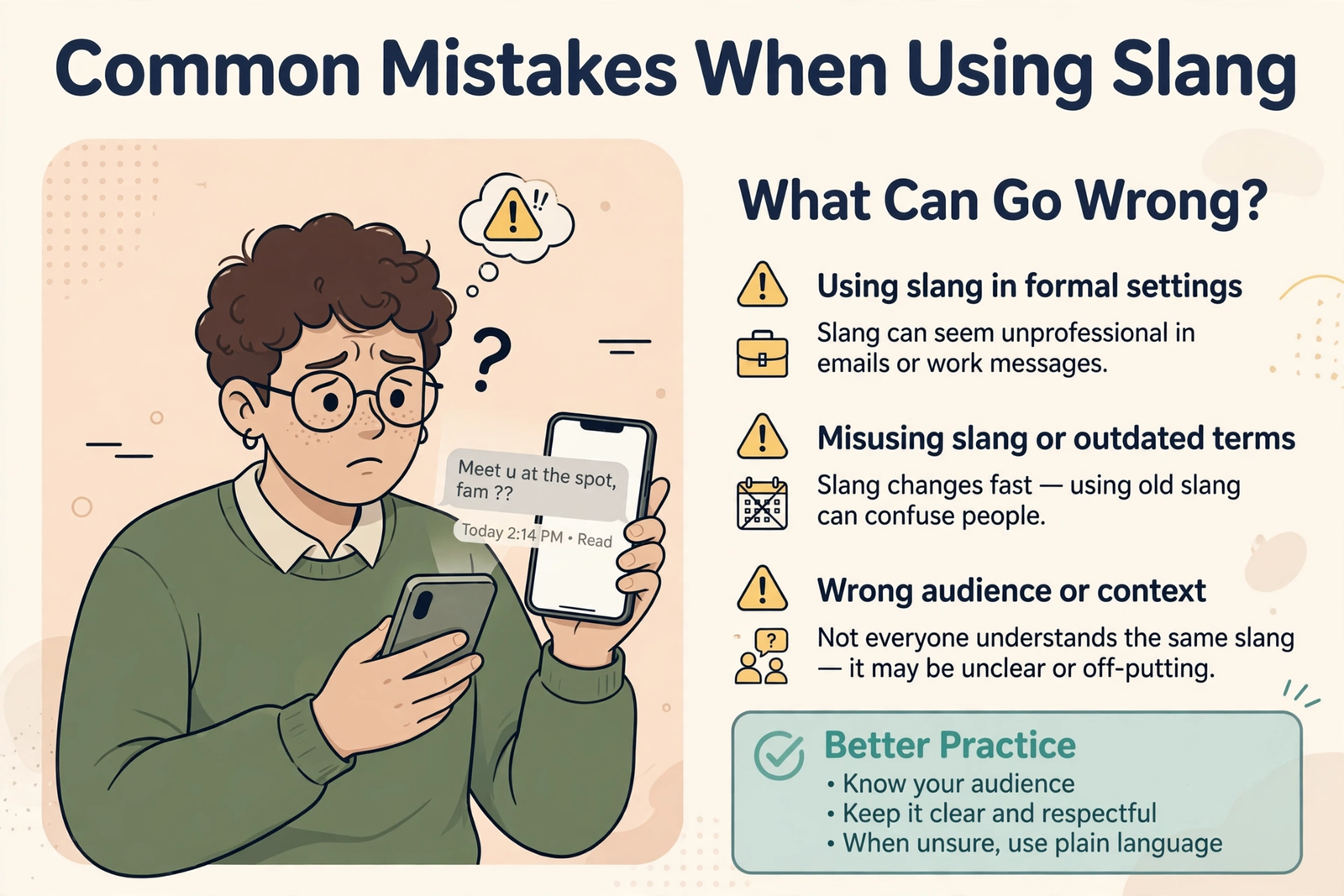
- Using boof in formal settings. The word is vulgar in several of its meanings. Do not use it at work, in school, in a customer email, or in front of people who do not know the slang — they may hear the crudest meaning, not the one you intended.
- Buying boof carts to save money. Counterfeit cartridges are the riskiest cannabis product on the market. They are often filled with unknown oils, cutting agents, or synthetic additives, and they have been linked to serious lung injuries. A cheap cart that turns out to be boof is not a bargain — it is a health risk. Buy from licensed dispensaries when you can; our guide to slang for weed explains more of the terms sellers use, including the ones that signal a fake product.
- Thinking “boof” always means weed. If someone in a medical, recovery, or harm-reduction conversation says “boofing,” they are almost certainly talking about rectal drug use, not cannabis. Read the room before you respond.
- Repeating the fart definition as fact. The 2018 hearing made the fart definition famous, but slang historians largely consider it a cover story. If you repeat it as the real origin, people who know the word’s history will correct you.
Quick Tips
Use these tips to sound natural when you use boof — and to stay out of trouble with it:
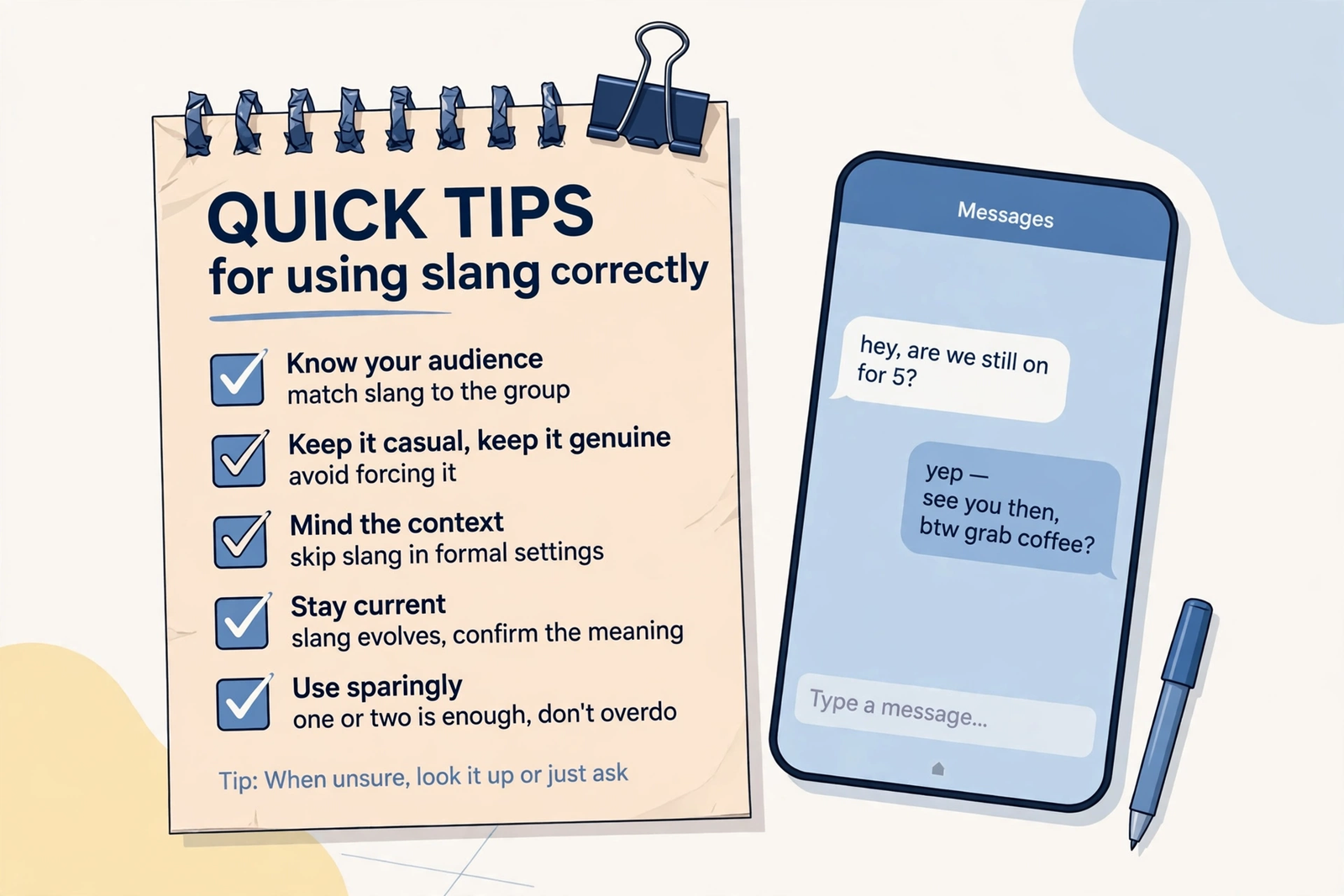
- Match the meaning to the room. Weed context means bad weed; drug-use context means rectal use; river context means kayaking. Let the setting choose the definition.
- Use it as an adjective for quality, not as a general insult. “This is boof” works when the product is genuinely weak or fake. Using it for everything you dislike makes you sound like you only know one word.
- Check the cart, not just the price. If a vape cart is far cheaper than dispensary prices, has no lab test, or comes in packaging with spelling errors, it is probably a boof cart. Walk away.
- Do not use it around people who do not know the slang. Older relatives, coworkers, and teachers may only know the crudest meaning. Save the word for friends who use it themselves.
- Learn the quality ladder. Gas and zaza at the top, mid in the middle, boof at the bottom. Knowing the ladder makes you sound informed instead of guessing. Our dope meaning in slang guide covers another word that has flipped between praise and insult over the years, just like boof.
- When in doubt, describe instead of naming. “This weed is dry and weak” is always safe. “This is boof” is only safe when everyone in the room already knows what boof means.

FAQ
What does boof mean in slang?
In slang, boof most commonly means low-quality, weak cannabis — dry, harsh weed that is not worth smoking. The same word also has other meanings: “boofing” means taking drugs or alcohol rectally, it can be an old joke word for farting, and in kayaking it is a move that lifts the bow over a drop. Context decides which meaning applies.
Is boof a bad word?
Yes, in most settings. Several of its meanings are vulgar, and the word is considered offensive or inappropriate in formal and professional contexts. Keep it in casual, private conversations with people who already use the word.
What is a boof cart?
A boof cart is a fake, counterfeit, or unregulated cannabis vape cartridge. It is usually filled with low-quality or unknown oil by an unlicensed producer, sold outside the regulated market, and often much riskier than a licensed product. Boof carts have been linked to lung injuries, so they are not a safe bargain.
What does boofing mean?
Boofing means taking a drug or alcohol through the rectum so it absorbs into the bloodstream faster. It is also called plugging or booty bumping. It carries a higher overdose risk than swallowing because the dose is hard to control and the effects come on fast.
What did boof mean in the Kavanaugh hearing?
During his 2018 Supreme Court confirmation hearing, Brett Kavanaugh was asked about the phrase “have you boofed yet?” in his 1983 high school yearbook, and he said boof meant farting. Slang historians were sceptical, because the sexual meaning of boof is well documented from that era while the fart meaning is not. The hearing made the word famous either way.
Is boof the same as mid?
No. Mid means average, middle-quality cannabis — not great, not terrible, and still smokeable. Boof is worse than mid: dry, harsh, weak, or fake weed that is not worth the money. On the quality ladder, gas and zaza are at the top, mid is in the middle, and boof is at the bottom.
Where did the word boof come from?
The word has several separate origins. The sexual meaning likely comes from “bufu,” a clipped form of a cruder phrase, and dates to the 1970s. The weed meaning appeared on Urban Dictionary in 2014, credited to Washington, D.C., and spread through hip-hop and cannabis culture. The kayaking meaning is onomatopoeia for the sound of a boat landing flat on the water.
What is Super Boof?
Super Boof is a real cannabis strain, a cross of Black Cherry Punch and Tropicana Cookies, originally released under the name Blockberry. The name is ironic: the strain is known for being strong and flavourful, the opposite of what “boof” usually means. People joked that it was so strong it “boofed” them — it knocked them flat.
Conclusion
Boof is a small word with a surprisingly big story. In its most common modern meaning, it is the cannabis world’s way of saying “this weed is bad” — dry, weak, harsh, and not worth your money. That one meaning explains most of what you will hear in rap lyrics, group chats, and smoke circles, and it sits at the bottom of a quality ladder that runs from zaza and gas at the top, through mid in the middle, down to boof at the bottom.
But boof is also a reminder that slang never has just one meaning. The same four letters describe a risky way of taking drugs, an old euphemism, a Supreme Court punchline, and a kayaking move. The word’s history runs from 1970s slang dictionaries to a 1983 high school yearbook, a 2018 Senate hearing, and a 2014 Urban Dictionary entry that launched its cannabis career.
The practical takeaways are simple. Use boof only when the context is clear and the audience already knows the word. Never confuse boof with boofing — one is an insult about weed quality, the other describes a dangerous act. Skip boof carts entirely and buy from licensed sources when you can. And when you are not sure which meaning someone intends, ask — because with this word, guessing wrong can be embarrassing at best and dangerous at worst.
If you enjoyed decoding this one, keep exploring the vocabulary around it. Our guides to gas slang and slang for weed cover the rest of the quality ladder and the words sellers use every day. Slang changes fast, but the rule stays the same: learn the meaning, check the context, and use the word like you actually know it — because now you do.
