Quick definition: In slang, zip most often means nothing at all — as in “I know zip about cars.” It can also mean to move very fast, or, as the command “zip it,” to be quiet. The exact meaning of zip slang always depends on context, which is why it confuses so many people.
Zip Slang Meaning & Definition
So, what does zip slang actually mean? At its core, zip is one of those short, punchy English words that has collected several slang meanings over the decades. The most common one today is “nothing” or “zero.” When someone says “I got zip,” they mean they got nothing — no money, no answers, no luck, no information.
The word works the same way in phrases like “zip, nada, nothing,” a playful triple that hammers home the idea of a total blank. It is casual, a little old-school, and still very much alive in texts, TikTok captions, and everyday conversation. Dictionary definitions of zip back up the speed-related sense of the word, but the “nothing” meaning is pure slang — it lives in speech, not in formal writing.
Here is the key thing to remember: zip slang is not one single meaning. It is a small family of meanings that share the same short word. Once you learn the three main uses — nothing, speed, and “be quiet” — you will almost never misread it again.
Introduction
Picture this: your friend texts you after an exam and writes, “I knew zip.” Did they mean they knew nothing? That they moved fast? That they want you to be quiet? If you guessed “nothing,” you are right — and you are also part of a long tradition of English speakers who have used zip this way for nearly a century.
Zip is one of those words that feels modern because it is short and snappy, perfect for texting. But it has been slang for “nothing” since the 1930s, long before smartphones existed. It survived because it is fun to say, easy to type, and instantly understood in context. Like much of today’s Gen Alpha slang, it proves that the best slang is often the simplest — a tiny word doing a big job.
In this guide, we will break down every meaning of zip slang, where it came from, how people actually use it in texts and on TikTok, and the mistakes to avoid. By the end, you will know zip — in the best possible way.
Origin
The slang use of zip to mean “nothing” dates back to American English in the early 20th century. Language historians generally trace it to the idea of a score of zero — a “zip” on the scoreboard, the same way a donut or a goose egg means zero in sports. The word may also connect to the sharp, empty sound of something zipping past with nothing attached to it.
By the 1930s and 1940s, “zip” was already appearing in American crime novels, comic strips, and everyday speech as a synonym for nothing. Phrases like “zip, nada, zilch” became a classic comic trio, each word reinforcing the same idea: absolutely nothing. The expression was popularized further by movies and TV, where tough-talking characters used it to sound dismissive: “You know zip, and you always will.”
The “zip it” command — meaning “shut up” or “close your mouth” — grew out of the image of a zipper closing. Just as you zip a bag shut, telling someone to “zip it” means sealing their lips. That usage became widespread in the second half of the 20th century and remains the most common imperative form today.
The speed meaning is the oldest of all: to “zip” somewhere means to move quickly, like a zipper sliding or a car zipping down the road. All three meanings share the same DNA — quick, sharp, and a little bit cheeky.
Popularity
Zip slang has never really gone away, but it has had waves of popularity. It was a staple of mid-century American speech, faded a little as newer slang took over, and then found new life online. Today, it shows up in several distinct places:
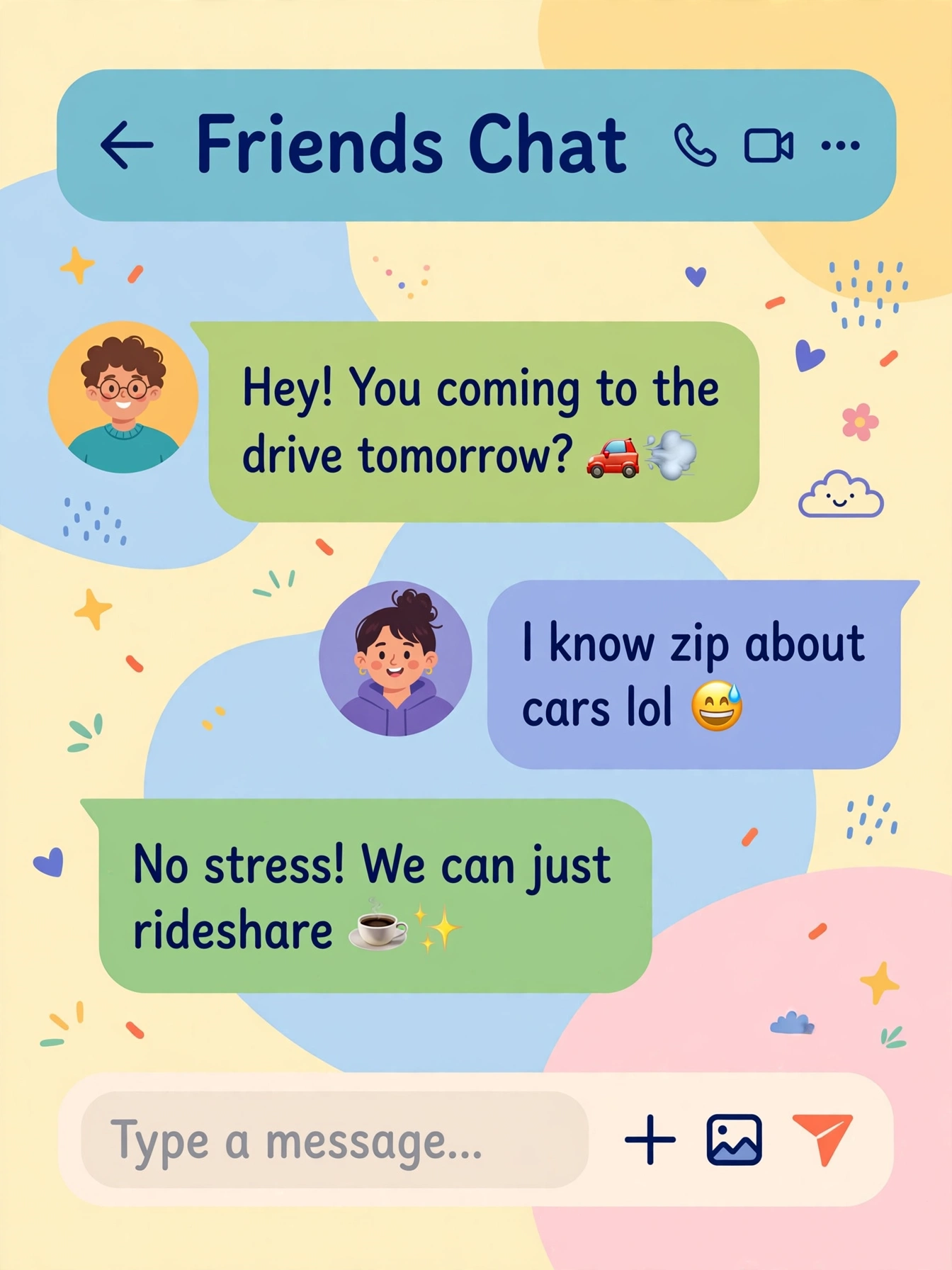
- Texting and group chats: “I know zip about that” is a quick, funny way to admit ignorance without sounding formal.
- TikTok and memes: Creators use “zip” in captions and voiceovers for comedic effect, especially in “zip, nada, nothing” jokes about failed plans, empty wallets, or bad dates.
- Sports commentary: A score of “zip” still means zero — “they held them to zip in the second half.”
- Everyday speech: Parents, teachers, and coworkers use “zip it” as a lighthearted (if slightly bossy) way to ask for quiet.
Part of zip’s staying power is its versatility. It works as a noun (“I got zip”), a verb (“zip over here”), and a command (“zip it!”). Few slang words pull triple duty that cleanly, which is why zip keeps getting passed down from one generation to the next.
How It Is Used
Zip slang shows up in three main patterns. Learning to spot which one is in play is the whole trick:
- Zip = nothing / zero. This is the most common slang use. “After all that studying, I still knew zip.” “The fridge has zip in it.” “We searched everywhere and found zip.”
- Zip = move fast. “I need to zip to the store before it closes.” “She zipped past me on her bike.” This use is closer to standard English, but it still carries a casual, energetic tone.
- Zip it = be quiet. “Zip it, the movie is starting!” This is a direct command, and it can sound rude if you say it to the wrong person — more on that in the mistakes section below.
Tone matters enormously with zip. “I know zip” is self-deprecating and funny. “You know zip” is dismissive and can start an argument. “Zip it” from a friend during a movie is playful; “zip it” from a boss in a meeting is a power move. The word is the same — the relationship and the context change everything.
Examples
The best way to learn zip slang is to see it in real sentences. Here are examples across different tones and situations.
Friendly Examples
- “Ask me about taxes and I know zip — I just smile and nod.”
- “We opened the present box and there was zip inside. Classic prank.”
- “I have zip planned this weekend, want to hang out?”
- “He tried to fix the Wi-Fi and got zip. We called support instead.”
Professional Examples
- “The report gave us zip — no usable data at all.” (Casual workplace chat, not a formal email.)
- “We ran the survey twice and got zip responses from that segment.”
- “I need to zip over to the office before the meeting starts.”
- “Let’s zip through these slides so we finish on time.”
Funny Examples
- “My bank account after rent: zip, nada, nothing.”
- “I went fishing all day and caught zip. The fish are winning.”
- “Zip it, Karen — the plot twist is coming!”
- “My motivation this Monday? Zip. Absolute zip.”
Notice how “zip” almost always appears at the end of a sentence or clause for maximum punch. That placement is part of the joke — the word lands like a door slamming on the idea of “something.”
Comparison with Similar Terms
Zip belongs to a whole family of “nothing” words in English slang. Here is how it stacks up against its closest cousins:
| Term | Meaning | Tone | Best used when |
|---|---|---|---|
| Zip | Nothing / zero | Casual, playful, a bit retro | Admitting you know or have nothing |
| Zilch | Nothing / zero | Playful, slightly nerdy | Emphasizing a total blank, often with humor |
| Nada | Nothing (from Spanish) | Cool, casual | Paired with zip: “zip, nada, nothing” |
| Squat | Nothing | Blunt, a bit rude | “You know squat” — dismissive, not friendly |
| Diddly-squat | Absolutely nothing | Emphatic, folksy | When you want to stress “not even a little” |
| Goose egg | Zero, especially a score | Sporty, old-fashioned | Talking about scores: “they put up a goose egg” |
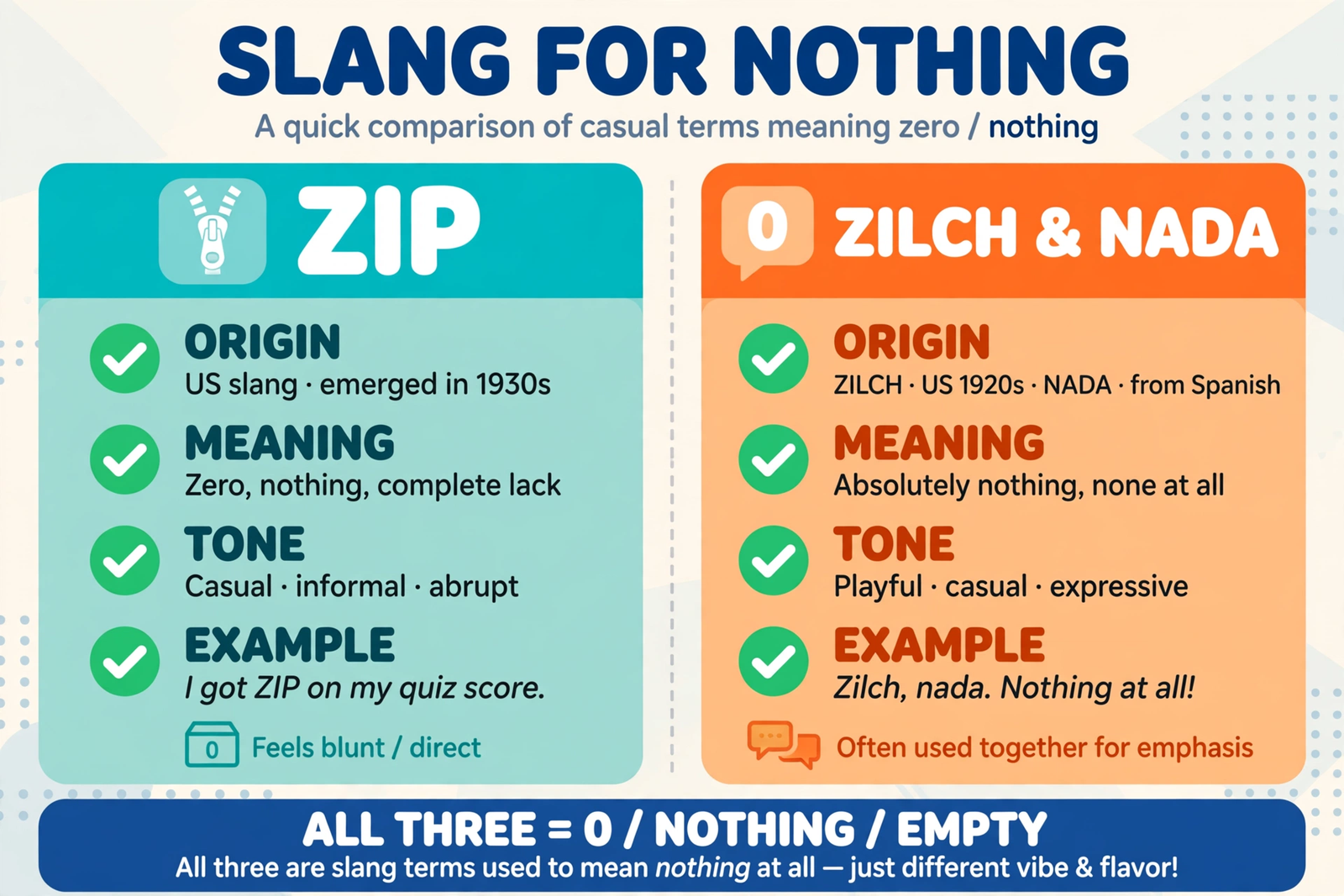
Zip is the most versatile of the bunch because it also carries the speed and “be quiet” meanings. Zilch and nada only mean “nothing.” If you want one word that does the most work, zip wins.
Alternate Meanings
Beyond the three main slang uses, zip pops up in a few niche contexts worth knowing:
- A zip of energy: “Full of zip” means full of energy and enthusiasm. “She walked in full of zip this morning.” This is the positive, peppy side of the word.
- Zip code: In American English, a ZIP code is a postal code. This is not slang, but it causes confusion in texts — “what’s your zip?” usually means the postal code, not the slang word.
- Zip file: A compressed computer file (.zip). Again, not slang, but common in tech chats: “Send me the zip.”
- Zip as a name or nickname: Occasionally used as a nickname for someone fast or energetic.
- Drug slang (dated): In older drug slang, “a zip” could mean an ounce of marijuana. This usage is rare today and mostly appears in older movies and songs. If you hear it in a modern text, it almost certainly means “nothing” or “move fast” instead.
Context is your best decoder. “I got zip” in a group chat about an exam means nothing. “Send the zip” in a work chat means a file. “Zip over here” means hurry. When in doubt, the “nothing” meaning is the safest bet in casual conversation.
Professional or Polite Alternatives
Zip slang is fun, but it is not right for every setting. In formal writing, job interviews, or polite company, swap it for one of these:
- Instead of “I know zip about this” → “I am not familiar with this topic yet.”
- Instead of “We got zip” → “We did not receive anything” or “The results were empty.”
- Instead of “Zip it” → “Could we hold that thought for a moment?” or “Let’s pause there.”
- Instead of “I need to zip to the store” → “I need to quickly stop by the store.”
The rule of thumb: zip is perfect for friends, texts, and casual social media. For emails to your boss, academic writing, or first impressions, use the polite version. You keep the meaning and lose the risk.
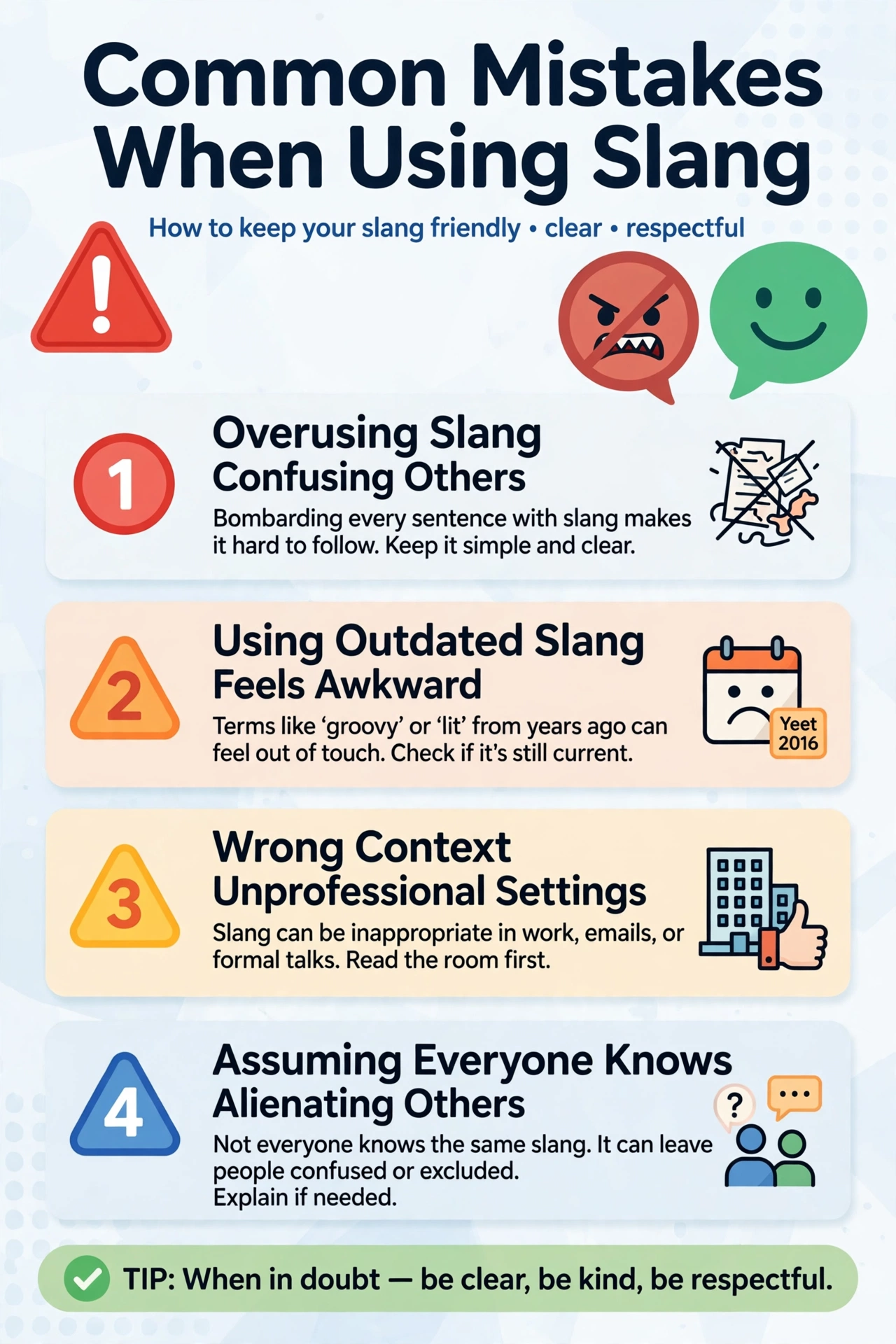
Common Mistakes
Even native speakers trip over zip slang sometimes. Here are the mistakes to avoid:
- Using “zip it” with strangers or superiors. It is a command, and it can sound rude. Save it for friends, siblings, and playful moments.
- Confusing zip with a ZIP code. “What’s your zip?” is about mail, not slang. If someone asks for your zip in a form, they want numbers, not attitude.
- Overusing it. Zip is punchy because it is rare. If every sentence ends in “zip,” the joke wears out fast.
- Reading “zip” as anger. “I know zip” is usually self-deprecating humor, not frustration. Do not take it as an insult — the speaker is usually laughing at themselves.
- Using it in formal writing. “The experiment yielded zip” might get a laugh in a lab chat, but it does not belong in a published paper.
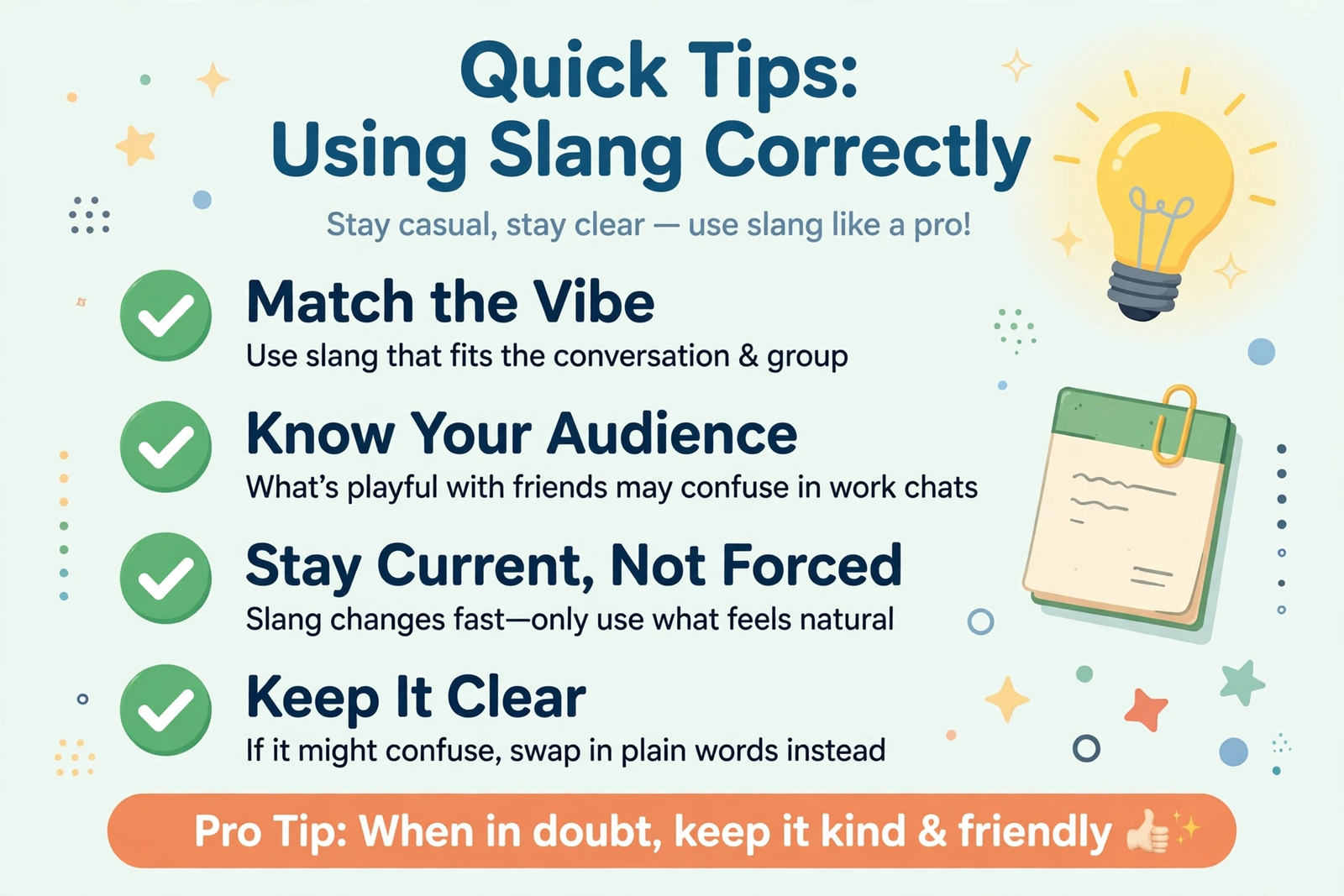
Quick Tips
- Use it for emphasis: Zip works best as the last word of a sentence — “I tried everything and got zip.” The placement sells the joke.
- Pair it for comedy: “Zip, nada, nothing” is a classic triple. Use it when you want a laugh, not just a statement.
- Match your audience: Friends and TikTok? Go for it. Boss and formal emails? Pick a polite alternative.
- Keep “zip it” playful: Add a smile, an emoji, or a joking tone so it lands as friendly, not bossy.
- Use the speed meaning freely: “Zip over here” and “zip through this” are safe in almost any casual setting, including work chats.
- When in doubt, check context: If a message says “zip” and you are unsure, the “nothing” meaning is the most likely one in casual conversation.
FAQ
What does zip mean in slang?
In slang, zip most commonly means nothing or zero — as in “I know zip.” It can also mean to move fast (“zip over here”) or, as “zip it,” to be quiet.
What does “I know zip” mean?
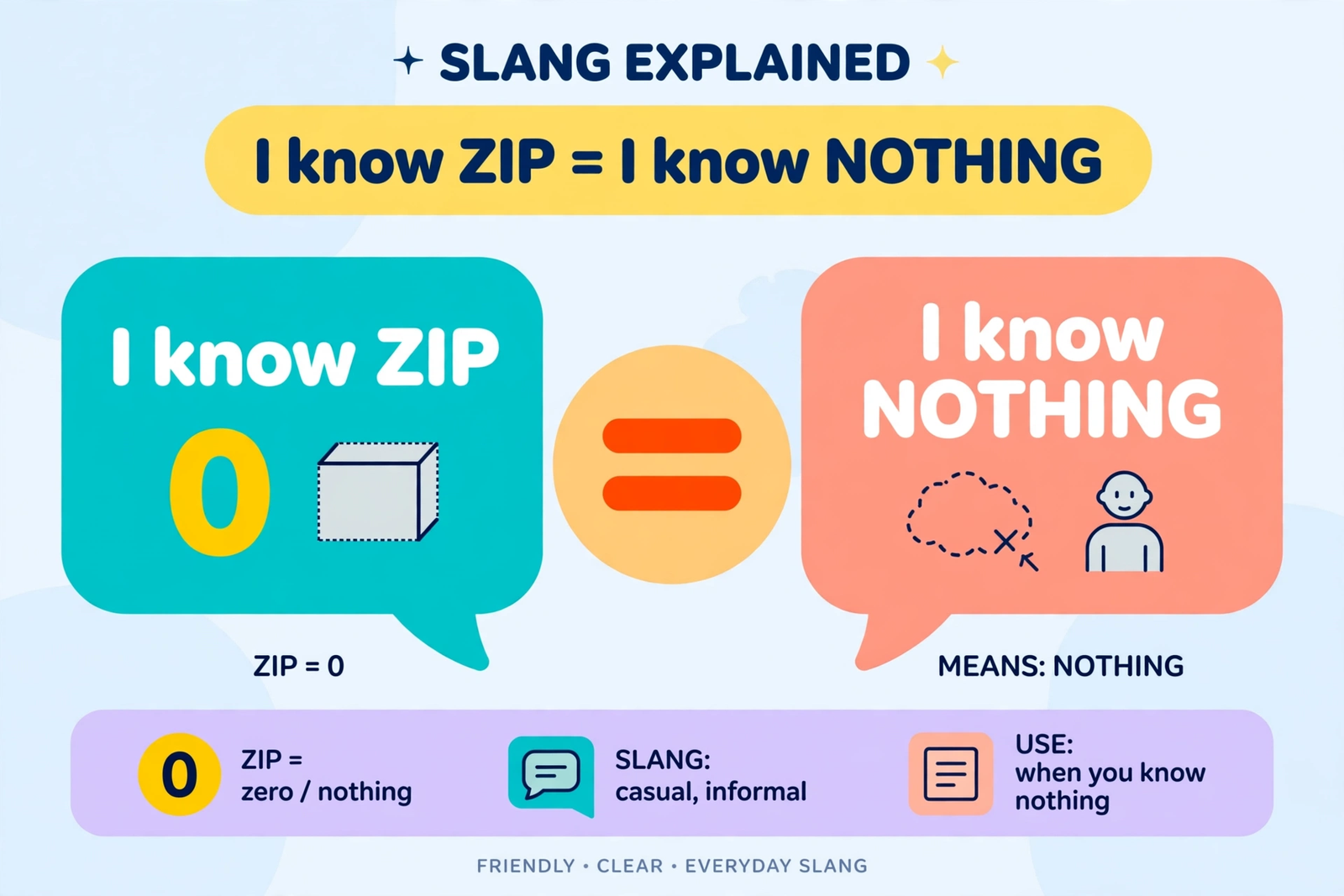
“I know zip” means “I know nothing about this.” It is a humorous, self-deprecating way to admit you have no knowledge on a topic.
What does “zip it” mean?
“Zip it” means “be quiet” or “stop talking.” It comes from the image of closing a zipper over your mouth. It is playful among friends but can sound rude to strangers.
Where does zip slang come from?
Zip as slang for “nothing” comes from early 20th-century American English, linked to a zero score. “Zip it” comes from the zipper metaphor, and the speed meaning comes from the fast motion of a zipper or a passing car.
Is zip slang rude?
Usually not. “I know zip” is harmless and funny. “You know zip” can be dismissive, and “zip it” can sound bossy — so the rudeness depends on who you say it to and how you say it.
What does “zip, nada, nothing” mean?
It is a playful triple that means “absolutely nothing.” Each word means the same thing, and stacking them is a joke about just how empty the result was.
Is zip slang still used today?
Yes. It appears in texts, TikTok captions, memes, sports commentary, and everyday speech. Its short, punchy sound makes it perfect for the age of short-form content.
What is the difference between zip and zilch?
Both mean “nothing,” but zip is more versatile — it also means speed and “be quiet.” Zilch only means nothing, and it sounds a little more playful and nerdy.
Conclusion
Zip slang is small, old, and surprisingly powerful. In three letters, it can mean nothing, speed, or silence — and it has survived nearly a century of language change because it does each job with style. Whether you are admitting “I know zip” about a topic, telling a friend to “zip it” during a movie, or zipping off to run an errand, you are using one of English’s most efficient little words.
The trick, as always with slang, is context. Read the room, match your audience, and save the bossy version for people who know you are joking. Do that, and zip will never trip you up again.
Want to decode more everyday slang? Check out our guides to Australian slang, BFE meaning, and chopped meaning slang — more short words with surprisingly big stories.
