Quick definition: “Slang for weed” refers to the many informal words people use instead of saying marijuana or cannabis — terms like bud, ganja, pot, grass, 420, and dope. These words show up in texts, song lyrics, memes, and everyday conversation, and each one carries its own tone, history, and level of formality.
Slang for Weed Meaning & Definition
When someone asks for the slang for weed, they are usually asking one of two things: what do people call marijuana when they are not using its formal name, and what do those words actually mean in context. The short answer is that there is no single slang word for weed. There are dozens — some decades old, some brand new — and the right one depends on who you are talking to, where you live, and how casual the conversation is.
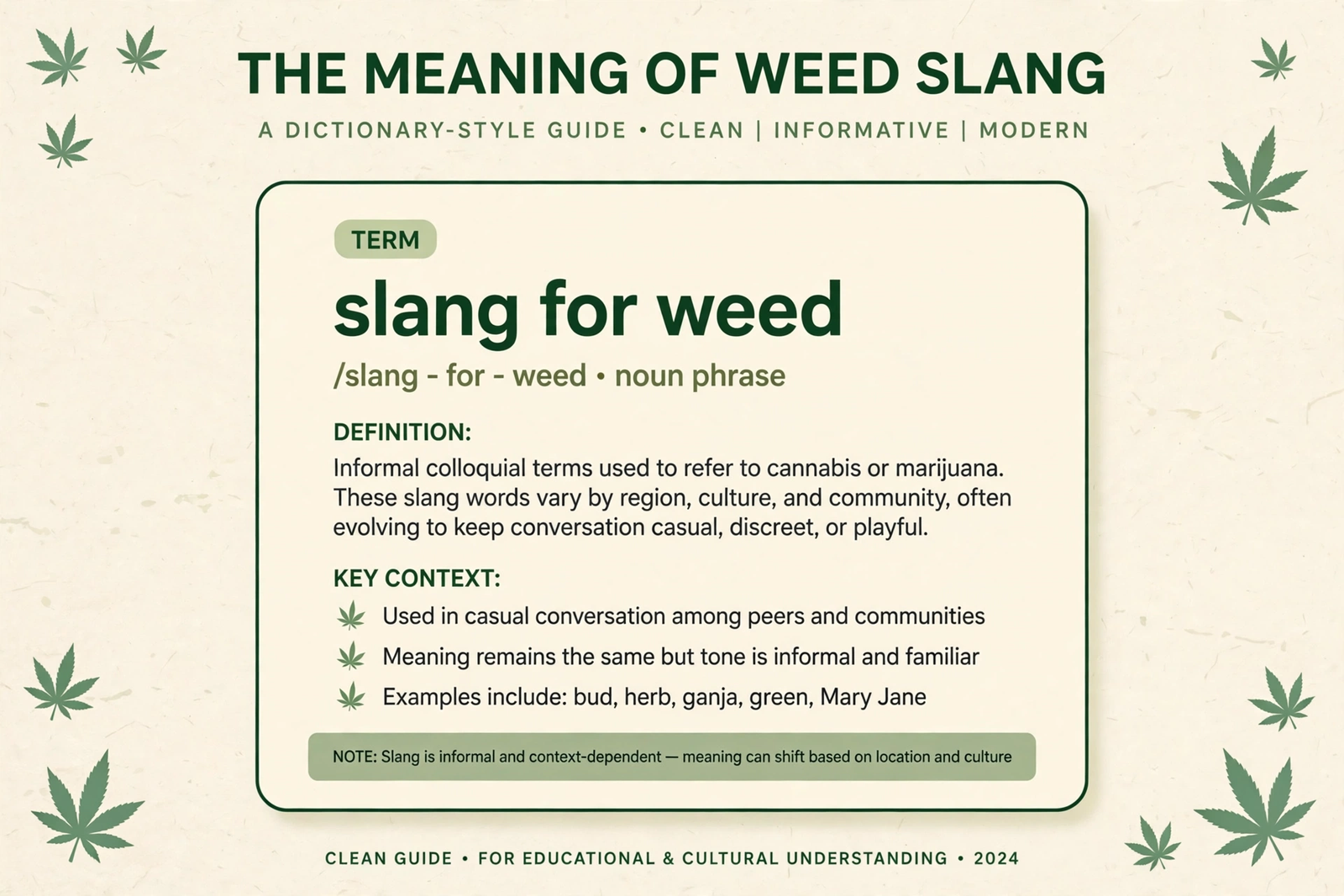
At its core, slang for weed is any informal term used to refer to cannabis, the plant and its dried flowers, without saying “marijuana” or “cannabis.” Some of the most common terms include bud (the flower itself), ganja (from Hindi, popularized through reggae culture), pot (a classic American term), grass, herb, dope, 420, kush, and loud. Newer slang keeps appearing on TikTok, in rap lyrics, and in group chats, so the list never really stops growing.
Understanding these terms matters even if you never use them yourself. Weed slang is everywhere in pop culture — movies, music, comedy, and social media — and knowing what a word means keeps you from misunderstanding a joke, a lyric, or a text message. It also helps parents, teachers, and anyone curious about modern language stay in the loop without sounding out of touch.
Introduction
Picture this: a friend texts you “got that loud for tonight?” and you have no idea whether they are talking about music, a party, or something else entirely. If you grew up around cannabis culture, you know instantly — loud is high-quality weed with a strong smell. If you did not, the message is a puzzle. That gap is exactly why slang for weed is worth understanding.
Cannabis has been part of American life for nearly a century, and everywhere it goes, nicknames follow. Some terms, like reefer and pot, date back to the 1930s and 40s. Others, like za and gas, are products of the 2020s internet era. Each generation renames the same plant in its own image, and the result is one of the richest slang vocabularies in the English language. According to the Merriam-Webster dictionary, cannabis itself has been known by many names across cultures, and the slang around it reflects that long, global history.
This guide covers the most important slang terms for weed, where they came from, how they are used in real conversations, and which ones to avoid in polite company. Whether you are decoding a song lyric, a meme, or a text from a friend, you will find the answer here.
Origin
Weed slang did not appear overnight. It grew alongside cannabis culture itself, shaped by immigration, music, prohibition, and the internet. Here is how the story unfolded:
- 1930s–1940s — the jazz era: Musicians in New Orleans and Harlem popularized terms like reefer, tea, and gage. “Tea” was so common that a “tea pad” was a place where people gathered to smoke. The word marijuana itself entered American English from Mexican Spanish during this period.
- 1960s–1970s — the counterculture boom: The hippie movement made pot, grass, and dope household words. Pot likely comes from the Spanish potiguaya or potación, a drink made with cannabis leaves. Grass was a simple visual metaphor — dried cannabis looks a bit like dried grass.
- 1980s–1990s — hip-hop and reggae: Reggae brought ganja (from Hindi gāñjā) into global English, while hip-hop spread terms like chronic, bud, and indo. Dr. Dre’s 1992 album The Chronic alone pushed “chronic” into the mainstream.
- 2000s — the internet era: Forums and early social media spread regional terms nationwide. 420, which began as a 1970s California high-school code for meeting to smoke at 4:20 p.m., became the universal symbol of cannabis culture, even giving us April 20 as an unofficial holiday.
- 2010s–today — legalization and TikTok: As states legalized cannabis, dispensary culture created new terms like loud (strong-smelling, high-potency flower), gas, za (short for “exotic”), and zaza. TikTok and rap lyrics now coin new slang faster than dictionaries can track it.
The pattern is clear: every era renames weed to fit its own culture. That is why older terms like reefer sound vintage today, while za sounds current — and why knowing the timeline helps you understand the tone of each word.
Popularity
So just how popular is weed slang? Extremely. Cannabis is one of the most talked-about topics in music, comedy, and social media, and its slang is woven into everyday language. A few numbers tell the story:
- Music: Thousands of songs across hip-hop, reggae, rock, and pop reference weed by slang names — from “ganja” in Bob Marley classics to “loud” in modern trap music. For many listeners, song lyrics are their first introduction to these words.
- Social media: Terms like 420, za, and gas trend regularly on TikTok, X, and Instagram. Coded language also helps users dodge content filters, which keeps new euphemisms appearing constantly.
- Everyday speech: Even people who never touch cannabis know words like pot, weed, and dope, because they appear in movies, TV shows, and news coverage. Slang for weed has crossed from subculture into general English.
- Regional variety: Different places favor different terms. Bud and chronic are common on the US West Coast, loud and gas dominate East Coast and Southern rap, while ganja remains strongest in Caribbean-influenced communities. If you are curious about how regional slang works in general, our guide on Chicago slang shows how one city builds its own vocabulary.
The popularity of weed slang also reflects a cultural shift. As cannabis becomes legal in more places, the language around it becomes more open — but the slang stays, because it is fun, coded, and part of the culture. Learning the terms is less about using them and more about understanding the world around you.
How It Is Used
Slang for weed shows up in almost every kind of conversation, but the tone changes with the setting. Here is how the main terms are used in practice:
- As a noun (the substance itself): “I picked up some bud for the weekend.” / “That ganja from Jamaica was unreal.” / “He’s got the loud if you want some.”
- As a code word: “You trying to match on some 420 later?” / “Got that gas?” Short, vague terms let people talk about weed without saying it directly — useful in texts, at work, or around family.
- As an adjective (quality or vibe): “That was some loud pack.” / “This za hits different.” Here the slang describes quality, not just the substance.
- In jokes and memes: “Me: I don’t smoke. Also me at 4:20 on April 20th…” Weed slang is a staple of internet humor, where the shared vocabulary is half the joke.
- In music and lyrics: Artists use slang to set a mood, signal authenticity, or dodge censorship. A lyric that says “rolling up the chronic” tells listeners exactly what scene is being painted.
The key rule is context. The same word can be casual among friends and inappropriate at work or school. If you are not sure a term fits the setting, the formal word — cannabis — is always the safe choice.
Examples
Real examples make the slang click. Here are authentic-feeling examples of how people use weed slang in different tones.
Friendly Examples
- “Yo, I got some bud — you coming through tonight?”
- “This ganja tea my grandma makes is actually so calming.”
- “Bro, that loud had me giggling at my own shadow for an hour.”
- “Pass the grass, we’re about to watch the game.”
- “She brought the za to the cookout and it was gone in twenty minutes.”
Professional Examples
- “The dispensary’s new cannabis flower tested at 24% THC.” (Note: professionals almost always switch to formal terms.)
- “Our study looks at how marijuana slang in song lyrics shapes teen perceptions.”
- “The report uses the term pot because that is the word survey respondents used most.”
- “In the interview, the artist referred to his herb use as part of his creative process.”
Funny Examples
- “My mom found my stash and called it ‘the devil’s lettuce.’ I just said, ‘Mom, it’s called za now.'”
- “He said he doesn’t smoke, then asked if I had any 420-friendly snacks. Sir, the snacks ARE the 420.”
- “I told my grandpa I was ‘hitting the gas‘ and he asked why I needed fuel at 11 p.m.”
- “She calls it ‘jazz cabbage’ and honestly, that might be the best slang for weed ever invented.”
Comparison with Similar Terms
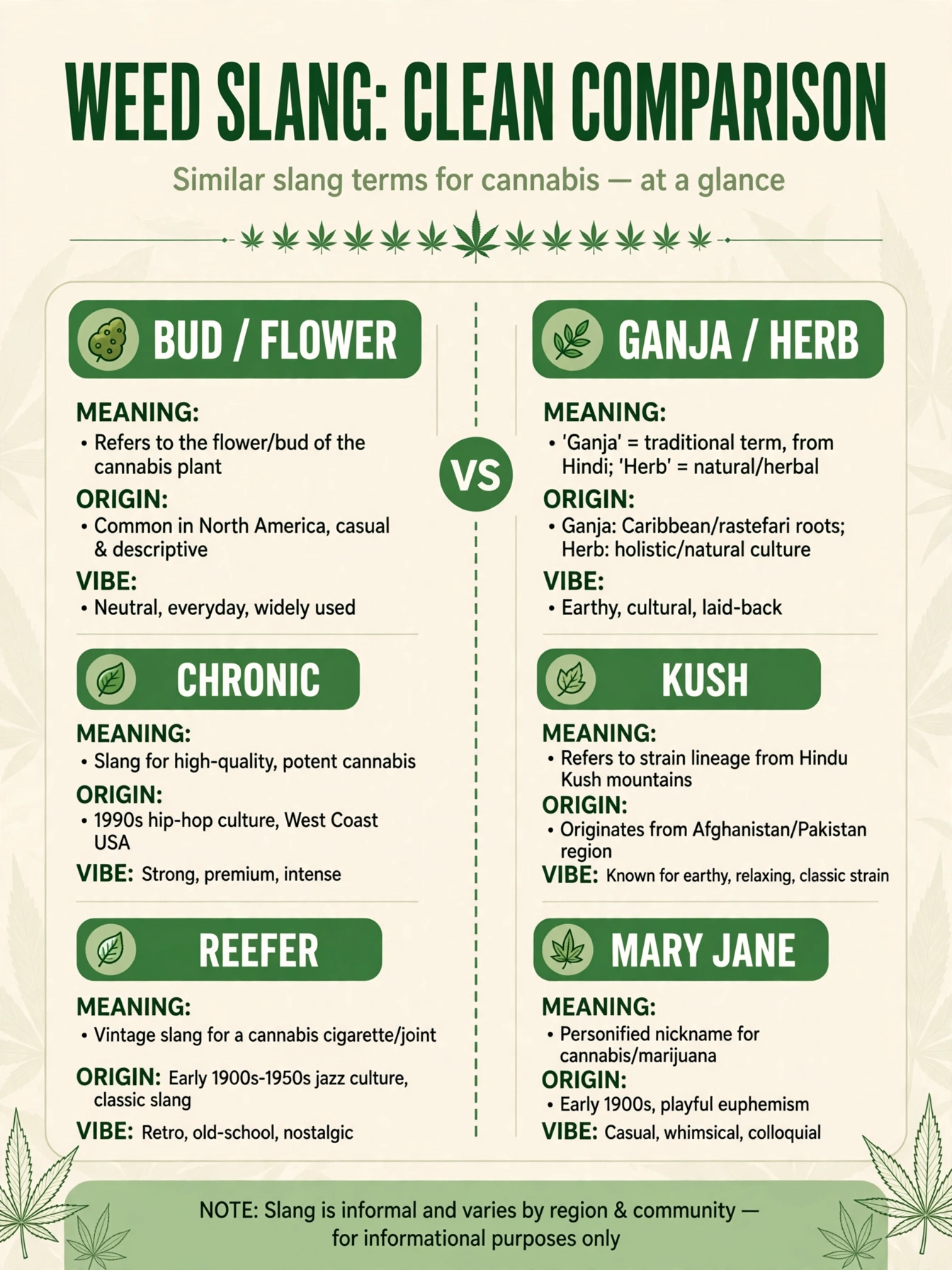
Not all weed slang means the same thing. Some words refer to the plant, some to its quality, and some to the act of smoking itself. This table clears up the confusion:
| Term | What It Means | Tone / Era | Example Use |
|---|---|---|---|
| Bud | The dried flower of the cannabis plant | Neutral, modern, most common today | “Pick up some bud for Friday.” |
| Ganja | Cannabis, from Hindi; reggae-associated | Cultural, relaxed, older roots | “That ganja hits smooth.” |
| Pot | General term for marijuana | Classic American, 1960s–70s | “He got busted with pot in his car.” |
| 420 | Code for cannabis or smoking time (4:20) | Playful, coded, universal | “You 420-friendly?” |
| Loud / Gas | High-potency, strong-smelling weed | Modern, hip-hop, quality flex | “That loud had the whole room smelling.” |
| Za / Zaza | Exotic, premium cannabis | Very new, TikTok/rap era | “He only smokes za now.” |
| Dope | Weed (also used for other drugs — be careful) | Old-school, ambiguous | “Got any dope?” |
| Chronic | High-quality weed, popularized in the 90s | 90s hip-hop classic | “Rolling up the chronic.” |
| Herb | Cannabis, gentle and natural-sounding | Soft, Rastafari-influenced | “A little herb helps me relax.” |
| Reefer | Vintage term for a marijuana cigarette | 1930s jazz era, now retro | “Reefer madness posters were wild.” |
The biggest takeaway: bud and ganja are the safest all-purpose terms, loud and za signal premium quality, and dope is the one to use carefully because it can also mean heroin or meth in some contexts. When in doubt, ask what someone means — slang shifts fast, and meanings vary by region and generation.
Alternate Meanings
Many weed slang words have other meanings, which is part of why they confuse people. Here are the most important ones to know:
- Weed itself: The word “weed” originally just meant an unwanted plant. In slang, it became the most common nickname for cannabis — but in a gardening context, it still means a plant you pull out of your lawn.
- Pot: Outside cannabis talk, a pot is a cooking vessel or a container for plants. “He smokes pot” and “she grows herbs in a pot” are very different sentences.
- Dope: In modern slang, “dope” also means “cool” or “awesome” — “That beat is dope!” It can also refer to other drugs, so context is everything.
- Grass: Usually a lawn. In older slang, it is marijuana — “smoking grass” meant smoking weed in the 60s and 70s, not mowing the lawn.
- High / Loud: “High” describes the feeling of being intoxicated, while “loud” can describe music, a person, or weed quality. Both words have completely normal non-cannabis meanings too.
- 420: Beyond cannabis, 420 is just a number — a time, a highway, or an apartment number. Only context tells you which meaning applies.
- Tea: In 1930s jazz slang, “tea” meant marijuana. Today, “tea” in slang usually means gossip — “spill the tea.” Same word, totally different era, totally different meaning.
This overlap is exactly why weed slang works so well as code: the words hide in plain sight. It is also why you should never assume — if a sentence sounds odd, the slang meaning is probably the right one.
Professional or Polite Alternatives
There are plenty of situations — work, school, medical appointments, family dinners — where weed slang does not belong. Use these formal alternatives instead:
- Cannabis — the scientific and legal name; the safest choice everywhere.
- Marijuana — the standard formal term in the US, used in law and medicine (though some prefer “cannabis” because of the word’s history).
- Cannabis flower — what dispensaries and medical professionals say when they mean the smokable part of the plant.
- THC products / CBD products — useful when you need to be specific about what is in the product.
- Medical cannabis — the right term when discussing prescribed use with a doctor.
- Recreational cannabis — the formal phrase for non-medical use in states where it is legal.
A good rule of thumb: if you are writing an email, talking to a doctor, or speaking in any formal setting, say cannabis. Save the slang for friends, memes, and song lyrics. Knowing both registers — slang and formal — is what makes you fluent, not just familiar.
Common Mistakes
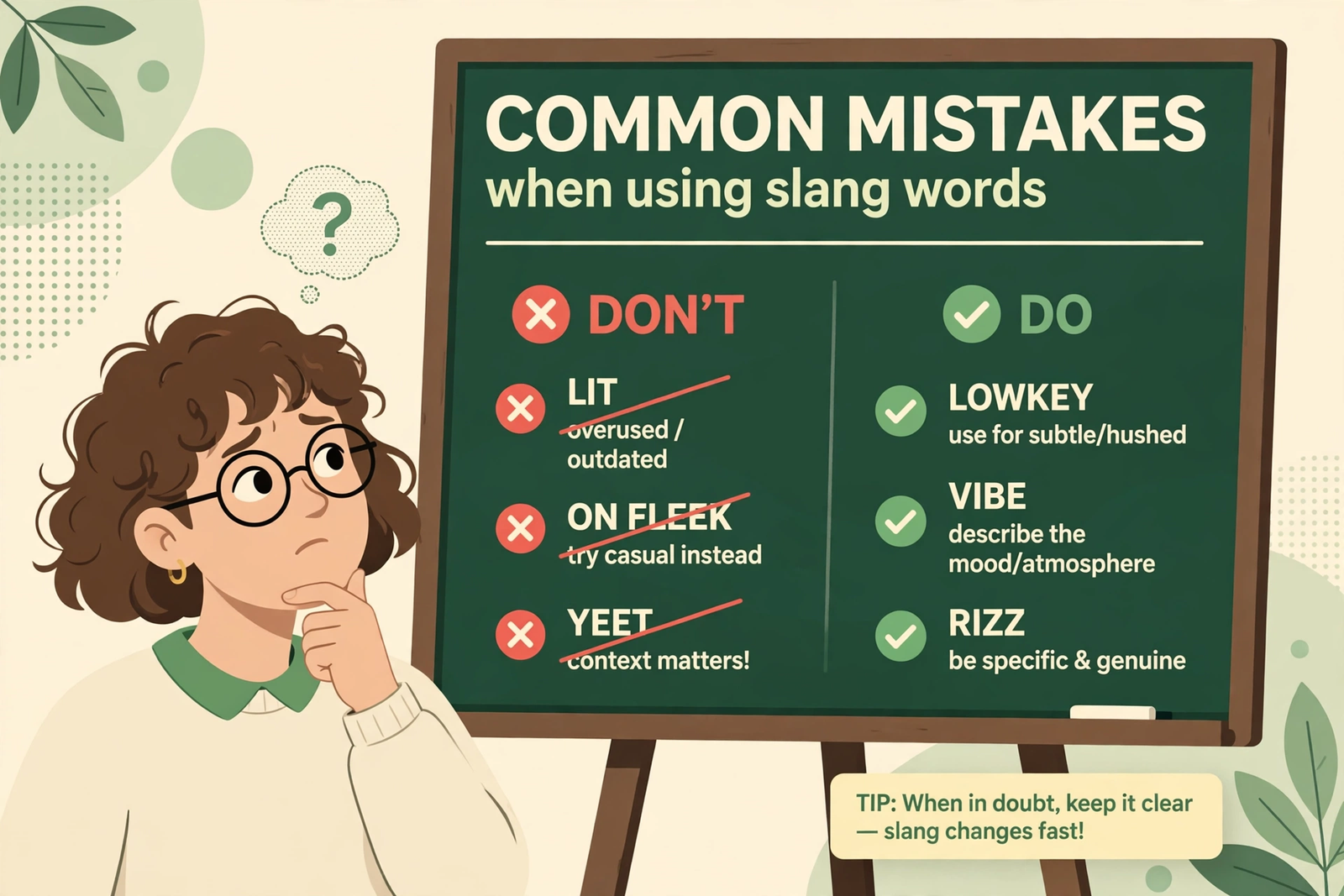
People get weed slang wrong all the time. Avoid these common mistakes:
- Using “dope” without context: Because “dope” can mean heroin, meth, or just “cool,” saying “I got dope” can send the wrong message entirely. Be specific when it matters.
- Calling everything “kush”: Kush is a specific strain family from the Hindu Kush mountains. Not all strong weed is kush, and using the word for any premium bud is a giveaway that you are guessing.
- Mixing up “loud” and “mids”: “Loud” means top-shelf, strong-smelling weed. “Mids” (short for middling) means average, lower-quality weed — if you want to understand that side of the scale, see our guide on mid meaning slang. Calling mids “loud” is an instant credibility loss.
- Using vintage terms to sound current: Saying “reefer” or “jazz cabbage” in 2026 is funny on purpose — but if you say it seriously, people will assume you are joking or quoting a movie.
- Assuming slang means the same thing everywhere: “Gas” might mean premium weed in Atlanta and fuel everywhere else. Regional slang varies, so listen before you use a new term.
- Using slang in professional or legal settings: Saying “I smoke za” to a doctor or employer sounds evasive. Formal language builds trust in those settings.
- Confusing “420” the time with “420” the date: 4:20 p.m. is the daily smoke time; April 20 (4/20) is the annual cannabis holiday. Both exist, and both get celebrated.
Quick Tips
- Learn the big five first: Bud, ganja, pot, 420, and loud cover 90% of what you will hear. Master those before chasing niche terms.
- Listen before you speak: New slang like “za” spreads through music and TikTok. Hear a term used naturally a few times before you try it yourself.
- Match the room: Slang is for friends and casual settings. In formal, medical, or work contexts, “cannabis” is always correct.
- Do not force it: Dropping “that za was gas, no cap” when it is not your natural vocabulary sounds awkward. One natural term beats five forced ones.
- Check the date on the slang: Terms age fast. “Chronic” was cool in the 90s; “za” is cool now. Old slang used seriously can make you sound out of touch — though used as a joke, it is hilarious.
- Know the quality words: Loud, gas, za, and exotic mean premium. Mids means average. Schwag (or “schwag weed”) means low quality. Knowing the scale helps you understand what people are actually saying.
- When in doubt, ask: “What does that mean?” is never a bad question. Slang changes by city, generation, and group chat — nobody knows all of it.


FAQ
What is the most common slang for weed?
The most common slang terms for weed are bud, pot, ganja, grass, and 420. “Bud” is the most widely used today because it refers directly to the flower, while “420” works as a universal code word that almost everyone in cannabis culture recognizes.
What does 420 mean in weed slang?
420 is a code for cannabis and for smoking it. It comes from a group of California high-school students in the 1970s who met at 4:20 p.m. to smoke. Today, 4:20 p.m. is the daily smoke time, April 20 (4/20) is an unofficial cannabis holiday, and “420-friendly” means someone is okay with cannabis use.
What does “loud” mean in weed slang?
“Loud” means high-quality, strong-smelling cannabis. The name comes from the smell — good weed is so pungent you can “hear” it, so to speak. If someone says “that pack is loud,” they mean it is premium, potent flower, not average weed.
What is “za” slang for?
“Za” (or “zaza”) is short for “exotic” and means premium, rare, or high-end cannabis, often with unusual flavors or genetics. It became popular in the early 2020s through rap lyrics and TikTok. It is one of the newest slang terms for weed and signals top-shelf quality.
Is “ganja” the same as weed?
Yes — “ganja” is simply a slang word for weed, borrowed from Hindi. It became famous worldwide through reggae music, especially Bob Marley, and it carries a relaxed, cultural tone. It means exactly the same substance as “marijuana” or “cannabis.”
What does “dope” mean in slang?
“Dope” can mean weed, but it is ambiguous — it can also refer to other drugs like heroin, and in modern slang it also means “cool” or “awesome.” Because of that ambiguity, most people today prefer clearer terms like “bud” or “ganja” when they specifically mean cannabis.
What is the polite way to say weed?
The polite and formal way to say weed is “cannabis.” It is the scientific name, it is used in law and medicine, and it works in every setting — work, school, doctors’ offices, and family conversations. “Marijuana” is also formal and widely understood.
Why are there so many slang words for weed?
There are so many slang words for weed because cannabis was illegal for most of the 20th century, so people invented coded language to talk about it discreetly. Music, regional culture, immigration, and now the internet keep adding new terms, and each generation renames the plant in its own style. Slang is also fun and social — new words signal belonging to a group.
Conclusion
Slang for weed is more than a list of funny nicknames — it is a living record of cannabis culture, from 1930s jazz clubs to 2020s TikTok feeds. The classic terms like pot, grass, and ganja carry decades of history, while newer words like loud, gas, and za show where the culture is headed. Knowing the difference between them helps you decode lyrics, memes, and texts without missing the joke — or the meaning.
The practical takeaway is simple: learn the big five (bud, ganja, pot, 420, loud), use formal language like cannabis when the setting calls for it, and never be afraid to ask what a new term means. Slang changes fast, and curiosity is the fastest way to keep up.
If you enjoyed this guide, you may also like our broader look at how slang works in general — what is slang — or our decade-by-decade breakdown in 90s slang words, where many of these terms first went mainstream. And if you want to see how drug-adjacent slang evolves in real time, our guide to sherm meaning slang is a perfect next read.

1 thought on “Slang for Weed: 40+ Terms, Meanings, and How People Actually Use Them”