
Quick definition: In cougar slang, a “cougar” is an older woman who dates, flirts with, or is romantically interested in significantly younger men. The term is informal, often playful, and sometimes controversial — it paints the woman as confident, experienced, and in charge of her dating life, drawing on the image of the cougar, a sleek and powerful wild cat.
Cougar Slang Meaning & Definition
The cougar slang definition is simple on the surface: a cougar is an older woman who prefers younger male partners. The age gap is usually noticeable — often ten years or more — and the younger man is sometimes affectionately called a “cub.” Unlike many dating terms, “cougar” describes the woman’s dating preference and attitude, not just her age. A woman in her forties who happens to date someone a year younger is not usually called a cougar; the label tends to appear when the age gap is clear and the woman is seen as actively choosing younger partners.
What makes cougar slang interesting is its tone. Depending on who says it and how, it can sound admiring, teasing, or insulting. Among friends, it might be a joke: “Watch out, she’s on the prowl tonight.” In a magazine headline, it might sound glamorous, suggesting a confident woman who knows what she wants. But it can also be used to judge or stereotype a woman for dating younger men — something men are rarely judged for in the same way. That double standard is a big part of why the term sparks so much conversation.
At its core, cougar slang is about flipping an old script. Traditionally, older men dating younger women was treated as normal, even expected. The cougar label gave a name — and a certain pride — to women doing the same thing in reverse. Whether you love the term or dislike it, understanding what it means, where it came from, and how it is used today will help you read it correctly in texts, on social media, and in pop culture.
- Core meaning: an older woman who dates or pursues younger men.
- The younger partner: often called a “cub” in the same animal-themed slang.
- Typical age gap: usually ten years or more, though there is no official rule.
- Tone: playful or admiring among friends, but it can also be judgmental or objectifying.
- Where you see it: dating conversations, TikTok and Instagram comments, TV shows, gossip columns, and memes.
Introduction
You have probably heard it in a TV show, read it in a celebrity headline, or seen it in a comment section: “She’s a total cougar.” Maybe a friend joked about it at a party, or you spotted it in a dating app bio and wondered whether it was a compliment or an insult. Either way, you are not alone — cougar slang is one of the most widely recognized dating terms in English, and also one of the most misunderstood.
Part of the confusion comes from the animal metaphor. A cougar is a mountain lion: quiet, strong, and a skilled hunter. When the word crossed over into dating slang, it carried that imagery with it. A “cougar” in slang is not just an older woman — she is pictured as confident, attractive, and in pursuit, rather than waiting to be pursued. That is a very different picture from the old stereotypes about older women and dating, which is exactly why the term caught on.
But the word also carries baggage. Some women embrace it as a badge of confidence. Others reject it because it reduces a real relationship to a joke about age, or because it implies the woman is “hunting” younger men rather than simply dating someone she likes. And the male equivalent barely exists in everyday language, which tells you a lot about how differently society treats age-gap dating depending on who is older.
In this guide, you will learn the full cougar slang meaning, its origin story, how it became a pop-culture phenomenon, how people actually use it in conversation, how it compares with similar terms, and the polite alternatives you can use instead. By the end, you will know exactly what someone means when they call a woman a cougar — and whether the comment is a compliment, a joke, or something to push back on.

Origin
The cougar slang meaning did not appear overnight. Its roots go back to at least the 1980s and 1990s, when the word was reportedly used in parts of Canada to describe older women who went out to bars looking to meet younger men. The animal metaphor was already in place: just as a cougar stalks its prey, the slang version suggested a woman on the lookout for a younger partner. Early uses were mostly whispered jokes in bars and locker rooms, not mainstream language.
The term went mainstream in the 2000s, thanks to two things: a book and a TV boom. In 2001, Canadian author Valerie Gibson published “Cougar: A Guide for Older Women Dating Younger Men,” which gave the word a friendly, proud spin and introduced it to a much wider audience. Around the same time, celebrity culture picked it up. When famous women in their forties and fifties were seen dating younger men, gossip columns reached for the same word, and suddenly everyone knew what a cougar was.
Television finished the job. The 2009 sitcom “Cougar Town,” starring Courteney Cox as a recently divorced woman in her forties navigating dating, put the word in the title of a prime-time show. Reality dating shows, dating apps, and social media kept it alive through the 2010s, and by the 2020s it had become a permanent part of dating vocabulary, spawning spin-off terms like “puma” and “manther” along the way.
It is worth noting that the term’s journey mirrors a real social change. As more women built careers, gained financial independence, and divorced later in life, more of them re-entered the dating world in their forties and fifties with clear preferences of their own. Cougar slang gave that shift a name — imperfect and loaded as it is — and the name stuck because it was vivid, funny, and easy to remember.
Popularity
Cougar slang is popular because it is short, visual, and instantly understood. You do not need a dictionary to picture it: the wild-cat metaphor does all the work. That is why it spread from bar jokes to magazine covers to everyday conversation in just a few years, and why it still shows up constantly in memes, dating-app profiles, and comment sections today.
On social media, the term thrives. TikTok and Instagram are full of “cougar” jokes, skits, and thirst-trap captions, often posted by the women themselves with a wink. Some creators use the label proudly, framing it as confidence and self-knowledge: they know what they want, and age is not a barrier. Others use it ironically, playing up the stereotype for laughs. Either way, the word’s staying power on social media is remarkable for a slang term that is now decades old.
Pop culture keeps refreshing it. Every time a celebrity couple with a large age gap makes headlines, the word resurfaces. Dating shows built around older women and younger men — sometimes marketed with the cougar label front and center — introduce it to new audiences. And in everyday dating, the word remains a quick shorthand: saying “she’s a cougar” tells a listener a whole story in three words, even if that story is a stereotype rather than a fact.
| Era | How cougar slang spread |
|---|---|
| 1980s–1990s | Bar and social slang in North America; the wild-cat metaphor takes hold |
| 2001 | Valerie Gibson’s book “Cougar” gives the term a proud, mainstream spin |
| 2000s | Celebrity headlines and gossip columns make the word widely known |
| 2009 | “Cougar Town” puts the word in a prime-time TV title |
| 2010s–today | Dating apps, reality TV, TikTok, and memes keep the term in daily use |
How It Is Used
Cougar slang is used in a few distinct ways, and the meaning shifts with the speaker’s intent. Here are the patterns you will see most:
- As a label: “She’s a cougar — she only dates guys in their twenties.” This is the straightforward descriptive use.
- As a joke among friends: “Careful, the cougars are out tonight!” — playful, usually said in a group setting.
- As a self-label: “Proud cougar, no apologies.” Some women reclaim the word as a statement of confidence.
- As an insult or judgment: “She’s just a sad cougar chasing young guys.” Here the tone turns mocking or shaming.
- As a compliment: “She’s a cougar and she looks amazing.” In this use, it signals admiration for confidence and style.
- In dating profiles and memes: “Cougar looking for her cub” — the animal theme, played for humor or flirtation.
One important note: cougar slang is almost always about women. There is a male equivalent, “manther” (man + panther), for an older man who dates younger women, but it is rarely used — because older men dating younger women was so normalized that it never needed a special, slightly scandalous label. That gap is a useful reminder: when you hear “cougar,” you are hearing a word shaped by a double standard, not just a neutral description of an age gap.
Context also matters for age. In slang, a woman in her thirties who dates younger men is sometimes called a “puma” rather than a cougar, while “cougar” is more often reserved for women in their forties and beyond. These lines are informal and vary by region and friend group — nobody checks ID before using the word — but they show how the animal theme expanded into a whole unofficial vocabulary. If you want to see how another slang label works in everyday chat, our HBU meaning in chat guide breaks down a term that is just as context-dependent.
Examples
Nothing explains slang better than seeing it in action. Here are real-world examples of cougar slang in conversation, comments, and captions — with the meaning and tone of each.
Friendly Examples
- Group chat: “My aunt is a proud cougar — she just started dating a guy fifteen years younger and she’s glowing.” — Tone: affectionate and admiring. The label is used with pride.
- Party joke: “Watch out for Sarah tonight, she’s in full cougar mode!” — Tone: teasing and playful among friends who know it is a joke.
- Compliment: “She’s forty-eight, fit, funny, and dating a thirty-year-old — total cougar energy.” — Tone: admiring. “Cougar energy” here means confidence.
Professional Examples
- Magazine headline: “The rise of the cougar: why more women are dating younger men.” — Tone: neutral and journalistic. The term is used as a cultural label.
- TV discussion: “The show plays with the cougar stereotype, but the character is much more than that.” — Tone: analytical. The word names a trope to be discussed.
- Dating advice column: “If you are a cougar, own it — but date someone who respects you, not just your age.” — Tone: direct and practical, aimed at readers who use the label themselves.
Funny Examples
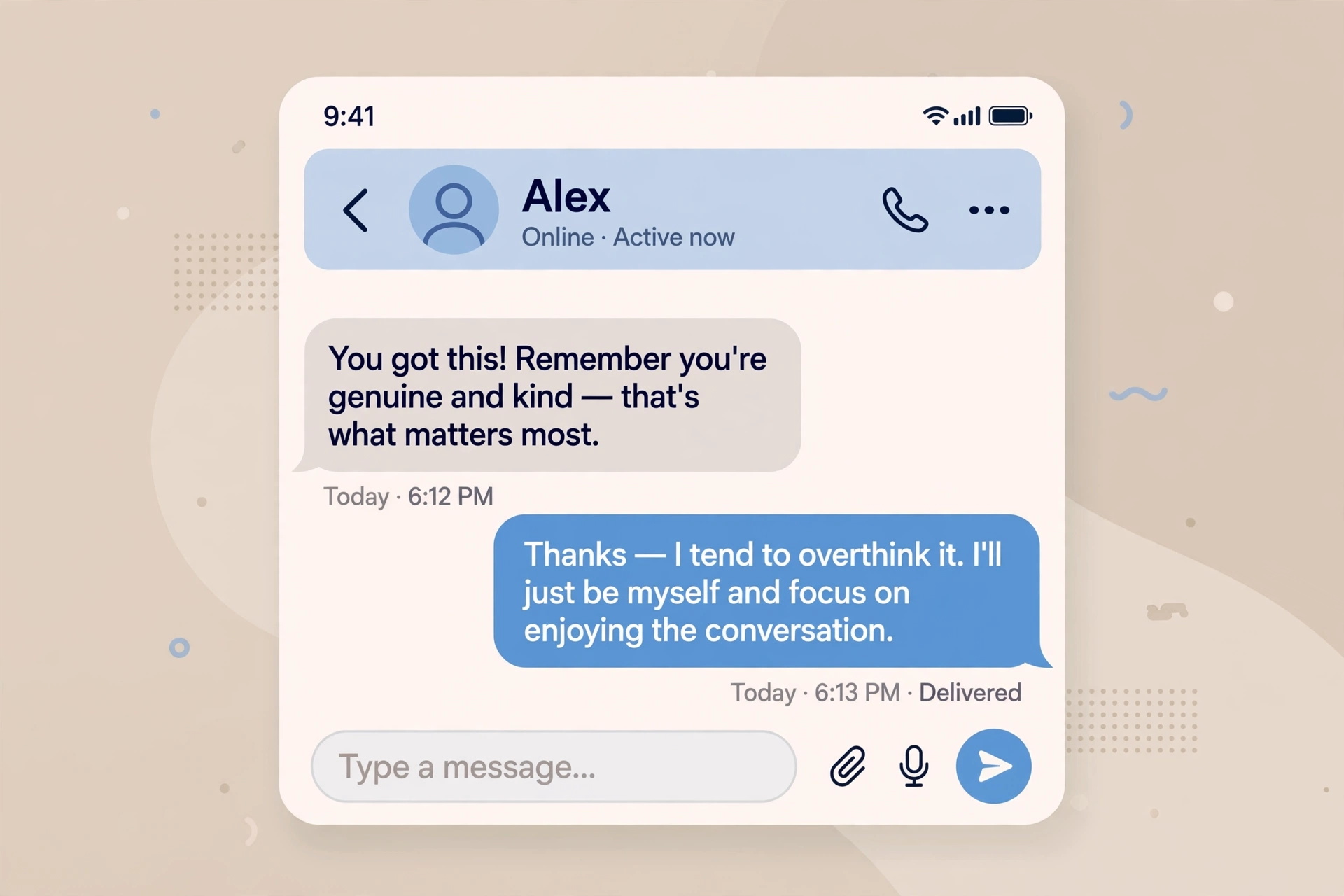
- Meme caption: “Me at 45: I didn’t choose the cougar life, the cougar life chose me.” — Tone: self-deprecating humor, playing on a famous meme format.
- Text to a friend: “The bartender just carded my date, not me. Officially a cougar now 😂” — Tone: lighthearted. The joke is about the age gap being visible.
- Comment section: “Cougar season is open, apparently.” — Tone: joking, though it leans on the hunting metaphor, which not everyone finds funny.
Comparison with Similar Terms
Cougar slang sits inside a whole family of animal-themed dating terms, and mixing them up is easy. Here is how the main ones compare:
| Term | Who it describes | How it differs from “cougar” |
|---|---|---|
| Cougar | An older woman (often 40+) who dates younger men | The main term; confident, sometimes judgmental tone |
| Puma | A younger version — a woman in her 30s dating younger men | Same idea, younger age bracket; less widely known |
| Cub | The younger male partner of a cougar | Describes the other person in the pairing, not the woman |
| Manther | An older man who dates younger women | The rare male equivalent; far less common in everyday speech |
| Sugar momma | An older, wealthier woman who financially supports a younger partner | Focuses on money and support, not just age or attraction |
| MILF | An older woman, usually a mother, found attractive by younger people | About attractiveness and motherhood, not necessarily dating younger men |
| Toy boy | A much younger male companion or partner | Often implies a casual or short-term arrangement |
The key difference to remember is that “cougar” is about dating preference and attitude, while terms like “sugar momma” are about money and “MILF” is about attraction from someone else’s point of view. A woman can be one without being the others, and using the wrong label is one of the fastest ways to turn a joke into an insult. For a broader look at how slang labels evolve in everyday language, see our CSL meaning in text guide, which covers another term whose meaning shifts heavily with context.

Alternate Meanings
Like many slang words, “cougar” has meanings outside dating, and context usually makes the right one obvious:
- The animal: a cougar is a large wild cat, also called a mountain lion or puma, native to the Americas. In a nature documentary, “cougar” is just the animal — no slang involved.
- The car: the Mercury Cougar was a well-known American car model produced for decades. Car fans talking about a “classic Cougar” mean the vehicle.
- Sports teams and mascots: several schools and teams use the Cougars as a mascot name. “Go Cougars!” at a game has nothing to do with dating.
- A surname and place names: Cougar appears as a surname and in place names, again with no slang meaning.
Inside dating slang itself, there are also softer uses: “cougar energy” or “cougar era” can describe a phase of confidence and bold dating choices without labeling a specific relationship. When someone says “I’m in my cougar era,” they usually mean they feel confident and are dating on their own terms — the age gap is secondary to the attitude.
Professional or Polite Alternatives
If you are writing, reporting, or simply talking about someone respectfully, you do not need the slang at all. These alternatives say the same thing without the animal metaphor or the judgment:
- “An older woman dating a younger man” — clear, neutral, and always safe.
- “A woman in an age-gap relationship” — the standard respectful phrasing in journalism and research.
- “A May–December relationship” — a classic, slightly literary phrase for a relationship with a large age gap, used for either gender.
- “Dating someone younger” — simple and judgment-free in everyday conversation.
- “A confident, independent woman” — use this when the point is her attitude, not her partner’s age.
The rule of thumb is simple: use “cougar” only when the person themselves uses it, or when you are clearly joking among friends who will take it that way. In professional writing, in a first conversation with someone, or when describing a real person who has not claimed the label, the neutral phrasing is the better choice every time.
Common Mistakes
People get cougar slang wrong in a few predictable ways. Avoid these and you will use — or interpret — the term far more accurately:
- Calling any older woman a cougar: age alone does not make someone a cougar. The term implies dating younger men, not simply being over forty.
- Assuming it is always a compliment: many women find it objectifying, especially from strangers. A joke among friends lands very differently from a comment by someone they barely know.
- Using it for a small age gap: a two- or three-year gap is not what the term describes. The gap is usually a decade or more.
- Confusing it with “sugar momma”: a cougar relationship is not necessarily about money. Assuming financial motives is a separate stereotype.
- Assuming the younger man is being used: the stereotype paints the younger partner as prey, but in real relationships both people are adults making their own choices.
- Using it in professional settings: like most dating slang, “cougar” does not belong in a workplace, a formal article, or a conversation with someone you do not know well.

Quick Tips
- Read the room: if the woman herself jokes about being a cougar, the term is fair game. If not, skip it.
- Do not use it to shame: commenting on a stranger’s relationship with a loaded label says more about the speaker than the couple.
- Keep the animal metaphor light: “cub” and “prowl” jokes are funny among friends and awkward everywhere else.
- Focus on the person, not the label: a relationship is about two people, not a category. If you are describing a real couple, describe them, not the stereotype.
- In writing, prefer neutral language: “age-gap relationship” works in every context where “cougar” might offend.
- If someone calls you a cougar and you dislike it, say so: a simple “I’d rather you didn’t call me that” is enough — you do not owe anyone an explanation for your dating life.

If you still have questions, you are not alone — cougar slang raises the same questions again and again. Here are the answers people search for most.
FAQ
What does cougar slang mean?
In cougar slang, a cougar is an older woman who dates, flirts with, or is romantically interested in significantly younger men, usually with an age gap of ten years or more. The term comes from the wild cat of the same name and suggests confidence and independence.
What age makes someone a cougar?
There is no official age. In informal slang, “puma” is sometimes used for women in their thirties, while “cougar” is more often used for women in their forties and beyond. The dating pattern matters more than an exact birthday.
Is being called a cougar a compliment or an insult?
It depends on who says it and how. Among friends, or when a woman uses it about herself, it can be playful or proud. From a stranger, or said with a mocking tone, it can feel judgmental or objectifying. When in doubt, do not use it about someone else.
What is a male cougar called?
The male equivalent is sometimes called a “manther” (man + panther), but the term is rarely used. Older men dating younger women were historically treated as normal, so no widely used label developed for them.
What is the difference between a cougar and a sugar momma?
A cougar is defined by age and dating preference. A sugar momma is defined by wealth and financial support of a younger partner. A woman can be one, both, or neither — the terms describe different things.
Where did the term cougar come from?
The term was used in North American bar slang as early as the 1980s and 1990s, then went mainstream in the 2000s through Valerie Gibson’s 2001 book “Cougar,” celebrity headlines, and later the TV show “Cougar Town” (2009).
Is cougar slang offensive?
It can be. Some women embrace it as confident and fun; others dislike it because it stereotypes them or reduces a relationship to an age joke. It is best used only when the person it describes is comfortable with it.
What is a cub in cougar slang?
A “cub” is the younger male partner of a cougar, continuing the wild-cat theme. Like “cougar” itself, it is informal and playful, and it is best used jokingly rather than as a serious label for a real person.
Conclusion
Cougar slang is proof that a single vivid word can carry a whole cultural argument. At its simplest, the cougar slang meaning is an older woman who dates younger men — but behind those few words sit questions about confidence, double standards, and who gets to choose in dating. Used playfully among friends, or claimed proudly by the women themselves, it can sound like confidence. Used to judge a stranger, it can sound like exactly the double standard it grew out of.
The key takeaways are simple: check the context before you use the label, remember that age alone does not make someone a cougar, do not confuse it with money-based terms like “sugar momma,” and prefer neutral language — “age-gap relationship” — whenever you are writing or speaking formally. Slang is fun, but the people it describes are real, and respect costs nothing.
Key takeaways:
- Cougar slang means an older woman who dates or pursues significantly younger men, usually with a gap of ten years or more.
- The term rose from 1980s–1990s bar slang to mainstream fame through a 2001 book, celebrity culture, and the show “Cougar Town.”
- Related terms include puma (younger bracket), cub (the younger partner), manther (the rare male equivalent), and sugar momma (money-focused).
- The label can be playful, proud, or insulting depending on tone and speaker — use it only when it is welcome.
- In professional or formal contexts, say “age-gap relationship” instead.
Slang keeps evolving, and dating slang evolves fastest of all — which is why staying fluent matters. If this breakdown helped, keep exploring: from everyday chat shortcuts in our IDT meaning in text guide to other context-dependent terms, there is always another code worth cracking properly. And for the dictionary definition behind the slang, Merriam-Webster’s entry for “cougar” lists the slang sense alongside the animal.

1 thought on “Cougar Slang: What It Really Means in Dating, Texts & Pop Culture”