Quick Definition: Sharking meaning slang is the act of aggressively pursuing someone — usually romantically or sexually — the way a shark circles its prey: confidently, relentlessly, and always watching for the perfect moment to move in. On TikTok and in group chats, “sharking” describes someone who is actively on the hunt for a date, a hookup, or attention, while in UK university slang it has a narrower meaning: an older student pursuing a fresher (first-year student). The word almost always carries a slightly predatory, opportunistic edge, so context matters a lot.
Sharking Meaning Slang Meaning & Definition
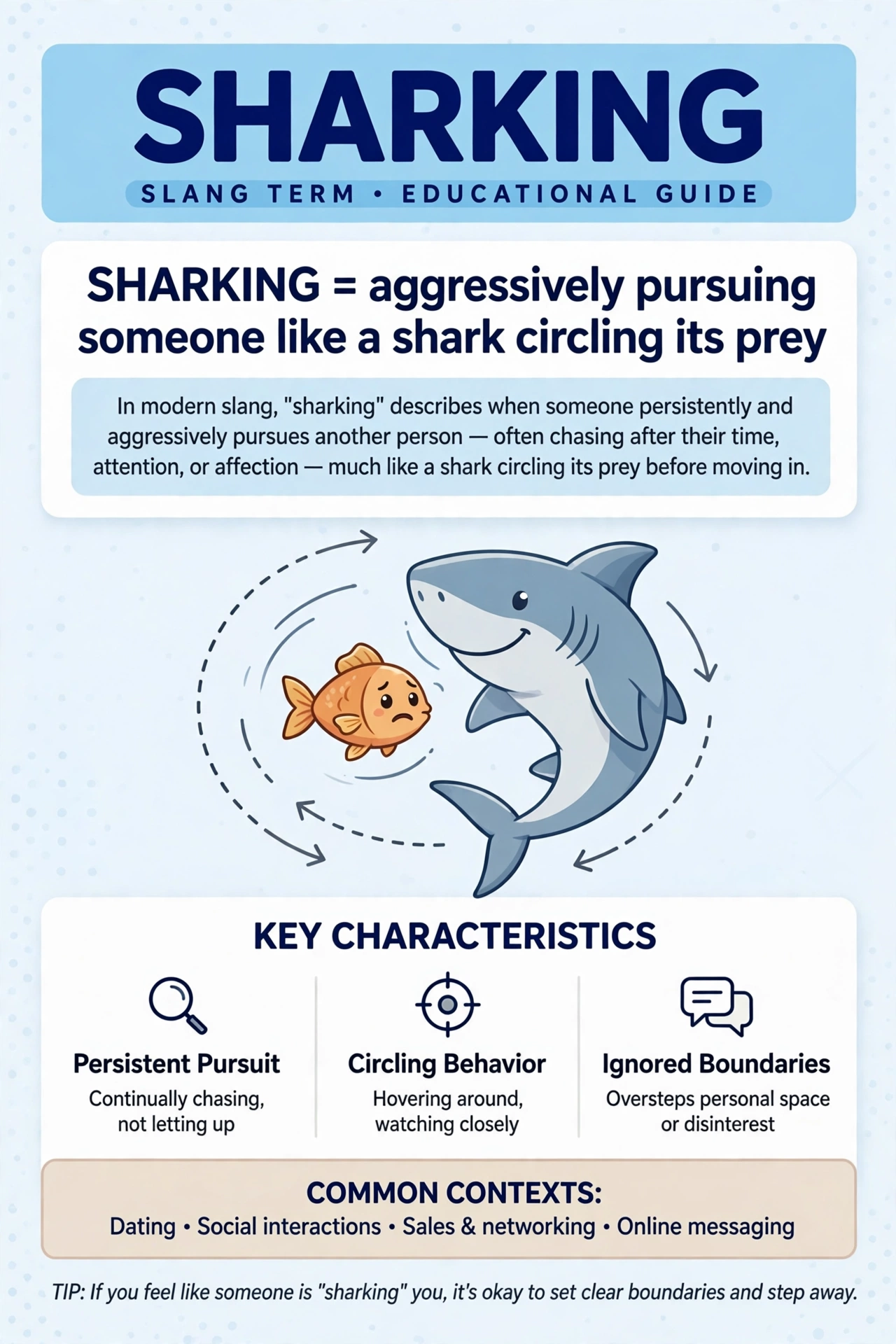
Sharking meaning slang refers to the behaviour of hunting for a romantic or sexual partner with the focus and persistence of a shark. The image is simple: a shark does not wander aimlessly. It circles, it watches, it waits, and then it strikes. When someone says a person is “sharking”, they mean that person is out looking for someone to pursue — scanning the room at a party, sliding into DMs, or working a crowd with one goal in mind.
The slang meaning of sharking is not about fish at all. It is about intent. A person who is sharking is not casually chatting or making friends; they are actively seeking a romantic or physical connection, often with a sense of urgency and opportunism. That is why the term usually sounds a little cheeky, a little bold, and sometimes a little uncomfortable — it depends on who is saying it and how the other person feels about being pursued.
In the UK, sharking has a more specific campus meaning. At British universities, “sharking” describes an older student — usually a second- or third-year — who deliberately pursues first-year students, known as freshers. The term became widely discussed in student newspapers because the power imbalance makes it controversial: freshers are new, often away from home for the first time, and still finding their footing, while the older student knows the scene, the social circles, and the shortcuts. Whether people treat it as a joke or a serious problem depends on the situation, but the word itself points to the same shark-like dynamic of an experienced hunter and a less experienced target.
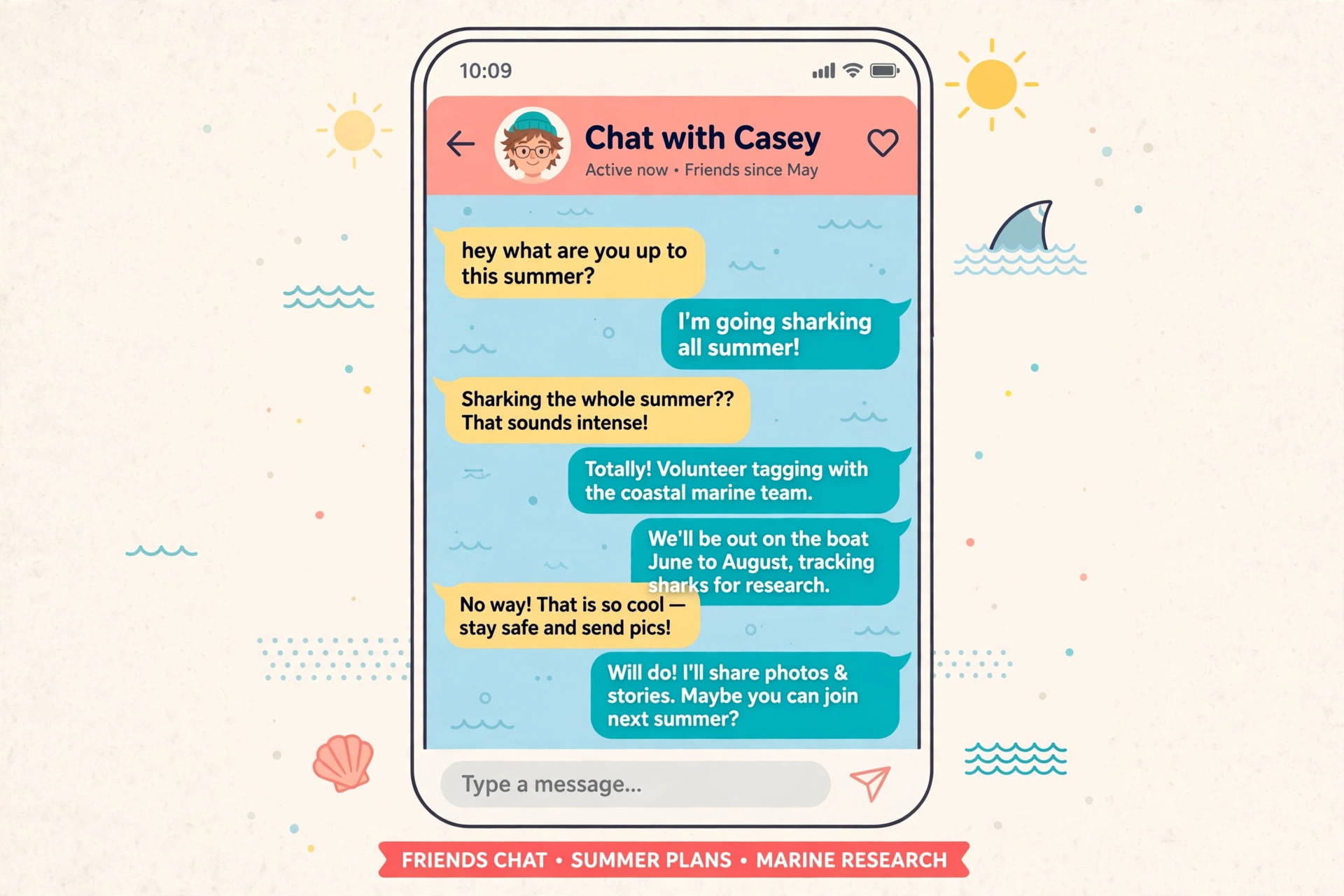
On TikTok in 2025, sharking took on a lighter, meme-friendly life. The phrase “sharking all summer” became a catchphrase for being single, confident, and ready to meet people — less about real predatory behaviour and more about the joke of being “on the hunt” while knowing you are probably too shy to talk to anyone. That double meaning is what makes the slang tricky: in one conversation it is a funny self-own, and in another it describes genuinely pushy behaviour. Understanding which one is in play is the whole point of this guide.
Introduction
You have probably seen the word “sharking” in a TikTok caption, a group chat, or a comment thread and wondered whether it was a compliment, a joke, or a warning. Maybe a friend said “bro’s been sharking all summer” under a video of someone dancing in a shark costume. Or maybe you read a university article calling sharking a serious problem on campus. Both uses are real, and both come from the same idea — but they land very differently.
Sharking is one of those slang words that sounds fun until you look closer. The image of the shark is everywhere in English: a “card shark” is a player who quietly takes your money, a “loan shark” is someone who lends at brutal rates and chases repayment, and a “pool shark” is the hustler who pretends to be bad at the game until the stakes get high. Sharking borrows all of that energy — clever, relentless, a little bit dangerous — and applies it to dating and social life.
In this guide, we break down exactly what sharking means in slang, where it came from, how it exploded on TikTok in 2025, and how people actually use it in texts, captions, and real conversations. You will also find clear examples, a comparison with similar slang like rizz and “thirsty”, the alternate meanings of the word, polite alternatives for professional settings, the common mistakes people make when using it, and quick tips for using it correctly. By the end, you will know not only what sharking means but also when it is funny, when it is flattering, and when it crosses a line.
Origin
The roots of sharking go back centuries, long before TikTok existed. The word “shark” entered English in the 16th century as a label for a person who preys on others — a cheat, a swindler, someone who lives off other people’s losses. The fish was the perfect metaphor: fast, silent, always moving, and impossible to ignore once it is circling. From there, “shark” became a job description in every scene where someone could be outplayed. A “card shark” cheated at cards. A “pool shark” hustled at the billiard table, pretending to be an amateur until real money was on the line. A “loan shark” lent money at punishing interest rates and collected aggressively.
The verb form — “to shark” — followed naturally. In 19th-century pool halls, “sharking” meant using deceptive tactics to win games: distracting an opponent, hiding your real skill, or talking someone into a bet they could not win. The word described a style of play, not a single act. You were sharking if you were always working an angle.
The dating sense of sharking grew out of that same idea, and it has two main branches. The first is American: in street slang, hip-hop, and hustle culture from the early 2010s onward, “sharking” meant aggressively chasing something you wanted — a deal, a favour, a person — before anyone else could get to it. The second is British and campus-specific: at UK universities, “sharking” became the word for an older student targeting freshers at parties and freshers’ week events. Student newspapers like The Tab and Epigram have written about it for years, and the 2014 National Union of Students “Hidden Marks” study — which found that over two-thirds of female students had experienced some form of harassment — is often cited in those discussions to explain why the joke version and the serious version of the word live side by side.
The TikTok version has a clear origin point. Rapper and YouTuber Jay Cinco is widely credited with popularising “sharking” as dating slang: in a video from May 2024, he described men actively looking for women as “sharking”, joking that “some n****s just be sharks… they see some b****** and say ‘I’m botta shark up on these hoes.'” The clip spread through TikTok edits and reaction videos, and in March 2025 TikToker @7khunna revived it with a video of herself dancing in a Left Shark costume to “Whim Whamiee” by Pluto and YK Niece. From there, “sharking all summer” became the season’s catchphrase — a meme about being on the hunt for love, or at least about pretending to be. You can read the full timeline of the trend on Know Your Meme’s Sharking All Summer page.
Popularity
Sharking went from niche slang to a mainstream TikTok word in the space of about a year. The phrase “sharking all summer” flooded For You Pages in spring and summer 2025, with creators posting videos of themselves circling parties, beaches, and clubs like sharks, usually set to “Whim Whamiee” or similar high-energy tracks. The joke worked because it was self-aware: most of the videos were about people who talked a big game about sharking but were too nervous to approach anyone. “When bro keep talking about sharking this summer knowing he scared to approach anyone of the opposite gender,” one viral caption read — and the comments agreed that not everyone can be the shark; some people are the bait.
Several things made the word stick. First, it is visual. A shark is instantly recognisable, and the metaphor needs no explanation. Second, it is flexible: it works as a verb (“he’s sharking”), a noun (“the sharking at that party was crazy”), and a catchphrase (“sharking all summer”). Third, it arrived at the right moment. By 2025, dating slang like “rizz”, “thirsty”, and “simp” had already trained a huge audience to talk about attraction in playful, exaggerated terms, and sharking fit neatly into that vocabulary — bolder than rizz, funnier than thirsty, and perfect for a summer meme.
The word also spread because it has a serious side that keeps it in the news. UK student media returns to sharking every freshers’ season, debating whether it is harmless fun or a form of exploitation. That coverage keeps the term in search results and in public conversation long after each TikTok trend fades. The result is a slang word with two lives: a light, funny one on TikTok and a heavier, contested one on campus. Both are real, and knowing which one someone means is part of using the word correctly.
Search interest reflects that split. People look up “sharking meaning slang” for two different reasons: some saw it in a meme and want the joke explained, and others heard it at university or in a news article and want to know whether it is something to worry about. This guide covers both, because the word genuinely means different things in different rooms.
How It Is Used
Sharking is used in three main ways, and the tone changes with each one.
1. As a joke about dating. This is the TikTok use. Someone says they are “sharking all summer” to mean they are single, available, and (at least in theory) ready to meet people. It is almost always self-deprecating or teasing. The humour comes from the gap between the confident shark image and the reality of being nervous, awkward, or happily single. Example: “Me sharking all summer” over a video of someone sitting alone eating snacks.
2. As a description of aggressive pursuit. This is the literal use. If someone is working a room at a party, moving from person to person, buying drinks, and pushing for numbers, a friend might say “he’s sharking hard tonight.” Here the word is descriptive and often mildly critical — it points out that the person is being pushy or opportunistic, even if nothing bad has happened yet.
3. As a campus warning. In UK university slang, sharking names a specific pattern: older students pursuing freshers. In this use, the word is not funny at all. It is a shorthand for a power imbalance, and it is usually used by people raising a concern — in student journalism, in consent workshops, and in conversations about campus culture. If you hear sharking used this way, take it seriously: the speaker is flagging behaviour, not making a joke.
Grammatically, sharking is flexible. As a verb, it takes the usual forms: “to shark”, “sharking”, “sharked”. A person can be “a shark” (the one doing the pursuing) or “shark bait” (the person being pursued, usually as a joke). You can “shark up on someone”, meaning to move in on them, or “go sharking”, meaning to go out with the intention of meeting someone. The word also appears in comments and captions without any grammar at all — just “sharking 🦈” under a photo is enough for everyone to get the joke.
Tone is everything. Between friends, sharking is playful. Said about a stranger, it can sound judgemental. Said about a fresher, it can sound like an accusation. Before you use it, check the room: who is being described, who is listening, and whether the person being “sharked” would find it funny. If the answer to that last question is no, pick a different word.
Examples
The best way to understand sharking is to see it in real sentences. The examples below cover friendly, professional, and funny uses — and show how the meaning shifts with context.
Friendly Examples
Between friends, sharking is usually a joke, not a report. People use it to tease each other about dating, confidence, and summer plans.
- “Jake said he’s sharking all summer. Bro hasn’t left his room since May.” — Teasing a friend whose big talk does not match his actions.
- “We went to the beach and my cousin spent the whole day sharking. She talked to literally everyone.” — Describing someone who was confidently meeting new people.
- “Are you sharking tonight or are you actually coming to the movie with us?” — Asking a friend whether they are going out to meet people or hanging out with the group.
- “No sharking at my birthday, please. I want a chill night, not a whole scene.” — Setting a boundary with humour.
- “She’s not sharking, she’s just friendly. There’s a difference.” — Defending someone against an unfair label.
Professional Examples
Sharking is not a professional word, but the shark metaphor shows up at work all the time — usually to describe aggressive competition rather than dating. Use it carefully, and never use the dating sense in a workplace conversation.
- “Our competitors were sharking for our clients all quarter — calling them daily, undercutting our prices.” — Describing aggressive business tactics.
- “In sales, there’s a fine line between following up and sharking. Nobody likes feeling hunted.” — A manager warning a team about pushy behaviour.
- “The new firm moved in like sharks, circling the best talent in the industry.” — Describing a company aggressively recruiting staff.
- “He’s a real shark in negotiations — once he smells a weak offer, he doesn’t let go.” — Praising (or warning about) someone’s tough negotiating style.
Funny Examples (if applicable)
The funniest uses of sharking lean into the shark image as hard as possible. The joke is always the contrast between a deadly predator and a very ordinary person.
- “Me: I’m gonna be sharking all summer. Also me: scared to order food on the phone.” — The classic self-own format.
- “He put on cologne, did his hair, and went sharking… at the grocery store. Sir, this is a Tuesday.” — Mocking someone’s misplaced confidence.
- “My grandma asked what sharking means and I had to explain it without explaining it.” — The generational gap, in one sentence.
- “POV: you’re the only single friend at the wedding and everyone’s watching you shark the dance floor.” — The group-chat roast.
- “Sharking season is officially open. The sharks are me. The prey is also me. I am the snack.” — Absurdist humour that works because it breaks the metaphor.
| Situation | Example sentence | What it means |
|---|---|---|
| Group chat joke | “Sharking all summer, no days off 🦈” | I’m single and ready to meet people (probably joking). |
| At a party | “That guy has been sharking since he got here.” | He is aggressively hitting on people. |
| University context | “Watch out for sharking during freshers’ week.” | Older students may target new students — be careful. |
| Gaming / hustle | “He was sharking in the lobby, taking everyone’s coins.” | He was dominating weaker players for profit. |
| Self-deprecating | “I tried sharking once. I got nervous and left.” | I tried to approach someone and failed — funny story. |
Comparison with Similar Terms
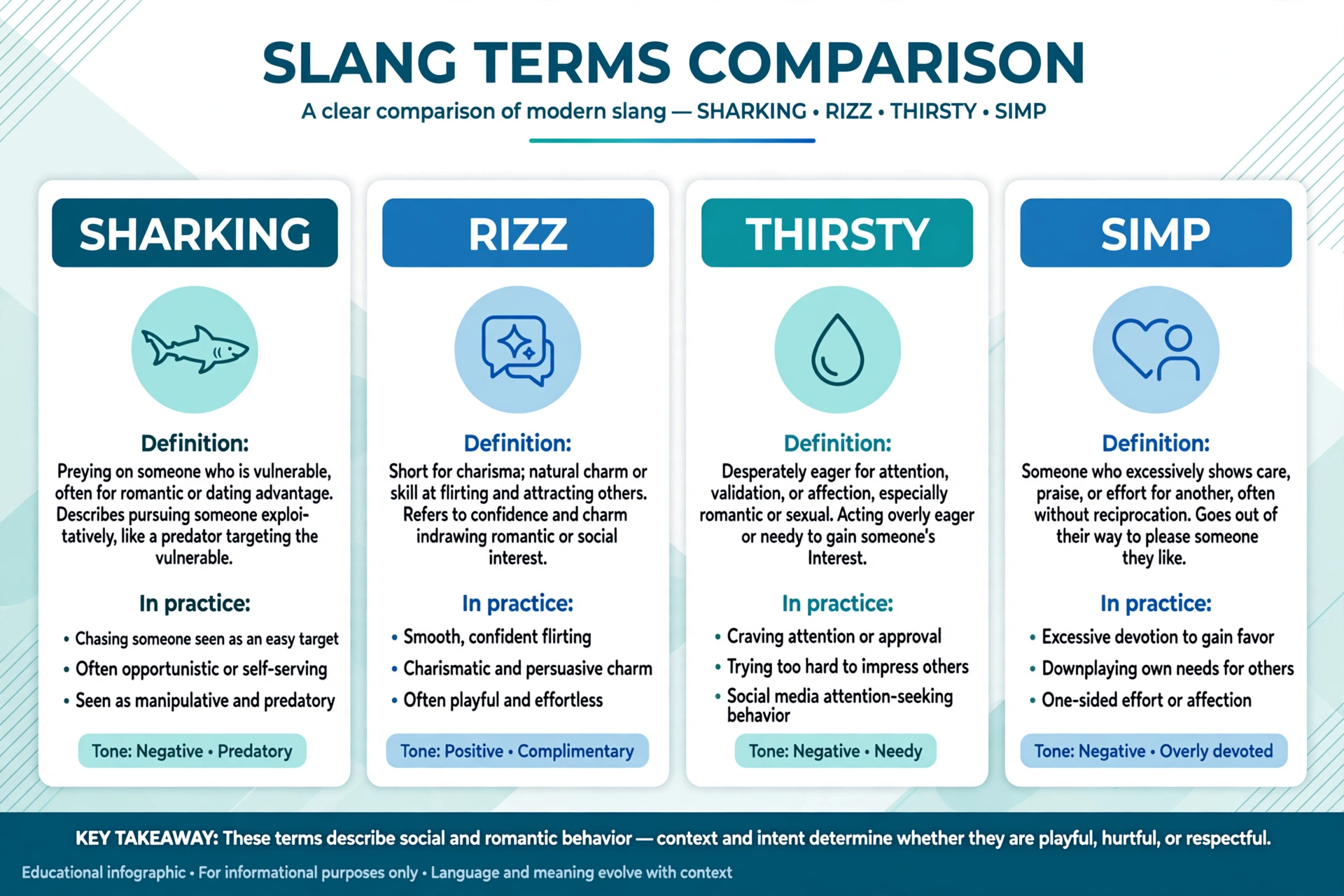
Sharking sits in a crowded family of slang words about attraction, confidence, and pursuit. The differences are subtle but important — using the wrong one can change the meaning of your sentence completely.
Sharking vs. rizz. Rizz is charm: the ability to attract someone smoothly, with words, humour, or confidence. Sharking is pursuit: the act of going after someone, often aggressively. A person with rizz does not need to shark — people come to them. A person who is sharking may have no rizz at all; they are trying hard, and everyone can see it. Rizz is a compliment. Sharking is a description, and sometimes a warning.
Sharking vs. thirsty. Thirsty means desperate for attention, affection, or validation — usually in a way that is obvious and a bit sad. Sharking can look thirsty, but it is more active: a thirsty person might double-text someone all day, while a sharking person is out in the world circling for a target. Thirsty is about need. Sharking is about the hunt.
Sharking vs. simp. A simp is someone who does too much for a person they like, often without getting anything back — buying gifts, sending money, always being available. Sharking is the opposite energy: the shark takes, the simp gives. Both words are judgemental, but they judge different things.
Sharking vs. creeping. Creeping means watching or following someone quietly, often in a way that feels invasive — checking someone’s profile repeatedly, showing up where they are. Sharking is louder and more direct. A shark approaches; a creep lurks. If someone’s behaviour feels secretive or stalker-like, “creeping” is the more accurate word.
Sharking vs. mack / player. A “mack” or a “player” is someone who is smooth with many partners and proud of it. Sharking is the action; player is the identity. You can shark without being a player (one nervous attempt at a party still counts), and a player might not need to shark at all.
| Term | Core meaning | Tone | Main difference from sharking |
|---|---|---|---|
| Sharking | Aggressively pursuing someone like prey | Bold / predatory | — |
| Rizz | Natural charm and flirting skill | Positive | Charm, not pursuit — no hunting involved |
| Thirsty | Desperate for attention or affection | Mocking | About need, not the hunt |
| Simp | Overdoing things for someone you like | Mocking | Giving too much, not taking |
| Creeping | Quietly watching or following someone | Negative | Secretive and passive, not direct |
| Player / Mack | Smooth with many romantic partners | Boastful | An identity, not a single action |
| Sliding into DMs | Messaging someone privately to flirt | Neutral / playful | Online only; one move, not a whole hunt |
Alternate Meanings
Sharking is not only a dating word. The same root — the predatory, opportunistic shark — gives the word several other meanings, and the context tells you which one is in play.
Pool and billiards. In pool halls, “sharking” means hustling: pretending to be a weak player, distracting your opponent, or talking them into a bet they will lose. A “pool shark” is the person who does this professionally. If someone says “he sharked me at pool”, they mean they were tricked out of their money by a better player in disguise — not that anyone was flirting.
Card games and gambling. A “card shark” is a skilled or cheating card player, and “sharking” at the table means using deception or superior skill to take other players’ money. This is one of the oldest uses of the word, going back to the 19th century.
Loan sharking. A “loan shark” lends money at extremely high interest rates and uses threats or aggressive tactics to collect. “Sharking” in this context means predatory lending itself. It has nothing to do with dating and everything to do with exploitation.
Fishing. The literal meaning is still alive: “sharking” can simply mean fishing for sharks, as a sport or for food. Deep-sea anglers talk about going sharking the way others talk about going fishing. If the sentence is about boats, bait, and the ocean, this is the meaning.
Business and competition. In offices and markets, sharking describes aggressive, opportunistic behaviour — a company circling a struggling rival, a salesperson poaching clients, a negotiator pressing every advantage. The metaphor is the same, but the “prey” is a deal, not a date.
Gaming. In gaming communities, a “shark” is a highly skilled player who dominates weaker opponents, and “sharking” means farming easy wins — joining beginner lobbies, smurfing, or exploiting less experienced players for rank or rewards. Teen chat apps and gaming servers helped spread this use in the late 2010s.
Professional or Polite Alternatives
Sharking is casual slang with a predatory edge, so it does not belong in formal writing, work messages, or polite conversation. When you need the same idea without the slang, these alternatives work better — and they avoid implying anything about the other person’s vulnerability.
| Instead of saying | Say this | When to use it |
|---|---|---|
| “He’s sharking all summer.” | “He’s actively looking to meet someone.” | Describing a friend’s dating plans politely. |
| “Stop sharking, it’s weird.” | “Please respect people’s boundaries.” | Calling out pushy behaviour directly and kindly. |
| “She was sharking at the event.” | “She was networking confidently all evening.” | Work or formal events (if the intent was professional). |
| “The firm is sharking our clients.” | “The firm is aggressively pursuing our clients.” | Business writing and meetings. |
| “Don’t go sharking freshers.” | “Don’t target first-year students.” | University guidance, consent workshops, official notices. |
The general rule is simple: if the sentence is about dating, say “pursuing”, “approaching”, or “trying to meet someone”. If it is about business, say “aggressively competing” or “pursuing”. And if the behaviour you are describing is actually harmful — pressuring someone, ignoring a “no”, or exploiting inexperience — name it plainly. Slang softens things; plain language does not, and sometimes that is exactly what is needed.
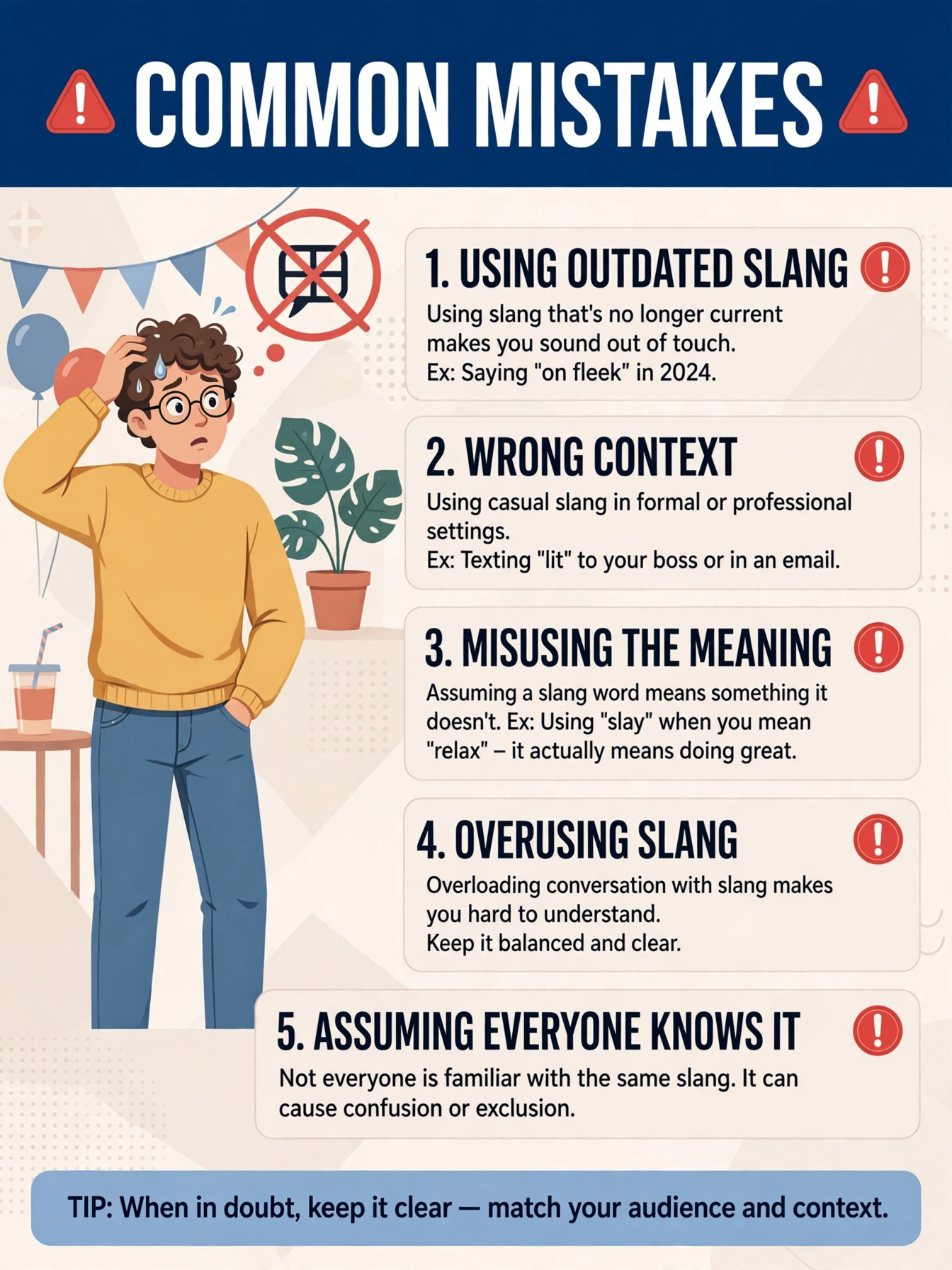
Common Mistakes
Sharking is easy to use wrong, because the word changes meaning with the room. These are the mistakes people make most often.
1. Using it as a compliment when it is not one. Calling someone a shark can sound like praise for confidence, but the word carries a predatory meaning. If you mean “confident and charming”, say “rizz” or “smooth”. Sharking suggests the other person is prey, and not everyone wants to hear that.
2. Confusing the joke with the serious meaning. “Sharking all summer” as a TikTok joke is harmless. “Sharking” as a description of older students pursuing freshers is a serious concern about consent and power. Using the joke tone in a serious conversation — or the serious tone in a joke — makes you sound tone-deaf. Read the room first.
3. Assuming it is only about dating. People also use sharking for pool hustling, card games, business, and gaming. If a friend says “he sharked me”, ask what happened before you assume it was about a date — they may have lost fifty pounds at the pool table.
4. Using it at work. The dating sense of sharking has no place in a professional setting, and the business sense (“sharking for clients”) can sound unprofessional too. In emails and meetings, use “pursuing”, “competing”, or “prospecting” instead.
5. Calling friendly behaviour sharking. Someone being outgoing, chatty, or friendly at a party is not automatically sharking. The word implies intent — active pursuit with a goal. Labelling normal social behaviour as sharking is unfair and can damage someone’s reputation.
6. Ignoring consent in the conversation. The biggest mistake is treating sharking as a strategy rather than a description. If you are the one doing the pursuing, the goal is a genuine connection, not a conquest. If the other person is not interested, the shark metaphor stops being funny and starts being a problem. Respect a “no” the first time.
For a related example of how slang can shift meaning with context, see our guide to CFS meaning in text — another term where the letters alone tell you almost nothing without the situation around them.
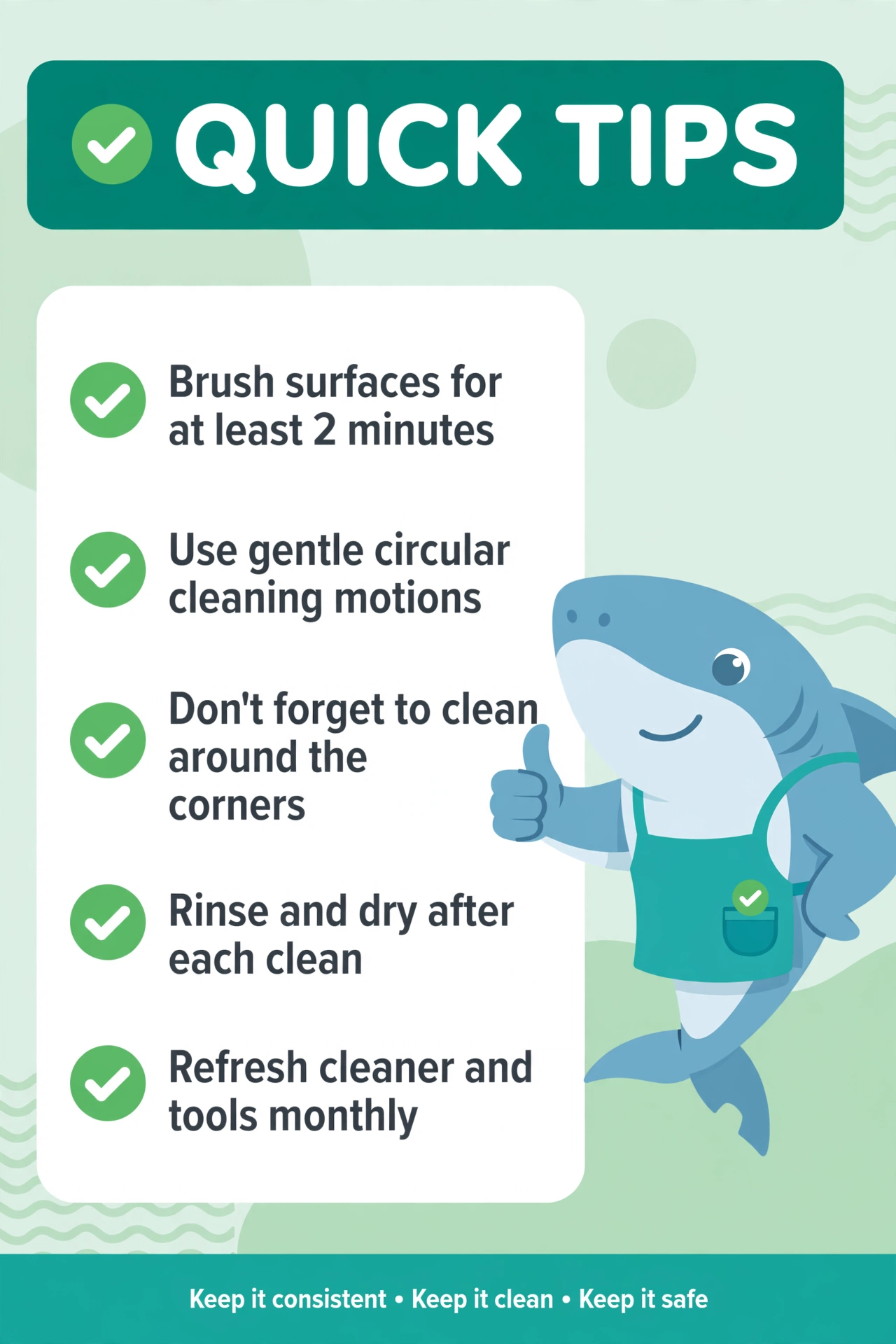
Quick Tips
- Check the context before you use it. TikTok joke, party description, or campus warning — the same word means three different things. Make sure your audience knows which one you mean.
- Keep it between friends. Sharking is informal slang. Use it in group chats, captions, and casual conversation — not in emails, essays, or formal messages.
- Do not use it to describe someone without their consent. Calling a real person a “shark” in public can embarrass them or imply things they did not do. When in doubt, keep the joke about yourself.
- Pair it with the shark emoji (🦈) in captions. On TikTok and Instagram, the emoji does half the work — it signals the joke instantly and keeps the tone light.
- Know the difference from rizz. Rizz is charm; sharking is pursuit. If someone is smooth and effortless, that is rizz. If they are working hard to get someone’s attention, that is sharking.
- Respect boundaries, always. The moment someone says no, walks away, or looks uncomfortable, the interaction is over. Confident pursuit and pushy behaviour are not the same thing.
- Learn the campus meaning if you are going to university. At UK universities especially, knowing what sharking means — and why people take it seriously — helps you look out for yourself and your friends during freshers’ week.
- Use it sparingly. Like all slang, sharking is funniest when it is fresh. Overusing it in every caption makes the joke go stale fast.
FAQ
What does sharking mean in slang?
In slang, sharking means aggressively pursuing someone romantically or sexually, like a shark circling its prey. It describes someone who is actively on the hunt for a date or a hookup — scanning the room, approaching people, and moving in when they see an opening. On TikTok, “sharking all summer” is also a joke about being single and ready to meet people.
Is sharking a good or bad thing?
It depends on the context. As a TikTok joke between friends, it is playful and self-deprecating. As a description of real behaviour, it is usually negative — it implies someone is being pushy, opportunistic, or predatory. In UK university slang, where it means an older student pursuing a fresher, it is treated as a serious concern about consent and power imbalance.
Where did “sharking all summer” come from?
The phrase was popularised by rapper and YouTuber Jay Cinco in May 2024, when he described men looking for women as “sharking”. It went viral again in March 2025 when TikToker @7khunna posted a video in a Left Shark costume dancing to “Whim Whamiee” by Pluto and YK Niece, and “sharking all summer” became the season’s catchphrase.
What is sharking at university?
At UK universities, sharking is slang for an older student (usually second- or third-year) deliberately pursuing first-year students, known as freshers. Because freshers are new, young, and often away from home for the first time, the practice is controversial — student newspapers and consent campaigns treat it as an example of a power imbalance, not just a joke.
What is the difference between sharking and rizz?
Rizz is charm — the natural ability to attract someone with words, humour, or confidence. Sharking is pursuit — the active, often aggressive act of going after someone. A person with rizz does not need to shark, and a person who is sharking may have no rizz at all. Rizz is almost always a compliment; sharking is a description that can be critical.
Does sharking mean the same thing in pool and card games?
Not exactly, but the idea is related. In pool and card games, a “shark” is a hustler — someone who hides their real skill or uses deception to win money from weaker players. “Sharking” there means hustling. The dating sense borrows the same predator metaphor but applies it to pursuing people instead of winning games.
Is sharking the same as being thirsty?
No. Thirsty means desperate for attention or affection in an obvious, needy way. Sharking is more active and confident — the shark is hunting, not begging. A thirsty person might double-text all day; a sharking person is out at a party circling the room. The two can overlap, but they describe different energies.
Can girls be sharks too?
Yes. Although the TikTok trend and the university discussion usually describe men pursuing women, anyone can shark — the word describes the behaviour, not the gender. Women, men, and non-binary people can all be described as sharking when they are confidently and aggressively pursuing someone, and the joke versions of the meme are used by everyone.
Conclusion
Sharking meaning slang is simple on the surface and complicated underneath. At its core, it means pursuing someone the way a shark pursues prey — confidently, relentlessly, and with a clear target. On TikTok, that idea became “sharking all summer”, a funny, self-aware joke about being single and ready to meet people. On UK campuses, the same word names a real pattern with real consequences, where experience and power are used to pursue people who are still finding their feet. And in pool halls, card games, and boardrooms, it has meant hustling and aggressive competition for more than a century.
The key takeaway is context. The word is playful in a group chat, descriptive at a party, and serious in a conversation about consent. Before you use it — or before you laugh at it — ask who is being described and how they would feel about the label. Slang is at its best when it helps people understand each other, and at its worst when it hides behaviour that should be named plainly.
If you enjoyed this guide, keep exploring the slang that shapes your feed. Our breakdown of glizzy meaning covers another word that jumped from niche slang to mainstream in record time, and our guide to TYSM meaning explains one of the most common abbreviations you will see in the same group chats where sharking shows up. The more of these words you know, the less time you spend guessing — and the more time you spend actually enjoying the conversation.
