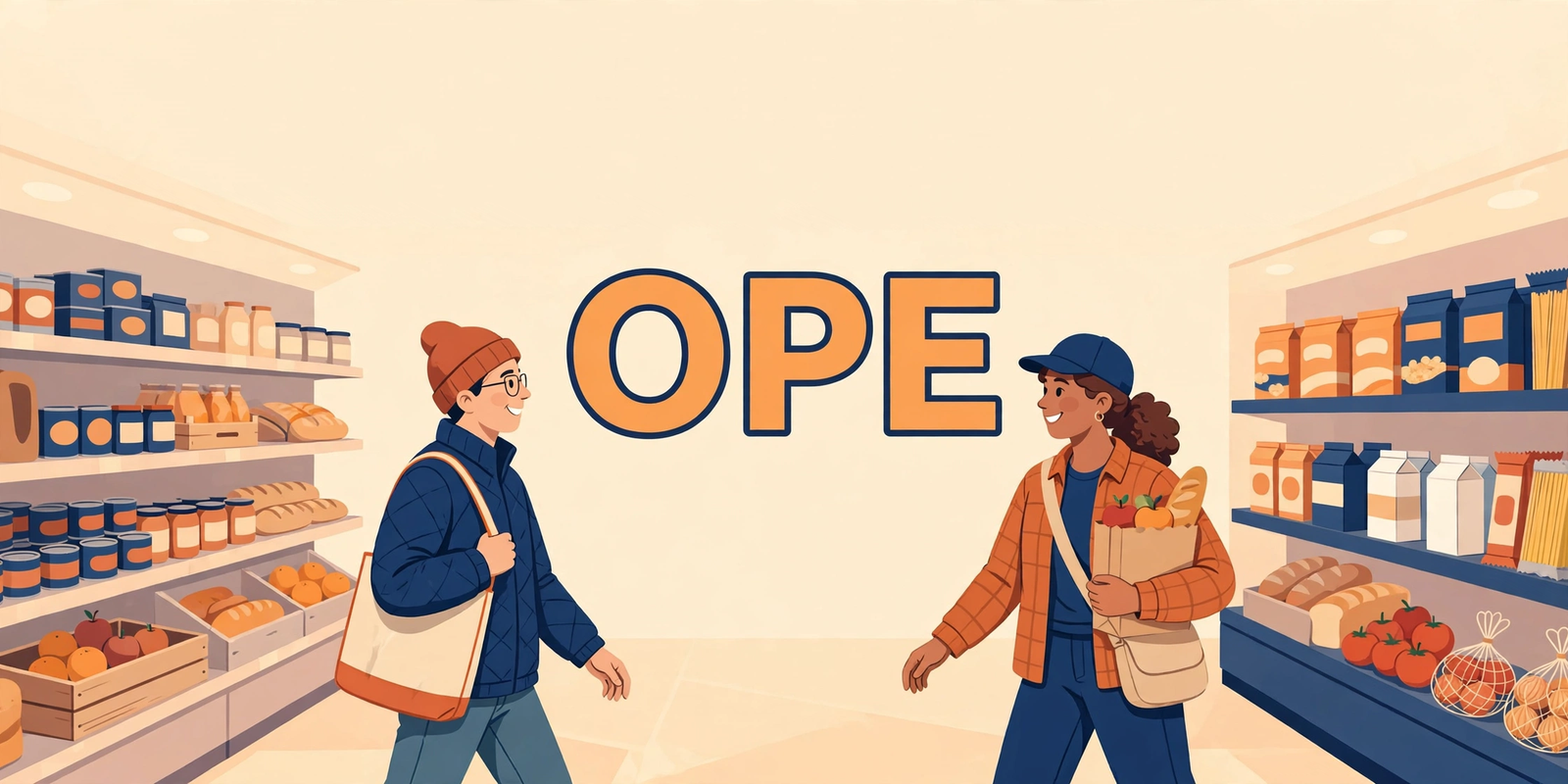
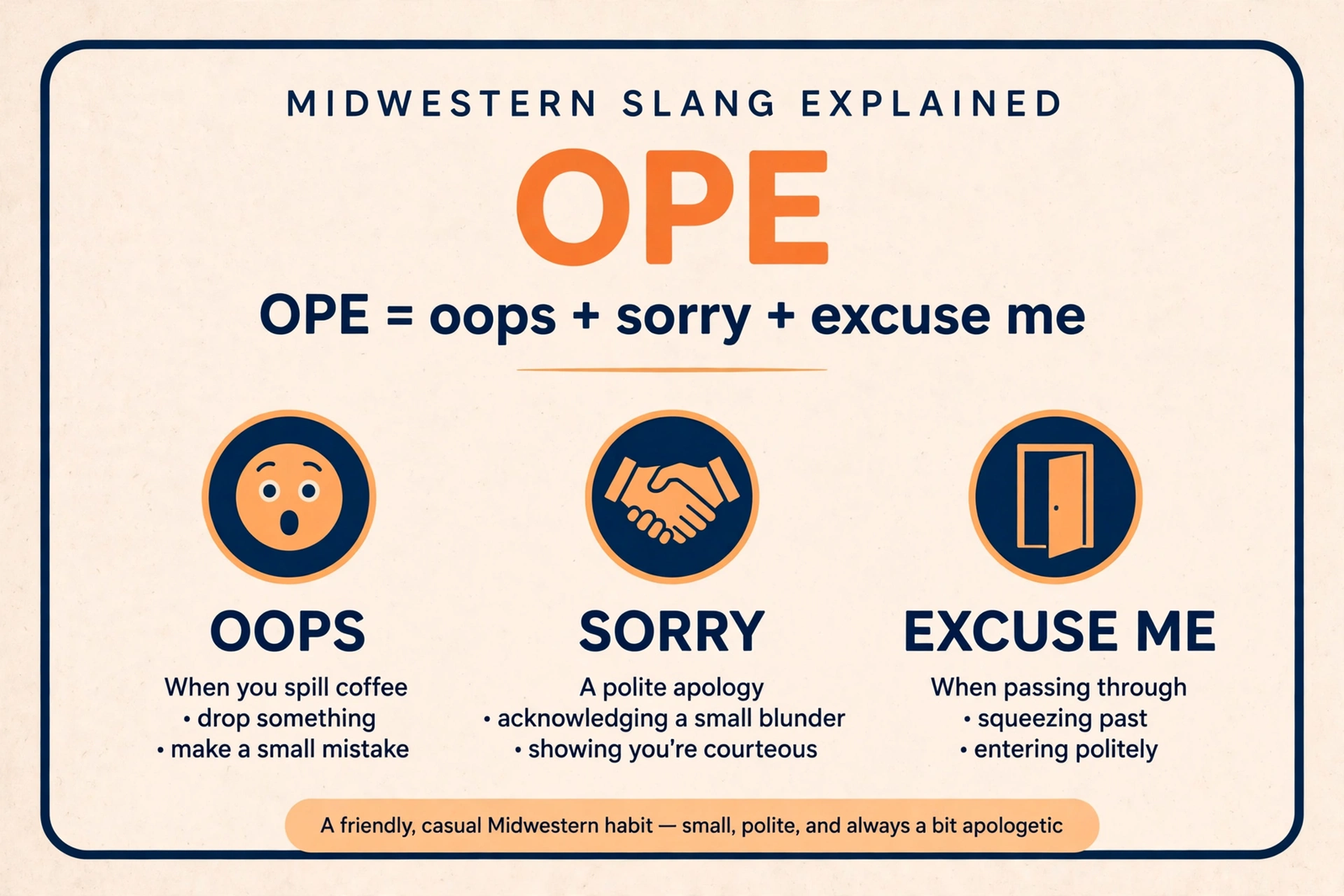
Quick definition: Ope is a Midwestern American slang interjection that means “oops,” “sorry,” or “excuse me” all at once. People say it when they bump into someone, squeeze past a stranger, drop something, or get mildly surprised. The ope meaning slang is simple on the surface — a polite little sound — but it carries a whole culture of friendliness behind it.
Ope Meaning Slang Meaning & Definition
So, what does ope actually mean? In the simplest terms, ope is an exclamation of mild surprise, apology, or acknowledgment, most strongly associated with the American Midwest. If someone says “ope” after brushing past you in a grocery store aisle, they are really saying: “I noticed you, I’m sorry for the tiny intrusion, and I mean no bother at all.”
Linguists describe ope as a discourse marker — a small sound that fills a gap in conversation and smooths over a social moment. It is pronounced “ohp” (rhymes with “hope” minus the “h” sound at the start, or close to “soap” without the “s”). The word is so short that many Midwesterners say it without even realizing it. Ask someone from Minnesota or Wisconsin what they say when they almost walk into a stranger, and the answer is almost always the same: “Ope, sorry!”
The ope meaning slang is famously elastic. Depending on tone and context, it can mean “oops,” “excuse me,” “pardon me,” “whoa,” “oh no,” or even “well, look at that.” Chicago Magazine once called it “the all-purpose expression of Midwestern politeness,” and that is exactly right. It is a single syllable that does the social work of an entire sentence.
Here is the key thing to understand: ope is not a typo, not a misspelling of “hope” or “open,” and not an abbreviation. It is a real, living piece of American regional speech that has now gone national thanks to memes, TikTok, and television. If you have ever wondered what does ope mean in text, the answer is the same as in speech — a quick, friendly “oops, my bad” that keeps things light.
Introduction
Picture this: you are walking down a supermarket aisle in Minneapolis, reaching for a box of cereal, when a stranger reaches for the same shelf at the same moment. Before either of you can say “excuse me,” a sound escapes: “Ope!” Nobody is offended. Nobody even blinks. In fact, the other person probably answers with an “ope” of their own, and you both move on smiling.
That tiny moment is the whole story of ope. It is the sound of Midwestern nice — a region famous for politeness, neighborliness, and apologizing to furniture when you bump into it. For decades, ope lived quietly in Wisconsin, Minnesota, Michigan, Illinois, and the surrounding states. Then the internet found it. Memes celebrating “Midwest nice” turned ope into a cultural mascot, and suddenly everyone from California to New York was asking what it meant.
In this guide, you will learn the full ope meaning slang story: where the word came from, how to use it naturally in texts and real-life conversations, how it compares to similar words like “oops” and “whoops,” the mistakes people make with it, and the polite alternatives you can use when ope does not fit. By the end, you will not only understand ope — you will know exactly when to drop it yourself.
Whether you heard it in a TikTok, read it in a comment, or got it as a reply from a Midwestern friend, this article has you covered. And if you enjoy decoding everyday internet words, you may also like our guides to fn meaning in text and hbu meaning in chat — two more short slang terms that confuse people every day.
Origin
The precise origin of ope is one of the great unsolved mysteries of American English. Linguists have studied it for years and still cannot point to a single source — which is part of what makes it so fascinating.
The most widely repeated theory is that ope is a shortened, softened form of “oops.” Ben Zimmer, a linguist who has written about the word, has argued that ope likely grew out of “oops,” with the “s” sound dropped and the vowel flattened into the short, gentle “ohp.” That fits the way the words are used: both mark a small accident. But Midwesterners themselves insist the two words are not interchangeable. “Oops” announces a mistake; “ope” apologizes for existing in your space for half a second.
Another theory looks further back. The word “ope” appears in Middle English as a shortened form of “open,” and some have suggested the modern interjection may be an old survival. Most linguists are skeptical of that link, though — the gap between medieval poetry and a Minnesota grocery store is very large, and there is no written trail connecting them.
A third idea connects ope to the region’s immigrant history. The Upper Midwest was settled heavily by Norwegian, Swedish, and German immigrants in the 19th century, and some researchers have suggested that Scandinavian speech patterns helped shape the sound. Betsy Sneller, co-director of Michigan State University’s Sociolinguistics Lab, has noted that ope “has been a feature of Midwest speech longer than Midwest speech has been analyzed.” In other words, it is old — older than anyone can prove.
There is also a neat phonetic explanation. Linguist Grant Barrett has argued that ope may not be a “word” in the usual sense at all, but a vocalization produced by the physical mechanics of speech — the sound your mouth makes when you abruptly stop exhaling because something startled you. That would explain why similar sounds pop up in Canada, the United Kingdom, and elsewhere, even though only the Midwest turned it into a cultural signature.
What we do know for certain is the timeline of its fame. Ope started gaining national attention around 2017, when articles and memes celebrating Midwestern culture went viral. It got another huge boost during the 2024 U.S. presidential election, when Minnesota Governor Tim Walz — the Democratic vice-presidential nominee — used the word spontaneously at a campaign rally in Eau Claire, Wisconsin, and the clip spread everywhere. Overnight, a regional quirk became a national talking point.
Popularity
Today, ope is everywhere. It shows up in TikTok skits about Midwestern moms, in “things only Midwesterners say” listicles, on T-shirts and coffee mugs, and in comment sections whenever someone from the region apologizes for something that was not their fault. Social media did for ope what it did for so many slang terms: it took a local habit and gave it a global audience.
Search interest in the ope meaning slang has climbed steadily since 2017, with sharp spikes whenever a celebrity or politician says it on camera. The 2024 election moment was the biggest yet, but the word’s popularity is not just a news-cycle blip. It has staying power because it is genuinely useful — English has surprisingly few words for “I acknowledge this tiny awkward moment and I am handling it politely,” and ope fills that gap in a single syllable.
Part of the appeal is the identity behind it. “Midwest nice” is a real cultural brand: friendly neighbors, casserole dishes, waving at strangers, and apologizing when someone else bumps into you. Ope is the sound of that brand. Saying it signals warmth, humility, and good manners, which is why people outside the Midwest have started adopting it as a joke — and then, often, for real.
It is also worth noting that ope is not limited to one age group. Teenagers use it ironically in texts, parents use it sincerely in stores, and grandparents have used it their whole lives without ever thinking about it. Few slang words cross generations that cleanly. According to Merriam-Webster, ope is used in contexts where “excuse me,” “sorry,” and “oops” are used, and it is associated especially with Minnesota, Wisconsin, Michigan, and Illinois — but claimed by folks across the Upper Midwest and Great Lakes region.
On TikTok and Instagram, ope appears in two main ways: sincere usage in slice-of-life videos (“POV: you’re a Midwesterner and someone walks in front of your cart — ope!”) and exaggerated comedy sketches where a character says “ope” twenty times in a minute. Both keep the word in front of millions of viewers, which is why you are probably reading this article in the first place.
How It Is Used
Ope is almost always used as a standalone interjection, usually at the very start of a sentence or as a complete utterance by itself. It is rarely part of a longer sentence, and it almost never appears in formal writing. Here are the main situations where it shows up:
- Minor collisions: You bump shoulders with a stranger in a hallway. “Ope, sorry about that!”
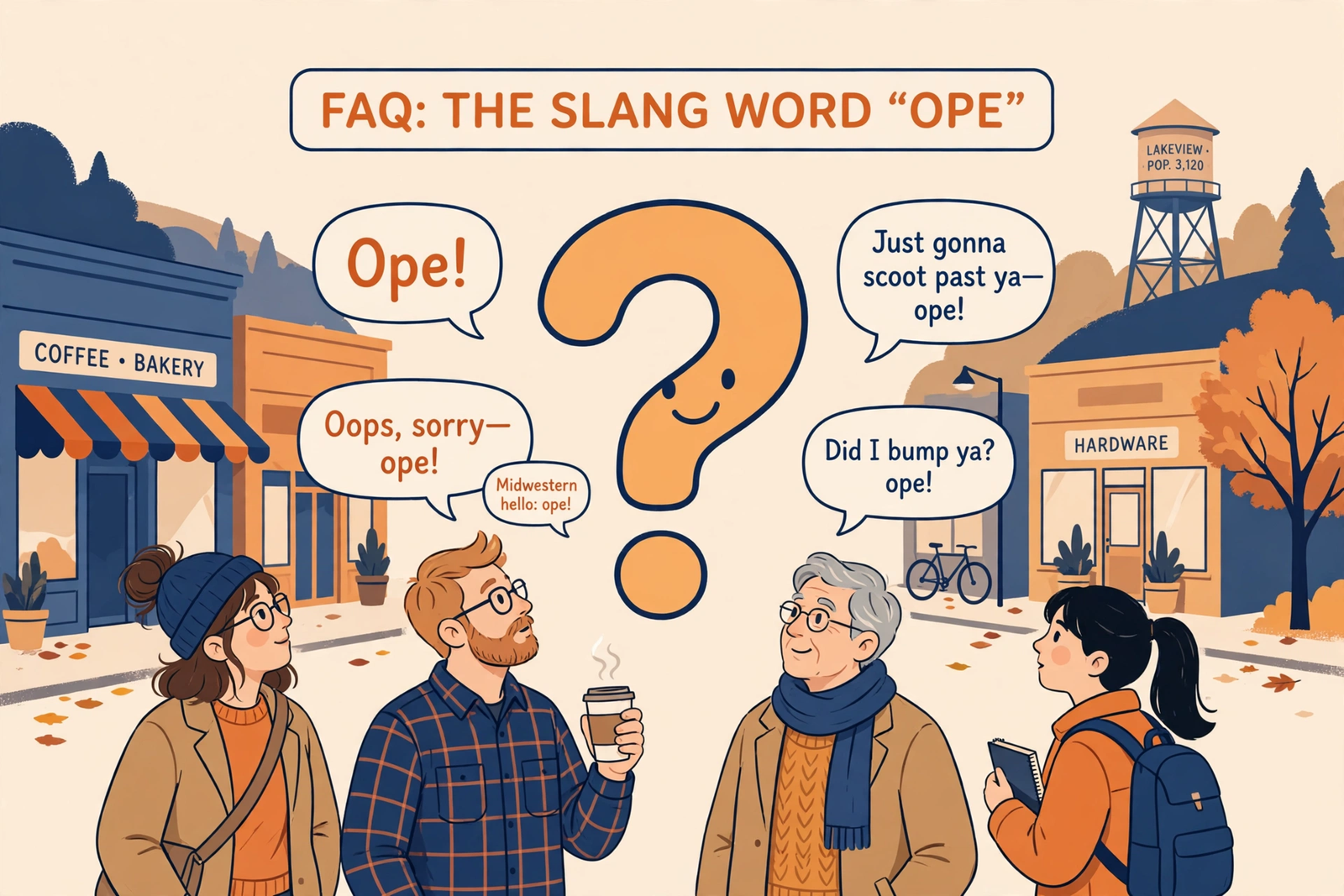
- Squeezing past someone: You need to get by in a crowded aisle. “Ope, just gonna sneak past ya.”
- Reaching across someone: You grab an item on a shelf over someone’s cart. “Ope, excuse me, just reaching for this.”
- Small accidents: You knock over a cup, drop your keys, or almost trip. “Ope! Almost lost that one.”
- Mild surprise: You notice something unexpected, like sunshine in December. “Ope, it’s actually nice out today.”
- Interrupting politely: You need to cut into a conversation. “Ope, sorry to jump in here — quick question.”
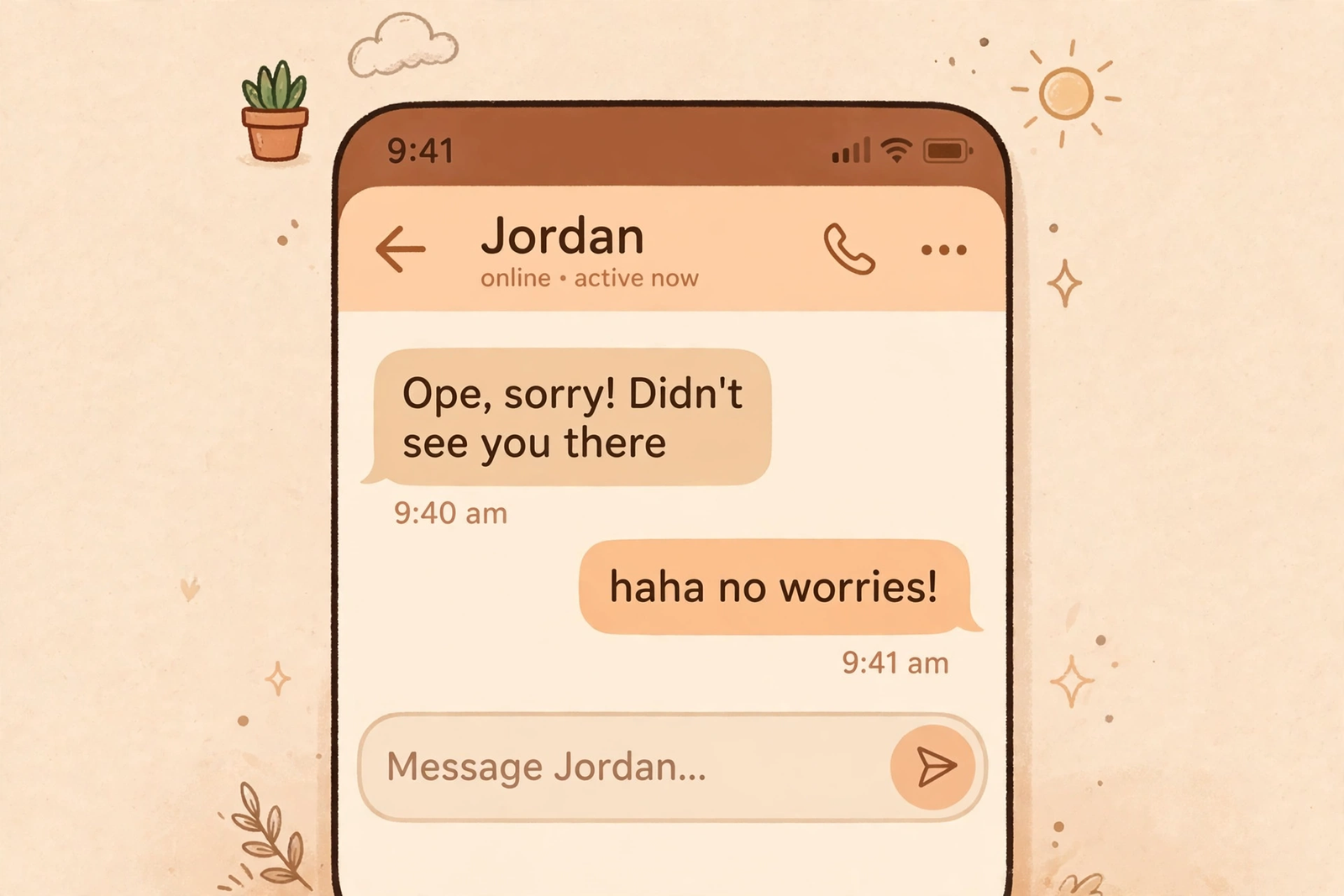
- In texting: Reacting to a clumsy moment or a funny fail in a chat. “ope 😅 I just sent that to the wrong group chat.”
Notice the pattern: ope always softens the moment. It tells the other person, “I know this was a tiny imposition, and I am handling it with good humor.” That is why it pairs so naturally with a quick apology — “ope, sorry” is probably the most Midwestern two-word phrase in existence.
In texting and social media, ope works the same way. It is casual, lowercase, and often followed by an emoji like 😅 or 🙈. It can stand alone as a reply (“ope”), or open a longer message (“ope, my bad, I totally forgot”). Because it is so short, it is perfect for fast-paced chats — just like other tiny slang words we have covered, such as imk meaning in text.
One more usage worth knowing: ope can carry a hint of cheerful surprise, not just apology. Linguist Betsy Sneller has pointed out that it is not always about a mistake — sometimes it simply marks a pleasant discovery, as in “Ope, it’s sunny in December.” Context and tone do the heavy lifting, and that flexibility is a big part of the word’s charm.
Examples
The best way to understand ope is to see it in action. Here are real-world examples grouped by tone, so you can match the right version to your situation.
Friendly Examples
- “Ope, didn’t see you there — sorry about that!” (bumping into a neighbor at the store)
- “Ope, let me just squeeze past ya real quick.” (getting through a crowded aisle)
- “Ope! I almost forgot my keys. Be right back!” (catching yourself before leaving the house)
- “Ope, sorry, I didn’t mean to step on your toes — literally!” (dancing at a wedding)
- “Ope, my bad — I totally meant to text you back yesterday.” (friendly apology in a chat)
Professional Examples
- “Ope, sorry to interrupt — I just wanted to add one quick point.” (speaking up in a meeting)
- “Ope, excuse me — I’ll just grab my laptop from the conference room.” (passing a coworker in a tight hallway)
- “Ope, I think I sent that file to the wrong person. Resending now!” (fixing a small work mistake)
- “Ope, my apologies — I didn’t realize you were on a call.” (walking into someone’s office)
A note on professional use: ope is fine in casual workplaces, especially in the Midwest, but keep it out of formal emails, client presentations, and job interviews. “Ope, sorry” works beautifully in a hallway; “I apologize for the oversight” works better in a boardroom.
Funny Examples
- “Ope, guess I’ll just die of embarrassment now. 😅” (tripping over absolutely nothing in public)
- “Ope — and there goes my coffee all over my white shirt. Classic Monday.” (a small disaster, handled with humor)
- “Ope, sorry, I didn’t mean to exist in this aisle. I’ll just evaporate now.” (the self-deprecating Midwestern classic)
- “Ope, I just apologized to a chair for bumping into it. Peak Midwest.” (yes, this really happens)
- “Ope, let me sneak right past ya there — don’t mind me, I’m basically a ghost.” (the famous “sneak past ya” line)
Comparison with Similar Terms
Ope sits in a crowded family of tiny exclamations — oops, whoops, uh-oh, excuse me, and sorry. They all live in the same neighborhood, but they are not the same house. Here is how they stack up.
| Term | Meaning | Tone | Best used when |
|---|---|---|---|
| Ope | Mild surprise, apology, or acknowledgment | Warm, polite, reflexive | Bumping into someone, squeezing past, small social friction |
| Oops | A mistake just happened | Light, casual | Dropping something, making a small error |
| Whoops | A playful version of oops | Playful, sometimes sheepish | Funny little accidents, often with kids around |
| Uh-oh | Something is wrong | Worried, alerting | A bigger problem is coming; a warning |
| Excuse me | Formal polite interruption | Polite, neutral | Any formal setting, or with strangers anywhere |
| My bad | Taking ownership of a mistake | Casual, accountable | When the mistake was clearly yours |
| Sorry | Apology | Sincere, direct | When a real apology is owed |
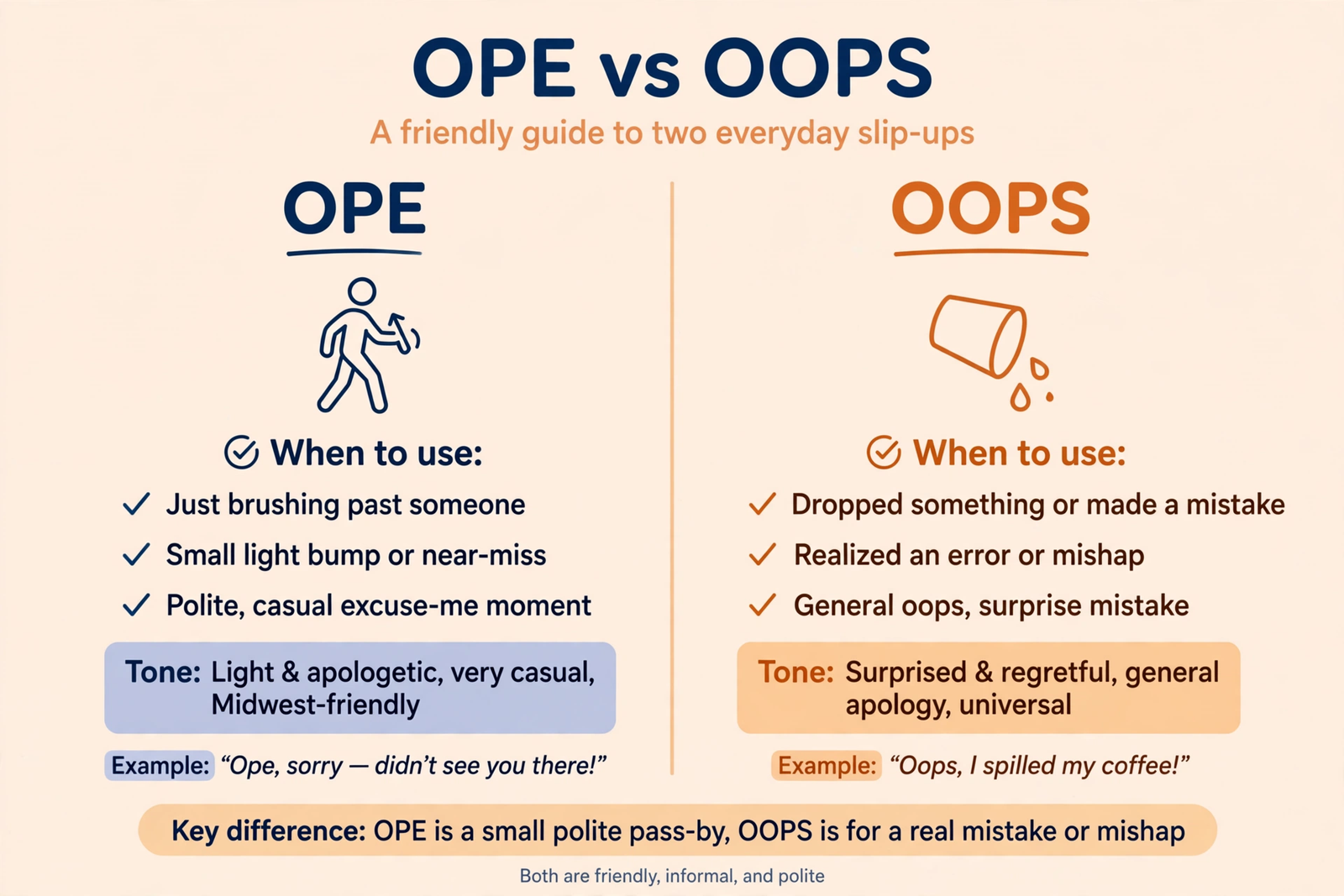
The key difference between ope and oops is the social layer. “Oops” points at the accident; “ope” points at the other person. Oops says “something went wrong.” Ope says “something went wrong, and I care about how it affected you.” That is why a Midwesterner who drops a pen alone in an empty room might say “oops,” but the same person who bumps a stranger’s cart will say “ope.” The presence of another human flips the switch.
Compared with “excuse me,” ope is faster, warmer, and far less formal. “Excuse me” can sound stiff or even annoyed depending on tone; ope almost never does. Compared with “my bad,” ope is less about blame and more about smoothing things over — you can say “ope” when nobody did anything wrong at all.
If you are learning American slang, it helps to know the whole family. For instance, the difference between ope and oops is a bit like the difference between mhm meaning in text and a plain “yes” — the words overlap, but the vibe is completely different.
Alternate Meanings
Most of the time, ope means the Midwestern interjection described above. But the word has a few other lives worth knowing about, so you are never caught off guard.
- Archaic verb — “to open”: In old and poetic English, “ope” was a shortened form of “open” — as in Shakespeare’s “ope their ruby lips.” You will only meet this version in literature, not in a group chat.
- Old Persian (abbreviation): In linguistics and coding contexts, “OPE” was once the ISO 639-3 code for Old Persian. Extremely niche, and almost never what someone means in conversation.
- Operations (Philippine slang): In the Philippines, “ope” is sometimes used as a clipping of “operations” in organizational contexts. Again, very context-specific.
- A name or username: Some people use “Ope” as a nickname or handle online, usually because they like the word or are from the Midwest.
- Typo territory: Occasionally “ope” in a text is just a typo for “hope,” “open,” or “one.” If the sentence does not make sense as an interjection, check the context — your friend may have just typed too fast.
In everyday American conversation, though, the interjection is the meaning that matters. If someone from Wisconsin texts you “ope,” they are not quoting Shakespeare — they just bumped into something.
Professional or Polite Alternatives
Ope is charming, but it is not right for every room. Here are polished alternatives for situations where a little more formality is expected.
| Situation | Instead of “ope” | Say this |
|---|---|---|
| Formal meeting | “Ope, sorry to jump in” | “Pardon me, may I add a brief point?” |
| Client email | “Ope, wrong file!” | “My apologies — I have attached the correct file.” |
| Job interview | “Ope, I almost forgot” | “One point I would like to add is…” |
| Passing a stranger | “Ope, sneaking past ya” | “Excuse me, may I get through?” |
| Apologizing for an error | “Ope, my bad” | “I apologize for the oversight — I will correct it now.” |
| Reacting to a surprise | “Ope!” | “Oh! I was not expecting that.” |
The rule of thumb: if the setting has a dress code, skip ope. If the setting has a potluck, ope is right at home.
Common Mistakes
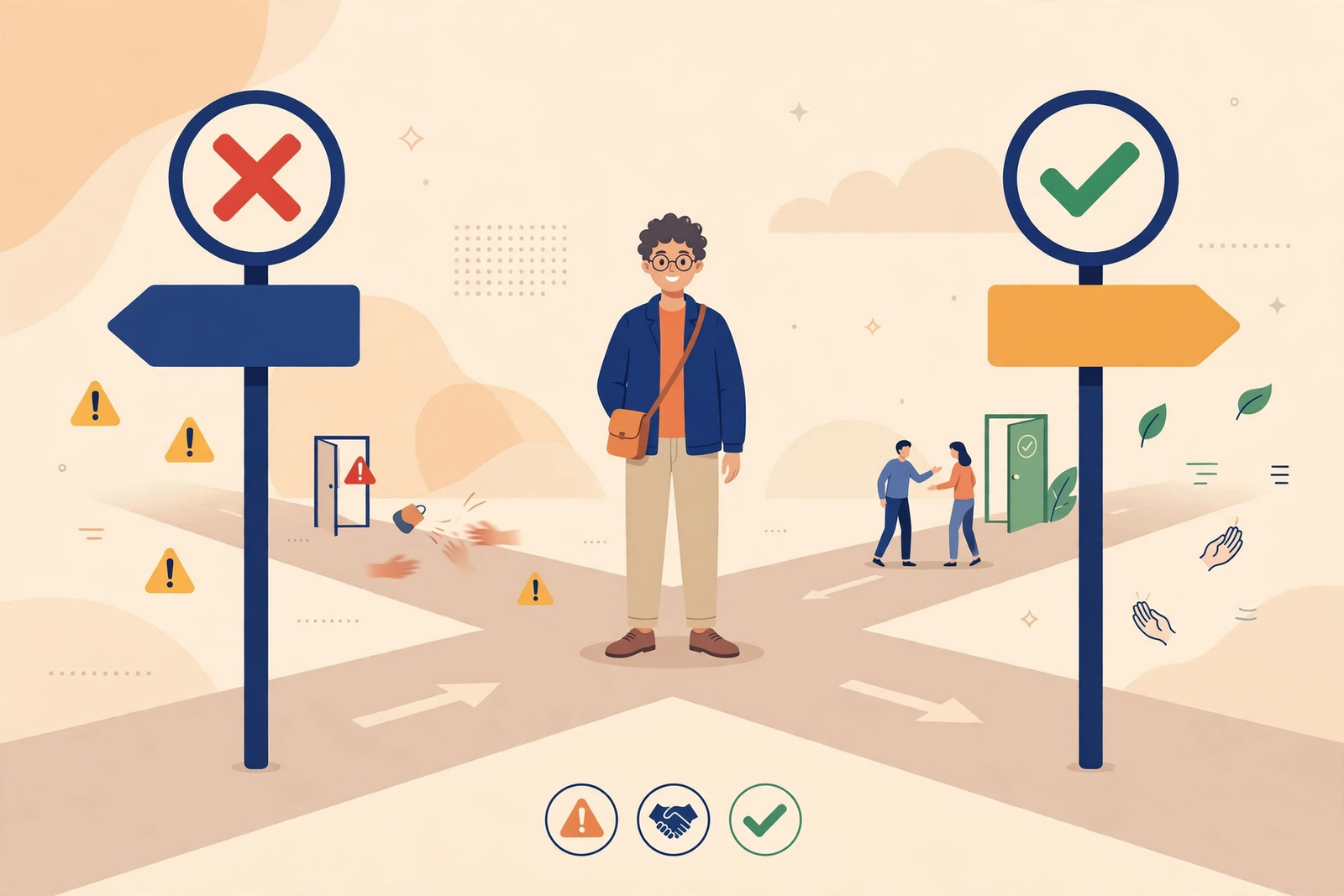
Ope is easy to use, but people still get it wrong — especially people who learned it from memes rather than from Midwesterners. Avoid these mistakes:
- Using it for big mistakes: Ope is for tiny moments. If you crash a car, spill red wine on a white couch, or miss a deadline, “ope” will sound flippant. Use a real apology instead.
- Overusing it: Saying “ope” five times in one conversation stops being charming and starts being a bit. One or two natural uses beat a performance.
- Using it sarcastically with strangers: A sarcastic “ope” can read as mocking the accent or the culture. Keep it sincere, especially outside the Midwest.
- Confusing it with “oops”: Remember — oops is about the accident, ope is about the person. Dropping your phone alone? Oops. Brushing past someone in a doorway? Ope.
- Spelling it “op” or “ohp”: The standard spelling is “ope.” “Ohp” is sometimes used to show the pronunciation, but “ope” is what you will see in writing and memes.
- Forcing the accent: Ope does not need a cartoon Midwestern accent to work. Say it in your normal voice — the word carries the warmth on its own.
- Using it in formal writing: Ope belongs in speech, texts, and casual social posts. It has no place in essays, reports, or professional emails.
Quick Tips
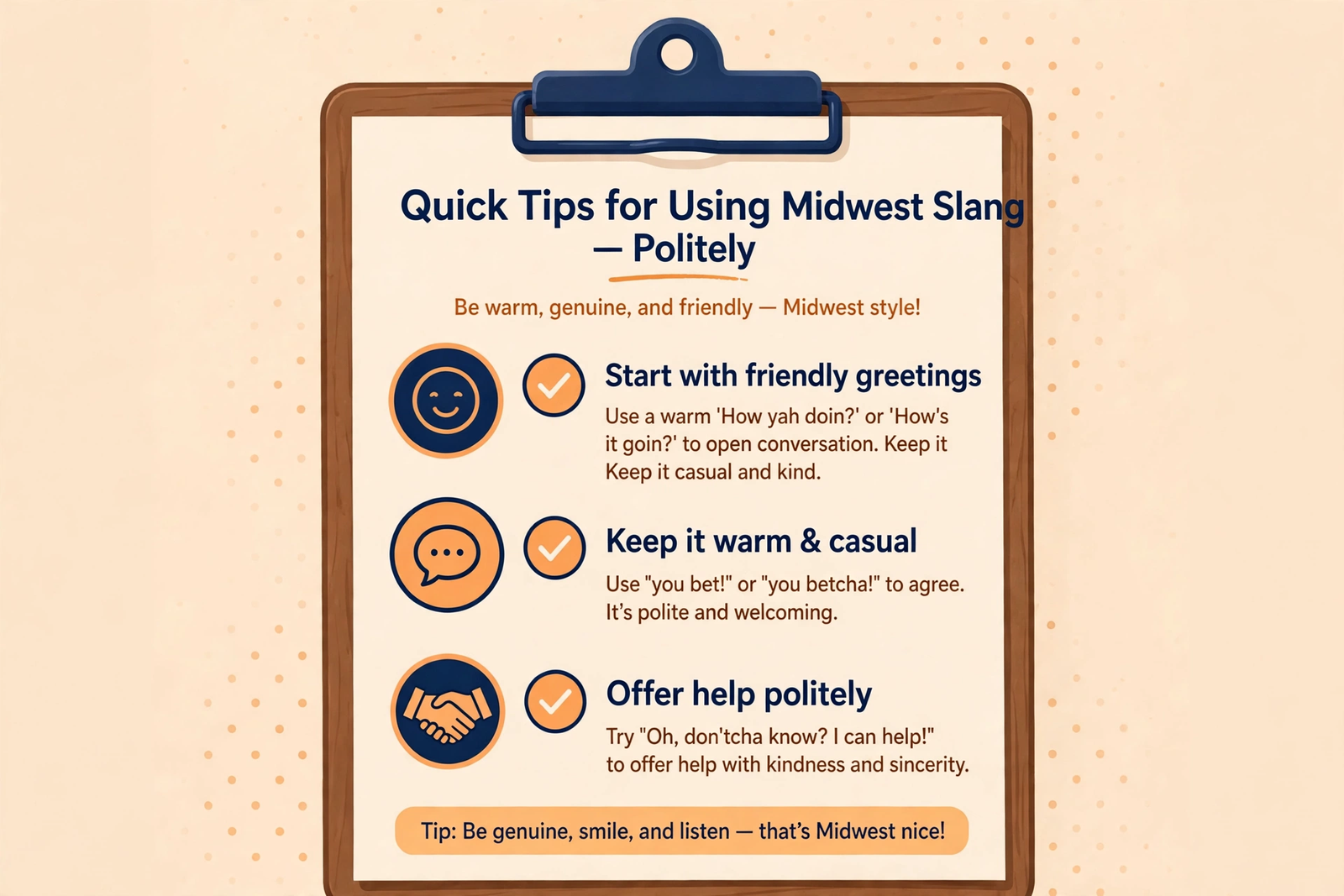
- Say it fast and soft: Ope works best as a quick, gentle sound — not a loud announcement. Think of it as a verbal speed bump, not a siren.
- Pair it with a smile: The word does half the work; your face does the rest. “Ope, sorry!” plus a smile is the full Midwestern package.
- Use it to open, not to close: Ope starts an interaction (“Ope, excuse me…”) — it rarely ends one. Follow it with what you actually need to say.
- In texts, keep it lowercase: “ope” in lowercase reads casual and natural. “OPE” in all caps reads like shouting, which is the opposite of the vibe.
- Add an emoji when texting: A 😅 or 🙈 after “ope” makes the tone obvious and keeps the message friendly.
- Listen before you copy: If you spend time with Midwesterners, you will absorb the timing naturally. It is a rhythm thing — the word lands in the half-second before the apology.
- Do not explain it: The moment you say “ope — that’s a Midwest thing, it means…” you have ruined the magic. Just say it and move on.
- Know your audience: With Midwesterners, ope is instant rapport. With everyone else, it is a fun conversation starter — either way, it works.
FAQ
1. What does ope mean in slang?
In slang, ope is a Midwestern American interjection that means “oops,” “sorry,” or “excuse me.” People say it when they bump into someone, squeeze past a stranger, drop something, or feel mildly surprised. It is a quick, polite sound that smooths over a small awkward moment.
2. Is ope a real word?
Yes — ope is a real, documented word in American English. Merriam-Webster lists it as a regionalism used in contexts where “excuse me,” “sorry,” and “oops” are used, and Wiktionary defines it as a U.S., chiefly Midwestern, exclamation of surprise. Linguists have studied it for years, even if its exact origin remains uncertain.
3. Where is ope used the most?
Ope is most common in the Upper Midwest and Great Lakes region — especially Minnesota, Wisconsin, Michigan, Illinois, Iowa, and the Dakotas. It is also heard in parts of Canada. Thanks to memes and TikTok, people across the United States now recognize it, even if they do not use it daily.
4. What is the difference between ope and oops?
Oops points at a mistake (“I dropped something”). Ope points at the other person — it is a social word that says “sorry for the tiny intrusion.” You say “oops” when you mess up alone; you say “ope” when another human is involved, even if nothing really went wrong.
5. Is ope rude or offensive?
No — ope is the opposite of rude. It is one of the politest sounds in American English. It exists specifically to be courteous in small, awkward moments. The only way it becomes rude is if you use it sarcastically to mock someone’s accent, which is a tone problem, not a word problem.
6. Can I use ope in texting?
Absolutely. Ope works perfectly in texts and DMs — usually lowercase, often with an emoji. For example: “ope 😅 just sent that to the wrong person” or “ope, my bad, I forgot!” It reads as friendly, casual, and a little bit funny.
7. Why do Midwesterners say ope so much?
It is part of the region’s culture of politeness, often called “Midwest nice.” The word lets people acknowledge tiny social frictions — brushing past someone, reaching across them, interrupting — without making a big deal of it. Over generations, it became an automatic reflex, like saying “bless you” after a sneeze.
8. How do you pronounce ope?
Ope is pronounced “ohp” — one quick syllable, rhyming with “hope” without the “h” at the start. Say it fast and soft, almost like a small puff of air. If you drag it out (“ooooppe”), you are doing it wrong.
Conclusion
Ope may be the smallest word with the biggest personality in American slang. In one syllable, it says “oops,” “sorry,” “excuse me,” “I see you,” and “no worries” — and it does it with a warmth that no other English word quite matches. That is the real ope meaning slang: not just a sound, but a tiny act of kindness, a social reflex built for crowded aisles, tight hallways, and everyday collisions.
Now you know where ope comes from, when to use it, how it differs from oops, and which mistakes to avoid. The next time someone brushes past you in a store and you hear that soft little “ope,” you will know exactly what just happened — and you might even find yourself answering with one of your own.
Want to keep decoding the internet’s shorthand? Check out our guides to fn meaning in text, hbu meaning in chat, and imk meaning in text — three more tiny terms that carry a lot more meaning than they look.
Quick recap: Ope = a Midwestern “oops + sorry + excuse me” in one syllable · pronounced “ohp” · used for tiny collisions, squeeze-pasts, and mild surprises · never formal, always friendly · when in doubt, just say “ope, sorry!” and smile.
