If you’ve been researching vision correction options beyond LASIK, you’ve probably run into the term ICL more than once. Before comparing procedures or costs, it helps to nail down the ICL Meaning Understanding clearly, because the acronym gets used loosely across clinics, forums, and marketing pages — sometimes interchangeably with terms that mean something slightly different.
ICL stands for Implantable Collamer Lens. It’s a small, permanent (but removable) lens that a surgeon places inside your eye — specifically between your iris and your natural lens — to correct refractive errors like nearsightedness and astigmatism. Unlike LASIK, which reshapes your cornea with a laser, ICL surgery adds a lens to your eye without touching or removing any existing tissue.
Grasping the full ICL Meaning Understanding matters because this procedure works fundamentally differently from laser eye surgery, and confusing the two can lead you to rule yourself out of a treatment you’d actually qualify for — or the reverse.
What ICL Actually Stands For
The letters break down like this:
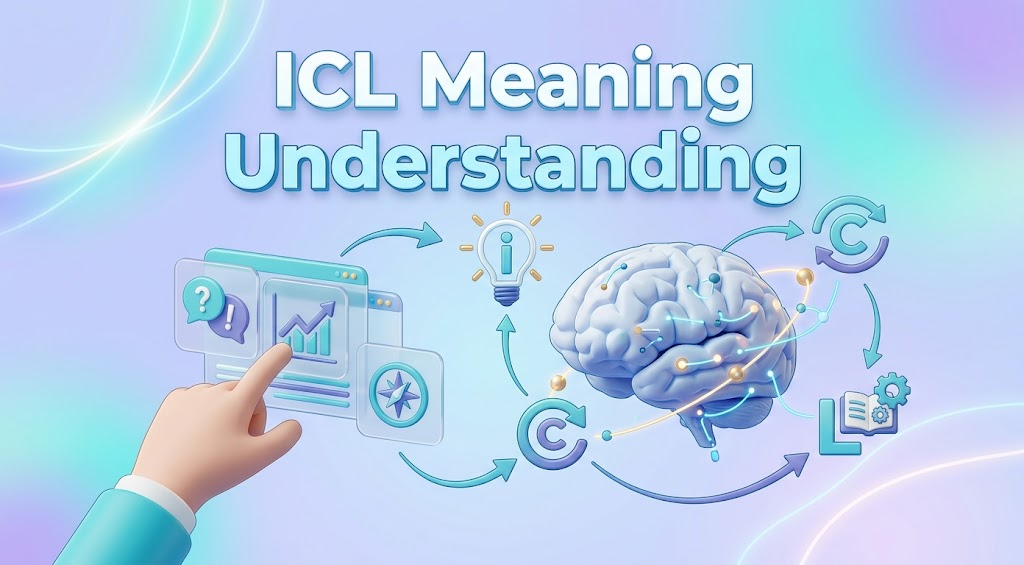
- I — Implantable (it’s surgically placed inside the eye, not worn like a contact lens)
- C — Collamer (the material the lens is made from)
- L — Lens (the corrective optic itself)
Collamer is a proprietary material developed by STAAR Surgical, made from a blend of collagen and a biocompatible polymer. It’s soft, flexible, and designed to be tolerated by eye tissue without triggering inflammation or rejection. This material is central to the ICL meaning — it’s not a hard plastic implant like the lenses used in cataract surgery. It’s foldable, which lets surgeons insert it through a very small incision.
Related Terms You’ll See Alongside ICL
Because manufacturers and clinics use several overlapping names, here’s a quick glossary so you’re not left guessing:
| Term | What It Means |
|---|---|
| ICL | Implantable Collamer Lens — the general term for the lens type |
| Visian ICL | The original brand name of the FDA-approved ICL, approved in 2005 |
| EVO ICL | The newer generation of Visian ICL, FDA-approved in 2022, with a central port (EVO) for fluid flow |
| TICL / Toric ICL | An ICL variant designed to correct astigmatism specifically |
| Phakic IOL | The broader medical category ICL belongs to — an intraocular lens implanted in an eye that still has its natural lens |
| Aphakic IOL | A different category — used in cataract surgery, where the natural lens is removed first |
Knowing these distinctions is part of understanding ICL meaning in context, since clinics will often use “EVO ICL” and “ICL” as if they’re identical, when EVO is technically the current-generation product built on the original ICL platform.
How ICL Meaning Understanding Surgery Actually Works
The mechanics behind the ICL meaning are straightforward once you see the sequence:
- Pre-surgical measurement. Your surgeon measures your eye’s anterior chamber depth, corneal thickness, and prescription to determine lens size and power.
- Anesthesia. Numbing eye drops (and often a mild oral sedative) are used — general anesthesia isn’t required.
- Incision. A small incision is made at the edge of the cornea.
- Insertion. The folded Collamer lens is guided through the incision and unfolded into position behind the iris and in front of the natural lens.
- Positioning. The surgeon confirms the lens sits centered and at the correct distance from the natural lens — this gap is called the “vault.”
- Closure. The incision is self-sealing in most cases and doesn’t require stitches.
The entire procedure typically takes 15 to 30 minutes per eye, and it’s done as an outpatient procedure — you go home the same day.
What Is “Vault” and Why It Matters
You’ll see this term come up constantly in ICL discussions, and it’s rarely explained well. Vault refers to the space between the back of the ICL and the front of your natural lens. This gap needs to fall within a specific range:
- Too low a vault increases the risk of cataract formation, because the ICL may rub against the natural lens.
- Too high a vault can crowd the angle where fluid drains from the eye, raising pressure and glaucoma risk.
Surgeons size the lens specifically to land in a safe vault range, and this measurement is checked at post-op visits.
Who Is a Candidate for ICL Meaning Understanding Surgery
Not everyone qualifies, and this is where a lot of the confusion around ICL meaning turns practical. Typical candidacy criteria include:

- Age between 21 and 45 (varies by clinic and lens type)
- Stable prescription for at least 12 months
- Moderate to high myopia (roughly -3.00 to -20.00 diopters), with or without astigmatism
- Anterior chamber depth of at least 3.00 mm
- No cataracts
- Healthy corneal endothelial cell count
- No active eye disease or uncontrolled diabetes
People who don’t qualify for LASIK due to thin corneas or high prescriptions are frequently good ICL candidates instead — this is one of the main reasons the procedure exists as a category separate from laser correction.
ICL vs. Other Vision Correction Procedures
This comparison is the piece most articles gloss over, but it’s central to understanding ICL meaning in the context of your actual decision.
| Factor | ICL | LASIK | PRK | SMILE |
|---|---|---|---|---|
| Corneal tissue removed | No | Yes | Yes | Yes (minimal) |
| Reversible | Yes | No | No | No |
| Best for high myopia | Yes | Limited | Limited | Moderate |
| Thin cornea candidates | Yes | Often disqualified | Sometimes | Sometimes |
| Recovery time | 1–3 days | 1–2 days | 1–2 weeks | 2–4 days |
| Dry eye risk | Lower | Higher | Moderate | Lower |
| Night glare/halos | Possible | Possible | Possible | Less common |
| Procedure type | Additive (lens implant) | Subtractive (laser reshaping) | Subtractive | Subtractive |
The core distinction worth remembering: LASIK, PRK, and SMILE all permanently reshape or remove corneal tissue. ICL is additive — nothing is removed, and the lens can be taken out later if needed. That reversibility is arguably the single most important part of the ICL meaning that differentiates it from every laser-based alternative.
Cost of ICL Surgery in the US
Because this is rarely addressed directly by clinic websites, here’s what to expect:
- Typical price range: $3,000 to $4,500 per eye, so $6,000 to $9,000 total for both eyes
- Insurance coverage: Generally not covered, since it’s classified as elective/cosmetic vision correction
- FSA/HSA eligibility: Usually eligible since it’s a qualifying medical procedure, even though insurance won’t pay for it
- Financing: Most surgical centers offer payment plans through third-party medical financing companies
Price varies based on geographic region, whether you need the toric (astigmatism-correcting) version, and whether both eyes are done in the same session.
Risks and Realistic Outcomes
No discussion of ICL meaning is complete without an honest risk section, since most patient-facing pages either skip this or bury it in a single vague sentence.
Possible risks include:
- Increased eye pressure (early post-op, usually manageable)
- Cataract formation, particularly with low vault measurements
- Halos or glare around lights at night, more noticeable in low-light driving
- Infection (rare, given it’s an invasive procedure)
- Need for lens repositioning or removal if vault is incorrect
What outcomes generally look like:
- Most patients report clear vision improvement within 24 to 48 hours
- Many patients achieve 20/20 vision or better without glasses or contacts
- The lens is designed to remain in place long-term, but it’s not necessarily meant to be permanent for life — some patients eventually need it removed or exchanged, particularly if they later need cataract surgery
Recovery Timeline After ICL Surgery
Understanding the day-by-day recovery is another gap in most existing coverage of ICL meaning and what the surgery actually involves post-op.

Day of surgery: Blurry vision, light sensitivity, mild discomfort. Rest is recommended for the remainder of the day.
Days 1–3: Vision sharpens noticeably. Most people return to light daily activities but avoid strenuous exercise.
Week 1: Follow-up appointment to check vault and eye pressure. Avoid swimming, eye makeup, and rubbing your eyes.
Weeks 2–4: Most restrictions lift. Full visual stabilization typically occurs within this window.
Month 1–3: Longer-term follow-up to confirm vault positioning and overall eye health.
Ongoing: Annual eye exams to monitor lens position, eye pressure, and lens clarity over time.
Why the ICL Meaning Gets Misunderstood So Often
A lot of the confusion online comes from marketing content that uses “ICL” as a catch-all branding term rather than explaining the clinical acronym clearly. Some pages conflate ICL with unrelated procedure packages, or use it interchangeably with LASIK-adjacent terms without clarifying the mechanical difference — an additive lens implant versus a subtractive laser reshaping procedure. If you’re researching this before a consultation, the safest approach is to confirm the ICL meaning directly with your surgeon and ask specifically oms meaning in text whether they mean the original Visian ICL or the newer EVO ICL platform, since post-op instructions and pricing can differ slightly between the two.
Frequently Asked Questions
What does ICL stand for?
ICL stands for Implantable Collamer Lens, a small lens surgically placed inside the eye to correct refractive errors like myopia and astigmatism.
Is ICL surgery permanent?
The lens is designed for long-term use, but it’s removable or exchangeable at any point, which makes it reversible unlike LASIK or PRK.
How is ICL different from LASIK?
LASIK reshapes the cornea with a laser and removes tissue, while ICL adds a lens inside the eye without altering or removing any corneal tissue.
Who qualifies for ICL surgery?
Candidates are typically ages 21–45 with a stable prescription, moderate to high myopia, and an anterior chamber depth of at least 3.00 mm.
Does insurance cover ICL surgery?
No, ICL surgery is considered elective and isn’t typically covered by insurance, though FSA and HSA funds can usually be used.
How much does ICL surgery cost?
In the US, ICL surgery generally costs between $3,000 and $4,500 per eye, or $6,000 to $9,000 for both eyes.
What is EVO ICL?
EVO ICL is the newer generation of the original Visian ICL, FDA-approved in 2022, featuring a central port that improves fluid flow inside the eye.
What is vault in ICL surgery?
Vault is the gap between the ICL and your natural lens; it needs to fall within a safe range to avoid cataract risk or elevated eye pressure.
How long does recovery take after ICL surgery?
Most patients notice significant vision improvement within 24 to 48 hours, with full stabilization typically occurring within two to four weeks.
Can ICL surgery be reversed?
Yes, the lens can be removed or replaced at any time, which is one of the defining advantages of this procedure over corneal reshaping surgeries.
