Quick definition: In slang, cringe describes something so awkward, embarrassing, or try-hard that it makes you physically wince. When someone says “that’s so cringe,” they mean the moment, post, or person is painfully uncomfortable to watch or read. The cringe meaning slang is all about that secondhand embarrassment you feel for someone else.
Cringe Meaning Slang Meaning & Definition
The phrase cringe meaning slang is one of the most searched slang questions online, and the answer is simple: cringe is the feeling of embarrassment you get when something is awkward, outdated, or desperate for attention. It started as a normal English verb, but on the internet it became a whole category of humor, criticism, and self-awareness.
To “cringe” at something means to recoil from it emotionally. You read a text, watch a video, or hear a joke, and your whole body reacts before your brain catches up. Your shoulders tense, you look away from the screen, and you think, “I cannot watch this.” That reaction is the heart of cringe meaning slang.
Here is a simple breakdown of what the word covers:
- As an adjective: “That dance video is so cringe.” (It is embarrassing to watch.)
- As a verb: “I cringed when he tried to flirt with the waiter.” (I felt embarrassed for him.)
- As a noun: “The whole interview was pure cringe.” (It was one long awkward moment.)
- As a reaction: “Cringe!” (A one-word reply to something awkward.)
On TikTok and in group chats, cringe is both a judgment and a joke. People post “cringe compilations” of awkward moments, comment “I’m cringing” under embarrassing videos, and even call their own old posts cringe. The word is flexible, which is exactly why it spread so far. If you understand fn meaning in text and other chat slang, cringe fits right into the same everyday texting vocabulary.
Introduction
We have all felt it. You open a video, and within three seconds you are covering your face. Someone is trying way too hard to be cool, a joke falls completely flat, or a stranger is being awkward in public. You are not angry. You are not sad. You are cringing.
That exact feeling is why cringe became one of the defining slang words of the social media era. It gives a name to a very specific kind of discomfort: the secondhand embarrassment of watching someone else be awkward. And because the internet serves up awkward moments all day long, the word never really leaves our feeds.
In this guide, we will break down the cringe meaning slang in full. You will learn where the word came from, how it exploded on TikTok and Reddit, how people actually use it in texts and comments, and how it compares to similar words like awkward and embarrassing. We will also cover the common mistakes people make with it, polite alternatives for formal situations, and quick tips so you never sound out of touch when you use it.
Whether you saw “cringe” in a comment section, heard a friend say “that’s cringe,” or want to understand why your favorite creator keeps getting called cringe, this article has you covered. By the end, you will know exactly what cringe means, when to use it, and when to avoid it.
Origin
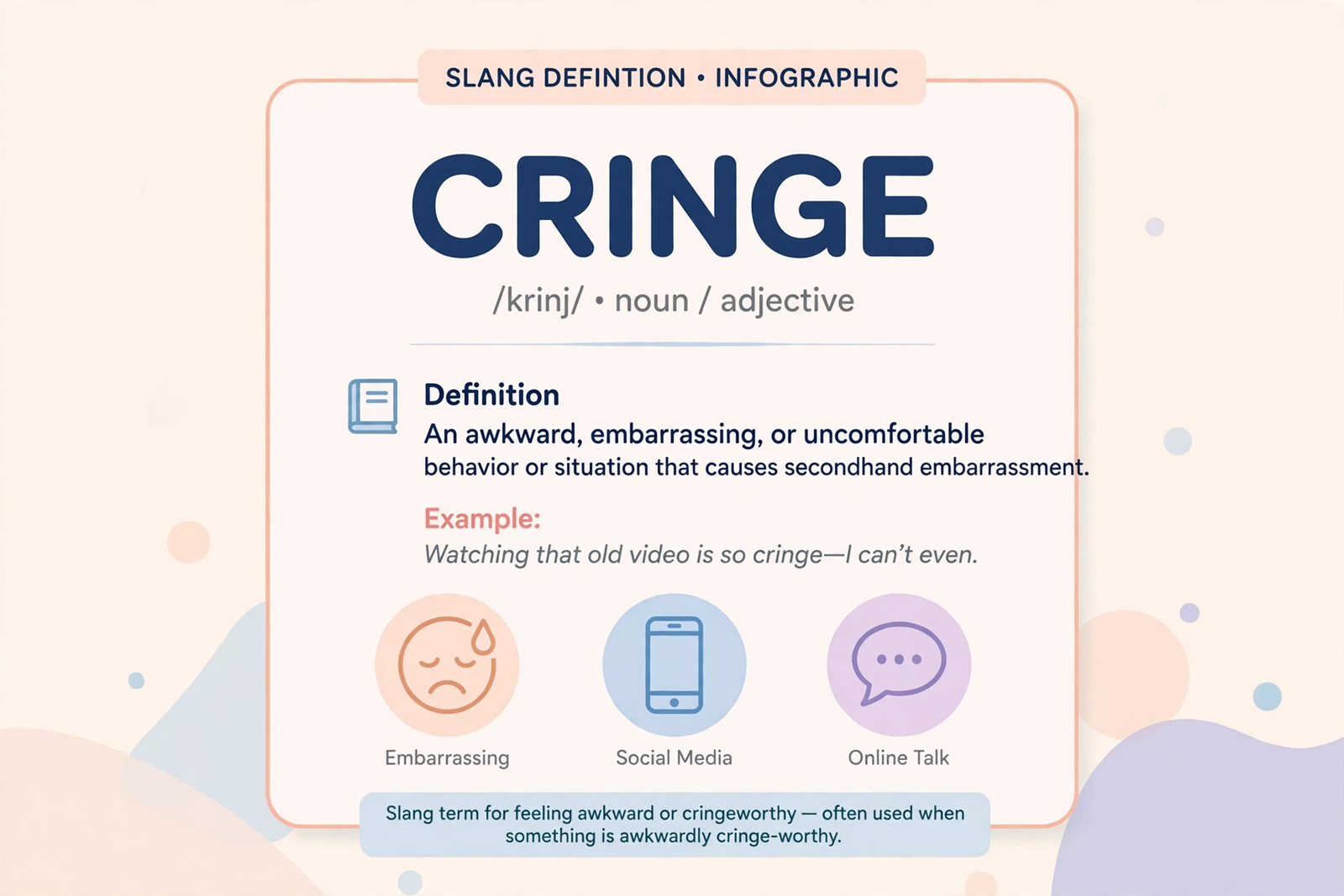
The word cringe is not new at all. It comes from Old English and has been in the language for centuries. The traditional dictionary meaning is to shrink back or cower in fear, which you can check in the Merriam-Webster definition of cringe. For hundreds of years, it described a physical reaction: flinching away from something unpleasant.
The slang meaning grew out of that physical idea. Instead of flinching from danger, people started flinching from embarrassment. By the early 2010s, forums like Reddit and Tumblr were using “cringe” to describe awkward content. Subreddits dedicated to awkward videos turned the word into a label for a whole genre of internet humor.
A few milestones explain how cringe went mainstream:
- 2012–2014: Reddit communities built around “cringe” content make the term popular with internet-heavy audiences.
- 2015–2017: YouTube cringe compilations rack up millions of views, and reaction channels turn secondhand embarrassment into entertainment.
- 2018–2020: TikTok takes over, and short awkward videos become a daily format. “Cringe” becomes a standard comment on the platform.
- 2021–today: The word goes fully mainstream. Brands, parents, and even news articles use it, and phrases like “cringe culture” and “cringe comedy” enter everyday language.
What changed over time is the tone. Early internet cringe was often mean: people laughed at strangers. Today, the word is softer and more self-aware. People call their own old photos cringe, laugh at themselves, and use the word as a friendly warning rather than an insult. That shift is a big part of why the cringe meaning slang still feels current instead of dated.
Popularity
Cringe is one of the most durable slang words of the last decade. Many slang terms burn out in a year or two, but cringe keeps showing up because the feeling it describes never goes away. Every generation produces new awkward moments, and every platform gives those moments an audience.
On TikTok, “cringe” appears in millions of comments and video captions. Creators deliberately post “cringe” content, from awkward skits to intentionally bad dancing, because audiences love reacting to it. The hashtag culture around the word keeps it in constant circulation, and reaction videos where someone watches something cringe have become a format of their own.
The word also thrives in group chats and comment sections. It is short, punchy, and instantly understood. Typing “cringe” under a friend’s embarrassing screenshot is faster than explaining why it made you uncomfortable, and everyone in the chat knows exactly what you mean. That efficiency is a big reason slang like this spreads, much like glizzy meaning spread through memes and short-form video.
Even offline, cringe has crossed into normal speech. Teachers, coworkers, and parents use it casually now. When a word jumps from internet comments into everyday conversation, it has officially become part of the language. Cringe made that jump years ago and has stayed there.
| Platform | How “cringe” is used | Typical tone |
|---|---|---|
| TikTok | Comments on awkward videos, “cringe” compilations | Playful, teasing |
| Threads and communities about awkward moments | Observational, humorous | |
| Reactions to embarrassing reels and stories | Light, social | |
| Group chats | One-word reply to an awkward screenshot | Friendly, joking |
| YouTube | Cringe compilation and reaction videos | Entertainment-focused |
How It Is Used
Using cringe correctly is easy once you know the pattern. The word almost always points at something awkward, and the speaker is usually reacting to it rather than describing themselves. Here are the main ways people use it in real conversations.
1. As a reaction to content. This is the most common use. Someone posts a video, a photo, or a text, and the reply is simply “cringe” or “that’s so cringe.” The meaning is: this made me uncomfortable to watch. Example: a friend posts a video of themselves singing badly on purpose, and the comments fill up with “cringe but iconic.”
2. As a description of a person or behavior. People call behavior cringe when it feels forced, outdated, or desperate for attention. “He’s being so cringe right now” usually means someone is trying too hard to impress others and it is not working.
3. As self-deprecating humor. This is the friendliest use. People call their own old posts cringe to show they have grown. “I just found my 2016 Facebook posts and I am cringing so hard” is a joke at their own expense, and it usually gets laughs instead of judgment.
4. As a warning. Sometimes cringe works like a heads-up. “Warning, this video is cringe” tells the audience to prepare for awkwardness. It sets expectations before anyone presses play.
5. As a noun for the genre. “Cringe” can also name the whole category. “I love watching cringe before bed” means the person enjoys awkward videos as entertainment. In this use, the word stops being an insult and becomes a genre label, like comedy or horror.
The tone matters more than the grammar. Said with a laugh among friends, cringe is harmless fun. Said coldly to a stranger, it can sting. Context decides whether the word lands as a joke or an insult, so pay attention to who you are talking to before you use it.
Examples
Real examples make the cringe meaning slang click instantly. Notice how the word changes slightly with the setting, while the core idea, awkwardness that makes you wince, stays the same.
Friendly Examples
- “Bro, that pickup line was so cringe, please never say it again 😂”
- “I just watched my old dance videos. The cringe is unreal.”
- “She posted a cringe TikTok and now the whole group chat is roasting her.”
- “That was cringe, but honestly, I respect the confidence.”
- “Stop, I’m cringing for you right now.”
Professional Examples
- “The presentation was a bit cringe when the slides stopped working mid-sentence.”
- “His email to the client came across as cringe because it was way too casual.”
- “That team-building exercise felt cringe, but everyone played along.”
- “I cringed when my boss tried to use slang in the meeting.”
In professional settings, people usually soften the word. Instead of saying “that was cringe” directly to a coworker, they might say “that was a little awkward” to keep things polite. Cringe is best saved for casual conversations, not performance reviews.
Funny Examples
- “Me: I’m not cringe. Also me: posting a selfie with a peace sign in 2026.”
- “Watching my dad try to dance at the wedding was peak cringe.”
- “He slid into her DMs with ‘hey’ and nothing else. The cringe was loud.”
- “That movie scene was so cringe I had to pause it and walk away.”
- “My 2014 captions were pure cringe. Who let me post those?”
The funny examples show why the word works so well in jokes. Everyone has a cringe memory, so the humor is instantly relatable. You do not need to explain the joke, because the audience has felt the same embarrassment themselves.
Comparison with Similar Terms
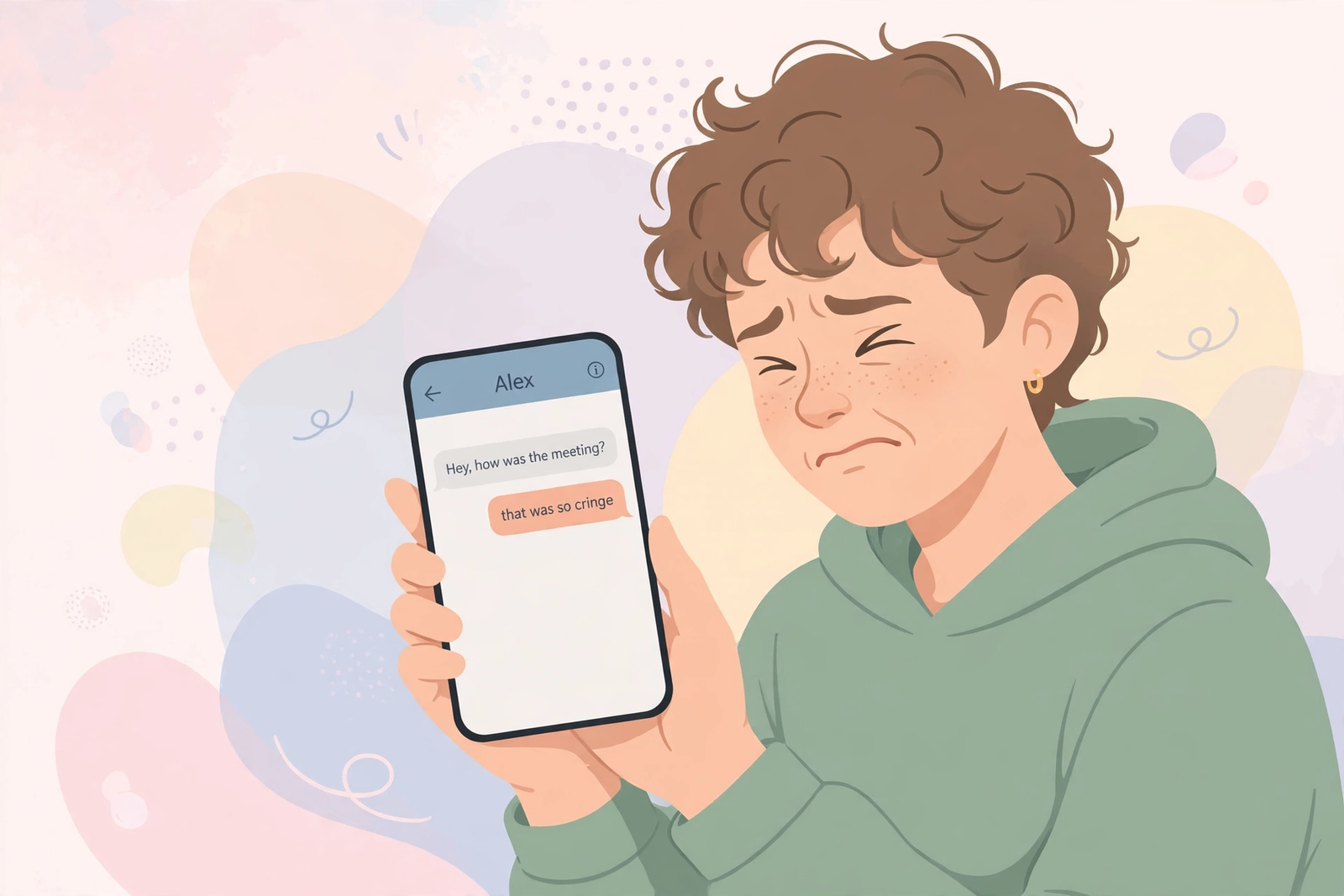
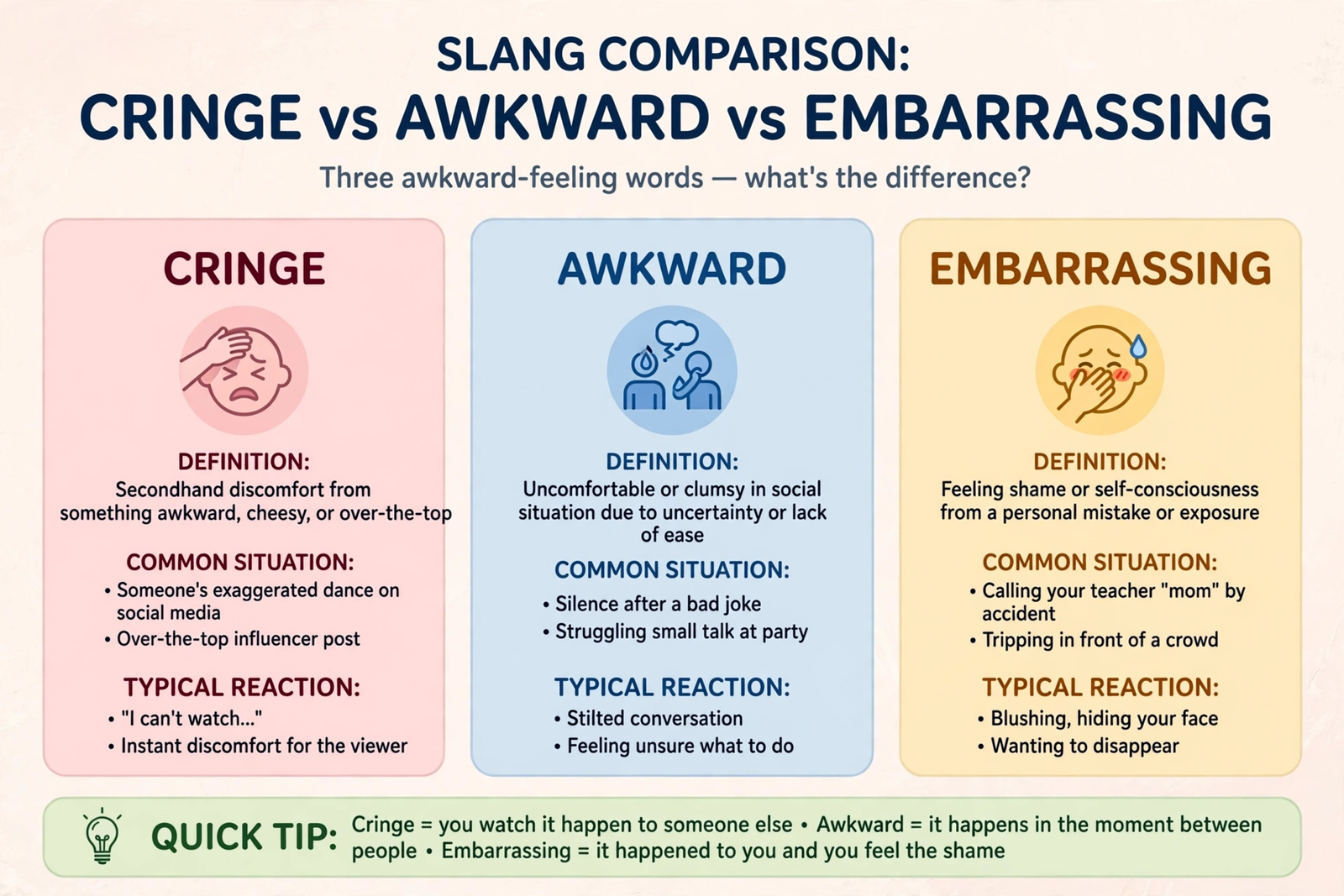
Cringe gets confused with a few nearby words, but each one means something slightly different. The table below clears up the differences so you can pick the right word every time.
| Term | What it means | Example | Key difference from cringe |
|---|---|---|---|
| Cringe | Secondhand embarrassment that makes you wince | “That video is so cringe.” | The core word: a physical wince reaction |
| Awkward | Uncomfortable or clumsy social moment | “That silence was awkward.” | Milder; no strong wince, just discomfort |
| Embarrassing | Something that causes shame | “Tripping on stage was embarrassing.” | About shame; cringe is about the observer’s reaction |
| Cheesy | Overly sentimental or corny | “That pickup line was so cheesy.” | About being corny, not necessarily awkward |
| Try-hard | Trying too hard to impress | “He’s such a try-hard.” | About effort; cringe is about the result |
| Secondhand embarrassment | Feeling embarrassed for someone else | “I felt secondhand embarrassment watching him.” | The formal phrase for what cringe describes |
The easiest way to remember the difference: awkward is uncomfortable, embarrassing is shameful, and cringe is the wince. If you physically look away from the screen, it is cringe. If you just feel a little uncomfortable, awkward is the better word. Learning these small distinctions is the same skill that helps you tell apart other chat terms, like the difference covered in hbu meaning in chat versus a plain greeting.
Alternate Meanings
Like many slang words, cringe has more than one meaning depending on the context. The slang meaning is the most common today, but the other meanings still show up, so it helps to know them.
- The original verb: To cringe means to shrink back in fear or servility. “He cringed when the dog barked.” This is the dictionary meaning, and it is still correct in formal writing.
- Physical flinch: In everyday speech, cringe can describe a quick physical recoil. “I cringed at the loud noise.” Here it is closer to flinching than to embarrassment.
- Cringe comedy: A whole genre of comedy built on awkward situations, where the humor comes from the audience’s discomfort. Shows famous for cringe comedy lean into long silences and social disasters on purpose.
- Cringe culture: An internet-era idea that people should be free to enjoy things without being mocked for them. The phrase “cringe culture is dead” means people are pushing back against shaming others for their tastes.
- “Cringe” as a compliment: In some friend groups, calling something cringe is almost affectionate. “That’s cringe, I love it” means the awkwardness is charming rather than off-putting.
The context almost always tells you which meaning is intended. In a comment section, it is the slang meaning. In a novel, it is probably the original verb. When in doubt, the slang meaning is the safe bet online.
Professional or Polite Alternatives
Cringe is casual slang, so it does not belong in every situation. In a work email, a formal presentation, or a conversation with someone you do not know well, these alternatives say the same thing more politely:
| Instead of | Say this | When to use it |
|---|---|---|
| “That’s so cringe.” | “That was a bit awkward.” | Work chats, polite feedback |
| “He’s being cringe.” | “He’s trying a little too hard.” | Talking about a colleague |
| “I cringed so hard.” | “That made me uncomfortable.” | Formal conversation |
| “Pure cringe.” | “Quite uncomfortable to watch.” | Reviews, professional writing |
| “Stop being cringe.” | “Maybe try a different approach.” | Giving advice kindly |
The rule is simple: use cringe with friends, and use awkward or uncomfortable with everyone else. The meaning stays the same, but the tone stays respectful. This is the same kind of code-switching you do with other slang, where a term like imk meaning in text belongs in a chat, not in a cover letter.
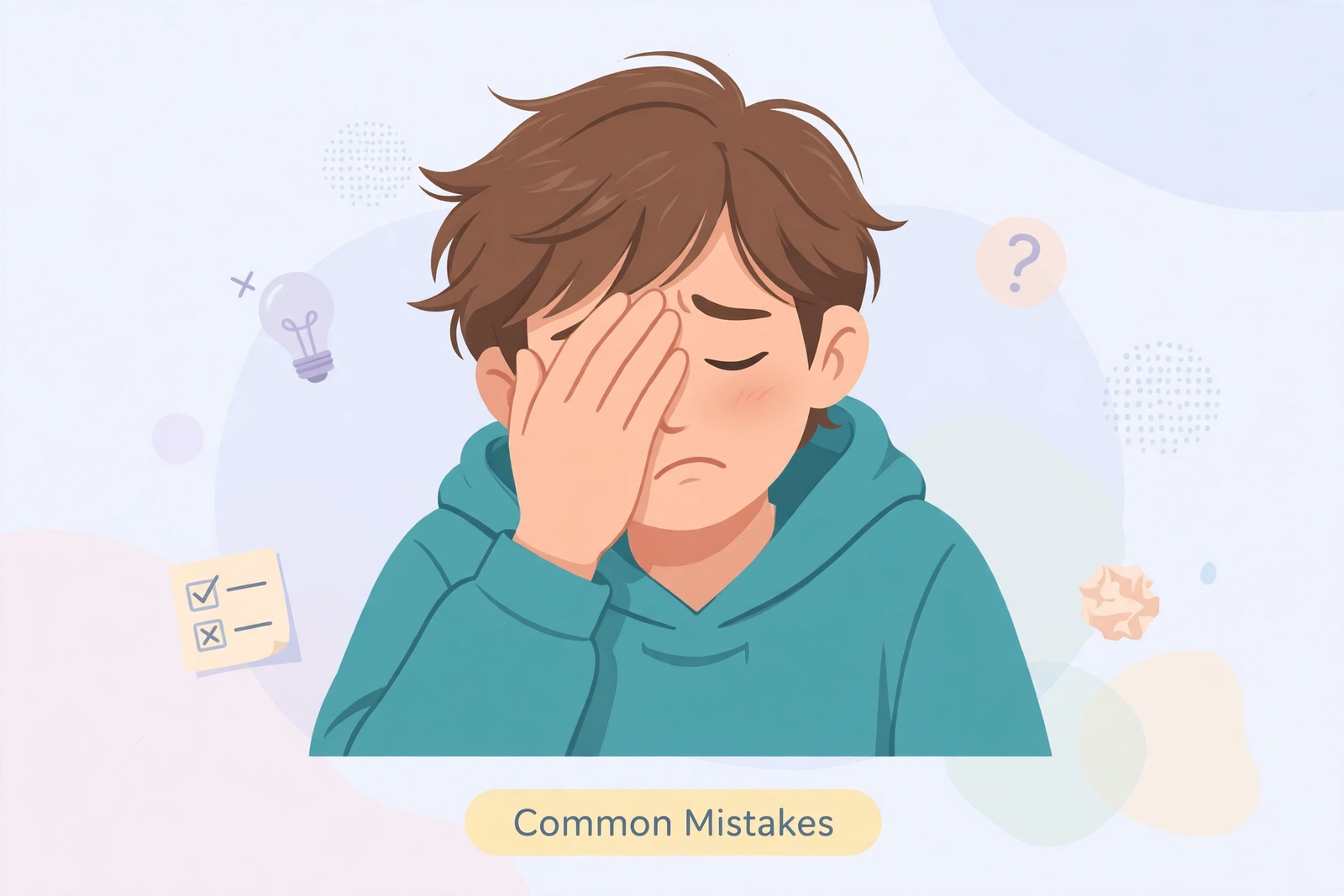
Common Mistakes
Even though cringe is a simple word, people still use it wrong. Here are the mistakes to avoid.
1. Calling everything you dislike cringe. Cringe means awkward, not bad. A song you dislike is not automatically cringe, and a movie with a weak plot is not cringe either. Save the word for things that actually make you wince.
2. Using it as an insult for people you disagree with. Calling a person cringe because you dislike their opinions is lazy and mean. The word works best when it describes a moment or behavior, not when it is used to shut someone down.
3. Overusing it until it loses meaning. If every post, video, and comment is “cringe,” the word stops meaning anything. Use it when the awkwardness is real, and it will hit much harder.
4. Saying it to someone’s face in a serious moment. Telling a coworker their presentation was cringe is not honest feedback, it is just rude. In serious situations, describe what went wrong instead of labeling the person.
5. Confusing cringe with offensive. Something can be awkward without being offensive, and something offensive is not automatically cringe. Mixing the two up makes your criticism unclear.
6. Using it about yourself too much. A little self-deprecating humor is charming, but calling everything you do cringe can come across as fishing for compliments. Own your awkward moments, laugh once, and move on.
Quick Tips
- Use it as a reaction, not a label. “That was cringe” lands better than “you are cringe.”
- Keep it casual. Cringe belongs in chats, comments, and conversations with friends, not in formal writing.
- Pair it with humor. Adding a laughing emoji or a joke keeps the word friendly instead of harsh.
- Know your audience. Close friends will laugh; strangers may take it personally.
- Use it on yourself first. Calling your own old posts cringe shows confidence and self-awareness.
- Do not force it. If a moment is only mildly awkward, “awkward” is the more accurate word.
- Watch the tone. The same word can be playful or cruel depending on how you say it.
- Learn the genre. If you enjoy cringe comedy, you will spot the pattern faster and use the word more naturally.

FAQ
What does cringe mean in slang?
In slang, cringe means something so awkward or embarrassing that it makes you wince. It describes secondhand embarrassment, usually caused by watching someone else be awkward, try too hard, or fail publicly in a painful way.
What does “that’s so cringe” mean?
“That’s so cringe” means the thing you just saw or heard was painfully awkward. It is a quick reaction, often used in comments and group chats, and it usually carries a playful or teasing tone among friends.
Is cringe an insult?
It can be, but it does not have to be. Among friends, cringe is usually a joke. Said seriously to a stranger, it can feel like an insult. The tone and the relationship decide how it lands.
What is cringe culture?
Cringe culture is the internet habit of mocking people for enjoying things that seem awkward or uncool. Many people now push back against it with the phrase “cringe culture is dead,” arguing that people should enjoy what they like without shame.
What is the difference between cringe and awkward?
Awkward is mild discomfort, while cringe is a stronger reaction that makes you physically wince or look away. If you just feel uncomfortable, it is awkward. If you have to cover your face, it is cringe.
Can cringe be a good thing?
Yes. Cringe comedy is a popular genre, and many creators post intentionally cringe content because audiences enjoy reacting to it. Among friends, calling something cringe can even be affectionate, as in “that’s cringe, I love it.”
Why do people say “I’m cringing”?
People say “I’m cringing” to describe the feeling of secondhand embarrassment in real time. It usually means they are watching or reading something awkward and their body is reacting before they can stop it.
Is cringe still popular in 2026?
Yes. Cringe remains one of the most used slang words online, especially on TikTok, in group chats, and in comment sections. It has lasted far longer than most slang because the feeling it describes never goes out of style.
Conclusion
The cringe meaning slang comes down to one feeling: the wince. When something is awkward enough to make you look away from the screen, cover your face, or laugh nervously, that is cringe. It started as an old English verb for flinching, became an internet label for awkward content, and grew into one of the most durable slang words of the social media era.
Now you know how to use it well. Save it for genuinely awkward moments, keep it casual and friendly, use it on yourself before you use it on others, and switch to “awkward” or “uncomfortable” when the situation is formal. And the next time a friend sends you a painfully awkward video, you will know exactly what to type: “that’s so cringe.”
If you enjoyed this guide, explore more slang breakdowns on the site, from fn meaning in text to glizzy meaning. Each one explains the word the same clear way, with real examples you can actually use.

2 thoughts on “Cringe Meaning Slang: What Does Cringe Mean in Text and on TikTok?”