Quick Definition: In slang, goose most commonly means a silly or foolish person — as in “you silly goose.” But goose slang covers much more: to goose someone is to poke them playfully (or startle them), to goose something up is to boost or energize it, and phrases like “cook someone’s goose” and “goose egg” carry their own slang meanings. Context decides which goose you are dealing with.
goose slang Meaning & Definition
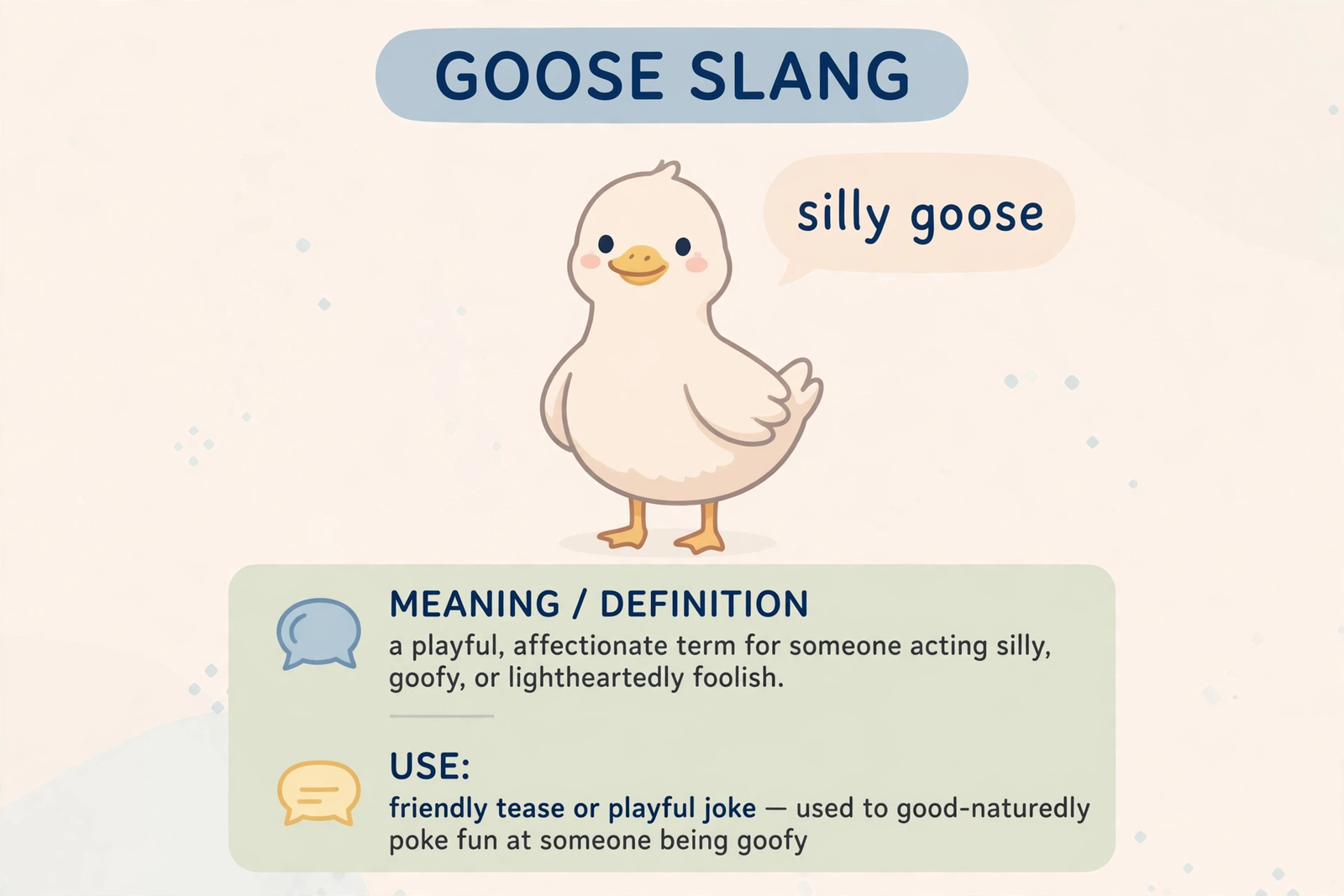
So, what does goose slang mean exactly? At its core, goose slang is built on the bird’s centuries-old reputation for being noisy, clumsy, and easily fooled. When someone calls you a goose, they are saying you are being silly — not stupid in a cruel way, but goofy, scatterbrained, or endearingly foolish. It is one of the gentlest insults in English, which is exactly why it has survived for more than 600 years.
But the word does not stop there. Goose slang works as a noun, a verb, and the heart of several idioms, and each use carries a different tone:
- A silly person (noun): “Don’t be such a goose — of course I was joking.” Playful, affectionate, mildly teasing.
- A playful poke (verb): “He goosed me as I walked past and I jumped a mile.” A quick prod, usually between friends, meant to startle rather than hurt.
- A boost or push (verb, “goose up”): “We need to goose up sales before the holidays.” To energize, strengthen, or speed something up.
- A ruined plan (idiom): “His goose was cooked when the boss found the report.” His chances were finished.
- A zero (noun, “goose egg”): “The team put up a goose egg in the first half.” A score of zero, from the egg’s round shape.
That range is what makes goose slang tricky — and fun. The same three-letter word can be a pet name, a prank, a pep talk, or a verdict, and the only way to tell them apart is context. This guide breaks down every meaning of goose slang, where it came from, how people actually use it in 2026, and the mistakes that trip people up — including the one that confuses goose with goon slang, a completely different word.
Introduction
Picture this: your friend walks into the wrong meeting room, sits down confidently, and only realizes the mistake when everyone stares. You laugh and say, “You silly goose.” Nobody is offended. Nobody needs an explanation. One little bird-word did the whole job — it said “that was foolish” and “I still like you” at the same time.
That is the magic of goose slang. It is soft where most insults are sharp. Parents call their kids silly geese. Friends call each other geese after harmless mistakes. Partners use it as a pet name. And on TikTok and in group chats, “silly goose” has become a whole vibe — a way to be playfully dramatic about small mistakes without sounding mean.
But goose has a wilder side too. Get goosed in a crowded hallway and you will yelp. Tell a coworker their goose is cooked and you have just delivered bad news. Say a team scored a goose egg and you have announced a shutout. The word has been collecting meanings since the 1400s, and in this guide you will learn all of them — the sweet ones, the cheeky ones, and the ones to avoid at work.
Origin
The slang story of goose starts with the bird itself. Geese are loud, they waddle, they honk at nothing, and they can look genuinely confused while doing it. By the late 1300s, English speakers were already using proverbs like “know no more than a goose,” and by the early 1400s “goose” was an established word for a simpleton or silly person. The great lexicographer Samuel Johnson later described the goose as “a large waterfowl proverbially noted, I know not why, for foolishness” — which is wonderfully honest, because nobody quite knows why the goose got this reputation. Roman geese were sacred to the goddess Juno and honored as watchful guardians; in Athens they were admired for watchfulness. The foolish reputation seems to be an English invention.
The verb sense came later. To goose someone — to give them a sudden poke from behind — is recorded from around 1880, possibly because the shape of an upturned thumb resembles a goose’s beak, or because the sudden poke creates the same nervous excitement as a honking goose. In 19th-century theater slang, to be goosed meant to be hissed off the stage. The “prod into action” sense — to goose the economy, to goose up sales — grew out of that same poke: a sharp nudge that gets something moving.
The idioms followed their own paths. “Cook someone’s goose” (to ruin their plans) is attested by 1845, though its exact origin is unknown. “Goose egg” for zero comes from baseball slang of 1866, when a big round zero on the scoreboard looked like an egg. “What’s sauce for the goose is sauce for the gander” — what is fair for one is fair for the other — dates to the 1600s. And the “golden goose” comes from Aesop’s fable, told since the 15th century. For the full etymology, the Online Etymology Dictionary’s entry for goose traces each sense with dated citations.
Popularity
Goose slang has never really gone away — it just changes costume every generation. In the 2010s it was the “silly goose” meme era: reaction images, Tumblr posts, and friends calling each other geese in comments. In 2019, the video game Untitled Goose Game turned the goose into a global mischief icon, and “goose” became shorthand online for playful chaos — honking, stealing, and causing harmless trouble.
On TikTok in the 2020s, “silly goose” became a term of endearment in its own right. Creators use it in captions, comments, and skits, often with exaggerated affection: “my silly little goose.” The phrase works because it is impossible to say angrily. It has also spread as a friendly label in gaming communities — the social deduction game Goose Goose Duck made “goose” a team identity, and players call each other geese as casually as they say “mate.”
Meanwhile the older senses never left everyday speech. Sports commentators still say “goose egg” for a scoreless game. Managers still talk about goosing up numbers. And “cook someone’s goose” still shows up in headlines whenever a scandal ruins someone’s plans. Goose slang is unusual: it is at home in a toddler’s picture book, a sports broadcast, a boardroom, and a TikTok comment section — all at once.
How It Is Used
Goose slang is used in four main ways today, and the grammar tells you which one you are hearing:
- As a noun for a silly person: “You goose!” “Don’t be a goose.” “My silly goose forgot his keys again.” Almost always affectionate or lightly teasing — the insult version is rare and usually obvious from tone.
- As a verb for a poke: “She goosed him in the elevator and he nearly dropped his coffee.” The poke is quick, playful, and between people who know each other. Done to a stranger, it is not a joke — it is harassment, and everyone understands that line.
- As a verb for a boost (“goose up”): “Let’s goose up the playlist before the party.” “A tax cut could goose the economy.” This is business-casual English, safe in emails and meetings.
- Inside idioms: “cook someone’s goose,” “goose egg,” “wild goose chase,” “golden goose,” “silly goose,” “loose as a goose.” These are fixed phrases — you use them whole, and people recognize them instantly.
Tone is everything. “You goose” said with a laugh is a hug in word form. “Don’t be a goose” said sharply can sting a little. And “your goose is cooked” is never good news. The word itself is neutral; the delivery decides whether it lands as love, laughter, or a warning.
Examples
Real examples show how flexible goose slang is. Notice how the same word shifts meaning with the situation — friendly, professional, or funny — without changing spelling.
Friendly Examples
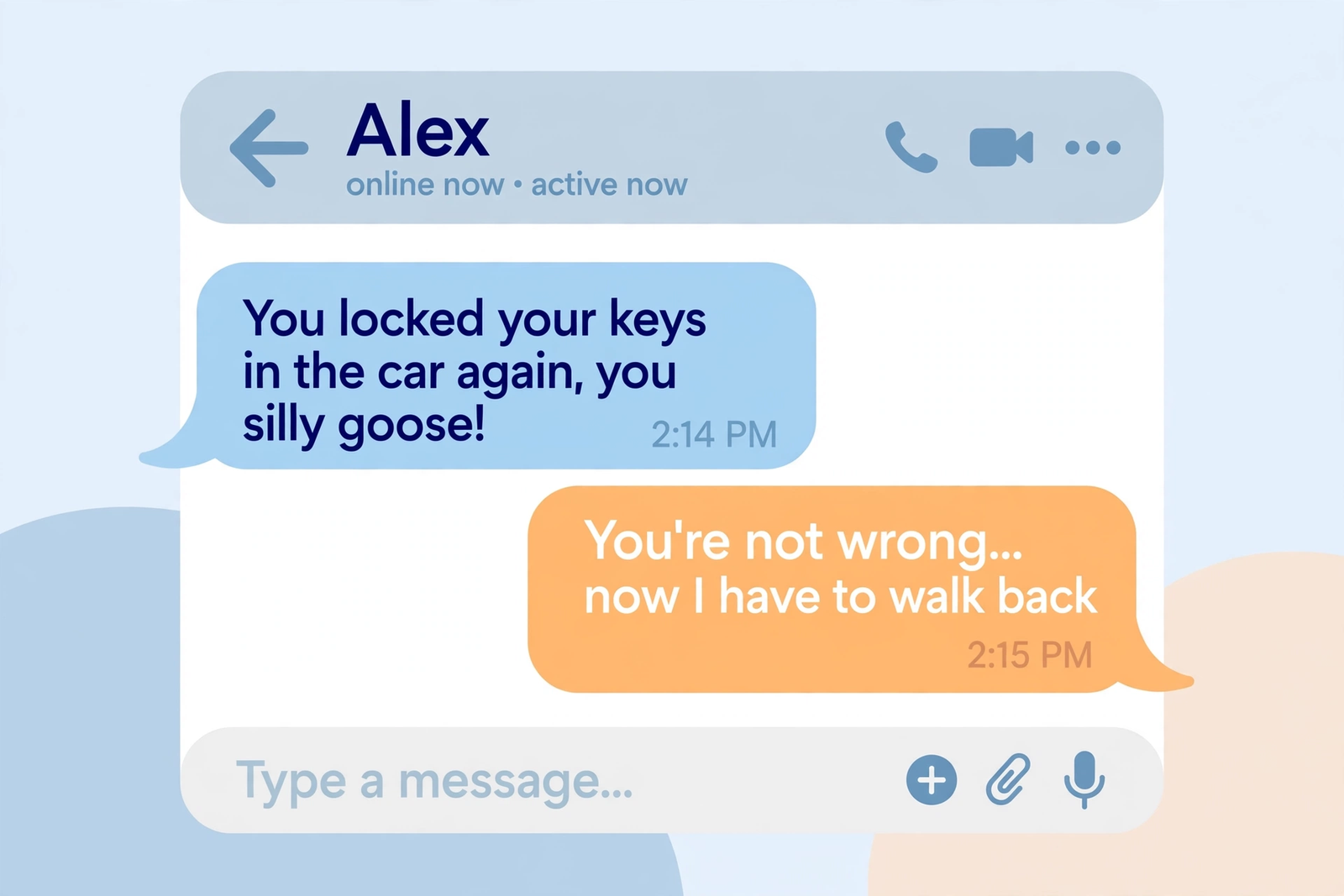
- “You locked your keys in the car again, you silly goose!”
- “Happy birthday to my favorite goose — thanks for always making me laugh.”
- “Aww, my little goose fell asleep on the couch again.”
- “Stop it, you goose, you know I was joking!”
- “We’re just two silly geese trying to assemble this bookshelf.”
Professional Examples
- “Let’s goose up the Q4 numbers with a final push before the deadline.”
- “A small discount could goose holiday sales without hurting margins.”
- “The new ad campaign really goosed our website traffic.”
- “If the client pulls out now, our goose is cooked on this project — let’s not let that happen.”
- “The marketing team is the golden goose of this company; protect them.”
Funny Examples
- “I tried to be cool and tripped over absolutely nothing. Classic goose behavior.”
- “He goosed me in the hallway and I screamed so loud the whole office turned around.”
- “Me: I’m a serious adult now. Also me: honks at a goose in the park.”
- “My fantasy team scored a goose egg this week. A literal zero. I am deceased.”
- “I’ve been on a wild goose chase for my glasses for an hour. They were on my head.”
Comparison with Similar Terms
Goose slang sits in a crowded family of playful insults and animal words, and mixing them up is easy. This table sorts them out so you can pick the exact word you mean.
| Term | What It Means | Tone | How It Differs from Goose |
|---|---|---|---|
| Goose | A silly, goofy person; a playful poke; a boost | Affectionate, light | The baseline — the softest of the group |
| Goon | A thug or henchman; a fool; a loyal friend in a crew | Rough, sometimes threatening | Harder and darker — a goon can be dangerous, a goose never is |
| Silly | Foolish in a harmless way | Gentle | An adjective, not a noun — “silly goose” combines both |
| Dork / Dweeb | An awkward, socially clumsy person | Teasing, can sting | Targets social awkwardness; goose targets a single goofy moment |
| Clown | Someone acting foolishly, often for laughs | Mocking or playful | Implies performing foolishness on purpose; a goose just is one |
| Airhead | Someone scatterbrained or not thinking | Dismissive | Meaner — it questions intelligence, while goose questions only the moment |
| Goofball | A lovably goofy person | Warm, affectionate | The closest cousin — a goofball is a goose with extra energy |
The most important distinction is goose vs. goon. They sound alike, they are both old slang, and they both describe a person — but they live on opposite ends of the tone scale. A goose is someone you laugh with; a goon is someone you might cross the street to avoid. If you want the full breakdown of the tougher cousin, our guide to goon slang covers every meaning, from 1920s henchmen to Australian boxed wine.
Alternate Meanings
Goose carries a flock of alternate meanings, and several of them have nothing to do with being silly. Here are the ones you will actually meet:
- Goose egg (zero): In sports, a goose egg is a score of zero — “the team laid a goose egg.” It comes from the round shape of the egg on a scoreboard, and it is still standard commentary language.
- Cook someone’s goose (ruin their plans): “When the audit found the missing funds, his goose was cooked.” A complete, irreversible ruin of someone’s chances.
- Golden goose (a prized money-maker): From Aesop’s fable of the goose that laid golden eggs — a person, product, or asset that keeps producing value. “Don’t kill the golden goose” means don’t ruin a good thing by being greedy.
- Wild goose chase (a hopeless search): A pursuit with no chance of success, chasing something that was never there. Shakespeare used it in Romeo and Juliet, and it is still the perfect phrase for a wasted afternoon.
- Mother Goose (nursery rhymes): The imaginary author of the classic collection of children’s rhymes — the reason “goose” feels innocent and storybook-like to most English speakers.
- Loose as a goose (relaxed): Completely at ease, uninhibited, often after a drink or two. “After the good news, she was loose as a goose for the rest of the evening.”
- Goosebumps (raised skin): The tiny bumps that appear when you are cold, scared, or thrilled — named because the skin looks like a plucked goose. Not slang exactly, but the same bird at work.
- Gander (a look): A male goose is a gander, and “take a gander” means take a look — from the way a goose cranes its neck to stare. A cousin phrase, not the same word, but they travel together.
- The bird itself: And of course, a goose is still a goose — a large waterbird famous for honking, hissing, and guarding its territory with surprising aggression. Anyone who has been chased by one knows the silly reputation is only half the story.
Professional or Polite Alternatives
Goose slang is gentle, but it is still informal. In professional settings, or with people you do not know well, these alternatives carry the same meaning without the barnyard:
- Instead of “you silly goose”: “That’s an easy mistake — don’t worry about it.” Warm, forgiving, and safe with anyone.
- Instead of “goose up sales”: “Boost sales,” “drive growth,” or “give sales a lift.” All standard business English with the same energy.
- Instead of “his goose is cooked”: “His chances are finished,” or “That deal is off the table.” Clear and professional.
- Instead of “goose egg”: “A shutout,” “scoreless,” or “zero points.” Sports writing already uses these interchangeably.
- Instead of “don’t be a goose”: “Let’s think this through,” or “Take a second look at that.” Corrects the mistake without labeling the person.
- When in doubt: “Silly goose” is fine with friends, family, and kids. At work, save it for colleagues you know well — and never use it upward to a boss or a client.
Common Mistakes
Most goose slang mistakes come from using the wrong sense in the wrong place. Here are the ones to avoid:
- Confusing goose with goon: The number one mistake. Goose is soft and funny; goon is tough and sometimes threatening. Calling a friend a goon when you mean goose can sound like an accusation — and calling a goon a goose is just confusing.
- Goosing a stranger: The playful poke only works between people who know and trust each other. Done to a stranger, a coworker, or anyone who did not invite it, it is not a prank — it is unwanted touching.
- Using “goose” as a serious insult: It does not work. Telling someone “you’re a goose” in a real argument sounds like a joke, which either defuses the fight or makes you look like you are not taking it seriously. Pick a different word for real criticism.
- Saying “goose” when you mean “gander”: “Take a goose” is not a phrase. The look is a gander. Mixing them up is a small error, but it marks you as someone guessing.
- Overusing “cook someone’s goose”: It means total ruin, not a small setback. A delayed flight did not cook anyone’s goose; a lost contract might have.
- Forgetting the plural: One goose, two geese — never “gooses” for the bird or the silly person. (The verb is fine: “he gooses, she goosed.”)
- Using goose slang in formal writing: Resumes, cover letters, and academic essays are goose-free zones. Save it for conversation, captions, and casual writing, where it shines.
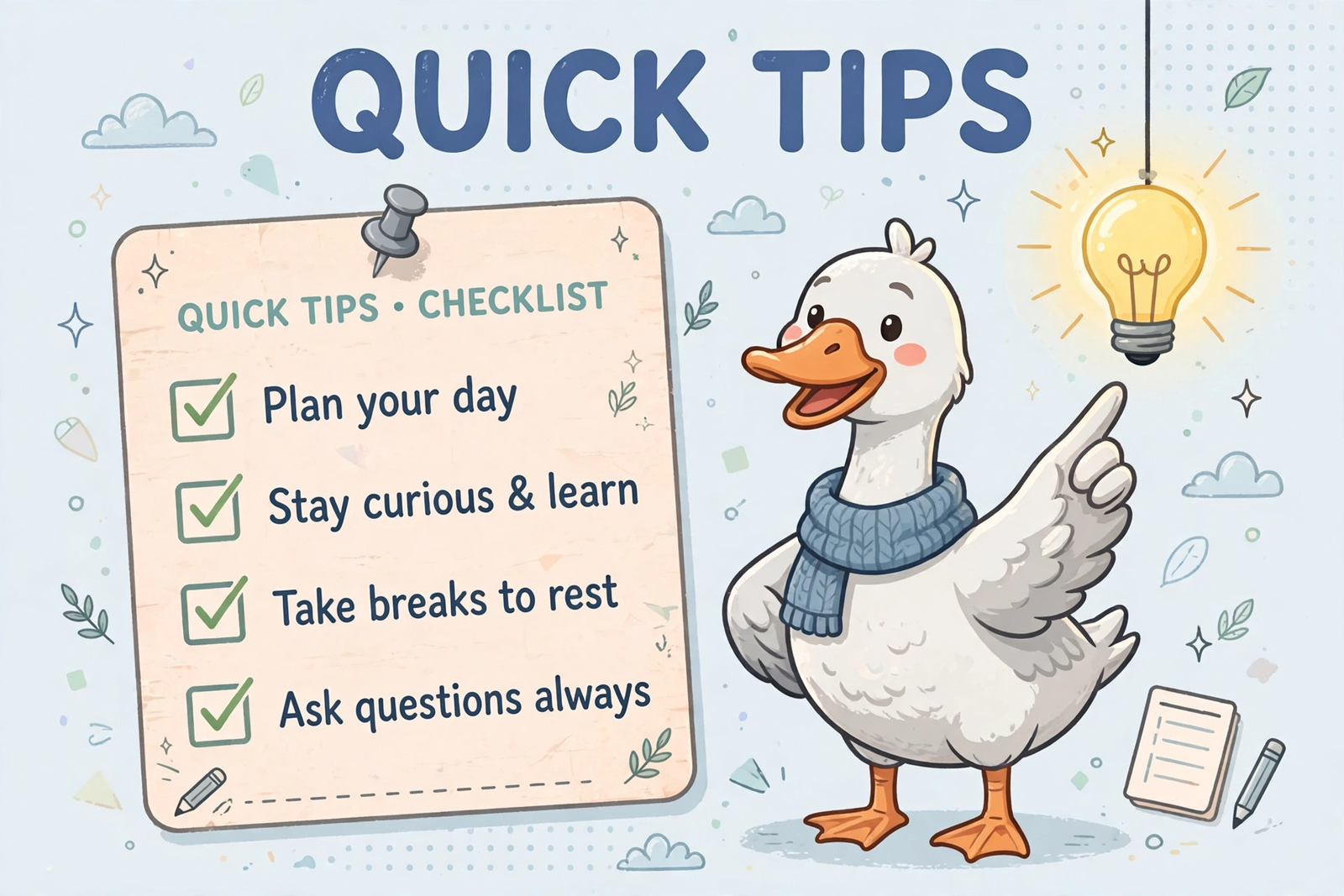
Quick Tips
- Use “silly goose” as a term of endearment: It is one of the safest playful labels in English — affectionate, funny, and almost impossible to take badly from someone you like.
- Pair “goose up” with numbers: “Goose up sales,” “goose up traffic,” “goose up the volume” — the phrase loves measurable things, and it sounds natural in business talk.
- Save idioms for storytelling: “Wild goose chase,” “cook someone’s goose,” and “golden goose” land best inside stories and jokes, not as standalone labels.
- Match the tone to the room: With friends, go full goose. With strangers or at work, use the polite alternatives above.
- Lean into the bird: Goose emojis, honking jokes, and “silly goose” captions perform well on TikTok and Instagram because the image is instantly funny — everyone can picture the bird.
- Remember the verb has two edges: “Goose up” (boost) is always safe; “goose someone” (poke) is only safe with close friends. When in doubt, boost things, not people.
FAQ
What does goose slang mean?
In slang, goose most commonly means a silly or foolish person, as in “you silly goose.” It can also mean a playful poke (“he goosed me”), a boost (“goose up sales”), or appear in idioms like “cook someone’s goose” (ruin someone’s plans) and “goose egg” (a zero score). Context decides the meaning.
What does it mean when someone calls you a goose?
It almost always means they think you did something silly or goofy — and they are saying it affectionately. “You goose” from a friend is closer to a hug than an insult. Only the tone can turn it sharp, and even then it is one of the mildest labels in English.
What does “silly goose” mean?
“Silly goose” is a playful, affectionate way to call someone goofy. Parents say it to kids, friends say it to each other, and couples use it as a pet name. It means “you did something funny or foolish, and I find it endearing.” It is popular on TikTok and in texting for exactly that reason.
What does “goose someone” mean?
To goose someone is to give them a sudden, playful poke — traditionally between the buttocks — to startle them. It is a prank between close friends. Done to a stranger or coworker, it is not funny; it is unwanted touching, so it only belongs in relationships where that kind of joking is welcome.
What does “goose up” mean in slang?
“Goose up” means to boost, energize, or increase something — “goose up sales,” “goose up the volume,” “goose up the economy.” It comes from the idea of a sharp prod that gets things moving, and it is standard informal business English.
What does “cook someone’s goose” mean?
It means to ruin someone’s plans, chances, or future completely. “When the evidence came out, his goose was cooked” means his career or case was finished. The phrase dates to 1845, though nobody knows exactly where it came from.
What is a goose egg in slang?
A goose egg is a zero, especially a zero score in sports — “the team put up a goose egg.” It comes from baseball slang of 1866, when a round zero on the scoreboard resembled an egg. It is still common in sports commentary today.
Is goose slang offensive?
No — goose is one of the least offensive slang words in English. As a label for a silly person it is gentle and often affectionate. The only sense that can cause offense is the physical “goosing” prank, which depends entirely on consent and context. When in doubt, use “goose” for the silly meaning and skip the poke.
Conclusion
Goose slang is proof that a word can be six centuries old and still feel fresh. It started as a medieval joke about a noisy bird, and today it is a pet name, a prank, a business verb, a sports score, and half a dozen idioms — all living side by side in one little word. The silly goose you call your best friend, the goose egg on the scoreboard, the golden goose in the boardroom, and the wild goose chase you went on yesterday are all the same bird, wearing different feathers.
The trick is knowing which goose you are dealing with. Use “silly goose” freely with people you love — it is warmth disguised as teasing. Use “goose up” confidently at work — it is energy in a phrase. Use the idioms in stories, where they shine. And keep the poke for your closest friends only. Do that, and you will never be the goose in the room — unless, of course, you want to be. For more playful slang with a harder edge, see our guide to goon slang, and for the word that means “amazing” in the same breath, check out gas slang — because sometimes the goose is not silly at all, it is straight gas.

1 thought on “Goose Slang Meaning: What Does Goose Mean in Slang? 7 Surprising Uses”