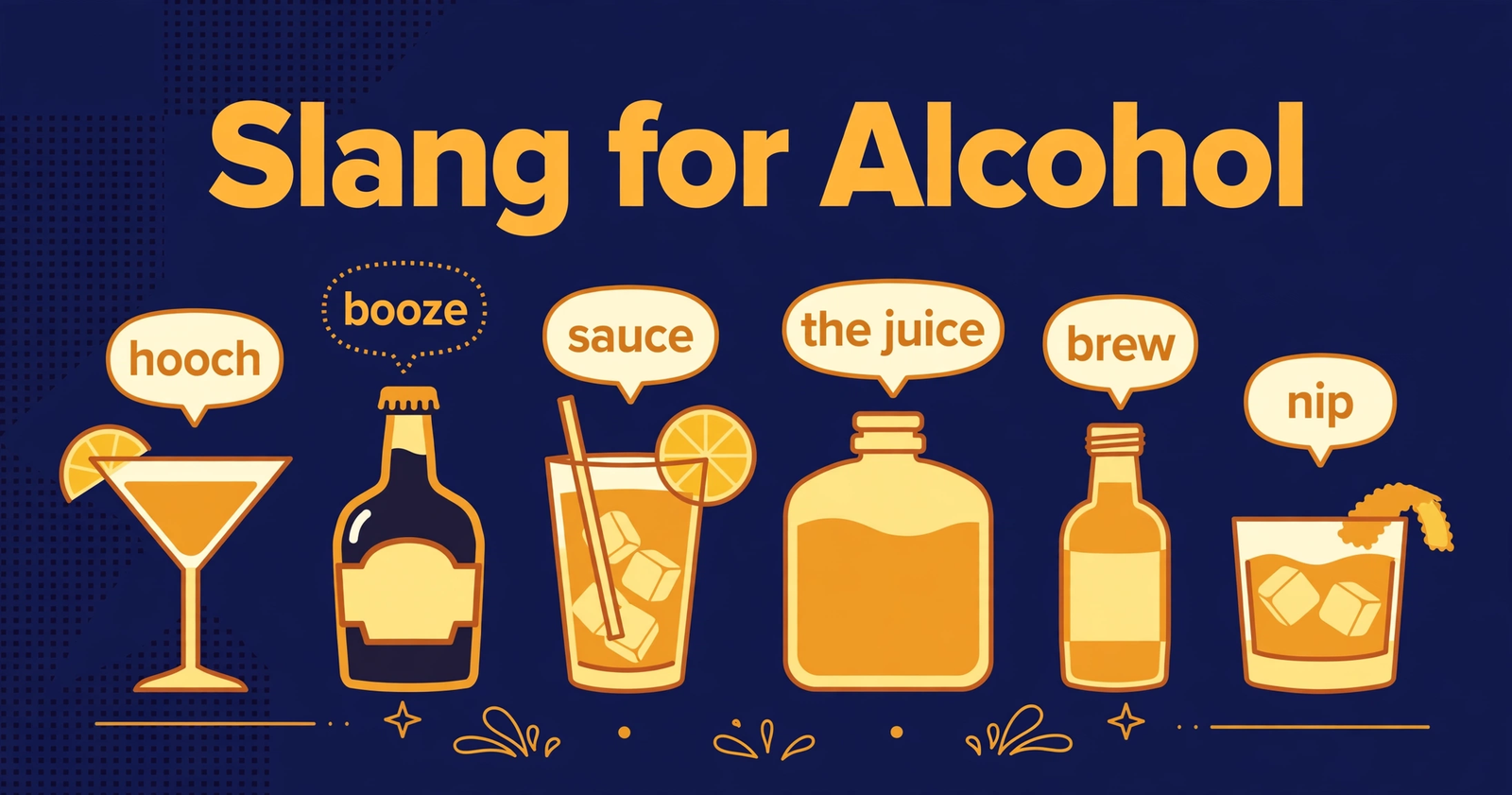
Slang for alcohol means the casual, playful, and sometimes secretive words people use instead of saying “alcohol” — words like booze, hooch, sauce, brew, and firewater. Whether someone is texting “grab some brews for tonight?” or joking about “the giggle juice,” these terms turn a plain drink into a vibe, a joke, or a shared code between friends.
Slang for Alcohol Meaning & Definition
At its simplest, slang for alcohol is any informal word used instead of “alcohol,” covering beer, wine, whiskey, vodka, and cocktails. Some terms name a specific drink — brew usually means beer, vino means wine — but most are general words for “a drink that gets you buzzed.”
The words people choose reveal a lot about the speaker. A grandparent might say “a nip of the sauce,” a college student might text “let’s get lit tonight,” and a bartender might ask if you want “the good stuff.” Same idea, completely different energy — the word signals age, crowd, and mood.
Most alcohol slang falls into a few loose groups:
- The classics: booze, hooch, sauce, brew, firewater, spirits, liquor
- The playful ones: giggle juice, happy juice, liquid courage, jungle juice
- The coded ones: the sauce, the good stuff, a little something, party juice
- The drink-specific ones: cold ones (beer), vino (wine), tequila shots, moonshine
- The modern texting ones: brews, pregame fuel, turn-up juice, drank
Knowing these words helps you read the room, catch jokes in movies and songs, and understand what people mean by “just a few cold ones.” Every generation invents its own way to talk about a drink.
Introduction
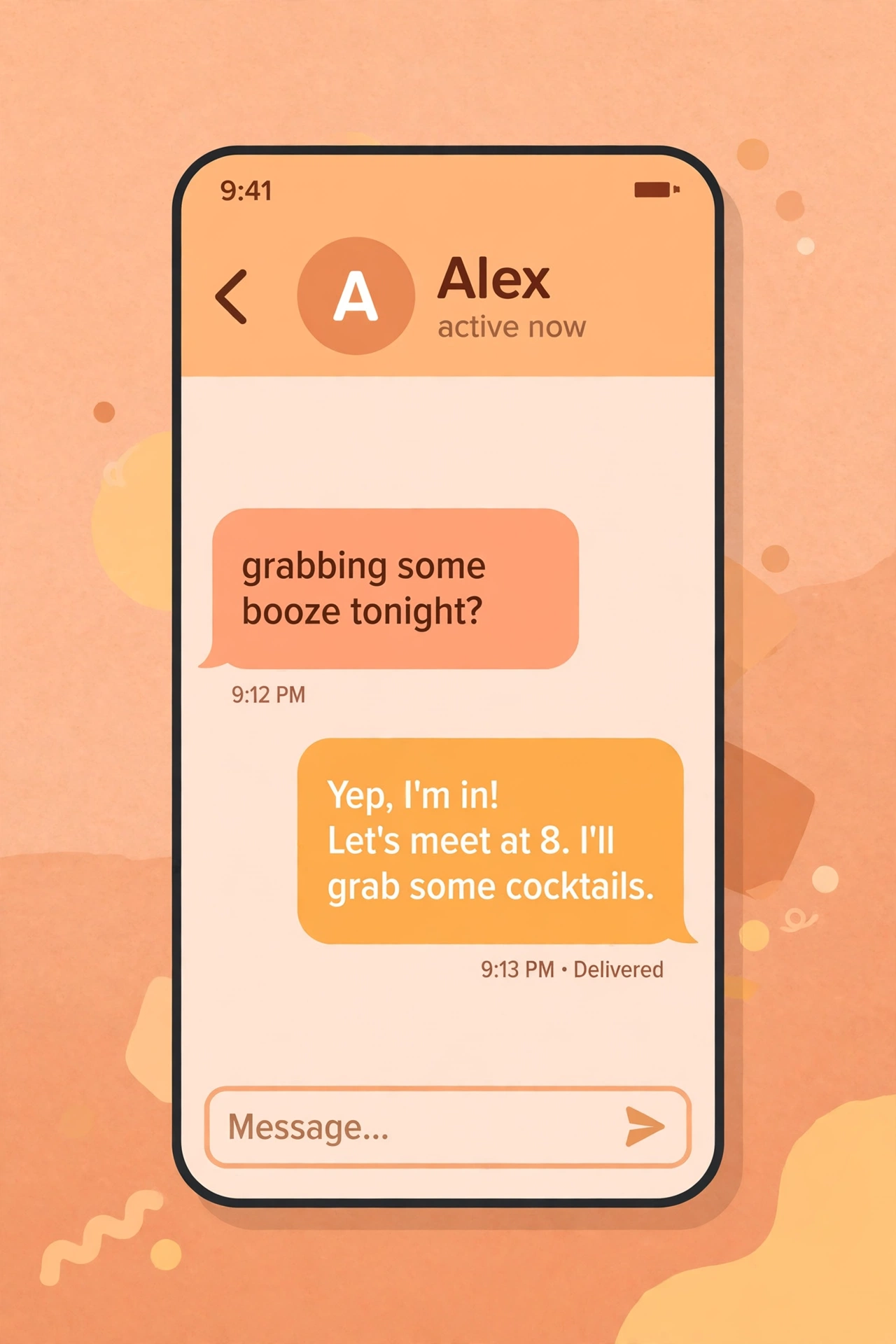
Picture this: a Friday 6 p.m. text reads, “Yo, bring the brews 🍻.” No one says “please purchase alcoholic beverages” — that would sound like a robot wrote it. Real people say booze, drinks, cold ones, or the sauce, and everyone instantly knows what they mean. That is the power of slang for alcohol: short, casual, and full of personality.
People have nicknamed alcohol for centuries. During Prohibition, coded words helped people talk about illegal liquor without attracting attention. Others were born from humor — calling whiskey “firewater” is simply more fun than calling it whiskey. Today, TikTok, memes, and group chats keep adding new terms every year.
This guide covers the classics, the modern Gen Z words, where each term came from, and exactly how to use them without sounding awkward — with real examples for friendly, work-safe, and funny moments, plus a comparison table so you can tell booze from hooch at a glance. If you have ever read a cringe text and wondered what someone meant by “the sauce,” this guide clears it up.
One quick note: slang is fun, but alcohol deserves respect. Knowing the words is great for conversation and pop culture — enjoying drinks responsibly is what keeps the party going.
Origin
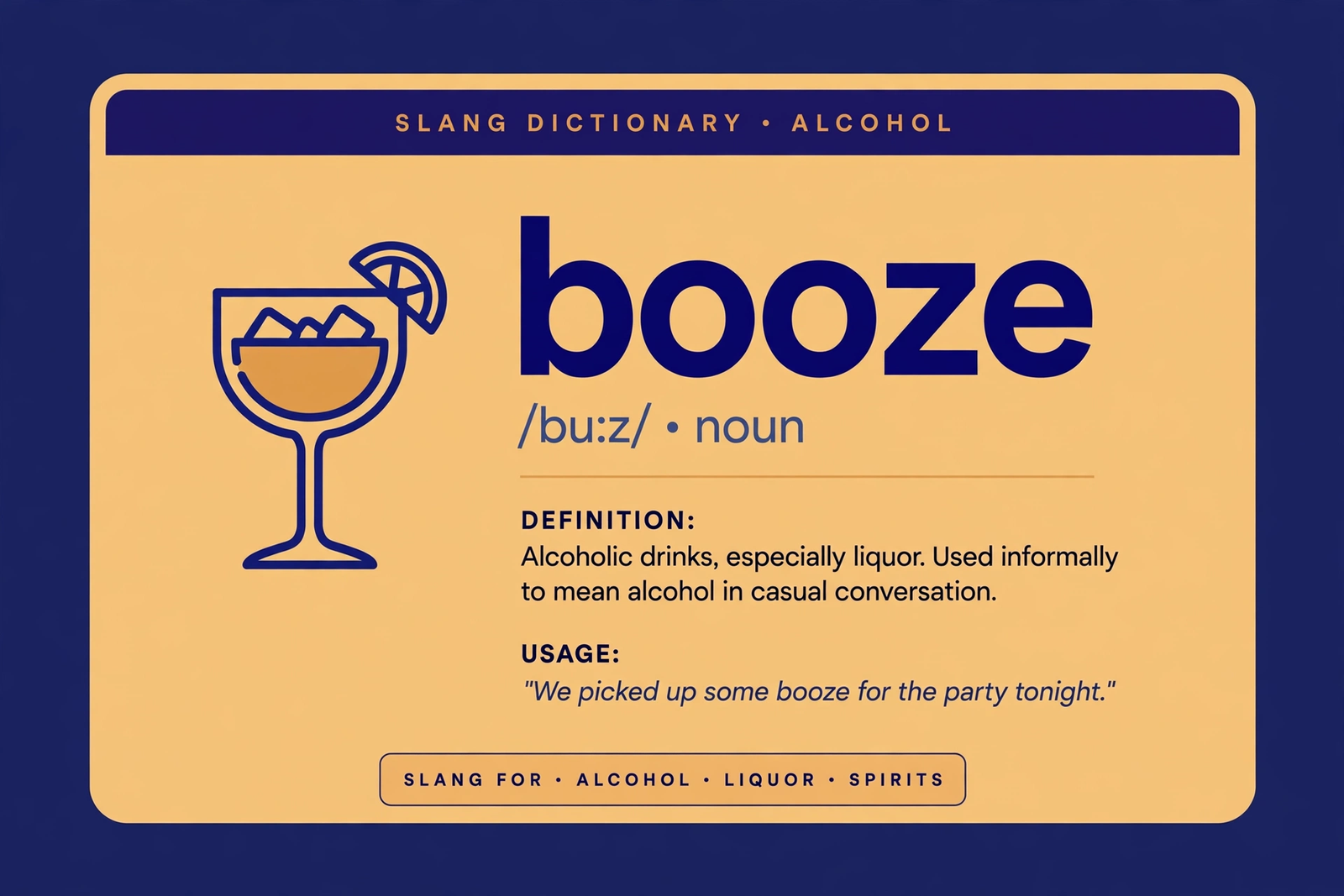
The story starts centuries before texting. Booze comes from the Middle Dutch būsen, “to drink heavily,” and has been used in English since the 1500s — one of the oldest slang words still in everyday use. When someone today says “let’s get some booze,” they are using a word Shakespeare’s contemporaries would have understood.
Hooch has an American origin: it is short for “Hoochinoo,” a distilled liquor made by the Hoochinoo people of Alaska in the 1800s. Traders shortened it, and it became a general term for strong, often homemade liquor. During Prohibition (1920–1933), hooch became the go-to word for bootleg whiskey and moonshine made in secret stills.
Firewater comes from Native American descriptions of the burning sensation of strong spirits, picked up in frontier America in the 1800s. Sauce rose in the 20th century — “on the sauce” and “off the sauce” became gentle ways to talk about drinking habits. And brew has meant beer since the 1600s, because beer was the most commonly brewed drink around.
Modern terms have faster origins. Giggle juice showed up in 1920s jazz slang, when musicians joked that a drink made everything funnier. Liquid courage became popular in the late 1900s for the confidence a drink gives before a scary moment — asking someone out, karaoke, a big speech. Turn-up juice and pregame fuel are pure 2010s party culture, born in college towns and spread through social media. Slang spreads fast because it signals belonging — as Merriam-Webster’s definition of slang explains, slang is the informal language of a particular group, and alcohol slang is a clear example.
Popularity
Alcohol slang is everywhere once you start listening. Country singers sing about “cold beer,” rappers mention “drank,” pop stars joke about “tequila shots.” It fills movie dialogue, from Westerns where cowboys ask for “firewater” to comedies where someone yells “shots!” before a night out. In everyday texting it is unavoidable: “brews?”, “wine night?”, “grab the giggle juice” — that is how friends actually plan their evenings.
A few terms dominate the popularity charts:
- Booze — the all-time classic, used by every generation everywhere.
- Brew / brews — the default word for beer in casual conversation and texts.
- Sauce — huge in memes and social media, especially “lost in the sauce.”
- Cold ones — a favorite in the US, Australia, and Canada, meaning ice-cold beer.
- Shots — a shot of liquor, and a staple of party and bar culture.
- Giggle juice — a playful favorite that keeps going viral because it sounds funny.
People do not search for “alcoholic beverage terminology.” They search for what a friend texted, what a lyric meant, or what “the sauce” means in a meme — and that curiosity keeps this slang relevant. The terms cross borders easily too: British drinkers say “a bevvy” or “a tipple,” Australians say “a cold one,” Americans say “booze,” and everyone understands each other. It is a shared, global vocabulary for having a good time.
How It Is Used
People use slang for alcohol to keep things casual, to be funny, or to be discreet — and most of the time, it is about tone. “Let’s grab drinks” is neutral. “Let’s grab some brews” is friendly. “Let’s get into the giggle juice” is a joke before the night even starts. The word you pick sets the mood of the whole evening.
Here are the most common situations where alcohol slang shows up:
- Texting and group chats: “Who’s bringing the brews?” — short, fast, and casual.
- Making plans: “Pregame at my place” means drinking before going out.
- At a bar or party: “I’ll have a cold one” or “shots on me!”
- Joking around: “I need liquid courage before karaoke” turns nerves into a punchline.
- Talking about habits: “He’s been off the sauce for a month” is a gentle way to say someone stopped drinking.
Context matters. “The sauce” in a meme means alcohol, but in a cooking video it means actual sauce. “Brew” usually means beer, but a coffee lover might mean coffee. If friends are planning a Friday night, “brews” means beer, not coffee. Some terms also carry a warning: “moonshine” or “hooch” hints at something strong and homemade. Knowing the slang helps you catch the subtext, not just the words.
Tone matters too. “Firewater” at a barbecue sounds funny and old-school; in a formal email it would sound bizarre. “Giggle juice” is perfect for a birthday party text and completely wrong for a work dinner. Match the word to the crowd: playful with close friends, neutral words like “drinks” or “a beer” with strangers or in mixed company.
Examples
The best way to learn alcohol slang is to see it in real sentences. The examples below show friendly, professional, and funny uses, so you can pick the right version for your own conversations.
Friendly Examples
- “Grab some brews on your way over? We’ve got the grill going.” — A classic barbecue text.
- “Wine night at mine, bring the giggle juice 🍷😂” — Giggle juice makes the invite sound fun.
- “She’s off the sauce this month, so we’re doing mocktails.” — A caring way to say a friend is taking a break.
- “A little liquid courage and I finally texted him back!” — Joking about needing a drink to feel brave.
Professional Examples
- “We’ll have drinks and light refreshments at the networking event.” — At work, the word is simply “drinks.”
- “We’re keeping the celebration modest — a toast with champagne, then back to work.” — A toast is the work-safe way to include alcohol in a celebration.
- “Please drink responsibly; rideshares will be available after the reception.” — The polite framing you will see at company parties and weddings.
- “He prefers a non-alcoholic option, and we’ve made sure those are available too.” — Inclusive and respectful — exactly right for work.
Funny Examples
- “Me: I’m only having one drink. Also me, three giggle juices later: KARAOKE TIME 🎤” — The classic self-roast.
- “That moonshine hit me like a freight train. I saw stars and my ancestors.” — Exaggeration is the joke: moonshine is famously strong.
- “I don’t always drink firewater, but when I do, I become the life of the party.” — A playful nod to the old cowboy term.
- “Lost in the sauce again — I ordered pizza at 2 a.m. and tipped the driver $20.” — “Lost in the sauce” means happily drunk and making silly decisions.
Comparison with Similar Terms
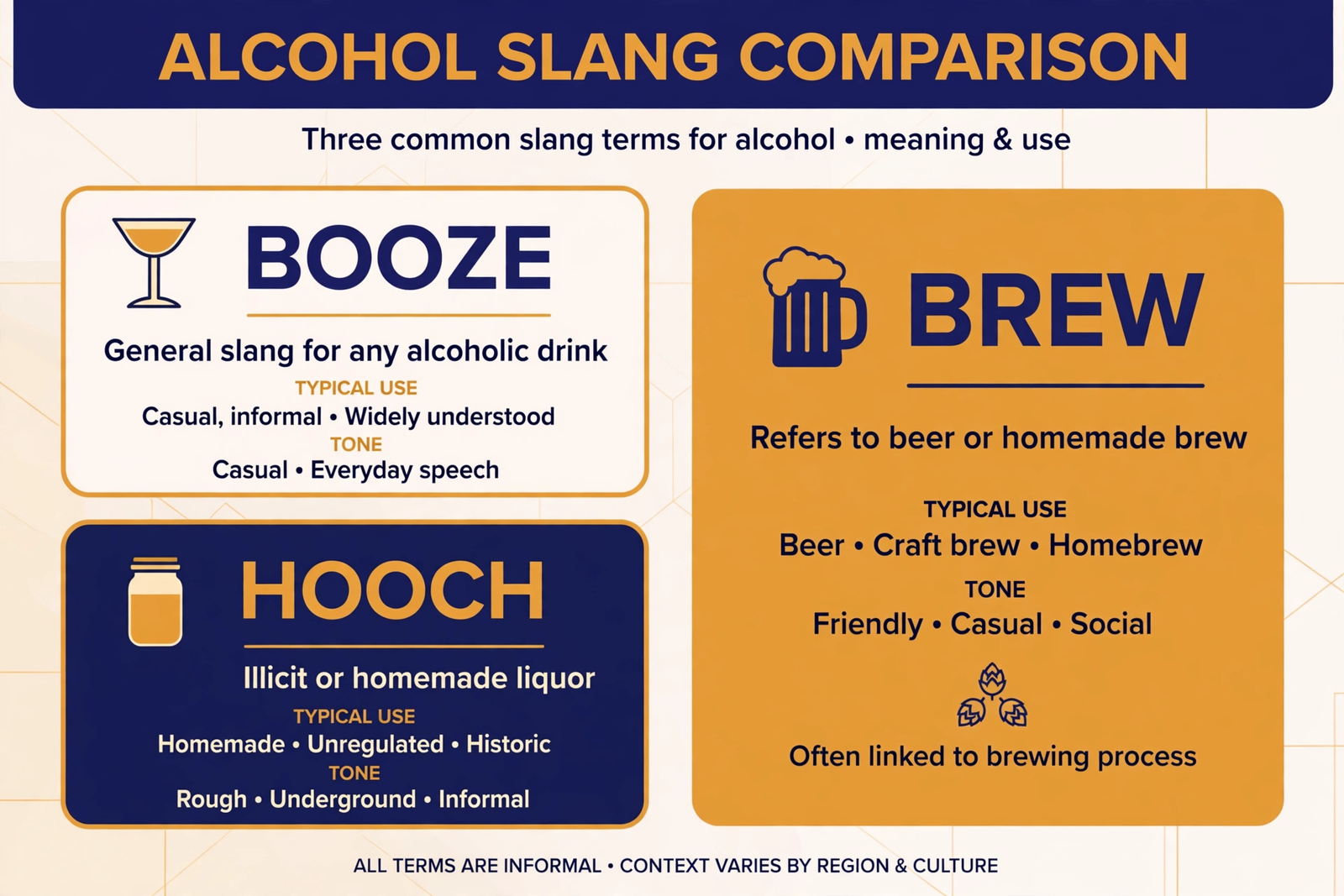
Many alcohol slang terms overlap, but they are not interchangeable. Booze is the general all-rounder, brew almost always means beer, hooch suggests something strong or homemade, and sauce is the playful catch-all. Firewater is almost never used seriously — it is a vintage word people pull out for effect. The table below breaks down the most common terms.
| Term | What It Usually Means | Tone | Best Used When |
|---|---|---|---|
| Booze | Any alcohol, general term | Casual, classic | Anytime with friends |
| Hooch | Strong or homemade liquor | Old-school, rough | Joking about strong drinks |
| Sauce | Alcohol in general | Playful, meme-y | Texts, jokes, social media |
| Brew / Brews | Beer | Relaxed, everyday | Planning a casual hangout |
| Firewater | Strong spirits, whiskey | Vintage, funny | Jokes, themed parties |
| Giggle juice | Any fun alcoholic drink | Silly, lighthearted | Party invites, funny texts |
| Liquid courage | A drink for confidence | Humorous, relatable | Before a nerve-wracking moment |
| Cold ones | Ice-cold beer | Friendly, laid-back | Barbecues, sports, summer |
| Moonshine | Illegal homemade liquor | Rustic, strong | Talking about potent drinks |
| Vino | Wine | Chill, slightly fancy | Wine nights, dinners |
Remember specificity versus generality: “booze” or “drinks” is the safest bet for everyone, “brews” for beer, “vino” for wine, and “shots” for liquor when you want to be precise. For humor, reach for “giggle juice” or “firewater” — just make sure your audience will get the joke.
Alternate Meanings
Like most slang, alcohol terms often have second lives — and that is where misunderstandings happen. In a bar or a meme, “the sauce” means alcohol; in a kitchen, it means pasta or barbecue sauce. “Lost in the sauce” means drunk in one context and deeply confused in another. The phrase travelled from drinking culture into general internet slang, where it now also means being overwhelmed.
“Brew” is another double agent: beer at a party, coffee at a café, a potion in fantasy talk. “Shots” can mean liquor, vaccines, basketball, or photos. “Drank” is alcohol in hip-hop culture, but also casual past tense of “drink.” And “spirits” means liquor in a bar, ghosts or mood everywhere else.
Even “on the sauce” and “off the sauce” have shades of meaning: the first can mean drinking a lot or just drinking tonight, the second a temporary break or a permanent decision to quit. The surrounding conversation usually makes it clear — and if you are ever unsure, just ask. A quick “wait, do you mean actual drinks?” saves everyone from an awkward mix-up.
Professional or Polite Alternatives
There is a time for slang and a time for plain, polite language. At work events, weddings, and family dinners, swapping “booze” for “drinks” instantly makes you sound more polished. Nobody will think less of you for asking “Would you like a drink?” instead of “Want some of the good stuff?” — the polite version is usually the smarter choice.
Here are some easy swaps for formal or mixed settings:
- Instead of “booze”: say “drinks,” “beverages,” or “alcoholic drinks.”
- Instead of “the sauce”: say “a drink” or just name the drink — “a glass of wine.”
- Instead of “getting lit”: say “celebrating” or “having a good time.”
- Instead of “liquid courage”: say “a little confidence boost” or simply “a drink to relax.”
- Instead of “pregame fuel”: say “drinks before we head out.”
- Instead of “shots”: say “a round of drinks” or name the spirit directly.
Polite language is also kinder when the topic is sensitive: “I’m taking a break from alcohol” beats jokes about “the sauce.” The golden rule is to match your words to the room — playful with friends, polished everywhere else. Words shift meaning between friend groups and formal settings, like the difference between a sigma mindset of doing your own thing and simply reading the room, or how a mid joke lands differently depending on the crowd.
Common Mistakes
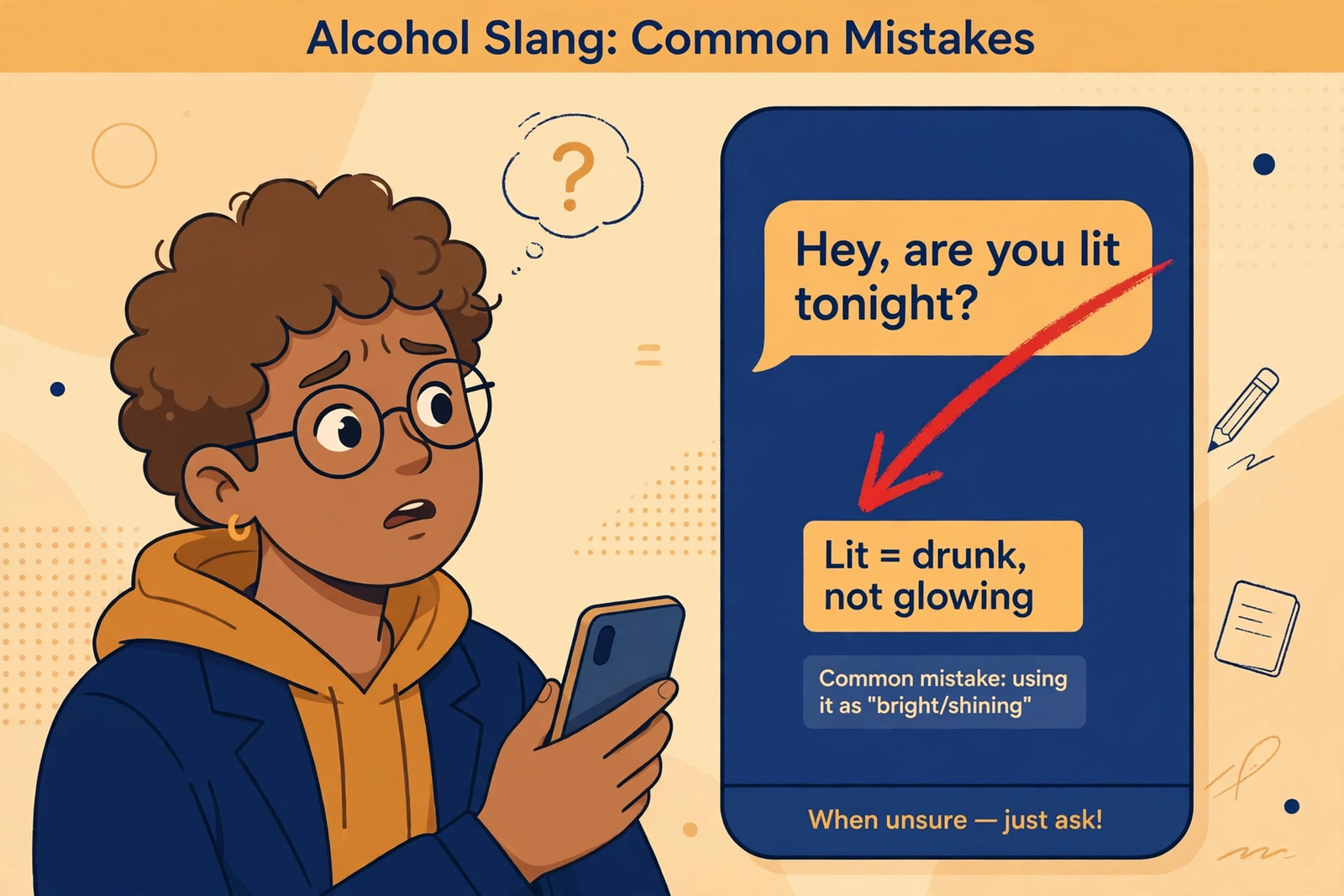
Alcohol slang is easy to get wrong — usually embarrassing rather than serious. The most common mistake is the wrong setting: telling your boss you need “liquid courage” before a presentation might get a laugh, or a very awkward silence. Slang has to match the audience.
Other mistakes people make include:
- Mixing up the drinks: ordering “brews” when you want cocktails, or calling wine “hooch” — friends will figure it out, but the bartender might not.
- Being too vague: “bring the stuff” could mean drinks or snacks. Be specific: “bring the brews” beats “bring the stuff.”
- Overusing one term: saying “sauce” in every sentence stops being funny and starts sounding forced.
- Assuming everyone knows the code: your uncle might not know “turn-up juice,” and a teenager might never have heard “firewater.”
- Forgetting the double meanings: texting “I’m lost in the sauce” to a coworker who thinks you mean cooking is a recipe for confusion.
- Using slang to hide a problem: joking about “the sauce” every day can mask real drinking habits. Humor is fine, but honesty matters more.
The fix is the same every time: watch the context, keep it light, and when in doubt, use the plain word. “Drinks” is never wrong.
Quick Tips
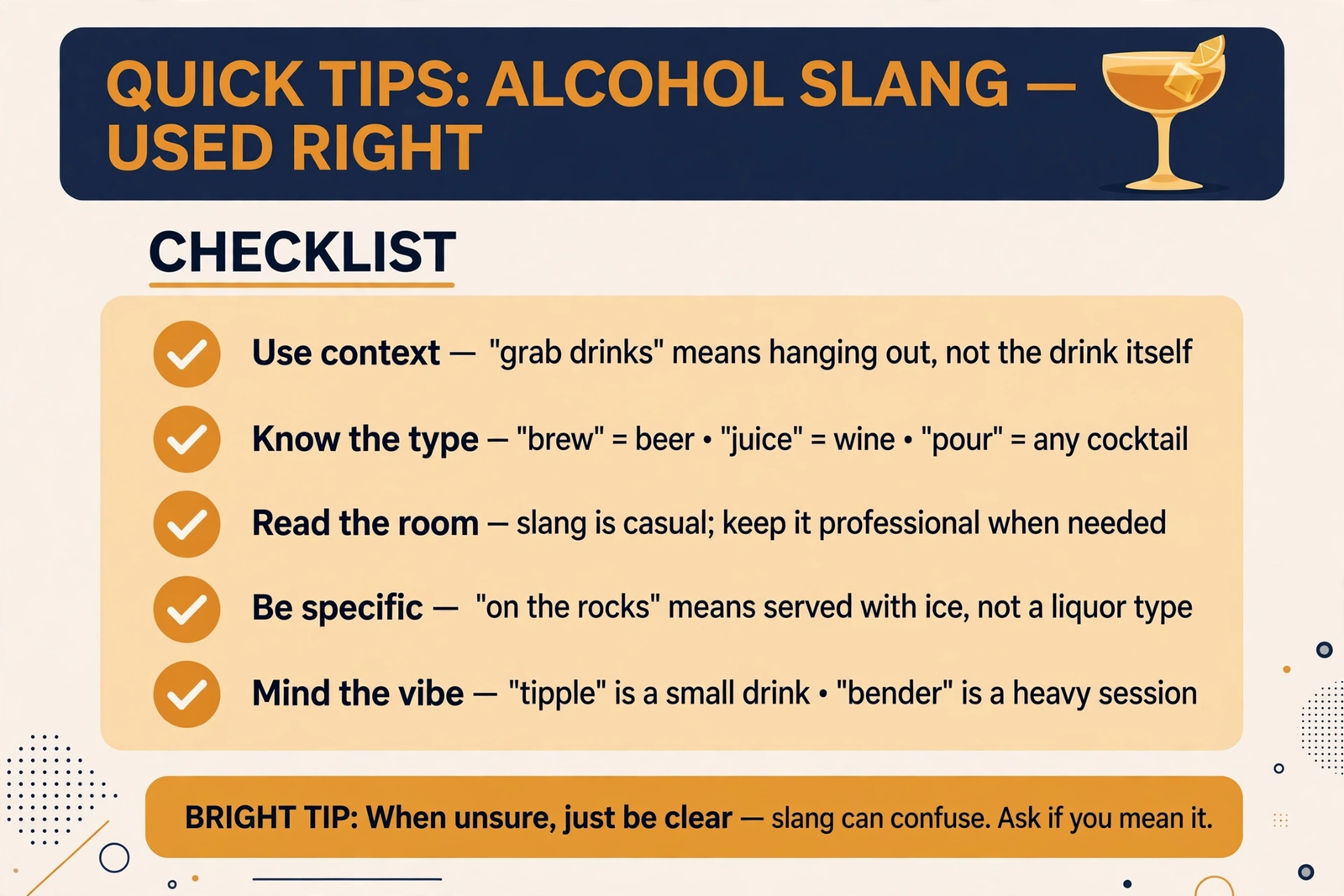
Want to sound natural instead of like you memorized a dictionary? These tips will get you there:
- Start with the classics: “booze,” “brews,” and “cold ones” work everywhere.
- Copy the crowd: mirror what your friends say — slang works best shared, not performed.
- Use it sparingly. One “giggle juice” per conversation is funny; five is a bit much.
- Match the moment. Playful words for parties, neutral words for work, caring words when someone is cutting back.
- Learn the drink-specific terms: “vino” is wine, “brews” is beer.
- Watch the memes: new slang spreads through TikTok and group chats.
- When unsure, ask. “Wait, what’s the sauce?” is a normal question, and people love explaining slang.
- Keep it responsible. The best party trick is knowing your limits — and making sure your friends get home safe.
FAQ
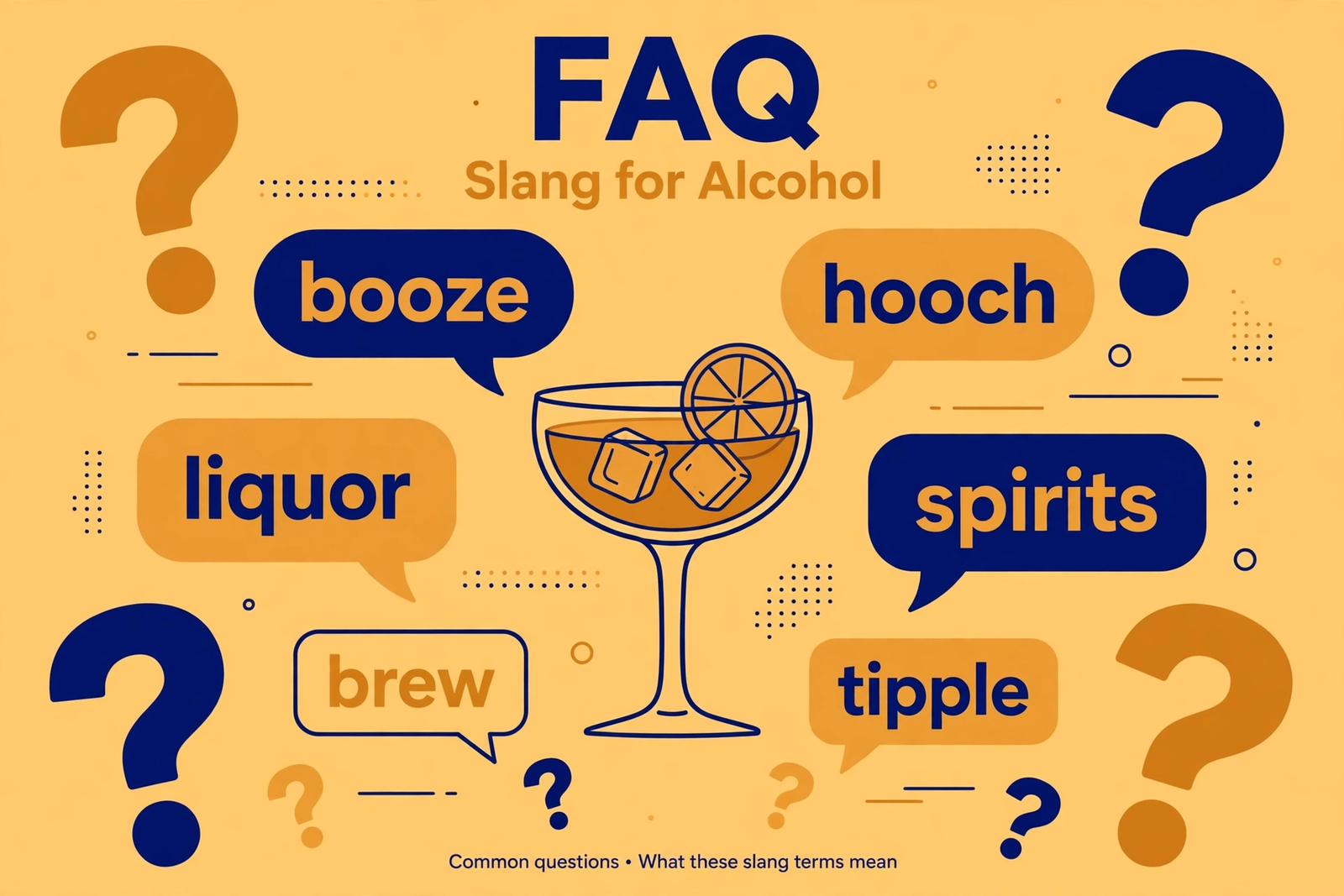
What does slang for alcohol mean?
Slang for alcohol means informal words used instead of “alcohol,” such as booze, hooch, sauce, brew, and giggle juice. They describe beer, wine, spirits, or cocktails in a casual way, and the exact meaning depends on the context.
What is the most common slang word for alcohol?
The most common slang word for alcohol is “booze.” It has been used since the 1500s, works for any type of drink, and is understood everywhere. “Drinks” and “brews” are close runners-up, with “brews” specifically meaning beer.
What does “the sauce” mean in slang?
In slang, “the sauce” means alcohol. “On the sauce” means drinking a lot, “off the sauce” means stopped drinking, and “lost in the sauce” means drunk or overwhelmed. In cooking, sauce just means sauce.
What is giggle juice?
“Giggle juice” is playful slang for a drink that makes people laugh and loosen up at a party. It dates back to 1920s jazz culture — best used with friends, not in formal settings.
What does “liquid courage” mean?
“Liquid courage” means the confidence someone feels after a drink — before asking someone out, singing karaoke, or giving a speech. It is a humorous phrase that admits the bravery is borrowed from the drink, usually used as a joke.
Is “hooch” the same as “booze”?
Not exactly. “Booze” is a general word for any alcohol, while “hooch” usually means strong, homemade, or bootleg liquor — the kind linked to moonshine and Prohibition stills. “Booze” works anywhere; “hooch” hints the drink is potent.
What do people mean by “cold ones”?
“Cold ones” means ice-cold beers — a friendly phrase heard at barbecues, sports games, and summer hangouts in the US, Canada, and Australia. If someone offers you “a cold one,” they are offering you a beer.
How can I use alcohol slang without sounding awkward?
Start with classics like “booze” or “brews,” copy what your friends already say, and match the term to the setting — playful with friends, neutral at work. Use slang sparingly, and just ask when you are unsure.
Conclusion
Slang for alcohol is more than a list of funny words — it is a living piece of how people talk, joke, and connect. From the 500-year-old “booze” to the meme-powered “lost in the sauce,” these terms carry history, humor, and identity. Knowing them helps you understand lyrics, decode group chats, and join conversations without missing a beat.
The takeaway is simple: learn the classics first, use playful terms with friends, and switch to polite language when the setting calls for it. Keep the drink-specific words straight — brews for beer, vino for wine, shots for liquor — and remember that context is everything. If you enjoyed decoding this slang, you will love exploring how other words shape online culture too — like what it really means to be called goated among your friends. Next time someone texts about “the giggle juice,” you will know exactly what they mean.
So go ahead: use these terms, share the jokes, and enjoy the language. Just remember the most important part of any night out — have fun, look out for your friends, and always drink responsibly. Cheers! 🍻
