
Quick definition: Honduran slang — known locally as caliche — is the colorful, everyday Spanish spoken in Honduras. It is packed with unique words like maje (dude), cipote (kid), and pisto (money) that you will not hear the same way anywhere else in the Spanish-speaking world.
Honduran Slang Meaning & Definition
Honduran slang is the informal vocabulary and set of expressions used every day by people in Honduras, a Central American country of about 10 million people. Locals call this street-level Spanish caliche, and it is one of the most distinctive dialects in Latin America. While standard Spanish will get you understood in Tegucigalpa or San Pedro Sula, honduran slang is what makes you sound like you actually belong there.
At its core, honduran slang does three things: it shortens words, it repurposes ordinary Spanish words with brand-new meanings, and it borrows from Indigenous languages, English, and neighboring Central American dialects. The word maje, for example, is used dozens of times a day as a friendly “dude” or “bro” — but it can also mean “fool” if your tone changes. Context is everything, and that is exactly what makes learning honduran slang so much fun.
This guide covers the 25+ most useful Honduran slang words and phrases, with real meanings, real examples, and honest tips on when to use them — and when to keep them in your pocket.
Introduction
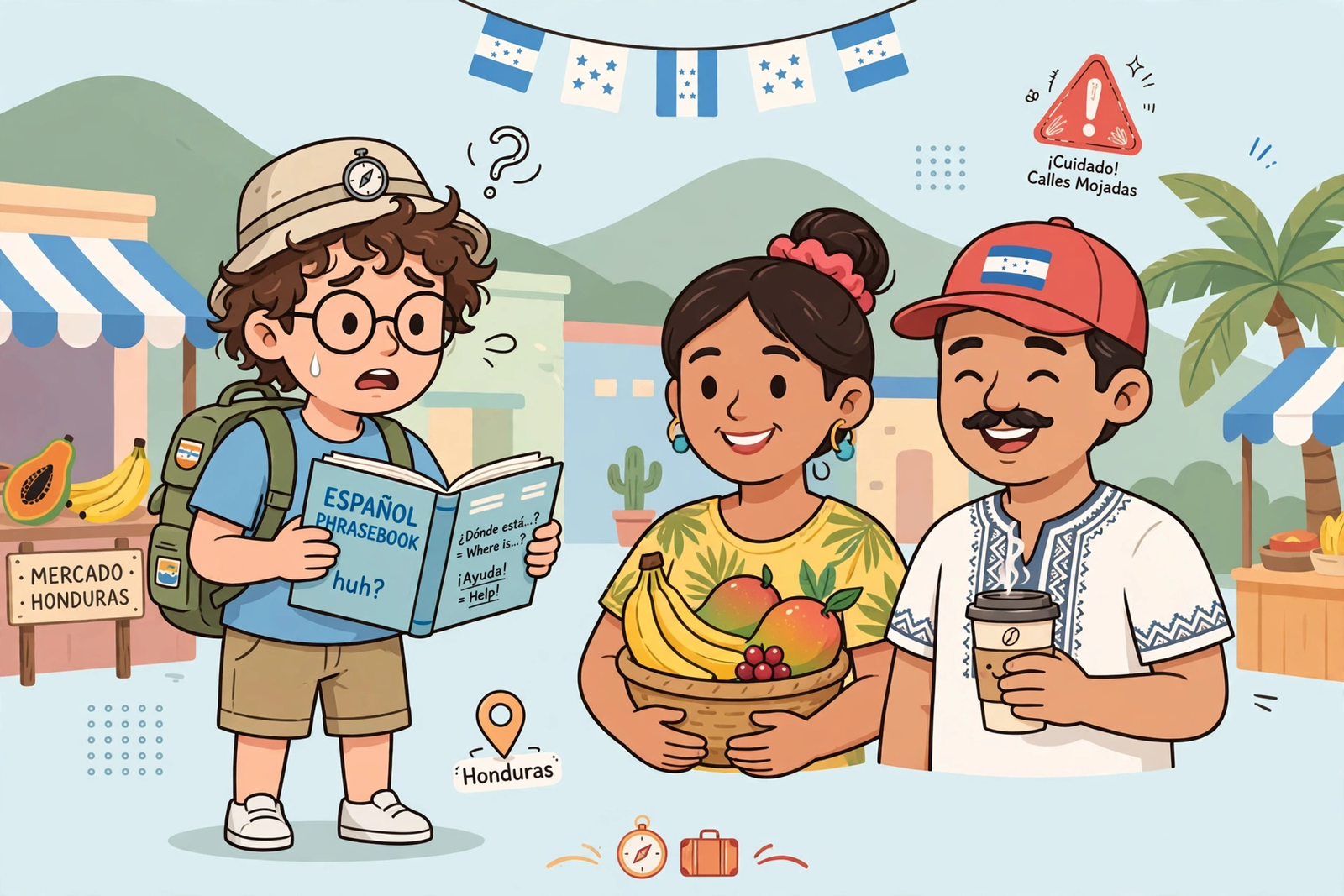
Picture this: you land in Tegucigalpa, hop in a taxi, and the driver greets you with “¿Qué tal, maje?” You smile, nod, and then he asks if you have pisto for the ride, warns you the traffic is yuca today, and tells you the cipotes are playing football in the street. If you only know textbook Spanish, you have just understood almost nothing — even though every single word was Spanish.
That is the magic of honduran slang. Honduras has one of the most recognizable street vocabularies in Central America, shaped by its Indigenous Lenca and Maya heritage, its Caribbean coast, decades of migration, and a healthy dose of humor. Hondurans are famously warm and funny people, and their slang reflects that: it is playful, direct, and full of personality.
Whether you are planning a trip to Roatán, chatting with Honduran friends online, watching Honduran creators on TikTok, or simply love learning how Spanish changes from country to country, this guide will help you understand honduran slang like a local. We will cover the essential words, the phrases you will hear on every street corner, how they compare with slang in neighboring countries like Salvadoran slang, and the common mistakes that give learners away instantly.

Origin
Honduran slang did not appear overnight. Its roots go back centuries, and understanding where it came from explains why it sounds so different from the Spanish of Spain or even Mexico.
The story starts with the Indigenous peoples of Honduras — the Lenca, Maya-Chortí, Pech, Tolupan, and Garífuna communities — whose words filtered into everyday speech long before modern slang existed. Words like cipote (kid) and güirro (boy) are believed to carry that deep local heritage, and they remain in daily use today.
The first formal record of this vocabulary came in 1899, when Alberto de Jesús Membreño published Hondureñismos: Vocabulario de los provincialismos de Honduras, the first dictionary of Honduran expressions. That book proved what Hondurans already knew: their Spanish had become something of its own. By the 2001 edition of the Royal Spanish Academy dictionary, the Honduran Academy of Language had contributed around 1,950 Honduran words — an extraordinary number for a single country.
Modern honduran slang kept evolving through the 20th and 21st centuries. English words drifted in from the Bay Islands and the Caribbean coast, where English-based Creole is spoken. Migration to the United States sent new expressions back home. And in the last decade, TikTok, reggaeton, and Honduran comedy creators pushed words like maje and macizo far beyond the country’s borders. You can read the full documented list of these expressions in the Wikipedia list of colloquial expressions in Honduras, which traces many of these terms to their published sources.
Popularity
Honduran slang is more popular — and more visible — than ever before. A decade ago, you had to visit Honduras to hear it. Today, it travels through phone screens.
TikTok and Instagram have turned Honduran creators into informal ambassadors of caliche. Comedy skits built entirely around the word maje rack up millions of views, and Honduran musicians drop slang-heavy lyrics that fans across Latin America repeat without always knowing the meaning. Search interest in honduran slang spikes every time a Honduran creator goes viral or a travel vlogger posts a “slang you need in Honduras” video.
Inside Honduras, slang is not a youth-only thing. Grandparents use it, market vendors use it, and news anchors sometimes slip into it for warmth. That said, younger Hondurans — especially Gen Z — are the ones remixing it fastest, blending classic caliche with internet slang, English loanwords, and reggaeton lyrics.
For travelers, the popularity matters practically: knowing even ten of these words changes how Hondurans respond to you. People light up when a visitor says “¡Qué macizo!” or greets them with “¿Qué onda, maje?” It signals respect for the culture, not just the language — and in Honduras, that goes a very long way.
How It Is Used
Honduran slang shows up everywhere: in greetings, in jokes, in bargaining at the market, in arguments, and in voice notes between friends. Here is how the core of it works in real life.
Greetings and addressing people. The single most common pattern is to attach maje to almost any sentence between friends: “Ey, maje, ¿qué tal?” (Hey, dude, what’s up?), “Maje, no te creo” (Dude, I don’t believe you). It functions like “man,” “bro,” or “mate” in English. Close friends may also use alero, which means a trusted friend or buddy — your inner circle.
Talking about money and work. Money is almost never dinero in casual conversation — it is pisto: “No tengo pisto” (I don’t have money). Work is chamba: “Tengo que ir a la chamba” (I have to go to work). These two words alone will make you sound dramatically more local.
Reacting to things. Something great is macizo (solid, awesome): “¡Esa fiesta estuvo maciza!” (That party was awesome!). Something easy or fine is cheque (okay, good). Agreement with enthusiasm is vaya pues — the Honduran “alright then, let’s go!”
Talking about people. A kid is a cipote or cipota (girl), or a güirro. A Honduran person proudly calls themselves a catracho (male) or catracha (female) — a nickname that comes from General Florencio Xatruch, a 19th-century Honduran military hero, and is now a badge of national pride. Someone with light skin or blonde hair is a chele. And when something is dirty or messy, it is chuco.
Tone matters more than vocabulary. This is the golden rule of honduran slang. Maje between friends is warm; maje shouted at a stranger can be an insult meaning “idiot.” Pucha is a mild “darn!” among friends but can sound rough in formal settings. Always watch how locals use a word before you copy it — and never use slang with elders, officials, or in job interviews.
Examples
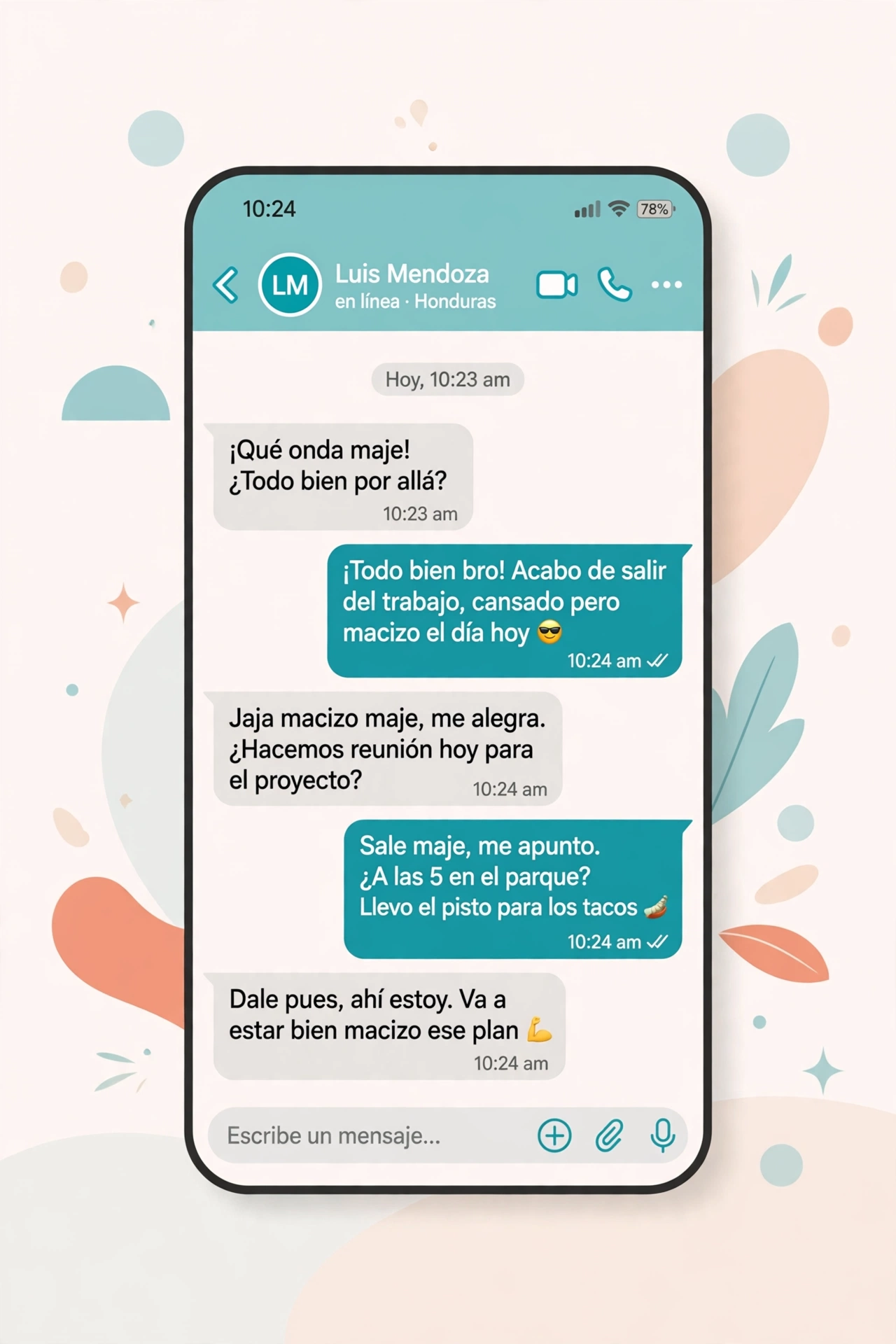
The fastest way to learn honduran slang is to see it in real sentences. Here are examples across friendly, professional, and funny situations.
Friendly Examples
- “Ey, maje, ¿vamos por unas birrias?” — “Hey, dude, shall we go for some beers?” (Birria is Honduran slang for beer.)
- “¡Qué onda, alero! Tanto tiempo sin verte.” — “What’s up, my friend! It’s been so long since I’ve seen you.”
- “Ese maje es buena onda, siempre ayuda a la gente.” — “That guy is a good person, he always helps people.”
- “Vaya pues, nos vemos mañana en la chamba.” — “Alright then, see you tomorrow at work.”
- “¡Qué macizo tu carro nuevo, maje!” — “Your new car is awesome, dude!”
Professional Examples
- “Disculpe, ¿cuánto es por el viaje? No tengo mucho pisto hoy.” — “Excuse me, how much is the ride? I don’t have much cash today.” (Polite but casual; fine with a taxi driver, not in a boardroom.)
- “Tranquilo, todo está cheque.” — “Relax, everything is fine.” (Cheque is widely used to mean okay or good.)
- “Los cipotes ya terminaron la tarea.” — “The kids already finished their homework.” (Cipote is affectionate and common, even in semi-formal family settings.)
- “Vamos a la pulpería a comprar algo.” — “Let’s go to the corner shop to buy something.” (Pulpería is the classic neighborhood store; trucha is another Honduran word for a small corner shop.)
Funny Examples (if applicable)
- “Ayer me dio una goma terrible después de la pachanga.” — “Yesterday I had a terrible hangover after the party.” (Goma = hangover, pachanga = party.)
- “¡Qué pepsi! Se me olvidó la tarea.” — “Damn! I forgot my homework.” (¡Qué pepsi! is a funny, mild exclamation unique to Honduras.)
- “Ese examen estuvo yuca, maje.” — “That exam was super hard, dude.” (Yuca literally means cassava, but in honduran slang it means something difficult.)
- “No te hagas el maje, vos sabés qué pasó.” — “Don’t play dumb, you know what happened.”
- “Estoy en la calle, maje, ¡no tengo ni un peso!” — “I’m broke, dude, I don’t have a single cent!”
Comparison with Similar Terms
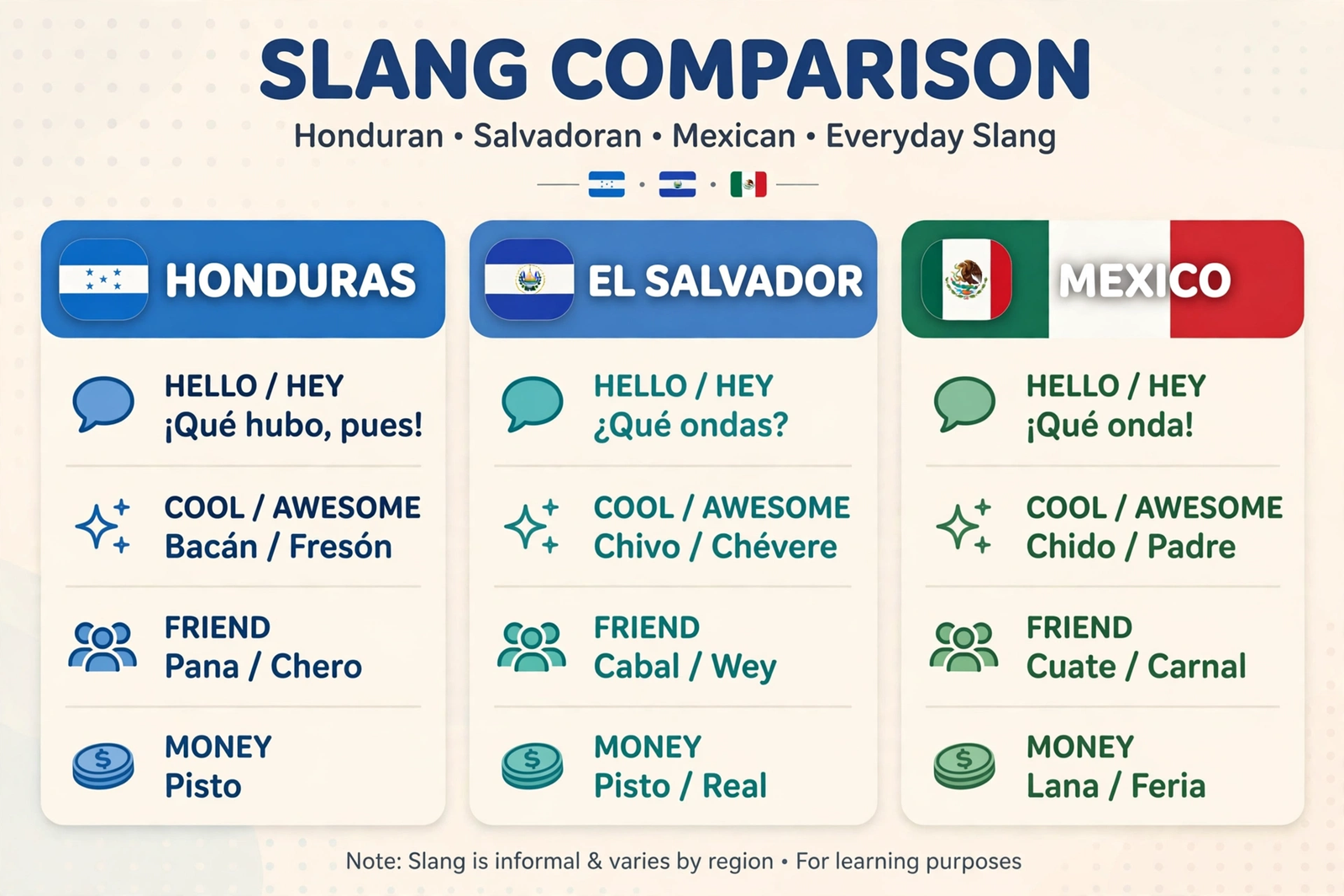
Honduran slang shares a lot with its Central American neighbors, but the details are what make it Honduran. Many words cross borders with slightly different meanings — and that is where travelers get tripped up.
| Meaning | Honduras | El Salvador | Mexico | Guatemala |
|---|---|---|---|---|
| Dude / bro | Maje | Maje | Güey | Cerote (vulgar) |
| Kid / child | Cipote / Güirro | Cipote / Bicho | Chamaco | Patojo |
| Money | Pisto | Pisto | Lana / Varo | Pisto |
| Work / job | Chamba | Chamba | Chamba | Chance |
| Cool / awesome | Macizo | Chivo | Chido | Chilero |
| Party | Pachanga | Pachanga | Peda / Fiesta | Pachanga |
| Hangover | Goma | Goma | Cruda | Goma |
| Friend (close) | Alero | Alero | Cuate | Cuate |
Notice how maje, pisto, chamba, and goma are shared across Honduras and El Salvador — the two countries share deep cultural roots. But macizo as “awesome” is distinctly Honduran; in El Salvador the same idea is chivo. If you want to go deeper into the region, our guides to Mexican slang and Spanish slang words show how the same ideas get completely different words just a border or two away.
The comparison also reveals something important: honduran slang is not “wrong Spanish.” It is a complete, rule-governed dialect with its own logic. Words like cheque (okay) or yuca (difficult) follow patterns that every Honduran understands instantly — even if no textbook teaches them.
Alternate Meanings
Many Honduran slang words have more than one meaning, and some of them change completely depending on the country. Here are the ones that cause the most confusion.
- Maje: In Honduras it usually means “dude” or “friend,” but it can also mean “fool” or “idiot” when used angrily. In Nicaragua and El Salvador it works the same way. Always read the tone first.
- Pisto: In Honduras it means money. In Mexico, the same word means an alcoholic drink (“echarse un pisto” = to have a drink). Saying “no tengo pisto” in Mexico City and in Tegucigalpa will get you two very different reactions.
- Cipote: In Honduras it means a kid or young person, affectionately. In parts of Central America it can also describe someone immature. It is almost always said by adults about children.
- Yuca: Literally a root vegetable (cassava). In honduran slang it means something difficult or complicated: “Está yuca” = “It’s tough.” In other countries it can also be slang for a lie or a trick.
- Paja: In Honduras it usually means a lie, an exaggeration, or idle talk (“¡Pura paja!” = “Total nonsense!”). In other Spanish-speaking countries the same word has very different — and often vulgar — meanings, so use it carefully outside Honduras.
- Chuco: Means dirty or muddy in Honduras, but it can also describe something of low quality or morally dirty. Context decides which one.
- Chele: Describes a person with fair skin or light hair. It is descriptive, not usually insulting, but like any comment on appearance, it lands better between friends.
- Bicho: In Honduras and El Salvador it means a kid or young person. In other countries it can mean a bug or insect — or something much ruder. Another reason to check the country before you use a word.
Professional or Polite Alternatives
Slang is for casual moments. In formal situations — a job interview, a meeting, a doctor’s office, or talking with an elder — Hondurans switch to standard Spanish. Here is your translation cheat sheet.
| Honduran Slang | Meaning | Polite / Formal Alternative |
|---|---|---|
| Maje | Dude / bro | Amigo, compañero |
| Pisto | Money | Dinero, efectivo |
| Chamba | Work / job | Trabajo, empleo |
| Cipote / Cipota | Kid | Niño / niña, joven |
| Macizo | Awesome | Excelente, muy bueno |
| Cheque | Okay / fine | Está bien, de acuerdo |
| Birria | Beer | Cerveza |
| Goma | Hangover | Resaca, malestar |
| Pucha / ¡Qué pepsi! | Darn! / Wow! | ¡Vaya! ¡Caramba! |
| Vaya pues | Alright then | De acuerdo, está bien |
A good rule of thumb: use honduran slang when the other person uses it first. Hondurans will appreciate the effort either way, but mirroring their register is the fastest way to sound natural instead of rehearsed. If you are learning how to sound cool without overdoing it, our guide to cool in Spanish slang covers the same balance for Spanish in general.
Common Mistakes
Even enthusiastic learners trip over honduran slang. These are the mistakes that instantly mark someone as an outsider — avoid them and you will sound far more natural.
1. Calling everyone “maje” on day one. Maje is friendly between equals and friends, but using it with a stranger, an elder, or a police officer can come across as rude. Earn it first: let locals call you maje before you return it.
2. Using the wrong country’s meaning. Pisto means money in Honduras but a drink in Mexico. Bicho means a kid in Honduras but something else entirely in Spain. Never assume a word means the same thing two borders away.
3. Overusing slang in every sentence. Real Hondurans mix slang into normal Spanish — they do not speak in 100% slang. Dropping maje into every sentence sounds like a parody. One or two slang words per sentence is plenty.
4. Saying “paja” or “pucha” in formal settings. Both words are mild among friends, but paja can be vulgar in other countries and pucha is a softened swear word. Keep them for casual conversation only.
5. Mispronouncing “cipote” or “güirro.” Cipote is pronounced see-POH-teh, and güirro is pronounced GWEER-roh, with the “ü” sounded. Getting the pronunciation right matters more than knowing ten extra words.
6. Confusing “cheque” with a check. In honduran slang, cheque means “okay” or “good,” not a bank check. If someone says “todo cheque,” they mean everything is fine — not that a payment arrived.
7. Forgetting that “catracho” is a compliment. Calling someone a catracho is a point of pride, tied to Honduran history. Use it warmly — Hondurans love hearing it from visitors.
Quick Tips
- Start with five words: maje, pisto, chamba, macizo, and cheque. They cover greetings, money, work, praise, and agreement — 90% of daily conversation.
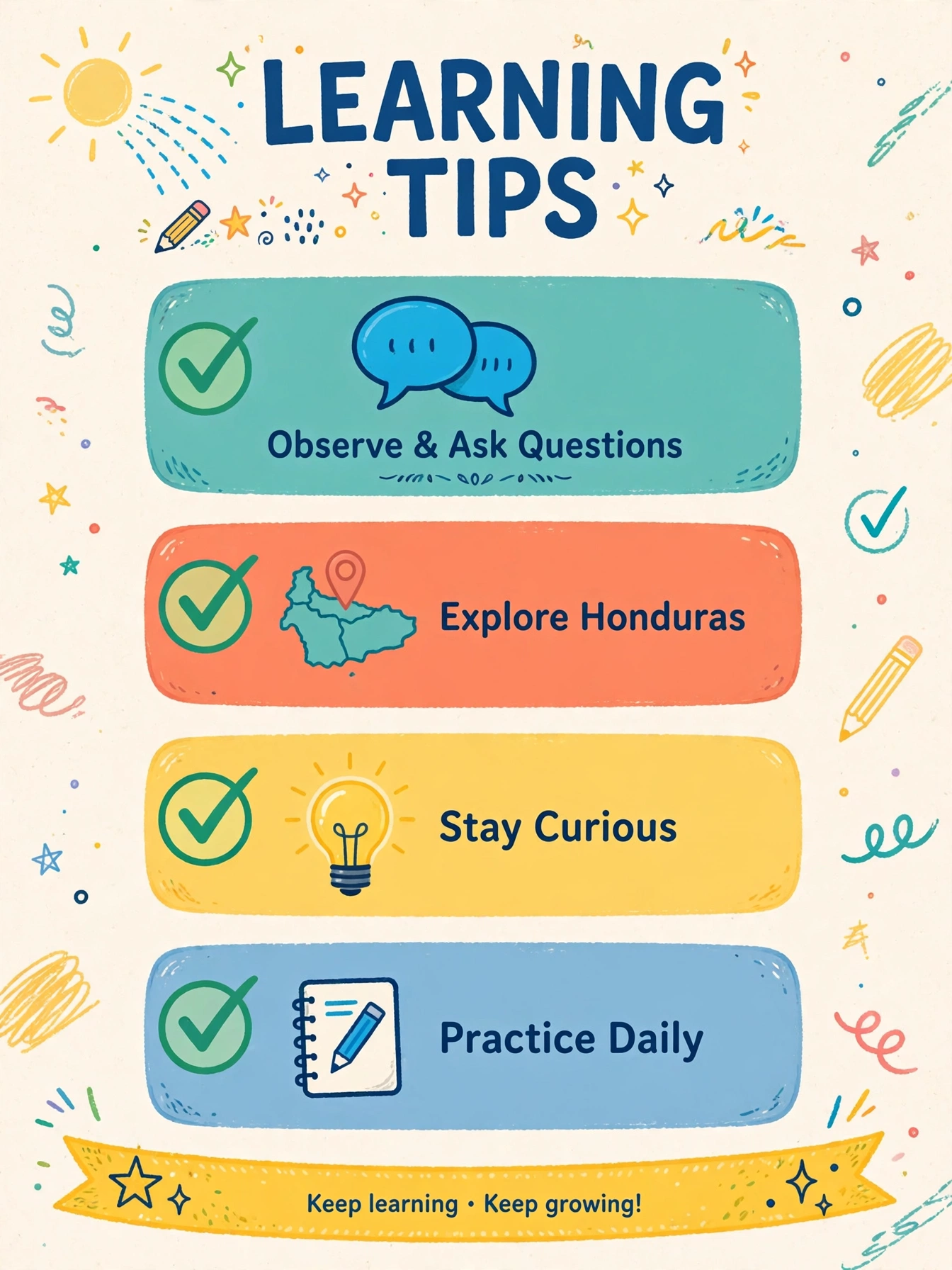
- Listen before you speak: Spend a day noticing which words locals actually use with each other, then copy those exact words in the same situations.
- Learn the phrases, not just the words: “Vaya pues,” “¡Qué pepsi!,” and “¿Qué onda, maje?” are complete social tools. Memorize them as chunks.
- Watch Honduran creators: TikTok and YouTube comedy from Honduras is the best free classroom for honduran slang — you hear the tone, the timing, and the body language together.
- Ask what you don’t know: Hondurans love explaining their slang. Asking “¿Qué significa maje?” will usually start a friendly conversation, not an awkward moment.
- Keep a small notebook: Write down every new word with one real example sentence you heard. Ten words with examples beat fifty words from a list.
- Practice the “voseo”: Hondurans often use vos instead of tú (“vos sabés” instead of “tú sabes”). Pairing vos with honduran slang is what makes you sound truly local.
- Respect the register: Slang is for friends, markets, and parties. In formal settings, switch to standard Spanish — locals do the same.
FAQ
What does “maje” mean in Honduran slang?
Maje is the most famous word in honduran slang. It means “dude,” “bro,” or “mate” between friends, as in “Ey, maje, ¿qué tal?” But be careful: said angrily, it can also mean “fool” or “idiot.” Tone and context decide the meaning.
What is Honduran slang called?
Honduran slang is called caliche. The broader set of uniquely Honduran expressions is known as hondureñismos, a term first documented in an 1899 dictionary by Alberto de Jesús Membreño.
What does “pisto” mean in Honduras?
In Honduras, pisto means money or cash: “No tengo pisto” means “I don’t have money.” Note that in Mexico the same word means an alcoholic drink, so the meaning changes completely across the border.
What does “cipote” mean in Honduran slang?
Cipote (male) and cipota (female) mean a kid or young person. It is an affectionate, everyday word used mostly by adults, similar to saying “kid” or “little one” in English.
What does “macizo” mean in Honduras?
Macizo literally means “solid,” but in honduran slang it means awesome, cool, or great: “¡Esa fiesta estuvo maciza!” means “That party was awesome!” It is one of the most positive words in the dialect.
What does “catracho” mean?
Catracho (male) or catracha (female) is the proud nickname for a Honduran person. It comes from General Florencio Xatruch, a 19th-century Honduran military hero, and today it is a badge of national pride.
Is Honduran slang the same as Salvadoran slang?
They overlap a lot — both countries share words like maje, pisto, chamba, and goma — but they are not the same. Honduras has its own words like macizo (awesome), ¡Qué pepsi!, and catracho that you will not hear the same way in El Salvador.
How do you say “what’s up” in Honduran slang?
The most common way is “¿Qué onda, maje?” or simply “¿Qué tal, maje?” Close friends may also say “¿Qué pedo?” in very casual settings, though that phrase is more Mexican. For a warm, enthusiastic goodbye or agreement, Hondurans say “¡Vaya pues!”
Conclusion
Honduran slang is much more than a list of funny words — it is a window into how Hondurans see the world: warm, direct, humorous, and proud of their roots. From maje to macizo, from pisto to cipote, these words carry centuries of Indigenous heritage, Caribbean influence, and everyday creativity.
The good news is that you do not need to memorize all 25 words at once. Start with the big five — maje, pisto, chamba, macizo, and cheque — and add a few more each week. Listen to how locals use them, copy the tone, and don’t be afraid to ask questions. Hondurans are famously patient with learners, and every slang word you use correctly earns you a smile.
If you enjoyed this guide, keep exploring: our Salvadoran slang guide shows how the same words shift just one border away, and our Spanish slang words collection covers 50+ essential terms from across the Spanish-speaking world. And remember the golden rule of honduran slang: it is not about sounding perfect — it is about sounding human. ¡Vaya pues, maje!
