Rabe Meaning & Definition
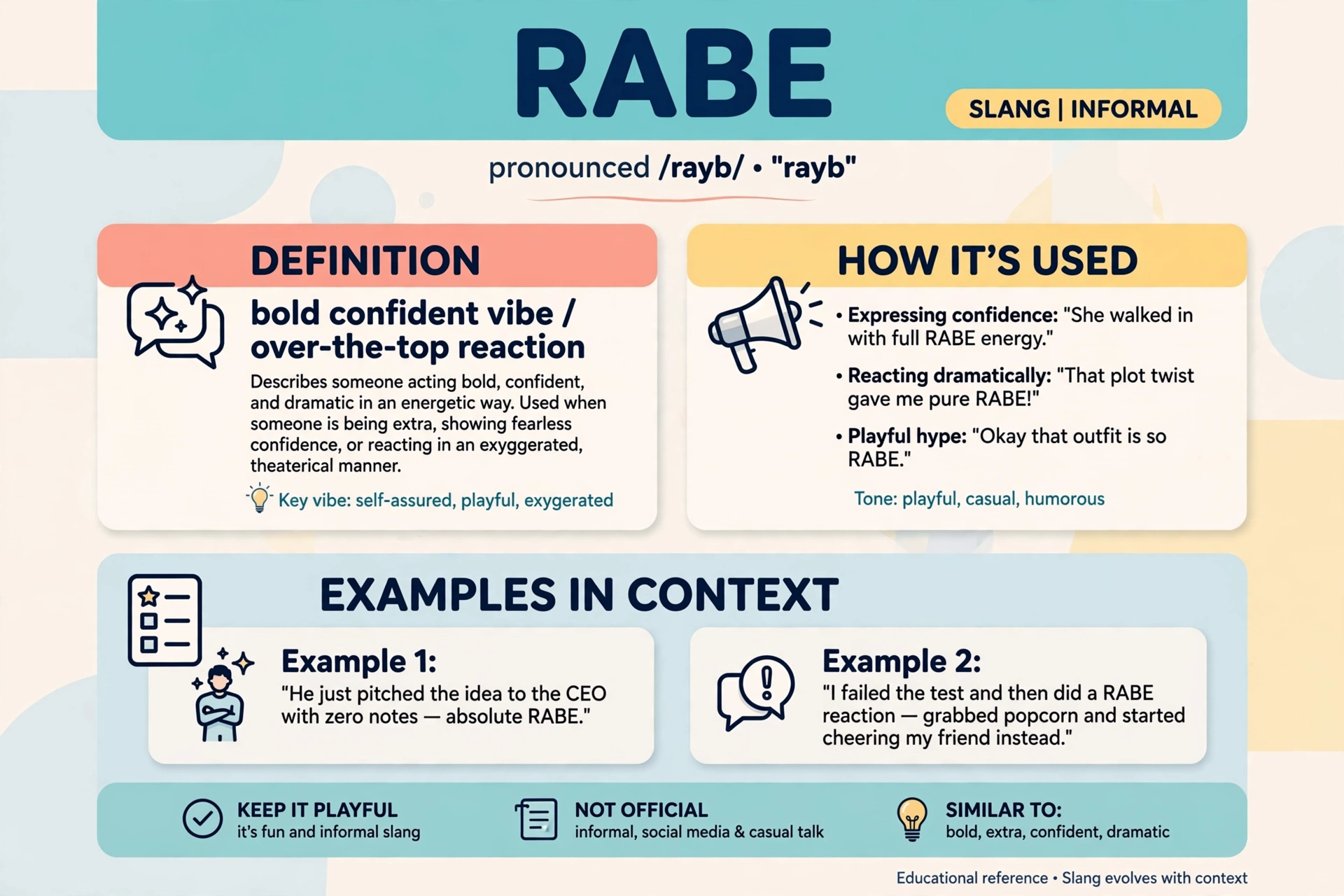
Quick Definition: “Rabe” (pronounced “rayb”) is informal slang that usually describes a bold, confident, over-the-top vibe or energy — like someone walking into a room owning it. In other circles it means going wild or freaking out (“going rabe”), and older Urban Dictionary entries define it as getting beaten badly in a game, messing something up, or third-wheeling. It is casual, non-offensive slang — but not for professional settings.
So, what does rabe actually mean? The honest answer is that it depends on who is saying it and where you heard it. The rabe meaning that has been floating around texting and social media most recently describes a kind of confident, unapologetic energy — a bold vibe that stands out. When someone says a person, a photo, or an outfit is “giving rabe,” they mean it radiates self-assurance, almost to the point of being dramatic about it. Think of it as the attitude version of strutting instead of walking.
Pronunciation matters here too. “Rabe” is pronounced “rayb,” rhyming with “vibe.” That rhyming quality is probably no accident — the word feels like it belongs to the same family as “vibe,” “aura,” and “energy,” and it is used in a similar way: to label a mood or atmosphere someone brings with them.
That said, rabe is one of those slang words with layers. The newer slang usage frames it as confidence and boldness, but other online slang communities use it to describe freaking out, going wild, or having an over-the-top reaction — as in “he went full rabe when he heard the news.” And if you dig into older Urban Dictionary entries, you will find still more definitions: getting beaten badly in a game (“we got rabed 40 to 0”), messing something up (“I rabed that project”), or describing a person who third-wheels or cock-blocks. Different crews, different meanings — which is why context is everything.
One thing all the slang definitions share: rabe is informal, low-stakes, and non-offensive. It is not a slur, not profanity, and not a coded insult. It is the kind of word friends use with friends. But because it is so informal, it has no place in professional emails, workplace chats, or formal writing.
Introduction
You have probably seen “rabe” pop up in a comment section or a group chat and wondered what on earth it means. It looks like it could be a typo, a name, or a vegetable — and honestly, it could be any of those depending on the day. But as slang, rabe meaning in text has settled (at least for now) around the idea of bold, confident energy: the person with main-character confidence, the outfit that refuses to be ignored, the reaction that goes a little bigger than everyone expected.
This guide breaks down every angle of the word: the rabe definition used most often today, where it came from, how people actually use it in texts and on social media, how it compares to similar slang, the alternate meanings that cause confusion (including the broccoli rabe problem), and the polite alternatives to use when you want to sound professional. By the end, you will be able to read “rabe” in any message and know exactly what the sender meant.
If you just want the one-line version: rabe = bold, confident, over-the-top energy — usually said playfully and positively. Keep reading for everything else it can mean. If you enjoy decoding internet slang, you may also like our guide to the white heart emoji meaning — another term where context changes everything.
Origin
Pinning down the exact origin of slang “rabe” is tricky, because it did not arrive with a birth certificate. What we can piece together comes from its scattered footprint across Urban Dictionary, forums, and social media over the past two decades.
The oldest documented uses come from Urban Dictionary entries from the 2000s and 2010s, where “rabe” (and the verb forms “rabed” and “rabing”) meant things like getting destroyed in a game, ruining something through clumsiness, or being the annoying third wheel. These entries suggest the word grew out of small gaming and friend-group circles — the kind of in-joke slang that starts in one dorm room or Discord server and slowly leaks outward.
The newer “confidence/bold vibe” sense appears to be a more recent evolution, likely pushed along by TikTok, Instagram captions, and texting culture in the 2020s. As with many micro-slang terms, once a word sounds fun to say — and “rabe” does have a punchy, one-syllable ring to it — creators repurpose it to fit new moods. The pronunciation “rayb” slotting neatly next to “vibe” probably helped this meaning catch on fast.
There is also a completely separate, much older root worth knowing: “Rabe” is a real German word meaning “raven” (and a German surname). Some of the word’s strange travels in English may trace back to this — German surnames carried into English-speaking countries, where friends shortened or repurposed them. Whether the slang usage borrowed from the German word or arrived there by coincidence is genuinely unclear, but the overlap exists and is worth knowing about.
Bottom line: “rabe” is grassroots internet slang with no single inventor. It bubbled up from gaming circles and friend groups, got remixed by social media, and is still settling on its final meaning today.
Popularity
“Rabe” sits in that interesting middle zone of slang: well-known in certain circles, completely unknown everywhere else. It has never reached the mainstream saturation of words like “slay,” “rizz,” or “sus” — which is exactly why so many people Google it. It is a classic “I saw this word twice this week and now I need to know what it means” term.
Here is how its popularity breaks down by context:
- Gaming communities: The older definitions (getting “rabed” in a match) have circulated here the longest. Older gamers may know this version and no other.
- TikTok and Instagram: The “bold vibe / main-character energy” sense is gaining traction here, especially in captions, comments, and short-form video text overlays.
- Group chats and texting: Both meanings live side by side. Friends use it as a playful adjective for people, outfits, moods, and reactions.
- General public: Low recognition. Most people outside these circles will guess it is a typo for “babe,” a name, or the vegetable.
Search interest in “rabe meaning” and “what does rabe mean” has been climbing steadily as the slang sense spreads — which is a classic pattern for emerging slang. The word gets just popular enough that people start seeing it everywhere, but not popular enough for everyone to know it. That is the sweet spot where slang dictionaries (and articles like this one) become necessary.
If you are seeing “rabe” more often lately, you are not imagining things. The word is having a moment — whether that moment lasts or fades is up to the internet.
How It Is Used
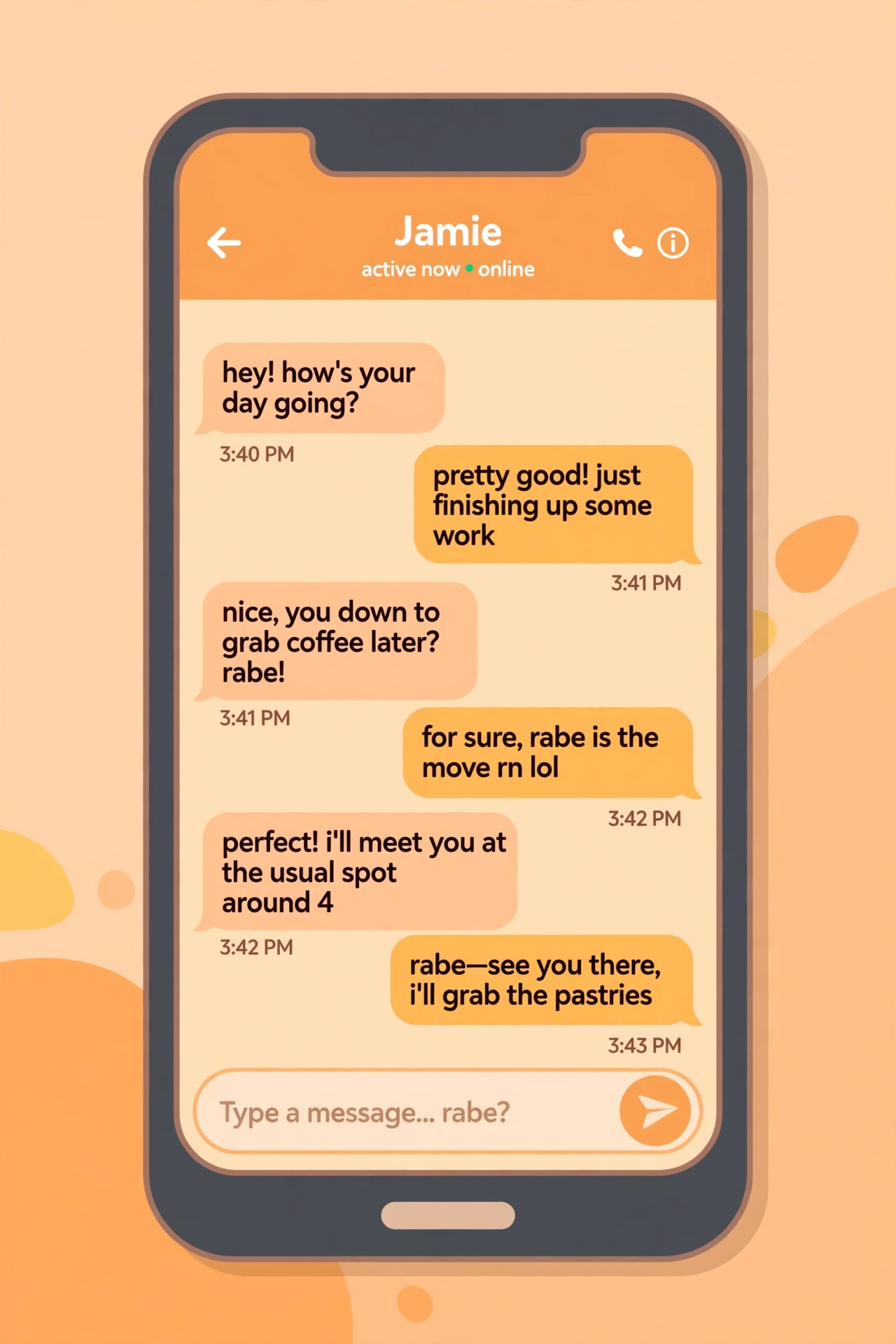
The rabe slang usage falls into a few distinct patterns. Here is how people actually deploy it:
1. As an adjective for people or energy (“giving rabe”)
This is the most common modern use. “Giving rabe” works exactly like “giving main-character energy” — it describes someone radiating confidence.
Her: Did you see Maya’s outfit at the party?
Him: Oh she was giving full rabe. Nobody else stood a chance.
2. As a verb: “going rabe”
This is the freaking-out/wild-reaction sense. When someone goes rabe, they are losing it — in a funny, dramatic, or chaotic way, not a scary one.
Me: Tell Jake the concert tickets sold out.
Friend: He is going to go full rabe. He has been talking about it for weeks.
3. As a verb for getting crushed (“rabed”)
The older gaming sense: being beaten badly. Still heard in gaming chats and sports talk.
Gamer 1: We got rabed 45 to 12.
Gamer 2: That team was insane, no shame.
4. For messing something up (“I rabed it”)
Another older use: botching a task or project through clumsiness.
I totally rabed that presentation. My slides were out of order.
Tone check: The “bold vibe” sense is almost always friendly or admiring — a compliment with swagger. The “going rabe” sense is usually playful or dramatic, laughing with someone rather than at them. The gaming senses are neutral to self-deprecating. None of them are inherently dismissive or mean, though tone always depends on context.
Emoji pairings: When people text “rabe,” they often pair it with 🔥 (fire) for the confident-energy sense, 💀 (skull) for the wild-reaction sense, or 😭 (laughing-crying) when describing someone going over the top. Example: “She walked in giving rabe 🔥🔥” or “Bro went full rabe when he saw the score 💀”.
Examples
Friendly Examples
In casual conversation with friends, “rabe” shows up as playful hype — a way to compliment someone’s confidence or narrate a dramatic moment with humor.
You: New haircut is giving rabe, I love it 😍
Friend: Stoppp, thank you though 🥹
Group chat:
A: Did Leo really ask the DJ to play his own song?
B: Yeah, pure rabe behavior. Respect honestly.
Her: I’m nervous about the interview.
Him: No. You walk in there with rabe energy. You got this.
Professional Examples
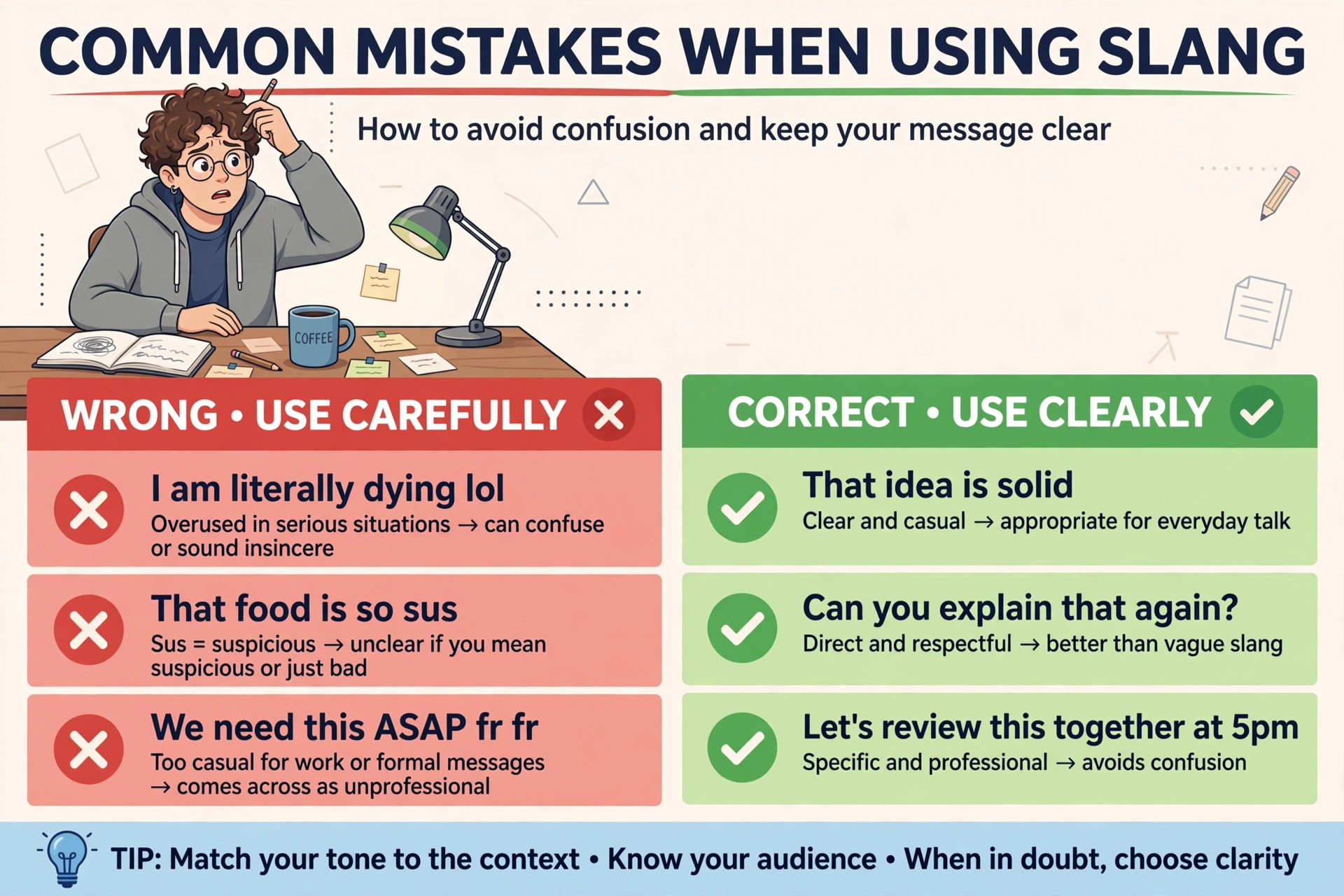
Here is the honest truth: rabe has no professional usage. It is pure casual slang, and dropping it in a work email or a meeting would read as a mistake, not a stylistic choice. The closest professional-adjacent scenario is a casual workplace chat among close colleagues — and even then, it is a gamble.
If a coworker texts you something like this outside work hours:
Coworker: Your presentation today was total rabe energy.
You: Haha thanks! (Mentally note: they mean confident and commanding.)
That is fine between friends-at-work. But you would never write “The Q3 strategy needs more rabe” in a Slack channel your boss reads. Use the alternatives section below instead.
Funny Examples
Slang “rabe” shines brightest in comedy — the word itself sounds funny, and the “going rabe” sense is built for dramatic storytelling.
Me: I told my mom the wifi was down for ten minutes.
Also me: She went full rabe. She was speed-walking around the router like it owed her money 💀
Friend: How did the date go?
You: He showed up in a cape. A CAPE. Full rabe. I stayed anyway.
Group chat:
A: Who ate my fries?
B: Not it.
C: Not it.
A: Y’all are about to see me go rabe.
Comparison with Similar Terms
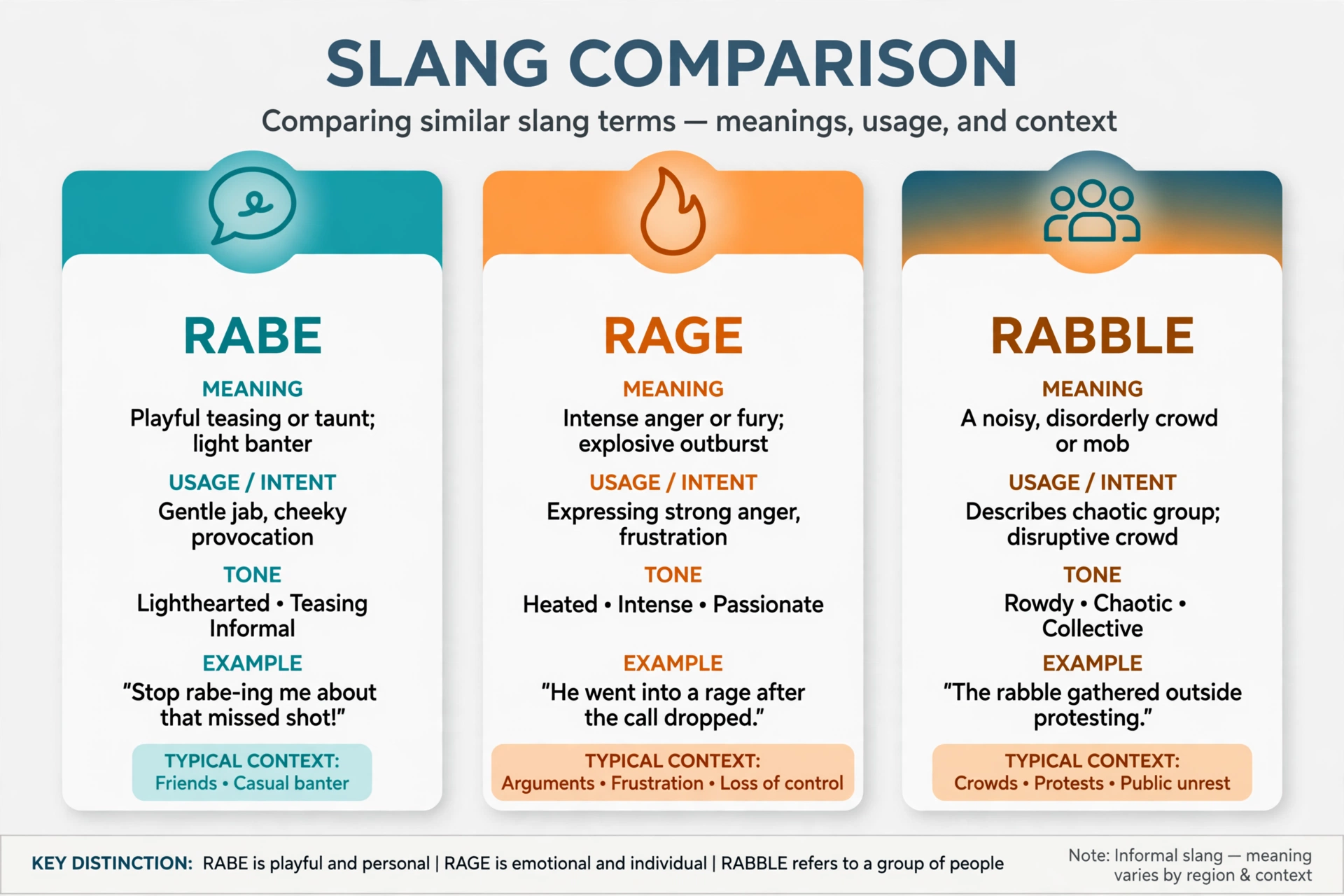
“Rabe” overlaps with several better-known slang words, but it is not identical to any of them. Here is how it stacks up:
| Term | Core Meaning | How It Differs from Rabe |
|---|---|---|
| Rabe | Bold, confident, over-the-top energy | — (the reference point) |
| Rizz | Charm, flirting ability | Rizz is specifically about romantic/social charm; rabe is broader — it is about confidence and presence, not seduction. |
| Aura | The vibe someone gives off | Aura is the closest cousin. “Giving rabe” and “giving aura” are nearly interchangeable, though rabe sounds bolder and more dramatic. |
| Slay | Doing something excellently | Slay praises the achievement; rabe praises the energy. You slay a performance, you give rabe walking into the room. |
| Main-character energy | Acting like the protagonist | Rabe is essentially a one-word version of this — shorter, punchier, more slang-coded. |
| Unbothered | Calm, not caring | Opposite energy. Rabe is loud confidence; unbothered is quiet confidence. |
| Extra | Over-the-top, dramatic | The “going rabe” sense overlaps here. “Extra” leans critical though; rabe is usually said with affection or admiration. |
When in doubt, think of it this way: aura is the vibe, rizz is the charm, slay is the performance, and rabe is the swagger. They all live in the same neighborhood of modern slang — complimentary words for impressive presence — but rabe carries a specific flavor of bold, unapologetic confidence that the others do not quite capture.
Alternate Meanings
This is where “rabe” gets genuinely confusing, because the word wears a lot of hats. Here are the alternate meanings you should know so you do not mix them up:
- Broccoli rabe (the vegetable): This is the most common source of confusion. Broccoli rabe (also spelled “rapini”) is a leafy green vegetable used in Italian cooking. If someone says “I made broccoli rabe for dinner,” they are talking about food, not slang. Not to be confused with the slang term. Context makes it obvious — but if you only catch the word “rabe” mid-sentence, double-check which one they mean.
- Rabe as a name: Rabe is a real first name and surname, most common in German-speaking countries and among people of German descent. If you meet someone named Rabe, it is just their name — pronounced the same way (“rayb”). Do not assume they are named after slang.
- “Rabe” in German: In German, “Rabe” (capital R, since German nouns are capitalized) means “raven.” The German word is pronounced differently (“RAH-beh”) and has nothing to do with the slang — but it is the historical root of the surname.
- Urban Dictionary older definitions: As mentioned, older entries define “rabe” as getting beaten badly in a game (“rabed”), messing something up (“I rabed that project”), or a third-wheeler/cock-block. These are legacy meanings that still pop up in gaming and older friend groups.
- “Going rabe” as freaking out: In some slang circles, this is actually the primary meaning — not confidence, but wild, over-the-top reactions. If a friend says “don’t go rabe on me,” they mean “don’t freak out,” not “don’t be confident.”
- RABE as an acronym: Occasionally you will see RABE in all caps as an acronym for organizations or technical terms (varies by industry). Capital letters are your clue that this is not slang.
How to tell which meaning is intended: Look at the sentence. Food context = vegetable. A person introducing themselves = name. Gaming context = beaten badly or messing up. Compliments about energy, outfits, or confidence = slang. Dramatic reactions = “going rabe.” The word is a chameleon — the surrounding words always give it away.
Professional or Polite Alternatives
Since “rabe” is strictly casual slang, you will need substitutes in professional, academic, or formal settings. Here is what to say instead, matched to each sense of the word:
- For “giving rabe” (confident energy): “carries herself with confidence,” “commands the room,” “has great presence,” “self-assured.”
- For “going rabe” (freaking out): “reacted strongly,” “was quite upset,” “responded passionately,” “overreacted” (use carefully).
- For “rabed” in gaming: “were defeated decisively,” “lost by a wide margin.”
- For “I rabed it” (messed up): “I made an error,” “I mishandled that,” “things did not go as planned.”
Example swap: instead of texting a colleague “Your pitch was total rabe energy 🔥”, write “Your pitch was confident and commanding — really well done.” Same compliment, zero slang risk.
Common Mistakes
People trip over “rabe” in predictable ways. Here are the mistakes to avoid:
- Confusing it with broccoli rabe: The number-one mix-up. If the conversation is about cooking, groceries, or Italian restaurants, “rabe” is the vegetable. Do not reply “lol rabe energy 🔥” when someone is discussing their dinner.
- Assuming everyone knows the slang meaning: Most people do not. Using “rabe” with someone outside your circle will get you a blank stare — or worse, they will think you mean the vegetable or misheard you.
- Using it professionally: It will not land in a work email, a job interview, or a client meeting. It reads as unprofessional every time. Use the alternatives above.
- Mixing up the senses: Telling someone “don’t go rabe” when you mean “be confident” is backwards — in many circles “going rabe” means freaking out. Know which meaning your audience uses before you use it.
- Spelling it wrong: It is R-A-B-E, not “raybe,” “raib,” or “rabeh.” The pronunciation “rayb” is just how it sounds. And do not confuse it with “rabbi” or “rabid” in writing — autocorrect loves to cause this problem.
- Overusing it: Like all micro-slang, “rabe” is fun precisely because it is rare. Drop it into every sentence and it stops being funny and starts being annoying.
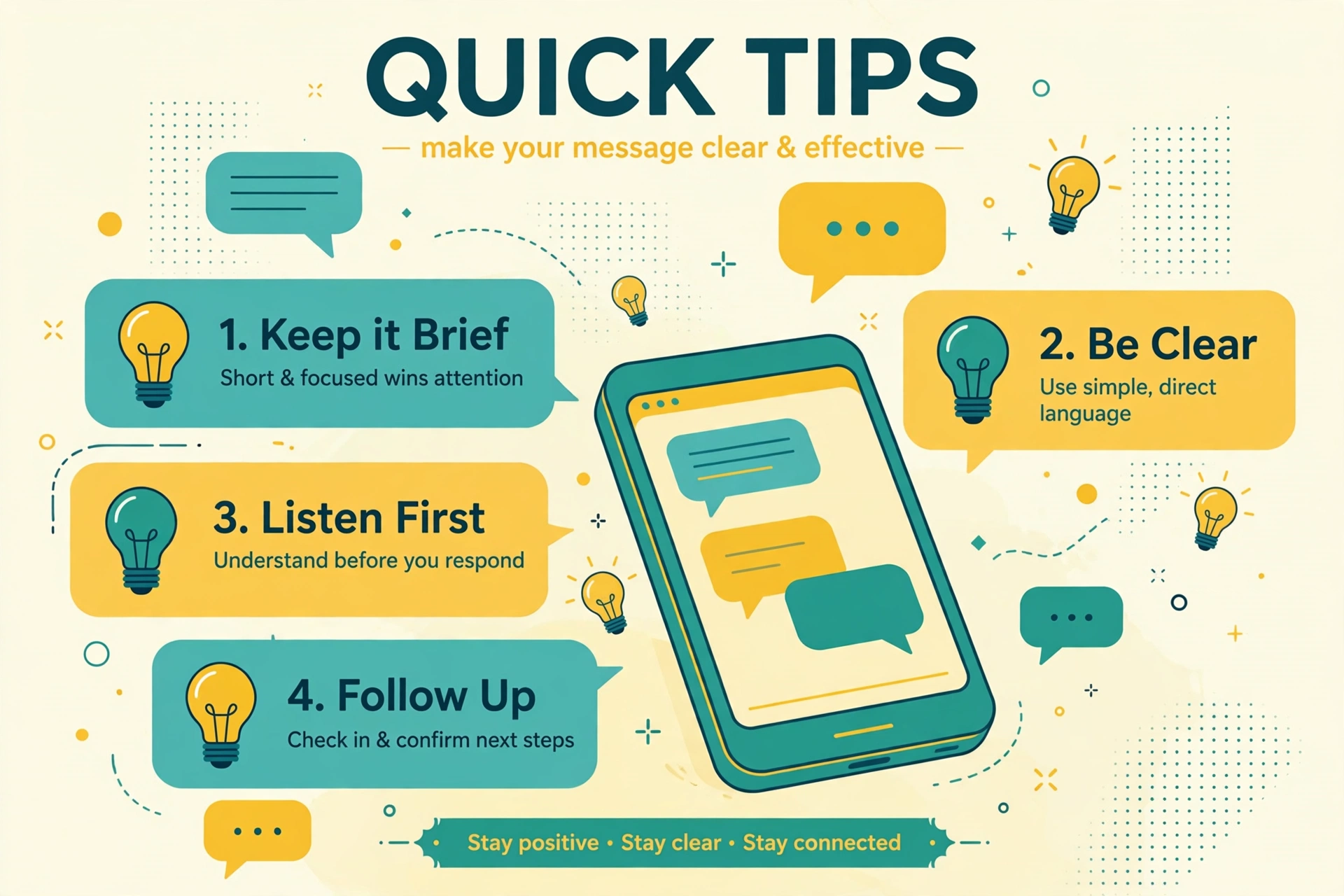
Quick Tips
- Pronounce it “rayb” — rhymes with “vibe.” Getting the pronunciation right is half the battle.
- Default to the confidence meaning in social media and texting contexts, but stay alert — in some circles it means freaking out instead.
- Pair it with “giving” (“giving rabe”) when you mean the bold-energy sense. It is the most natural, most recognized phrasing.
- Read the room: friend groups and group chats = fine; work, school essays, formal events = avoid.
- When in doubt, ask: “Wait, what do you mean by rabe?” is a perfectly normal question. Slang meanings shift fast, and nobody will judge you for checking.
- Do not correct other people’s usage: if your friend’s crew uses “rabe” to mean something slightly different, that is their dialect. Slang belongs to the people who use it.
- Have fun with it: “rabe” is playful slang. Use it lightly, laugh with it, and do not overthink it.
FAQ
What does rabe mean in text?
In texting, “rabe” (pronounced “rayb”) most commonly means bold, confident, over-the-top energy — like saying someone has main-character confidence. In some circles it instead means going wild or freaking out (“going rabe”). It is casual, non-offensive slang used playfully between friends.
What is the rabe slang definition?
The rabe slang definition has two main branches: (1) a confident, bold vibe or presence — “she was giving rabe”; and (2) an over-the-top or wild reaction — “he went full rabe.” Older Urban Dictionary entries add: getting beaten badly in a game, messing something up, or third-wheeling.
How do you pronounce rabe?
“Rabe” is pronounced “rayb,” rhyming with “vibe.” (Note: the German word “Rabe,” meaning raven, is pronounced “RAH-beh” — a different word with a different sound.)
Is rabe the same as broccoli rabe?
No — not to be confused with broccoli rabe, the leafy green vegetable (rapini) used in Italian cooking. Same spelling for the second word, completely different thing. If the conversation is about food, it is the vegetable; if it is about someone’s energy or a reaction, it is the slang.
Is rabe offensive?
No. In casual use, “rabe” is non-offensive slang. It is not a slur or profanity in any of its slang senses. The only risk is using it in professional or formal settings, where it would come across as unprofessional rather than offensive.
What does “going rabe” mean?
“Going rabe” means freaking out, going wild, or having an exaggerated, over-the-top reaction. Example: “When he heard the concert was canceled, he went full rabe.” It is usually said humorously, not as a genuine criticism.
What does “giving rabe” mean?
“Giving rabe” means radiating bold, confident energy — similar to “giving main-character energy” or “giving aura.” Example: “Her red-carpet look was giving rabe.” It is almost always a compliment.
Can I use rabe at work?
No — keep “rabe” out of professional settings. It is strictly informal slang and will read as unprofessional in emails, meetings, or client communication. Use alternatives like “confident,” “commanding presence,” or “self-assured” instead.
Conclusion
The rabe meaning in text boils down to one idea with a few fun detours: at its core, it is slang for bold, confident, over-the-top energy — the kind of presence that walks into a room and owns it. Around that core, older and parallel meanings orbit: going wild, getting crushed in a game, botching a task, or third-wheeling, depending on whose group chat you are in.
What makes “rabe” interesting is not just what it means, but how it moves. It started in gaming circles and small friend groups, got remixed by social media into a confidence compliment, and is still negotiating its final definition in real time. It shares spelling with a vegetable and a German word for raven, which only adds to the confusion — and the fun.
Use it with friends, in captions, and in group chats where everyone gets the joke. Keep it out of the office. And the next time someone texts you that an outfit, a moment, or a person is “giving rabe,” you will know exactly what they mean: pure, unapologetic confidence. 🔥
Like other emerging slang, “rabe” sits alongside terms such as TYSM and HBU — short, punchy words that do a lot of work in a few letters.
