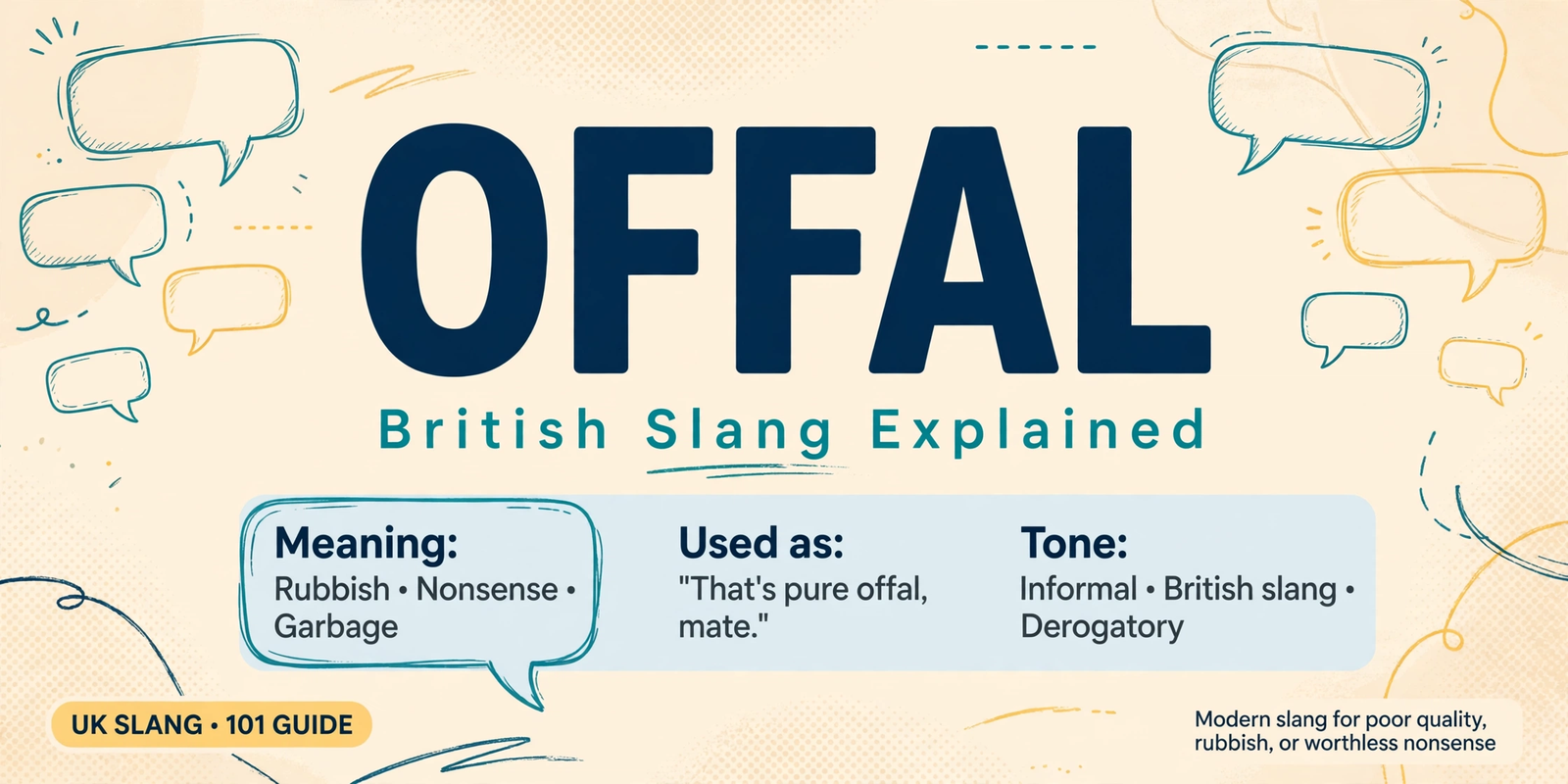
Quick Definition: In slang, offal meaning slang is simple: offal is a cheeky, mostly British way to call something rubbish, disgusting, or embarrassingly bad. If someone texts you “that movie was pure offal,” they are not talking about food — they are saying the movie was total garbage, with a joke built in. It sounds exactly like “awful,” and that is half the point.
Offal Meaning Slang & Definition
So, what does offal mean in slang? At its core, offal meaning slang describes anything low-quality, gross, or just plain terrible — a failed meme, a dreadful haircut, a boring party, or a meal that should never have left the kitchen. It is an informal insult, but a playful one. Calling something offal is like calling it trash, except with a posh, foodie twist that makes the insult feel clever instead of crude.
The literal meaning is very different. Dictionary.com defines offal as the edible internal organs of a butchered animal — liver, kidneys, heart, tongue, and tripe — and, in a second sense, simply refuse or rubbish. The slang meaning grows directly out of that second sense: offal is the stuff that gets thrown away, so calling something offal means it belongs in the bin.
Pronunciation matters here. Offal is pronounced “OFF-ull,” which sounds almost exactly like “awful.” That happy accident is a big reason the word works so well as slang. When you say “that was offal,” listeners hear both the food insult and the word awful at the same time, and the joke lands twice.
Here are the quick facts:
- Part of speech: Usually an uncountable noun (“that film was pure offal”), but it can also work as an adjective (“an offal haircut”).
- Tone: Playful, sarcastic, and cheeky — rarely truly angry.
- Where you will hear it: Mostly British English, UK Twitter, TikTok comments, and group chats.
- Formality: Very informal. Never use it in a work email or a formal setting.
- Closest synonyms: Trash, garbage, rubbish, awful, dreadful.
Introduction
Imagine this: you spend two hours watching a movie your friend swore was brilliant, and when the credits roll, you text the group chat three words — “that was offal.” Everyone laughs. Nobody asks what you mean. In that one word, you have said the film was boring, badly made, and a waste of an evening, and you have said it with style.
That is the strange charm of offal meaning slang. It takes a word most people only meet in a butcher’s shop or a cookery show and turns it into a punchline. It is gross, it is funny, and it is just unusual enough that using it makes you sound witty rather than rude. You are not swearing. You are not shouting. You are just calmly declaring that something belongs with the leftovers.
But offal is also a word people misunderstand. Some think it only means animal organs. Some have never heard it at all, especially in the United States, where “organ meat” or “variety meats” are the usual terms. And some use it in the wrong situations — calling a person offal to their face, for example, is far harsher than calling a movie offal. This guide clears all of that up: the real definition, where the slang came from, how to use it in texts and memes, how it compares with similar insults, and the mistakes to avoid.
Origin
The word offal has been around for centuries, and its history explains exactly why it became an insult. It comes from Middle English, built from two simple words: “off” and “fall.” The idea is literal — offal is the parts that fall off the animal when it is butchered. The first recorded uses date back to around 1350–1400, when offal meant the waste material and entrails left over after slaughter.
For hundreds of years, offal was simply a butcher’s word. It described the liver, kidneys, heart, lungs, tripe, and other internal organs — the parts that were not prime cuts of meat. In many cultures these parts were (and still are) prized food: haggis in Scotland, steak and kidney pie in England, and nose-to-tail cooking in France all celebrate offal. But in everyday English, offal also picked up a second meaning: refuse, rubbish, anything discarded as worthless.
The jump from butcher’s term to slang insult happened gradually, mostly in British English during the 19th and 20th centuries. Food has always been a rich source of British insults — think of calling someone a “plonker” or describing a bad idea as “half-baked.” Offal fitted the pattern perfectly: it was vivid, slightly disgusting, and funny. To call something offal was to say, “this is the part nobody wants.”
The internet gave the word a second life. On UK Twitter, TikTok, and Reddit, offal started appearing as a deliberately old-fashioned, almost posh insult — the kind of word a person uses when “trash” feels too plain. Creators and commenters picked it up because it stands out: in a feed full of “this is trash” and “this is mid,” the word offal stops the scroll.
Popularity
Offal meaning slang is popular, but in a very specific way. It is not a global Gen Z buzzword like rizz or sigma. It is a niche, mostly British favourite that has found a second home online — and that niche quality is part of its appeal.
In the UK, the word has steady, quiet popularity. British speakers already know offal from cooking and from the figurative sense of “rubbish,” so the slang use feels natural. It pops up in football banter (“that performance was offal”), in food reviews, in reality TV commentary, and in group chats whenever something disappoints. It is the kind of word a British person might use to roast a friend without sounding aggressive.
In the United States, offal is much less common as slang. Most Americans meet the word in a culinary context — if at all — and the slang meaning can genuinely confuse them. That gap is exactly why the term is trending in searches: Americans see it in a meme or a British TikTok, do not know what it means, and look it up. The same pattern drives searches for other British-born internet words, like the regional jokes explained in our guide to Ohio slang, which also spread through memes before people understood them.
On TikTok and X (formerly Twitter), offal works as a reaction word. A creator posts a terrible take, a bad outfit, or a failed cooking attempt, and the top comment is a single word: “offal.” The joke is the understatement. Nobody is angry; everyone is in on it. Food creators have also helped the word travel, because videos about cooking liver, kidney, or tripe — real offal — regularly attract comments joking about the slang meaning.
Search interest reflects this slow-burn pattern. People rarely search for offal slang every day, but the term gets steady lookups from curious readers, students, and anyone who has just been called it (or called something it) online. It is not a viral explosion — it is a durable little insult with centuries of history behind it.
How It Is Used
Offal is flexible, and that flexibility is what makes it useful. It works as a noun, an adjective, and even a punchline on its own. Here is how people actually use it.
As a noun — “that was pure offal.” This is the most common use. The structure is simple: “that [thing] was offal” or “pure offal.” It works for movies, songs, meals, outfits, parties, games, and ideas. Adding “pure” or “total” in front of it makes the insult stronger without making it ruder.
As an adjective — “an offal haircut.” Less common, but perfectly correct. You can describe a thing directly: an offal performance, an offal excuse, an offal parking job. It sounds slightly old-fashioned in this form, which is part of the joke.
As a one-word reaction — “Offal.” In a group chat or a comment section, a single “offal” under a photo or a video says everything. It is the polite person’s version of a thumbs-down, and it usually gets a laughing reaction in return.
Self-deprecating use — “my cooking is offal.” People also use the word on themselves. Saying your own attempt at something was offal is a funny way to admit failure before anyone else can point it out. It softens the embarrassment and usually earns sympathy laughs.
Where does it show up? Mostly in casual texting, group chats, TikTok comments, tweets, gaming lobbies, and friendly roasting sessions. You will rarely hear it in a classroom, an office, or a formal conversation — and that is the point. Offal is an in-group word: it signals that you are joking with friends, not filing a complaint.
Tone is everything. The same word can be gentle teasing or a genuine insult depending on context:
| Tone | Example | What it really means |
|---|---|---|
| Playful teasing | “Your playlist is offal, mate.” | I am joking with you — your taste is questionable but I like you. |
| Honest review | “The sequel was pure offal.” | I genuinely did not enjoy it, and I am being funny about it. |
| Self-deprecating | “My first attempt at baking? Offal.” | I failed, and I know it. Laugh with me. |
| Harsh insult | “You are offal.” | This is no longer a joke — do not say this to someone’s face. |
Examples
The fastest way to understand offal meaning slang is to see it in real sentences. These examples cover friendly chats, work-safe situations, and the funniest uses — so you can hear the difference between teasing and insulting.
Friendly Examples
- “Bro, that movie was pure offal. Two hours of my life I will never get back.”
- “Your cooking last night? Offal. But I still ate all of it, so what does that say about me?”
- “Did you see his new haircut? Absolute offal. He looks like a traffic cone.”
- “This weather is offal. Rain, wind, and my umbrella just broke.”
- “The Wi-Fi in this café is offal. I have been staring at a loading screen for ten minutes.”
Professional Examples
Offal is not a professional word, but it can appear in light, informal work chats — usually about things, never about people. A few safe examples:
- “The first draft of the presentation was offal, to be honest. I rewrote the whole thing.”
- “That meeting could have been an email. The slides were pure offal.”
- “Our old booking system was offal. The new one is so much faster.”
Notice the pattern: in every professional example, offal describes a thing — a draft, slides, a system. The moment you aim it at a colleague, it stops being funny and starts being a problem. Keep it aimed at objects, and you will stay safe.
Funny Examples (if applicable)
- “I tried to make sourdough. The result was offal — it could have been used as a doorstop.”
- “My team lost 5–0. Offal. I am deleting the sports app and moving on with my life.”
- “He said his mixtape was fire. It was offal. My ears are still recovering.”
- “That Halloween costume was offal in the best way — so bad it was actually brilliant.”
- “Me: I will just have one slice. Also me, three hours later: that whole pizza was offal and I regret nothing.”
| Situation | What someone says | Meaning |
|---|---|---|
| Bad movie | “That film was pure offal.” | The film was terrible. |
| Terrible food | “This takeaway is offal.” | The food tastes awful. |
| Friend’s joke flops | “That joke was offal, mate.” | That joke was not funny at all. |
| Own failure | “My exam went offal.” | I did really badly. |
| Online comment | “Offal.” | This post is garbage (playfully). |

Comparison with Similar Terms
Offal is not the only word for “bad.” English has a whole shelf of insults for terrible things, and each one carries a slightly different flavour. Here is how offal stacks up against the words people confuse it with.
| Term | Meaning | Tone | Where it is used |
|---|---|---|---|
| Offal | Rubbish, gross, embarrassingly bad | Cheeky, witty, slightly posh | Mostly British, online banter |
| Trash | Garbage, worthless | Direct, casual | Everywhere, especially US |
| Garbage | Rubbish, nonsense | Blunt, a bit harsh | Mostly US |
| Rubbish | Nonsense, low quality | Mild, everyday | Mostly British |
| Awful | Very bad, unpleasant | Neutral, standard English | Everywhere |
| Mid | Average, mediocre, disappointing | Gen Z, dismissive | TikTok, gaming, US |
| Chopped | Ugly, bad-looking | Harsh, Gen Z insult | TikTok, US/UK |
The key difference is personality. “Trash” and “garbage” are plain and direct — they get the job done, but nobody laughs. “Mid” is cooler and younger, but it means average, not truly terrible. “Awful” is correct but boring, and it is standard English rather than slang. Offal is the word you choose when you want the insult to be funny. It sounds clever because it is unusual, and it carries a built-in food joke that the other words do not have.
It also overlaps with some look-focused insults. If someone says a haircut is chopped, they mean it looks bad — and an offal haircut means roughly the same thing, just with a different joke attached. The two words often appear in the same conversations, and knowing both makes your slang vocabulary much stronger. For a lighter, more playful term on the other end of the spectrum, zesty shows how slang can praise energy and flair instead of mocking failure.

Alternate Meanings
Offal is a word with more than one life, and the slang meaning is only the newest one. Depending on context, it can mean something completely different — which is why it confuses so many people.
| Meaning | Context | Example |
|---|---|---|
| Animal organs used as food | Cooking, butchery | “The chef specialises in offal — liver, kidney, and sweetbreads.” |
| Refuse, rubbish, waste | Formal or literary English | “The streets were full of offal after the market closed.” |
| Something terrible (slang) | Texts, memes, banter | “That movie was pure offal.” |
| “Offal to the wall” | Humorous slang phrase | “That cheese tastes offal to the wall.” |
| Worthless material (figurative) | Writing, criticism | “Most of the internet is offal, but some of it is gold.” |
The culinary meaning deserves respect. In many food cultures, offal is not waste at all — it is a delicacy. Liver pâté, haggis, menudo, sweetbreads, and grilled heart are celebrated dishes, and nose-to-tail cooking treats offal as the most flavourful part of the animal. So when a chef talks about offal, they are talking about ingredients, not insults. Context is everything: in a kitchen, offal is dinner; in a group chat, offal is a joke.
There is also the phrase “offal to the wall,” a playful twist on “awful to the wall” that means something is extremely unpleasant or distasteful, usually said with humour. And in older, more literary English, writers used offal to describe the worthless leftovers of anything — the offal of society, the offal of the internet, political offal. The insult “offal-eater” exists too, but it is very harsh: it describes someone who consumes any nonsense they are given, and it is best avoided entirely.
Professional or Polite Alternatives
Sometimes offal is the wrong word — in a work meeting, in front of your grandmother, or in any situation where a joke could be misunderstood. Here are polite alternatives that say the same thing without the gross-out humour:
- “Not great” — the safest all-purpose option. “The food was not great, to be honest.”
- “Disappointing” — polite and clear. “The film was disappointing after all the hype.”
- “Below standard” — formal enough for work. “The first draft was below standard, so I revised it.”
- “Unimpressive” — honest without being rude. “The performance was unimpressive.”
- “Needs work” — constructive instead of insulting. “The design needs work before we show the client.”
- “Not my taste” — perfect when the thing is fine but not for you. “The music was not my taste.”
- “Could be better” — gentle and diplomatic. “The service could be better.”
As a rule of thumb: use offal with friends who share your sense of humour, and use these alternatives everywhere else. The meaning survives the swap — only the joke changes.
Common Mistakes
Offal is easy to use, but it is also easy to get wrong. These are the mistakes people make most often:
- Using it on a person to their face. Calling a movie offal is funny. Calling a person offal is a genuine insult — it compares them to slaughterhouse waste. Keep it aimed at things, not people, unless you are very sure the joke will land.
- Using it in formal settings. Offal is slang. Using it in a job interview, a work email, or a school essay will make you sound careless, not clever.
- Confusing it with “awful” in writing. They sound the same, but they are spelled differently and they are different words. Writing “that was awful” when you meant the slang “offal” loses the joke entirely.
- Assuming everyone knows it. In the US, many people have never heard offal as slang. If your audience is American, they may think you are talking about cooking — or they may have no idea what you mean at all.
- Overusing it. Offal is funny because it is unusual. If you call everything offal, the joke wears out fast and you start sounding like you only know one insult.
- Forgetting the food meaning. Telling a chef their offal dish is “offal” is a confusing compliment-insult. In a restaurant, the word means the menu, not the review.
- Using it for something mildly bad. Offal means truly terrible, not just average. For something that is merely okay, “mid” fits better — offal is for disasters.

Quick Tips
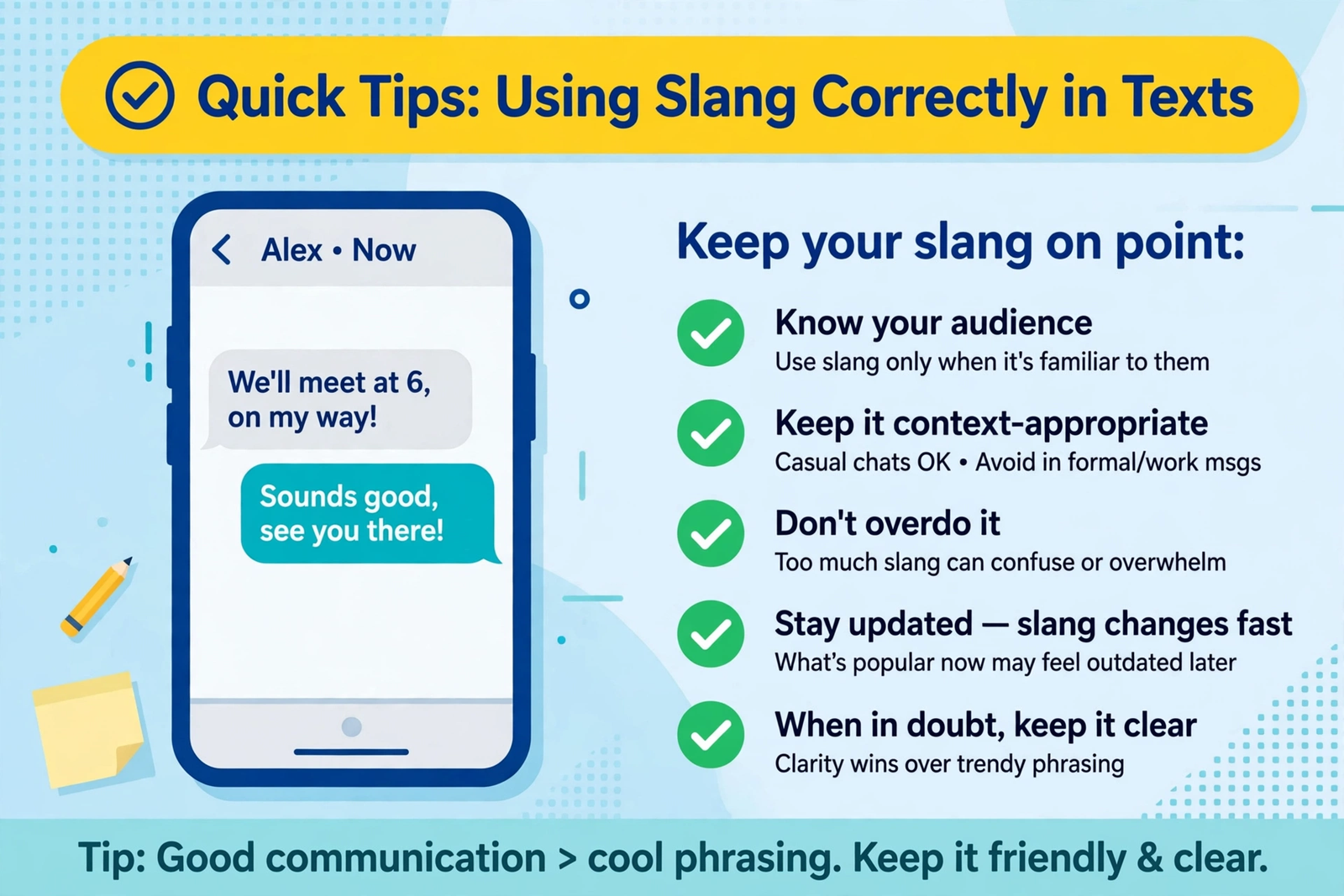
Want to use offal like a native? Keep these tips in mind:
- Save it for friends. Offal works best in group chats, gaming lobbies, and friendly roasts — not at work or with strangers.
- Aim it at things, not people. Movies, meals, outfits, and ideas are fair game. People are not.
- Add “pure” for emphasis. “Pure offal” hits harder than plain “offal” and sounds more natural.
- Pair it with specifics. “That movie was offal — the plot made no sense” is funnier and clearer than the insult alone.
- Use it sparingly. One well-timed “offal” gets a laugh. Ten in a row gets an eye-roll.
- Know your audience. British friends will get it instantly. American friends may need the explanation — or just enjoy the confusion.
- Own it when it is about you. Calling your own cooking or your own joke offal is the fastest way to make people laugh with you, not at you.

FAQ
What does offal mean in slang?
In slang, offal means something rubbish, disgusting, or embarrassingly bad. It is a cheeky, mostly British way to call a movie, a meal, a meme, or an idea total garbage. For example, “that party was pure offal” means the party was terrible.
Is offal a rude word?
Offal is not a swear word, but it is an insult — so it depends on context. Aimed at a thing (a film, a meal, a haircut) among friends, it is playful teasing. Aimed at a person, it is genuinely rude, because it compares them to slaughterhouse waste. Use it on objects, not people.
Why does offal sound like awful?
Because it almost is. Offal is pronounced “OFF-ull,” which sounds nearly identical to “awful.” That is part of why the slang works so well — when you call something offal, listeners hear both the food insult and the word awful at the same time.
Is offal slang British or American?
Mostly British. The slang use grew out of British English, where offal already meant rubbish in a figurative sense. In the United States, most people know offal only as a cooking term for organ meats, so the slang meaning often confuses American listeners.
What is the literal meaning of offal?
Literally, offal is the internal organs and entrails of a butchered animal — liver, kidneys, heart, tongue, tripe, and similar parts — used as food. The word comes from Old English “off” + “fall,” meaning the parts that fall off during butchering.
Can you use offal to describe a person?
You can, but you probably should not. Calling a person offal is a harsh insult, not a joke. The playful version of the slang only works when it describes things — movies, food, outfits, ideas, performances. For people, choose a gentler word.
What is the difference between offal and trash?
They mean roughly the same thing — something worthless or terrible — but offal is cheekier and more unusual. “Trash” is direct and plain; offal adds a food joke and a posh, British flavour. Offal also sounds like “awful,” which gives it an extra layer of humour that trash does not have.
What does “offal to the wall” mean?
“Offal to the wall” is a humorous slang phrase meaning something is extremely unpleasant or distasteful. It plays on the phrase “awful to the wall” and on the fact that offal sounds like awful. Example: “That cheese tastes offal to the wall.”
Conclusion
Offal meaning slang is proof that the best insults are not always the loudest ones. A single old word — born in a butcher’s shop more than 600 years ago — now does the work of a whole bad review, and it does it with a joke built in. It means rubbish, gross, or embarrassingly bad, and it sounds like awful, which is exactly why it sticks in your head.
Use it well: aim it at things, not people; save it for friends who share your humour; and pair it with a specific reason so the joke lands. And remember that slang is always moving — today’s offal could be tomorrow’s forgotten word. If you enjoyed decoding this one, keep exploring the words your friends actually use, from mewing to the latest TikTok terms, and you will never be lost in the group chat again.
