greek slang Meaning & Definition
Quick definition: Greek slang is the informal, everyday language Greeks actually speak — a mix of ancient-rooted expressions, street words, playful insults, and English borrowings that you will never find in a textbook. If formal Greek is what you learn in class, greek slang is what you hear in a Athens café, in a group chat, or at a family dinner when everyone relaxes.
When someone searches for “greek slang,” they usually want one of two things: the fun, real words Greeks use with friends, or the meaning of a specific Greek word they heard in a song, a movie, or a text message. This guide covers both. You will learn 25 real Greek slang words with their meanings, pronunciation, and examples, plus how to use them without embarrassing yourself.
Introduction
Picture this: you land in Athens, you have studied Greek for months, and you proudly say “Kalimera” to a barista. She smiles and replies, “Ela re, ti kaneis?” You freeze. None of those words were in your textbook. Welcome to greek slang — the living, breathing version of the language that 10 million Greeks use every single day.
Greek slang is warm, dramatic, funny, and sometimes gloriously rude. A single word like re can mean “hey,” “dude,” “seriously?” or “are you kidding me?” depending on the tone. A word like malaka can be an insult, a term of endearment, or a punctuation mark between friends. And in 2026, young Greeks are blending classic street words with English imports like flexaro (to flex) and krintzaro (to cringe), creating a slang that changes almost every year.
This article is your shortcut. Instead of memorizing a dictionary, you will learn the words Greeks actually say, when to say them, and — just as important — when not to.
Origin
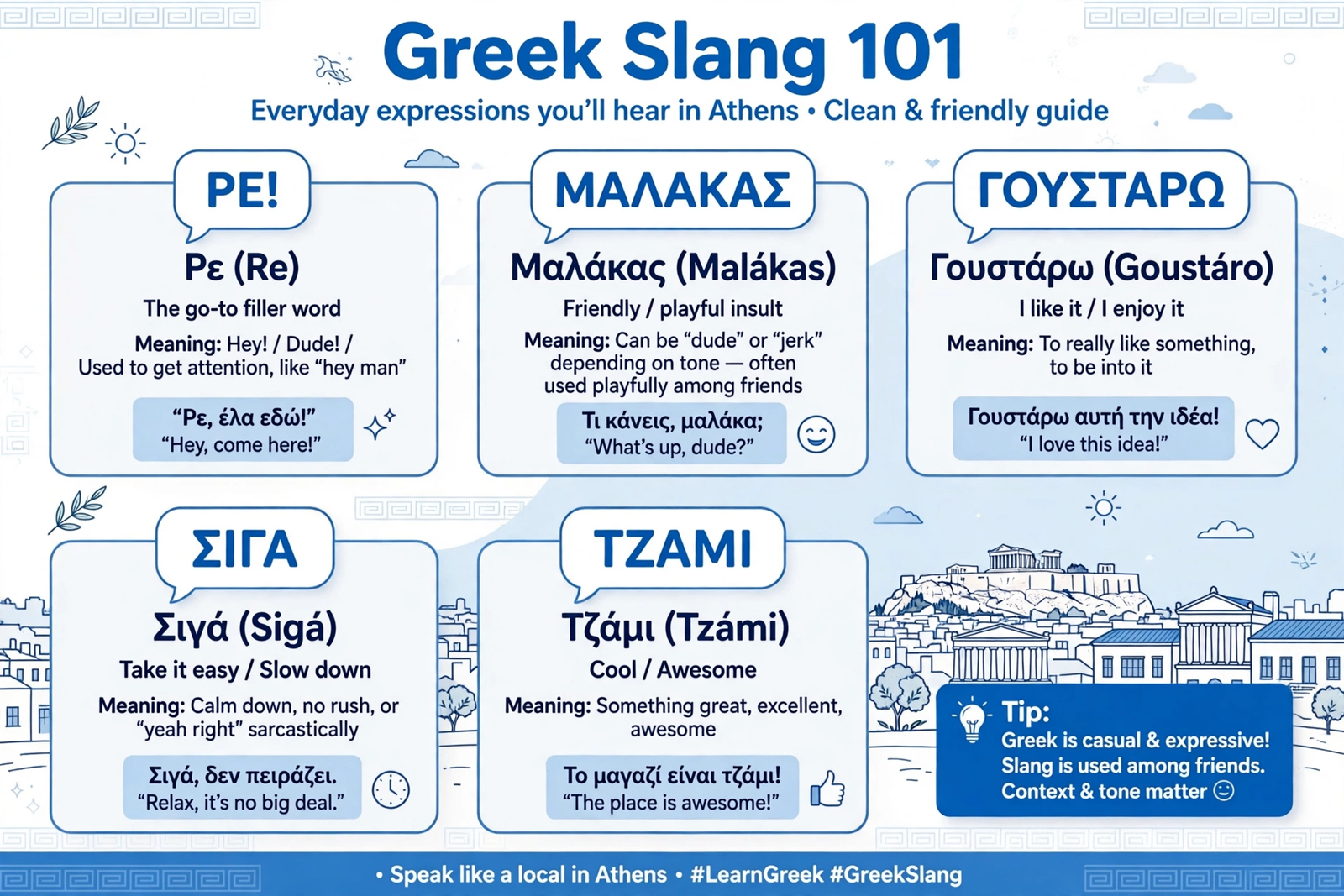
Greek slang did not appear overnight. It grew out of centuries of street life, music, migration, and humor. Many classic slang words trace back to the rebetiko music scene of the early 1900s, where the mangas — the streetwise tough guy of Piraeus — developed his own code of words. The word mangas itself comes from that world and still means a cool, clever, self-reliant person today.
Other words come from everyday life. Marouli literally means “lettuce,” but in slang it means money — the same way English speakers say “lettuce” or “bread” for cash. Lefta is another word for money, and both are still heard in markets and cafés across Greece. Modern Greek itself has one of the longest documented histories of any living language — see the Greek language overview for background on where these words come from.
Then came the English wave. As Greek teenagers grew up with the internet, social media, and American pop culture, English verbs got a Greek ending. “To flex” became flexaro, “to chill” became tsilaro, and “cringe” became krintzaro. These are not lazy translations — they are fully Greek words now, conjugated like any other verb, and they show how greek slang keeps reinventing itself with every generation.
Popularity
Greek slang is more popular than ever, and not only in Greece. Travel vloggers, language apps, and TikTok creators have turned words like opa and malaka into global memes. The Netflix-era boom in Greek travel means millions of visitors arrive each year wanting to sound like locals, not tourists.
Online, the numbers tell the same story. Language-learning communities constantly ask what Greeks really say in texts, and Greek-American families pass slang down as a badge of identity. Words like kefi — that untranslatable feeling of joyful celebration — have even entered English travel writing.
What makes greek slang so shareable is its emotion. Greek is already an expressive language, and slang turns the volume up. A Greek friend will not just say a party was “good” — they will say it was teleia (perfect), or gamato (amazing), or simply shout opa and start dancing. That energy is exactly why people keep searching for these words.
How It Is Used
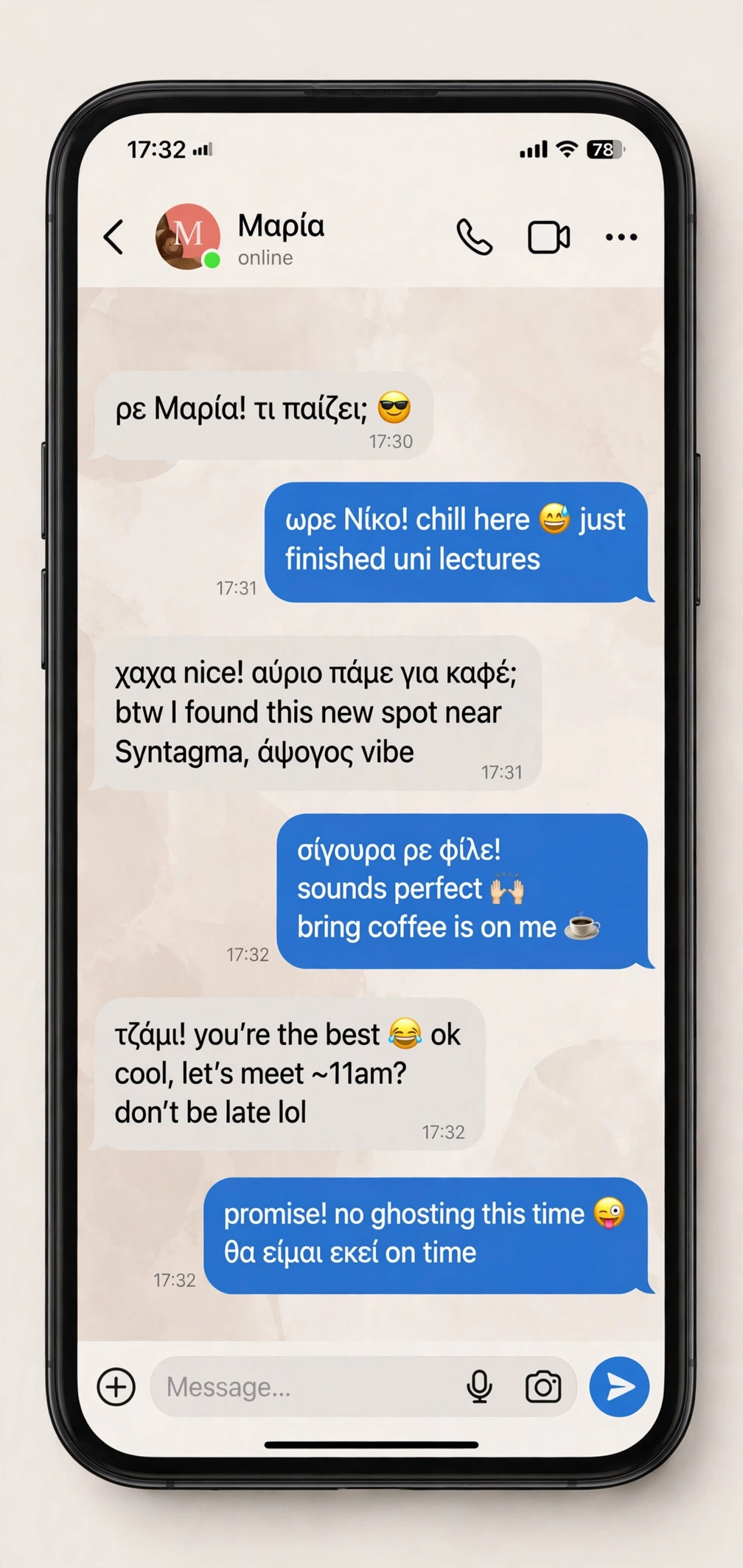
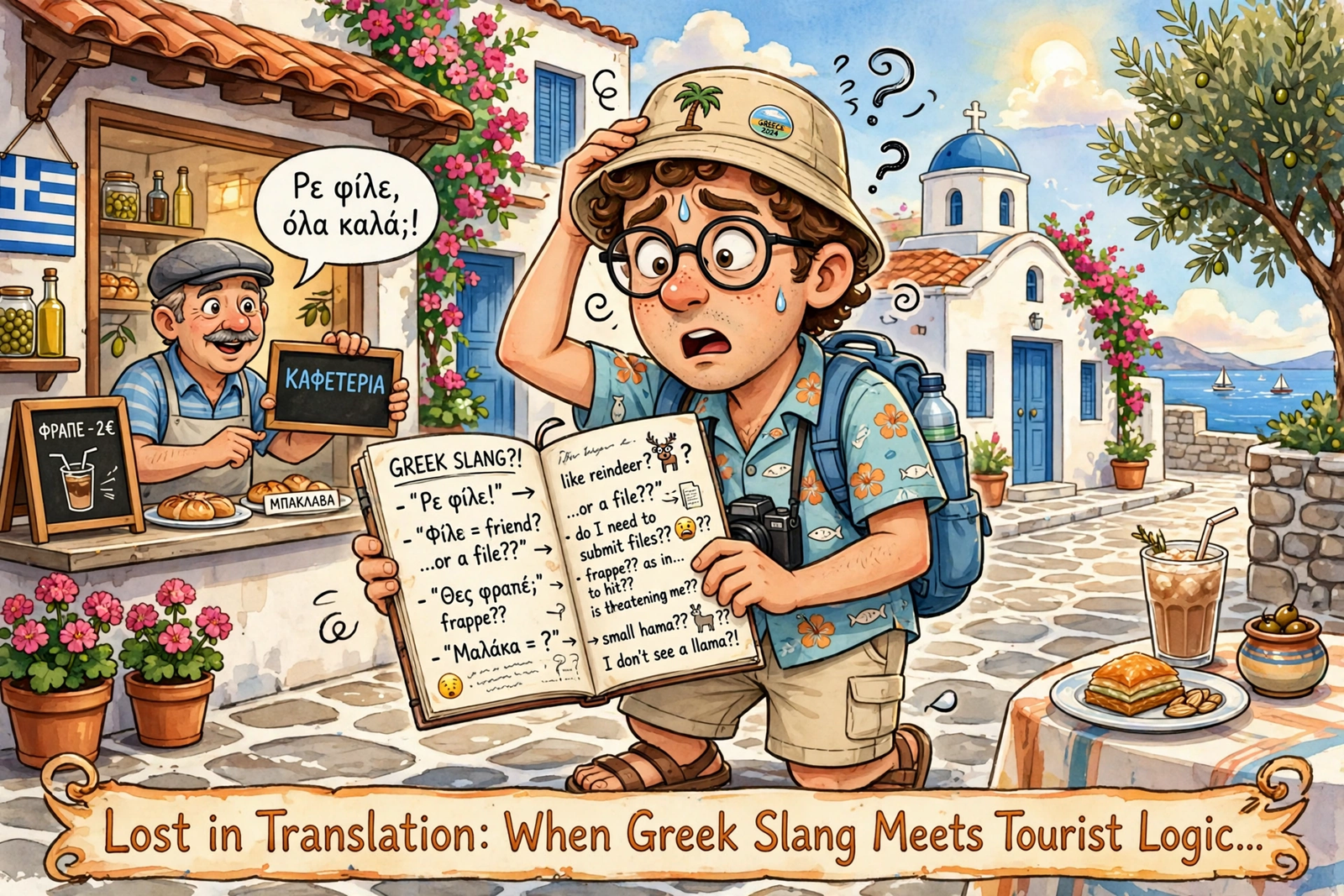
Greek slang lives in three places: spoken conversation, text messages, and social media. In speech, tone does half the work — the same word can be friendly or fighting words depending on how you say it. In texts, Greeks often write slang in Greeklish (Greek words written with Latin letters), so you might see “re file” instead of “ρε φίλε” in a WhatsApp message.
Here are the ground rules before you start using these words:
- Friends only, at first. Most greek slang is informal. Do not use it with a boss, a teacher, or someone’s grandmother until you know them well.
- Tone is everything. Words like re and malaka swing from affectionate to aggressive based on your voice. When in doubt, stay soft and smile.
- Start with the safe ones. Words like ela, pame, endaxi, and teleia are friendly in almost any casual setting.
- Learn the pronunciation. Greeks love it when foreigners try. Even an imperfect “Yia sou, ti kaneis?” will earn you a warmer welcome than perfect textbook Greek.
Most slang words in this guide work in both Greece and Cyprus, and Greek diaspora communities in the US, UK, and Australia use many of them too — often mixed with English in the same sentence.
Examples
Here are 25 Greek slang words grouped by how you will actually use them, with pronunciation and a real example for each.
Friendly Examples
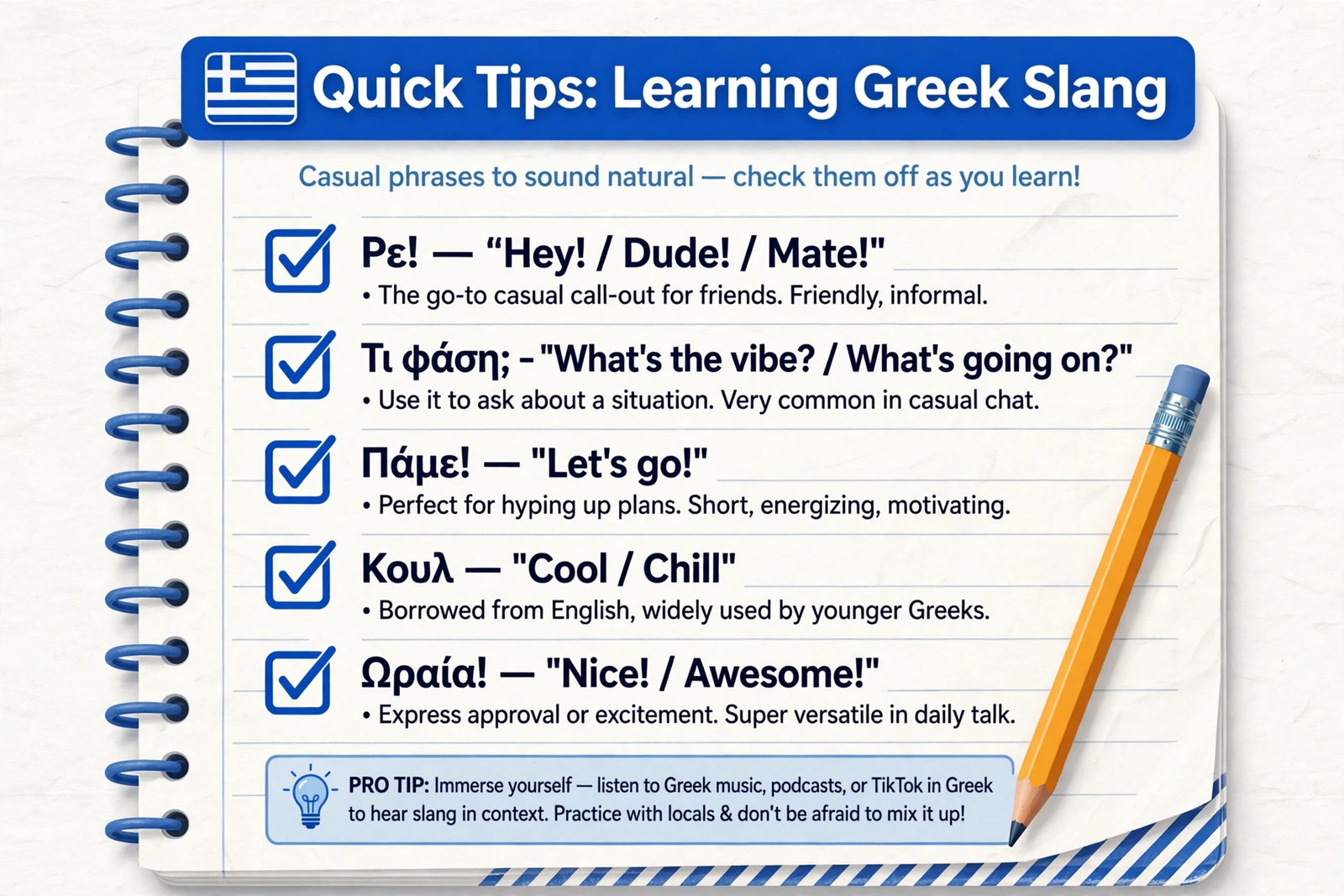
1. Re (ρε) — “hey / dude / man.” Pronounced “reh.” The most versatile word in greek slang. Example: “Re file, ti kaneis?” — “Hey friend, how are you?”
2. Ela (έλα) — “come on / no way / hello.” Pronounced “EH-lah.” Used to answer the phone, express disbelief, or hurry someone along. Example: “Ela re, alithia?” — “Come on, really?”
3. Pame (πάμε) — “let’s go.” Pronounced “PAH-meh.” The universal call to action. Example: “Pame gia ouzo!” — “Let’s go for ouzo!”
4. Filaraki (φιλαράκι) — “little friend / buddy.” Pronounced “fee-lah-RAH-kee.” Warmer than just “friend.” Example: “Ela, filaraki mou!” — “Come here, my buddy!”
5. Yia sou (γεια σου) — “hi / hey.” Pronounced “YAH soo.” The casual greeting everyone uses. Example: “Yia sou, ti ginete?” — “Hi, what’s happening?”
6. Ti kaneis (τι κάνεις) — “what’s up / how are you?” Pronounced “tee KAH-nees.” The standard check-in. Example: “Ti kaneis, ola kala?” — “What’s up, all good?”
7. Ti lei (τι λέει) — “what’s up / what’s it saying.” Pronounced “tee LEH-ee.” A cooler way to ask what’s happening. Example: “Ti lei, pame paralia?” — “What’s up, shall we go to the beach?”
8. Endaxi (εντάξει) — “okay / alright / fine.” Pronounced “en-DAH-xee.” The most useful word in Greece. Example: “Tha se paro avrio, endaxi?” — “I’ll call you tomorrow, okay?”
9. Ola kala (όλα καλά) — “all good.” Pronounced “OH-lah kah-LAH.” The perfect reply to “ti kaneis.” Example: “Ola kala, esi?” — “All good, and you?”
Professional Examples
Even in relaxed workplaces, a few slang words are safe — as long as they stay polite.
10. Teleia (τέλεια) — “perfect / awesome.” Pronounced “TEH-lee-ah.” Great for praising food, a plan, or an idea. Example: “To fagito itan teleio!” — “The food was perfect!”
11. Chalará (χαλαρά) — “relax / take it easy.” Pronounced “hah-lah-RAH.” Use it to calm a situation. Example: “Chalará, tha ta kataferoume!” — “Relax, we’ll manage!”
12. Fovero (φοβερό) — “incredible / amazing.” Pronounced “foh-veh-ROH.” Genuine surprise or praise. Example: “Fovero! Den to perimena!” — “Incredible! I didn’t expect it!”
13. Aneta (άνετα) — “easily / no problem.” Pronounced “AH-neh-tah.” Confident and casual. Example: “Aneta tha ftasoume stin ora mas!” — “We’ll easily arrive on time!”
14. Mangas (μάγκας) — “cool guy / clever dude.” Pronounced “MAHN-gahs.” Once a street-tough label, now a compliment for someone smart and confident. Example: “Ti mangas pou eisai!” — “You’re such a cool guy!”
15. Kefi (κέφι) — “joyful spirit / good mood.” Pronounced “KEH-fee.” The feeling of a great night with music, friends, and dancing. Example: “Apopse exoume kefi!” — “Tonight we’re in high spirits!”
Funny Examples
16. Opa (ώπα) — “whoa / woohoo!” Pronounced “OH-pah.” The famous Greek shout of surprise, joy, or celebration — often heard when plates are smashed at a party. Example: “Opa! Pame!”
17. Spao plaka (σπάω πλάκα) — “I’m cracking up / having a laugh.” Pronounced “SPAH-oh PLAH-kah.” Literally “I break the record,” but it means joking around. Example: “Spame plaka me ton Giorgo!” — “We’re having a laugh with George!”
18. Trelos (τρελός) — “crazy / awesome.” Pronounced “treh-LOHS.” Depending on tone, it means mad — or brilliantly fun. Example: “Eisai trelos, file!” — “You’re crazy, man!” (said with a grin).
19. Fasi (φάση) — “vibe / scene / situation.” Pronounced “FAH-see.” Young Greeks use it for everything from a mood to a whole situation. Example: “Ti fasi einai afti?” — “What kind of vibe is this?”
20. Gamatos (γαμάτος) — “awesome / amazing.” Pronounced “gah-MAH-tohs.” Very common among young people, but it comes from a vulgar root, so keep it for close friends only. Example: “To party itan gamato!” — “The party was awesome!”
21. Flexaro (φλεξάρω) — “to flex / show off.” Pronounced “flex-AH-roh.” Borrowed from English, now fully Greek. Example: “O Giannis flexarei to kainourio tou aftokinito.” — “John is showing off his new car.”
22. Krintzaro (κριντζάρω) — “to cringe.” Pronounced “krin-TZAH-roh.” For those awkward moments. Example: “Afto to asteio me ekane na krintzaro.” — “That joke made me cringe.”
23. Tsilaro (τσιλάρω) — “to chill.” Pronounced “tsee-LAH-roh.” The Greek version of chilling out. Example: “Tsilaroume spiti simera.” — “We’re chilling at home today.”
24. Marouli (μαρούλι) — “money / cash.” Pronounced “mah-ROO-lee.” Literally “lettuce.” Example: “Den exo marouli simera.” — “I don’t have money today.”
25. Den paizei (δεν παίζει) — “no way / it’s not happening.” Pronounced “then PEH-zee.” A firm, funny refusal. Example: “Den paizei na paw!” — “No way I’m going!”
Comparison with Similar Terms
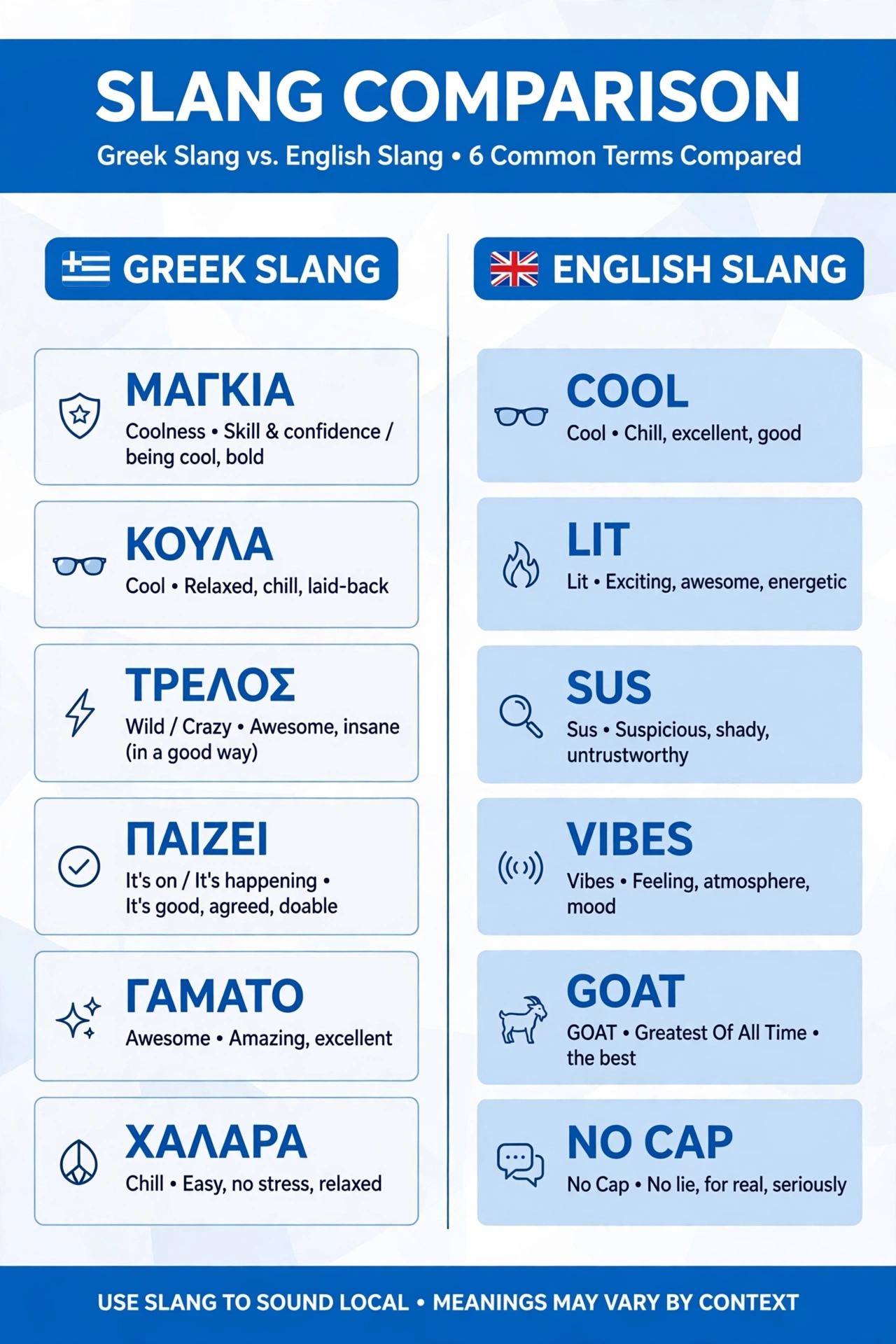
Greek slang overlaps with slang from other languages, but the Greek versions carry their own flavor. Here is how the most-searched terms compare:
| Greek slang | Closest English slang | Difference |
|---|---|---|
| Re (ρε) | Hey / dude / man | Far more flexible — it can open, close, or punctuate almost any sentence. |
| Malaka (μαλάκας) | Idiot / dude | Can be a harsh insult or warm affection between friends; context is everything. |
| Opa (ώπα) | Woohoo / whoa | A celebration shout tied to music, dancing, and Greek parties. |
| Kefi (κέφι) | Vibes / good mood | Deeper — a whole spirit of joy, music, and togetherness, not just a mood. |
| Mangas (μάγκας) | Cool guy / badass | Comes from old street culture; implies cleverness and self-reliance, not just style. |
| Flexaro (φλεξάρω) | To flex | Same meaning, but conjugated as a Greek verb with Greek endings. |
| Endaxi (εντάξει) | Okay / alright | Used far more often — it can mean yes, fine, got it, or “calm down.” |
One word deserves a special note: malaka (μαλάκας) is probably the most famous piece of greek slang in the world, and also the most misunderstood. Its literal meaning is vulgar, and strangers should never use it as an insult. But between close Greek friends, it works like “dude” or “mate” — “Ela re malaka!” can be a warm greeting. The rule is simple: do not say it until a Greek friend says it to you first.
Alternate Meanings
Many Greek slang words have a second life outside the dictionary. Here are the most important alternate meanings to know:
- Malaka: literally a vulgar insult, but among friends it means “dude” or “mate.” The same word, two opposite feelings.
- Mangas: once meant a member of the street underworld; today it usually means a cool, clever person.
- Trelos: literally “crazy” or “mad,” but in slang it often means “amazing” or “wildly fun.”
- Fasi: literally “phase,” but in slang it means a vibe, a scene, or a situation.
- Marouli: literally “lettuce,” but in slang it means money.
- Lefta: literally “coins” in older usage, but in slang it just means cash.
- Gamoto: literally a curse, but Greeks use it the way English speakers say “damn it” when they forget their keys.
- Kouklos / Koukla: literally “doll,” but in slang it means handsome (for a man) or beautiful (for a woman).
- Kleo: literally “I cry,” but young Greeks use it to mean “I’m dying of laughter,” like the English “I’m screaming.”
- Efaga paketo: literally “I ate a package,” but in slang it means “I had a really tough time.”
These double meanings are why greek slang confuses translation apps. A literal translation will almost always miss the real meaning, which is why learning the slang meaning — not just the dictionary meaning — matters so much.
Professional or Polite Alternatives
Greek slang is fun, but it has no place in a job interview, a formal email, or a first meeting with someone’s parents. Here is how to say the same thing politely:
| Slang | Polite alternative | When to use it |
|---|---|---|
| Re, ti kaneis? | Kalimera, ti kanete? | Greeting someone formally (note kanete, the polite “you”) |
| Ela re! | Alithia? / Sigoura? | Expressing surprise politely (“Really? / Are you sure?”) |
| Teleia! | Einai ekseretiko! | Praising something formally (“It’s excellent!”) |
| Chalará | Min anisicheite | Reassuring someone (“Don’t worry”) |
| Opa! | Bravo! / Sigharitiria! | Celebrating politely (“Bravo! / Congratulations!”) |
| Malaka (as “dude”) | File mou / Agapite mou | Addressing a friend warmly (“My friend / My dear”) |
| Den paizei | Dystichos den ginete | Declining politely (“Unfortunately, it’s not possible”) |
The golden rule: use slang with friends, use formal Greek with everyone else — and if you are unsure which one fits, formal Greek is always the safe choice.
Common Mistakes
Learners make the same five mistakes with greek slang. Avoid them and you will sound natural instead of awkward:
- Using malaka with strangers. This is the number one mistake. It can be friendly between friends, but to a stranger it is a serious insult. Never open with it.
- Overusing re. Greeks sprinkle it into sentences, but dropping it into every phrase sounds forced. One re per sentence is plenty when you are learning.
- Saying slang in formal settings. A job interview, a church service, or a meeting with an older relative is not the place for street words. Switch to standard Greek.
- Copying the literal translation. Translating spao plaka as “I break the record” will confuse everyone. Learn the slang meaning, not the word-for-word one.
- Mixing up mangas and malaka. They sound vaguely similar to new learners, but one is a compliment and the other can start a fight. Learn them separately.
- Forgetting the polite “you.” Greek has a formal eseis (you, plural/polite) and an informal esi. Slang always pairs with the informal form — never mix slang words with formal grammar.
Quick Tips
- Learn 5 words first. Start with re, ela, pame, endaxi, and teleia. They cover most daily conversations.
- Watch Greek shows with subtitles. Series and YouTube vlogs show slang in real context — tone, timing, and reactions included.
- Listen before you speak. Notice how your Greek friends use each word, then copy their timing.
- Practice in texts. Greeklish texting is low-pressure: try “ti kaneis, ola kala?” with a Greek friend and see how they reply.
- Learn the pronunciation out loud. Greek is phonetic — every letter is pronounced — so reading the transliteration slowly will get you close.
- Keep a slang notebook. Write the Greek word, the pronunciation, the real meaning, and one example sentence. Review it before a trip.
- Ask what you heard. If a Greek friend says a word you do not know, ask them. Greeks love explaining their slang — it is a point of pride.
FAQ
What does greek slang mean?
Greek slang is the informal language Greeks use in everyday conversation — street words, playful expressions, and English borrowings that are not taught in textbooks. It includes greetings like re and ela, praise like teleia, and cultural words like kefi and opa.
What is the most famous Greek slang word?
Malaka (μαλάκας) is the most famous Greek slang word worldwide. Its literal meaning is vulgar, but between close friends it works like “dude” or “mate.” Beginners should understand it but avoid using it until a Greek friend uses it with them first.
What does “re” mean in Greek slang?
Re (ρε) means “hey,” “dude,” or “man.” It is a filler word Greeks add to casual sentences for emphasis or friendliness, like “Re file, ti kaneis?” (“Hey friend, how are you?”). It should only be used with people you know well.
What does “opa” mean in Greek?
Opa (ώπα) is a shout of joy, surprise, or celebration — similar to “woohoo!” or “whoa!” in English. Greeks shout it while dancing, celebrating, or when something exciting happens, and it is famously linked to smashing plates at parties.
What does “malaka” mean in Greek slang?
Malaka literally has a vulgar meaning, but in everyday greek slang between friends it is used like “dude,” “mate,” or “man.” Tone decides everything: warm among friends, offensive toward strangers. Learners should not use it with people they do not know well.
How do you say “what’s up” in Greek slang?
The most common ways are ti kaneis (“what’s up / how are you?”), ti ginete (“what’s happening?”), and the cooler ti lei (“what’s up?”). Reply with ola kala (“all good”) to sound natural.
Is Greek slang different from formal Greek?
Yes. Formal Greek is what you learn in class — polite, complete, and grammatically careful. Greek slang is shorter, looser, and full of emotion, borrowed words, and double meanings. Most Greeks switch between the two effortlessly depending on who they are talking to.
What Greek slang words do Gen Z use?
Greek Gen Z mixes classic slang with English borrowings: flexaro (to flex), krintzaro (to cringe), tsilaro (to chill), sik (sick/impressive), and vaimps (vibes). They also use fasi for any vibe or situation and kleo (“I’m crying”) to mean “I’m dying of laughter.”
Conclusion
Greek slang is more than a list of funny words — it is the sound of Greece being itself. From the ancient-rooted mangas to the brand-new flexaro, these words carry humor, warmth, history, and attitude in a way no textbook ever will. Learning them will not just help you understand Greek friends, movies, and group chats — it will help you feel like you belong.
Start small: five words, used with the right people, in the right tone. Say yia sou when you arrive, ela re when you are surprised, pame when it is time to go, and teleia when something is perfect. The rest will come naturally — usually over an ouzo, with music playing, and someone shouting opa in the background.
Want to keep going? Check out our guides to alpha slang and lore meaning slang for more modern terms, or see how food words become slang in our pita meaning slang and beans slang guides. And remember — in Greece, the best slang lesson is always a real conversation.
