
Quick definition: Black slang is the informal vocabulary, phrases, and expressions that originated in Black American communities and spread through music, social media, and everyday conversation. It includes words like “lit,” “woke,” “slay,” and “no cap” — terms that started in African American Vernacular English (AAVE) and are now used by millions of people around the world, often without knowing where they came from.
black slang Meaning & Definition
The black slang meaning is simple on the surface: it refers to the slang created and popularized by Black Americans. But behind those two words sits a whole language tradition. Black slang grows out of African American Vernacular English (AAVE), a dialect with its own grammar, rhythm, and history that goes back generations. The slang is the most visible, fast-moving part of that tradition — the words and phrases that jump from neighborhood conversations into rap lyrics, then onto TikTok, and finally into everyday texts from people who have never set foot in the communities where the words were born.
Here is the black slang meaning in one line: it is the informal, creative language of Black American culture — words and phrases that express attitude, humor, identity, and belonging, many of which have now become part of mainstream American English.
What makes black slang different from regular slang is its roots. Most slang is just casual language. Black slang carries history. Words like “cool,” “hip,” “bad” (meaning good), and “dope” all started in Black communities decades before the rest of the country picked them up. The pattern has repeated for generations: a word is born in Black culture, it spreads through music and media, and eventually it becomes so common that people forget where it came from.
| Term | Meaning | Example |
|---|---|---|
| Lit | Exciting, amazing, fun | “The party was lit last night.” |
| Woke | Aware of social and racial issues | “Stay woke about what’s happening.” |
| No cap | No lie, for real | “No cap, that was the best meal ever.” |
| Slay | To do something exceptionally well | “She slayed that performance.” |
| On fleek | Perfectly done, on point | “Her eyebrows are on fleek.” |
| Tea | Gossip or news | “Spill the tea, what happened?” |
Introduction
You have heard black slang today. Probably several times. If someone told you a party was “lit,” said “no cap” in a group chat, or called something “fire,” you were hearing words that started in Black American communities. The same goes for “bae,” “shade,” “flex,” “ghost,” “salty,” and “stan” — all of them traveled the same road from Black culture into the mainstream.
Black slang is everywhere now because Black culture is everywhere. Hip-hop is the most streamed music in the United States. Black creators dominate TikTok trends, Twitter humor, and meme culture. When a phrase goes viral, there is a good chance it started as black slang. The problem is that the people who create the language rarely get the credit, and the people who use it often do not know the history behind the words they are saying.
This guide explains what black slang really is, where it comes from, and how to use it without sounding forced — or worse, disrespectful. You will learn the most common terms, see real examples of how they work in conversation, and understand the difference between appreciating a culture and borrowing from it without acknowledgment. Whether you are trying to understand your group chat, keep up with TikTok, or just want to know what your favorite rapper is actually saying, this is the complete breakdown.

Origin
Black slang did not appear out of nowhere. It grew out of African American Vernacular English, a dialect that developed over centuries as enslaved Africans in America blended English with the rhythms, grammar, and wordplay of West African languages. From the very beginning, Black Americans used language creatively — partly as expression, partly as survival. Coded language, double meanings, and signifying (a style of playful, indirect verbal sparring) were ways to communicate freely in a society that restricted Black speech and punished Black expression.
By the early 20th century, Black slang was already shaping American English. Jazz musicians in the 1920s and 1930s spread words like “cool,” “hip,” “cat” (a person), and “gig” far beyond Black neighborhoods. In the 1960s and 70s, the Black Power movement and soul music added words like “right on,” “brother,” and “soul” to the national vocabulary. Hip-hop, born in the Bronx in the 1970s, turned Black slang into a global export. Every decade since has added a new layer: “bling” and “holla” in the 2000s, “on fleek” and “bae” in the 2010s, and “no cap,” “bussin,” and “periodt” in the 2020s.
One thing has stayed constant through all of it: the source. Black slang is created in Black communities — in barbershops and beauty salons, in churches and on street corners, in group chats and on Black Twitter — and then it spreads outward. The internet sped up the process enormously. A phrase that once took years to travel from Atlanta to Los Angeles can now go global in a weekend. But the origin has not changed. As linguists have documented, African American Vernacular English has a long, systematic history of its own, and its slang is one of the most influential forces in modern English.
Popularity
Black slang is not a niche dialect anymore — it is the engine of mainstream American slang. Look at any list of the most popular slang words of the last ten years and most of them trace back to Black communities. “Lit” was the word of the year in countless online polls. “Woke” went from Black activist circles to the dictionary and then to political debates on cable news. “Slay” moved from ballroom culture to Beyoncé lyrics to everyday compliments. “No cap” went from Atlanta rap to high school hallways across the country in about two years.
Social media is the biggest reason for this spread. TikTok dances, Twitter jokes, Instagram captions, and YouTube reaction videos carry black slang to audiences who may never hear it in person. A Black creator coins a phrase in a video, it gets remixed a thousand times, and within a week teenagers in small towns are using it in their group chats. Brands noticed too — companies now use black slang in ads and marketing, sometimes smoothly and sometimes awkwardly, which is its own conversation.
The popularity also creates tension. When slang spreads this fast, the people who created it often watch their words get used in ways that strip away the original meaning. “Woke” is the clearest example: it started as a call to stay alert to racial injustice, and it is now used as a political insult by people who have no connection to that history. This is why understanding black slang matters — it is not just vocabulary. It is culture, and using it well means knowing at least a little about where it came from.
How It Is Used
Black slang shows up in almost every kind of conversation, but it works differently depending on the setting. In casual texts and social media, it adds energy, humor, and attitude. A plain sentence like “that was good” becomes “that was bussin” or “that was fire,” and suddenly it carries a feeling, not just a fact. In music, black slang is the raw material — rappers and R&B singers build entire verses out of phrases their communities invented. In comedy, it is the punchline: the timing, the exaggeration, and the delivery all depend on slang landing exactly right.
The key to using black slang naturally is context. Most of these words are flexible — the same phrase can mean different things depending on tone, relationship, and situation. “No cap” can be sincere (“no cap, I miss you”) or a joke (“no cap, I ate the whole pizza”). “Periodt” can end an argument or celebrate a win. “Bet” can mean “okay, deal,” “really?,” or “I dare you” — the situation decides. People who grew up with the slang read these cues automatically. People learning it should pay attention to how the words are used by the people who created them, not just copy the word itself.
There is also an important line between using slang and performing it. Dropping one or two natural phrases in a text is normal. Forcing five slang words into a sentence to sound cool usually has the opposite effect. The words work best when they match how you actually talk. If you would not naturally say “that fit is fire,” saying it because you heard it on TikTok will sound stiff. Authenticity matters more than vocabulary.
Examples
Here is how black slang sounds in real conversations. Notice that the words rarely stand alone — they work inside full sentences, with tone and context doing half the work.
Friendly Examples
- “Girl, your hair is on fleek today.” — A compliment between friends.
- “That new song is fire, I have had it on repeat all day.” — Sharing excitement about music.
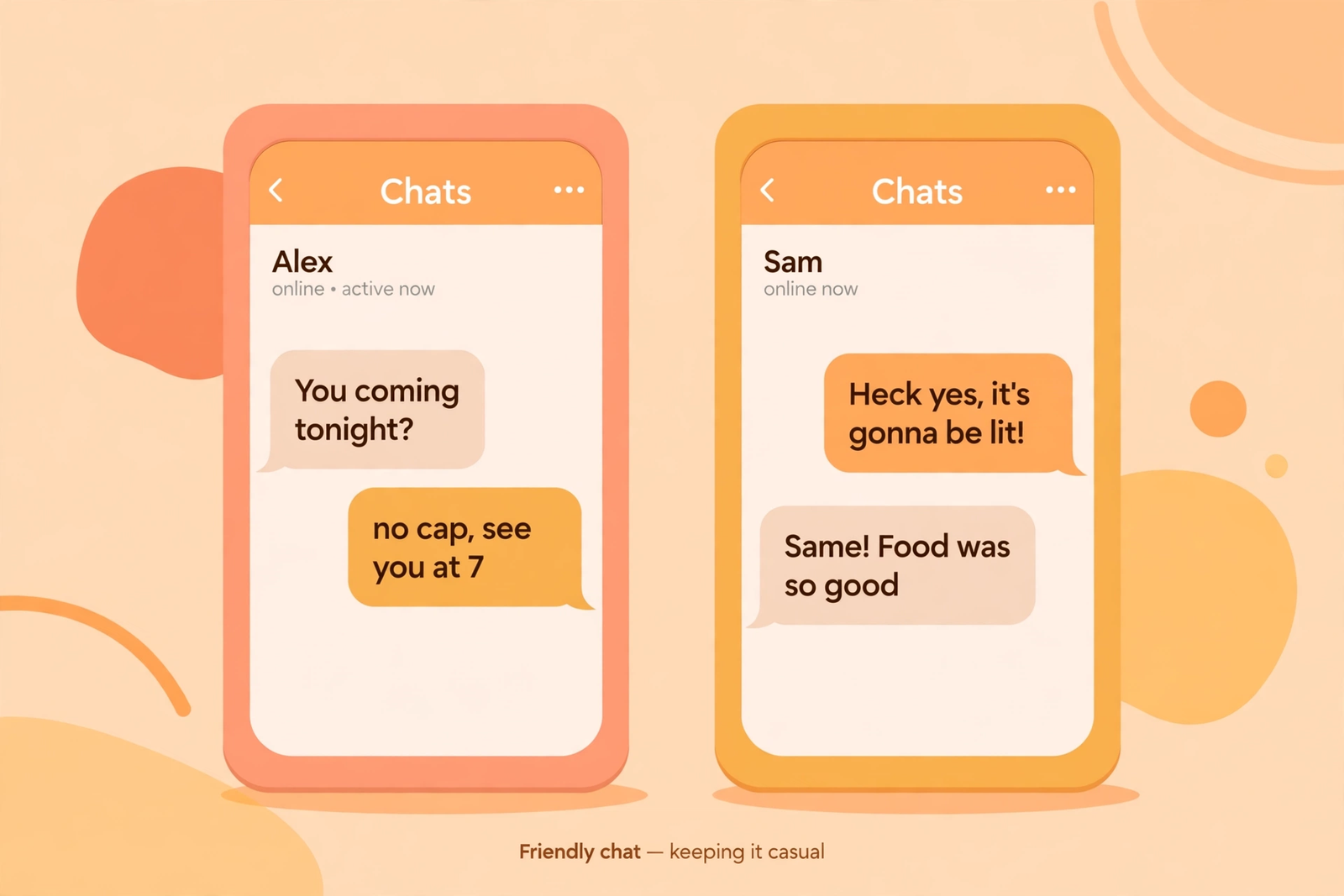
- “No cap, you really came through for me.” — A sincere thank-you.
- “We lit last night, I am still tired.” — Recalling a fun night out.
- “You did that, periodt.” — Celebrating a friend’s win with emphasis.
- “Spill the tea, what did he say?” — Asking for gossip between close friends.
Professional Examples
Black slang and professional settings can mix, but the mix has to be light. A casual workplace might welcome a little slang, while a formal one will not. Here is how it can work when the setting allows it:
- “That pitch was fire — the client loved it.” — Casual praise after a meeting.
- “Let’s keep it 100 about the timeline.” — Being honest and direct with a team.
- “She slayed that presentation.” — Complimenting a colleague’s work.
- “Bet, I’ll have the report to you by Friday.” — Agreeing to a deadline.
The rule is simple: one slang word in a natural sentence is fine in a relaxed office. A full sentence of slang in a board meeting is not. When in doubt, keep it clean — the slang will still be there when you get back to the group chat.
Funny Examples
- “He said he was five minutes away. That was an hour ago. The audacity.” — The dry, dramatic delivery is the joke.
- “My bank account said no ma’am.” — Personifying your balance to joke about being broke.
- “I was today years old when I found out what that word meant.” — A classic self-roast format.
- “She really said ‘let me hold $20′ and never gave it back. Bye.” — “Bye” as a full sentence is a whole mood.
- “Not me crying over a dog video at 2am.” — “Not me” as a way to admit something embarrassing with humor.
Comparison with Similar Terms
Black slang overlaps with other kinds of slang, and the lines can get blurry. Here is how it compares with the closest related categories.
| Type | What it is | Key difference from black slang | Examples |
|---|---|---|---|
| Black slang | Slang from Black American communities and AAVE | The source — it has a specific cultural origin | Lit, no cap, slay, woke |
| Gen Z slang | Slang popular with people born after 1997 | Describes a generation, not a culture — much of it is black slang, repackaged | Slay, vibe check, hits different |
| Internet slang | Words born online (LOL, OMG, meme terms) | Describes where it spread, not who created it | LOL, stan, ratio |
| General American slang | Casual informal English used by everyone | No single cultural origin — it is just informal speech | Cool, awesome, dude |
| Hip-hop slang | Slang from rap music and hip-hop culture | Mostly overlaps with black slang, since hip-hop is Black culture | Flex, drip, bars |
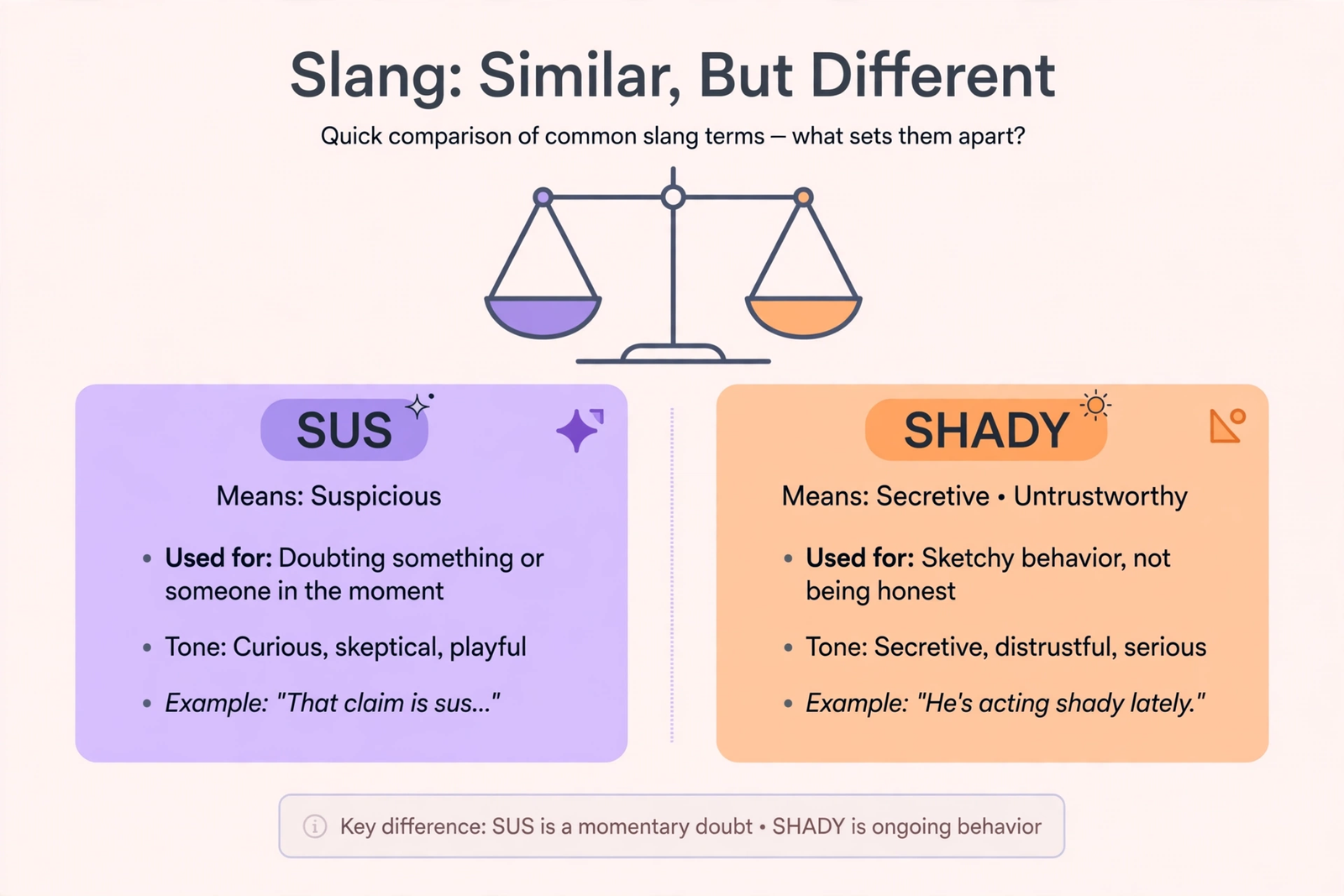
The biggest confusion is between black slang and Gen Z slang. They are not the same thing. Gen Z slang is a label for what young people say. A huge share of what young people say started as black slang — words like “slay,” “lit,” “no cap,” and “periodt” — but calling them “Gen Z slang” erases where they came from. The word did not become slang because a generation used it. It became generational slang because Black creators made it first and the internet carried it everywhere. If you want to sound like you actually know what you are talking about, give credit where it is due: it is black slang that Gen Z adopted, not the other way around. And if you are keeping up with the latest internet abbreviations, you will run into terms like iykyk — one of the many phrases that traveled from Black Twitter into everyone’s group chats.
Alternate Meanings
The phrase “black slang” itself does not have a secret second meaning, but many of its words do. Black slang is famous for double meanings — words that change completely depending on who says them and where. “Bad” has meant “good” in Black slang for decades (“those are some bad shoes” means they look great). “Sick” works the same way. “Tea” means gossip, but it also literally means the drink. “Shade” means a subtle insult, not a shadow. “Read” means to call someone out cleverly, not to look at a book.
Some black slang words also mean something different in other dialects. “Bae” is a term of endearment in black slang, but in Danish “bae” means “poop” — a fact that has produced more than a few awkward moments. “Flex” means showing off in slang, but it is also a muscle or a gym move. “Ghost” means to suddenly stop replying to someone, not a spirit. Context is everything, and it is the main reason people misunderstand black slang. The same word in a text from a friend means something completely different in a text from your boss.
There is also the question of whether “black slang” refers to the words or the dialect. Some people use it loosely to mean any slang Black people use. Linguists usually mean something more specific: the informal vocabulary of AAVE. Both uses are common, and both are fine in everyday conversation — just know that the words are part of a much bigger language system, not a random collection of cool phrases.
Professional or Polite Alternatives
There are times when black slang fits perfectly and times when a cleaner phrase works better. If you are writing a work email, talking to a client, or speaking at a formal event, these alternatives carry the same meaning without the slang:
| Black slang | Professional alternative |
|---|---|
| Lit / fire | Excellent, impressive, outstanding |
| No cap | Honestly, to be frank, in all seriousness |
| Slay / killed it | Did an excellent job, performed exceptionally |
| Bet | Agreed, sounds good, consider it done |
| Keep it 100 | To be completely honest |
| Spill the tea | Could you fill me in? What’s the latest? |
| On fleek | Perfect, flawless, impeccably done |
| Ghost (someone) | Stop responding, end communication |
None of this means black slang is unprofessional in itself. In many workplaces — especially creative ones, media, music, and tech — a little slang is normal and even welcome. The question is always about the audience. A hiring manager you just met is not your group chat. A client presentation is not a TikTok. Match your language to the room, and you will never go wrong.
Common Mistakes
Most mistakes with black slang come from using it without understanding it. Here are the ones people make most often.
- Using it as a costume. Piling slang into every sentence to sound cool or funny usually backfires. One natural phrase works. Five in a row sounds like a performance — and people notice.
- Getting the meaning wrong. “No cap” does not mean “no hat.” “Periodt” is not a typo for “period.” “Bussin” does not mean “busy.” If you are not sure what a word means, look it up before you use it in front of people.
- Using it to mock. Imitating Black speech as a joke — exaggerating an accent or using slang to play a character — is offensive. There is a clear line between using a word naturally and putting on a voice.
- Claiming you invented it. If you heard a phrase on TikTok, you did not coin it. Do not take credit for language that a community built over decades.
- Using AAVE grammar wrong. Black slang includes grammar patterns — like dropping “is” (“she working”) or using “be” for habits (“he be working”). Using these patterns incorrectly, or only as a joke, comes across as mockery rather than fluency.
- Forgetting the audience. Slang that is fine with friends can be a problem at work, at school, or with older relatives. The word does not change — the room does.
- Confusing slang with the whole culture. Knowing ten slang words does not mean you understand Black culture. The words are the surface. The history, humor, and community behind them run much deeper.
The fix for most of these mistakes is simple: listen more than you speak. Pay attention to how Black creators and speakers use the words themselves, and copy the usage — not just the vocabulary. If a term confuses you, a quick search usually clears it up faster than guessing in front of an audience. Even a phrase like bts meaning slang has layers that only make sense once you see how fans and creators actually use it, and black slang works the same way.

Quick Tips
- Learn the history first. Knowing that a word came from AAVE changes how you use it — and keeps you from saying something you will regret.
- Start with the easy ones. “Lit,” “fire,” “no cap,” and “slay” are widely understood and hard to get wrong. Master those before trying the deeper cuts.
- Watch, then use. Spend time seeing how the words work in real conversations, songs, and videos before adding them to your own vocabulary.
- Keep it natural. If a phrase does not sound like you, do not force it. Slang that sounds rehearsed is worse than no slang at all.
- Respect the source. When someone asks where a word comes from, say it: Black culture. Credit is free, and it matters.
- Do not correct Black speakers. AAVE is a real dialect with real grammar, not “broken English.” Correcting it says more about the corrector than the speaker.
- Stay current, but do not chase trends. Black slang moves fast. Words that were hot last year can sound dated now. If you are not sure a term is still in use, it probably is not.
- Know when to drop it. Formal settings, job interviews, and first impressions are not the place to test new slang. Save it for the people who know you.


FAQ
What does black slang mean?
Black slang is the informal vocabulary and expressions created in Black American communities, rooted in African American Vernacular English (AAVE). It includes words like “lit,” “no cap,” “slay,” and “woke” — terms that started in Black culture and spread into mainstream English through music, social media, and everyday conversation.
Is black slang the same as AAVE?
Not exactly. AAVE is a full dialect with its own grammar, pronunciation, and vocabulary. Black slang is the informal, fast-changing vocabulary that sits inside AAVE. Think of it this way: AAVE is the whole language system, and black slang is the newest, most creative layer of it.
What are the most popular black slang words right now?
Some of the most widely used terms include “lit” (exciting), “no cap” (no lie), “slay” (do something exceptionally well), “bussin” (really good, especially food), “periodt” (end of discussion), “on fleek” (perfect), “tea” (gossip), and “bet” (okay, deal). The list changes constantly as new words are created and old ones fade.
Is it okay for non-Black people to use black slang?
Yes — using slang is not the problem. The problem is using it without understanding it, using it to mock, or taking credit for it. If you use the words naturally, respect where they came from, and do not exaggerate or perform, you are fine. Appreciation is welcome; appropriation is not.
Where does black slang come from?
It comes from Black American communities, growing out of African American Vernacular English. Its roots go back to the blend of English and West African languages during slavery, and it has been shaped by jazz, soul, hip-hop, Black Twitter, and TikTok ever since. Every generation of Black Americans has added new words to it.
Why does black slang change so fast?
Slang changes fast because it is tied to youth culture, music, and social media. A word can go from a group chat to a viral TikTok to a brand advertisement in weeks. Once a word goes fully mainstream, the community that created it often moves on and invents something new — which is why last year’s slang can already sound dated.
What is the difference between black slang and Gen Z slang?
Gen Z slang describes what young people say. Black slang describes where many of those words came from. A huge share of Gen Z slang — “slay,” “lit,” “no cap,” “periodt” — started as black slang. Calling it Gen Z slang is not wrong, but it leaves out the origin, and the origin is the interesting part.
How can I learn black slang without sounding forced?
Listen first. Follow Black creators, watch how the words are used in real conversations, and start with a few common terms before trying the rest. Use them in casual settings with people you know, not in formal ones. And if you are still unsure about a word — like fn meaning in text or murk meaning slang — look it up before you use it. A quick search beats an awkward guess every time.
Conclusion
Black slang is more than a list of cool words. It is a living language tradition that has shaped American English for a hundred years — from jazz clubs in the 1920s to hip-hop in the 1970s to TikTok today. Words like “lit,” “no cap,” “slay,” and “woke” started in Black communities and now belong to the whole world, but they still carry the history of the people who made them.
The best way to use black slang is the simplest one: learn what the words mean, respect where they came from, and use them naturally instead of forcing them. Listen to how Black creators use the language, give credit when credit is due, and remember that the words are the surface — the culture underneath is the real story.
Now you know exactly what black slang means, where it comes from, and how to use it without sounding out of touch. Next time someone says “no cap” in your group chat or a song calls something “fire,” you will know precisely what they mean — and exactly what to say back. For more internet slang that confuses everyone at first, keep exploring: every word has a story, and most of them start in the same place.
