
Quick definition: In slang, beaver is most famously a vulgar term for a woman’s pubic area or genitals, first recorded in British slang in 1927. But the word wears many hats: it can also mean a bearded man, a hard worker (an eager beaver), or, in 1970s CB radio slang, a woman. The exact meaning of beaver slang always depends on context, tone, and who is saying it.
beaver slang Meaning & Definition
If you have ever heard someone say “beaver” and wondered whether they were talking about an animal, a joke, or something rude, you are not alone. The beaver slang meaning changes completely depending on where and how you hear it. At its core, it is one of the oldest animal-based slang words in English, and it has collected a surprising number of meanings over the past century.
Here is the short version. In modern slang, beaver usually refers to female genitalia, specifically the pubic area, and it is considered vulgar. That is the meaning most people are looking for when they search for beaver slang. But the same word also shows up in completely innocent phrases such as eager beaver (a hard worker) and busy as a beaver (very busy). In British slang, to beaver away means to work hard and steadily at something.
| Meaning | Tone | Where you hear it |
|---|---|---|
| Female pubic area / genitals | Vulgar, offensive to many | Comedy, adult films, slang dictionaries |
| A hard worker (eager beaver) | Playful, positive | Workplaces, schools, everyday talk |
| To work hard (beaver away) | Neutral, informal | British English, offices |
| A bearded man / a beard | Old-fashioned, playful | Early 1900s British slang, word games |
| A woman (CB radio slang) | Dated, now offensive | 1970s trucker / CB radio culture |
| A pornographic film (beaver flick) | Vulgar, dated | 1960s–70s slang |
The key takeaway is simple: context is everything. “She is an eager beaver” is a compliment about work ethic. Used on its own in a crude joke, the same word means something very different. This guide breaks down every sense of beaver slang, where it came from, how people actually use it, and what to say instead when you need a polite alternative.
Introduction
One small word, one furry animal, and nearly a hundred years of slang history. Few English words have travelled as far from their original meaning as beaver. It started as the name of a dam-building rodent, became fur-trade currency, turned into a nickname for bearded men, and then took on a vulgar meaning that made comedians famous and parents nervous in the 1960s and 70s.
Today, when someone searches for beaver slang, they usually want one of two things: the rude meaning explained plainly, or the innocent idioms such as eager beaver and busy as a beaver explained. Both live in the same word, which is exactly why the term confuses people. A teacher praising an “eager beaver” student and a comedian telling a crude joke are using the same animal, but they are not speaking the same language.
In this guide, you will learn the full beaver slang meaning, its surprising origin story in the fur trade and the streets of early 1900s Britain, how its popularity rose and fell, real examples of every sense, a side-by-side comparison with similar terms, and the polite alternatives you should use in formal settings. By the end, you will never have to guess what someone means when they say “beaver” again. If you enjoy decoding tricky slang, you may also like our guide to kinky meaning in modern slang.

Origin
The story of beaver slang begins long before slang dictionaries existed. The word beaver itself comes from Old English bēofor, traced back to Proto-Germanic bebruz and the Proto-Indo-European root bhebhrus. For centuries it meant only one thing: the animal. The slang journey started with the animal’s fur.
The fur trade connection. In the 1600s and 1700s, beaver pelts were so valuable in North America that they worked as a form of money. Traders exchanged pelts for goods, and a “beaver” could mean a unit of value. The thick, dense fur of a beaver pelt became the visual bridge to the slang meaning: the resemblance between a split beaver pelt and pubic hair gave rise to the vulgar sense. Language researchers note that the female-genital sense was first printed in British slang in 1927, transferred from the earlier meaning of a bearded man, which dates to around 1910. You can see the full historical entry in Green’s Dictionary of Slang, which traces each sense with dated quotations.
The bearded man game. Before it meant anything rude, beaver was Oxford student slang for a beard or a bearded man. In the early 1900s, students played a spotting game: the first person to see a bearded man would shout “Beaver!” and score a point. The joke was the visual similarity between a bushy beard and a beaver’s fur. According to slang historians, the cry of “Beaver!” at the sight of a bearded man was eventually also uttered at the sight of a woman’s pubic hair glimpsed through a keyhole — and that is how the vulgar meaning was born from an innocent word game.
The merkin theory. There is also a darker, colourful theory. In the 1800s, some sex workers reportedly shaved to avoid lice and wore pubic wigs called merkins, sometimes made from beaver fur, to mimic natural hair. Whether or not this story is the true origin, it shows how tightly the word became tied to fur, hair, and the body in the popular imagination.
America in the 1940s–1970s. The Oxford English Dictionary records the genital sense in 1940s US military jargon, and the term exploded in the counterculture of the 1960s and 70s. Stand-up comedians such as Richard Pryor and George Carlin used it on stage, adult films were nicknamed beaver flicks, and the word became a staple of crude humour. In the 1970s, CB radio users also adopted beaver as a neutral-sounding word for a woman — a usage that was common at the time, even among women themselves, but is now considered dated and disrespectful.
Popularity
Beaver slang had its moment in the spotlight. Its peak came in the 1960s and 1970s, when counterculture comedy, adult cinema, and CB radio all pushed the word into everyday conversation. For a generation, it was one of the best-known vulgar slang terms in English, right alongside words that still dominate slang lists today.
Since then, the vulgar sense has faded. Younger generations rarely use beaver this way — they have their own vocabulary, and many now see the term as old-fashioned or needlessly crude. Slang dictionaries and modern guides increasingly recommend neutral, respectful language instead. What has not faded is the innocent side of the word. Eager beaver and busy as a beaver are still completely normal in workplaces, classrooms, and family conversation, and most people who say them have no idea the word ever had a rude meaning.
Search interest tells the same story. People still look up beaver slang out of curiosity — after hearing it in an old movie, a song, or a joke — but the word no longer drives youth culture the way it did fifty years ago. It survives mainly in three places: historical slang dictionaries, classic comedy, and the cheerful idioms about hard work that never picked up the rude association.
How It Is Used
Because beaver slang has so many senses, the way people use it depends entirely on the situation. Here are the main contexts, from the most innocent to the most vulgar.
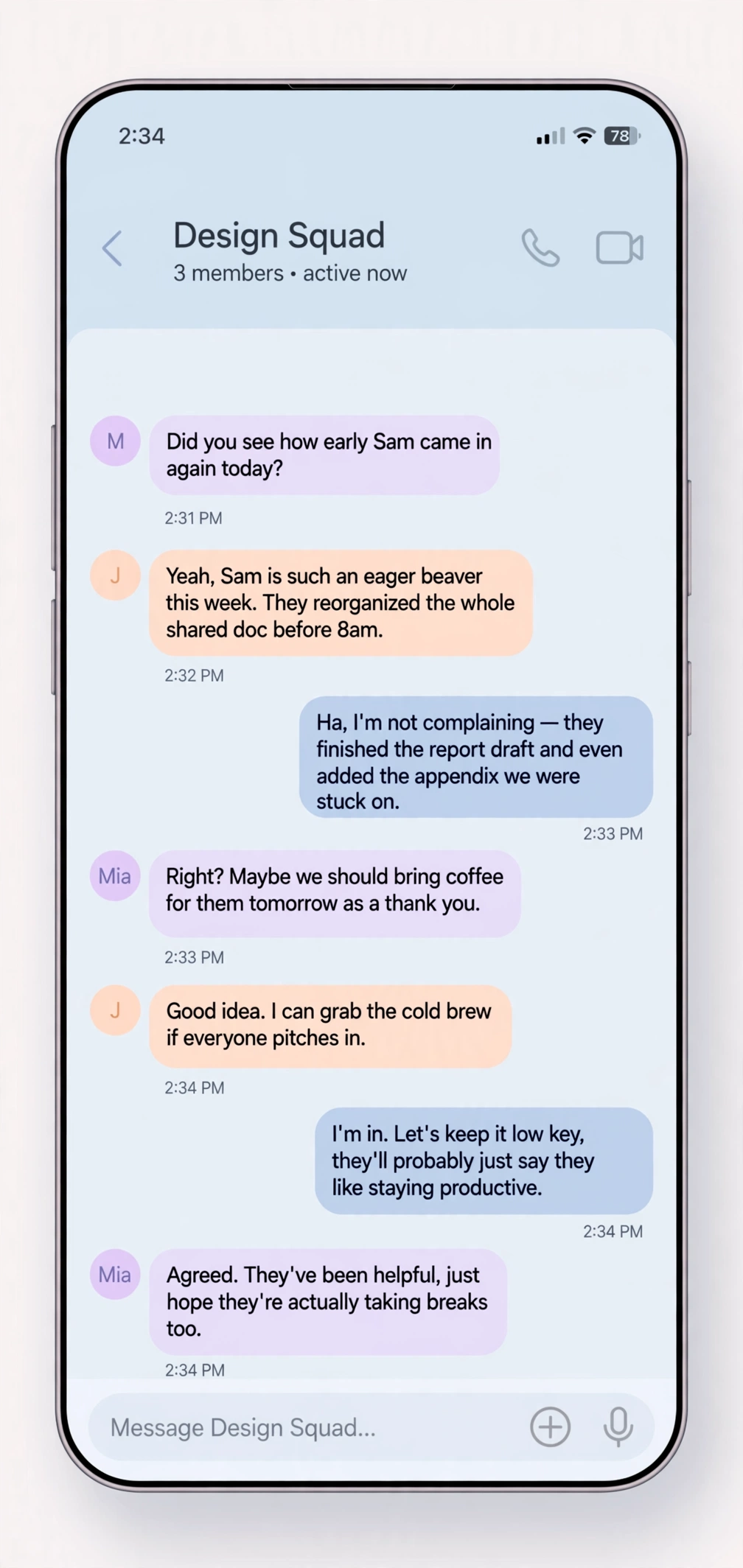
- Praising hard work: “Eager beaver” describes someone who is enthusiastic and industrious, sometimes annoyingly so. A manager might say, “Our new intern is a real eager beaver — she finished the whole report before lunch.” This is positive and safe in any setting.
- Describing being busy: “Busy as a beaver” means extremely busy. “I have been as busy as a beaver all week getting the shop ready.” The image is the animal working non-stop on its dam.
- British work talk: To “beaver away” means to work steadily at something for a long time. “He has been beavering away at his thesis for months.” This is standard informal British English.
- Crude jokes and comedy: The vulgar sense appears in adult humour, old stand-up routines, and films. It is meant to shock or amuse, and it is never appropriate in formal, professional, or mixed company.
- Historical or quoted use: Writers, linguists, and film historians mention the word when discussing 1960s–70s culture, CB radio, or the TV show Leave It to Beaver — whose title gave rise to the pun “beaver cleaver” for the male anatomy.
- Online slang lists: Modern slang roundups include it for completeness. Our own list of slang for vagina covers beaver alongside dozens of other terms, with notes on which ones are still used and which are best avoided.
Tone matters more than the word itself. The vulgar sense is crude and often perceived as insulting because it reduces a woman to a body part. The hard-work senses are warm and complimentary. Before using the word, ask yourself which meaning your listener will hear — because they will almost always hear the one you did not intend if the context is unclear.
Examples
Real examples make the difference between the senses obvious. Notice how the same word changes meaning completely with a single extra word — eager or busy — in front of it.
Friendly Examples
- “Maya is such an eager beaver — she volunteered to organise the whole charity event.”
- “You have been busy as a beaver today! Did you build all of this yourself?”
- “He is a real eager beaver in the gym; he never misses a morning session.”
- “Thanks for beavering away at the garden while I was away — it looks amazing.”
These are the everyday, friendly uses. They praise energy and effort, and they are safe to use with friends, family, teachers, and coworkers.
Professional Examples
- “Our team has been beavering away at the year-end report, and it will be ready on Friday.” (British workplace email)
- “She is an eager beaver who always meets her deadlines early.” (performance review)
- “We have all been busy as beavers preparing for the product launch.” (team meeting)
In professional settings, only the hard-work senses belong. The vulgar sense should never appear at work — it would be considered harassment in most workplaces, not humour.
Funny Examples
- “I am as busy as a beaver building a dam — except my dam is made of unread emails.”
- The classic pun: fans of the 1950s sitcom Leave It to Beaver turned its hero’s name, Beaver Cleaver, into the joke term “beaver cleaver.”
- A dad joke at a nature reserve: “Look, a real beaver! He is busy as a beaver — literally, that is his job description.”
When it comes to the vulgar sense, the “funny” examples live in old comedy routines and adult films rather than in polite conversation. Comedians in the 1970s used the word as a punchline precisely because audiences knew it was rude — the shock was the joke. That style of humour has mostly aged out, which is why the word now sounds dated when used that way.
Comparison with Similar Terms
Beaver slang sits in a crowded family of slang words. Some are near-synonyms, some share only the animal metaphor, and some sound similar but mean something else entirely. This table sorts them out.
| Term | Meaning | Tone | How it differs from beaver |
|---|---|---|---|
| Beaver | Female pubic area / genitals | Vulgar, dated | The reference term; fur-based metaphor |
| Pussy | Female genitals; also a coward | Vulgar, still common | Far more common today; also used as an insult for weakness |
| Snatch | Female genitals | Vulgar | Shorter, blunter; no animal metaphor |
| Beav | Short form of beaver | Vulgar, casual | Same meaning, just shortened; used in jokes |
| Merkin | A pubic wig | Historical, crude | An object, not a body part; tied to the fur-wig theory |
| Beaver cleaver | Male genitals | Vulgar joke term | Opposite anatomy; a pun on the TV character Beaver Cleaver |
| Eager beaver | A hard, enthusiastic worker | Positive, innocent | Shares the word but not the rude meaning |
| Busy as a beaver | Very busy | Neutral idiom | An idiom about work, not the body |
| Beaver away | To work hard and steadily | Neutral, British | A verb phrase about effort, not anatomy |
| Beaver flick / beaver movie | A pornographic film | Vulgar, dated | Refers to a film genre, popular in the 1960s |
The pattern is clear: the animal metaphor produced a whole cluster of terms in the 20th century, but only the work-related idioms survived into polite modern English. If you want to compare how other body-part slang evolved, our guide to kinky meaning shows a term that moved in the opposite direction — from taboo to mainstream.

Alternate Meanings
Outside slang, beaver has several standard meanings that are worth knowing, because they are the ones you will meet most often in everyday life.
- The animal: A large, nocturnal, semi-aquatic rodent famous for building dams and lodges from sticks and mud. The North American beaver is a national symbol of Canada.
- A beaver hat: In the 1600s–1800s, a hat made from beaver felt. “Beaver” was once shorthand for any fine hat, and the fur trade existed largely to supply hat-makers.
- Money: In early North American trade, beaver pelts were a unit of exchange — a “beaver” could literally be currency.
- A beard or bearded man: Early 1900s British slang, from the Oxford spotting game described above.
- A hard worker: The eager beaver sense, in use since the mid-1800s.
- A woman: 1970s CB radio slang, now dated and disrespectful.
- A pornographic film: A beaver flick or beaver movie, 1960s slang.
- A brothel or pornographic cinema: Historical compounds such as beaver palace (a brothel) and beaver house (a pornographic cinema) appear in old slang dictionaries.
- The Beaver Moon: The full moon of November, named for the season when beavers build their winter dams. It has nothing to do with the slang meaning, despite the shared name.
As with many slang words, the alternate meanings prove that a word’s history is always wider than its most famous sense. For more animal-inspired slang with surprising histories, see our guide to tea slang meaning — another everyday word with a secret second life.
Professional or Polite Alternatives
Because the main slang sense of beaver is vulgar, you will often need a different word. Here are safe replacements for every situation.
| Instead of | Say this | When to use it |
|---|---|---|
| Beaver (vulgar sense) | Vulva / pubic area | Medical, educational, or clinical contexts |
| Beaver (vulgar sense) | Private parts | Polite everyday conversation |
| Beaver (for a woman) | Woman | Always — the slang use is disrespectful |
| Eager beaver | Hard worker / go-getter | Formal writing or HR documents |
| Busy as a beaver | Very busy / swamped | Formal emails and reports |
| Beavering away | Working steadily / plugging away | Professional updates |
| Beaver flick | Adult film | Any neutral discussion of film history |
A simple rule covers most cases: if you mean the hard-work sense, eager beaver and busy as a beaver are fine everywhere. If you mean the anatomical sense, use clinical or neutral language instead — and in professional or mixed company, do not use the slang term at all.
Common Mistakes
Most confusion around beaver slang comes from mixing up its senses. Avoid these mistakes and you will never be caught out.
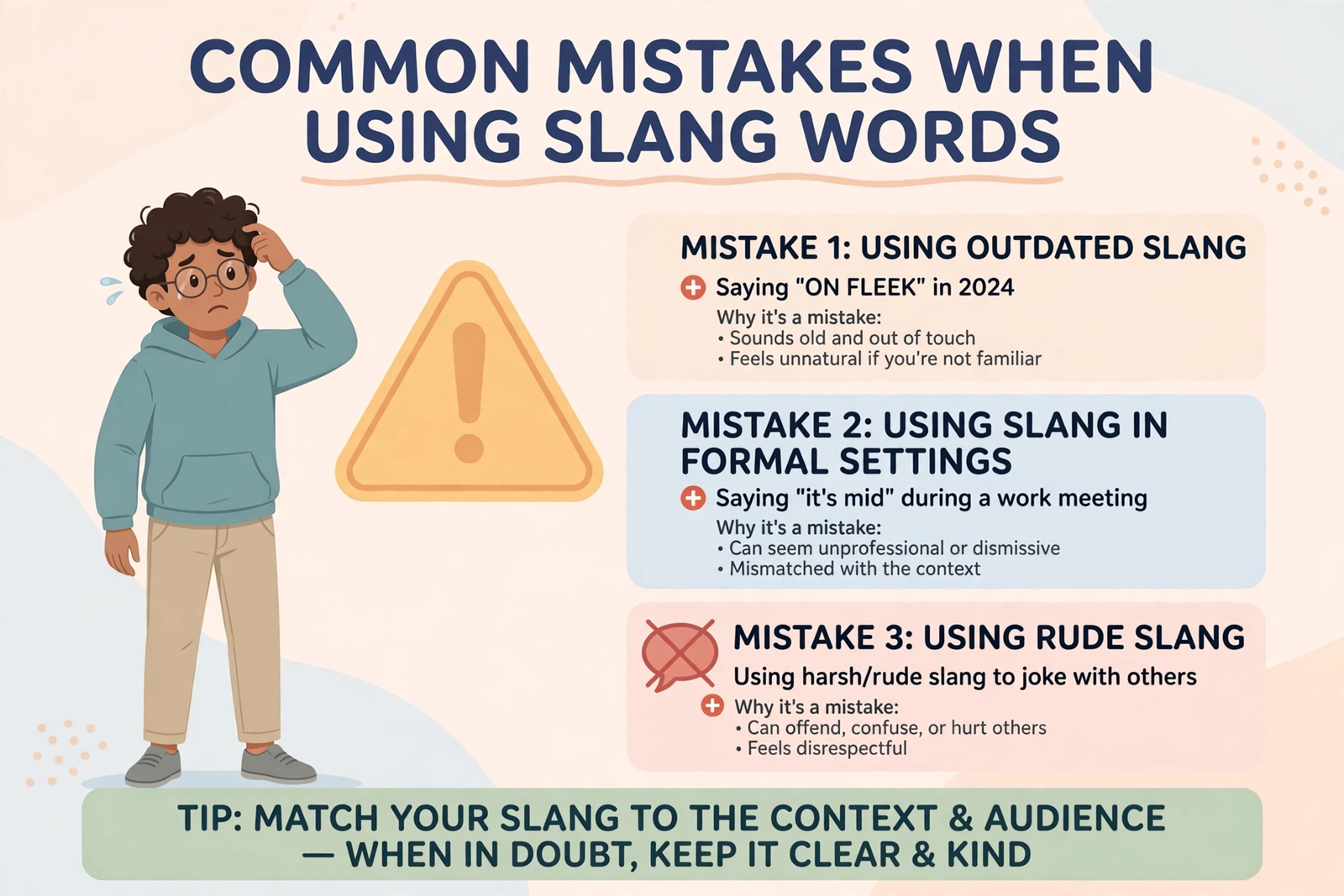
- Using the vulgar sense at work or in formal settings: The most serious mistake. In a professional context, the word reads as crude or harassing, even if you meant it as a joke. Keep it out of offices, classrooms, and formal writing entirely.
- Assuming it is modern Gen Z slang: It is not. The vulgar sense is about a hundred years old and peaked in the 1970s. Using it to sound young and current usually has the opposite effect.
- Confusing it with the TV show: Leave It to Beaver (1957–63) is a wholesome family sitcom. Its title character’s nickname is innocent — the rude pun “beaver cleaver” came later, from comedians, not from the show.
- Calling a woman a “beaver”: The 1970s CB radio usage may once have been neutral, but today it is insulting. Use “woman” instead.
- Thinking “eager beaver” is rude: It is not. This is the most common misunderstanding in the other direction — people avoid a perfectly innocent compliment because they know the word has a rude sense. Eager beaver is safe in any setting.
- Using it in medical or educational contexts: Slang is imprecise — it does not distinguish between the vulva and the vagina, for example. In health discussions, always use accurate anatomical terms.
- Forgetting the audience: A joke that lands among close friends can offend strangers, older relatives, or international listeners who only know the animal meaning. When in doubt, pick the polite alternative.
Quick Tips
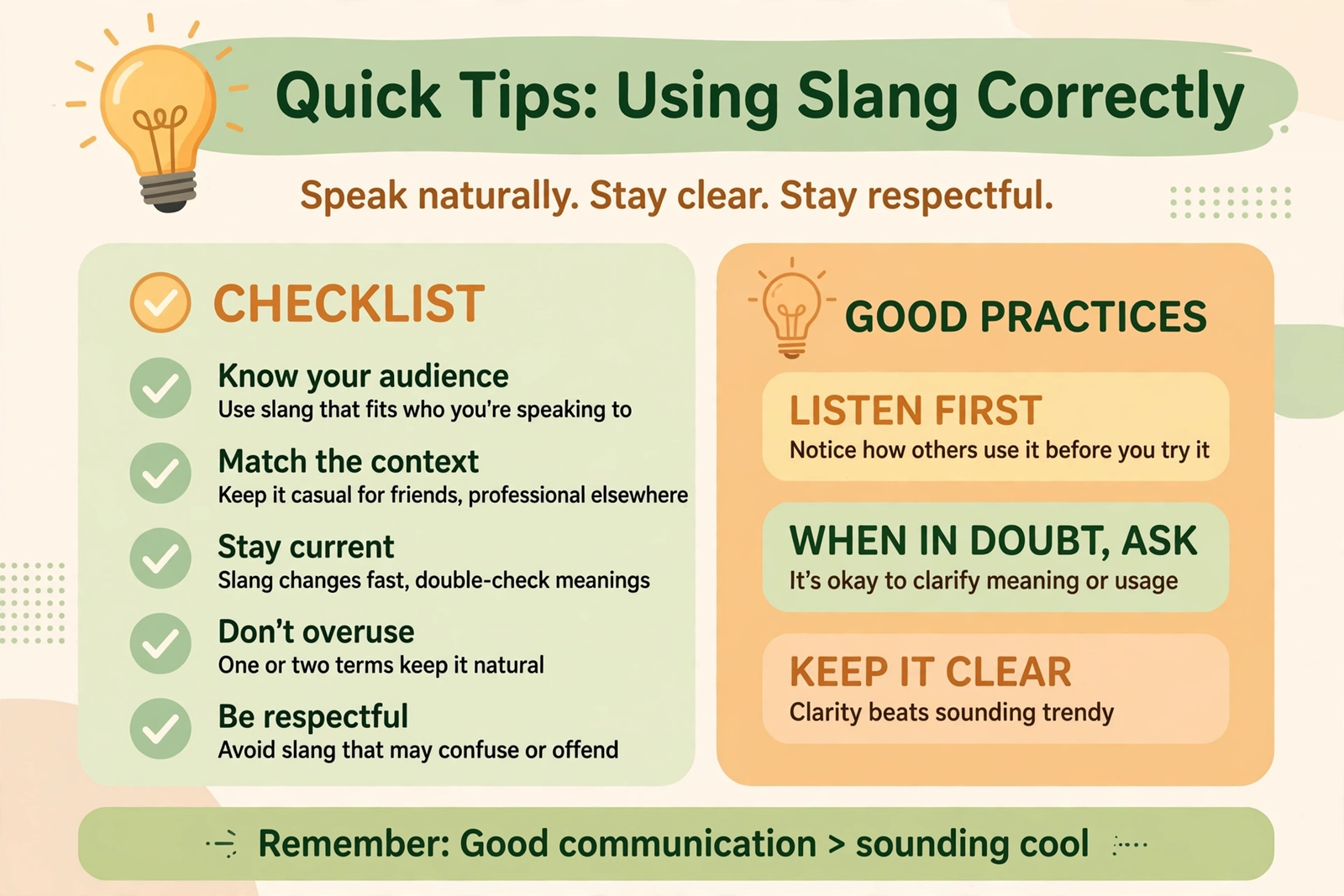
- Check the context first: “Eager beaver” and “busy as a beaver” are compliments; bare “beaver” in a joke is usually vulgar.
- Keep the rude sense out of work: Never use it professionally — use clinical or neutral language instead.
- Use the idioms freely: The work-related phrases are innocent, widely understood, and safe with any audience.
- Do not use it to refer to a woman: That usage is dated and disrespectful in 2026.
- Remember the history: Knowing the fur-trade and Oxford game origins makes the word easy to explain — and easy to remember.
- When in doubt, swap it out: “Hard worker,” “very busy,” and “private parts” cover every situation where beaver might cause confusion.
- Teach, do not repeat: If you are explaining the term to someone, a dictionary-style definition is enough — you do not need crude example sentences to make the meaning clear.

FAQ
What does beaver mean in slang?
In slang, beaver most commonly means a woman’s pubic area or genitals, and it is considered vulgar. The word also appears in innocent idioms: an eager beaver is a hard worker, busy as a beaver means very busy, and to beaver away means to work steadily. Context decides which meaning applies.
Is beaver slang offensive?
The anatomical sense is vulgar and many people find it offensive, because it reduces a woman to a body part. It is inappropriate in formal, professional, or mixed company. The work-related senses — eager beaver and busy as a beaver — are not offensive at all.
What is an eager beaver?
An eager beaver is someone who is very hardworking and enthusiastic, sometimes annoyingly so. The phrase has been in use since the mid-1800s and is a compliment in most contexts, from classrooms to workplaces.
What does “busy as a beaver” mean?
It means very busy or working extremely hard. The idiom comes from the beaver’s reputation for industriously building dams, and it is still common in everyday English.
Where did beaver slang come from?
The vulgar sense comes from the visual resemblance between a beaver’s thick fur (or a split pelt) and pubic hair. It grew out of an earlier sense meaning a beard or bearded man — Oxford students in the early 1900s played a game of shouting “Beaver!” when they spotted a beard — and was first printed with the genital meaning in British slang in 1927.
Is beaver slang still used in 2026?
The vulgar sense has declined sharply among younger generations and now sounds dated, surviving mostly in old comedy, films, and slang dictionaries. The innocent idioms — eager beaver, busy as a beaver, beaver away — are still widely used.
What does “beaver away” mean?
To beaver away is to work hard and steadily at something for a long time. It is informal British English: “She has been beavering away at her novel all year.”
What is the polite way to say it?
For the anatomical sense, use clinical terms such as “vulva” or “pubic area,” or the neutral phrase “private parts.” For the work senses, “hard worker,” “go-getter,” and “very busy” are perfect polite replacements.
Conclusion
Beaver slang is a perfect example of how one small word can hold two completely different lives. On one side, it is a vulgar term with a century of history, from the fur trade to Oxford word games, 1940s military slang, and the comedy stages of the 1970s. On the other side, it is a cheerful, innocent compliment — the eager beaver who gets things done and the colleague who is busy as a beaver all week.
The lesson is one that applies to almost every slang word: meaning lives in context. Before you use beaver, know which meaning your listener will hear, and when the situation is formal, professional, or uncertain, reach for the polite alternative instead. Keep the idioms, drop the crude sense, and you will never go wrong.
If you found this guide useful, keep exploring the world of slang with us. Check out our breakdown of lore meaning slang for another term with a surprising history, or revisit our slang for vagina roundup to see where beaver fits among dozens of similar terms. And if you are curious about another everyday word with a hidden second meaning, our guide to tea slang meaning is a great next read.
