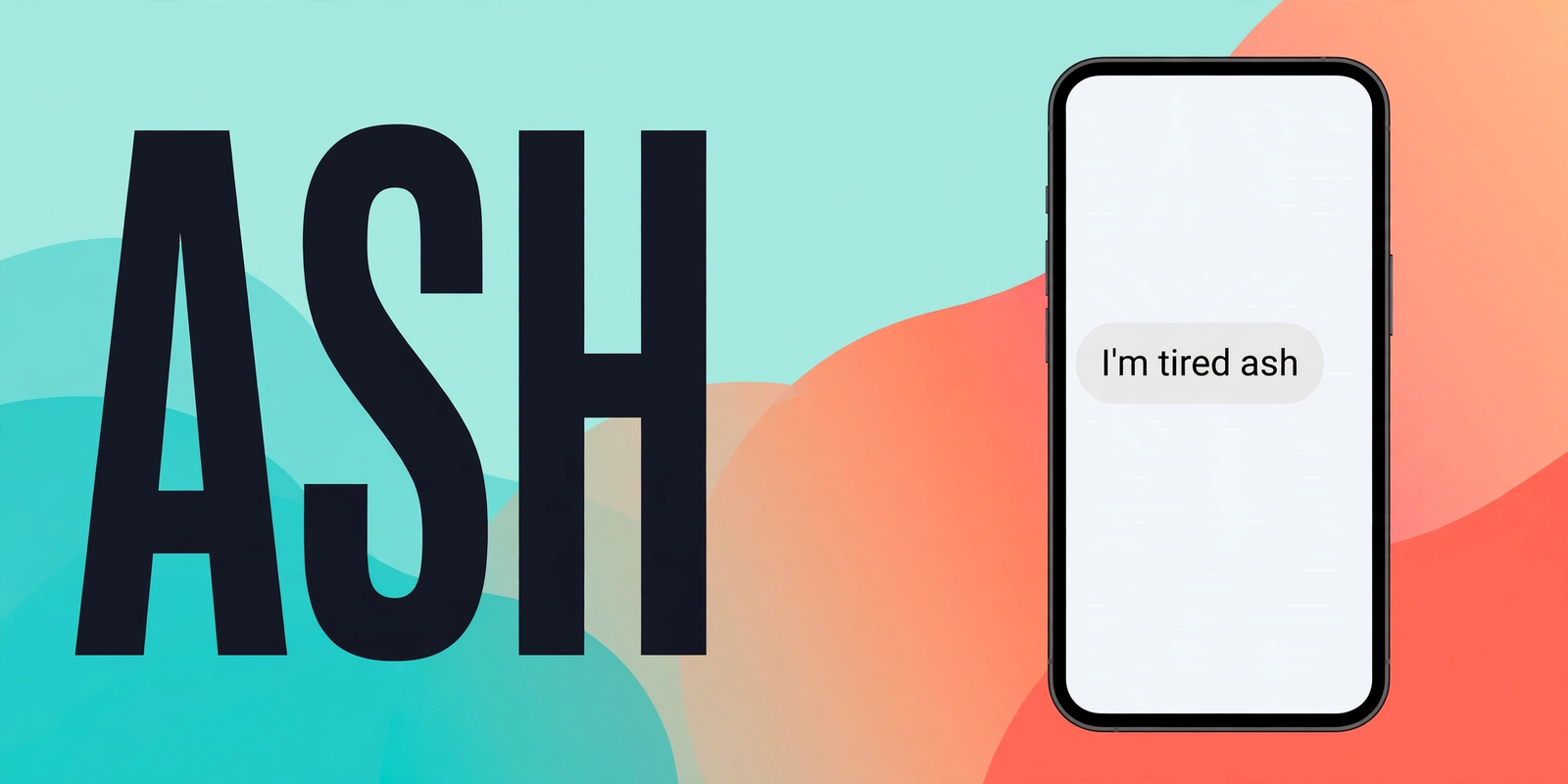
Quick definition: In slang, ash meaning slang is most often short for “as hell” — a casual intensifier that makes the word before it stronger. When someone texts “I’m tired ash,” they mean “I’m extremely tired.” It works the same way in phrases like “funny ash,” “cold ash,” and “hungry ash,” and it shows up constantly in TikTok comments, Instagram captions, Discord chats, and everyday texting.
Ash Meaning Slang & Definition
If you have ever stared at a message that said “that movie was boring ash” and wondered whether your friend was talking about fire, you are not alone. The word “ash” has lived a very long life in English — it is the grey powder left after something burns — but on the internet it picked up a completely different job. In modern texting slang, ash is an intensifier, a tiny three-letter amplifier that turns any adjective up to eleven.
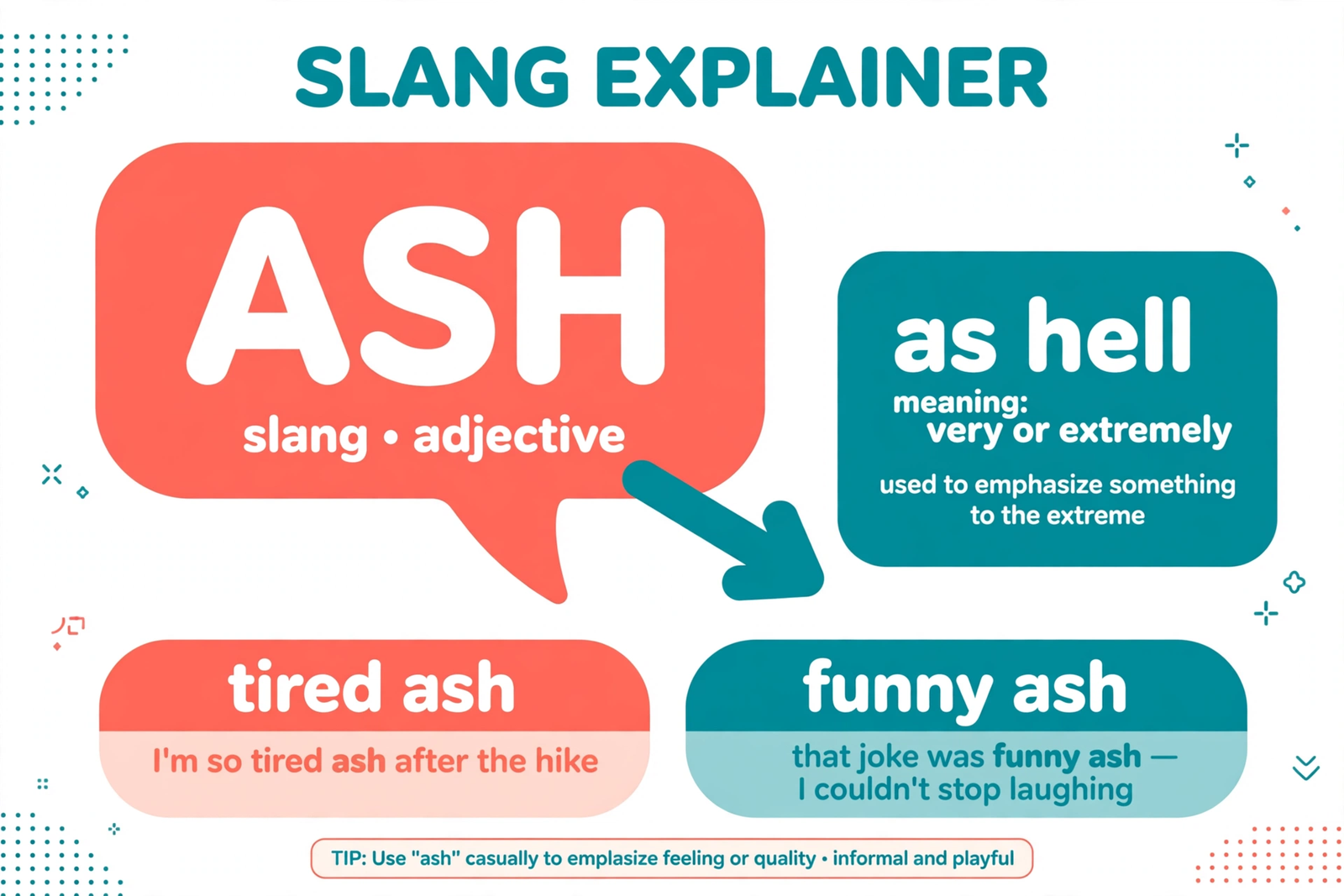
The ash meaning slang most people are looking for is simple: “as hell.” It is a shortened, softened spelling of the classic English intensifier phrase “as hell,” the same construction behind “mad as hell,” “hot as hell,” and “tired as hell.” Texters dropped the extra letters, kept the punch, and started writing “tired ash” instead of “tired as hell.” The result reads lighter, looks less aggressive, and slips past the kind of filters and family group chats where the full phrase would feel too strong.
That is the core rule to remember: whatever comes before “ash” is being said loudly. “Funny ash” means really funny. “Cute ash” means extremely cute. “Annoying ash” means very annoying. The word almost never appears alone, because its whole job is to sit behind an adjective and make it stronger. Once you know that pattern, you can decode almost every “ash” you will ever see in a text message.
There are a few secondary readings worth knowing, and this guide covers all of them — the main “as hell” meaning, the softer “as heck” interpretation, the rare “ashamed” reading, the name connection, and the TikTok-specific “As Savage As Hell” twist — so you never have to guess from context alone again.
Introduction
Slang moves fast, and “ash” is a perfect example of how a plain old English word can get a second career online. A few years ago, seeing “ash” in a message almost always meant one of two things: actual ashes from a fire, or someone named Ashley or Ashton. Then Gen Z texting culture got hold of it, and the word started appearing after adjectives in places it had never been before: “I’m bored ash,” “it’s hot ash outside,” “that game was hard ash.”
The confusion is understandable. Unlike abbreviations such as FN meaning in text, which at least looks like an abbreviation, “ash” looks like a regular word — which is exactly why it trips people up. It does not look like slang, so readers try to read it literally, and the sentence stops making sense. Add in the fact that it shows up on TikTok, Snapchat, Instagram, and gaming chats with slightly different flavors on each platform, and it is no wonder “ash meaning slang” has become one of the most searched slang questions of the last two years.
This guide breaks the term down completely: what it means, where it came from, how it is used on every major platform, how it compares to similar intensifiers, the mistakes people make with it, and exactly what to say back when someone drops it in your messages.
Origin
The story of “ash” as slang starts with the phrase “as hell,” which has been doing intensifier duty in English for well over a century. “Mad as hell” and “hot as hell” were already common in spoken American English long before the internet existed. The phrase is blunt, emotional, and a little bit rude — which is precisely why teenagers and young adults loved it, and precisely why it kept getting shortened.
African American Vernacular English (AAVE) played a major role in how this kind of intensifier spread. In AAVE-influenced speech, “as hell” and the related “ass” intensifier (“funny ass,” “tired ass”) have long been used to add emphasis after adjectives. Online, “ash” emerged as a playful respelling of “ass” in the same position — “funny ash” carries the same meaning as “funny ass” but reads softer and dodges the profanity filters that flag the original spelling. That softening matters: it is the reason “ash” can appear in a TikTok comment or a group chat where the unfiltered version would get hidden or feel too crude.
The shift from spoken phrase to typed slang followed the usual path. Fast texting rewards short words, and three letters beat seven. By the early 2020s, “ash” was appearing regularly in tweets, TikTok comments, and Discord messages, and dictionary-style slang sites began documenting it. Wiktionary now records the internet-slang use of “ash” as an intensifier, and usage trackers show searches for the term climbing steadily since 2022. It is a textbook case of internet culture taking a piece of spoken English, respelling it, and giving it a new written life.
Popularity
“Ash” is popular precisely because it is useful. Texting is fast, emotional, and short on space, and an intensifier that costs only three letters is a bargain. It does the same work as “very,” “really,” “extremely,” and “so” — but with more attitude. Saying “I’m tired” states a fact. Saying “I’m tired ash” performs the feeling. That extra punch is why it thrives on platforms built around quick reactions.
TikTok is where “ash” is most visible. It floods comment sections as pure emphasis: “funny ash” under a comedy clip, “cute ash” under a pet video, “hard ash” under a dance challenge. Because TikTok comments reward short, punchy reactions, a three-letter amplifier is a natural fit. Instagram works the same way — captions and replies use “ash” to add feeling without writing a longer sentence. On Snapchat and in private group chats, it is simply part of how friends talk to each other now.
The term has also spread beyond native English speakers. Because it is short, easy to spell, and easy to copy from a comment or caption, learners of internet English pick it up quickly. That is part of why search interest keeps rising: every wave of new users meets the word for the first time and looks it up. Unlike trend-driven slang that burns out in a month, intensifiers tend to stick around, because the need they fill — saying something strongly, quickly — never goes away.
How It Is Used
The grammar of “ash” is simple and strict. It goes after the adjective it amplifies, never before it. You say “tired ash,” not “ash tired.” It works with feelings (“bored ash,” “happy ash”), physical states (“cold ash,” “hungry ash”), and judgments (“weird ash,” “funny ash,” “dumb ash”). In almost every case, you can swap it for “very,” “really,” or “extremely” and the sentence still works.
It is almost always casual. You will see it between friends, in comment sections, and in group chats — not in work emails, school assignments, or messages to a boss. The reason is the hidden expansion: “ash” stands for “as hell,” and “hell” has no business in formal writing. Some readers — older, more religious, or simply not slang-fluent — may find it crude even in abbreviation form, so the safe rule is to keep it in casual spaces.
Tone matters too. “Ash” is loud and expressive. It signals strong feeling, not mild agreement. “That’s cool ash” is not a calm observation; it is enthusiasm. Used sarcastically, it can flip the other way — “yeah, that was fun ash” after a terrible experience means the opposite. As with most slang, the surrounding conversation tells you which way it leans.
Where You Will See It Most
- Text messages: “I’m sleepy ash” or “it’s hot ash outside” — quick feeling updates between friends.
- TikTok: comments and captions where short reactions win — “funny ash 😭” or “cute ash.”
- Instagram: replies to stories and posts, usually as a one-line reaction.
- Discord and gaming chats: fast reactions mid-game, like “that was hard ash” after a tough round.
- Snapchat: casual snaps and replies, often paired with emojis.
Examples
Seeing “ash” in real sentences is the fastest way to learn it. Notice how in every example the word sits directly after an adjective, and how removing it leaves a normal, weaker sentence behind.
Friendly Examples
- “I’m tired ash after that workout.” — I’m extremely tired after that workout.
- “That pizza was good ash.” — That pizza was really good.
- “You’re funny ash, I can’t stop laughing.” — You’re really funny.
- “It’s cold ash outside, bring a jacket.” — It’s extremely cold outside.
- “I’m happy ash we finally met up.” — I’m really happy we finally met up.
- “That puppy is cute ash.” — That puppy is extremely cute.
Professional Examples
Honest answer: there are almost no professional examples, because “ash” does not belong in professional writing. That is itself a useful lesson. If you are tempted to use it at work, swap it for “very,” “extremely,” or “really” instead. The closest you will get to a workplace sighting is a casual Slack message between close colleagues, such as “that meeting was long ash” — and even that is better rewritten as “that meeting was really long” when anyone senior is in the channel. The word’s home is casual conversation, and keeping it there is part of using it correctly.
Funny Examples
- “My bed is comfy ash, I’m never getting up.” — My bed is extremely comfortable.
- “That plot twist was crazy ash.” — That plot twist was really crazy.
- “Bro, that game was hard ash and I still won.” — That game was really hard.
- “I’m hungry ash, feed me now.” — I’m extremely hungry.
- “This song is catchy ash, it’s been stuck in my head all day.” — This song is really catchy.
Example Table
| What someone says | What it means | Tone |
|---|---|---|
| “I’m tired ash.” | I’m extremely tired. | Casual |
| “That’s funny ash.” | That’s extremely funny. | Playful |
| “It’s hot ash outside.” | It’s extremely hot outside. | Casual |
| “He’s annoying ash.” | He’s very annoying. | Frustrated |
| “That test was hard ash.” | That test was really hard. | Relatable |
| “She’s pretty ash.” | She’s very pretty. | Compliment |
Comparison with Similar Terms
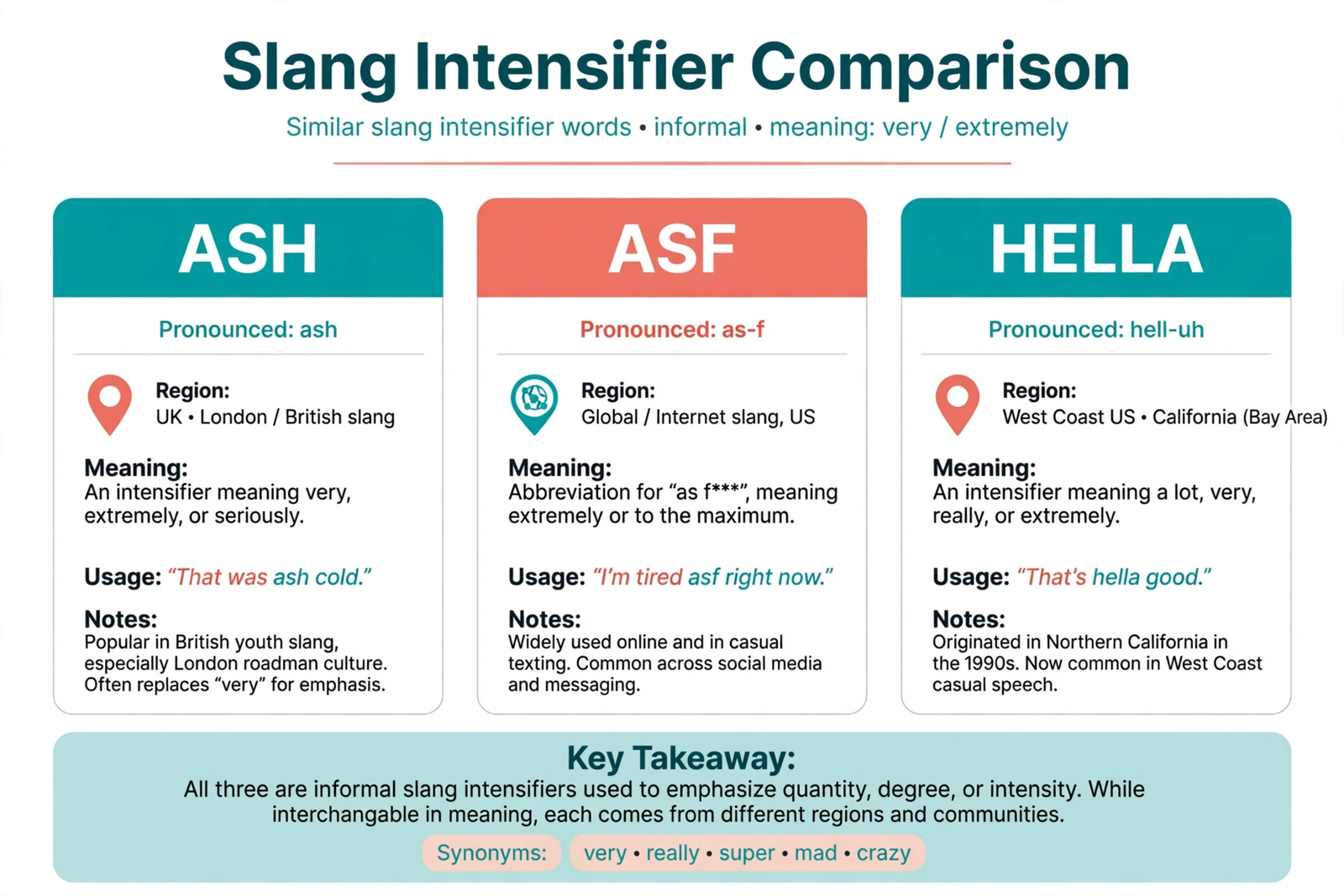
“Ash” belongs to the intensifier family — the slang whose whole job is making other words louder. It shares that job with several cousins, and knowing the differences keeps you from mixing them up.
| Term | Full form | Strength | What it does |
|---|---|---|---|
| ash | As hell | Strong | Amplifies the adjective before it — “tired ash” |
| asf | As f*** | Stronger, vulgar | Same job, but much cruder — “tired asf” |
| af | As f*** | Stronger, vulgar | The older abbreviation for the same idea — “cute af” |
| as heck | As heck | Mild | The polite cousin — “tired as heck” |
| hella | — | Strong | Goes before the adjective — “hella tired” |
| deadass / fr | — | Emphasis | Emphasizes truth or seriousness, not degree |
| lowkey | — | Softens | Does the opposite — tones a statement down |
The most important distinction is ash vs. asf/af. All three amplify an adjective, but “ash” is the mildest of the three. “Asf” and “af” expand to a much stronger profanity, which makes them riskier in mixed company and more likely to be filtered. “Ash” gives you most of the emphasis with far less edge, which is a big reason it spread so quickly.
The second distinction is ash vs. hella. Both mean “very,” but they sit in different places: “ash” follows the adjective (“tired ash”) while “hella” precedes it (“hella tired”). Mixing up the order is the fastest way to sound like you are guessing. And unlike “lowkey,” which softens a statement (“lowkey tired” means only a little tired), “ash” always turns the volume up.
One more comparison worth making: “ash” vs. “ass” in the same position. “Funny ass” and “funny ash” mean the same thing, and “ash” is essentially the filter-friendly respelling of “ass.” If you see both forms, they are the same slang wearing different clothes.
Alternate Meanings
Context decides everything with “ash,” because the word has several lives outside slang. Here are the readings you need to separate.
1. “As Hell” — The Main Slang Meaning (About 95% of Uses)
This is the one this whole guide is about. Adjective + “ash” = that adjective, turned up. “Hungry ash,” “bored ash,” “loud ash” — all of them mean the same pattern. If the sentence has an adjective right before “ash,” this is almost certainly the meaning.
2. “As Heck” — The Softer Reading
Some people use “ash” intending the milder “as heck” rather than “as hell.” The sentences look identical — “tired ash” could be either — and the difference barely matters in practice, because both mean “very.” If someone seems to be deliberately keeping things clean, “as heck” is probably what they mean.
3. “Ashamed” — Rare, Needs Context
Occasionally “ash” is a clipped form of “ashamed,” as in “feeling ash rn” after an embarrassing moment. This is uncommon and only works when the conversation is already about embarrassment or regret. Without that context, do not assume it.
4. A Name — Ashley, Ashton, Ashlyn
“Ash” is a common short form of names like Ashley, Ashton, and Ashlyn. “Hey Ash!” at the start of a message is a greeting to a person, not slang at all. The giveaway is position: a name appears where a name belongs, not glued to the end of an adjective.
5. Literal Ashes — Fire Residue
The original dictionary meaning never went away. In a message about a campfire, a barbecue, a volcano, or a cigarette, “ash” means exactly what it always meant: the grey powder left after burning. If the conversation is about fire, the slang reading does not apply.
6. “As Savage As Hell” — The TikTok Reading
On TikTok, “ASH” sometimes expands to “As Savage As Hell,” used for something bold, impressive, or wild — a savage comeback, a fearless stunt, an outfit that turns heads. This is a niche reading, mostly found in comments on bold or impressive videos. It still works as an intensifier, just with “savage” doing the flavoring.
7. Symbolic Ash — Burned Out or Done
In poetic or emotional messages, “ash” can symbolize something faded or finished — “our friendship turned to ash” means it is over. This is figurative language, not slang, and the sentence structure makes it obvious.
Professional or Polite Alternatives
Because “ash” expands to “as hell,” it does not travel well into formal settings. Here is how to say the same thing politely, depending on the situation:
| Slang version | Polite alternative | Best for |
|---|---|---|
| “I’m tired ash.” | “I’m extremely tired.” | Work, school, family |
| “That’s funny ash.” | “That’s really funny.” | Any formal setting |
| “It’s hot ash outside.” | “It’s very hot outside.” | Any formal setting |
| “That was hard ash.” | “That was really difficult.” | Work or school |
| “She’s pretty ash.” | “She’s very pretty.” | Polite compliments |
| “I’m hungry ash.” | “I’m really hungry.” | Family, formal dinners |
The general rule is simple: in any message where you would not write “as hell,” do not write “ash” either. “Very,” “really,” “extremely,” and “so” carry the same meaning with zero risk. Save “ash” for friends, comments, and chats where casual language is expected.
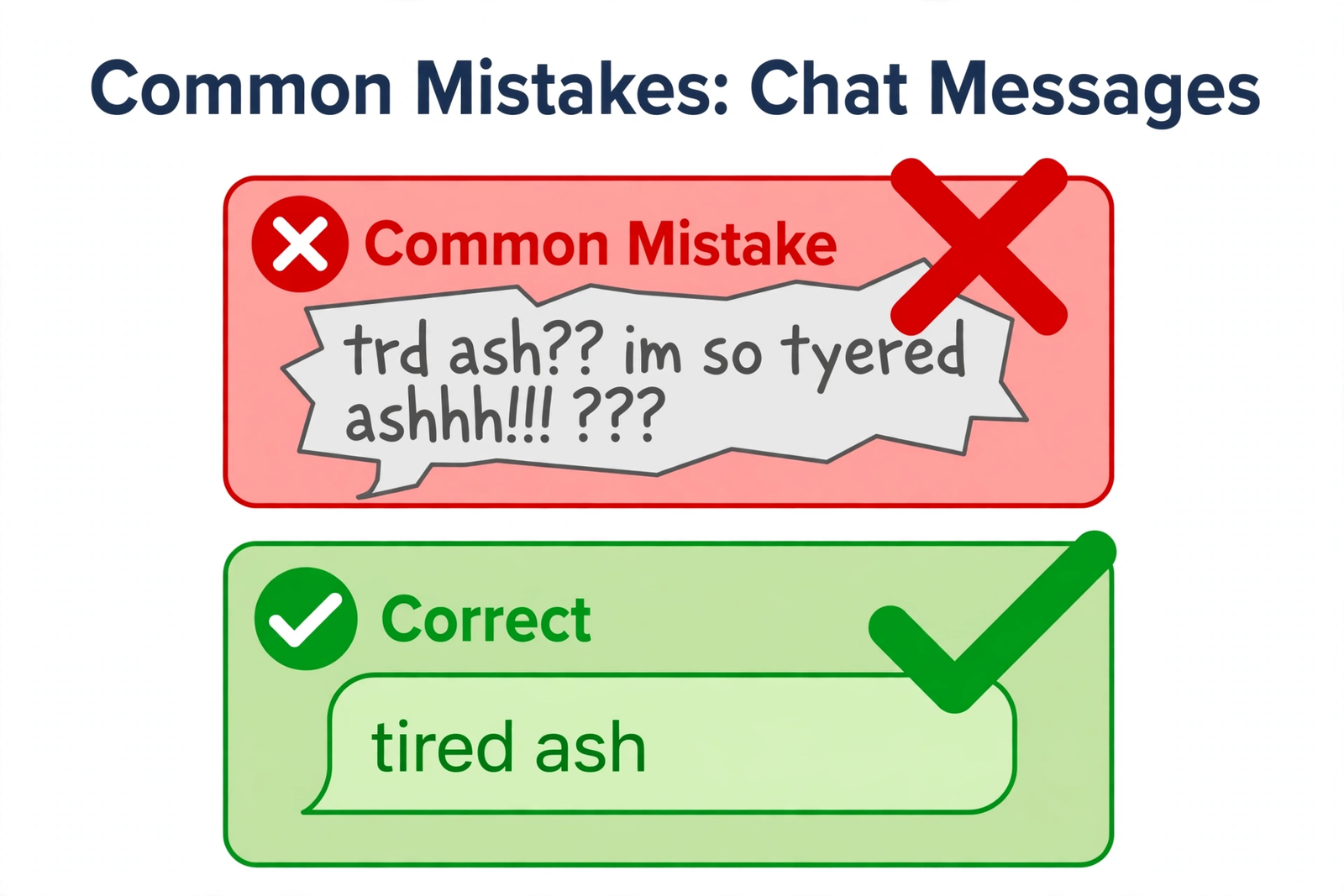
Common Mistakes
Most mistakes with “ash” come from its innocent look. People treat it like a normal word, and the sentence falls apart. Here are the errors to avoid.
1. Putting “ash” before the adjective. The order is fixed: adjective first, “ash” second. “Ash tired” is wrong; “tired ash” is right. This is the single most common mistake, and it instantly marks someone as unfamiliar with the slang.
2. Using it alone. “Ash” almost never stands by itself. A message that just says “ash” means nothing to the reader — it needs an adjective to amplify. If you catch yourself typing it alone, add the word it is supposed to strengthen.
3. Using it in formal messages. Work emails, school essays, messages to a teacher or a boss — “ash” does not belong in any of them. The hidden expansion is “as hell,” and no abbreviation makes that formal. Swap in “very” or “extremely” and move on.
4. Confusing it with a name. “Hey Ash, that’s funny ash” contains both uses in one sentence: the first “Ash” is a person, the second is the intensifier. Reading them as the same thing is an easy mistake in a fast-scrolling chat. Position tells you which is which.
5. Assuming it always means “as hell.” Most of the time it does, but the “ashamed” reading and the literal fire meaning exist. If a sentence about embarrassment says “feeling ash rn,” or a camping message mentions ash on a tent, the slang reading is wrong. Check the context before you reply.
6. Overusing it. Like any intensifier, “ash” loses power when it appears in every sentence. One “tired ash” in a message lands; five in a row reads like a tic. Use it where the feeling is genuinely strong and let plain words do the rest.
7. Using it sarcastically without a signal. “Yeah, that was fun ash” after a miserable experience is sarcasm, but text strips away tone of voice. Without an emoji, a “lol,” or obvious context, the reader may take it literally. Add a signal when the meaning flips.
Quick Tips
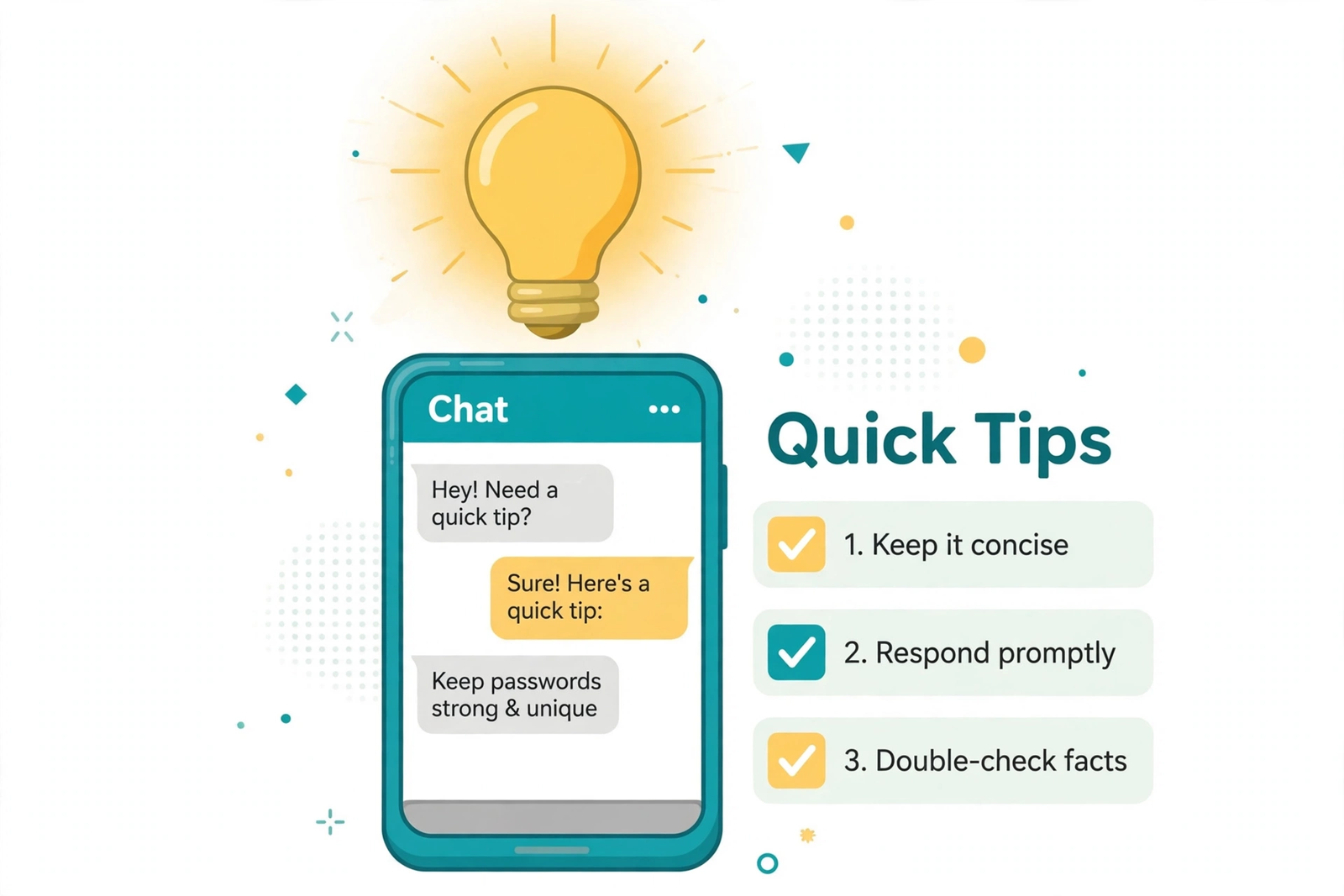
- Remember the pattern: adjective + “ash” = that adjective, but stronger. If there is no adjective before it, something else is going on.
- Keep it casual: friends, comments, group chats — never work, school, or formal messages.
- Read the whole sentence first: one glance at the surrounding words tells you whether “ash” means “as hell,” a name, or literal ashes.
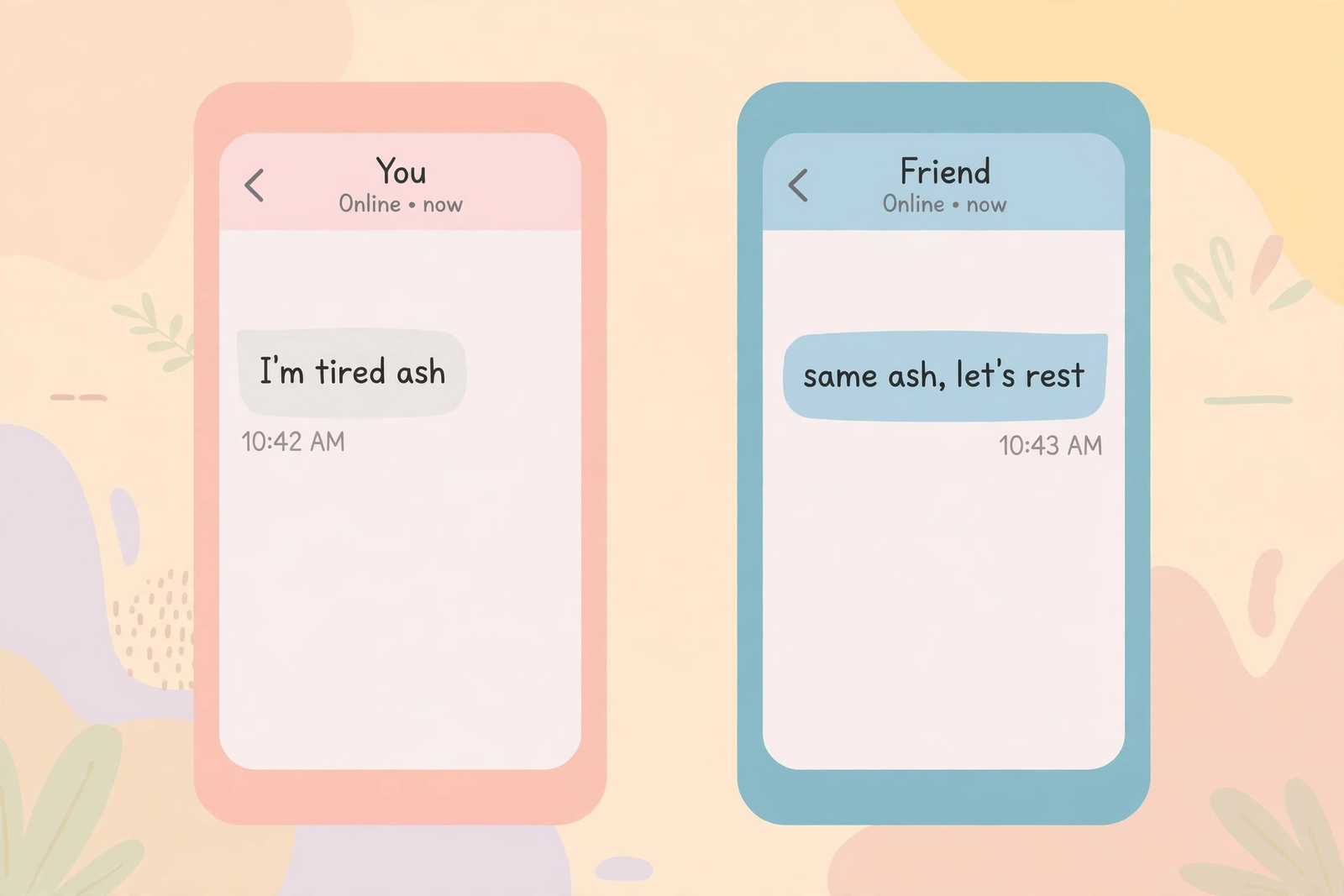
- Reply in kind: if a friend says “I’m tired ash,” a natural reply is “same ash, let’s rest” or simply “same.” Matching their energy keeps the conversation flowing.
- Do not force it: if it does not come naturally, “really” and “very” say the same thing. Slang that sounds forced is worse than no slang at all.
- Watch the platform: TikTok and Instagram comments are its natural habitat; a formal email is not.
- Pair it with emojis carefully: “funny ash 😭” reads as laughing hard; “tired ash 😴” reads as exhausted. The emoji sets the tone the words leave open.
- When in doubt, ask: “wait, what does ash mean here?” is a perfectly fine question — slang is supposed to be learned, not guessed.
FAQ
What does “ash” mean in slang?
In slang, “ash” most commonly means “as hell.” It is an intensifier placed after an adjective to make it stronger — “tired ash” means “extremely tired,” “funny ash” means “really funny,” and “cold ash” means “extremely cold.” It is casual Gen Z texting slang, common on TikTok, Instagram, and in group chats.
What does “ash” mean in text messages?
In text messages, “ash” usually means “as hell” and intensifies the word before it. “I’m tired ash” means “I’m extremely tired.” The meaning is also documented in Wiktionary’s entry for the internet-slang use of the word, which records it as an intensifier in online communication.
Is “ash” short for “as hell” or “as heck”?
Both readings exist, and the sentences look identical either way. “As hell” is the primary, most widely recognized expansion; “as heck” is the softer version some people intend when they want to keep things clean. In practice the difference barely matters, because both mean “very” or “extremely.”
What does “ash” mean on TikTok?
On TikTok, “ash” is most often the same “as hell” intensifier used in comments and captions — “funny ash” under a comedy clip or “cute ash” under a pet video. In some TikTok comments it can also expand to “As Savage As Hell,” used for something bold or impressive, like a savage comeback or a fearless stunt.
Is “ash” a bad word?
“Ash” itself is not a profanity, and it is milder than related intensifiers like “asf” or “af.” But it expands to “as hell,” which Merriam-Webster classifies as somewhat impolite, so it is informal and unsuitable for work, school, or formal messages. Think of it as casual rather than offensive.
What does “tired ash” mean?
“Tired ash” means “extremely tired” or “tired as hell.” It follows the standard pattern: the adjective “tired” plus “ash” as an amplifier. The same pattern works with any adjective — “hungry ash” means extremely hungry, “bored ash” means extremely bored.
Can “ash” mean “ashamed”?
Rarely, yes. In a conversation already about embarrassment or regret, “feeling ash rn” can be a clipped form of “feeling ashamed right now.” This reading is uncommon — about 3% of uses — and only works when the context is already about shame. Without that context, assume “as hell.”
How do you reply when someone says “ash”?
Match their energy. If they say “I’m tired ash,” reply “same ash” or “get some rest.” If they say “that was funny ash,” reply with a laughing emoji or “fr, I was crying.” You do not need to use the word back — a normal, warm reply works just as well.
Conclusion
The ash meaning slang question has a short answer and a useful one: “ash” means “as hell,” a three-letter amplifier that makes the adjective before it louder. “Tired ash” is extremely tired, “funny ash” is really funny, and “cold ash” is extremely cold. It grew out of the spoken phrase “as hell,” traveled through AAVE-influenced internet speech as a softer respelling of “ass,” and found its home in TikTok comments, Instagram replies, and fast group chats where three letters do the work of a whole sentence.
The key takeaways are simple. First, the position tells you everything: adjective first, “ash” second, and the meaning is emphasis. Second, context separates the slang from the name, the literal ashes, and the rare “ashamed” reading — read the whole sentence before you decide. Third, keep it casual: “ash” is for friends and comment sections, and “very” or “extremely” does the same job everywhere else. If you remember those three rules, you will never be confused by “ash” again — and you will know exactly how to use it when the moment calls for a little extra volume.
Slang keeps changing, and new intensifiers will keep appearing alongside the ones we already know. If you want to keep up, the same habit helps every time: learn the pattern, check the context, and use the word where it belongs. For more plain-English breakdowns of the abbreviations filling your chats, check out our guides to CFS meaning in text and TYSM meaning — and when someone drops a new piece of slang in your messages, you will already know how to read it. As the dictionary entry for the word shows, even a word as old as “ash” can pick up a brand-new job online — see the Wiktionary entry for “ash” for the full range of its meanings, slang included.
