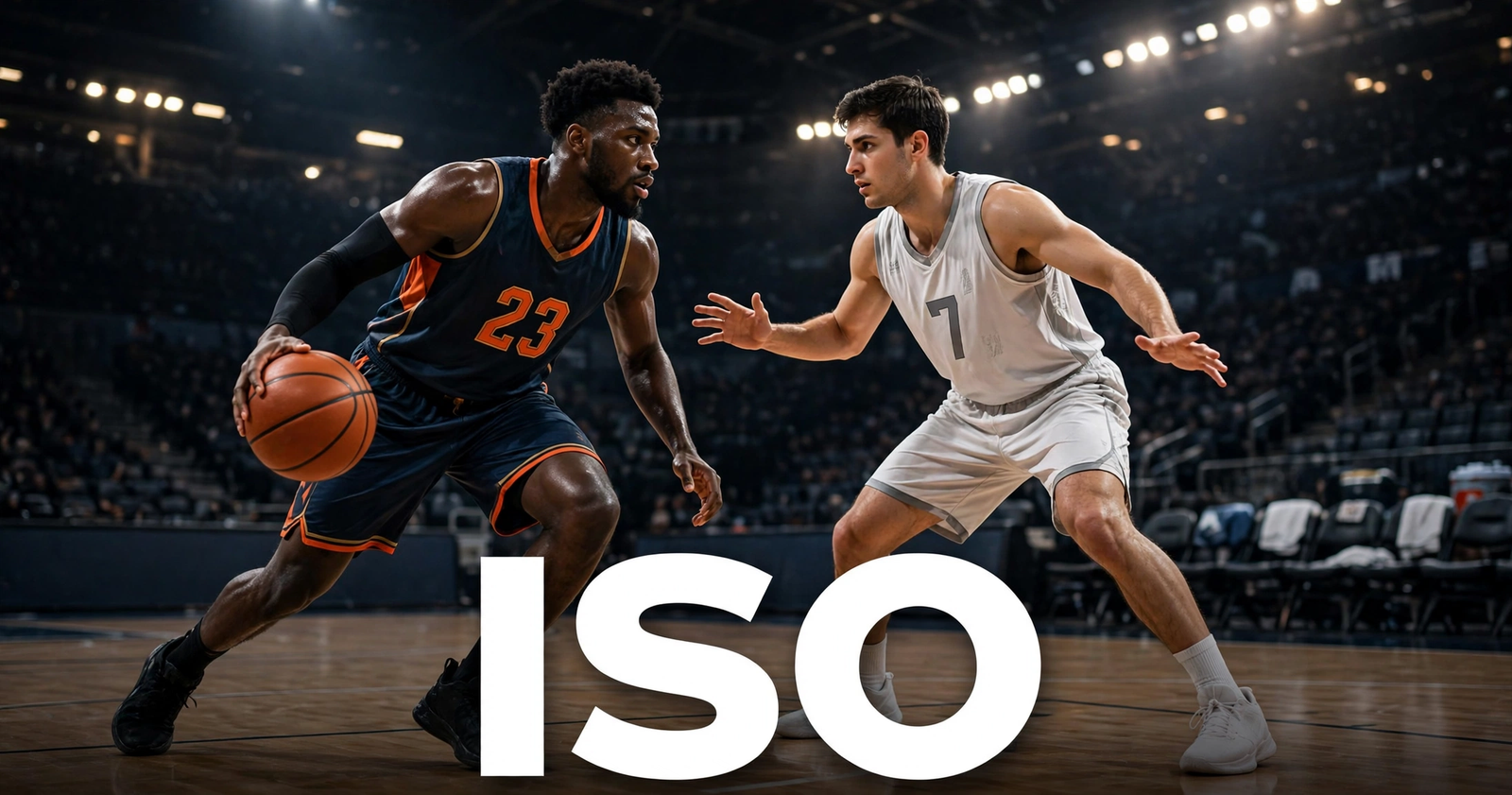
Quick definition: In basketball slang, ISO is short for isolation — a play where one offensive player takes on a single defender one-on-one while the other four teammates clear out to the far side of the court. When fans, players, or commentators say “run an iso,” they mean: give the ball to your best scorer, spread the floor, and let him or her go to work alone.
iso meaning slang basketball Meaning & Definition
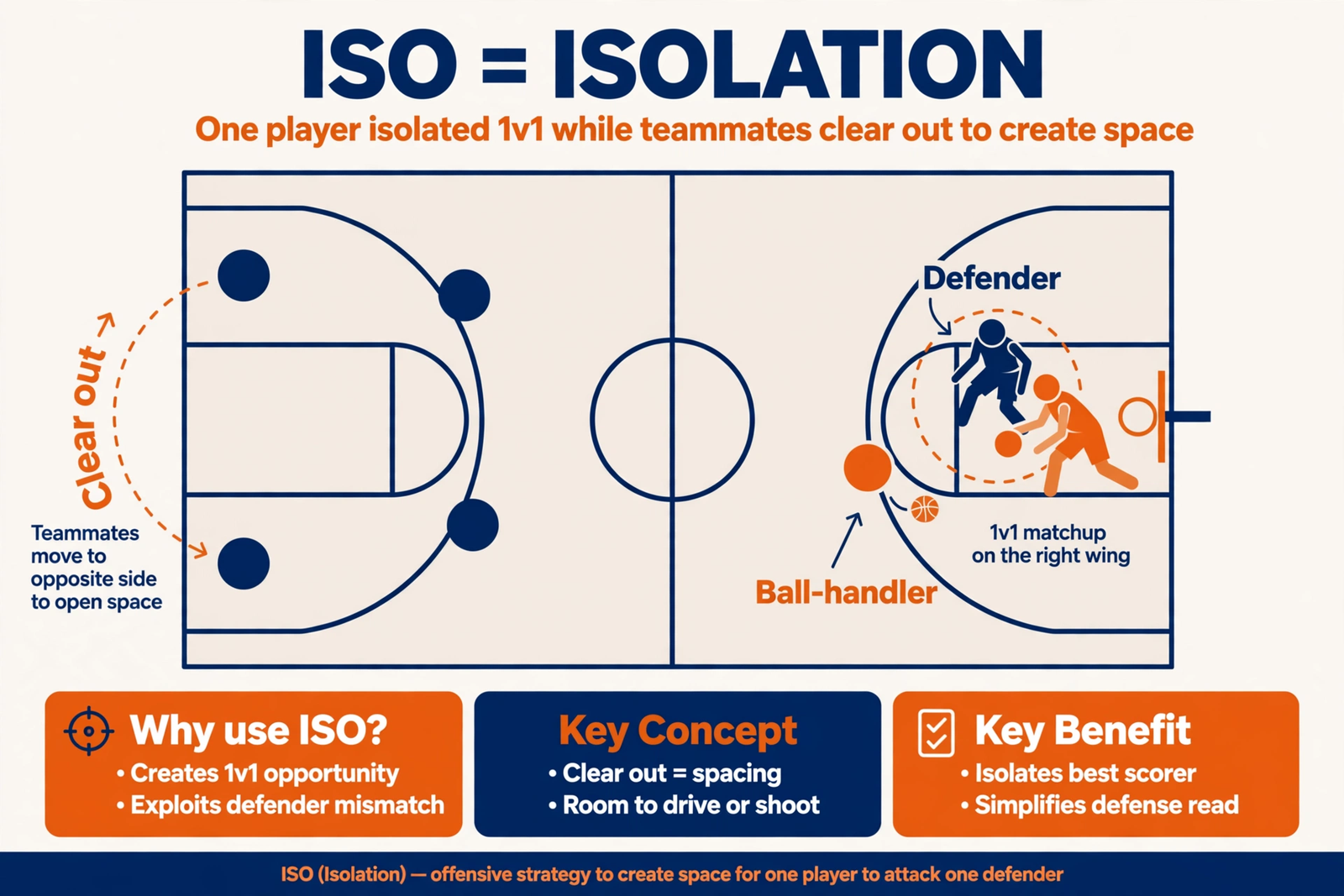
The iso meaning slang basketball fans use every night on TV and in group chats is simple: ISO = isolation. It describes an offensive setup in which the ball-handler is deliberately left alone with one defender while the rest of the team moves away. The goal is to create a favorable one-on-one matchup — usually your best scorer against a weaker defender — and let individual skill decide the possession.
Unlike most basketball plays, which rely on screens, cuts, and ball movement, an iso strips the game down to its simplest form: one player, one defender, and a lot of open floor. That is why the word shows up so often in highlight clips, in heated bar debates, and in texts between friends watching a game together. When someone yells “ISO!” from the bench or types it in a chat, everybody knows what is coming next.
The term is also written as “iso” (lowercase) in casual writing, and you will sometimes see it spelled out as “isolation play” in coaching manuals. In NBA broadcasts, analysts use it as both a noun and a verb — “They went iso on that possession” or “He iso’d his man and pulled up for three.” Either way, the meaning is the same: clear out and let the star cook.
Introduction
If you have ever watched an NBA game and heard a commentator say “they are going iso here,” you have heard basketball slang at its purest. The crowd rises, the other four players drift to the weak side, and the arena holds its breath while one player sizes up his defender. It is the most dramatic, most debated, and most entertaining play in modern basketball — and it all starts with three little letters: ISO.
But the iso meaning slang basketball fans throw around goes beyond a simple play call. It is a whole philosophy of basketball. Some fans love it, because nothing beats watching a great scorer break someone down one-on-one. Others hate it, because it can look like four players standing around watching. Coaches argue about it, analysts track it with advanced stats, and players build entire reputations on it.
In this guide, we will break down the iso meaning in basketball slang completely: where the term came from, why it exploded in popularity, how the play actually works, when teams use it, who the best iso players in the game are, and the mistakes people make when they use the word. You will also get real examples, a comparison with similar basketball terms, and answers to the most common questions fans ask. By the end, you will understand iso like a coach — and you will never be confused when your group chat starts arguing about it again.
Origin
The word “iso” comes from “isolation,” a coaching term that has been part of basketball vocabulary for decades. Long before it became slang, isolation was a diagram on a clipboard: the coach would draw the ball-handler on one side of the floor and move the other four offensive players to the far side, creating a pocket of space for a one-on-one attack.
The play itself is much older than the slang. In the 1980s and 1990s, isolation basketball was the default late-game offense of the NBA. Michael Jordan’s Chicago Bulls ran the famous “triangle” offense, but in the final seconds, the plan was often simple: clear out and let Jordan go to work. The same was true for Kobe Bryant, who became so associated with the iso that his Team USA teammates joked about it — LeBron James famously laughed while retelling how Kobe would call “Iso!” during games, meaning “get out of the way, I have this.”
The slang form “iso” spread through playground culture, streetball, and then social media. On playgrounds, calling “iso” is a challenge — it means you believe you can beat your man without any help, and it puts your reputation on the line. If you are new to hoops vocabulary, a good basketball lingo guide will show you how iso sits alongside dozens of other terms players use every game. In the 2000s and 2010s, as NBA stars like James Harden, Kevin Durant, and Stephen Curry built their games around isolation scoring, the term moved from locker rooms into everyday fan language.
Today, the iso meaning slang basketball communities use has fully crossed over. It appears in memes, in video games like NBA 2K (where players spam the iso move in online matches), in sports betting discussions, and in highlight captions on Instagram and TikTok. What started as a coach’s clipboard diagram is now one of the most recognized words in basketball culture.
Popularity
Isolation basketball has never been more popular — or more argued about. According to Synergy Sports tracking data from the 2023–24 NBA season, isolation plays averaged about 0.93 points per possession, ranking below transition and off-screen actions but above post-up plays. In other words, iso is not the most efficient play in basketball, but it is far from the worst — and when the right player has the ball, it can be devastating.
The popularity of iso is tied to the stars who use it best. James Harden turned isolation into an art form in Houston, leading the league in isolation possessions for years and making the step-back three the signature shot of an entire era. Kevin Durant’s iso game — a 7-foot scorer who can shoot over anyone — is often called unguardable. Kyrie Irving’s handle in isolation is the stuff of highlight reels, and Luka Doncic has become the modern face of the iso, regularly hunting mismatches and backing defenders down.
The term also thrives in online basketball culture. Fans argue endlessly about “iso ball” versus team basketball, especially during the playoffs when games slow down and isolation becomes more common. The phrase “iso island” has become popular too — it describes a defender left alone on an island against a star scorer, with no help coming. When a young player like AJ Dybantsa says he wants to guard Luka Doncic “on an iso island,” the clip goes viral, because every fan understands exactly what that challenge means.
Video games have pushed the term even further. In NBA 2K, “iso” is a playstyle: players who love to dribble, cross over, and shoot without passing are called “iso players,” sometimes with a little trash talk attached. If you have ever played pickup basketball, you have heard someone call “iso” at the top of the key — and you have probably seen the other four players step aside with a mix of excitement and eye-rolling.
How It Is Used
An isolation play follows a simple setup. The ball-handler — usually the team’s best scorer — brings the ball to one side of the court, often the wing or the top of the key. The other four offensive players move to the opposite side, spacing the floor behind the three-point line. This “clear out” removes help defenders from the area and gives the ball-handler a clean one-on-one matchup.
From there, the iso player has several options. He can drive to the basket and finish, pull up for a mid-range jumper, step back for a three-pointer, or draw a double team and kick the ball out to an open teammate. The best iso scorers read the defense in real time: if the defender plays tight, they drive past him; if he gives space, they shoot; if help comes, they pass.
Teams usually run iso in specific situations:
- Late in the shot clock: When a play breaks down and only a few seconds remain, the safest option is often to give the ball to your best scorer and let him create.
- End of games: In close games, coaches trust their star to win the matchup rather than running a complicated set that might fail.
- Mismatch hunting: If a slow big man switches onto a quick guard, the offense will call iso immediately to attack the mismatch.
- After a timeout: A simple iso is hard to defend when the defense knows a play is coming but cannot predict the scorer’s move.
- Against zone or switching defenses: Iso punishes defenses that switch everything, because a switch can leave a weak defender alone with a star.
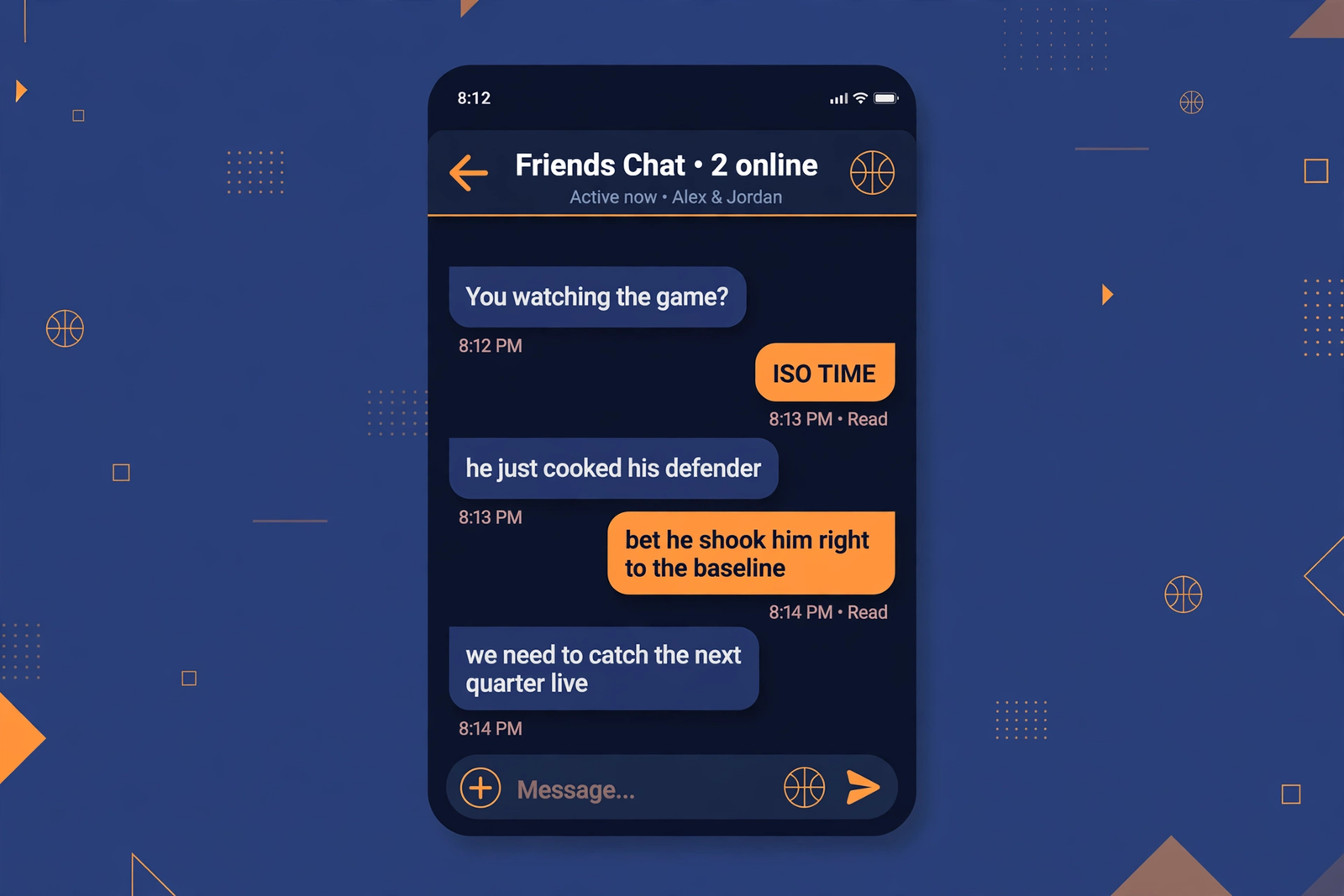
Calling “iso” is also a social signal. On a playground or in a pickup game, it means “I want this matchup, and I am confident I can win it.” In a group chat, typing “iso” during a game is shorthand for “watch this — our guy is about to cook his defender.” The word carries swagger, which is a big part of why it stuck.
Examples
The best way to understand the iso meaning slang basketball fans use is to see it in real conversations. Here are examples across different tones and settings.
Friendly Examples
- “Yo, did you see that iso? Luka had that dude on skates!”
- “Clear out, clear out — let him run the iso, he has been hot all night.”
- “That was a nasty iso move. The crossover alone deserves a highlight reel.”
- “We are down two with ten seconds left. Just give it to him and run iso.”
Professional Examples
- “The coaching staff has leaned on isolation sets late in games, trusting their star’s one-on-one scoring to close out tight contests.”
- “According to the tracking data, the team scores 0.98 points per possession on iso plays, well above the league average for that play type.”
- “The analyst noted that the offense cleared the strong side to create an isolation opportunity for their leading scorer.”
- “Defensively, the plan is simple: do not switch on the iso, and send help only when the ball-handler puts the ball on the floor.”
Funny Examples
- “My guy called iso and then airballed. Bro, you are not him.”
- “He ran iso for 20 seconds, dribbled in place, and passed it with 1 second left. Elite offense.”
- “In 2K, my friend picks iso every single possession and still loses by 30. Confidence is unreal.”
- “Kobe used to call iso so much that LeBron thought it was a phone call. ‘Iso! Iso!’ — get out of the way!”
You will also see the term combined with other basketball slang. “Iso ball” describes a whole style of play built around isolation — often used as a criticism. “Iso island” describes the lonely defender stuck one-on-one with a star. And “iso merchant” is a playful insult for a player who can only score in isolation and struggles in a team system. If you can read these phrases, you are fluent in modern basketball slang — just like knowing the fn meaning in text helps you read everyday chat slang.
Comparison with Similar Terms
Iso is often confused with other basketball concepts. The table below clears up the differences.
| Term | What It Means | How It Differs from Iso |
|---|---|---|
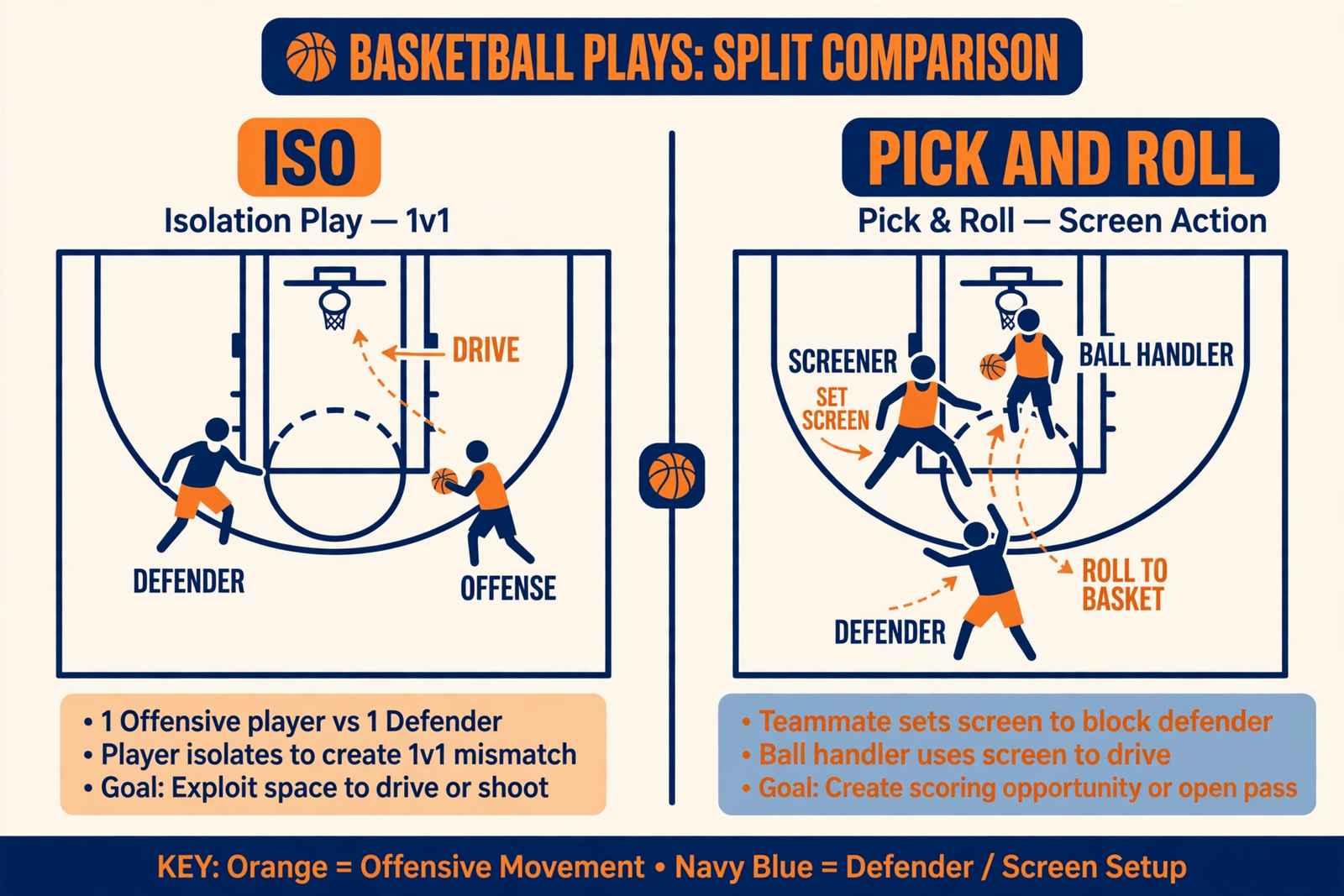
| Iso (Isolation) | One player attacks one defender while teammates clear out. | The baseline term — a set play for a one-on-one matchup. |
| Pick and Roll | A teammate sets a screen for the ball-handler, who then drives or passes. | Uses a screen and two players; iso uses no screen and one player. |
| Post-Up | A big player catches the ball near the basket with his back to the defender. | Happens close to the rim; iso usually starts on the perimeter. |
| Hero Ball | A player ignores teammates and shoots every time, usually selfishly. | A criticism of attitude; iso is a legitimate team strategy. |
| One-on-One (1v1) | Any single matchup between two players. | A general description; iso is the specific play that creates it. |
| Clear Out | Teammates move away to give one player space. | The setup action; iso is the whole play that follows. |
| Iso Ball | An offense built mostly around isolation plays. | A style or system; a single iso is just one possession. |
The most important distinction is between iso and hero ball. Iso is a coached, deliberate play — the team agrees to clear out, the spacing is planned, and the scorer reads the defense. Hero ball is what fans call it when a player goes rogue, ignores open teammates, and takes bad shots. The same possession can look like either one depending on the result, which is why the debate never ends.
Alternate Meanings
Like many slang terms, “iso” has more than one meaning, and context decides which one applies. The basketball meaning is the original one, but here are the other uses you will run into.
- In search of (buying/selling groups): On Facebook Marketplace, Craigslist, and sneaker groups, “ISO” means “in search of.” A post that says “ISO size 11 Jordans” means the person wants to buy them. This is the most common alternate meaning, and it confuses basketball fans — some coaches have even joked about it online. If the conversation is about shoes, tickets, or trading, ISO almost certainly means “in search of,” not isolation.
- Photography (ISO setting): In cameras, ISO measures the sensor’s sensitivity to light. A photographer saying “bump the ISO” is talking about exposure, not basketball. This meaning comes from the International Organization for Standardization, which standardized film speed ratings.
- Gaming (ISO as a file): In gaming and computing, an ISO file is a disk image — a copy of a CD or DVD. If someone says “download the ISO,” they mean a game or software image, not a basketball play.
- Business (ISO certification): In business, ISO refers to standards from the International Organization for Standardization, such as ISO 9001 for quality management. This is the formal, corporate use of the same three letters.
- Music and social media: Occasionally, “iso” is used as short for “isolated” in other contexts — for example, an “iso vocal” track is a singer’s voice separated from the music. In basketball highlight captions, though, it is always the play.
So how do you tell which meaning someone intends? Look at the context. If the sentence mentions a player, a defender, a crossover, or a highlight, it is basketball. If it mentions a size, a price, or “looking for,” it is “in search of.” If it mentions a camera or a photo, it is the photography setting. The basketball slang meaning is by far the most common in sports conversations, which is why it dominates the search results for this keyword.
Professional or Polite Alternatives
Basketball slang is perfect for group chats and highlight captions, but in formal settings — a coaching clinic, a broadcast, a written report, or a conversation with someone who does not follow the sport — a more professional phrase works better. Here are polite alternatives for “iso” and when to use them.
| Instead of | Say | Best For |
|---|---|---|
| “Run an iso” | “Run an isolation play” | Coaching discussions, broadcasts |
| “He is an iso player” | “He excels in one-on-one situations” | Scouting reports, analysis |
| “Iso ball” | “An isolation-heavy offense” | Written analysis, journalism |
| “Clear out for iso” | “Space the floor for a one-on-one opportunity” | Instructional content |
| “He iso’d him” | “He beat his defender one-on-one” | Formal commentary |
In everyday conversation with friends, though, “iso” is perfectly fine — it is the standard word, and everyone who follows basketball understands it instantly. The alternatives above are only for situations where clarity matters more than style.
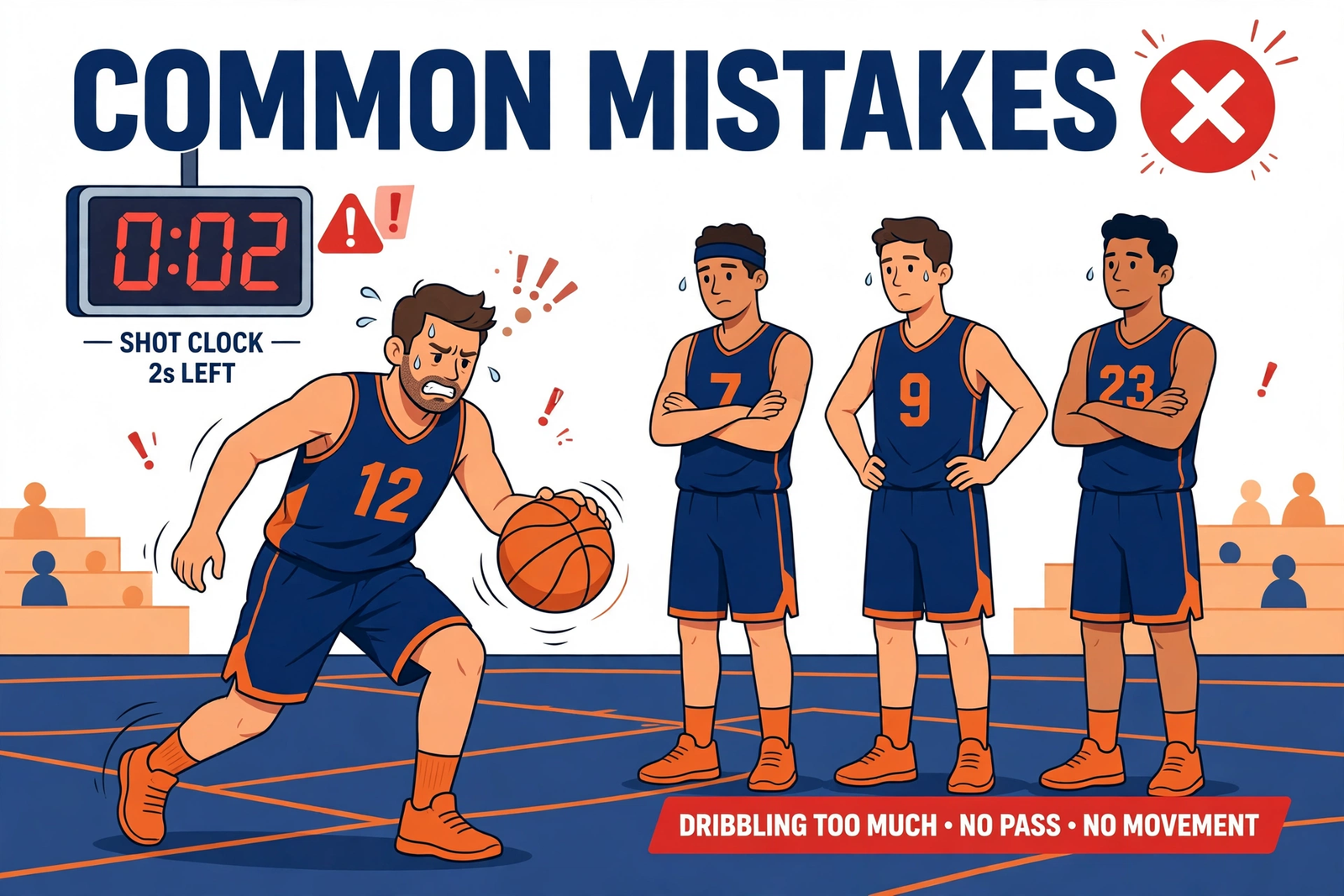
Common Mistakes
People make a few predictable mistakes with this term. Avoid these and you will sound like someone who actually watches the game.
- Calling every one-on-one an iso: Not every one-on-one is an isolation play. If a player beats his man off a screen or in transition, that is not iso — iso requires the deliberate clear-out setup. Save the word for the real thing.
- Confusing iso with hero ball: Iso is a team decision, planned and spaced. Hero ball is a player ignoring the plan. Calling a smart late-game iso “hero ball” misses the point, and calling selfish play “iso” gives it too much credit.
- Mixing up the “in search of” meaning: If someone posts “ISO tickets for Friday,” they are not talking about basketball. Replying with a highlight clip will only confuse everyone. Check the context first.
- Assuming iso is always bad offense: Critics love to say “iso ball never wins championships,” but the data disagrees. Isolation is one of the most common plays in the playoffs, and every championship team uses it in late-game situations. The 2023–24 tracking data puts iso at 0.93 points per possession — below transition, but better than post-ups. Context matters more than the label.
- Using it for the wrong sport: Iso is a basketball term. Using it for soccer, football, or hockey will confuse people, even though one-on-one moments exist in every sport. Each sport has its own vocabulary.
- Overusing it in 2K and pickup games: Calling iso every possession in a video game or pickup run is the fastest way to annoy your teammates. The play works because it is used at the right moment — not because it is used every time.
Quick Tips
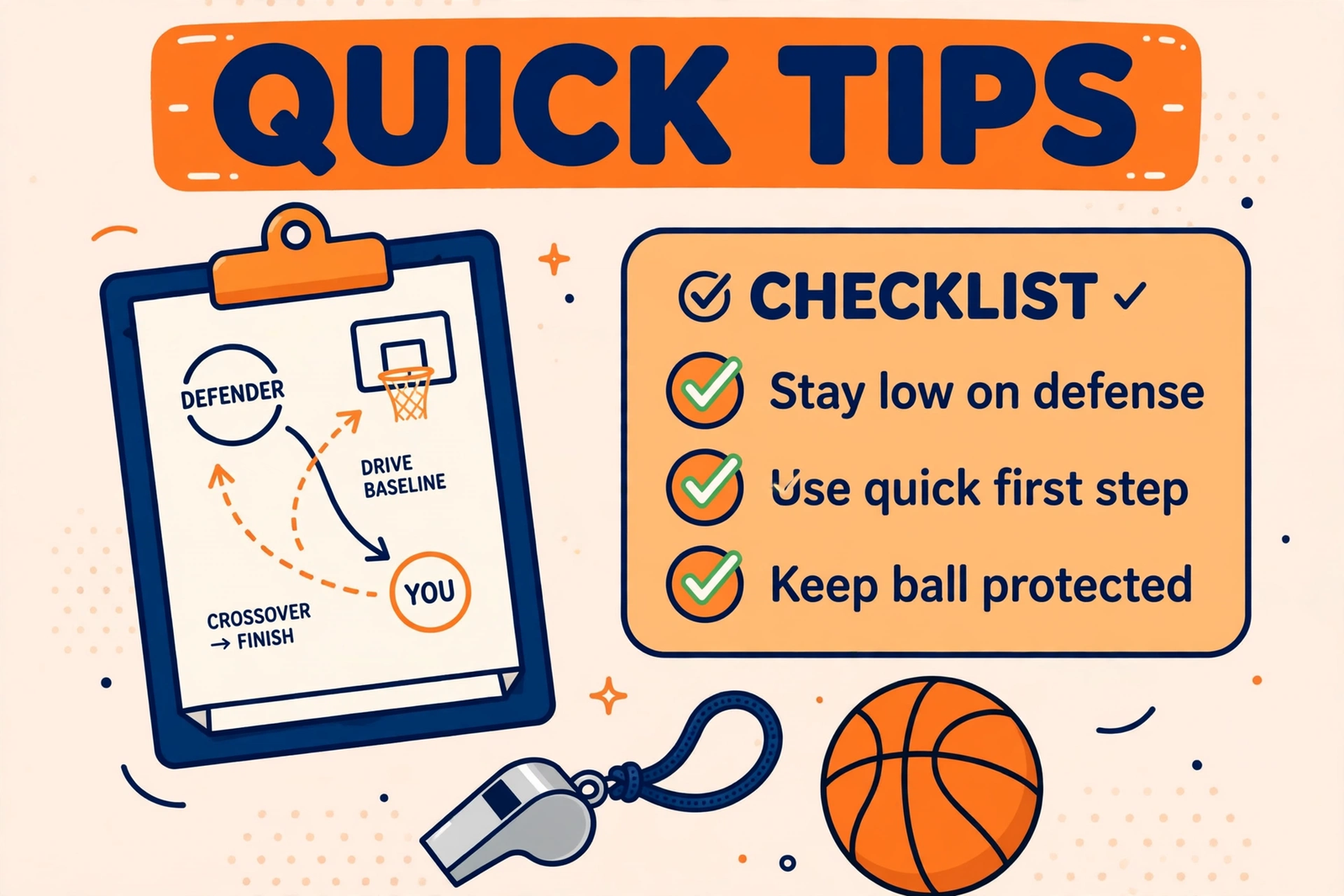
Whether you are using the word or watching the play, these tips will help.
- Watch the spacing: The easiest way to spot an iso is to watch the other four players. If they all drift to the weak side and the ball-handler is alone with his defender, it is an iso — no matter what the commentator says.
- Look for the mismatch: Great iso plays start with a mismatch — a quick guard on a slow big, or a strong wing on a small defender. If you can spot the mismatch before the play starts, you can predict the iso.
- Count the dribbles: Elite iso scorers are efficient. If a player dribbles 15 times and takes a contested shot, that is not great iso — that is stalled offense. The best iso moves end in two or three dribbles.
- Use it in texts correctly: “Iso” works best as a noun or a verb in short messages: “ISO TIME,” “they went iso,” or “he iso’d him.” Keep it short and your friends will know exactly what you mean — just as short slang like cfs meaning in text or ptso meaning in text works best when it stays brief.
- Learn the counters: Good defenses counter iso by sending a double team or pre-switching. If you want to sound smart, mention the counter: “They doubled the iso and he kicked it out for three.”
- Respect the moment: Iso shines late in close games, when the shot clock is low and the defense is set. That is when stars earn their money — and when the word “iso” gets typed the most in group chats.
FAQ

What does ISO mean in basketball slang?
ISO is short for isolation — an offensive play where one player takes on a single defender one-on-one while the other four teammates clear out to give him space. It is used to create a favorable matchup for the team’s best scorer, especially late in games or late in the shot clock.
What is the iso meaning slang basketball fans use on social media?
On social media, the iso meaning slang basketball fans use is the same as on the court: a one-on-one isolation play. Fans type “ISO!” when a star is about to attack his defender alone, and phrases like “iso island” describe a defender left alone against a scorer. It is also a popular caption for highlight clips of crossovers and step-back jumpers.
Who are the best ISO players in the NBA?
James Harden, Kevin Durant, Kyrie Irving, Luka Doncic, and Stephen Curry are widely considered the best isolation scorers of the modern era. Harden led the league in isolation possessions for years in Houston, Durant’s size and shooting make his iso nearly unguardable, and Doncic is the current face of the iso game.
Is ISO ball good or bad for a team?
It depends on the player and the moment. Tracking data from the 2023–24 NBA season shows isolation averaging about 0.93 points per possession — less efficient than transition or off-screen plays, but more efficient than post-ups. With an elite scorer and the right timing, iso is very effective; with a weak scorer or overused, it stalls the offense.
What is an “iso island” in basketball?
An “iso island” is a defender left alone on one side of the court against a star scorer, with no help defense nearby. The phrase became popular in 2026 when young prospect AJ Dybantsa said he wanted to guard Luka Doncic “on an iso island.” It describes the loneliest, most exposed spot in basketball.
Does ISO mean “in search of” too?
Yes. Outside basketball, “ISO” commonly means “in search of” in buying, selling, and trading groups — for example, “ISO size 11 Jordans” means the person wants to buy them. In photography it is a camera light-sensitivity setting, and in computing it is a disk image file. Context decides the meaning: if the talk is about players and defenders, it is basketball.
How do you run an ISO play?
The ball-handler takes the ball to one side of the court, usually the wing or the top of the key. The other four offensive players move to the far side, spacing behind the three-point line. The ball-handler then reads his defender — drive if he plays tight, shoot if he gives space, or pass if a double team comes. The key is spacing: without it, the help defense collapses and the iso fails.
Why do coaches use ISO in late-game situations?
Coaches use iso late in games because it is simple, predictable, and puts the ball in the best player’s hands. With the defense set and the clock winding down, a complicated play can break down; a one-on-one matchup cannot be disrupted the same way. The star either beats his man, draws a foul, or passes out of a double team — all good outcomes.
Conclusion
The iso meaning slang basketball fans use every day is simple but rich: ISO is short for isolation, a play where one star takes on one defender while everyone else clears out. It is the most dramatic moment in basketball — part strategy, part showmanship, and part pure confidence. From Michael Jordan and Kobe Bryant to James Harden, Kevin Durant, and Luka Doncic, the greatest scorers in history have built their legends one isolation possession at a time.
Understanding iso also means understanding when it works and when it does not. Used at the right moment, with the right player, it is one of the most effective plays in the game. Overused, or used by the wrong player, it stalls the offense and frustrates teammates. The numbers back this up: isolation is a solid, mid-tier play by efficiency, but it becomes elite when the ball is in elite hands.
So the next time you hear a commentator say “they are going iso,” or your group chat lights up with “ISO TIME,” you will know exactly what is happening — and exactly why everyone is watching. The floor is cleared, the matchup is set, and one player has the ball with the game on the line. That is iso, and that is basketball at its most exciting. If you enjoy decoding sports slang, you may also like our guides to the tysm meaning and other everyday text abbreviations that show up in your chats just as often as “iso” shows up on the court.
