Quick definition: The ilysm meaning in text is “I love you so much.” It is a short, affectionate acronym people send in texts, DMs, and social media chats to express strong love, gratitude, or closeness — without typing out the full sentence. When someone texts you “ILYSM,” they are saying they care about you a lot, in the warmest, most casual way possible.
ILYSM Meaning in Text: Meaning & Definition
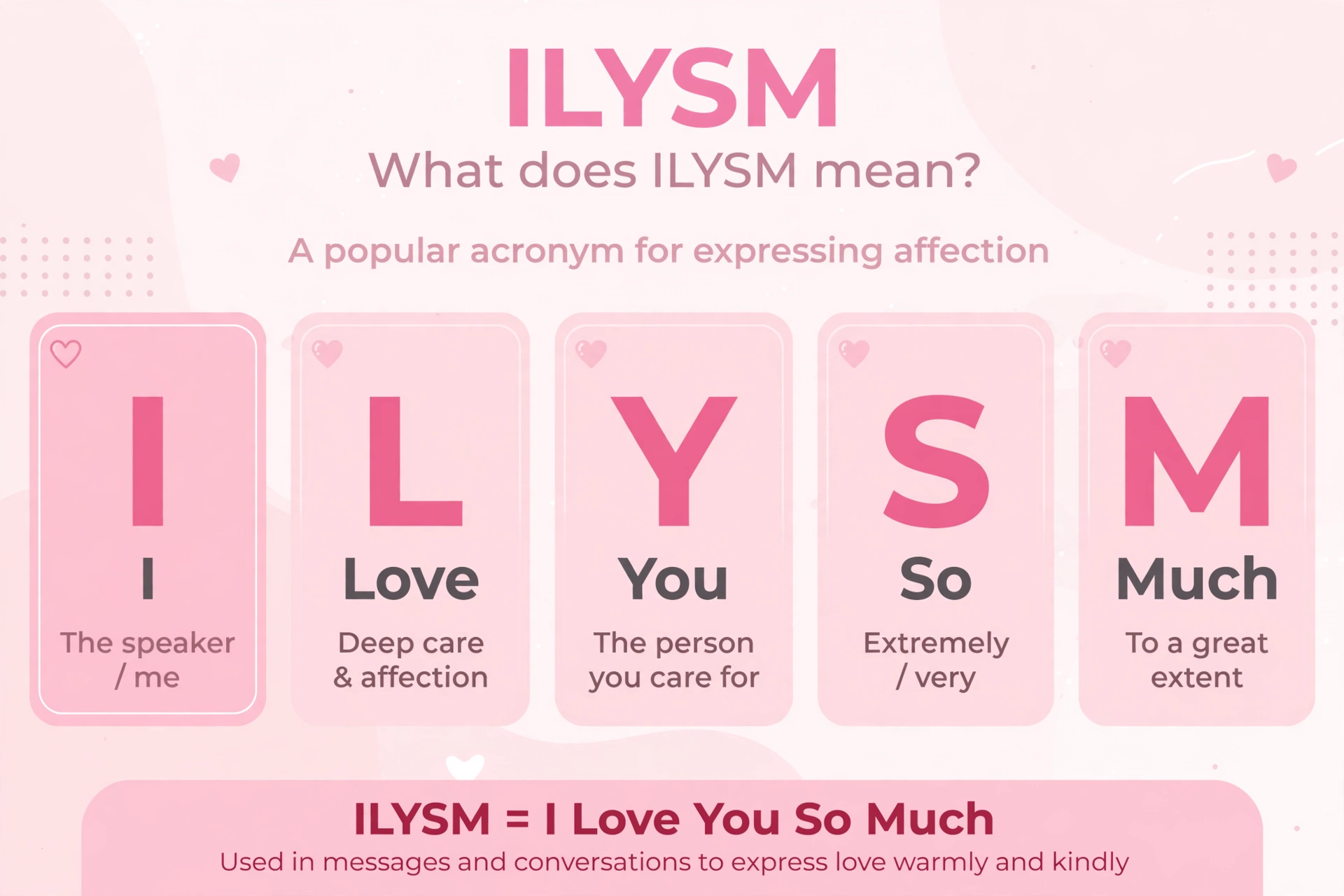
ILYSM stands for “I love you so much.” Each letter carries one word of the phrase: I = I, L = Love, Y = You, S = So, M = Much. Put together, it is one of the sweetest shortcuts in modern texting — a full declaration of affection squeezed into five letters.
What makes ILYSM special is its tone. Saying “I love you so much” in full can feel heavy, formal, or even dramatic, especially in a quick chat. ILYSM keeps the same feeling but makes it light. It reads like a warm hug in text form: sincere, but easy. That is why people use it dozens of times a day with partners, best friends, siblings, and even favorite group chats.
Here is the meaning in its simplest form:
| Element | What It Means |
|---|---|
| ILYSM | I Love You So Much |
| Core message | I care about you deeply, and I want you to know it |
| Tone | Warm, affectionate, casual, heartfelt |
| Where it appears | Texts, DMs, Snapchat, Instagram, TikTok comments, WhatsApp, Discord |
| Best paired with | Heart emojis, a name, or a reason — e.g. “ILYSM, thank you for today ❤️” |
ILYSM is almost always written in capital letters, but lowercase “ilysm” means exactly the same thing. Capitals can feel a little more emphatic, while lowercase reads softer and more relaxed. A bare “ilysm” is sweet; “ILYSM!!!” with exclamation marks and hearts is over-the-moon affection. The letters never change meaning — the context and punctuation around them do.
One thing worth knowing upfront: ILYSM is not reserved for romantic love. In fact, most of the time it is used platonically — between friends, family members, and people who simply appreciate each other. The exact flavor depends on who sends it, and this guide will show you how to read that difference every time.
Introduction
Picture this: you have had a long, exhausting day. Your phone buzzes, and it is a message from your best friend: “You did amazing today. ILYSM ❤️.” Instantly, the day feels lighter. That tiny five-letter word did what a whole paragraph could not — it made you feel seen, appreciated, and loved.
The ilysm meaning in text is simple, but the way people use it is surprisingly rich. It can close a goodnight message, thank someone for a favor, reassure a partner, celebrate a win, or soften an apology. It shows up in flirty chats, family group chats, friendship DMs, and even birthday posts. And like all good slang, it has unwritten rules: it works best when the affection is genuine, it lands differently depending on the relationship, and sending it to the wrong person at the wrong time can create confusion.
In this guide, you will learn the full ILYSM meaning in text, where it came from, how it changes tone across platforms, and exactly how to reply when someone sends it to you. You will also see real examples for every situation, a comparison with lookalike terms such as ILY and ILYSVM, the mistakes people make with it, and polite alternatives for settings where slang does not belong.
Origin
ILYSM was born from the same wave of abbreviation culture that gave us LOL, BRB, and TTYL. As texting and instant messaging took off in the late 1990s and 2000s, people started compressing their most common phrases into initials. “I love you” became ILY. Then someone added the “so much,” and ILYSM was born — a slightly longer shortcut for a slightly bigger feeling.
The phrase itself, “I love you so much,” has been part of everyday English forever. It appears in love letters, greeting cards, song lyrics, and bedtime goodnights. What the internet did was turn it into a code — something you could drop into a fast-moving chat without breaking the rhythm of the conversation. Early instant messaging platforms, MySpace, and later Facebook and SMS made acronyms like ILYSM part of daily language for millions of teenagers and young adults.
ILYSM truly exploded with smartphones and social media. On Snapchat, Instagram DMs, and TikTok, where conversations are quick, visual, and emoji-heavy, a short burst of affection fits perfectly. Influencers started using it in captions and replies, celebrities used it with fans, and soon it became a standard sign-off — the digital equivalent of blowing a kiss at the end of a call.
Major outlets have covered this shorthand too — USA TODAY’s explainer on ily lists ilysm as a common variation of ily — which shows how firmly the ilysm meaning in text has entered everyday language.
Today, ILYSM is no longer niche slang. It appears in dictionaries of internet slang, in song titles and merch, and in everyday conversation far beyond the chatrooms where it started. What began as a typing shortcut is now a love language of its own — a way to say something huge in the smallest possible package.
Popularity
ILYSM is popular because it solves a real problem in digital communication: text strips away tone of voice, facial expressions, and touch, so affection can feel flat or awkward on screen. ILYSM restores warmth. It tells the reader, “This message comes with real feeling,” before they even finish reading it.
It is especially common in these spaces:
- Romantic chats: Couples use it as a daily sign-off, a goodnight message, or a quick reassurance during a busy day.
- Friendship DMs: Best friends use it to say “you mean a lot to me” without making things weird or overly serious.
- Family group chats: Siblings, cousins, and parents use it to close conversations with love.
- Social media comments: TikTok, Instagram, and Snapchat replies where fans and friends shower someone with affection.
- Long-distance relationships: When you cannot hug someone, ILYSM becomes the next best thing.
ILYSM is most popular with Gen Z and Millennials, but it has spread well beyond them. Parents now text it to their kids, older siblings use it with younger ones, and even coworkers who are close friends drop it into a supportive message. Its popularity keeps growing because affection never goes out of style — only the way we express it changes. That is also why explainers of the ilysm meaning in text keep appearing: the feeling is universal, only the shorthand is new.
Another reason for its staying power: ILYSM is emotionally efficient. In a world where everyone is busy, it lets you deliver a full emotional message in under a second. You do not need a paragraph. You do not need perfect timing. You just need five letters and someone you mean them for.
How It Is Used
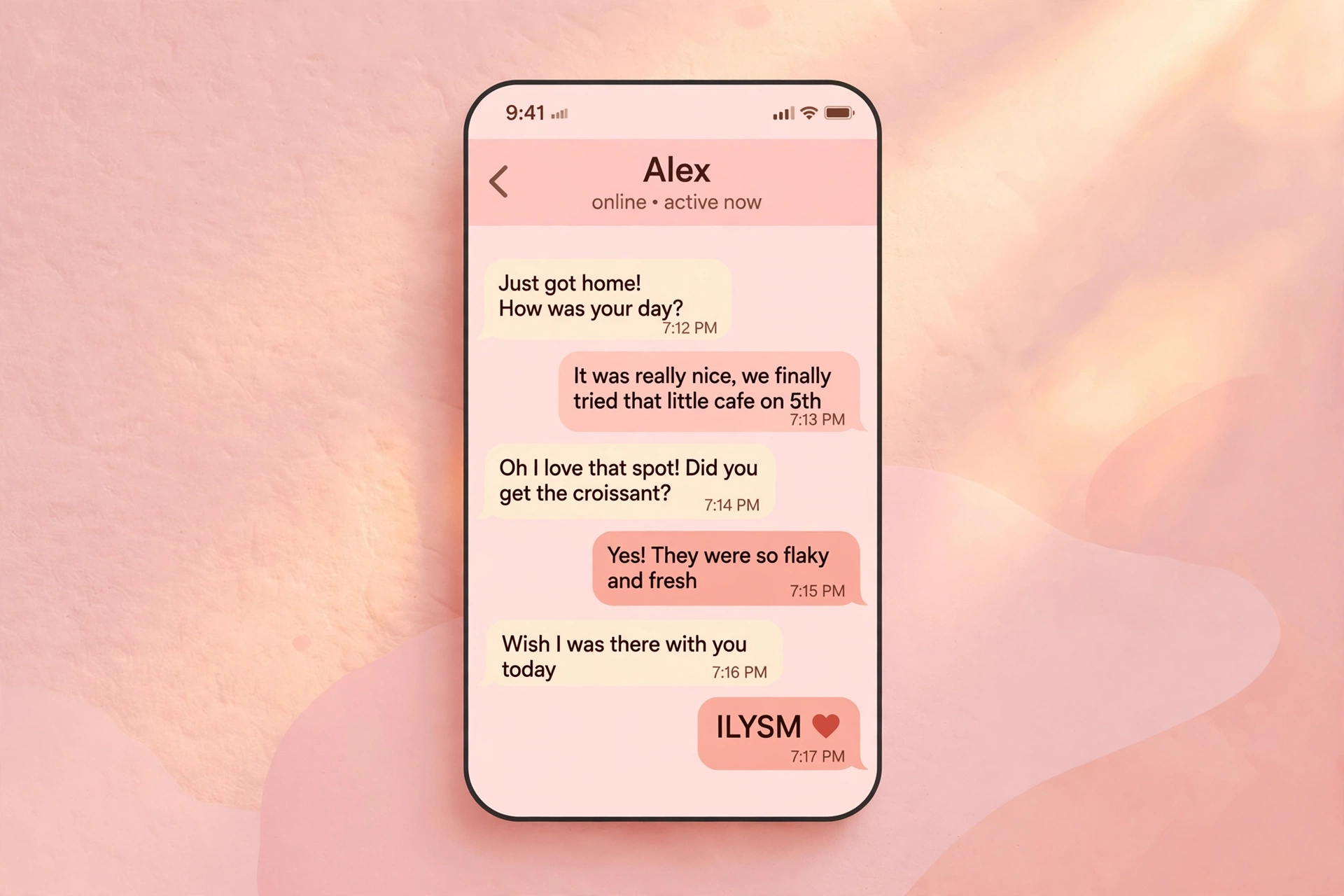
ILYSM is used as a standalone message, a sentence closer, or an emotional exclamation. It can stand alone — just “ILYSM” with a heart emoji — or it can sit at the end of a longer thought: “Thank you for listening to me vent for an hour, ILYSM.” Either way, its job is the same: to add love to the message.
Here are the most common ways people use it:
- As a thank-you: “You brought me food when I was sick?? ILYSM.” The gratitude and the affection arrive together.
- As a goodnight: “Goodnight, sleep well, ILYSM.” A soft, caring way to end the day.
- As reassurance: “I know today was hard. ILYSM and I am here.” Comfort, packed into one line.
- As a celebration: “You got the job!! ILYSM, I am so proud of you!” Excitement plus affection.
- As a reply: Someone sends a sweet message, and “ILYSM” is the natural, warm response.
- As an apology softener: “I am sorry I forgot to call back, ILYSM.” It does not replace the apology — it warms it.
ILYSM also changes meaning slightly by platform. On Snapchat, it is often quick and playful, sent with a selfie or a streak snap. On Instagram, it appears in comments and DMs with lots of hearts. On TikTok, it shows up in comments on emotional or wholesome videos. In a private text thread, it tends to be the most sincere — because a private message carries more weight than a public comment.
Timing matters too. ILYSM sent after someone shares good news reads as celebration. ILYSM sent after an argument reads as repair. ILYSM sent out of nowhere on a random Tuesday reads as “I was just thinking about you” — which is often the sweetest version of all.
One important note: ILYSM is almost never used in professional or formal settings. You would not send it to a boss, a teacher, or a new acquaintance. It belongs in personal conversations where warmth is welcome and the relationship already has trust. If you are unsure whether it fits, it probably does not — save it for the people who already know you care.
Examples
The best way to understand ILYSM is to see it in real conversations. Notice how the same five letters shift tone depending on who is talking, what came before, and which emojis travel with them.
Friendly Examples
- “You remembered my coffee order?? ILYSM, you are the best.”
- “Thanks for helping me move all day. ILYSM, seriously.”
- “Happy birthday, bestie! ILYSM and I hope this year is your best one yet.”
- “You always know how to cheer me up. ILYSM ❤️”
- “We have been friends for ten years and it still feels like day one. ILYSM.”
- “Good luck on your exam! You have got this. ILYSM.”
In friendships, ILYSM usually means “I appreciate you so much.” It is affection without romance — a way of saying the friendship matters. Most friends read it exactly that way, especially when the chat already has a warm, supportive tone.
Professional Examples
ILYSM does not belong in a formal workplace message, but there is one gray area: very close colleagues or creative teams with a warm, informal culture sometimes use it jokingly or affectionately. Even then, it is safer to use a toned-down alternative such as “You are the best, thank you so much!” or “Really appreciate you.” If you want to keep things professional, keep ILYSM out of work chats entirely.
- Instead of “ILYSM,” try: “Thank you so much — you saved the day.”
- Instead of “ILYSM,” try: “I really appreciate your help with this.”
- Instead of “ILYSM,” try: “You are amazing, thank you for going the extra mile.”
Funny Examples
- “You brought snacks AND chargers? ILYSM, marry me (kidding… mostly).”
- “ILYSM for sending me that meme at exactly the right moment.”
- “If my phone battery could talk, it would say ILYSM to you for the charger.”
- “You finished the group project by yourself? ILYSM, you absolute legend.”
- “ILYSM, but if you eat my fries again we are going to have a problem.”
Humor is one of ILYSM’s secret powers. Pairing a huge declaration of love with something small — fries, memes, chargers — makes the joke land harder, because the exaggeration is the point. Just make sure the person knows you are joking; with a crush or a new friend, a funny ILYSM can accidentally sound serious.
Comparison with Similar Terms
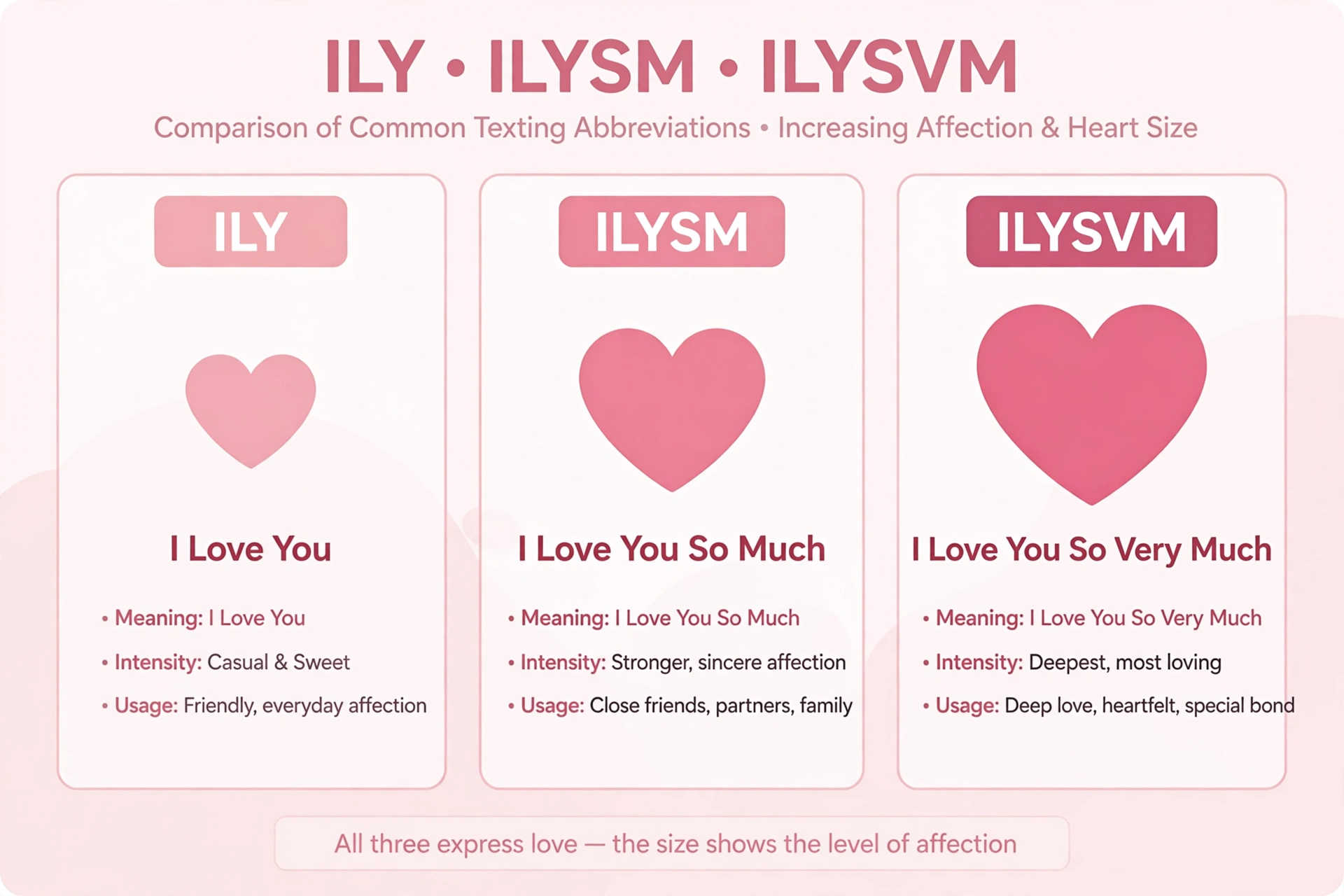
ILYSM has several close cousins, and mixing them up can change the message. Once you know the ilysm meaning in text, the differences below make choosing the right one easy. Here is how the most common ones compare:
| Term | Stands For | Meaning & Strength | When to Use It |
|---|---|---|---|
| ILY | I Love You | Classic, direct, slightly more serious | Any close relationship; the standard version |
| ILYSM | I Love You So Much | Warmer and stronger than ILY | When you want extra affection or gratitude |
| ILYSVM | I Love You So Very Much | Maximum intensity, playful exaggeration | Dramatic, joking, or deeply emotional moments |
| ILY2 / ILYT | I Love You Too / I Love You Too | A reply, not an opener | Answering someone else’s ILY or ILYSM |
| LYSM | Love You So Much | Same feeling, drops the “I” | Casual chats; slightly softer and quicker |
| ILYTB | I Love You To Bits | British-flavored, sweet and playful | Friends and partners who like playful slang |
| ILU | I Love U | Same meaning, “U” spelling | Very casual texting; same use as ILY |
The biggest difference is intensity. ILY is the baseline. ILYSM turns the volume up one notch. ILYSVM turns it up two more — and is usually a little playful about it. If you are choosing between them, ask yourself how big the feeling is: a normal day calls for ILY, a moment that genuinely moved you calls for ILYSM, and a dramatic, joking, or overwhelming moment calls for ILYSVM.
There is also a useful contrast with gratitude slang. TYSM (thank you so much) expresses thanks without love, while ILYSM expresses love that often includes thanks. If someone did you a favor and you want to stay friendly rather than affectionate, TYSM is the safer pick. If you want them to feel the love behind the thanks, ILYSM is the one.
Alternate Meanings
In nearly every real conversation, the ilysm meaning in text is “I love you so much.” But like many acronyms, it has a few rare or playful alternate readings worth knowing:
- “I Like You So Much” — a softer version, sometimes used by people who are not ready to say “love” yet, especially in early dating or a new crush. Context usually makes it clear: if the relationship is new, “like” may be the intended shade.
- “I Love Your Sweet Mind” — a poetic, flirty twist occasionally used in creative captions or poems. Rare in everyday texting.
- “Internet Loves You So Much” — used in fan culture when a community showers a creator with affection in comments.
- Usernames and brand names — ILYSM sometimes appears in handles, merch, or song titles where it works as a vibe rather than a literal sentence.
None of these replaces the main meaning. If someone texts you ILYSM, assume “I love you so much” unless the conversation clearly points elsewhere. And if you ever see ILYSM in a technical or medical context, it is almost certainly a different abbreviation or a typo — the slang meaning dominates everywhere people chat.
Professional or Polite Alternatives
ILYSM is perfect for personal chats, but there are many moments when you need the same warmth in more polished language. Use these alternatives when the setting calls for it:
- With family: “I love you so much, and I am so grateful for you.”
- With friends: “You mean so much to me — thank you for being you.”
- With a partner: “I love you more than words can say.”
- With a colleague: “I really appreciate you — thank you for everything.”
- In a card or letter: “With all my love, always.”
- In a public post: “So much love for you all — thank you for being here.”
The pattern is simple: keep the feeling, drop the acronym. In formal writing, full sentences always land better than slang. A heartfelt thank-you note, a wedding card, or a condolence message should use complete words — the effort of writing them out is part of what makes them meaningful.
Common Mistakes
ILYSM is easy to use, but a few common mistakes can make it awkward. Avoid these and your messages will always land the way you intend.
- Sending it too early. Dropping ILYSM on a crush after two days of chatting can feel intense. Match the affection to the stage of the relationship.
- Using it to replace a real apology. “Sorry, ILYSM” does not fix a missed birthday or a broken promise. Apologize properly first, then add the affection.
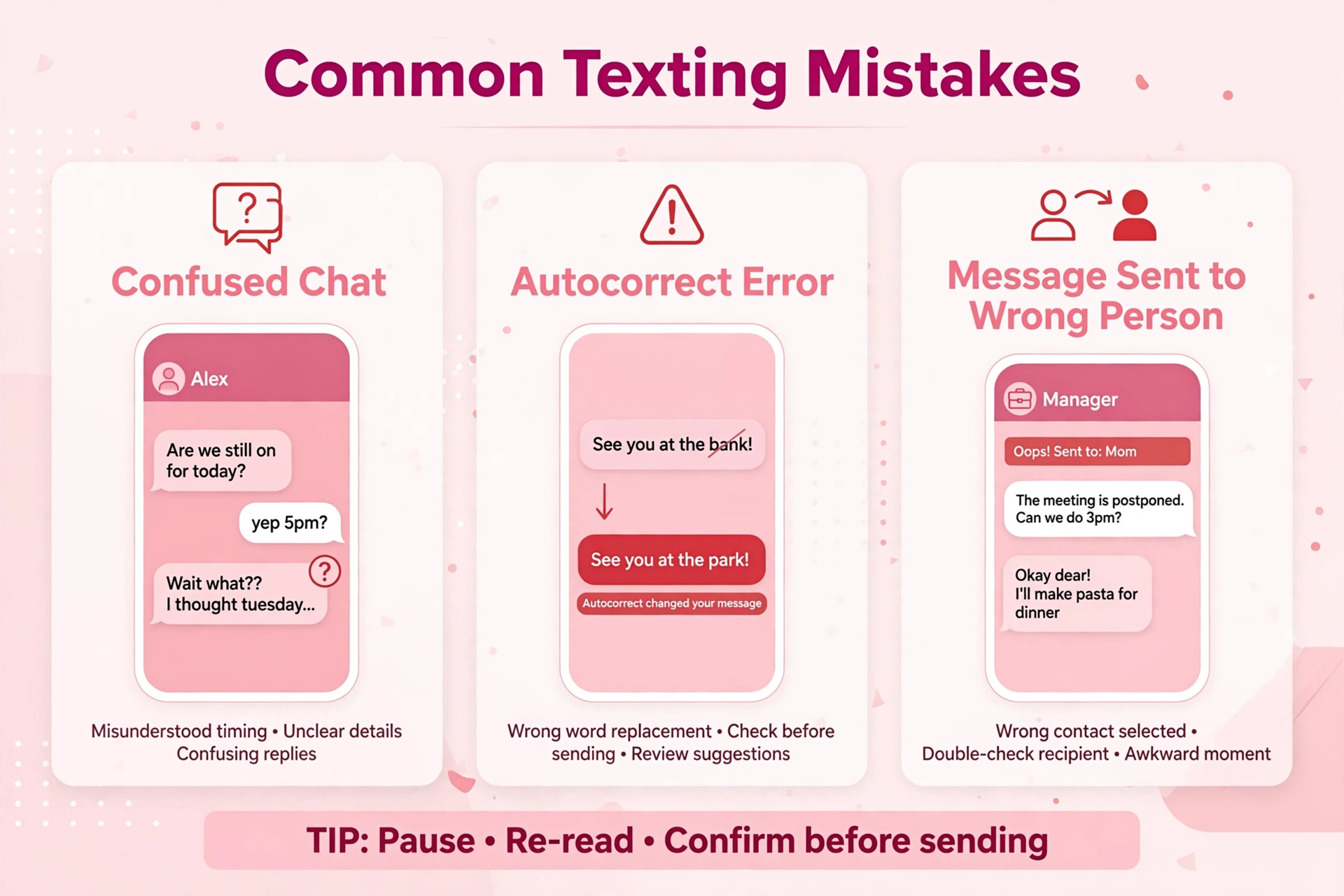
- Sending it to the wrong person. Autocorrect and group chats are dangerous. Double-check the recipient before sending any love message.
- Overusing it. If every message ends with ILYSM, it starts to lose its weight. Save it for moments when you truly feel it.
- Using it sarcastically with someone who will not get the joke. “ILYSM 🙄” can read as mocking. Sarcasm needs a relationship that already handles teasing well.
- Assuming it always means romance. When a friend sends ILYSM, it usually means friendship. Reading romance into a friendly ILYSM creates awkwardness that did not need to exist.
- Replying with nothing. Leaving an ILYSM on read can sting. Even a short “ILYSM too ❤️” keeps the connection warm.
The golden rule: ILYSM is a gift, not a habit. Send it when you mean it, to people who will understand it, and it stays powerful.
Quick Tips
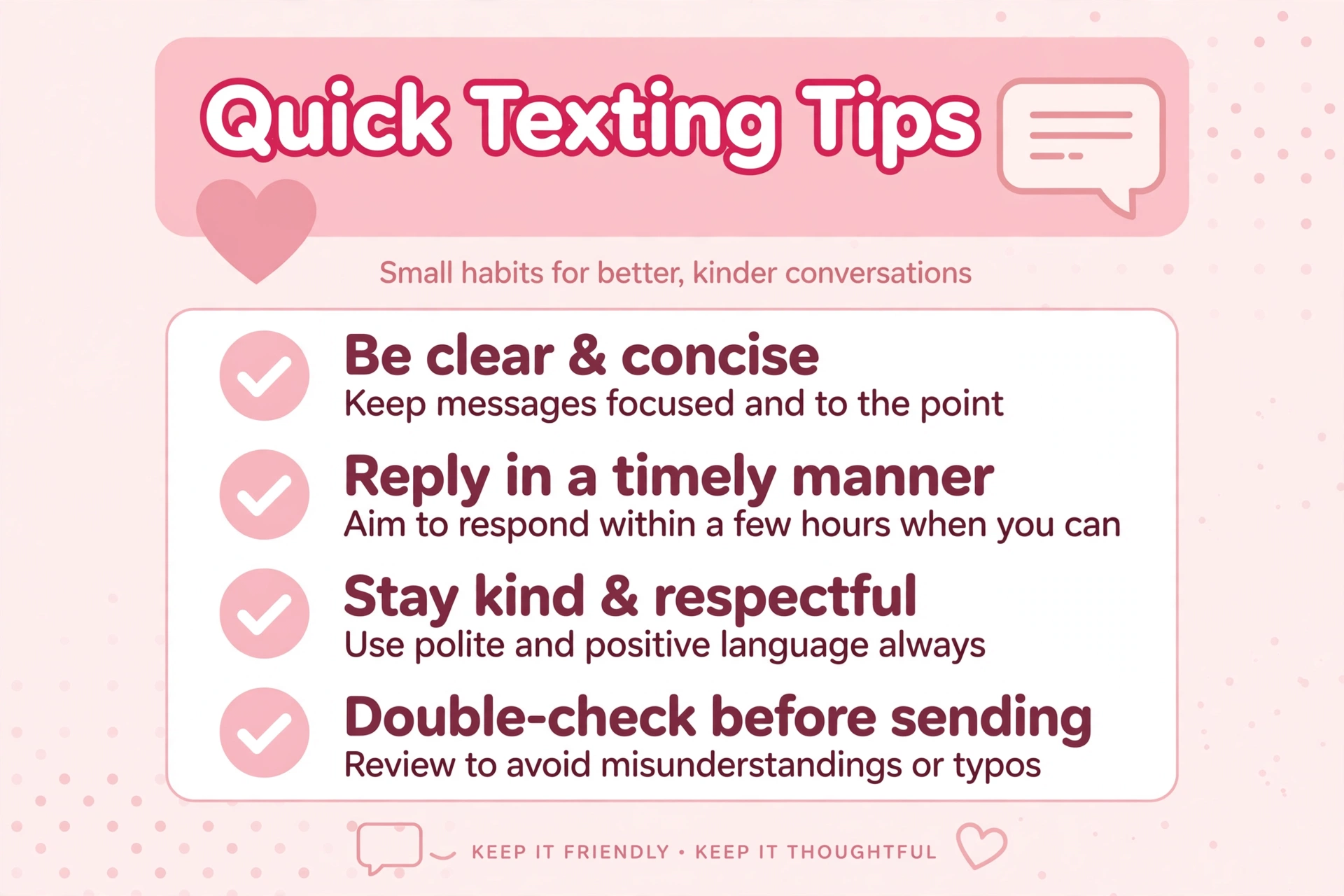
- Pair it with a reason. “ILYSM for staying up with me” hits harder than a bare “ILYSM.”
- Add a heart emoji. A ❤️ or 🫶 removes all doubt about your tone.
- Use their name. “ILYSM, Emma” feels personal; “ILYSM” alone can feel generic.
- Match their energy. If they send a long, emotional message, reply with warmth, not a one-word acronym.
- Know when to spell it out. Big moments — anniversaries, apologies, reunions — deserve the full “I love you so much.”
- Read the room. In group chats, a public ILYSM can embarrass someone. A DM is often kinder.
- Do not demand it back. Affection is not a transaction. If they reply differently, respect their style.
- Combine it with a question. “ILYSM — HBU? How was your day?” keeps the conversation going instead of ending it.
One more tip: if someone sends you ILYSM and you are not sure how to reply, mirror them. A simple “ILYSM too ❤️” is almost always the right answer. If the sender is a friend and you want to keep it platonic, “ILYSM, bestie!” does the job. If it is a partner, add something specific: “ILYSM, today was perfect because of you.” Small specifics turn a small acronym into a big feeling.
FAQ
What does ILYSM mean in text?
ILYSM means “I love you so much” in texting — that is the ilysm meaning in text in a nutshell. It is an affectionate acronym used in texts, DMs, and social media to express strong love, gratitude, or closeness in a short, casual way.
Is ILYSM romantic or friendly?
It can be both. Between partners it is romantic. Between friends and family it is platonic affection — a warm way of saying “you mean a lot to me.” The relationship and the context tell you which one it is.
What should I reply when someone says ILYSM?
The simplest reply is “ILYSM too ❤️.” If it is a friend, “ILYSM, bestie!” keeps it friendly. If it is a partner, add something personal, like “ILYSM, thank you for making today so good.”
What is the difference between ILY and ILYSM?
ILY means “I love you,” while ILYSM means “I love you so much.” ILYSM is warmer and slightly stronger. Use ILY for everyday affection and ILYSM when the feeling is bigger — gratitude, reunion, comfort, or celebration.
Can I say ILYSM to a friend?
Yes. Friends use ILYSM all the time, especially best friends. It is a normal, healthy way to show platonic affection. If you want to make the friendly tone extra clear, add “bestie,” “bro,” or “sis.”
Does ILYSM mean the same on Snapchat and TikTok?
Yes, the core meaning is the same on every platform: “I love you so much.” On Snapchat it tends to be quick and playful, on TikTok it often appears in comments on wholesome videos, and in private texts it tends to be the most sincere.
When should I not use ILYSM?
Do not use ILYSM in professional messages, with new acquaintances, or to pressure someone into saying it back. Avoid it when the relationship does not yet have that level of warmth, and never use it as a substitute for a real apology.
What does ILYSM mean from a guy or a girl?
The meaning does not change by gender. From anyone, ILYSM means “I love you so much.” What matters is your relationship: from a partner it is romantic, from a friend it is friendly, and from family it is familial love.
Conclusion
ILYSM may be only five letters long, but it carries one of the biggest feelings in human language. The ilysm meaning in text — “I love you so much” — is a shortcut that never shortchanges the emotion. It works because it is honest, warm, and easy: a way to tell someone they matter, right in the middle of an ordinary day.
Use it with the people who already know your heart — your partner, your best friends, your family — and use it when you mean it. Pair it with a reason, a name, or a heart emoji, and it becomes more than slang. It becomes a small, daily reminder that love does not need a grand gesture. Sometimes, five letters are enough.
Next time your phone buzzes and you see “ILYSM,” you will know exactly what it means — and exactly how to answer. And if you are still curious about the rest of texting slang, keep exploring: from WYA to NGL, every little acronym has a story worth knowing.
