
Quick definition: Bimbo is slang for a person — almost always a woman — who is stereotyped as very attractive but not very smart. The word has been used as an insult for about a hundred years, but on TikTok and in Gen Z slang it has also been reclaimed as a playful, confident identity: the “bimbo” aesthetic celebrates being pretty, pink, glamorous, and unbothered by what other people think. Whether it sounds like a compliment or an insult depends entirely on who says it and how they say it.
bimbo slang meaning & Definition
The bimbo slang meaning is simple on the surface: a bimbo is an attractive woman who is assumed to be unintelligent. But that short definition hides a long and complicated history. For most of the 20th century, “bimbo” was a sexist insult, a word used to dismiss a woman by reducing her to her looks. In the 2020s, though, the word took a strange turn. Young women on TikTok started calling themselves bimbos on purpose — wearing pink, embracing hyper-feminine style, and joking that being a bimbo means being hot, fun, and completely unbothered. That reclaimed version is now the meaning most people meet first online.
So what does “bimbo” actually mean today? It depends on the context:
- As an insult: “She is such a bimbo” means the speaker thinks a woman is pretty but dumb — a dismissive, sexist put-down.
- As a reclaimed identity: “I am a bimbo and I am proud of it” means the speaker is embracing femininity, glamour, and confidence, and rejecting the idea that looking a certain way means being stupid.
- As a joke between friends: “Okay, bimbo” can be teasing and affectionate, the way friends roast each other without meaning real harm.
- As an aesthetic: “Bimbo core” or “bimbofication” describes a style — blonde hair, pink outfits, glossy lips, Y2K fashion — rather than a person’s intelligence at all.
The important thing to understand is that “bimbo” is a loaded word. Even when it is used playfully, it carries a century of baggage. Calling a stranger a bimbo is almost always rude. Calling yourself one is a choice. That gap between the insult and the reclaimed identity is exactly what makes the word so interesting — and so easy to use wrong.
Introduction
If you have spent any time on TikTok, in a group chat, or around Gen Z in the last few years, you have probably heard someone say “bimbo” — and if you did not grow up with the word, your first reaction was probably confusion. Is it an insult? A compliment? A joke? A whole personality? The honest answer is that it can be all four, and the difference is in the context.
“Bimbo” is one of the oldest slang words still in everyday use. It was already an insult in the 1920s, it was a movie stereotype in the 1980s and 1990s, and then, against all odds, it became a TikTok trend in the 2020s. Very few slang words survive that long, and even fewer get completely reinvented by a new generation. That is why the word keeps showing up in searches: people hear it in a video or a text, they sense it means more than just “pretty girl,” and they want the full story.
This guide covers all of it — the real bimbo slang meaning, where the word came from, how it changed from an insult into an aesthetic, how people actually use it in texts and on TikTok today, and the mistakes to avoid so you do not accidentally insult someone. Like other loaded slang terms we have explained, such as 304 meaning slang, “bimbo” is a word where tone and context change everything.

Origin
The word “bimbo” comes from Italian. In Italian, “bimbo” means a baby or a small child — a little boy, specifically. It arrived in American English in the early 1900s, and its first slang meaning was very different from today’s. In the 1920s, a “bimbo” was a tough, stupid man — a brute. Gangsters and tough guys in films and pulp novels were called bimbos. The word described a man who was all muscle and no brains.
By the 1930s and 1940s, the meaning had flipped. “Bimbo” started being applied to women instead of men, and the “stupid” part stayed while the “tough” part disappeared. A bimbo became a beautiful woman who was assumed to be empty-headed — the classic “dumb blonde” stereotype. Hollywood did the rest. For decades, films and TV shows used the bimbo as a stock character: the glamorous blonde secretary, the showgirl, the girlfriend who was there to look good and say something silly. The stereotype was so common that the word and the image became inseparable.
The 1980s and 1990s made “bimbo” a tabloid word. Gossip columns and scandal coverage used it constantly, and it became shorthand for a certain kind of celebrity story. At the same time, the word picked up a political edge: calling a woman a bimbo was a way to dismiss her without engaging with anything she said. It was, and still is, a gendered insult — there was never an equally common male version with the same sting, although “himbo” (a male bimbo, a handsome but not-so-bright man) later appeared as a gentler, often affectionate counterpart.
Then came the 2020s twist. Around 2021 and 2022, TikTok creators — most famously Chrissy Chlapecka, whose videos about being a “bimbo” went viral — started reclaiming the word. Their argument was simple: the bimbo stereotype was invented to punish women for being feminine, so why not take the label, keep the pink and the glamour, and drop the shame? The “bimbo” became a persona: hot, confident, funny, and deliberately unbothered by people who think femininity and intelligence cannot coexist. The trend even got a name, “bimbofication,” and an aesthetic, “bimbo core,” built on Y2K fashion, Juicy Couture tracksuits, flip phones, and hot pink everything.
Popularity
“Bimbo” is one of those rare slang words that has never really gone away. It was popular in the 1920s, the 1980s, and again in the 2020s — three completely different eras, three slightly different meanings. That staying power is unusual. Most slang burns out in a few years. “Bimbo” keeps coming back because the stereotype it describes — the tension between beauty and brains — keeps being relevant.
The TikTok revival is what made the word explode again for younger audiences. Videos tagged with bimbo-related hashtags have collected billions of views, and the “bimbo” persona became a recognised online identity alongside trends like “hot girl” culture and Y2K nostalgia. The reclaimed bimbo is not trying to be taken seriously by the standards of the people who invented the insult — she is ignoring those standards entirely, and that confidence is a big part of the appeal.
The word also stays popular because it is useful. English has very few words that pack so much meaning into two syllables: looks, attitude, gender, humour, and a century of cultural history. Writers, comedians, and content creators keep reaching for it, and every time they do, a new wave of people searches for what it means now.
It is worth noting that the popularity is uneven. Among Gen Z and on TikTok, the reclaimed, playful meaning is dominant. Among older generations, and in professional or formal settings, the older insult meaning is still the first thing people hear. That split is exactly why the word causes misunderstandings — two people can use the same word and mean two different things.
How It Is Used
“Bimbo” is used in a few distinct ways, and telling them apart is the key to understanding the word:
- As an insult: “Do not be such a bimbo” or “She is just a bimbo” — dismissive, sexist, and meant to sting. This is the classic usage, and it is still the most common one outside of TikTok.
- As a reclaimed identity: “I am a bimbo, I love pink, I love being hot, and I do not care” — confident, ironic, and self-chosen. This is the TikTok usage.
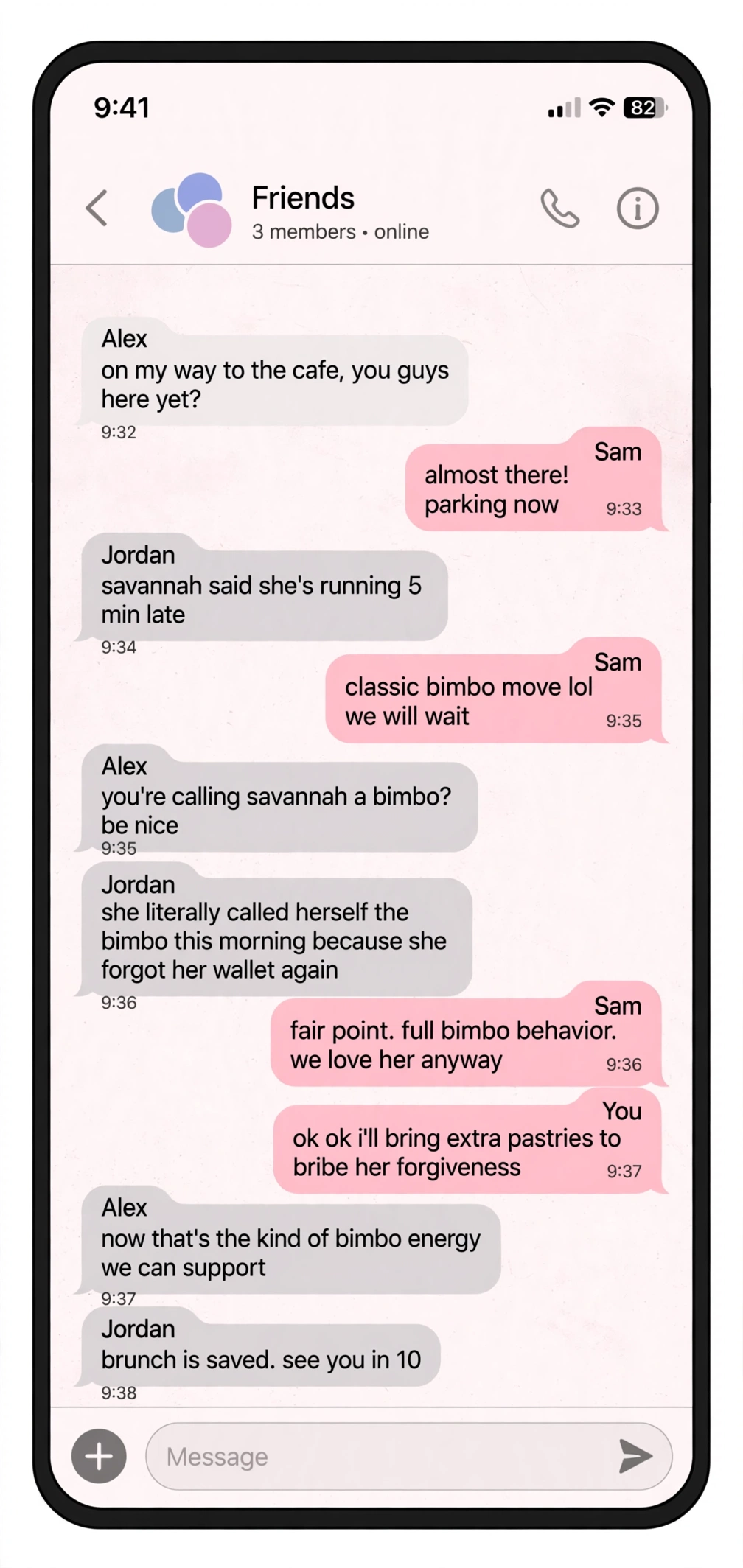
- As a joke or tease: “Okay bimbo, calm down” between friends — playful, affectionate, and clearly not serious.
- As an aesthetic label: “That outfit is so bimbo core” or “She is going through her bimbofication era” — describing a style, not a person’s intelligence.
- As a noun for the stereotype itself: “The movie uses the bimbo trope” — talking about the character type, not a real person.
Grammar is simple: “bimbo” is a noun, and its plural is “bimbos.” It can also work as an adjective, as in “bimbo energy” or “bimbo aesthetic.” The male counterpart “himbo” follows the same pattern. You will also see “bimbofication” (the process of becoming a bimbo, usually as a style choice) and “bimbo core” (the aesthetic). None of these are formal words — they live in slang, social media, and casual conversation.
The tone matters more than the dictionary definition. Said with a laugh between friends, “bimbo” can be harmless. Said about a colleague, a stranger, or a woman you disagree with, it is an insult — and a specifically sexist one, because it targets her intelligence through her appearance. If you are not sure which version the other person will hear, do not use it.
Examples
Here is how “bimbo” actually shows up in real conversations, texts, and comments:
Friendly Examples
- “She walked in with the pink Juicy tracksuit and the flip phone — full bimbo energy and I am obsessed.”
- “We are having a bimbo night: face masks, pink drinks, and 2000s rom-coms. No brain cells allowed.”
- “My girl just said she is a bimbo now and honestly? She has never looked happier.”
- “Okay bimbo, you look amazing, now come help me pick an outfit.”
Professional Examples
- “The article discusses how the ‘bimbo’ stereotype was used in 1990s tabloid coverage to discredit women in public life.”
- “Her TikTok series reclaims the bimbo persona as a feminist statement about femininity and intelligence.”
- “The brand’s new campaign leans into Y2K bimbo-core aesthetics: hot pink, gloss, and playful confidence.”
- “In the meeting, someone called the influencer a bimbo, and the room went quiet — it landed as an insult, not a joke.”
Funny Examples
- “Me: I have a degree. Also me, a bimbo: what is 7 times 8?”
- “I am not dumb, I am just a bimbo. There is a difference and the difference is the lip gloss.”
- “She said ‘I am a bimbo’ and then explained quantum physics. The duality is the point.”
- “Bimbofication update: I bought the pink bag, the gloss, and the confidence. Brain cells sold separately.”
Comparison with Similar Terms
“Bimbo” gets mixed up with several other slang words, but each one means something different. Here is how they compare:
| Term | What It Means | Tone | Key Difference from Bimbo |
|---|---|---|---|
| Bimbo | Attractive woman stereotyped as unintelligent | Insult, or reclaimed and playful | The original term; focused on looks vs. brains |
| Baddie | Confident, stylish, attractive woman | Mostly a compliment | About confidence and style, not intelligence |
| Thot | Promiscuous woman (derogatory acronym) | Harsh insult | About sexual behaviour, not intelligence |
| 304 | Coded slang for a promiscuous woman | Insult, often joking | About sexual behaviour; the number code is the joke |
| Himbo | Handsome man stereotyped as not very smart | Usually affectionate or funny | The male version, and much gentler in tone |
| Dumb blonde | Blonde woman stereotyped as unintelligent | Insult, dated stereotype | Specifically about blonde hair; older and more clichéd |
| Valley girl | Shallow, materialistic young woman (1980s stereotype) | Mocking, dated | About speech, shopping, and attitude, not just looks |
The closest cousins are “baddie” and “himbo.” A baddie is a compliment about confidence and style with no judgement about intelligence, while a bimbo — even reclaimed — always carries the brains-versus-beauty idea. A himbo is the male mirror image, but it is almost always said with affection, which shows how differently the same joke lands depending on gender. And while “thot” and “304” sound similar because they are also slang about women, they judge sexual behaviour, not intelligence — a completely different insult.

Alternate Meanings
“Bimbo” has a few meanings that have nothing to do with slang:
- Italian: In Italian, “bimbo” simply means a baby or a small child, usually a little boy. It is a sweet, everyday word with no insult attached at all — which is why Italian speakers are often surprised by the English meaning.
- The brand: Grupo Bimbo is one of the largest baking companies in the world, based in Mexico. Its name comes from the Italian word, and its white-bread packaging is familiar across the Americas. If someone says “Bimbo bread,” they are talking about the bakery, not slang.
- The 1920s male meaning: As noted above, the earliest American slang meaning of “bimbo” was a tough, stupid man — the opposite of today’s meaning in almost every way. You will still find this meaning in old novels and films.
- Australian slang: In Australia, “bimbo” has also been used more generally for a foolish person of either gender, closer to “idiot” than to the American stereotype — though the American meaning is now the dominant one everywhere.
- Names and titles: “Bimbo” appears as a nickname, a pet’s name, and a character name in films, songs, and books. Context always tells you which meaning is meant.
None of these alternate meanings changes the slang meaning, but they explain why the word shows up in surprising places. If you see “Bimbo” on a bread truck, nobody is being insulted.
Professional or Polite Alternatives
Because “bimbo” is a gendered insult in most contexts, it is smart to have alternatives ready. What you say depends on what you actually mean:
- If you mean glamorous and confident: say “glamorous,” “confident,” “fashion-forward,” or “bubbly.” All of these describe the look and energy without the insult.
- If you mean fun and carefree: say “carefree,” “playful,” or “light-hearted.” These capture the vibe without judging anyone’s intelligence.
- If you mean stylish: say “stylish,” “put-together,” or “a fashion lover.” Simple, accurate, and kind.
- If you mean someone is not thinking clearly: say “distracted,” “not focused,” or “having an off day.” Criticise the moment, not the person — and never tie it to their appearance.
- If you are writing about the trend: phrases like “the reclaimed bimbo aesthetic” or “bimbo-core style” are fine in writing, because you are describing a cultural trend, not labelling a person.
The general rule is easy: describe what you see (the outfit, the energy, the style) instead of labelling who someone is. “She has great style” is always safer — and usually more accurate — than “she is a bimbo.”
Common Mistakes
Here are the mistakes people make most often with this word:
- Calling a stranger a bimbo: The reclaimed TikTok meaning does not make the word safe to use on people you do not know. To a stranger, it is just the old insult.
- Using it at work or school: “Bimbo” has no place in a professional setting. Even as a joke, it can read as harassment, because it judges a woman’s intelligence by her appearance.
- Assuming the stereotype is true: The whole point of the reclaimed bimbo trend is that the stereotype is false — looking glamorous says nothing about how smart someone is. Using the word as if the stereotype were a fact is the mistake the trend is pushing back against.
- Using it in an argument: Calling a woman a bimbo during a disagreement is a way of dismissing her instead of answering her. It ends conversations instead of winning them.
- Forgetting the gender double standard: “Himbo” is usually a joke; “bimbo” is usually an insult. The same idea lands very differently depending on who it describes, and pretending otherwise causes real misunderstandings.
- Using it about yourself in formal contexts: Calling yourself a bimbo can be funny and empowering among friends, but on a résumé, in a job interview, or in a professional bio, it will be read the old way — as a lack of seriousness.

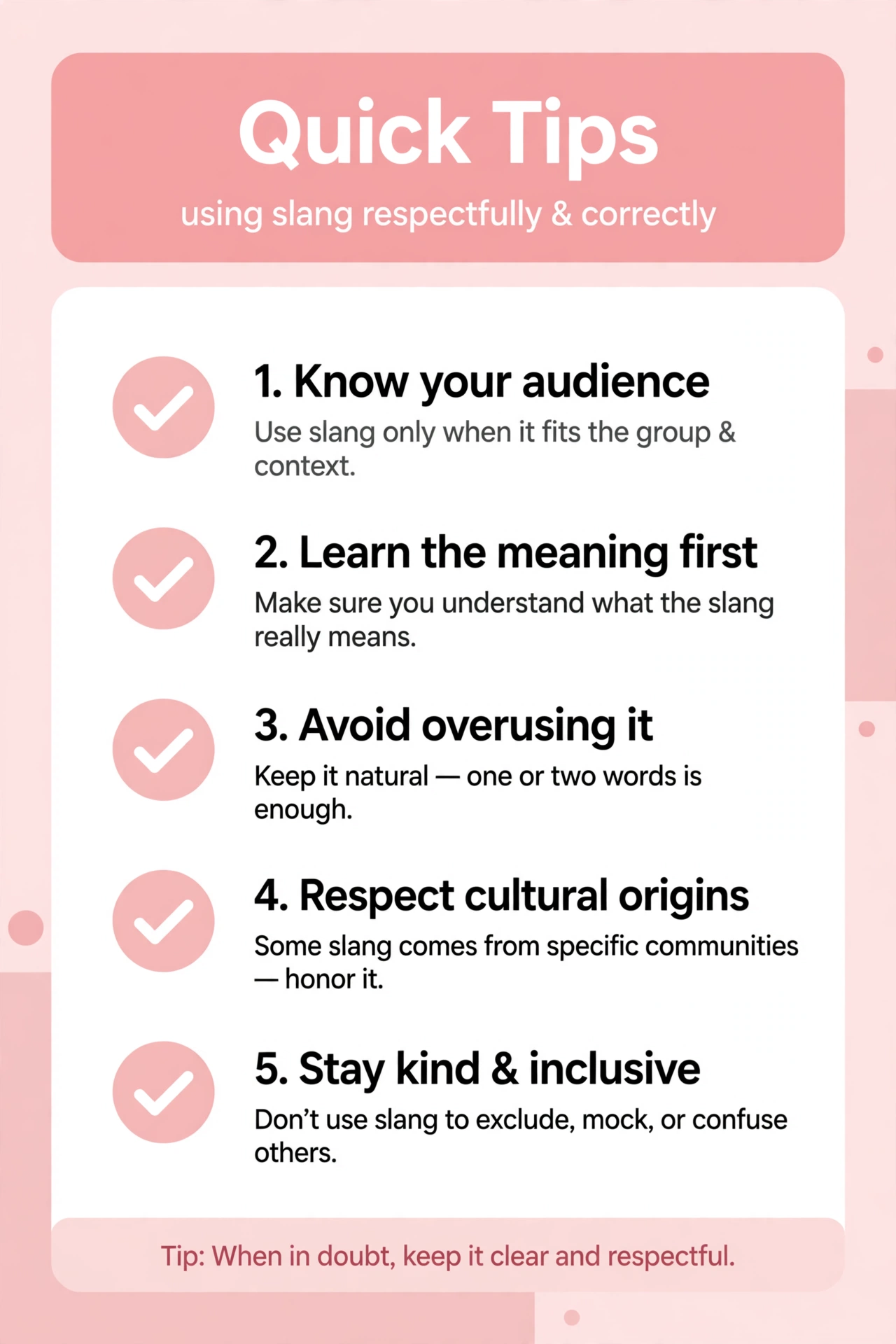
Quick Tips
- Check the context first: On TikTok and among friends, “bimbo” can be playful. Anywhere else, assume it is an insult until proven otherwise.
- Never use it about a stranger: If you do not know someone well enough to know how they will hear the word, do not use it.
- Self-labels are personal: Someone calling herself a bimbo is not giving you permission to call her one. Reclamation belongs to the person doing it.
- Know the difference from “baddie”: If you mean confident and stylish, “baddie” is the compliment you are looking for — it carries no judgement about intelligence.
- Use it for the aesthetic, not the person: “Bimbo core” and “bimbofication” describe a style. They are much safer than labelling a person.
- When in doubt, describe instead of labelling: Talk about the pink outfit, the confidence, the energy — not about who someone is.
- Remember the history: A hundred years of baggage does not disappear because a word trends on TikTok. Respecting that history is part of using the word well.

FAQ
What does bimbo mean in slang?
In slang, a bimbo is a woman stereotyped as very attractive but not very intelligent. The word has been an insult for about a century, but on TikTok it has also been reclaimed as a playful identity celebrating femininity, glamour, and confidence. The bimbo slang meaning depends on context: as an insult it dismisses a woman’s intelligence, while as a reclaimed label it celebrates being pretty and unbothered.
Is bimbo an insult?
Yes, in most contexts it is. For most of its history, “bimbo” has been a sexist insult used to dismiss a woman by reducing her to her looks. The reclaimed TikTok usage is real, but it is mostly used by people describing themselves or their own style. Calling someone else a bimbo — especially a stranger, a colleague, or someone you disagree with — will almost always be heard as an insult.
What is a male bimbo called?
A male bimbo is called a “himbo” — a blend of “him” and “bimbo.” A himbo is a handsome man stereotyped as not very smart, but the word is usually affectionate and funny rather than harsh. The difference in tone between “himbo” and “bimbo” is a good example of the gender double standard built into the original insult.
What does bimbo mean on TikTok?
On TikTok, “bimbo” usually refers to the reclaimed bimbo persona and aesthetic: hot pink outfits, Y2K fashion, glossy lips, and a confident, unbothered attitude. Creators like Chrissy Chlapecka popularised the idea that being a bimbo means embracing femininity and refusing to be shamed for it. The trend also has its own vocabulary, including “bimbofication” and “bimbo core.”
What is bimbofication?
Bimbofication is the playful process of adopting the bimbo aesthetic — dressing in hyper-feminine, Y2K-inspired styles, wearing pink and gloss, and embracing a carefree, glamorous attitude. On TikTok it is usually presented as a fun style transformation rather than a serious identity change, and it is closely tied to the broader “bimbo core” trend.
Is it OK to call someone a bimbo?
It depends on your relationship and the context. Between close friends who both understand the joke, it can be playful. As a self-label, it is a personal choice. But calling a stranger, a colleague, or someone you barely know a bimbo is rude, and using it in an argument or at work can come across as sexist or harassing. When in doubt, do not use it about other people.
What is the difference between bimbo and baddie?
A baddie is a confident, stylish, attractive woman — a compliment about style and attitude with no judgement about intelligence. A bimbo is defined by the stereotype that beauty and brains do not mix, so even the reclaimed version carries that history. If you want to compliment someone’s confidence and look, “baddie” is the safer and more accurate word. For more on related slang, see our guide to bop meaning in slang.
Where did the word bimbo come from?
“Bimbo” comes from the Italian word for a baby or small child. It entered American slang in the 1920s, first meaning a tough, stupid man, then shifting to mean a beautiful but supposedly unintelligent woman. Hollywood, tabloids, and the “dumb blonde” stereotype kept that meaning alive for decades, until TikTok creators in the early 2020s reclaimed it as a confident, hyper-feminine identity. You can read the full dictionary history in the Merriam-Webster entry on bimbo.
Conclusion
“Bimbo” is a small word with a very long story. It started as the Italian word for a baby, became 1920s slang for a tough man, then spent most of a century as a sexist insult aimed at beautiful women, and finally got reinvented on TikTok as a pink, glamorous, unbothered identity. Few slang words have travelled that far — and that journey is exactly why the word is so easy to get wrong.
The key takeaways are simple. The classic bimbo slang meaning is an attractive woman stereotyped as unintelligent, and in most contexts the word is still an insult. The reclaimed version — the TikTok bimbo, the bimbo-core aesthetic, “bimbofication” — is real and popular, but it belongs to the people who choose it for themselves. It is not a free pass to label strangers, colleagues, or anyone you disagree with. And if what you actually mean is confident and stylish, words like “baddie” say it better, without the baggage.
So the next time you hear “bimbo” in a video, a text, or a conversation, listen for the context. Is it a joke between friends, a style label, a proud self-description, or an old-fashioned put-down? The word is the same — the meaning is in the moment. For more slang explained the same way, explore our guide to snatched meaning slang — and if you want the full picture from an authoritative source, the Merriam-Webster entry on bimbo is an excellent place to start.
