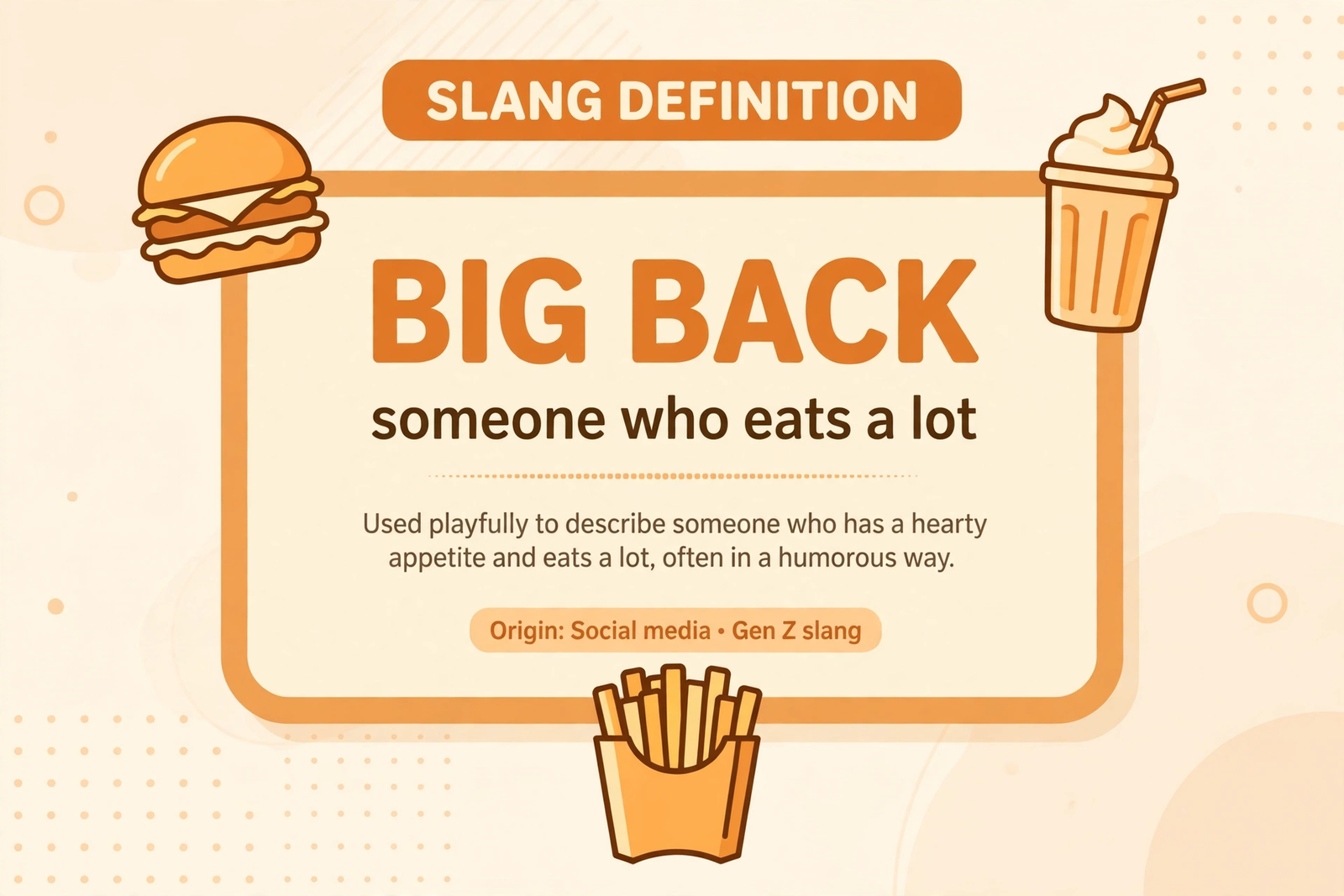
Quick definition: In slang, a big back is someone who eats a lot — a person with a huge appetite who is always snacking, ordering seconds, or finishing everyone else’s food. The big back slang meaning comes from TikTok and African American Vernacular English (AAVE), where “big back behavior” describes overeating as a joke. It is usually playful and self-deprecating, but it can also sting, because it doubles as a comment on someone’s body size.
big back slang meaning & Definition
The big back slang meaning is simple on the surface: a “big back” is a person who eats too much. When someone says “she’s got a big back,” they usually do not mean her back is literally wide. They mean she loves food, she eats big portions, and she never turns down a snack. It is a joke about appetite first and a joke about body size second — and that second layer is exactly why the phrase is so debated.
On TikTok and in group chats, the phrase almost always shows up as “big back behavior” or “big back activities.” Both phrases describe the same thing: eating like food might disappear. Ordering a large fries and a milkshake at midnight. Eating the pizza crusts nobody else wanted. Going back to the buffet for a third plate while everyone else is full. The joke is that this kind of eating is so extreme it must be building a “big back” — a wide, well-fed back.
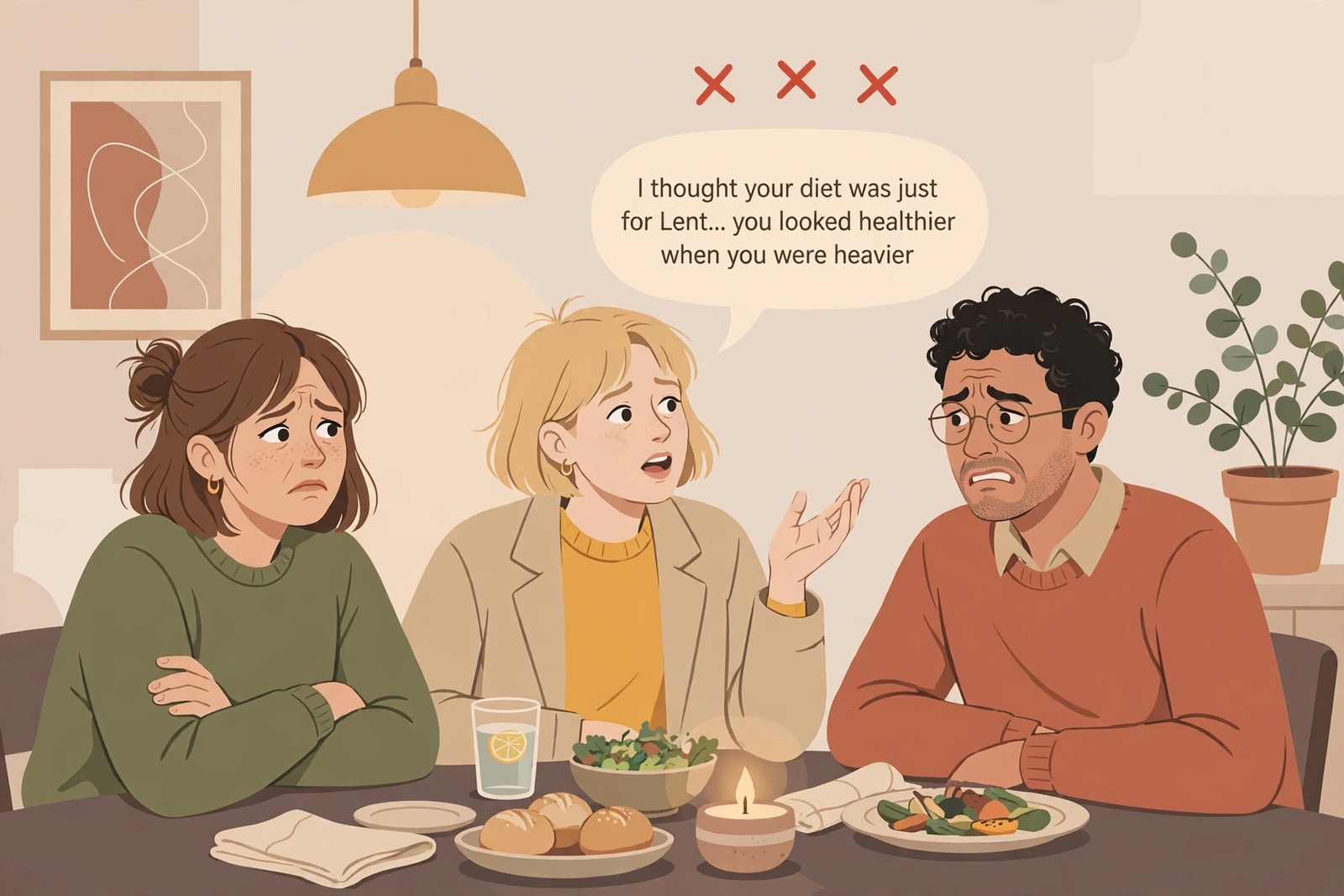
Here is the important nuance: the phrase is almost never a compliment, but it is not always an insult either. Friends use it on each other as a roast, the same way they might call each other greedy in a loving way. People also use it on themselves — “my big back is acting up again” after a second helping — as a self-deprecating joke. Context decides everything. Said between close friends over a shared meal, it lands as funny. Said to a stranger, or said seriously about someone’s weight, it lands as body-shaming.
| Term | Meaning |
|---|---|
| Big back | Slang for someone who eats a lot or overeats; also used to describe an overweight person |
| Big back behavior | Acting like a big back — eating huge portions, snacking constantly, always hungry |
| Big back activities | Things a big back does: late-night snacking, buffet trips, finishing leftovers |
| Bigbacked | The TikTok trend of stuffing clothes to fake a wide back for comedy videos about overeating |
| Big back season | A joking “season” for eating a lot, often used around holidays and winter |
| Foodie | Someone who loves food and cooking — positive, with no body-size joke attached |
Introduction
You have probably seen it in a TikTok caption: someone films themselves eating a giant plate of pasta at 1 a.m., and the caption reads “big back behavior.” Or a friend texts the group chat a photo of three empty chip bags and writes “my big back strikes again.” If you had to guess the meaning from the words alone, you would probably get it wrong — because a “big back” in slang has very little to do with anyone’s actual back.
Like so much of today’s internet slang, “big back” started in Black culture and African American Vernacular English, then exploded on TikTok in 2024, where it turned into a full-blown comedy trend. Within months, millions of people were using it to joke about their own eating habits, roast their friends, and caption their food videos. It even inspired a parody song that racked up tens of thousands of uses as a TikTok sound.
But the phrase also sparked a real debate. Some people find it harmless and hilarious — a way to laugh at the universal experience of eating too much. Others say it is just a dressed-up way to mock people for their weight, and that the viral “bigbacked” trend, where creators stuff pillows into their shirts to fake a fat back, crosses the line into fatphobia. Both sides have a point, and understanding the term means understanding that tension.
This guide explains the full big back slang meaning, where it came from, how it went viral, and how people actually use it in texts, captions, and conversations — plus the mistakes to avoid so you do not accidentally insult someone. If you want to see how other TikTok slang works the same way, our guide to the zesty meaning slang follows a very similar path from AAVE to viral trend.
Origin
The phrase “big back” is older than TikTok — much older. In British slang, “back” has long been used to refer to a person’s buttocks, and a “big back” meant a big backside. That older sense even shows up in pop culture: Sir Mix-A-Lot’s 1992 hit “Baby Got Back” turned the idea into a mainstream joke, and the phrase kept circulating in music and comedy through the 1990s and 2000s. In that era, a big back was often treated as a compliment, especially in hip-hop and R&B culture.
The modern meaning took shape in African American Vernacular English, where “big back” gradually shifted from describing a body part to describing a person — specifically, a person whose eating habits had given them a larger body. The logic is blunt and visual: someone who eats a lot develops a big back. From there, “big back behavior” became shorthand for the eating itself: the second helpings, the midnight snacks, the refusal to leave food on the plate.
The phrase went mainstream in early 2024, and one moment did more than any other to push it there. Radio personality Charlamagne Tha God commented on TikTok creator ReesaTeesa’s viral 50-part series “Who TF Did I Marry?” — a storytime saga about her ex-husband — and described the ex’s eating habits as “big back behavior.” The clip spread fast, and suddenly a phrase that had lived mostly in Black social media circles was on everyone’s feed. Around the same time, TikTok creators began posting food videos tagged #bigback, showing off enormous meals and joking about their appetites.
Then came the trend that made the phrase impossible to ignore. In early April 2024, TikTok users started posting “bigbacked” videos: they stuffed pillows or clothes into the backs of their shirts to fake a wide, heavy back, then filmed themselves doing comedy skits about eating excessively. One of the earliest, posted on April 1, 2024, by creator @jayda.waydah, showed her baby with a pillow stuffed behind her and the caption about all the breast milk catching up. The sound attached to these videos was used more than 22,000 times in just two weeks. By July 2024, the comedy channel thecincomedy had even released a parody song, “Big Back (The Original Parody),” which became a TikTok sound in its own right.
Popularity
“Big back” is now one of the most recognisable food jokes on the internet. The hashtag #bigback has millions of views across TikTok and Instagram, and the phrase shows up everywhere food content lives: mukbang videos, restaurant reviews, grocery hauls, and “what I eat in a day” posts. Creators use it to caption their biggest meals, and viewers use it in the comments to joke about their own appetites.
Part of the reason it spread so fast is that the joke is universal. Almost everyone has eaten too much at least once — at a holiday dinner, at a buffet, at 2 a.m. in front of the fridge. “Big back” gives that shared experience a funny name, and using it on yourself is a way of saying “I know, I ate too much, and I am laughing about it.” Self-deprecating food humour has always done well online, and “big back” fits that tradition perfectly.
The phrase has also crossed over into everyday speech, especially among teenagers and young adults. Parents report hearing their kids call each other “big back” at the dinner table. Teachers hear it in school hallways. It has become a standard roast among friends — quick, visual, and just mean enough to be funny without starting a real fight. That is the sweet spot for slang: edgy enough to feel cool, harmless enough to use every day.
But the popularity also brought pushback. As the “bigbacked” trend grew, many users pointed out that stuffing a pillow into your shirt to pretend to be fat is not really different from mocking fat people — and that the joke only works because society treats a big body as funny. Psychologists who have commented on the trend note that even joking uses of the term can hurt, especially for teenagers who are already sensitive about their bodies. The phrase is not going away, but the conversation around it is a reminder that slang about bodies always carries weight — pun intended.
How It Is Used
“Big back” works in a few different ways, and the grammar is flexible. As a noun, it describes a person: “He’s such a big back.” As an adjective phrase, it describes behaviour: “That was big back behavior.” And as a label for an event, it shows up as “big back activities” — a whole category of eating-related chaos. The phrase is almost always informal, and it lives in speech, texts, captions, and comments rather than in formal writing.
Most of the time, people use it in one of three ways. The first is self-deprecating: you call yourself a big back after eating too much. The second is a friendly roast: you call a friend a big back when they order dessert after a full meal. The third is a caption or hashtag: you label a food video #bigback so other people who love the joke can find it. All three uses depend on the audience understanding that it is a joke — which is why tone matters so much with this phrase.
It also pairs naturally with other slang. You will see “big back” next to “no crumbs left,” “ate that up,” “foodie,” and “snack monster.” On TikTok, it often appears with the “Big Back” parody song as the audio, or with a video of someone dramatically eating. In group chats, it is usually a one-line reaction to a food photo: a friend posts a picture of a triple cheeseburger, and someone replies “big back behavior fr.”
- Self-roast: “I just ate a whole pizza by myself. My big back is showing.”
- Friendly roast: “Bro ordered a large fries AND onion rings. Certified big back.”
- Caption: “Big back activities only. No salads allowed. #bigback”
- Excuse: “It’s big back season, I don’t make the rules.”
- Observation: “She finished everyone’s leftovers. That’s big back energy.”
Examples
Seeing the phrase in real conversations is the fastest way to understand it. The examples below cover friendly, professional, and funny uses — and they show how the same words can land very differently depending on who is talking and who is listening.
Friendly Examples
Between friends, “big back” is a term of endearment disguised as a roast. It says “I know you, I love you, and I am going to tease you about the third slice of cake.” The humour works because both people know it is not serious.
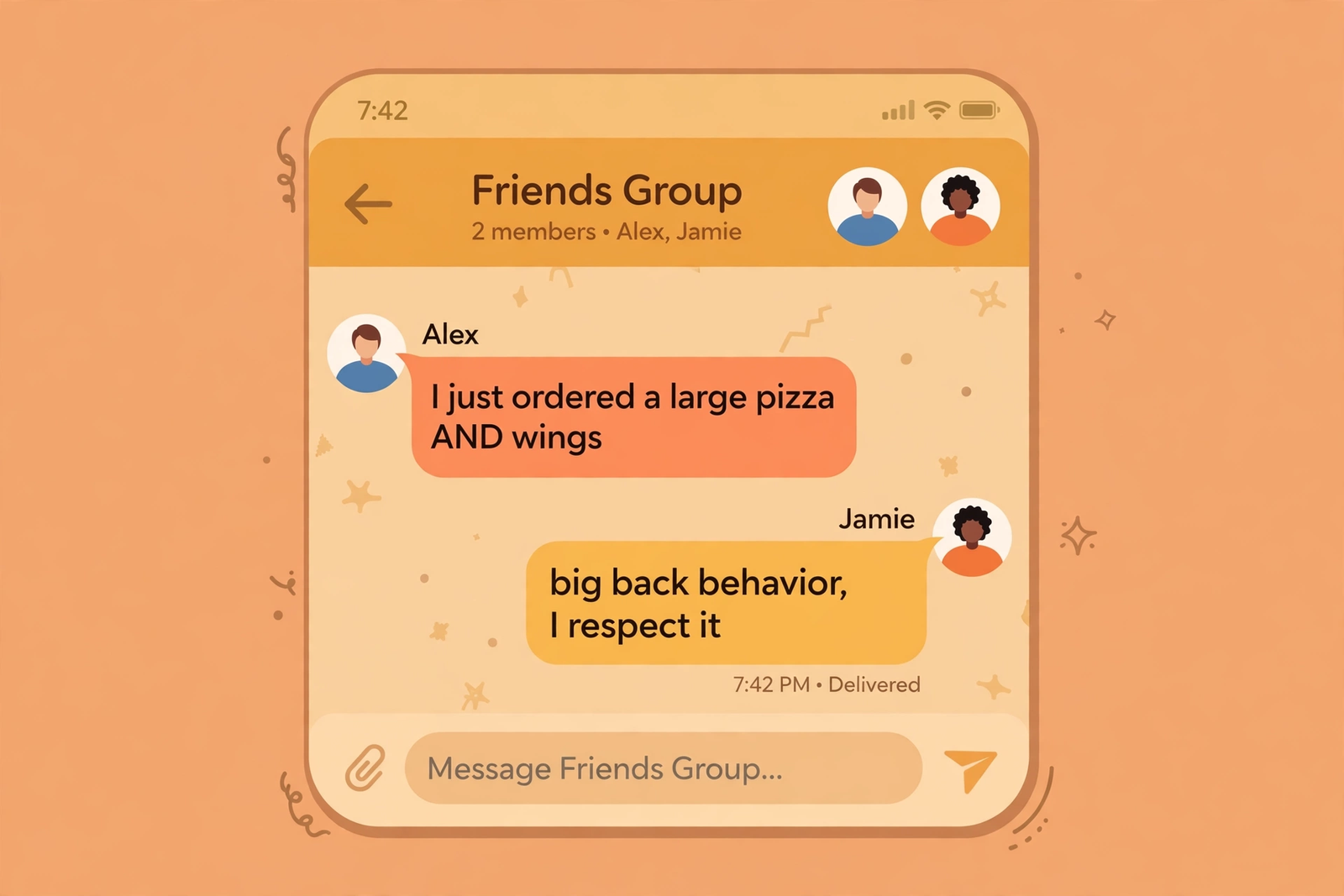
- Friend 1: “I just ordered a large pizza, garlic bread, AND wings.”
Friend 2: “Big back behavior. I respect it though.” - Friend 1: “Why did you eat my fries?”
Friend 2: “Sorry, my big back took over. I’ll buy you new ones.” - Group chat: “POV: your friend says she’s full and then orders dessert.”
Reply: “Certified big back, we love to see it.” - Friend 1: “It’s 2 a.m. and I’m making a full sandwich.”
Friend 2: “Big back activities at 2 a.m. is crazy.”
Professional Examples
In professional or formal settings, “big back” basically does not belong. It is a body joke, and body jokes at work are a bad idea in almost every case. If the topic of food comes up at the office, use a neutral word instead — “foodie,” “big appetite,” or “loves a good lunch.” The examples below show what to say instead, and the one rare case where the slang might appear: a casual chat between close colleagues who already joke this way.
- Instead of: “He’s a big back, he ate all the meeting snacks.”
Say: “He has a big appetite — the snack tray didn’t stand a chance.” - Instead of: “That’s big back behavior, ordering a double lunch.”
Say: “That’s a serious lunch order. I respect the commitment.” - Close colleagues, joking: “Team lunch turned into big back activities again. Nobody is getting work done this afternoon.”
- Instead of: “Don’t be a big back at the client dinner.”
Say: “Let’s keep portions reasonable at the client dinner.”
Funny Examples
The funniest uses of “big back” lean into the exaggeration. The joke is always the same — someone ate an absurd amount of food — but the delivery is what makes people laugh. These are the kinds of lines that do well as TikTok captions and group-chat reactions.
- “My big back woke me up at 3 a.m. demanding snacks. I had no choice.”
- “Thanksgiving is just big back season with extra steps.”
- “I said I was on a diet and then my big back ordered a milkshake. We are not the same person.”
- “The buffet saw me coming and started cooking more food. Big back behavior.”
- “My New Year’s resolution was to eat less. My big back said: nice try.”
Comparison with Similar Terms
“Big back” is not the only slang word for loving food too much. English has a whole menu of them, and each one carries a slightly different tone. Some are warm, some are rude, and some have nothing to do with food at all. The table below shows how “big back” stacks up against its closest neighbours, so you can pick the right word for the moment.
| Term | What It Means | Tone | Difference from “Big Back” |
|---|---|---|---|
| Big back | Someone who eats a lot; a joke about appetite and body size | Playful roast, can sting | The standard term — food joke with a body-size edge |
| Foodie | Someone who loves good food and cooking | Positive | About taste and quality, not quantity; never an insult |
| Glutton | Someone who eats greedily and excessively | Negative, formal | An old-fashioned insult; sounds serious, not funny |
| Snack monster | Someone who is always snacking | Light, affectionate | Softer and safer — no body-size joke attached |
| Munchies | A sudden strong craving for snacks | Casual, funny | Describes a craving, not a person |
| Chubby chaser | Someone attracted to larger people | Slang, sensitive | About attraction, not eating — a different topic entirely |
| Thick | Someone with a curvy, full figure | Usually a compliment | A compliment about looks; “big back” is a joke about eating |
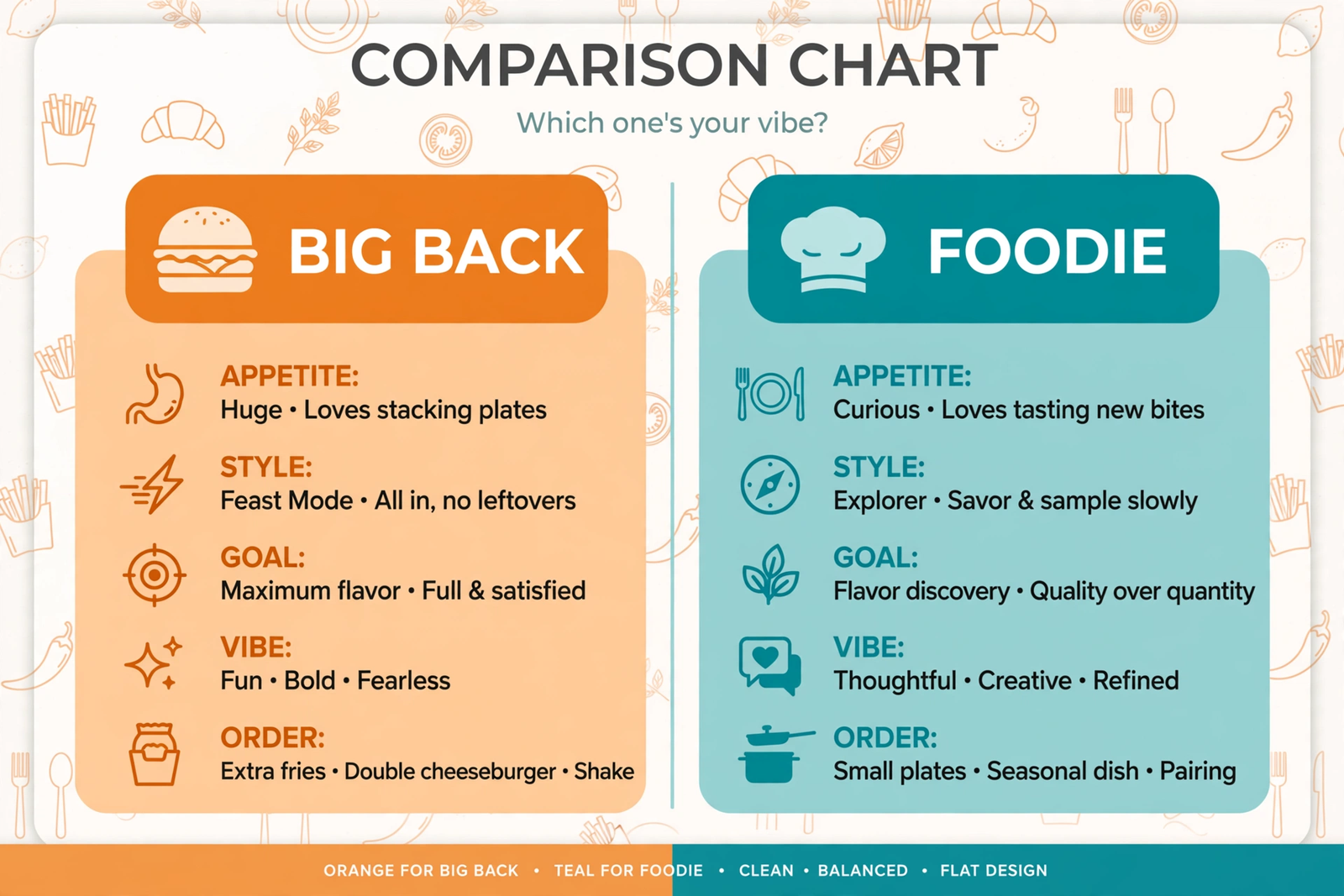
The closest cousins are “snack monster” and “foodie,” but neither one carries the same punch. “Foodie” is a compliment about taste. “Snack monster” is a gentle tease about habit. “Big back” is the only one of the three that also comments on the body, which is exactly why it is funnier to some people and more hurtful to others. If you want the food joke without the body joke, “snack monster” is the safer choice. For more on how slang terms shift meaning online, see our guide to sigma meaning slang — another AAVE-origin term that TikTok turned into a trend.
Alternate Meanings
“Big back” has a few other meanings, and context is the only way to tell them apart. The most common alternate meaning comes from fitness and bodybuilding, where a “big back” is a compliment: it means someone has built wide, muscular lats through years of training. In a gym, “he’s got a big back” means he can deadlift a house, not that he eats too much. The same words, the opposite vibe.
The older British sense is also still around: a “big back” can simply mean a large backside, in the “Baby Got Back” tradition. In that sense it is closer to a compliment than an insult, and it has nothing to do with eating. You will still hear it used this way in music, in comedy, and in older slang.
There is also the literal meaning, which is worth remembering precisely because the slang meaning is so dominant now. A doctor talking about a “big back” might mean a broad torso or a posture issue. A tailor might mean a jacket cut. None of these uses are slang, but they are a reminder that the phrase existed long before TikTok got hold of it — and that in a gym or a clinic, it means something completely different from what it means in a group chat.
Professional or Polite Alternatives
Because “big back” is a body joke, there are many situations where a different phrase is the right call. At work, at school, with people you do not know well, or with anyone who is sensitive about weight, reach for one of these instead. They keep the humour about food while dropping the comment about the body.
- “Big appetite” — the safest swap. “She has a big appetite” says the same thing without the roast.
- “Foodie” — positive and safe anywhere. “He’s a real foodie, he knows every restaurant in town.”
- “Loves to eat” — simple and warm. “She just loves to eat, and honestly, same.”
- “Snack monster” — playful without the edge. Good for friends and family.
- “Always hungry” — neutral and true. “He’s always hungry, it’s actually impressive.”
- “Enthusiastic eater” — a light, slightly formal option for polite company.
A good rule: if you would not say it to a stranger, do not say it about a stranger. And if you are not sure whether a friend finds the joke funny, ask — or use “big appetite” instead. The laugh is never worth making someone feel bad about their body.
Common Mistakes
“Big back” is easy to get wrong, because the line between a funny roast and a hurtful comment is thin. These are the mistakes people make most often — and how to avoid them.
- Using it on a stranger. The joke only works between people who already trust each other. Said to a stranger, it is just an insult about their weight.
- Using it seriously. If you actually mean “this person is overweight,” you are not joking — you are body-shaming. Keep the phrase for clearly playful moments.
- Using it at work or school. Body jokes in professional settings can be reported as harassment. Use “big appetite” instead.
- Forgetting the fatphobia debate. The “bigbacked” pillow trend is controversial for a reason. Imitating a fat body for laughs can hurt people who actually live in one.
- Confusing it with the gym meaning. In a fitness context, “big back” is a compliment about muscle. Do not correct a gym friend who uses it proudly — they mean something else entirely.
- Using it about a child. Kids repeat what they hear, and a body joke that is funny between adults can be genuinely hurtful to a child. Keep it away from kids.
- Overusing it. A roast is funny once. The tenth time you call the same friend a big back, it stops being a joke and starts being a label.
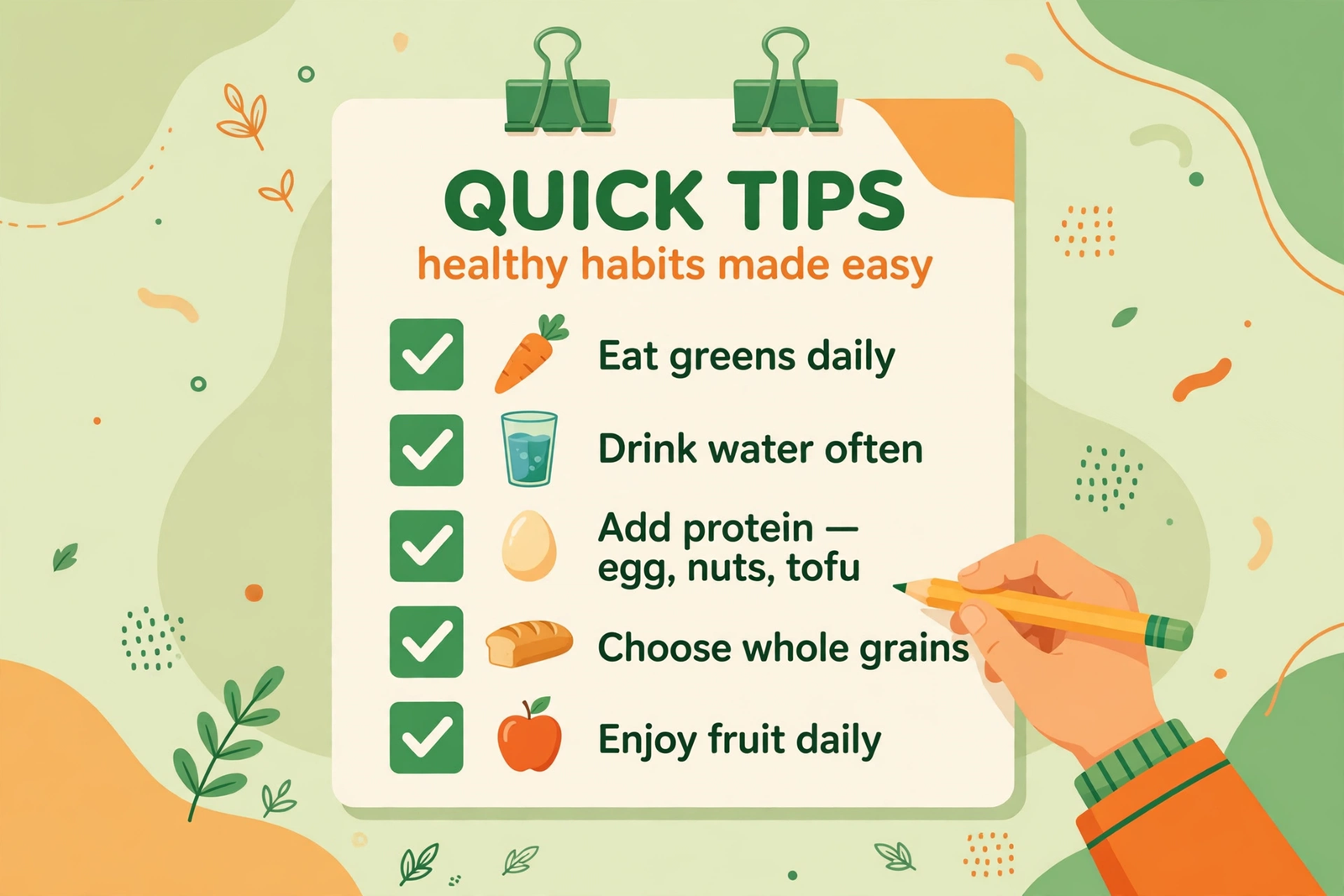
Quick Tips
Want to use “big back” the right way? These tips will keep the joke funny and the friendship intact.
- Roast yourself first. The safest use is self-deprecating: “my big back ordered dessert again.” Nobody gets hurt when the joke is on you.
- Know your audience. Only use it with close friends who already joke this way. If you have to wonder whether it will land, do not say it.
- Keep it about food, not bodies. “Big back behavior” (the eating) is funnier and safer than “big back” (the person).
- Use it in captions, not confrontations. It works best as a caption on a food photo or a reaction in a group chat.
- Read the room. If someone looks uncomfortable, drop it immediately — do not double down on a joke that missed.
- Pair it with love. The best roasts come with warmth. “Certified big back, and I love you for it” lands very differently from the roast alone.
- Try the softer swaps. “Snack monster” and “big appetite” get you 90% of the laugh with none of the risk.
FAQ
1. What does big back mean in slang?
In slang, a “big back” is someone who eats a lot or overeats. The big back slang meaning comes from AAVE and TikTok, where “big back behavior” describes eating huge portions, snacking constantly, or finishing everyone else’s food. It is usually a joke, but it also comments on body size, so it can sting.
2. Where did big back slang come from?
The phrase has roots in British slang for a big backside and in African American Vernacular English, where it shifted to describe someone whose eating habits gave them a larger body. It went mainstream in early 2024 after Charlamagne Tha God called ReesaTeesa’s ex’s eating “big back behavior,” and the “bigbacked” TikTok trend in April 2024 pushed it worldwide. For the full documented history, see the Know Your Meme entry on the Big Back trend.
3. Is big back offensive?
It can be. Between close friends it is usually a playful roast, and many people use it on themselves as a joke. But because it comments on weight and body size, it can feel like body-shaming — especially to strangers, children, or anyone sensitive about their body. The “bigbacked” pillow-stuffing trend has also been criticised as fatphobic.
4. What is big back behavior?
“Big back behavior” means acting like a big back: eating very large portions, ordering seconds, snacking at midnight, or finishing other people’s leftovers. It describes the eating habit rather than the person, which makes it the slightly safer version of the joke.
5. What are big back activities?
“Big back activities” are the things a big back does — late-night snack runs, buffet trips, eating a whole pizza alone, or ordering dessert after a full meal. The phrase is mostly used as a caption or a joke label for food-related chaos.
6. What is the bigbacked trend on TikTok?
The “bigbacked” trend started in April 2024: creators stuffed pillows or clothes into the backs of their shirts to fake a wide back, then filmed comedy skits about eating excessively. The trend went viral — its sound was used more than 22,000 times in two weeks — but it also drew criticism for mocking larger bodies.
7. What is the difference between big back and foodie?
A “foodie” loves good food and cooking — it is a compliment about taste. A “big back” eats a lot — it is a joke about quantity and appetite, with a body-size edge. If you want to compliment someone’s love of food without any risk, “foodie” is the better word. For another slang term that works the same way, check our guide to delulu meaning.
8. Can I say big back at work?
Probably not. It is a body joke, and body jokes at work can be seen as harassment. Use “big appetite” or “foodie” instead. The one exception is a very casual team where close colleagues already roast each other — and even then, keep it light and never direct it at someone’s weight.
Conclusion
The big back slang meaning is a small phrase with a big story: a joke about eating too much, rooted in British slang and AAVE, that TikTok turned into a global trend in 2024. At its best, it is a funny, relatable way to laugh at the universal experience of overeating — the midnight snack, the third plate at the buffet, the dessert after a full meal. At its worst, it is a body joke that can hurt, and the “bigbacked” trend showed exactly how quickly a food joke can become a fat joke.
The key takeaways are simple. First, the meaning: a big back is someone who eats a lot, and “big back behavior” is the eating itself. Second, the origin: AAVE and Black culture, pushed mainstream by Charlamagne Tha God and the April 2024 TikTok trend. Third, the neighbours: “foodie” is a compliment, “snack monster” is a gentle tease, and “big back” is the edgy one — use it accordingly. And finally, the rule that matters most: roast yourself, roast your close friends, and never aim a body joke at someone who did not sign up for it.
Now you know what the term means, where it came from, and when to use it — which, for a slang term like this one, is the whole point. The next time someone captions a giant plate of pasta with “big back behavior,” you will know exactly what they mean. And if you are the one holding the fork at 2 a.m., you will know what to call yourself. For more TikTok slang explained the same way, see our guide to the iykyk meaning — another phrase that went from niche to everywhere overnight.
Quick recap: Big back = someone who eats a lot · from AAVE, viral on TikTok in April 2024 · “big back behavior” = overeating · “bigbacked” = the pillow-stuffing trend · softer swaps: big appetite, foodie, snack monster · use it as a joke among friends, never as a comment on a stranger’s body.
