If someone has ever called you habibti — in a message, a song, a film, or a conversation — and you found yourself wondering what it really means, you are not alone. This warm, melodic Arabic word has quietly crossed borders and languages, showing up in TikTok comments, Instagram captions, love songs, and everyday texts around the world.
But habibti is more than just a trendy expression. It carries centuries of cultural weight, linguistic precision, and genuine emotional depth. Understanding its true meaning opens a window into Arabic culture, Islamic heritage, and the way millions of people express love and care every single day.
This guide covers everything you need to know about habibti meaning — from its linguistic roots and grammatical structure to how it is used in real life, on social media, and in romantic or friendly contexts.
What Does Habibti Mean?
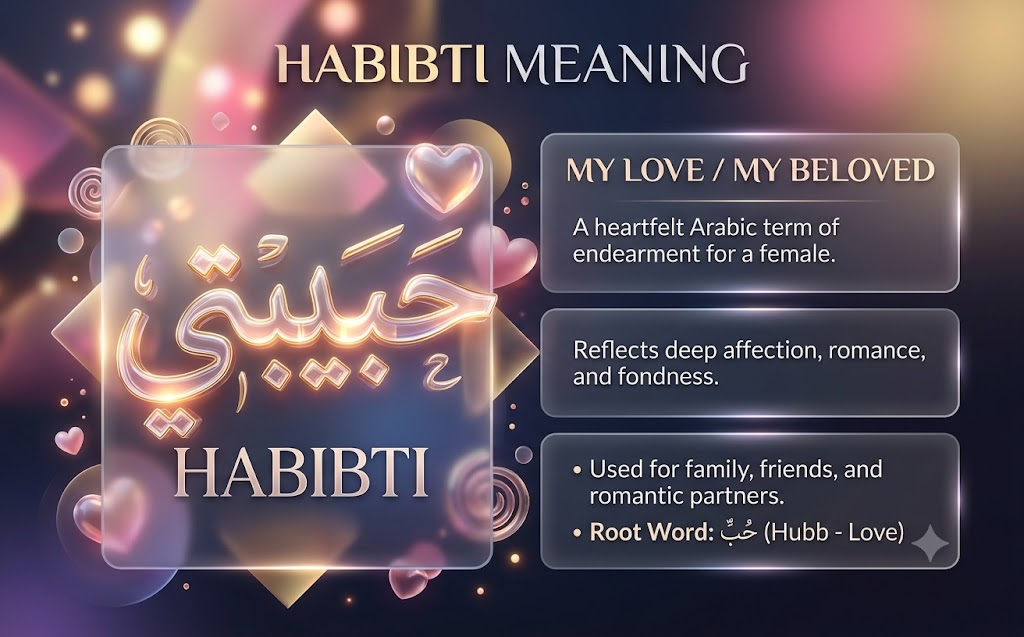
At its most direct, habibti (حبيبتي) means “my beloved” or “my darling” in Arabic. It is a term of endearment used exclusively when addressing a female — a girlfriend, wife, daughter, sister, or close friend.
The word is built from two parts:
- Habib (حبيب) — meaning “beloved” or “dear one”
- -ti (تي) — a feminine possessive suffix meaning “my”
Together, they form habibti: literally, my beloved (female).
The pronunciation is ha-BEEB-tee, with the stress falling on the second syllable. Some people spell it habibty in informal digital writing, but both versions refer to the same word.
Habibti vs Habibi: What Is the Difference?
This is one of the most common questions people ask, and the answer is straightforward:
| Term | Arabic Script | Gender | Meaning |
|---|---|---|---|
| Habibi | حبيبي | Masculine | My beloved (male) |
| Habibti | حبيبتي | Feminine | My beloved (female) |
Arabic is a gendered language, meaning the form of a word changes depending on who you are addressing. Using habibi for a woman or habibti for a man is grammatically incorrect and immediately signals a non-native speaker. Native Arabic speakers use these forms instinctively, and getting it right shows genuine cultural awareness.

The Linguistic Root of Habibti
To fully understand habibti meaning, it helps to look at its Arabic root. The word comes from the root ḥ-b-b (ح-ب-ب), which is one of the most foundational roots in the Arabic language and relates to the concept of love and deep affection.
From this root, Arabic builds a whole family of words: bfe meaning
- Hubb (حب) — Love
- Habib (حبيب) — Beloved (masculine)
- Habiba (حبيبة) — Beloved (feminine, without the possessive)
- Habibti (حبيبتي) — My beloved (feminine, with possessive “-ti”)
- Habibi (حبيبي) — My beloved (masculine, with possessive “-i”)
This root also appears in classical Arabic poetry, Islamic scripture, and literary texts, showing that the concept of love encoded in this word has been part of the Arabic language for well over a thousand years. The root ḥ-b-b appears in the Quran itself, often describing divine love and the closeness between Allah and righteous believers.
How Habibti Is Used in Real Life
One of the most important things to understand about habibti is its versatility. Unlike English, where “my beloved” might sound overly formal or exclusively romantic, habibti flows naturally across a wide range of relationships and situations in Arabic-speaking cultures.
Romantic Use
Between romantic partners, habibti is one of the most common and natural ways to express affection. A husband might say it to his wife during a morning phone call. A boyfriend might end a text message with it. It conveys warmth, love, and intimacy without needing any further explanation.
Examples:
- “Good night, habibti. Sweet dreams.”
- “I missed you so much, habibti.”
- “You looked beautiful today, habibti.”
Family Use
Parents, especially mothers, use habibti when speaking to their daughters. Older relatives use it with younger female family members. It carries the same sense of deep affection and care, but without any romantic connotation. In this context, it is completely ordinary — the Arabic equivalent of calling a daughter “sweetheart” or “darling.”
Friendly Use
Close female friends in Arabic-speaking cultures frequently call each other habibti. This is especially common in countries like Lebanon, Egypt, and Jordan, where terms of endearment are woven naturally into casual conversation. Two friends catching up over coffee might say habibti a dozen times without thinking twice about it.
Cultural Significance of Habibti
Arabic culture places a high value on warmth, hospitality, and verbal expressions of care. Unlike some Western communication styles that reserve terms of endearment for intimate relationships only, Arabic speakers use affectionate language openly with family, close friends, and loved ones.
Habibti reflects this cultural norm perfectly. It is not considered unusual or overly dramatic to call someone habibti — it is simply how deep care and connection are expressed in daily life.
Regional nuances do exist, however. In countries like Lebanon, Egypt, and Palestine, habibti is used quite casually and frequently even among acquaintances. In Gulf countries such as Saudi Arabia, UAE, and Kuwait, it tends to carry stronger emotional weight and is reserved more for private or intimate relationships.
Habibti in Islamic and Quranic Context
The root of habibti — the Arabic word for love — appears throughout the Quran and Islamic literature. The concept of divine love, human affection, and closeness to God are all described using words derived from the same ḥ-b-b root. This gives the word habibti a sense of sacred resonance for many Arabic speakers, particularly Muslim communities, where language and faith are deeply intertwined.
Habibti in Music, Film, and Social Media
In recent decades, habibti has traveled well beyond the Arab world. Several factors have driven this global spread.
Music has been one of the biggest vehicles. Egyptian pop legend Amr Diab built an international career on songs filled with habibi and habibti, introducing these words to audiences across Europe, Africa, and South Asia. More recently, Western artists have borrowed the term to add warmth and authenticity to their lyrics.
Film and television have also played a role. Arabic-language films and series, increasingly available on streaming platforms with subtitles, often leave terms like habibti untranslated, allowing international audiences to absorb their meaning through context and emotional tone.
Social media has arguably done the most to globalize habibti. On Instagram, TikTok, and Twitter, the word now appears in captions, comments, and DMs by people of all backgrounds. Non-Arab users adopt it to add emotional warmth to their messages, using it playfully or affectionately in online friendships.
How to Respond When Someone Calls You Habibti
If someone calls you habibti and you want to respond naturally, the tone and relationship guide your reply.
- Romantic context: Respond warmly in kind. “Habibi” (if you’re addressing a male) or “habibti” (if female) works beautifully as a reciprocal term.
- Friendly context: A smile, a heart emoji, or a simple “habibti!” right back creates an instant warm connection.
- Family context: Receiving habibti from a parent or older relative is a sign of deep affection — simply appreciate the love behind it.
If you are not Arabic and want to use habibti yourself, the most important rule is context. Use it with people you genuinely care about, in warm or playful settings, and with an understanding of what it carries emotionally. Most Arabic speakers appreciate when others embrace their language respectfully.
Common Mistakes to Avoid
Understanding habibti meaning also means knowing what not to do:
- Do not use it in professional settings. Calling a colleague, client, or boss habibti in a formal or Western work environment can come across as inappropriate or overly familiar.
- Do not use habibi when addressing a woman. Gender accuracy matters deeply in Arabic.
- Do not use it with strangers unless the context is clearly playful and culturally aware.
- Do not confuse it for being exclusively romantic. Habibti is equally a word of familial and platonic affection.
Related Arabic Terms of Endearment
Arabic offers a rich vocabulary of affectionate expressions. Here are some close relatives of habibti worth knowing:
| Arabic Term | Transliteration | Meaning |
|---|---|---|
| حياتي | Hayati | My life |
| روحي | Rohi | My soul |
| قلبي | Qalbi | My heart |
| عمري | Omri | My life / my age |
| نور عيني | Nour el ein | Light of my eye |
| يا قمر | Ya qamar | Oh moon (term of beauty) |
| عزيزتي | Azizati | My dear (feminine, more formal) |
Each of these carries its own emotional weight and shade of meaning, but all are rooted in the same Arabic tradition of expressing love through richly descriptive language.
Frequently Asked Questions About Habibti Meaning
What does habibti mean in English? Habibti translates to “my beloved,” “my darling,” or “my love” in English. It is used to address a female with warmth and affection in Arabic-speaking cultures.
Is habibti romantic or friendly? Both, depending on context. Habibti can be deeply romantic between partners, warmly familial between parents and daughters, or casually affectionate between close female friends. The relationship and tone determine the meaning.
What is the difference between habibi and habibti? Habibi is the masculine form, used when addressing a male. Habibti is the feminine form, used when addressing a female. Both mean “my beloved,” but using the wrong form is a grammatical mistake in Arabic.
Can a non-Arab use habibti? Yes, as long as the context is appropriate and the usage is sincere or playfully affectionate rather than mocking. Arabic speakers generally appreciate when others engage with their language respectfully.
Is habibti used in the Quran? The root of habibti — the Arabic word for love (ḥubb) — appears in Quranic text. While habibti as a possessive endearment is a spoken and literary form, its root carries deep religious significance in Islamic culture.
Conclusion
Habibti is far more than a word. It is an expression of love that has been spoken across the Arab world for centuries, shaped by language, culture, faith, and human connection. Whether whispered between romantic partners, called out by a mother to her daughter, or typed into a message between best friends, it carries a warmth that translation alone cannot fully capture.
Now that you understand habibti meaning in all its depth — its linguistic roots, cultural context, correct usage, and emotional richness — you can hear it with new appreciation. And if you ever want to use it yourself, do so with sincerity. In Arabic culture, few words carry as much genuine love as this one.
