
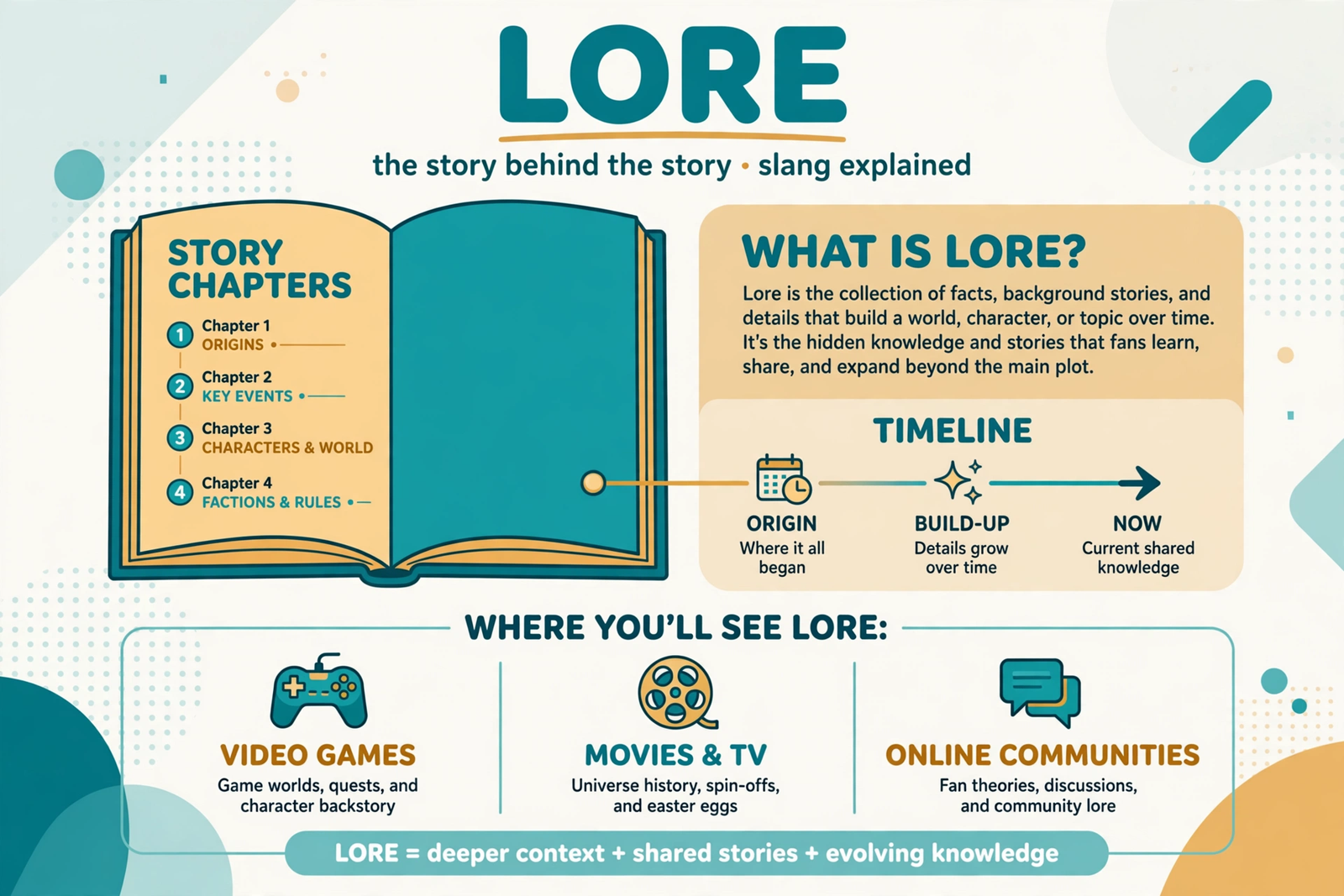
Quick definition: In slang, lore means the backstory, history, and hidden details behind a person, character, game, show, fandom, or even a real-life friend group. When someone says “the lore goes deep,” they mean there is a rich story behind the surface — and once you know it, everything makes more sense.
Lore Meaning & Definition
The lore meaning slang is simple at its core: lore is the story behind the story. Originally a word for traditional knowledge passed down through generations, “lore” has been adopted by gamers, fandoms, and internet culture to describe the full background of anything — a video game world, a TV show, a YouTuber, a meme, or a friend’s chaotic past.
If you have ever watched a three-hour YouTube video titled “The Complete Lore of Five Nights at Freddy’s” or heard a friend say “you don’t know the lore behind that joke,” you have already met this word in action. Lore is not just facts. It is the context, the drama, the history, and the little details that turn something ordinary into something worth talking about.
In everyday slang, people use lore in a few common ways:
- The backstory of a fictional world: “The lore of Elden Ring is insane — every item description hides a piece of the story.”
- A person’s history: “She has so much lore. Every time we talk, I learn something new about her high school days.”
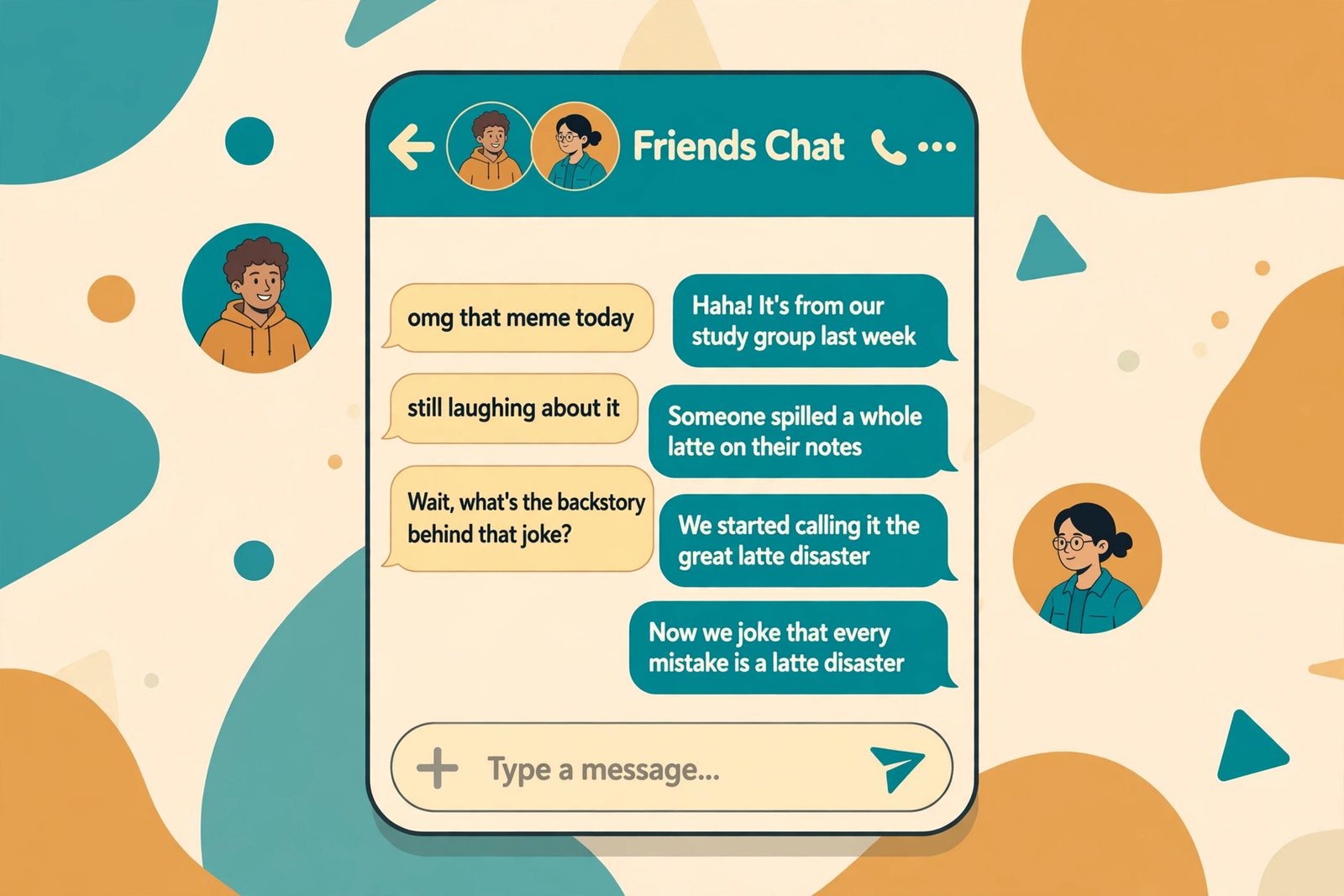
- The story behind a joke or meme: “You need the lore to understand why everyone is laughing at that picture.”
- A deep-dive explanation: “Let me explain the lore real quick before we start the show.”
What makes lore different from a simple “history” or “background” is the vibe. Lore sounds mysterious, layered, and a little bit epic — like there is a secret archive somewhere waiting to be uncovered. That is exactly why the word caught on with gamers and fandom communities first, and then spread to the wider internet.
Introduction
You are scrolling TikTok when a creator says, “POV: you finally learn the lore behind your friend group.” The comments are full of people sharing their own wild stories. Or you join a Discord server for your favorite game, and someone drops a message: “New players, read the lore channel first.” What are they all talking about?
They are talking about lore — the unofficial history that makes a community, a game, or a friendship feel alive. In 2026, lore is one of those slang words that quietly took over the internet. It shows up in gaming, in fandoms, in friend groups, and even in office gossip. Once you understand it, you will start noticing it everywhere.
This guide covers everything: the lore meaning slang explained in plain English, where the word came from, how gamers and fandoms use it, real examples from chats and social media, how it compares to similar words like canon and backstory, the mistakes people make with it, and quick tips for using it naturally. By the end, you will know the lore — about lore itself.
Origin
The word “lore” is far older than the internet. It comes from Old English “lār,” meaning teaching or learning, and for centuries it described traditional knowledge — folklore, old stories, and the wisdom passed from one generation to the next. Think of “folklore”: the lore of the folk.
So how did an old-fashioned word become modern slang? The shift happened in two waves.
Wave 1: Tabletop games and fantasy (1970s–2000s). Games like Dungeons & Dragons and franchises like The Lord of the Rings and Warhammer built enormous fictional worlds. Fans needed a word for all the history, mythology, and background material that made those worlds feel real. “Lore” was the perfect fit — it sounded ancient and weighty, just like the worlds it described. Game manuals, wikis, and forums began using “lore” constantly.
Wave 2: Video games and YouTube (2010s–2020s). Games like Dark Souls, Elden Ring, Five Nights at Freddy’s, and Genshin Impact hid their stories in item descriptions, environmental details, and cryptic dialogue instead of spelling everything out. Players became detectives, piecing the story together and sharing “lore videos” on YouTube. Channels dedicated entirely to explaining game lore gained millions of subscribers. From there, the word jumped to TikTok, Twitch, and Discord — and then to everyday speech.
By 2023–2024, “lore” had escaped gaming entirely. People started using it for real-life situations: “the lore of our friend group,” “my family’s lore,” “the lore behind that meme.” The word kept its sense of hidden depth, but the subject could now be anything with a story worth telling.
Popularity
Lore is popular because it does a job no other word does quite as well. “Backstory” sounds like a writing term. “History” sounds like school. “Lore” sounds like an adventure — like there is something fascinating waiting just below the surface.
Several forces pushed it into the mainstream:
- Lore YouTube: Multi-hour lore explainers for games like FNAF, Elden Ring, and The Legend of Zelda regularly pull millions of views. Entire channels exist just to explain the lore of a single franchise.
- TikTok and Reels: Short-form creators use “the lore” as a hook — “the lore behind this photo is crazy” — because it promises a story in the next 30 seconds.
- Fandom culture: Every major fandom, from Marvel to K-pop, has lore: timelines, theories, and character histories that fans debate endlessly.
- Friend-group slang: Gen Z and Gen Alpha use “lore” for personal history, which made the word feel casual and everyday rather than nerdy.
- Streaming and Discord: Streamers and their communities build running jokes and shared histories — their own lore — that new viewers need explained.
Search interest in “lore meaning” and “what is lore” has stayed strong for years, and the word now appears in mainstream articles, podcasts, and even marketing. It has moved from a niche gaming term to a standard piece of internet vocabulary, much like NPC meaning slang did before it.
How It Is Used
Lore works as a noun, and it is almost always used with “the” — “the lore.” Here are the main patterns you will see online and in real life:
1. “The lore” = the full backstory. “Before you watch season 2, you need to know the lore.” This is the most common use. It means the history and context that make the current story make sense.
2. “Lore drop” = a new piece of the story. When a game update, a trailer, or a friend reveals a surprising detail, fans call it a lore drop. “That interview was a massive lore drop about the main character.”
3. “Lore accurate” = faithful to the established story. Fans use this to praise (or criticize) adaptations. “The movie was actually lore accurate, which never happens.”
4. “Deep lore” = obscure or complicated history. “Only the OG fans know the deep lore of this server.” Deep lore is the stuff casual fans miss.
5. “Lore” as a person’s past. “He just told me his lore and honestly, I was not ready.” Here lore means someone’s personal history, often dramatic or surprising.
6. “What’s the lore?” = “What’s the story behind this?” This is the casual question version. “Wait, what’s the lore with you two? Why does everyone laugh when your name comes up?”
The tone is usually playful and curious. Saying “what’s the lore?” is warmer and more fun than asking “what’s the history?” — it signals that you want the good story, not a boring summary.
Examples
Here is how lore shows up in real conversations, chats, and posts. Notice how the word always points to a story that is bigger than what is on the surface.
Friendly Examples
- “Okay, before you meet my friends, I have to give you the lore. We have known each other since middle school and there is a LOT.”
- “The lore behind our group chat name is so dumb but I love it.”
- “She knows all the lore of our family. Ask her about the Thanksgiving incident.”
- “I spent the whole night reading the lore of this game and now I cannot stop thinking about it.”
- “New to the fandom? Start with the lore videos — they explain everything in like 20 minutes.”
Professional Examples
- “For the new hires, here is a quick lore document on how this project started and why we made the choices we did.”
- “The brand lore really matters to our customers — they love knowing the story behind the company.”
- “Before the client call, let me give you the lore on this account so nothing surprises you.”
- “Our onboarding now includes a short video on the team’s lore — the inside jokes and the history.”
- “Understanding the lore of this industry helps you avoid repeating old mistakes.”
Funny Examples
- “Bro has lore. Every time he tells a story from college, it gets wilder.”
- “The lore of why our teacher banned phones is actually hilarious.”
- “I just learned the lore behind that cursed image and I wish I could unlearn it.”
- “POV: you are the only one in the friend group who does not know the lore.”
- “My cat has lore. Do not ask about the missing curtain. It is a long story.”
One thing these examples share: lore is never just information. It is information with a story attached — and usually a story worth hearing.
Comparison with Similar Terms
Lore is close to several other words, but each one has a different flavor. This table makes the differences clear.
| Term | What It Means | How It Differs from Lore | Example |
|---|---|---|---|
| Lore | The full backstory and hidden details behind something | The base word — broad, story-like, a little mysterious | “The lore of this game goes so deep.” |
| Canon | The official, confirmed story of a fictional world | Canon is what is officially true; lore can include fan theories and rumors too | “That scene is not canon, but fans treat it as lore.” |
| Backstory | A character’s or person’s past | Backstory is usually about one character; lore covers the whole world or group | “Her backstory explains why she left the city.” |
| History | The recorded past of something | History sounds factual and formal; lore sounds like a story you would tell around a campfire | “The history of this town is well documented.” |
| Mythology | The legends and myths of a culture or fictional world | Mythology is grand and ancient; lore can be about a Discord server or a friend group | “Greek mythology is full of wild stories.” |
| Tea / Gossip | Juicy personal news about people | Tea is about current drama; lore is about the whole story behind it | “Spill the tea about what happened last night.” |
The key difference is scope and tone. Canon is official, backstory is personal, history is formal, and gossip is current. Lore sits in the middle: it can be official or unofficial, personal or world-sized, ancient or from last week — as long as it feels like a story worth knowing. If you are comparing it with other internet words, our guide to aura meaning slang shows how another gaming-adjacent term made the same jump into everyday speech.

Alternate Meanings
Lore does not always mean the slang version. Here are the other meanings you might run into:
- Traditional lore / folklore: The original meaning — stories, customs, and knowledge passed down in a culture. “The folklore of the region includes tales of river spirits.”
- Animal lore: In biology and zoology, lore can refer to the area between an animal’s eyes and nostrils, especially in birds and reptiles. This is a technical term you will mostly see in field guides.
- Lore as a name: Lore is also used as a given name in some countries, short for names like Lorraine or Dolores.
- Lore in gaming (specific): In some games, “lore” items or “lore books” are collectibles that reveal story pieces. Finding them all is often an achievement.
In almost every casual conversation in 2026, though, “lore” means the slang sense: the backstory. If someone says “the lore is crazy,” they are not talking about birds.
Professional or Polite Alternatives
Lore is casual internet slang, so it fits group chats, gaming, and social media — but not every setting. Here are more formal ways to say the same thing:
- Background / background information: “Let me give you some background on this project.” (Best all-purpose alternative.)
- History: “Here is a brief history of how the company started.”
- Context: “Some context will help you understand the decision.”
- Backstory: “The character’s backstory explains her choices.”
- Origins: “Let me explain the origins of this tradition.”
- Institutional knowledge: “She holds a lot of institutional knowledge about this team.” (Workplace version of “she knows the lore.”)
Rule of thumb: use “lore” with friends, fandoms, and online communities. Use “background” or “context” in formal emails, job interviews, and professional documents. Both mean the same thing — the difference is the vibe.
Common Mistakes
People get lore wrong in a few predictable ways. Avoid these and you will sound natural every time.
1. Using it for a simple fact. Lore is a story, not a single fact. Saying “the lore is that the door is blue” is odd — that is just a fact. Lore needs depth: “the lore is that the door was painted blue after the great prank war of 2019.”
2. Confusing lore with canon. Not everything fans believe is official. If you say something is lore when it is actually a fan theory, hardcore fans will correct you. When in doubt, say “fan lore” for theories and “canon” for confirmed facts.
3. Overusing it until it means nothing. If every little detail is “lore,” the word loses its punch. Save it for stories with real depth — the surprising history, the hidden connection, the twist nobody expected.
4. Using it in very formal settings. “Let me explain the lore of this contract” in a legal meeting will get you strange looks. In professional settings, “background” is the safer word, as noted above.
5. Assuming everyone knows the lore. The whole point of lore is that newcomers do NOT know it yet. If you reference “the lore” without explaining it, you leave people out of the joke. Good communities have a lore channel or a pinned post for exactly this reason.
6. Spoiling lore for new fans. Dropping major lore revelations on someone who just started a game or show is a fast way to ruin their experience. Ask first: “Do you want the lore, or do you want to discover it yourself?”

Quick Tips
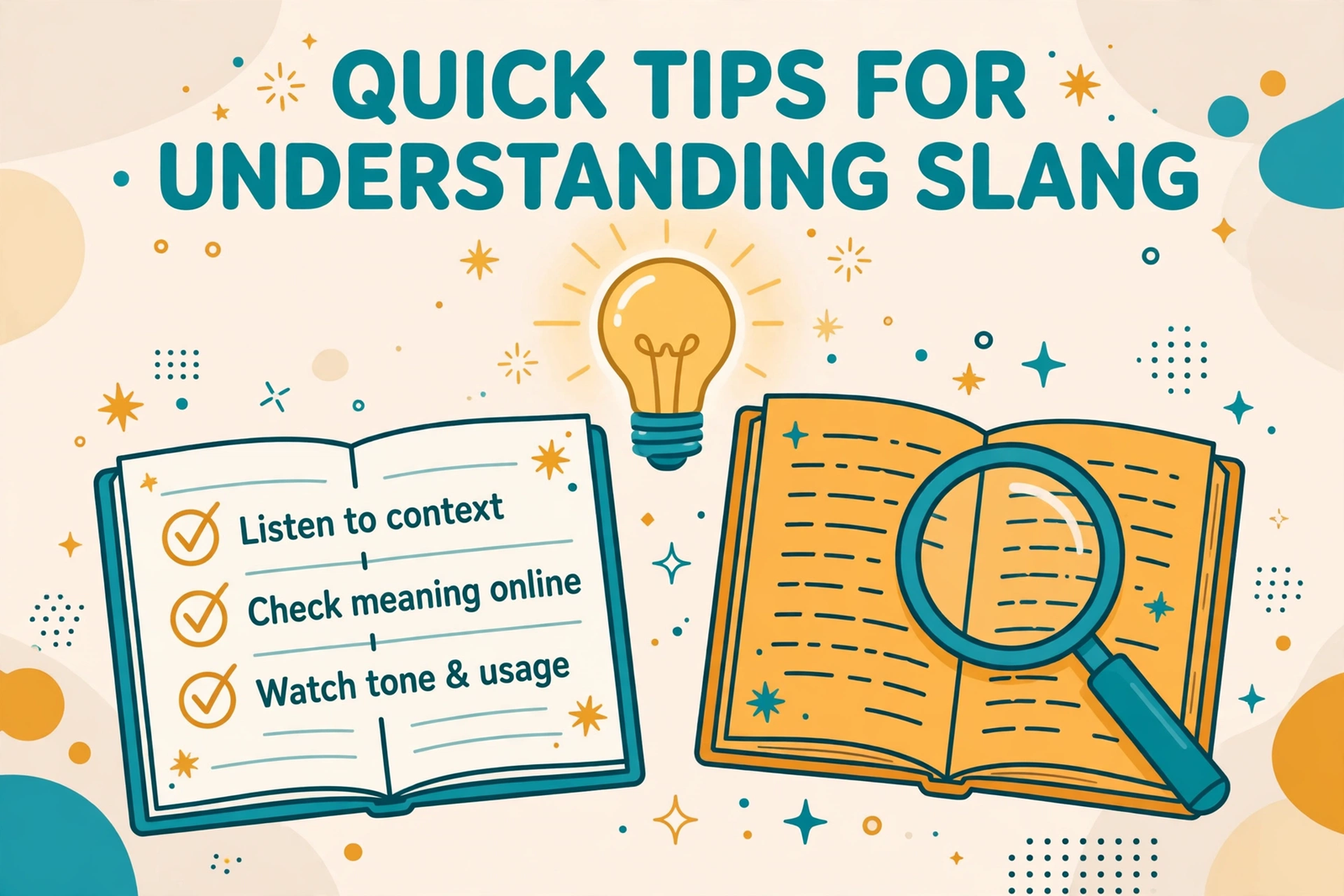
- Ask “what’s the lore?” when you are lost. It is the friendliest way to ask for the backstory — people love telling their lore.
- Start with lore videos or wikis. Joining a new fandom? A 10-minute lore summary saves you hours of confusion.
- Use “lore drop” for new revelations. When something surprising is revealed, calling it a lore drop makes the moment feel bigger.
- Keep a lore note for your friend group. A shared doc with the running jokes and origin stories helps new members catch up fast.
- Do not lore-dump on strangers. A 20-minute lore explanation is great for a willing friend and terrible for someone who just asked a simple question. Match the depth to the interest.
- Separate canon from fan lore. When sharing, say which parts are confirmed and which are theories — your credibility will thank you.
- Use it to bond, not to gatekeep. The best use of lore is welcoming people in: “Let me tell you the lore” is an invitation, not a test.
FAQ

What does lore mean in slang?
In slang, lore means the backstory, history, and hidden details behind a person, game, show, fandom, or friend group. The lore meaning slang is essentially “the story behind the story” — the context that makes everything else make sense.
Where did the slang word lore come from?
Lore comes from Old English “lār” (teaching, learning) and originally meant traditional knowledge or folklore. Gamers and fantasy fans adopted it for fictional world-building in the 1970s–2000s, and video games, YouTube lore videos, and TikTok spread it into mainstream slang in the 2010s and 2020s.
What is a lore drop?
A lore drop is a new, often surprising piece of backstory — revealed by a game update, a trailer, an interview, or a friend telling a story. Fans use it when a single detail changes how they understand the whole story.
Is lore the same as canon?
Not exactly. Canon is the officially confirmed story of a fictional world. Lore is broader — it can include canon, fan theories, rumors, and community jokes. Something can be part of the lore without being canon.
Can lore be about real people?
Yes, and this is one of the most popular modern uses. People talk about “my friend’s lore,” “the lore of our friend group,” or “family lore” to mean someone’s dramatic or funny personal history.
What does “deep lore” mean?
Deep lore means obscure, complicated, or hard-to-find backstory that only dedicated fans know. If someone says “that’s deep lore,” they mean it is not surface-level knowledge — you had to dig for it.
Is lore a Gen Z word?
Lore is popular with Gen Z and Gen Alpha, but the word itself is centuries old and was used by fantasy and gaming communities for decades before that. Gen Z just made it mainstream and applied it to everyday life.
How do I use lore in a sentence?
Try these: “What’s the lore behind that meme?” / “The lore of this game is actually insane.” / “Before you meet my friends, you need the lore.” The pattern is simple: “the lore” + “of/behind” + the thing with a story.
Conclusion
The lore meaning slang is easy to remember once you have seen it in action: lore is the story behind the story. It started as an old English word for traditional knowledge, became the backbone of fantasy worlds and video games, and then jumped into everyday internet speech — because everyone has lore, from a game franchise to a group chat to your own best friend.
Remember the key points: lore is the backstory with depth, not just a fact. A “lore drop” reveals something new, “deep lore” is the obscure stuff only true fans know, and “what’s the lore?” is the friendliest way to ask for the full story. Use it for games, fandoms, memes, and friend groups — and switch to “background” or “context” when the setting is formal.
Now you know exactly what lore means, where it came from, and how to use it without sounding forced. The next time someone says “you don’t know the lore,” you will know exactly what to ask — and you might even enjoy the story. If you want to keep building your internet vocabulary, check out our guides to sigma meaning slang and skibidi meaning slang — because in the world of slang, there is always more lore waiting to be discovered.
